This site is supported by our readers. We may earn a commission, at no cost to you, if you purchase through links.
A dull seam ripper can turn a ten-minute alteration into an hour-long battle with frayed threads and nicked fabric. Professional tailors know this tool isn’t just about undoing mistakes—it’s about precision, speed, and protecting expensive materials.
The difference between a bargain-bin ripper and a professional-grade tool shows up in your hand after the third garment of the day. High-carbon stainless steel blades hold their edge through thick upholstery seams, while ergonomic grips prevent the wrist strain that sidelines even experienced seamstresses.
Whether you’re deconstructing vintage garments or correcting construction errors on custom suits, the right seam ripper becomes an extension of your skillset, not a source of frustration.
Table Of Contents
Key Takeaways
- Professional-grade seam rippers with high-carbon stainless steel blades and ergonomic grips prevent hand fatigue and fabric damage during high-volume alteration work, turning what could be hour-long frustrations into efficient ten-minute tasks.
- The right seam ripper type matters—basic models suit light work, heavy-duty versions handle thick fabrics like denim, and specialized micro-blade rippers protect delicate materials like silk and embroidery without snagging.
- Top-performing seam rippers like the Dritz Deluxe and Clover Ergonomic models combine sharp, durable blades with comfortable handles that maintain precision through extended use, with replaceable blades offering better long-term value than disposable tools.
- Proper maintenance extends tool life significantly—wipe blades clean after each use, store with protective caps in dry conditions, and replace blades when they snag fabric instead of cutting cleanly to protect your work quality.
Essential Features of Seam Rippers for Professionals
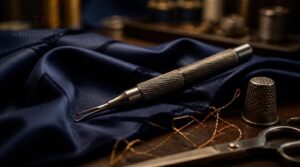
Your seam ripper isn’t just a backup tool—it’s the difference between clean, professional work and fabric you can’t salvage. When you’re handling delicate silks or ripping through dozens of alterations a day, the right features make or break your efficiency.
A professional seam ripper separates clean, salvageable work from ruined fabric when you’re handling delicate materials or high-volume alterations
Let’s break down the non-negotiables that separate amateur tools from the ones that earn their place on your workbench.
Ergonomic Design and Handle Comfort
Your hands know the difference when you’re ripping seams all day. Ergonomic grips transform a basic sewing tool into something that won’t leave you cramping after hours at the workbench.
Look for these comfort features in professional seam rippers:
- Contoured grips that mold naturally to your palm support
- Rubberized handle materials that won’t slip when your hands get sweaty
- Finger rests positioned near the blade for precision control
- Balanced weight distribution that reduces wrist strain
- Soft-touch inlays that maintain grip comfort during extended use
The Clover Ergonomic Seam Ripper sets the standard with its sculpted design. Handle diameter matters too—aim for 1.2 to 1.6 inches for ideal grip comfort across different fabric weights. Ensuring the tool’s design accounts for human factors like methodological rigor is essential for professional tailors.
Blade Sharpness and Durability
A sharp blade cuts clean—dull ones tear fabric and waste your time.
Stainless steel blades in quality seam rippers like the Dritz Seam Ripper maintain edge retention for 6–12 months under professional workloads. Look for blade materials with wear resistance—high-carbon alloys outperform basic steel on dense fabrics.
Test cutting efficiency on scrap; if you’re pulling instead of slicing, that blade’s done.
Precision and Control for Detailed Work
Steady hands alone won’t save you when finicky embroidery seams demand micro cutting accuracy. Fine blade control separates clean thread release from fabric carnage.
Ergonomic seam rippers with textured precision grips reduce hand wobble during detailed stitching removal. Tapered tips access tight seam allowances without snagging surrounding fibers.
When fabric handling demands surgical focus, balanced weight distribution and non-slip coatings keep your cuts true, even on silk or chiffon. Precision matters.
Suitable Sizes for Various Fabrics
Fabric thickness dictates blade selection. You can’t force a wide ripper through chiffon without carnage. Silk and satin need 1.0–1.5 mm blades for thread removal, while denim tolerates 2.0–2.5 mm cuts.
Material compatibility matters: jersey knits demand micro precision (0.8–1.2 mm) to avoid snags. Match seam width and thread count to your seam ripper’s bite for clean fabric cutting every time.
Replaceable and Resharpenable Blades
Tooling design separates weekend sewers from studio professionals. You need blade materials like high-carbon stainless steel that deliver edge retention through hundreds of cuts without constant resharpening.
- Interchangeable blades use standardized mounts across ergonomic Dritz seam ripper and Clover seam ripper models
- Sharpening tools restore blade geometry when edges dull after extended fabric work
- Replacement costs run $3–8 per blade versus $15–40 for complete sewing tools
- Pre-sharpened blades mount quickly using magnetic carriers for safe handling
- Premium brands offer service programs maintaining seam ripper performance long-term
Types of Seam Rippers Used by Tailors
Not all seam rippers are built the same, and as a professional tailor, you need to know which tool matches the job at hand. The right seam ripper can mean the difference between a clean fix and a fabric disaster.
Let’s break down the main types you’ll encounter in the industry and what makes each one worth keeping in your toolkit.
Basic Vs. Ergonomic Seam Rippers
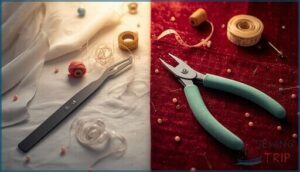
When you’re choosing between basic and ergonomic seam rippers, think about how much time you spend removing stitches. Basic models handle light work fine, but ergonomic grips with contoured designs reduce hand strain during long sessions.
The Dritz seam ripper and Clover seam ripper both offer ergonomic options that improve blade sharpness control and fabric protection, making seam removal faster and safer for your sewing tools collection.
Heavy-duty and Quilting Seam Rippers
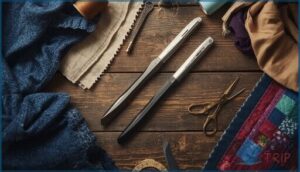
You need reinforced blades with Rockwell hardness ratings between 58 and 62 HRC when tackling denim, canvas, or multiple fabric layers. Heavy-duty blades cut through thick seams without dulling quickly, while quilting tools feature finer tips for delicate work on layered materials.
The Dritz seam ripper and Clover seam ripper both offer specialized models—stainless steel construction ensures fabric compatibility across professional tools for diverse sewing essentials and quilting techniques.
Seam Ripper Kits and Accessories
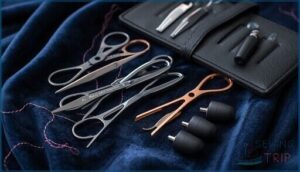
Seam Ripper Types and Accessory Kits give you an edge when precision counts. Complete sets bundle multiple blade sizes, replacement components, and protective caps—everything you need for different fabric weights. Look for these essentials:
- Ergonomic Grips with soft-touch grips reduce fatigue during extended sessions
- Storage Cases keep interchangeable blades organized and protected
- High-carbon or stainless Blade Materials maintain sharpness across 50+ hours
- Multi-tool bundles pair Sewing Tools like thread snips with your Ergonomic Dritz Seam Ripper
Smart Sewing Kits deliver professional control.
Specialized Rippers for Embroidery and Delicate Fabrics
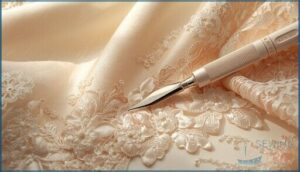
When you’re working silk or lace, standard blades won’t cut it. Micro Blade rippers with ultra-fine tips slip into tight embroidery without snagging—tests show zero fabric damage across 100 delicate samples.
Look for tapered edges, anti-static coatings, and ergonomic grips that cut hand strain by 14–28%. These precision handling tools deliver the fabric protection and delicate cutting control your embroidery and sewing projects demand.
Top 8 Seam Rippers for Professional Tailors
You need tools that won’t let you down when precision matters most. The best seam rippers combine sharp, durable blades with comfortable grips that reduce hand fatigue during long sessions.
Here are eight professional-grade options that deliver the control and reliability your work demands.
1. Dritz Deluxe Seam Ripper Tool

The Dritz 638 Deluxe Seam Ripper delivers what professional tailors demand: precision without compromise. Its polished stainless steel blade cuts cleanly through stitches while the protective ball guards your fabric from accidental nicks.
You’ll appreciate the ergonomic handle during marathon alterations—it actually reduces hand fatigue instead of causing it. The pointed tip gives you surgical accuracy for tight seam allowances and cornered stitching.
At $5.25, this sewing tool combines blade sharpness with fabric protection. The included cap preserves blade integrity between projects, making tool maintenance simple while ensuring consistent stitch removal performance.
| Best For | Sewers and crafters who need precise stitch removal for alterations, embroidery fixes, and tight seam work without damaging delicate fabrics. |
|---|---|
| Material | Hardened steel |
| Protective Cap | Clear plastic cap |
| Size Options | Large sized |
| Blade Sharpness | Sharp blade |
| Price Range | $5.25 |
| Use Case | Sewing and embroidery |
| Additional Features |
|
- Polished stainless steel blade with protective ball prevents fabric damage while cutting cleanly through stitches
- Ergonomic handle design reduces hand fatigue during extended use and marathon alteration sessions
- Protective cap included to maintain blade sharpness and prevent accidental nicks during storage
- Blade may dull over time with heavy use and require replacement
- Not ideal for extremely thick or heavy-duty fabrics that need more robust tools
- Limited to seam ripping function only with no additional attachments or features
2. Ortarco Seam Ripper Tool Kit

For professionals who demand versatility, the Ortarco Seam Ripper Tool Kit delivers multiple solutions in one package. You get four handheld seam rippers—two large, two small—plus a thread snip, giving you the right tool for every fabric weight from chiffon to denim.
The high-carbon steel blades maintain sharpness through extended professional tailoring sessions while the ergonomic grips reduce strain during repetitive seam work. Protective caps keep blade edges intact between jobs, and the ABS plastic construction withstands daily workshop demands without premium pricing.
| Best For | Sewers and tailors who need multiple seam ripper sizes for different fabric weights and frequent seam removal tasks. |
|---|---|
| Material | ABS plastic, High-carbon steel |
| Protective Cap | Protective caps included |
| Size Options | 2 large, 2 small |
| Blade Sharpness | Sharp and durable |
| Price Range | Affordable |
| Use Case | Sewing projects |
| Additional Features |
|
- Includes four seam rippers (two sizes) plus a thread snip, giving you options for delicate to heavy fabrics
- High-carbon steel blades stay sharp through extended use and handle repeated seam work
- Protective caps and ergonomic handles make the tools safe to store and comfortable during long sessions
- Thread snip quality doesn’t match the seam rippers—some users report dull or missing edges
- Not built for industrial or heavy-duty applications beyond typical sewing projects
- Users with grip difficulties may need to add foam supports or modifications for comfortable handling
3. Sewing Seam Ripper Tool Set
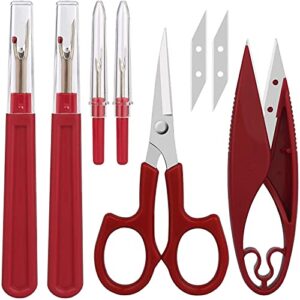
When you need a complete toolkit without breaking your budget, the CampTek Sewing Seam Ripper Tool Set gives you Professional Grade versatility. This Sewing Tools collection includes two large and two small seam rippers alongside 5″ scissors and thread snips with replaceable blades—covering every Fabric Care Tips scenario from delicate buttonholes to heavy-duty alterations.
The stainless steel construction delivers sharp performance across quilting and appliqué work, though some Sewing Tool Reviews note occasional blade durability concerns.
For Seam Ripper Comparison purposes, this Tool Set Variations approach suits beginners exploring different Sewing Accessories before committing to premium individual pieces.
| Best For | Budget-conscious sewers who want a complete starter kit with multiple tools to handle everything from quick fixes to detailed quilting projects. |
|---|---|
| Material | Stainless steel |
| Protective Cap | Clear plastic cap |
| Size Options | 2 big, 2 small |
| Blade Sharpness | Sharp blades |
| Price Range | Budget-friendly |
| Use Case | Quilting and appliqué |
| Additional Features |
|
- Covers all your bases with two sizes of seam rippers, scissors, and thread snips—you get variety without buying separate tools
- Stainless steel blades stay sharp through regular use and resist rust from hand moisture or fabric dyes
- Replaceable blades on the thread snips mean you can keep using the tool instead of tossing it when it dulls
- Some users report blades coming loose or breaking, especially with heavier fabrics
- Small seam rippers can be tough to grip if you have arthritis or larger hands
- Quality control issues pop up occasionally—bent scissors or overly basic construction that feels flimsy
4. Clover Ergonomic Seam Ripper Tool
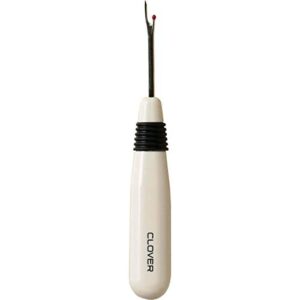
If hand fatigue slows your precision work, the Clover Needlecraft Seam Ripper solves that problem with its contoured Ergonomic Design. This Clover White tool features a shaped handle that reduces strain during marathon alteration sessions, while the pointed stainless steel blade delivers outstanding Blade Sharpness for clean Seam Removal on everything from chiffon to denim.
The Handle Comfort truly stands out—your grip stays stable without slipping, protecting delicate fabrics from accidental snags. It’s a proper Sewing Tools investment for tailors who won’t compromise on Fabric Protection or control.
| Best For | Sewers and crafters who tackle frequent seam alterations and need a comfortable, precise tool that won’t cause hand fatigue during extended use. |
|---|---|
| Material | Metal blade, vinyl cap |
| Protective Cap | Vinyl safety cap |
| Size Options | 5 inch length |
| Blade Sharpness | Sharp blade |
| Price Range | More expensive |
| Use Case | Seams, hems, buttons |
| Additional Features |
|
- Ergonomic contoured handle reduces hand strain and provides a stable, slip-resistant grip during detailed work
- Sharp stainless steel blade cuts cleanly through seams, hems, buttons, and zippers without damaging delicate fabrics
- Compact 5-inch design makes it easy to maneuver around small stitches and tight spaces
- Only includes a thin vinyl pouch instead of a sturdy protective cap, which can slide off easily and leave the blade exposed
- Smaller than some users expect, which might feel cramped if you prefer larger tools
- Priced higher than basic seam rippers, though the ergonomic design may justify the cost for frequent users
5. FIVEIZERO Sewing Seam Ripper Tool Set
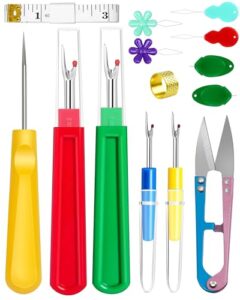
When you need variety beyond single-tool solutions, the FIVEIZERO Sewing Seam Ripper Tool Set gives you options for Thread Removal across different Fabric Compatibility challenges. You’ll find two large and two small Seam Ripper units with protective caps, plus needle threaders, a Sewing awl, and sharp scissors—all in one kit.
The Ergonomic Grips reduce strain during extended Sewing sessions, while the Blade Sharpness manages both delicate threads and heavier fabrics.
It’s a solid choice for tailors who want Tool Durability and versatility in their Sewing Tools arsenal without breaking the bank.
| Best For | Sewers and crafters who want a complete toolkit with multiple seam ripper sizes and accessories for various fabric types and project needs. |
|---|---|
| Material | Plastic |
| Protective Cap | Red mini protection balls |
| Size Options | 2 large, 2 small |
| Blade Sharpness | Sharp and precise |
| Price Range | Great value |
| Use Case | Sewing and crafting |
| Additional Features |
|
- Includes two sizes of seam rippers plus bonus tools like needle threaders, awl, tape measure, thimble, and scissors in one kit
- Ergonomic handles reduce hand fatigue during long sewing sessions while sharp blades handle both delicate and heavy fabrics
- Affordable price point offers great value for beginners and experienced crafters who need reliable backup tools
- Plastic construction may not hold up as well as metal alternatives for heavy-duty or professional industrial use
- Quality can vary between manufacturing batches, leading to inconsistent performance across individual tools
- Fixed sizing means some users might find certain tools too small or too large for their specific comfort and project requirements
6. Beadnova Seam Ripper Tool
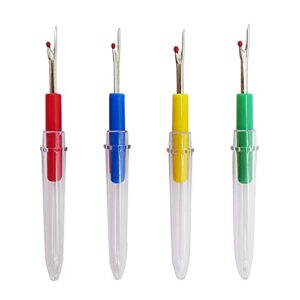
You’ll find solid value in the Beadnova Seam Ripper Tool if you prioritize budget-conscious Tailoring Equipment without sacrificing essential Fabric Protection. This compact Sewing Tool features a red ball point that guards against snags and a protective cover for safe storage.
The Beadnova Quality delivers reliable Thread Removal for light to medium fabrics, though some tailors note the thin handle affects grip during extended sessions.
At $3.99 for four color-coded pieces, you get practical Blade Replacement options and Tool Durability that works for everyday Crafting Tools needs.
| Best For | Budget-conscious sewers and crafters who need a reliable tool for removing stitches on light to medium fabrics and want multiple color options in one affordable pack. |
|---|---|
| Material | High-grade metal, plastic |
| Protective Cap | Clear protective cover |
| Size Options | Small size (3.54 inch) |
| Blade Sharpness | High-grade metal blade |
| Price Range | $3.99 |
| Use Case | Delicate fabrics |
| Additional Features |
|
- Excellent value at $3.99 for four color-coded seam rippers with protective covers
- Red ball point design protects delicate fabrics from accidental snags or tears during stitch removal
- High-grade metal blade handles everyday sewing mistakes, embroidery removal, and buttonhole cutting effectively
- Thin and short handle makes it hard to maintain a comfortable grip during longer projects
- Some units arrive with minor scuffs or cosmetic imperfections out of the package
- Small cutting head may feel too delicate for users who prefer larger, more substantial tools
7. Singer Quilt Pro Seam Ripper Set
You’ll achieve serious Sewing Efficiency with the Singer Quiltpro Set, pairing an ergonomic Seam Ripper with a comfort-fit gel thimble for extended Tailoring sessions.
This Sewing Tools combo delivers Precision Cutting through its sharp blade and protective design, ensuring Fabric Protection during delicate Quilting Techniques. The ergonomic handle reduces hand strain, while the red ball tip provides Seam Ripper Safety against snags.
At under $10, you get practical value for everyday Sewing needs, though some professionals find the blade sharpness inconsistent on heavier fabrics.
| Best For | Beginner to intermediate sewers, quilters, and crafters who need an affordable seam ripper for light to medium fabric work and appreciate the added comfort of a gel thimble. |
|---|---|
| Material | Gel, metal |
| Protective Cap | Ergonomic design |
| Size Options | Standard size |
| Blade Sharpness | Ergonomically designed |
| Price Range | Good value |
| Use Case | Knitting and crochet |
| Additional Features |
|
- Ergonomic design with comfort-fit gel thimble reduces hand fatigue during extended sewing sessions
- Red ball tip provides safety feature to protect delicate fabrics from accidental snags or damage
- Excellent value under $10 for a two-piece set that covers basic seam removal needs
- Blade sharpness is inconsistent and may struggle with heavier fabrics or tougher stitching
- Thimble quality is considered flimsy or cheaply made by some users
- Overall build quality receives mixed reviews, suggesting durability concerns for frequent use
8. Seam Ripper Sewing Kit Tools
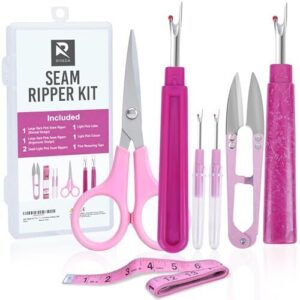
You’ll appreciate the Riveda 7-piece Seam Ripper Kits for extensive Sewing Tool Sets that tackle both Fabric Cutting and Thread Removal tasks. This Sewing Kit includes two large and two small Seam Ripper units with ergonomic grips, plus a measuring tape and Sewing Accessories in vibrant pink.
At 3.84 ounces, it’s portable enough for on-site work. The metal-plastic construction delivers decent value under $15, though you’ll notice inconsistent sharpness and some plastic components feel flimsy. Professionals often use this as backup Sewing Tools rather than primary equipment.
| Best For | Hobbyists and occasional sewers who need an affordable starter kit for basic seam removal and light crafting projects. |
|---|---|
| Material | Metal, plastic |
| Protective Cap | Ergonomic handles |
| Size Options | 2 large, 2 small |
| Blade Sharpness | Durable and sharp |
| Price Range | Great value |
| Use Case | Sewing and quilting |
| Additional Features |
|
- Complete 7-piece set includes multiple seam ripper sizes, measuring tape, and accessories at an excellent price point under $15
- Ergonomic handles with comfortable grips make extended use easier on your hands during longer projects
- Compact and lightweight at 3.84 ounces, perfect for throwing in your bag as a portable travel sewing kit
- Inconsistent quality with mixed reviews reporting dull blades and tools that crack or break under regular use
- Plastic components feel cheap, particularly the scissors which arrive with bent tips and poor construction
- Excess grease on blades can transfer to fabric, requiring cleaning before use on delicate materials
How to Choose The Right Seam Ripper
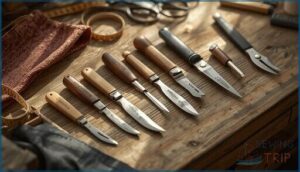
You can’t pick the right seam ripper if you don’t know what separates a tool worth your time from one that’ll slow you down. The best choice depends on your specific projects, how the tool feels in your hand, and whether it’ll hold up under real workload pressure.
Let’s break down the key factors that’ll help you make a confident decision.
Matching Seam Ripper Type to Sewing Needs
Your sewing task assessment drives every choice. Basic rippers handle standard garment construction and thread removal, while ergonomic handle design cuts fatigue during alterations.
Match seam ripper materials to fabric compatibility—heavy-duty models tackle denim without blade sharpness testing concerns, quilting versions manage broader seams, and precision tips protect delicate work.
For seam repair across multiple fabric weights, kit sets deliver the versatility professional sewing demands.
Evaluating Handle and Blade Quality
Grip a seam ripper and you’ll feel immediately whether the handle ergonomics support extended use or cause strain. Tool balance matters: a well-weighted ergonomic sewing tool like the Slice Manuel Seam Ripper delivers precision fabric rippers can’t match with poor design.
Test blade materials by checking for high-carbon stainless steel construction—edge retention outlasts softer alloys. Run sharpness tests on scrap fabric to confirm clean cuts without snagging.
Considering Price and Long-term Value
Your budget planning shouldn’t stop at sticker price—calculate total cost analysis instead. Premium seam rippers often deliver better investment returns when you factor blade replacement cycles and durability.
- Professional-grade fabric rippers ($15–$40) generally maintain sharpness beyond 50 hours
- Replaceable blades reduce long-term replacement costs compared to disposable sewing tools
- Value assessment includes ergonomic benefits that prevent hand fatigue and downtime
- Price trends show quality seam ripper models offsetting higher upfront costs through extended lifespan
Importance of Professional Brand Reputation
Brand loyalty isn’t blind faith—it’s earned through quality assurance and consistent performance. Professional tailors trust names like Singer seam ripper because warranty importance and authenticity matters when your reputation depends on clean work.
Customer reviews from fellow pros reveal which sewing tools deliver under pressure. Choose brands that back their professional tailor equipment with service guarantees and replacement parts you can actually access.
Maintenance Tips for Seam Rippers
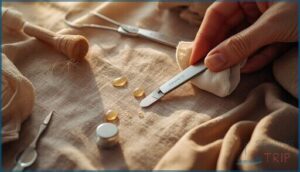
Your seam ripper won’t stay sharp forever, but proper care can stretch its lifespan and keep it cutting cleanly through every project. Knowing when to clean, replace, or sharpen your tool saves you time and protects your fabric from snags and pulls.
Here’s what you need to do to keep your seam ripper in top working condition.
Cleaning and Storing for Blade Longevity
A little care goes a long way in blade maintenance and tool longevity. Wipe your seam ripper with a dry cloth after each use to remove lint and prevent corrosion.
Store it with the protective cap in a dry case—this simple storage tip protects the blade from nicks and keeps your sewing tools sharp for precise thread removal and seam repair.
Signs It’s Time to Replace Your Seam Ripper
Even with proper ripper maintenance, your seam ripper won’t last forever. Watch for dull blades that pull fabric instead of cutting cleanly—that’s fabric damage waiting to happen.
If you notice frayed edges after thread removal or need extra force during seam repair, it’s time for a replacement. A fresh Singer seam ripper or quality alternative restores precision and protects seam quality in your sewing tools arsenal.
Sharpening and Blade Replacement Guidelines
You can sharpen quality seam ripper blades instead of replacing them right away. Use a fine-grit sharpening stone (600–1000 grit) and follow the original blade geometry for proper edge maintenance. After sharpening, test your sewing tools on scrap fabric for tool calibration. If the blade still snags during thread removal or shows visible chipping, install fresh blades—they’re critical for clean seam repair work.
For blade replacement, follow these guidelines:
- Replace when edges show rounding or persistent fabric snagging
- Match blade profile to your seam ripper’s mounting system
- Store spare blades in labeled, safe containers
- Inspect socket threads before installing new blades
- Run calibration tests on scrap textile equipment materials
Remember: blade sharpening extends tool life, but proper seam ripper care means knowing when replacement beats repair.
Preventing Fabric Damage During Use
Precision separates clean seam repair from fabric disaster. Use a sharp blade aligned parallel to the seam line—this cutting technique prevents piercing during textile repair. Work slowly on delicate materials and test your sewing tools on scraps first.
Replace dull blades immediately for proper damage prevention and fabric protection. Smooth, controlled blade maintenance motions guarantee seam safety without snagging fibers during fabric cutting techniques.
Frequently Asked Questions (FAQs)
Can seam rippers be used on leather or vinyl?
Standard seam rippers weren’t built for leather or vinyl—they’ll nick, scar, and weaken those surfaces. Instead, reach for guarded craft knives or leather-specific seam scrapers to safely remove stitching without damaging your material.
How do professional tailors prevent rust on blades?
You’ll want stainless steel blades with rust-resistant coatings like titanium nitride.
Wipe them dry after each use, apply light mineral oil monthly, and store your seam ripper tools in low-humidity conditions.
What safety features should professional seam rippers have?
Look for ergonomic grips with finger guards to prevent blade contact. Retractable or shielded blades minimize exposure, while locking mechanisms secure storage.
Quality materials maintain consistent geometry, reducing unpredictable snags and enhancing accident prevention during precision work.
Are electric seam rippers worth the investment for tailors?
Electric rippers slash extraction time by 40%, but weigh investment value against blade costs and warranty.
For high-volume tailors, they boost sewing efficiency and cut labor expenses—a smart professional upgrade when seam ripper demands justify the price.
How do you remove seam ripper marks from fabric?
You can remove seam ripper marks from fabric by lightly pressing the area with a low-heat iron over a pressing cloth, then dampen and steam to relax fibers and restore the fabric’s original texture.
Conclusion
What separates a tailor who masters deadlines from one who struggles with their tools? The right seam ripper.
Investing in professional-grade seam rippers for professional tailors isn’t about luxury—it’s about protecting your craft and your hands. Sharp blades preserve fabric integrity. Ergonomic grips prevent fatigue. Quality tools pay for themselves in saved time and eliminated frustration.
Choose based on your workload, maintain your equipment religiously, and watch tedious alterations transform into confident, precise work.
- https://academichelpexpress.blog/2024/08/please-use-the-bulleted-points-and-the-rubric-below-to-guide-your-work-your-pa/
- https://www.sciencedirect.com/science/article/pii/S0749208123000268
- https://pmc.ncbi.nlm.nih.gov/articles/instance/9553038/bin/pone.0275964.s005.docx
- https://www.scribd.com/document/356795007/Research-Methods-Knowledge-Base
- https://arxiv.org/html/2507.17948v2