This site is supported by our readers. We may earn a commission, at no cost to you, if you purchase through links.
Pins disappear into carpet. They hide in upholstery. They find bare feet with uncanny accuracy. Anyone who’s taught a kid to sew knows the particular dread of scattering a pincushion across the floor mid-project.
Pattern weights for kids solve that problem before it starts. Instead of stabbing fabric into submission, you lay a small weighted shape on top and let gravity do the work. No sharp points, no puncture holes, no stopping every two minutes to reposition what just shifted.
The best part? Kids take to them faster than pins anyway. Here’s everything you need to get started.
Table Of Contents
- Key Takeaways
- Pattern Weights for Kids Explained
- Why Pattern Weights Beat Pins
- Top 6 Kid-Friendly Pattern Weight Supplies
- Best Materials for Kids’ Weights
- Sewn Fabric Weight Tutorial
- No-Sew Pattern Weight Ideas
- Safe Cutting With Pattern Weights
- Choosing Sizes and Shapes
- Frequently Asked Questions (FAQs)
- Conclusion
Key Takeaways
- Pattern weights eliminate the sharp-point risks of pins, making fabric cutting genuinely safer and less stressful for kids learning to sew.
- Flat squares and rectangles are the most stable shapes for beginners, while triangles tackle tricky corners that would otherwise shift mid‑cut.
- You don’t need to buy anything fancy — rice, dried beans, stacked washers, or small tins filled with gravel, all make effective DIY weights with zero sewing required.
- Around age 7 or 8, most kids have the coordination to use pattern weights confidently, and starting them on straight‑seam projects like pillow covers or tote bags builds real skills fast.
Pattern Weights for Kids Explained
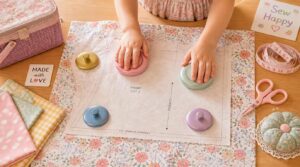
Pattern weights are one of those sewing tools that make you wonder why you ever bothered with pins in the first place. They’re especially great for kids because they’re simple, safe, and honestly kind of fun to use. Here’s what you need to know before your child gets started.
If you’re curious which ones are worth buying, this roundup of viral sewing tools that are actually worth the money is a great place to start.
What Pattern Weights Do
Think of pattern weights as tiny anchors for your fabric. They sit on top of your pattern pieces and hold everything flat, stabilizing fabric tension so nothing slides around while you cut.
That’s what makes them so useful — they handle preventing pattern shifting and improving cutting accuracy without you having to wrestle slippery material back into place every few seconds.
Understanding feature representation transforms reveals how raw patterns become numerical inputs for models.
Why Kids Can Use Them
Here’s the part where pattern weights really shine for little ones. No pins means no accidental pricks during class or at the kitchen table.
Small hands grip and place weights way easier than fumbling with pins — way less fine motor strain, way more confidence.
They also keep patterns flat and steady, building beginner precision without frustration, and cut down on fabric holes so projects (and reducing sewing anxiety) stay intact.
Best Beginner Sewing Uses
Okay, so once your kid’s got the hang of placing weights, where do they actually use them? Easier than you’d think.
Pillow covers and tote bags are perfect first projects — straight seams, simple edges. Simple curtains work too. Try these:
- Pillow cover basics
- Tote bag construction
- Simple curtain hemming
- Garment refashioning
- Soft toy creation
All beginner-friendly, all weight-approved.
Safe Shapes and Sizes
Shape matters more than you’d think. Flat squares and rectangles sit stable on pattern edges and won’t slide — unlike anything round that rolls the moment a kid breathes near it.
| Shape | Best Use | Ideal Size |
|---|---|---|
| Square | General coverage | 2–3 inches |
| Rectangle | Long straight edges | 3–4 inches |
| Triangle | Pattern corners | 2–3 inches |
| Circle | Curved sections | 3 inches |
Rounded corners cut injury risk instantly. Pair that with non-toxic fabric finishes and bright contrast colors, and kids can grab and place weights confidently every time.
Pins Versus Pattern Weights
Since pins can snag delicate fabrics and hide blade hazards beneath your mat, pattern weights win for beginners. Pins risk:
- Fabric damage on silk or vinyl
- Slower placement than weights
- Misaligned notches after removal
Pattern weights speed up cutting, protect delicate materials, and keep little fingers safe—an easy upgrade for any sewing project.
Why Pattern Weights Beat Pins
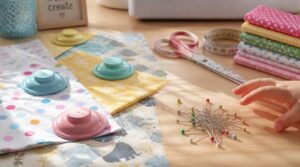
Pins get the job done, sure, but they come with a lot of baggage you don’t actually need. Switch to weights, and a bunch of those everyday sewing headaches just disappear. Here’s exactly what makes them the better pick for you and your kiddo.
No Sharp Pin Pricks
Ever stab your finger reaching for a pin? Fabric weights, even DIY versions, skip that risk: no sharp points, no puncture wounds. Classroom rules, finger guards, and tool inspections help, but weights keep sewing for beginners safer, easing accidental contact.
| Tool | Risk | Safety |
|---|---|---|
| Pins | Punctures | Careful use |
| Weights | None | Beginner-safe |
| Needles | Sharp tip | Guards needed |
| DIY weights | Blunt | No risk |
Fewer Fabric Holes
Beyond the prick, pins punch tiny holes that add up fast. Every puncture weakens paper patterns, and after a few rounds of cutting, those holes turn into rips.
Pattern weights skip that damage, preserving pattern longevity while protecting delicate textiles from snags.
No pin marks, no distortion—just clean edges and fabric integrity, project after project.
Faster Pattern Placement
Pinning takes forever—poke, adjust, poke again. Pattern weights skip all that. Plop them down, slide the fabric, done.
That speed adds up. Quick layout hacks like weighting corners first or using a grid mat for instant alignment can cut repositioning moves way down, sometimes by half.
Less fumbling, more cutting. Your DIY pattern weights turn setup into the fast part, not the frustrating one.
Easier Grainline Adjustments
Pins force a repin with every tweak. Pattern weights hold fabric still, so fabric grainline alignment stays put while you check it.
Lengthened a hem? Redrawing grainpaths gets simpler when weights anchor pattern center points. Quick vertical alignment checks along the seam catch slipping grain before it causes bias pull, helping you avoid distortion and keep drape true—no repinning required.
Safer Cutting Practice
Rotary cutters demand respect — and pattern weights make that easier by keeping blade paths clear.
- Replace dull blades promptly to prevent slipping
- Always cut away from your body
- Keep weights flat, never overlapping edges
- Use a self-healing cutting mat
- Clear workspace clutter before starting
Fewer obstacles mean cleaner cuts and safer hands — especially for kids just finding their rhythm.
Top 6 Kid-Friendly Pattern Weight Supplies
Getting started doesn’t have to mean hunting down obscure supplies. These six picks cover everything from ready-made weights to the tools that make cutting with kids actually work. Here’s what’s worth having on hand.
1. Quilted Bear Fabric Pattern Weights
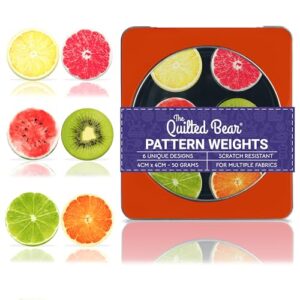
These are personal favorites for kids just starting out.
Quilted bear-shaped weights sit flat on fabric thanks to a stable base, so they don’t tip or slide mid-cut. Each one weighs around 40–60 grams — enough hold without bending the lightweight fabric. The bear silhouette makes them feel less like a tool and more like a craft companion, which honestly keeps younger sewers engaged longer. Sets come with a storage case, so nothing gets lost between projects.
| Best For | Beginners and younger crafters looking for a fun, pin-free way to hold fabric and sewing patterns in place while cutting. |
|---|---|
| Material | High-density plastic |
| Item Count | 6 weights + tin container |
| Primary Use | Pattern weighting |
| Weight | Not specified |
| Durability Concern | Inner plastic holder may crack |
| Craft Application | Quilting & dressmaking |
| Additional Features |
|
- Scratch-resistant finish keeps both fabric and paper surfaces protected during use
- The playful "Funky Fruit" design adds a bit of personality to your workspace and helps keep kids engaged
- Comes with a tin storage container, so the set stays organized between projects
- May not provide enough hold for very large or heavy pattern pieces
- The packaging can be tricky to open the first time
- Some users have reported the internal plastic holder cracking, so a little extra care is needed
2. Wisemen Glass Pattern Weights
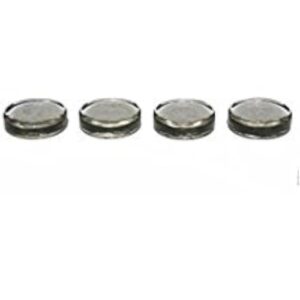
If the quilted bears are the fun option, Wisemen glass weights are the sleek, no-nonsense pick. Each clear disc is about 2¾ inches wide and weighs roughly 5.5 oz — solid enough to hold slippery fabrics like satin without shifting.
Because they’re transparent, your kid can still read pattern markings right through them. The one honest caveat: glass breaks if dropped, so these work best with older children who understand careful handling.
| Best For | Older kids and teens (or adults helping younger ones) who need a clean, pin-free way to hold delicate fabrics like silk or satin while cutting or pattern work. |
|---|---|
| Material | Lead-free glass |
| Item Count | 4 discs per pack |
| Primary Use | Pattern weighting |
| Weight | ~5.5 oz per disc |
| Durability Concern | Glass breaks if dropped |
| Craft Application | Delicate fabric & paper crafts |
| Additional Features |
|
- Transparent design lets you see pattern markings right through the disc — no guessing or lifting required
- Smooth glass surface glides easily without snagging or wrinkling fabric
- Lead-free, food-grade glass makes them safe around fabric and food-related crafts like decorating
- Glass can break if dropped, making them less ideal for young or unsupervised children
- May not hold heavy fabrics like denim or canvas securely enough
- The ~2¾ inch size can feel larger than expected, which might be awkward on smaller pattern pieces
3. Fiskars 45mm Rotary Fabric Cutter
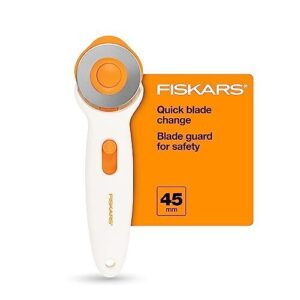
Once your kid has weights holding the pattern down, they need a cutter that actually keeps up. The Fiskars 45mm rotary cutter is a solid next step — its ambidextrous handle works for both righties and lefties, and the sliding blade lock means the blade stays safely retracted until they’re ready to cut.
The titanium carbide blade slices cleanly through multiple fabric layers in one smooth pass. Just keep it on a proper cutting mat, and you’re set.
| Best For | Quilters, sewers, and crafters — including kids learning to cut fabric — who want clean, multi-layer cuts with a safe, easy-to-handle tool that works for both right- and left-handed users. |
|---|---|
| Material | Titanium carbide & stainless steel |
| Item Count | 1 rotary cutter |
| Primary Use | Fabric cutting |
| Weight | 0.11 lb |
| Durability Concern | Blade dulls on thick materials |
| Craft Application | Quilting & multi-layer sewing |
| Additional Features |
|
- Ambidextrous design works equally well for right- and left-handed users, making it versatile for the whole family
- Titanium carbide blade cuts through multiple fabric layers cleanly in a single pass, saving time on bigger projects
- Sliding blade lock keeps the blade safely retracted when not in use, reducing the risk of accidental cuts
- The blade can dull more quickly on thick or abrasive materials, meaning more frequent replacements
- The warranty doesn’t cover the blade itself, so replacement costs are on you
- Not great for deco mesh or specialty meshes — there are occasional reports of the blade stalling mid-cut
4. Fiskars Large Self Healing Cutting Mat
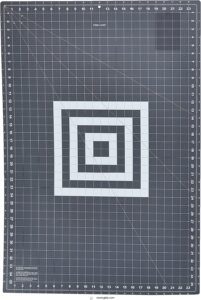
A good cutter needs a good surface to work on. The Fiskars 24 × 36-inch cutting mat gives kids plenty of room to lay out full pattern pieces without running out of space mid‑cut.
The self‑healing polymer surface seals back up after each pass, so grooves don’t build up and throw off accuracy. Both sides include 1‑inch grid lines and bias guides at 30, 45, and 60 degrees — less measuring, more cutting.
| Best For | Quilters, sewists, and crafters who need a spacious, precise surface for cutting full fabric bolts, large quilt blocks, or oversized pattern pieces. |
|---|---|
| Material | Self-healing multi-layer polymer |
| Item Count | 1 cutting mat |
| Primary Use | Cutting surface |
| Weight | 2.61 lb |
| Durability Concern | Deep cuts reduce self-healing |
| Craft Application | Quilting & scrapbooking |
| Additional Features |
|
- Generous 24 × 36-inch self-healing surface holds up to repeated cuts without grooves building up
- Double-sided design with printed 30°, 45°, and 60° bias grid lines for fast, accurate angle cuts
- Shields tabletops from blade damage while doubling as a built-in measuring guide
- Large size and 2.61 lb weight can be unwieldy in small workspaces or for travel
- Leftover adhesive from packaging stickers may cling to the surface if not removed carefully
- Repeated deep cuts in the same spot wear down the self-healing effect over time and may eventually require resurfacing
5. Gold Sand Lampwork Glass Beads
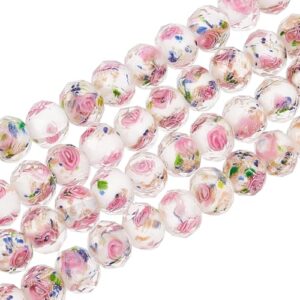
Lampwork glass beads make surprisingly effective pattern weights when strung or bundled together. Each white glass bead features a shimmering gold sand interior and a delicate flower pattern — pretty enough that kids actually want to use them.
A strand holds about 60 beads across 44 cm, giving you plenty to split into small clusters. Drape a few loops across a pattern edge, and they hold fabric flat without shifting. Fragile, yes — so handle with care.
| Best For | Jewelry makers, crafters, and DIY enthusiasts who want handcrafted glass beads for necklaces, bracelets, rosaries, or decorative projects. |
|---|---|
| Material | Lampwork glass |
| Item Count | ~60 beads per strand |
| Primary Use | Jewelry making |
| Weight | 40 g total (60 beads) |
| Durability Concern | Fragile glass chips easily |
| Craft Application | Jewelry & rosary making |
| Additional Features |
|
- Each bead has a beautiful gold sand interior and hand-painted flower detail that gives finished pieces a unique, artisan look
- A full strand of ~60 beads at 44 cm gives you plenty of material to work with across multiple projects
- Lightweight at just 40 g total, so jewelry made with these beads stays comfortable to wear all day
- Hand-crafted sizing means beads can vary slightly, so expect some inconsistency if uniformity matters to your design
- The small 1.5–2 mm hole limits compatibility with thicker wires, cords, or larger findings
- Glass construction makes them fragile — rough handling or dropping can chip or crack them
6. Yiszm Natural Aquarium Gravel
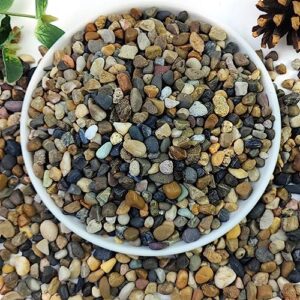
River rocks aren’t just for fish tanks. YISZM Natural Aquarium Gravel — smooth, polished ¼-inch pebbles — fills a small fabric pouch beautifully, giving you a dense, stable weight that sits flat without rolling.
The stones are 100% natural, with no dyes or oils, so they’re safe for little hands. Just rinse before use to clear any dust. A 5 lb bag goes a long way — you’ll have enough gravel to fill several weights and still have plenty left over.
| Best For | Aquarium and turtle tank owners, plant enthusiasts, and crafters who want a versatile, all-natural pebble that works across multiple projects. |
|---|---|
| Material | Natural stone |
| Item Count | 5 lb bag (varied sizes available) |
| Primary Use | Aquarium & garden substrate |
| Weight | 5 lb per bag |
| Durability Concern | Size variation between bags |
| Craft Application | DIY crafts & landscaping |
| Additional Features |
|
- 100% natural stones with no dyes, oils, or fillers — safe for fish, turtles, and kids
- Multipurpose use across aquariums, potted plants, garden beds, vases, and DIY crafts
- Polished, smooth finish with a natural multicolor mix that looks great in any setting
- Stones arrive dusty and need a rinse before use
- Slight size variations between bags due to manual measurement
- Small pebble size means larger projects may require purchasing multiple bags
Best Materials for Kids’ Weights
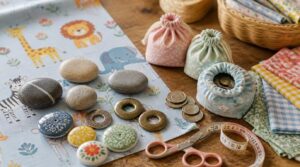
Picking the right materials makes all the difference between a weight that actually works and one that just sits there looking cute. The good news is you’ve got plenty of options, from things you probably already have at home to a few small upgrades worth grabbing. Here’s a quick look at what works best.
Cotton Fabric Squares
Cotton fabric squares are a dream starting point. Precut to sizes like 4×4 or 5×5 inches, they skip the measuring hassle entirely.
Look for quilting cotton or broadcloth — both hold their shape well when filled. Prewash before sewing to prevent shrinkage later. Coordinating printed designs make each weight feel personal, turning a simple DIY project into something kids actually want to keep.
Muslin Scrap Fabric
Muslin scraps are the perfect "use what you’ve got" material. Pre-washed muslin is soft, stable, and holds its shape beautifully around any filler.
- Utility muslin — balanced body, works with most fillers
- Extra fine muslin — gentle enough for baby or delicate projects
- Unbleached natural — the most common scrap you’ll find
- Bleached or dyed — adds a fun pop of color for kids
Store clean scraps in a breathable container to prevent mildew.
Fender Washer Stacks
Here’s a trick seasoned sewers swear by: stack large fender washers four or five deep, and you’ve got a surprisingly solid DIY pattern weight — no sewing required.
Their flat, wide geometry keeps them stable on fabric without rolling, and zinc-plated steel copes everyday indoor use just fine.
| Washer Stack | Weight Approx. | Best For |
|---|---|---|
| 2 washers | ~0.5 oz | Lightweight fabrics |
| 3 washers | ~0.75 oz | Cotton quilting |
| 4 washers | ~1.5 oz | Medium-weight fabric |
| 5 washers | ~2 oz | Denim or canvas |
| 5 + flat washers | ~2.5 oz | Large pattern pieces |
Wrap the stack in a fabric scrap or slip it inside a small pouch — smooth, burr-free edges matter most for kids’ hands.
Rice and Dried Beans
Got rice in your pantry? You’ve got a pattern weight filler. About 2 tablespoons fills a small fabric pouch, giving you roughly 1.5–2 oz — perfect for kids’ DIY pattern weights.
Dried beans work too, and they’re cheap, lightweight, and easy for little hands to scoop. Keep fillers bone-dry to dodge pests, and store extra beans in a sealed jar; they’ll last months without trouble.
Glass Beads or Pellets
Want something denser? Glass beads pack more weight into less space than rice ever could.
- High density (2.4–2.6 g/cm³) beats poly pellets
- Often sourced from recycled glass
- Smooth, safe texture gives nice tactile feedback
Poly pellets work too, just bulkier. Either way, you’ve got solid fabric weights for sewing pattern projects.
Sewn Fabric Weight Tutorial
Making your own fabric pattern weights is easier than you’d think — even for beginners. All you need are a few basic supplies and these five simple steps. Here’s exactly how to put one together from start to finish.
Cut Two Fabric Squares
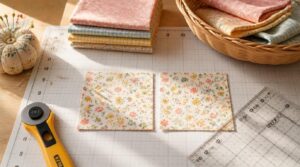
Start with two identical fabric squares — 2 to 4 inches per side work perfectly for kids’ weights. Cut both from the same piece so the grain lines up consistently.
A rotary cutter and straight edge give you the cleanest edges, but sharp fabric scissors do the job too.
Prewash your fabric scraps first to prevent shrinkage later.
Add Fusible Interfacing
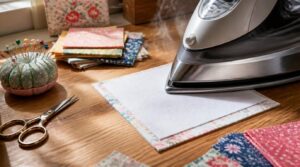
Once your squares are cut, grab a small piece of fusible interfacing and place it glue-side down on the wrong side of one square. Press firmly with a hot, dry iron — no sliding.
Let it cool completely before touching it. This stops bubbling and keeps the bond strong, giving your finished weight just enough stiffness to lie flat.
Stitch With Seam Allowance
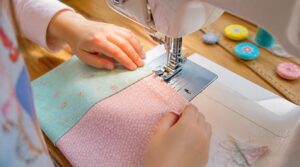
Place your two squares together, right sides facing, and sew around three sides using a ¼-inch seam allowance. Leave one corner open — you’ll need that gap later.
- Keep stitches short and even for strength
- Grade fabric edges at corners to reduce bulk
- Backstitch at each end to lock the seam
Slow, steady stitching beats rushing every time.
Fill and Close Opening
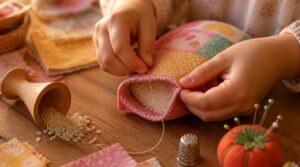
Turn the bag right-side out through that corner gap — a small funnel helps you fill it up without spills.
Pour in your rice or beads, then fold the raw edges inward.
Hand stitch the opening shut using an invisible ladder stitch, and strengthen the corners with a few extra passes.
This keeps everything sealed and fray‑free.
Add a Ribbon Loop
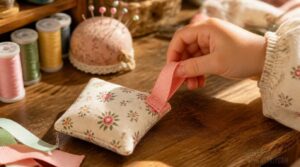
Snip a ¼-inch fabric strip about three inches long, fold it into a loop, and hand-stitch both ends flat against one corner of your weight.
Grosgrain or satin ribbon works beautifully here — stiff enough to hold its shape, soft enough for small hands to grab.
That little loop makes hanging, storing, and grabbing your handmade sewing supplies genuinely painless.
No-Sew Pattern Weight Ideas
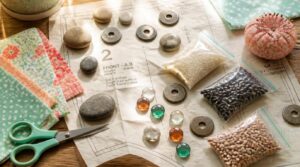
Not every pattern weight needs a needle and thread. If you’ve got a few spare minutes and some stuff lying around the house, you can throw together something that works just as well. Here are some no-sew ideas worth trying.
Wrapped Washer Bundles
Wrapped washer bundles are one of the quickest no-sew wins you’ll find. Tuck fender washers into a small cotton or muslin square, tie it off, and you’re done.
They stack uniformly, so bundle density adjustment is easy — just add or remove washers.
Always choose non-toxic filler materials and store finished bundles in a breathable bag to prevent moisture buildup.
Fabric Scrap Pouches
Got fabric scraps sitting in a pile doing nothing? Sew them into small pouches — four to six inches square works perfectly — then fill with rice or dried beans for instant DIY pattern weights.
Kids love picking mismatched textures. It’s a genuinely useful fabric scrap reuse project that teaches fine motor skills while keeping little cutting stations organized.
Small Filled Containers
Small tins and snap-lid containers make surprisingly solid no-sew pattern weights. Look for 30 to 100 ml tins or clear plastic vessels — fill them with rice, glass beads, or aquarium gravel, then seal the lid.
The airtight seal keeps fillers from spilling mid-project.
Kids can even decorate the lids, making each weight genuinely theirs.
Repurposed Household Items
You probably already own a dozen future pattern weights without knowing it. Worn t-shirts cut into small bundles and knotted tight, glass jars filled with aquarium gravel, even yogurt cups packed with dried beans — all work beautifully.
Upcycling household items keeps costs near zero. Kids love hunting for candidates, which honestly makes the whole project feel like a treasure hunt.
Upcycling household scraps into pattern weights costs nearly nothing — and kids treat the hunt like a treasure search
Quick Classroom Options
When you’re teaching a whole room of kids, speed matters. Keep a labeled bin at each station with a few wrapped washers or filled pouches ready to grab.
- Pre-cut fabric squares in two sizes
- Color-coded weights by pattern size
- A quick self-check worksheet at every mat
That setup keeps the session moving without chaos.
Safe Cutting With Pattern Weights
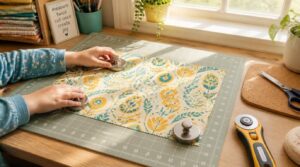
Pattern weights make cutting so much easier, but there’s still a right way to set things up before the scissors (or rotary cutter) come out. A few simple habits keep the process smooth and safe for kids of all skill levels. Here’s what to keep in mind each time you cut.
Arrange Pattern Pieces First
Before placing any weight, lay out all pattern pieces first. Each piece’s grainline must run parallel to the selvage — skip this and your seams will twist. Start with fold pieces, then larger sections to boost fabric usage. Check that notches align and rotate directional prints to keep designs consistent.
| Layout Step | Why It Matters |
|---|---|
| Align grainline to selvage | Prevents bias stretching over time |
| Place fold pieces first | Sets reference points for other pieces |
| Position large pieces next | Reduces fabric waste and gaps |
| Verify notch alignment | Ensures pieces match during assembly |
| Rotate directional prints | Keeps design continuous across seams |
Weights hold everything steady once the layout’s confirmed.
Keep Weights Off Edges
Once your layout’s locked in, resist the urge to stack weights right along the cut lines. Keep every weight at least one inch inland from any printed or cut edge — this protects your seam allowance and prevents edge distortion while cutting.
Work from the center outward, securing the pattern’s heart first, then let the edges speak for themselves.
Use a Cutting Mat
A good cutting mat is your best friend here. Self-healing mats close up after every pass, so the surface stays smooth and accurate across dozens of projects. The built-in grid lines help you confirm fabric grain and pattern placement at a glance — no guessing.
For kids especially, that stable, non-slip surface keeps everything exactly where you put it.
Guide Rotary Cutters Slowly
Slow and steady wins here. Rushing a rotary cutter is the fastest way to lose a straight line.
Follow these four moves for clean, safe cuts:
- Press the blade perpendicular to the mat
- Move in one smooth, continuous stroke
- Release pressure if the blade binds or skips
- Swap in a fresh blade when resistance builds
Your pattern weights hold everything still — let them do that job while you focus purely on guiding the cutter forward.
Supervise Younger Children
Young children need active supervision here — not a glance from across the room, but real, close presence.
| Supervision Level | Age Range | Adult Role |
|---|---|---|
| Arm’s reach | Under 5 | Hold fabric steady |
| Line of sight | Ages 5–7 | Guide each cut |
| Close proximity | Ages 8–10 | Check weight placement |
| Check-ins | Ages 10–12 | Verify grainline |
| Independent | Ages 12+ | Monitor from nearby |
Ask kids to verbalize intentions — "I’m cutting now" — before moving the cutter. That one habit keeps everyone alert and safe.
Choosing Sizes and Shapes
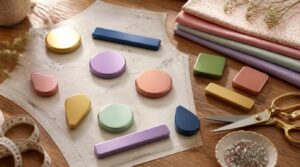
Not all pattern weights are built the same, and honestly, the size and shape you pick makes a bigger difference than you’d think. The right choice depends on what you’re cutting — a tiny corner needs something different than a long straight edge. Here’s a quick breakdown of the shapes that work best for different jobs.
Flat Square Weights
Flat square weights are the go-to starter shape for good reason. Their uniform flat faces sit flush against fabric without rocking or rolling, and sizes between 2 and 6 inches cover most beginner sewing patterns comfortably.
Look for ones with rounded or chamfered edges — no snagging, no scratched cutting mats. A non-slip felt bottom keeps everything exactly where you placed it.
Rectangle Edge Weights
Rectangle weights shine along long pattern edges — think a 2×4 inch bar holding down the side seam of a simple skirt. Their shape naturally follows straight lines, so edge stability stays consistent without constant repositioning.
A non-slip rubber backing grips the fabric underneath, and beveled edges mean no snagging mid-cut.
Dense material keeps pressure evenly spread across the whole length.
Triangle Corner Weights
Corners are the trickiest part of any small project. A triangle corner weight slips right into pattern corners, locking down corner alignment accuracy without a single pin.
- Fits snugly into pointed corners
- Chamfered edges prevent fabric snagging
- Distributes pressure evenly along each edge
- Low profile keeps rotary cutters safely clear
Solid steel or zinc alloy builds make these durable handsewn weights worth every penny.
Larger Garment Weights
When your kid grips a larger garment — think a dress, jacket, or wide-leg pants — you’ll want heavier pattern weights to match. Heavier fabric adds density, which means lighter weights just slide or shift.
Aim for weights between 2–3 oz each, with 10–12 spread across the piece. That keeps everything flat without constant readjusting.
Storage and Reuse Tips
Once you’ve built your collection, keep weights in an airtight container — a repurposed glass jar works perfectly. Label it so kids can grab and return weights independently.
- Store by size using color-coded labels
- Sanitize fabric pouches between projects
- Use a modular drawer divider for shapes
- Hang ribbon-loop weights on a peg for quick access
Frequently Asked Questions (FAQs)
Are pattern weights worth it?
A stitch in time saves nine." Yes, pattern weights are absolutely worth it — they speed up cutting, protect your fabric, and help beginners build real confidence without wrestling with pins.
Can pattern weights work on stretchy or knit fabric?
Yes, pattern weights work on knit fabric — just go lighter than usual. Heavier weights can stretch or imprint delicate jersey. For slippery knits, pair weights with a silicone shelf liner underneath.
How do I clean fabric pattern weights after use?
A stitch in time saves nine." Hand wash fabric covers in mild soap and lukewarm water, rinse thoroughly, then air dry completely flat. Always wipe any metal components dry immediately after use to prevent rust.
Can kids decorate their own pattern weights?
Decorating is half the fun. Let kids use fabric-safe markers or fabric paint to add stars, hearts, or initials — it builds fine motor skills and makes every weight feel like their own little creation.
What age is appropriate to start using weights?
Around age 7 or 8, most kids have the motor skills and focus to start safely. With a supervising adult nearby, they can handle pattern weights confidently right from their first sewing project.
Do pattern weights work on vertical or angled surfaces?
Gravity is the single greatest enemy of fabric on an angled surface. Pattern weights can hold light fabrics vertically, but slippery fabric management demands denser weights placed near edges and corners for reliable cutting stability.
Conclusion
The first time a kid reaches for a weight instead of a pin, something shifts.
They stop fighting the fabric and start working with it.
That’s what pattern weights for kids quietly hand over — not just a safer tool, but a little more confidence with every project.
Small wins stack up fast in sewing.
One steady cut, one piece that doesn’t slip, one finished thing they made themselves.
That’s where the love for it begins.
- https://www.guavarama.com/2018/10/28/montessori-math-materials-you-absolutely-need-for-elementary
- https://www.hand2mind.com/glossary-of-hands-on-manipulatives/pattern-blocks
- https://www.blocksandbeads.com/post/using-montessori-materials-to-teach-elementary-math
- https://teachingwithamountainview.com/must-have-math-manipulatives-for-upper-elementary
- https://montessorigeneration.com/blogs/montessori/math-toys-by-age