This site is supported by our readers. We may earn a commission, at no cost to you, if you purchase through links.

After 20 years in garment construction, I’ve watched blade technology transform how we work with fabric. The rotary cutter I used in 2006 dulled after one bolt of denim, required a screwdriver to change blades, and left my hand cramping after an hour.
Today’s professional-grade cutters glide through eight layers of canvas, swap blades with a single lever press, and feature grips that actually understand hand anatomy. You’ll find tungsten steel blades that stay sharp through entire production runs, squeeze-trigger safety locks that prevent the injuries we used to accept as normal, and ergonomic designs that let you cut all day without the ache.
The difference between a consumer-grade cutter and a professional tool shows up in your speed, precision, and whether you can finish a custom order without reaching for ibuprofen.
Table Of Contents
- Key Takeaways
- Key Features of Rotary Cutters for Professionals
- Choosing The Right Rotary Cutter Size
- Top 10 Rotary Cutters for Professional Seamstresses
- 1. Fiskars Rotary Fabric Cutter Tool
- 2. Fiskars Titanium Rotary Fabric Cutter
- 3. Olfa Rotary Cutter Tool
- 4. Olfa Ergonomic Rotary Fabric Cutter
- 5. Olfa Rotary Fabric Cutter
- 6. Headley Tools Rotary Cutter Blades
- 7. Olfa Rotary Fabric Cutter Tool
- 8. Fiskars Rotary Fabric Cutter Ruler
- 9. Fiskars Rotary Cutting Set
- 10. Rotary Cutter For Fabric And Crafting
- Essential Safety and Maintenance Tips
- Benefits of Rotary Cutters for Seamstresses
- Frequently Asked Questions (FAQs)
- Conclusion
Key Takeaways
- Professional-grade rotary cutters with tungsten steel or titanium carbide blades stay sharp through 470+ yards of fabric and cut cleanly through 6-10 layers at once, dramatically reducing both cutting time and hand fatigue compared to consumer tools.
- Blade size selection directly impacts your efficiency: 28mm handles intricate curves and appliqué work, 45mm serves as the versatile workhorse for most garment construction, and 60mm powers through heavy materials like leather, canvas, and thick batting stacks.
- Essential safety features like squeeze-trigger blade retraction, dual-action locks, and quick-change systems without screwdrivers prevent the injuries that used to be accepted as normal while keeping your workflow uninterrupted during production deadlines.
- Regular maintenance—replacing blades every 3-5 projects when you notice fraying, cleaning lint from carriers with isopropyl alcohol, and using self-healing mats—preserves cutting precision and extends tool lifespan while reducing material waste from poor edge quality.
Key Features of Rotary Cutters for Professionals
When you’re cutting fabric all day, the right rotary cutter makes the difference between finishing strong and fighting hand cramps by noon. Professional seamstresses need tools that deliver clean cuts, stay sharp through multiple projects, and won’t slow you down when you’re on deadline.
Choosing rotary cutters designed for smaller hands can dramatically reduce fatigue and give you better control throughout long cutting sessions.
The right rotary cutter separates finishing strong from fighting hand cramps by noon when you’re cutting fabric all day
Let’s break down the essential features that separate professional-grade cutters from basic hobby tools.
Professional cutters offer precision and durability that hobby tools can’t match, especially when you’re working through multiple layers or following detailed fabric cutting techniques for clean, accurate results.
High-Quality Blade Materials
Your blade material makes or breaks your cutting life. Tungsten steel rotary blades can power through eight layers of cotton and last 470 yards longer than competitors, while titanium carbide and alloy steel options deliver outstanding sharpness retention.
For seamless precision and comfort, explore left-handed rotary cutters designed for extended blade life that pair perfectly with these durable materials.
Blade coatings like titanium nitride reduce friction during high-speed work, and ceramic blades stay ultra-sharp for demanding projects, though they’re more brittle than steel.
For sewers working with tough fabrics or long sessions, left-handed seam rippers with premium blade coatings offer smoother cutting action and longer edge retention.
For peak performance, consider using high speed blades to achieve precise cuts.
Ergonomic Handle Designs
Ergonomic grip design matters when you’re cutting yards of fabric daily. Contoured grips with soft, non-slip overlays reduce grip force by 25% during marathon sessions, while textured surfaces distribute pressure evenly across your palm.
Look for rotary cutters with reversible designs that work for both hands, palm rests that keep wrists neutral, and handle materials like cushioned elastomer that won’t cramp your fingers after hours at the cutting table.
Essential Safety Mechanisms
Your cutter’s safety features can mean the difference between a productive day and a trip to urgent care. Dual-action safety locks secure the blade in open or closed states, preventing accidental activation in your bag, while squeeze-trigger mechanisms automatically retract blades the moment you release pressure.
- Sliding blade covers that fully enclose the circular edge reduce contact risk during storage
- Concealed blade housings shield fingers from cutting paths while maintaining fabric access
- Cut-resistant gloves paired with self-healing mats create layered protection against lacerations
Following proper machine safety guidelines (general safety tips) is essential for preventing accidents and ensuring a safe working environment.
Quick-Change Blade Systems
When your blade dulls mid-project, you don’t have time for screwdrivers and scattered parts. Lever-based quick release systems on tools like the OLFA 45mm RTY-2/C let you swap blades in seconds, keeping your rotary cutting rhythm unbroken.
Magnetic hubs in Fiskars models allow touch-free blade replacement—safer for your fingers, faster for your workflow—while maintaining compatibility with standard rotary cutter blades across brands.
Multi-Layer Cutting Capabilities
Professional rotary cutters transform your workflow when you need to stack and slice in one pass. Sharp 45mm blades handle six to eight cotton layers cleanly, while 60mm models power through ten or more depending on fabric thickness and blade sharpness. Material compatibility varies—dense wool or batting reduces your stack height—but titanium carbide edges maintain cutting accuracy longer, letting you work faster without sacrificing precision.
- Layer Cutting Tips: Keep stacks under four layers for curved patterns to prevent shifting and maintain clean edges throughout your project.
- Fabric Thickness Matters: Heavier materials like denim or flannel cut best with 60mm blades, limiting practical stack height to preserve blade sharpness.
- Blade Size Selection: Match your rotary cutter diameter to material limits—larger blades deliver better results when cutting through batting, vinyl, or multiple fabric layers simultaneously.
Choosing The Right Rotary Cutter Size
Blade size isn’t just about preference—it’s about matching the right tool to the job at hand. A 28mm cutter manages intricate curves one day, while a 60mm blade powers through layers of canvas the next.
Let’s break down which size belongs in your toolkit and when to reach for each one.
28mm Cutters for Precision Work

When you’re steering through tight corners or intricate appliqué shapes, a 28mm rotary cutter becomes your secret weapon for precision cutting and curve mastery.
Many quilters keep a collection of rotary cutters for crafts in different sizes to handle everything from delicate detail work to cutting multiple fabric layers at once.
These compact tools deliver outstanding fabric control for small detail work, accurate trimming of seam allowances, and maneuvering around templates where larger rotary cutter blades feel clumsy. The sharp, tight turning radius lets you follow curves smoothly, while ergonomic grips maintain comfort during detailed sessions.
Their blade sharpness ensures clean edges on baby clothes, doll garments, and quilting blocks with narrow shapes—projects where control trumps speed.
45mm Cutters for Versatility
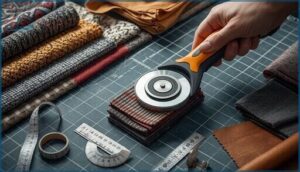
Striking the sweet spot between precision and power, 45mm rotary cutters handle most professional sewing tasks with exceptional adaptability, from quilting strips to garment patterns across lightweight cottons and heavier wools. Their blade sharpness delivers clean cuts through 4-6 fabric layers, while ergonomic grips reduce fatigue during extended sessions.
Here’s why they’re workshop essentials:
- Wide-ranging fabric selection capability—cotton, linen, leather, vinyl, paper
- Advanced cutting techniques for both straight lines and curved appliqué shapes
- Compatible rotary cutter blades including pinking, wave, and scallop varieties for decorative edges
- Efficient rotary maintenance with quick-change blade systems minimizing downtime
- Ideal for crafting projects requiring multiple layers and precise maneuvering around templates
60mm Cutters for Heavy Materials
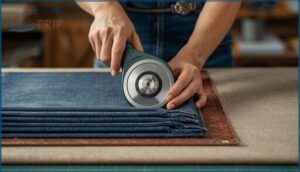
When you’re slicing through denim, canvas, or upholstery leather, 60mm rotary cutters deliver the power you need for heavy material cutting. Their stainless steel rotary cutter blades cleanly cut 3-5 fabric layering thicknesses with minimal fraying, while carbide-tipped options extend blade durability by 40-60%.
Balanced grips reduce hand fatigue during extended sessions, and proper rotary cutter maintenance—regular lubrication, debris cleaning—keeps these professional crafting tools performing at peak efficiency.
Matching Blade Size to Project Needs
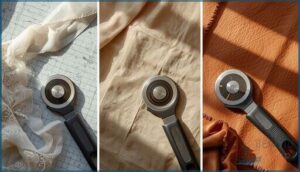
Your fabric thickness dictates blade selection more than any other factor—28mm rotary cutter blades handle delicate silks and detailed curves, 45mm strikes the sweet spot for everyday garment construction and medium-weight cottons, while 60mm manages leather, canvas, and 4+ layer stacks.
Match rotary cutters to material compatibility and project planning needs, ensuring cutting accuracy without fraying or snagging during critical fabric cutting techniques.
Top 10 Rotary Cutters for Professional Seamstresses
You’ve narrowed down your blade size, and now it’s time to look at specific tools that’ll hold up in a professional workroom.
The cutters below have earned their spot through reliable performance, smart design features, and compatibility with the specialty blades you’ll need for different projects.
Here’s what’s proven itself on cutting tables across the industry.
1. Fiskars Rotary Fabric Cutter Tool
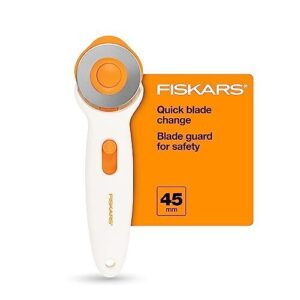
When you need reliable fabric cutting that won’t quit mid-project, the Fiskars 45mm rotary cutter delivers professional-grade performance without the fuss. Its premium steel blade sharpness manages multiple layers of cotton, wool, and vinyl with clean precision, while the symmetrical stick handle fits comfortably in either hand—perfect for those marathon cutting sessions.
The sliding safety lock prevents accidental blade exposure, and with Fiskars’ lifetime warranty on tool durability, you’re investing in a cutter that’s built to last through countless garments and quilts.
| Best For | Quilters, sewers, and crafters who regularly cut multiple fabric layers and want a comfortable, ambidextrous tool that handles extended projects without causing hand fatigue. |
|---|---|
| Blade Size | 45mm |
| Blade Material | Steel |
| Handle Material | Stainless Steel |
| Ambidextrous Design | Yes |
| Safety Feature | Sliding button |
| Warranty | Lifetime (excludes blade) |
| Additional Features |
|
- Sharp 45mm steel blade cuts through multiple layers of fabric, vinyl, and quilting materials cleanly and precisely
- Ambidextrous design with ergonomic handle works equally well for left- and right-handed users during long cutting sessions
- Lifetime warranty on the tool (excluding blade) plus easy blade replacement system means long-term reliability
- Replacement blades can add up in cost over time
- Takes some practice to master safe and effective cutting technique
- Handle grip may feel slippery for certain users, requiring extra caution during use
2. Fiskars Titanium Rotary Fabric Cutter
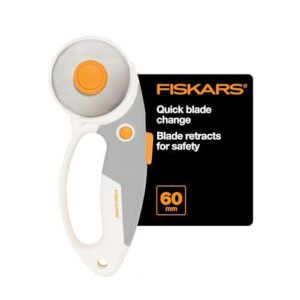
For heavy-duty projects demanding extended blade durability, the Fiskars Titanium 60mm rotary cutter sets a new standard with its 100% titanium carbide blade that keeps its edge through batting, foam, and multiple fabric layers.
The ergonomic loop grip and sliding button lock give you rotary action control whether you’re cutting curves or straight seams, and cutter safety stays front and center with its retractable blade design.
This tool manages thicker materials with precision, backed by Fiskars’ full lifetime warranty on construction quality.
| Best For | Quilters, sewists, and crafters who cut through thick batting, foam, or multiple fabric layers regularly and want a blade that stays sharp longer. |
|---|---|
| Blade Size | 60mm |
| Blade Material | Titanium |
| Handle Material | Plastic |
| Ambidextrous Design | Yes |
| Safety Feature | Sliding button |
| Warranty | Lifetime |
| Additional Features |
|
- Titanium carbide blade holds its edge much longer than standard steel, so you’re not constantly swapping blades mid-project.
- Ergonomic loop grip and sliding lock button make it comfortable and safe to use for both righties and lefties, even during long cutting sessions.
- Handles thicker materials and multiple layers with clean precision cuts, plus it’s backed by a full lifetime warranty.
- Blade stays exposed unless you manually unlock it to close, which requires extra attention for safe storage.
- Some users noticed residue or lubricant on the blade out of the box that needs cleaning before first use.
- Higher upfront cost compared to non-titanium models, though the longer blade life helps balance that over time.
3. Olfa Rotary Cutter Tool

When you need a rotary cutter that powers through six layers of cotton, wool, leather, or foam without flinching, the Olfa 60mm rotary cutter delivers professional-grade performance at a surprisingly accessible price.
Its carbon steel blade and metal handle give you the cutting control serious quilters and garment makers depend on.
The blade cover and ambidextrous design make it a shop favorite for right- and left-handed seamstresses alike.
This workhorse manages heavy materials and large projects with consistent precision.
| Best For | Quilters, sewists, and crafters who regularly cut through multiple fabric layers or heavier materials like leather and need a durable, ambidextrous tool that reduces hand fatigue during long projects. |
|---|---|
| Blade Size | 60mm |
| Blade Material | Carbon Steel |
| Handle Material | Metal |
| Ambidextrous Design | Yes |
| Safety Feature | Blade cover |
| Warranty | Not specified |
| Additional Features |
|
- Cuts cleanly through up to 6 layers of fabric and handles heavier materials like leather, wool, and foam without struggle
- Ambidextrous design with safety blade cover makes it accessible and safe for both right- and left-handed users
- Durable carbon steel blade and metal construction deliver reliable, long-lasting performance for frequent use
- Requires a cutting mat for best results, adding an extra purchase if you don’t already own one
- The blade cover knob can be accidentally grabbed during use, which may interrupt your cutting flow
- Blade replacement requires careful handling and attention to avoid injury
4. Olfa Ergonomic Rotary Fabric Cutter
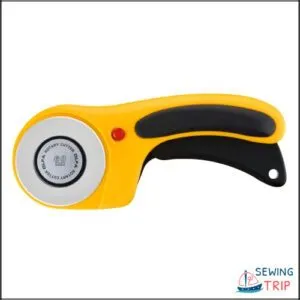
Long cutting sessions demand a tool that won’t punish your wrists, and the Olfa Ergonomic Rotary Fabric Cutter with its squeeze trigger handle answers that call. This 60mm cutter slices through 12 layers of cotton in one pass, making quilting marathons feel manageable.
The dual-action safety lock and angled grip deliver control without cramping your hand. Compatible with standard RB60 replacement blades, it manages everything from vinyl to leather with consistent blade sharpness.
Your cutting technique improves naturally when the tool fits your hand properly—this ergonomic design proves that daily.
| Best For | Quilters and sewists who tackle multi-layer fabric projects and need a rotary cutter that reduces hand fatigue during extended cutting sessions. |
|---|---|
| Blade Size | 60mm |
| Blade Material | Steel |
| Handle Material | Rubber |
| Ambidextrous Design | No |
| Safety Feature | Dual-action lock |
| Warranty | Not specified |
| Additional Features |
|
- Cuts through up to 12 layers of cotton fabric in a single pass, saving time on large quilting and sewing projects.
- Ergonomic squeeze trigger handle and angled grip significantly reduce wrist strain and hand cramping during long work sessions.
- Dual-action safety lock and retractable blade guard provide reliable protection when the cutter isn’t in use.
- The 60mm blade requires extra caution when used alongside plastic rulers to avoid damaging them.
- Some users may need practice to master the cutting technique and maintain optimal blade sharpness.
- Contains California Prop 65 warning regarding chemicals that may cause cancer or reproductive harm.
5. Olfa Rotary Fabric Cutter
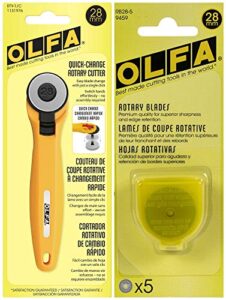
Detailed work like foundation paper piecing calls for nimble precision, and the Olfa Rotary Fabric Cutter with its 28mm tungsten blade delivers exactly that. This compact yellow tool cuts curves and small areas with accuracy, making English paper piecing and template work straightforward rather than frustrating.
The quick-change blade system and included five replacement blades keep you working without interruption. Designed for both right and left-hand users, it manages multiple fabric layers while the added blade cover protects fingers between cuts—a smart safety feature for workspaces crowded with materials.
| Best For | Quilters and crafters who need precise control when cutting curves, small fabric pieces, and detailed work like foundation paper piecing or English paper piecing. |
|---|---|
| Blade Size | 28mm |
| Blade Material | Alloy Steel |
| Handle Material | Plastic |
| Ambidextrous Design | Yes |
| Safety Feature | Blade cover |
| Warranty | Not specified |
| Additional Features |
|
- Comes with five replacement blades right out of the box, so you won’t need to hunt for spares anytime soon
- Quick-change blade system with a safety cover makes swapping blades fast and keeps your fingers protected between cuts
- Ambidextrous design works equally well for right and left-handed users, plus the compact 28mm size excels at curves and tight spaces
- Handle quality feels cheaper than expected and may not hold up to heavy daily use
- The 28mm blade size limits you to smaller cutting areas and won’t handle thick or heavy fabrics well
- Blades will need replacement over time, adding to the long-term cost of ownership
6. Headley Tools Rotary Cutter Blades
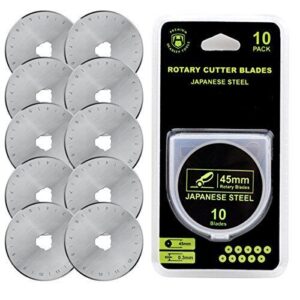
Japanese SKS-7 steel sets these replacement blades apart when cutting precision matters most. Their blade durability manages woven cottons, leather, vinyl, and multiple fabric layers without losing edge retention, while craftsmanship quality means fewer mid-project replacements during demanding professional work.
Fitting standard 45mm rotary cutters from Fiskars and Olfa, these rotary cutting blades maintain blade sharpness through extended sessions cutting material variety up to 16mm thick. The oil coating prevents rust between blade replacement cycles, and cutting precision stays consistent whether you’re working with fleece or card stock.
| Best For | Quilters, sewers, and crafters who need reliable replacement blades that stay sharp through heavy-duty cutting sessions with thick or multi-layered materials. |
|---|---|
| Blade Size | 45mm |
| Blade Material | Japanese Steel (SKS-7) |
| Handle Material | N/A (Replacement Blades) |
| Ambidextrous Design | N/A |
| Safety Feature | Oil-coated |
| Warranty | Not specified |
| Additional Features |
|
- Japanese SKS-7 steel maintains sharpness longer than budget alternatives, handling leather, vinyl, and multiple fabric layers without frequent replacements
- Universal fit works with standard 45mm rotary cutters from Fiskars, Olfa, and similar brands
- Oil coating protects against rust and scratching during storage, extending blade life between uses
- Some users report the blades can dull faster than expected despite the premium steel construction
- Excess oil coating may require cleaning before first use to prevent residue on fabrics
- Cut-out design can produce clicking noises during use, which may be distracting during long projects
7. Olfa Rotary Fabric Cutter Tool

You’ll cut through multiple layers with confidence using this OLFA 45mm rotary cutter, built with tungsten tool steel for lasting Olfa blade quality.
The ergonomic handle design features finger grooves that reduce hand fatigue during extended sessions, while the built-in blade cover and quick-change system combine critical safety features with practical rotary cutter maintenance.
Whether you’re slicing through eight layers of cotton or working with leather and vinyl, this adaptable tool manages diverse fabric cutting tips while accommodating both right and left-handed users.
| Best For | Quilters, sewers, and crafters who need precise cuts through multiple fabric layers and want a comfortable tool that works for extended cutting sessions. |
|---|---|
| Blade Size | 45mm |
| Blade Material | Alloy Steel |
| Handle Material | Plastic |
| Ambidextrous Design | Yes |
| Safety Feature | Built-in cover |
| Warranty | Not specified |
| Additional Features |
|
- Cuts through up to 8 layers of cotton fabric at once, saving time on large projects
- Ergonomic handle with finger grooves reduces hand strain, making it easier for people with arthritis or hand pain
- Works for both right and left-handed users with a quick-change blade system and built-in safety cover
- Requires a cutting mat underneath to protect your work surface, adding an extra expense
- Replacement blades can get pricey, especially if you stick with original OLFA blades
- Takes some practice to nail curved or angled cuts without mistakes
8. Fiskars Rotary Fabric Cutter Ruler
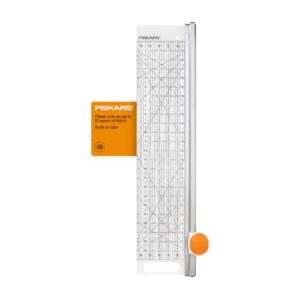
You’ll appreciate how this Fiskars rotary fabric cutter ruler combines blade precision with fabric measurement in one tool, featuring a built-in measuring grid with highlighted numbers and a spring-action 45mm blade.
The clear acrylic construction provides cutting accuracy across woven cottons, leather, vinyl, and paper, while the ergonomic blade carriage and magnetic blade-change system deliver both comfort and safety features.
At 24″L x 6″W, this ruler integration lets you measure and cut multiple layers simultaneously, though pieces under 1.5 inches require careful handling for best material compatibility.
| Best For | Quilters, sewers, and crafters who need to measure and cut multiple fabric layers quickly with consistent accuracy across projects. |
|---|---|
| Blade Size | 45mm |
| Blade Material | Steel |
| Handle Material | Acrylic Plastic |
| Ambidextrous Design | N/A |
| Safety Feature | Magnetic system |
| Warranty | Not specified |
| Additional Features |
|
- Spring-action 45mm rotary blade with magnetic quick-change system cuts through multiple fabric layers, leather, vinyl, and paper in one smooth motion
- Built-in measuring grid with highlighted numbers eliminates the need for separate rulers, speeding up your workflow
- Ergonomic blade carriage and built-in handle make extended cutting sessions comfortable and transport between projects easy
- Clear acrylic construction can crack or break if you drop it or handle it roughly
- Not ideal for cutting small pieces under 1.5 inches, which limits precision work on tiny fabric scraps
- Lightweight feel may not provide the heft some users prefer for controlling cuts on heavier materials
9. Fiskars Rotary Cutting Set
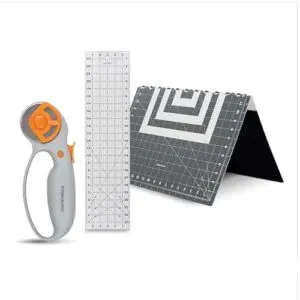
This complete Fiskars rotary cutting set delivers everything you need to start professional crafting, pairing a 45mm rotary blade with a self-healing mat and measuring ruler. The ergonomic grips reduce fatigue during extended quilting sessions, while safety features like the blade guard protect you between cuts.
You’ll achieve cutting accuracy with the mat’s grid lines and angle guides, though the folding design creates a center crease that requires careful fabric handling. Fiskars quality shows in the high-grade steel blade that maintains sharpness through 6–8 hours of continuous work.
| Best For | Quilters and sewers who need a complete starter kit with professional-grade tools for cutting multiple fabric layers with precision. |
|---|---|
| Blade Size | 45mm |
| Blade Material | Steel |
| Handle Material | Acrylic |
| Ambidextrous Design | Yes |
| Safety Feature | Safety lock |
| Warranty | Lifetime (excludes blade/mat) |
| Additional Features |
|
- High-grade steel blade stays sharp for 6–8 hours of continuous cutting and works cleanly through cotton, quilting fabrics, and light synthetics
- Self-healing mat with grid lines and angle guides provides accurate measurements and protects your work surface
- Ergonomic handle with contoured grip reduces hand fatigue during long projects and works equally well for right- and left-handed users
- Center crease from the folding mat design can affect cutting accuracy and cause the blade to skip over the fold
- Blade and cutting mat aren’t covered by the lifetime warranty, adding to long-term replacement costs
- Ruler measurements are in inches only, which may be inconvenient if you prefer metric units
10. Rotary Cutter For Fabric And Crafting

The Headley Tools rotary cutter combines reliable SKS7 stainless steel performance with ambidextrous design and five bonus replacement blades, making it a practical workhorse for seamstresses who need dependable cutting without breaking the budget.
The soft-grip ergonomic handle reduces joint fatigue during extended fabric cutting sessions, while the safety lock prevents accidental cuts when you’re moving between projects.
You’ll appreciate how the rotary blades handle everything from quilting cottons to leather and vinyl, though some users report the bearings wear faster than premium models—an acceptable trade-off for the value-conscious crafter building their crafting tools collection.
| Best For | Crafters and seamstresses who need a budget-friendly rotary cutter for frequent fabric work across quilting, sewing, and DIY projects. |
|---|---|
| Blade Size | 45mm |
| Blade Material | Stainless Steel |
| Handle Material | Plastic |
| Ambidextrous Design | Yes |
| Safety Feature | Safety lock |
| Warranty | Not specified |
| Additional Features |
|
- Sharp SKS7 stainless steel blade cuts through fabric, paper, leather, and vinyl with ease
- Ergonomic soft-grip handle reduces hand fatigue during long cutting sessions
- Ambidextrous design with safety lock works for both right- and left-handed users
- Locking mechanism may not hold up reliably over time
- Bearings can wear out faster than more expensive models
- Feels lighter and less sturdy compared to premium rotary cutters
Essential Safety and Maintenance Tips
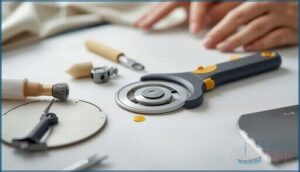
Your rotary cutter is only as reliable as the care you give it, and proper maintenance isn’t just about performance—it’s about keeping your fingers safe. I’ve seen too many dull blades cause slips and injuries that could’ve been avoided with basic upkeep.
Let’s walk through the essential practices that’ll keep your cutter sharp, safe, and ready for years of professional work.
Blade Replacement and Care
Sharp blades don’t last forever, and recognizing when to replace yours keeps your rotary cutter performing like new. Replace blades every 3–5 projects or sooner if you notice fabric fraying or uneven cuts—dullness compromises both safety and precision.
Here’s how to maintain blade sharpness and extend cutter life:
- Engage the safety lock, retract the blade fully, then use the correct screwdriver size to remove old blades and install manufacturer-approved replacements
- Wipe the blade hub with a lint-free cloth, apply light lubricant to the bearing, and brush away fabric fibers after each use
- Dispose of dull blades in rigid containers and store new ones in protective packaging to prevent edge damage
Regular blade replacement and proper cutter maintenance guarantee clean cuts, protect your ergonomic grips from strain, and keep safety features functioning correctly.
Proper Storage Techniques
Once you’ve replaced your blade, protecting your rotary cutters through smart storage solutions extends their lifespan considerably. Store cutters in labeled containers with blade protection covers engaged, ideally on a stable shelf away from heat and moisture.
Organized systems—like blade size dividers and transparent cases—simplify your handling protocols while preserving safety features and grips. Proper cutter maintenance starts with where you keep your tools between projects.
Cleaning and Lubricating Components
Keeping your rotary cutters in peak condition means regular cleaning and proper lubrication. Remove fabric lint from the blade carrier with a soft cloth and isopropyl alcohol, then dry completely before reassembly. Apply manufacturer-approved lubricant sparingly to pivot points—wipe away excess to prevent residue on your fabric.
- Clean blade carriers with lint-free cloths and mild solvents
- Use only manufacturer-approved lubricant types for moving parts
- Lubricate pivot points while blade is safely removed
- Inspect drive mechanisms and locking features during cleaning
- Document maintenance dates for consistent blade replacement schedules
Using Cutting Mats and Protective Gear
Beyond tool care, your workspace setup matters just as much. Self-healing mats with measurement grids protect blades and prevent slippage during precision cuts—never use rotary cutters on hard surfaces.
Protective gear options like safety glasses shield your eyes when cutting multiple layers, while non-slip mat bases keep everything stable.
Proper mat maintenance tips include regular cleaning to maintain that self-healing surface quality.
Benefits of Rotary Cutters for Seamstresses
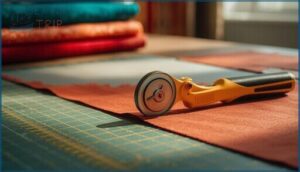
If you’ve ever struggled with frayed edges or wasted fabric, you already know why rotary cutters have become indispensable in professional sewing workrooms.
These tools deliver benefits that go far beyond basic cutting, from precision that saves material costs to versatility that suits any project on your table.
Let’s look at the specific advantages that make rotary cutters worth the investment for serious seamstresses.
Precision and Efficiency in Fabric Cutting
When you’re racing through dozens of garment pieces or piecing together intricate quilt blocks, rotary cutters deliver the speed and accuracy that scissors simply can’t match. Their circular blade sharpness maintains clean edges through multiple layers, while ergonomic grips support your cutting techniques during long production runs.
Precision crafting demands efficiency tools that keep pace with your skills, and proper fabric selection paired with precision methods in fabric cutting transforms your workflow completely.
Versatility Across Materials and Projects
Material variety transforms your rotary cutter into a single-tool powerhouse, tackling cotton, wool, leather, vinyl, and craft plastics with material compatibility that streamlines your workflow across project applications.
Craft precision extends beyond fabric selection to paper, vinyl, and light leather projects, while professional rotary cutters maintain sharpness across multiple material types, eliminating constant tool switches.
- 45mm and 60mm blades handle fabric cutting through denim, canvas, and upholstery materials with steady pressure control
- Cutting techniques adapt seamlessly from quilting cottons to synthetic blends without blade wobble
- Craft precision extends beyond fabric selection to paper, vinyl, and light leather projects
- Professional rotary cutters maintain sharpness across multiple material types, eliminating constant tool switches
Reduced Waste and Clean Edges
Sharp rotary cutters deliver clean edges that scissors simply can’t match, minimizing fabric distortion and frayed selvages with every pass. Your cutting precision improves immediately when blade sharpness meets proper mat maintenance, reducing waste on expensive materials.
Waste reduction becomes tangible when edge quality eliminates re-cuts and salvage trimming.
| Edge Quality Factor | Impact on Results | Your Action |
|---|---|---|
| Blade Sharpness and Replacement | Clean cuts, minimal fraying | Replace at first sign of snagging |
| Even Pressure | Consistent edge across fabrics | Maintain steady hand control |
| Mat Surface Condition | Prevents fiber lift, gaps | Rotate and clean regularly |
| Continuous Cutting Motion | Reduces distortion points | Plan long, uninterrupted passes |
Enhancing Productivity in Professional Settings
Speed matters in professional sewing, and rotary cutters slice through garment pieces and quilt components faster than scissors ever could, freeing up hours for assembly and finishing work. Workflow optimization starts with professional tools that support efficiency strategies—you’ll cut multiple layers simultaneously, maintain blade sharpness and replacement schedules, and benefit from ergonomic grips that prevent fatigue during production runs.
- Time management improves when rotary cutters reduce cutting time by 40-60% compared to traditional scissors
- Task automation through multi-layer cutting lets you process entire pattern sets in single passes
- Ergonomic grips and safety features minimize breaks and injury-related downtime during high-volume projects
- Consistent blade sharpness maintains cutting speed without mid-project tool changes
- Sewing and quilting workflows accelerate when precision cutting feeds directly into accurate piecing and construction
Frequently Asked Questions (FAQs)
How often should professional rotary cutter blades be replaced?
Professional seamstresses generally replace rotary cutter blades every 6 to 12 months with daily use.
Heavier fabrics like denim accelerate blade wear patterns, requiring more frequent replacement schedules to maintain sharp blades and precision cuts.
Can rotary cutters be sharpened or only replaced?
Most rotary cutter blades can’t be sharpened effectively—replacement is your reliable path forward.
The circular edge wears unevenly, and attempts at blade sharpening often damage protective coatings, compromise safety features, and reduce cutter durability compared to fresh replacement costs.
Which cutting mat thickness works best for professionals?
Think of your cutting mat as the foundation of every clean cut—0 millimeters strikes the sweet spot for professional seamstresses, balancing blade durability, cutting efficiency, and self-healing recovery across quilting and sewing tools.
Are specialty blades worth the investment for seamstresses?
Yes, specialty blades deliver 10–25% better cutting accuracy on delicate fabrics, extend blade durability by 2–3x with tungsten steel coatings, reduce blade replacement frequency, and improve edge quality—offsetting costs through material savings and enhanced productivity.
How do you prevent blade rust in humid environments?
I learned this the hard way when mildew ruined three blades in July—now I wipe mine with mineral oil after each shift, store them with silica gel packets, and they stay sharp for months.
Conclusion
The right blade changes everything—turning hours of tedious cutting into swift, confident strokes that feel seamless. Whether you’re working through delicate silk or heavyweight canvas, the rotary cutters for professional seamstresses in this guide will match your ambition with precision, durability, and comfort that lasts through every project.
Your hands deserve tools that work as hard as you do, so choose wisely, cut boldly, and watch your craftsmanship reach new heights of quality.
- https://olfa.com/products/olfa_45mm_tungsten_steel_rotary_blade
- https://www.techsew.com/products/ergonomic-45mm-rotary-cutter
- https://www.ravecommercial.com/Ergonomic-Fabric-Cutter-For-Sewing-Quilting-Crafts/1044181
- https://www.accuquilt.com/blog/avoid-common-rotary-cutter-injuries
- https://44tools.com/olfa-45mm-ergonomic-rotary-cutter/