This site is supported by our readers. We may earn a commission, at no cost to you, if you purchase through links.
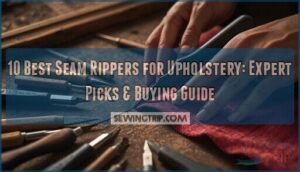
A botched seam removal can ruin hours of upholstery work in seconds. One slip with a dull or unwieldy tool, and you’re staring at torn fabric, stretched fibers, or a gash that wasn’t there before.
Professional upholsterers know that the right seam ripper isn’t just a convenience—it’s the difference between a clean restoration and a costly mistake. Heavy fabrics, multiple stitch layers, and tight spaces demand tools built for precision and control, not the flimsy rippers that come free with sewing kits.
Whether you’re stripping vintage furniture or repairing automotive interiors, choosing a seam ripper designed for upholstery work protects your materials and saves you from frustrating do-overs.
Table Of Contents
- Key Takeaways
- Best Seam Rippers for Upholstery Work
- 1. Seam Rippers for Sewing
- 2. C S Osborne Leather Seam Ripper Tool
- 3. Metal Sewing Seam Ripper Tool
- 4. Seam Ripper Stitch Remover Tool
- 5. Sewing Seam Rippers Tool Set
- 6. Aruicheng Seam Ripper Tool
- 7. Sewing Seam Ripper Tool Kit
- 8. Sewing Seam Ripper Tool Set
- 9. Ergonomic Seam Ripper Set
- 10. Anchor Seam Ripper Clipper Tool
- Key Features of Upholstery Seam Rippers
- Choosing The Right Seam Ripper for Upholstery
- Proper Use and Maintenance Tips
- Upholstery Applications and Expert Tips
- Frequently Asked Questions (FAQs)
- Conclusion
Key Takeaways
- Professional upholstery work demands seam rippers with reinforced blades (HRC 58-62 rating), ergonomic grips, and protective features specifically designed for heavy fabrics like leather, canvas, and vinyl—standard sewing rippers won’t cut it.
- The right seam ripper prevents costly mistakes by protecting expensive materials through features like protective ball tips, controlled blade angles, and non-slip handles that maintain precision during extended removal sessions.
- Proper technique matters as much as tool quality—work perpendicular to seams with shallow angles, cut one stitch at a time from edge to center, and replace dull blades immediately to avoid fabric tears and fiber damage.
- Material construction separates professional tools from cheap alternatives, with carbon steel delivering 400-2000 MPa tensile strength for dense stitching while stainless steel provides corrosion resistance and edge retention for humid workshop environments.
Best Seam Rippers for Upholstery Work
You’re ready to take control of your upholstery projects, and that starts with the right seam ripper in your hands. Whether you’re ripping through heavy leather or carefully removing delicate stitching, these tools separate the pros from the amateurs.
The right blade design, handle ergonomics, and tip precision make all the difference—check out our comprehensive guide to seam rippers for professional tailors to find what actually works in the field.
Here are the top 10 seam rippers that’ll give you the precision and power you need to master any upholstery job.
1. Seam Rippers for Sewing
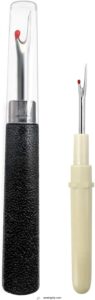
You’ll find that standard sewing seam rippers work surprisingly well for lighter upholstery tasks. The classic Dritz-style design features a forked metal head with a sharp blade tucked beneath the U-shaped fork, letting you undercut stitches safely.
That protective ball at one end lifts loose threads without snagging delicate fibers. Most models sport molded plastic or rubberized grips that won’t slip during extended sessions. Some even offer dual-sided or replaceable blades to tackle different stitch sizes with precision.
| Best For | Sewers and crafters who need a reliable tool for removing stitches, opening seams, and fixing mistakes in fabric projects. |
|---|---|
| Material | Plastic & Steel |
| Blade Type | Hardened Steel |
| Handle Design | Non-slip Comfort Grip |
| Primary Use | Seam Ripping |
| Quantity | 2 Pieces |
| Safety Feature | Red Round Mini Ball |
| Additional Features |
|
- Two different sizes give you flexibility for both delicate work and larger seams
- Sharp hardened steel blades cut through threads cleanly without damaging fabric
- Comfortable non-slip grip makes extended use easier on your hands
- Sharp points require careful storage away from kids
- Not ideal for heavy-duty upholstery or very thick materials
- You need good lighting to avoid accidentally nicking your fabric
2. C S Osborne Leather Seam Ripper Tool
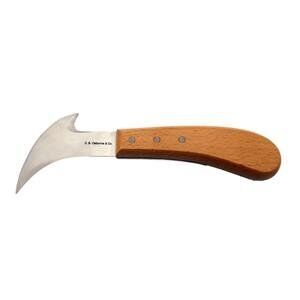
When leather upholstery demands real precision, the C S Osborne Leather Seam Ripper delivers with authority. Built with finest steel and a contoured beechwood handle, this 7-3/4″ professional-grade tool won’t quit on marathon sessions. Its 2-7/8″ blade slices through auto carpeting, vinyl, and rubber with surgical accuracy.
At $43.95, it’s pricey, but this Made in USA workhorse pulls double duty—ripping stubborn seams and prying dried paint from tight crevices when your project throws curveballs.
| Best For | Professional upholsterers and auto trimmers who need a reliable tool for heavy-duty seam ripping and precision cutting in leather, vinyl, and rubber materials. |
|---|---|
| Material | Steel & Beechwood |
| Blade Type | Hook & Pointed |
| Handle Design | Contoured Beechwood |
| Primary Use | Seam Ripping & Cutting |
| Quantity | 1 Piece |
| Safety Feature | None Specified |
| Additional Features |
|
- Premium steel construction with ergonomic beechwood handle designed for extended use and comfort
- Versatile functionality—cuts through tough materials like auto carpeting and vinyl while handling delicate seam ripping
- American-made quality tool that can last decades with proper care
- High price point at $43.95 compared to basic seam rippers
- May eventually break under constant heavy-duty use over many years
- Specialty tool that might be overkill for occasional hobbyist projects
3. Metal Sewing Seam Ripper Tool
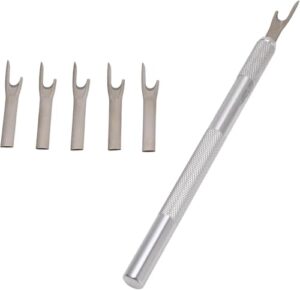
You’ll find solid value in the Zerodisznb253ri04 metal seam ripper set when budgets run tight. This five-piece aluminum alloy kit includes replacement blades and weighs just 0.634 ounces—light enough for extended sessions without hand fatigue. The ergonomic handle makes quick work of upholstery labels and buttonholes.
Fair warning: some users report flimsy construction and blades that shift during use. At this price point, you’re trading premium stability for affordability and backup blades when tackling lighter upholstery repairs.
| Best For | Hobbyists and occasional sewers on a tight budget who need basic seam ripping tools with backup blades for lighter fabric work. |
|---|---|
| Material | Aluminum Alloy & Steel |
| Blade Type | Steel Replacement |
| Handle Design | Ergonomic Aluminum Alloy |
| Primary Use | Seam & Stitch Removal |
| Quantity | 5 Pieces |
| Safety Feature | None Specified |
| Additional Features |
|
- Comes with five pieces including replacement blades for extended use
- Lightweight at 0.634 ounces, reducing hand fatigue during longer projects
- Affordable option that handles basic tasks like removing labels and opening buttonholes
- Construction quality is reportedly flimsy with stability issues
- Blades may shift or jerk around in the handle during use
- Sharpness and blade security don’t match higher-end alternatives
4. Seam Ripper Stitch Remover Tool
This stainless steel ripper gives you a sharp U-shaped blade wrapped in a thick plastic handle that won’t crack mid-project. You get a transparent protective cover to shield the blade between jobs and prevent scratches when tossing it in your toolbox.
At 6.28 x 2.76 x 1.18 inches and 3.84 ounces, it won’t weigh you down during long sessions removing old embroidery patterns or cutting tape off wiring harnesses—adaptable enough for home repairs beyond upholstery work.
| Best For | Sewers, crafters, and DIYers who need a reliable tool to quickly remove stitches, unwanted embroidery, or cut through thread and tape without damaging fabric. |
|---|---|
| Material | Stainless Steel & Plastic |
| Blade Type | U-shaped Stainless |
| Handle Design | Thick Plastic |
| Primary Use | Thread Cutting |
| Quantity | 1 Piece |
| Safety Feature | Transparent Plastic Cover |
| Additional Features |
|
- Sharp stainless steel U-shaped blade makes clean cuts through thread without snagging or tearing fabric
- Ergonomic plastic handle provides comfortable grip for both quick fixes and extended use
- Includes protective cover to keep the blade sharp and safe when stored in toolboxes or sewing kits
- Blade dulls over time with no sharpening option, requiring full replacement
- Handle may feel too small for users with larger hands
- Quality can vary between production batches, leading to inconsistent durability
5. Sewing Seam Rippers Tool Set
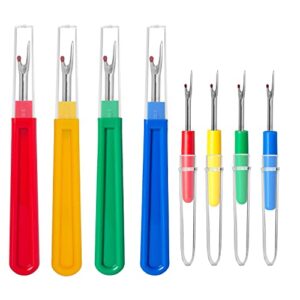
You get eight rippers in this red metal and plastic kit—four small and four large—so you can tackle fine seams and heavy upholstery without switching tools mid-job.
If you’re still deciding which style fits your workflow, check out this guide on choosing the right seam ripper for quilting projects.
Each 5.5-inch ripper features a red safety ball that stops snags before they start and a long flat handle that won’t roll off your workbench. The sharp cutting edge removes threads cleanly, and caps keep blades protected between projects.
At 1.12 ounces, they’re light enough for extended use without hand fatigue.
| Best For | Sewers and crafters who need multiple seam rippers on hand for different project sizes and want affordable backups that won’t damage delicate fabrics. |
|---|---|
| Material | Metal & Plastic |
| Blade Type | Sharp Cutting Portion |
| Handle Design | Long Flat Handle |
| Primary Use | Thread & Stitch Removal |
| Quantity | 8 Pieces |
| Safety Feature | Red Safety Ball |
| Additional Features |
|
- Eight rippers total (four small, four large) give you options for fine detail work and heavier materials
- Red safety ball prevents fabric snags and accidental damage while removing stitches
- Lightweight design at 1.12 ounces reduces hand fatigue during extended use
- Small rippers can be awkward to grip and control for some users
- Storage caps don’t fit securely on the handle backs for all sizes
- Blades may not be sharp enough for heavy-duty or professional sewing work
6. Aruicheng Seam Ripper Tool
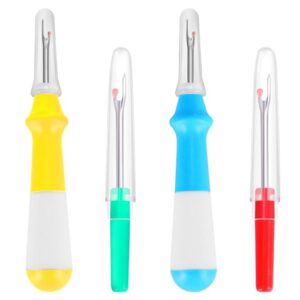
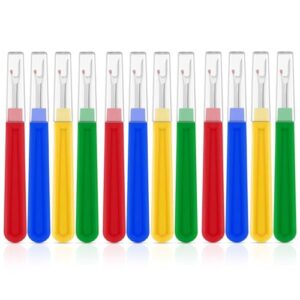
This upholstery ripper combines a fold-away cap with a hardened blade that slices through heavy thread without dulling on synthetic fibers. You’ll notice the curved forked head lifts threads cleanly while a protective ball prevents fabric snagging.
The 120 to 140 millimeter handle uses a rubberized surface and natural finger contours to reduce hand fatigue during long removal sessions.
At 40 to 60 grams, it’s light enough for extended use yet built with a zinc alloy core for rigidity when you’re tackling dense upholstery seams.
| Best For | Sewers and crafters who need a reliable tool for removing stitches and seams without damaging delicate fabrics. |
|---|---|
| Material | Stainless Steel & Rubber |
| Blade Type | Stainless Steel |
| Handle Design | Ergonomic Rubber Grip |
| Primary Use | Seam Ripping |
| Quantity | 4 Pieces |
| Safety Feature | Red Round Mini Ball |
| Additional Features |
|
- Ergonomic grip design with rubberized surface reduces hand fatigue during extended use
- Protective red ball prevents accidental fabric damage while ripping seams
- Comes with 4 pieces in different sizes and colors for various projects
- Blade may become dull over time and require replacement
- No warranty or durability guarantees mentioned
- Risk of accidentally damaging fabric if not used carefully
7. Sewing Seam Ripper Tool Kit
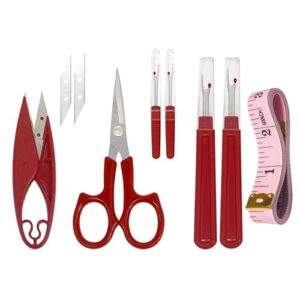
This kit delivers two small and two big thread unpickers plus a double-edged cutter with replaceable blades, so you won’t lose momentum when a blade dulls mid-project.
You’ll also find a 5.1-inch scissor, a 4.5-inch thread snipper, and a sewing tape measure bundled in one package.
The stainless steel and rubber construction keeps each tool lightweight yet durable enough for removing tags or ripping seams without tearing fabric, though you’ll need to handle the peaked tips with care.
| Best For | Sewers who want a complete toolkit for unpicking seams, snipping threads, and handling fabric work without buying each tool separately. |
|---|---|
| Material | Stainless Steel & Rubber |
| Blade Type | Double-edged |
| Handle Design | Ergonomic Handles |
| Primary Use | Sewing Tasks |
| Quantity | Multiple Pieces Set |
| Safety Feature | Peaked Tips Warning |
| Additional Features |
|
- Comes with multiple seam rippers in different sizes plus scissors, thread snipper, and tape measure all in one kit
- Replaceable blades mean you can keep using the tools instead of tossing them when they dull
- Stainless steel construction holds up well for removing tags and ripping stitches without damaging fabric
- Sharp peaked tips require careful handling and should be kept away from kids
- No storage case included, so you’ll need to find your own way to organize everything
- Quality might not match what you’d get buying premium individual tools separately
8. Sewing Seam Ripper Tool Set
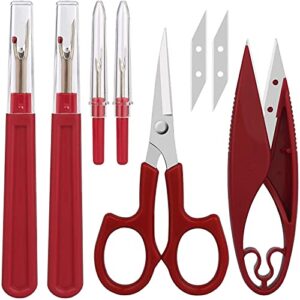
Four ripper heads with forked edges let you lift stitches without slicing through vinyl or canvas, while the interchangeable blades manage everything from lightweight cotton to thick automotive fabric. Most sets include a curved-tip ripper for tight gaps, plus replacement blades so you won’t have to hunt for new tools mid-repair.
You’ll get a protective cap and a small storage case to keep those blades sharp between jobs. The light plastic grips reduce hand fatigue when you’re pulling apart yards of old seams.
| Best For | Sewers, quilters, and embroidery enthusiasts who need reliable tools for removing stitches, opening buttonholes, and cutting threads with precision. |
|---|---|
| Material | Stainless Steel |
| Blade Type | Stainless Steel |
| Handle Design | Ergonomic Handles |
| Primary Use | Seam Ripping & Quilting |
| Quantity | Multiple Pieces Set |
| Safety Feature | Clear Plastic Cap |
| Additional Features |
|
- Four seam rippers (two large, two small) plus scissors and thread cutter give you options for different fabric weights and tasks
- Forked edges lift stitches cleanly without damaging delicate materials like vinyl or canvas
- Stainless steel blades stay sharp through repeated use, and you get extra replacement blades for the thread cutter
- Small rippers might be tough to grip if you have arthritis or limited hand mobility
- Design is pretty basic—no fancy features if you’re looking for something more specialized
- Only really useful for sewing projects, so it’s not a multi-purpose tool set
9. Ergonomic Seam Ripper Set
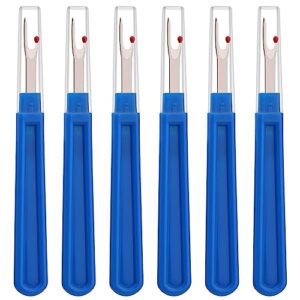
When your hand cramps after the first hour of ripping seams, you need a grip that won’t quit on you. This six-piece set uses soft rubber coatings and contoured grips shaped to fit your natural grasp, so pressure points vanish even during marathon sessions.
Each tool runs four to five inches long—just right for control without fatigue. You’ll find textured surfaces that stay secure when your fingers sweat, plus ambidextrous designs that work whether you’re left- or right-handed.
| Best For | Sewers and crafters who spend hours ripping seams and need tools that won’t leave their hands aching by the end of a project. |
|---|---|
| Material | Metal & Plastic |
| Blade Type | Sharp Metal |
| Handle Design | Ergonomic Rubber Grip |
| Primary Use | Seam & Hem Removal |
| Quantity | 6 Pieces |
| Safety Feature | Red Round Mini Ball |
| Additional Features |
|
- Six different tools give you options for tight spots, heavy fabric, and delicate work
- Rubber grips stay comfortable even when your hands get sweaty during long sessions
- At $6.19 for the whole set, you get backup tools without breaking the bank
- The ergonomic shape might not fit every hand size comfortably
- Some sets arrive with the protective ball missing from the forked end
- If you want one premium ripper instead of multiple budget ones, this isn’t it
10. Anchor Seam Ripper Clipper Tool
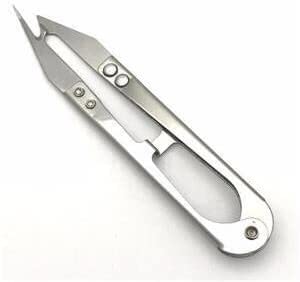
This spring-action tool combines seam ripping and thread clipping in one four-inch frame, so you won’t juggle multiple tools mid-project. The angled stainless steel blade cuts through heavy upholstery seams without snagging fabric, while spring tension reduces hand strain during long sessions.
You’ll appreciate the ergonomic grip that stays comfortable through extended use. The built-in clipper trims thread ends immediately after cutting, streamlining your workflow. Just don’t twist it while working—some users report the mechanism can separate under torque.
| Best For | Sewers and crafters who need a dual-purpose tool for quickly removing seams and clipping threads without switching between separate tools. |
|---|---|
| Material | Metal |
| Blade Type | Angled Metal |
| Handle Design | Ergonomic Spring Action |
| Primary Use | Seam Ripping & Clipping |
| Quantity | 1 Piece |
| Safety Feature | None Specified |
| Additional Features |
|
- Spring-action design reduces hand fatigue during long sewing sessions
- Angled blade makes it easy to rip seams without damaging fabric
- Combines seam ripper and thread clipper in one compact tool
- Can pop apart if twisted during use
- Blade may not be sharp enough for some users’ needs
- No protective case included for the sharp tip
Key Features of Upholstery Seam Rippers
Not all seam rippers are built the same, and when you’re tackling upholstery work, you need tools that won’t quit halfway through a tough job. The right features can mean the difference between a smooth repair and a frustrating fight with stubborn stitches.
Here’s what separates professional-grade upholstery seam rippers from basic sewing tools.
Ergonomic Handle Designs
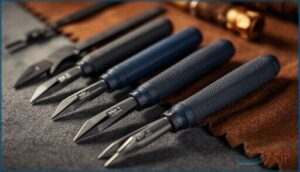
You’ll slash through old upholstery faster when your Seam Rippers feature proper Grip Ergonomics. Look for Ergonomic Grips with diameters between 14 and 20 millimeters—they deliver User Experience without hand cramping.
Comfort Designs matter for Upholstery Tools, especially when removing heavy-duty seams. Handle Materials like rubberized coatings follow Ergonomic Principles by absorbing impacts and preventing slippage.
Your Upholstery Seam Ripper becomes an extension of your hand with textured surfaces that boost friction up to 50 percent. For additional insight, review the importance of to further understand ideal grip and comfort.
Check out when to use a seam ripper in sewing for hands-on tips about choosing tools with the right handle design for your projects.
Blade Sharpness and Durability
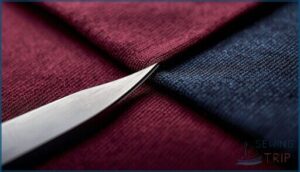
Sharp Blades with proper Edge Retention cut through upholstery without snagging. Blade Geometry matters: narrow angles pierce thick fabrics faster, while micro bevels sustain edges longer. Material Selection and Sharpness Maintenance determine whether your Sewing Tools or Upholstery Tools stay effective through hundreds of seams.
Your Seam Rippers need high-carbon Stainless Steel construction—it balances hardness with corrosion resistance. Monitor Wear Monitoring by checking for shiny spots that signal dulling.
Protective Features to Prevent Fabric Damage
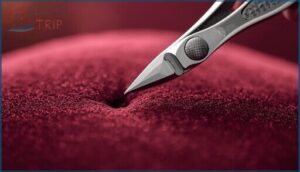
Once you’ve got a durable blade, you need Protective Edges and Blade Guards that let you work fearlessly. Look for a Protective Ball at the hook tip—it glides under threads without snagging upholstery fibers. Safety Features like rounded ends and self-retracting blades give you control over Damage Prevention. Your Fabric Safeguards include non-slip grips and guarded heads that shield sensitive textiles during every cut.
- Protective Ball technology shields velvet and suede from accidental punctures
- Blade Guards snap closed between cuts, preventing fabric contact during storage
- Rounded tips let you master tight corners without crushing nap direction
- Self-retracting mechanisms give you command over blade exposure depth
- Non-slip grips maintain your precision angle on thick leather and vinyl
Materials Suitable for Heavy-duty Use
Protection means nothing if your tool bends when you’re slicing through double-stitched leather. Heavy-duty seam rippers demand material strength from metal alloys like carbon steel and stainless steel. Carbon steel delivers tensile strength up to 2000 MPa, while stainless resists workshop humidity and maintains sharp blades longer. Tool durability comes from hardened alloy construction paired with ergonomic grips that won’t crack under pressure.
| Material | Key Advantage | Best Application |
|---|---|---|
| Carbon Steel | High tensile strength (400-2000 MPa) | Dense upholstery stitching |
| Stainless Steel | Corrosion resistance, edge retention | Humid workshops, leather work |
| Tool Steel (D2/M2) | Maintains hardness, resists chipping | Repeated heavy fabric cutting |
| Titanium Alloy | Strength-to-weight ratio | Extended use without hand fatigue |
| Hardened Low Alloy | Balanced toughness and wear resistance | Multi-layer upholstery projects |
Choosing The Right Seam Ripper for Upholstery
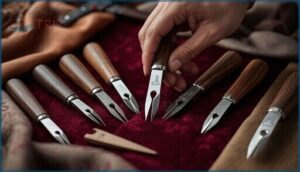
Not all seam rippers are created equal, especially when you’re tackling heavy-duty upholstery work. The right tool can save you hours of frustration and protect expensive fabrics from accidental damage. Here’s what you need to keep in mind before making your pick.
Manual Vs. Electric Seam Rippers
You’ll face two paths when choosing seam rippers for upholstery repair: manual tools that give you complete control, or electric models that power through heavy-duty seam removal. Each brings distinct advantages to your upholstery tools arsenal.
Manual seam rippers deliver:
- Precise manual control for delicate fabric work
- Lower electric costs with no batteries required
- Enhanced ripper safety through finger-guided blade pressure
- Exceptional tool durability with widely available replacement blades
- Maximum portability for any sewing tools kit without charging hassles
When considering options, it’s helpful to review available to suit a wide range of sewing needs.
For those working with woven fabrics, exploring techniques for finishing seam edges with pinking shears can complement your seam ripper toolkit perfectly.
Size and Grip Considerations
Your hand’s natural span determines which seam rippers become trusted allies. Ergonomic grips between 8.5 and 9.5 cm match larger hands for secure grip sizes, while slim profiles cause slipping during demanding upholstery tools work.
Look for contoured finger placement that guides your hand naturally, and soft rubberized surfaces that deliver hand comfort and wrist support even when sharp blades tackle stubborn seams.
Fabric protection starts with control.
Compatibility With Thick Fabrics
Canvas, denim, and leather demand stubby blade use to slice through dense layers without snagging. Reinforced shafts keep your heavy-duty seam ripper stable when removing thick upholstery stitches, while serrated blade benefits include grabbing multiple thread layers cleanly.
Tempered edges on furniture restoration tools resist dulling from hidden staples, giving you consistent cutting power through every stitch remover tool pass on demanding upholstery tools projects.
Versatility for Various Upholstery Tasks
You’ll face everything from narrow piping gaps to foam-backed vinyl, so your seam ripper needs serious adaptability. Interchangeable tips let you swap between precision intra-seam work and broader lifting without grabbing a second tool.
- Heavy fabric adaptability handles canvas and dense foam layers in one pass
- Tight space access reaches armrest crevices and under-cushion seams cleanly
- Multi-layer cutting slices through fabric and batting without blade flex
- Interchange systems switch blade shapes for varied stitching removal tasks
- Furniture restoration tools with replaceable edges maintain performance through upholstery repair and restoration projects
Proper Use and Maintenance Tips
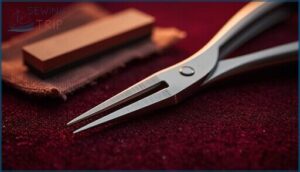
Knowing how to use your seam ripper correctly makes all the difference between clean work and torn fabric. Regular maintenance keeps your tool sharp and reliable when you’re tackling heavy upholstery projects.
Let’s cover the essential techniques and care practices that’ll help you work faster and protect both your materials and your investment.
Safe Seam Removal Techniques
You don’t want to rush through stitch removal and end up gouging your fabric—work slowly in short strokes to keep sharp blades from slicing deeper layers. Target the stitch line parallel to your seam, lifting threads at a shallow angle for damage minimization. If you feel resistance, stop immediately and adjust your approach.
| Technique | Why It Works |
|---|---|
| Stabilize fabric with clamps | Prevents shifting during thread lifting |
| Keep blade perpendicular | Minimizes snagging on canvas or leather |
| Work in controlled motions | Protects upholstery tools from breakage |
| Use safety ball protection | Guards foam and padding during seam cutting |
Cleaning and Blade Care
Sharp blades don’t stay that way without your attention—rinse yours with warm water after heavy use to clear pitch and fibers, then dry immediately to stop rust. Run a fine honing stone along the edge to maintain sharpness, wipe away metal filings, and coat stainless steel surfaces with light machine oil.
Cleaning solutions like mild dish soap protect fabric protection features without corroding your sewing tools.
Storage and Protection
Keeping your seam ripper in top form means protecting that blade from damage. Store yours with the clear plastic cap in place and tuck it into a dedicated storage case away from moisture and other tools.
- Use a padded zipper pouch near your workbench to prevent blade contact
- Keep blade guards or protective ball covers locked on when not cutting
- Store in vertical slots to avoid bending or dulling the edge
- Apply light oil monthly to metal surfaces for rust prevention
- Label storage cases with maintenance dates for easy tracking
Proper fabric protection starts with tool safety—your handle designs and protective materials work together to keep both your upholstery and your hands safe.
When to Replace Your Seam Ripper
Even with careful ripper maintenance, your tool won’t last forever. Watch for these replacement signs: a dull blade that snags fabric instead of slicing cleanly, a loose or missing protective ball, or visible rust compromising tool durability. When blade sharpness fades after hundreds of stitches, seam quality suffers, and repair work becomes frustrating—time for a new sewing tool.
| Wear Signal | Impact on Seam Quality | Action Needed |
|---|---|---|
| Rounded blade tip | Missed threads, rework required | Replace immediately |
| Wobbly pivot joint | Uneven cuts, fabric damage risk | Replace tool |
| Visible corrosion | Reduced strength, fabric stains | Replace blade or unit |
Upholstery Applications and Expert Tips
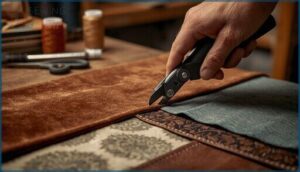
You’ve got the right tool—now it’s time to put it to work. Upholstery projects demand more than just ripping seams; you need the right approach to tackle thick fabrics, stubborn stitches, and delicate materials without causing damage.
Here’s how to master your seam ripper across different upholstery scenarios and work smarter, not harder.
Removing Old Upholstery Stitches
You can’t just yank old stitches out—that’s how you tear foam or ruin fabric alignment. Slip your seam ripper’s sharp point under each thread carefully, working from edge to center for damage prevention and proper fabric protection. Cut only what holds the material to the backing, preserving original seams for reupholstery success.
Master these upholstery tools techniques for impeccable stitch removal:
- Use a fine-blade seam ripper to slip beneath stitching without piercing padding or underlying layers
- Remove thread one stitch at a time from outer edges toward the center to maintain fabric tension
- Inspect for waxed linen or nylon thread types that require repeated passes with your ripper
- Slide scrap fabric under seams during thread removal to protect the outer upholstery surface
- Check surrounding areas for hidden staples or tacks before continuing your stitching removal process
Working With Heavy Fabrics and Leather
Heavy duty tools matter when you’re wrestling with canvas, denim, or full-grain leather—these beasts demand sharp, sturdy seam rippers for stitch removal without snagging. Work perpendicular to the seam using controlled motions, not hacking at it.
Upholstery tools designed for fabric thickness above 1.5 millimeters give you material selection confidence, fabric protection precision, and the sewing tools muscle you need for leather care mastery.
Tips for Minimizing Fabric Damage
You’ll master fabric protection and damage control by cutting only thread strands—never fabric itself. Keep your blade at a shallow angle during stitch removal to prevent textile repair nightmares.
Replace dull seam rippers immediately; they force excessive pressure that tears fibers. For seam safety, use cutting techniques that work one stitch at a time, and always secure your workpiece to prevent slips that cause fabric damage.
Enhancing Efficiency in Upholstery Projects
Boost your workflow optimization by organizing upholstery tools in labeled bins and keeping seam rippers within arm’s reach. Smart project planning cuts time management headaches—batch similar tasks and use templates for common patterns.
Store sewing tools and accessories where you can grab them fast, and your fabric protection efforts won’t slow you down. These efficiency strategies transform DIY upholstery projects from chaotic to controlled.
Frequently Asked Questions (FAQs)
What is better than a seam ripper?
Don’t cut corners—sometimes precision scissors or specialized thread zippers actually outperform traditional seam rippers for certain fabric repair tasks, especially when you’re working with delicate materials or need cleaner cuts in upholstery projects.
How to make a homemade seam ripper?
You can craft your own seam ripper by shaping a hardened steel blade to a fine point, securing it into a sturdy handle, and adding a protective ball tip to guard fabric during use.
Can seam rippers cut through industrial upholstery thread?
Think of industrial upholstery thread as the heavyweight champion—standard seam rippers won’t cut it.
You need heavy-duty tools with reinforced blades rated HRC 58-62 for proper thread cutting and fabric safety during repair work.
How do you sharpen a dull seam ripper?
You can restore a dull seam ripper by using 400 to 600 grit sandpaper at a shallow angle, sharpening both sides evenly with smooth strokes, then deburring gently to achieve precision honing.
Are there seam rippers specifically for vinyl fabrics?
Yes, vinyl seam rippers exist with protective caps and blunt tips that shield slick surfaces from scratches. Their shallow blade angles and non-slip ergonomic grips give you total control over delicate vinyl upholstery work.
Whats the difference between upholstery and sewing rippers?
Upholstery rippers pack heavier blades and sturdier grips to power through thick fabrics and multiple layers.
Sewing rippers stay lighter with finer points, targeting delicate garment seams where precision trumps brute force.
Conclusion
A furniture restorer once saved a 1940s velvet settee by using a sharp, ergonomic ripper instead of forcing a utility blade through aged seams. The difference? Zero fabric tears.
Your choice of seam rippers for upholstery determines whether you preserve or destroy irreplaceable materials. Invest in tools built for precision—sharp blades, comfortable grips, and protective features that match your fabric weight.
The right ripper doesn’t just remove stitches; it protects your craftsmanship and ensures every project ends successfully.