This site is supported by our readers. We may earn a commission, at no cost to you, if you purchase through links.
Halfway through a beaded Elizabethan bodice, your thread snaps for the third time, and the culprit isn’t your tension dial — it’s a warped plastic bobbin flexing under pressure.
Costume construction pushes machines through heavy brocades, structured boning, and hours of continuous stitching that ordinary garment sewing never demands.
Choosing bobbins for costume making means weighing heat resistance, capacity, and machine compatibility against the specific stresses your build will face.
Get it wrong, and you’re troubleshooting skipped stitches mid-fitting instead of finishing your hem.
Get it right, and your machine combats velvet, vinyl, and everything between without complaint.
What follows breaks down which bobbins actually earn their keep on a costumer’s worktable.
Table Of Contents
Key Takeaways
- Metal bobbins outperform plastic under the heat, heavy fabrics, and marathon stitching sessions typical of costume construction, resisting warping, corrosion, and fatigue that plastic can’t withstand.
- Matching bobbin class and material to your specific machine—whether Class 15, L-style, top-loading, or a proprietary European brand—prevents the tension and timing problems that ruin seams mid-project.
- Transparent plastic bobbins let you monitor thread levels at a glance, which speeds up color changes and detail work but sacrifices the durability metal offers for heavy fabrics.
- Pre-wound bobbins save valuable time during tight deadlines by delivering consistent tension without the hassle of hand-winding, making them ideal for embroidery-heavy or high-volume costume production.
Why Bobbin Choice Matters for Costumes
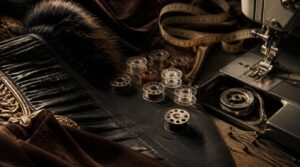
When you’re building costumes rather than quilting a blanket, your bobbin choice carries real consequences for the finished garment. Corsetry, capes, and layered fur trims all put different demands on that small spool, from durability to visibility to sheer stitching muscle.
Before picking a bobbin for that corset boning or heavy fur trim, it helps to brush up on how a sewing machine bobbin actually works so tension and thread type match the job.
Here’s what actually matters when you’re picking one for your next build.
Metal Vs Plastic Durability
Since costume projects often mean marathon sessions under hot studio lights, your bobbin material determines whether stitching holds up. Metal bobbins resist heat tolerance limits, corrosion, and surface scratches far better than plastic.
- Better fatigue life under cyclic stress
- Higher heat tolerance limits
- Great resistance to corrosion
- Scratch-resistant surfaces
- No thermal expansion issues affecting fit
While metal offers durability, you can also consider plastic weight reduction for lighter machine components.
Plastic bobbins stay corrosion-free but soften faster near heat sources on your sewing machine.
Weight and Stitching Smoothness
Weight isn’t just about durability—it directly shapes stitch formation stability. Metal bobbins add fabric feed pressure, keeping stitch density balanced on heavy costume layers. Lighter plastic bobbins reduce this pressure, which can invite tension ripple effects if your thread tension isn’t calibrated properly. That’s why matching bobbin weight to fabric weight keeps seam surface friction—and your sewing machine’s performance—working in your favor.
Thread Visibility for Detail Work
Beyond weight, your bobbin choice affects thread visibility—transparent plastic bobbins let you monitor color contrast against fabric instantly. High contrast between bobbin thread and fabric sharpens edge definition, while metallic threads under harsh lighting scatter glare, blurring intricate motifs.
Pair proper tension alignment with a 45-degree viewing angle, and stitching precision on delicate appliqué work becomes immediately, satisfyingly visible.
Handling Heavy Costume Fabrics
Once your eye’s trained on thread visibility, the next test is brute mechanical demand: brocade and heavy taffeta over 400 g/m² push sewing bobbins hard. Metal bobbins handle that torque without warping.
Lengthen your stitch, ease tension slightly, size up to a 100/16 needle, and stabilize layers with tear-away backing—this bulk management keeps seams flat and ready for professional finishing.
Matching Bobbins to Your Machine
Before you buy a single bobbin, you need to know exactly what your machine takes, because a fraction of an inch off and you’re fighting tension all afternoon. Every sewing machine has its own quirks, from bobbin case style to how it loads, and costume work leaves no room for guesswork. Here’s what to check before you commit to a size.
Class 15 Bobbin Specs
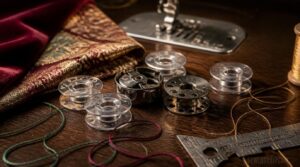
Picture a 13/16-inch flat-flanged disc with flared sides that seat snugly into most drop-in cases—that’s your Class 15. Standard plastic versions run about 11mm tall, 20.5mm across, weighing 1.2 to 1.5 grams. The cylindrical center rotates smoothly under tension, while security notches lock winding in place.
Choose polycarbonate for lighter stitching or steel for rigidity under heavier costume fabrics.
L-style Bobbin Specs
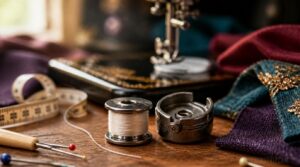
Slimmer than Class 15, the L-style bobbin measures 13/16 inch across and 11/32 inch tall, holding roughly 110 yards of thread. That capacity suits everyday costume seams without the bulk of M-style spools.
- Fits low-clearance bobbin cases
- Reduces lateral movement while stitching
- Available in plastic or metal
- Common on select Singer and Brother models
Winding consistency matters here—uneven batches throw off tension fast, so check your sewing machine’s manual before buying replacements.
Top-loading Drop-in Systems
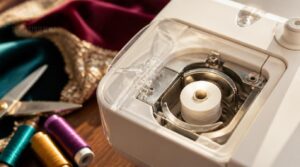
Flip the machine open and you’ll find the bobbin sitting right on top—no digging beneath the needle plate.
This toploading bobbin system relies on vertical orientation for smoother thread feed and steadier hook timing. Clear covers let you check thread levels mid-project.
Stick with plastic bobbins here to keep tension discs interacting properly, and clear lint regularly; buildup around the case throws off accessibility fast.
European Brand Compatibility
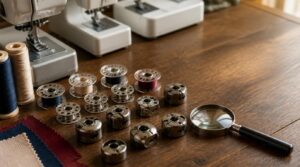
Pfaff, Viking, and Bernina don’t play by Class 15 or L-style rules—their proprietary bobbin cases demand brand-matched replacement bobbins.
Before buying, check three things:
- EU compliance standards stamped on packaging
- European safety marks confirming certified materials
- Machine compatibility against your specific model
Regional branding authenticity and labeling directive alignment mean genuine European stock, whether metal or plastic bobbin, ships through proper cross-border distribution channels.
Avoiding Tension and Timing Issues
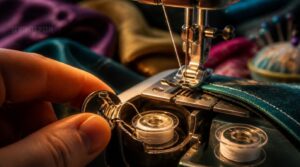
A wrong-sized bobbin throws timing off before you’ve sewn a single stitch.
Align the thread path from spool to needle, keep the bobbin case lint-free, and match needle to fabric weight. Run a tension calibration test on scrap fabric first.
Whether using plastic bobbins or prewound bobbins, consistent thread tension protects your costume seams from skipped stitches and puckering.
Top Bobbins for Costume Sewing
Once you’ve matched your machine’s bobbin style, the next step is picking a brand and material that actually performs under a costume shop’s demands.
Some options favor precision stitching on delicate trims, while others hold up through layers of heavy fabric without warping.
Here’s a closer look at eight bobbins worth having in your sewing kit.
1. Singer Class 15 Transparent Bobbins
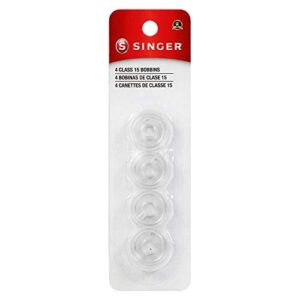
Model number 02134 hits the sweet spot for costume work: clear plastic construction lets you monitor thread levels mid-seam without stopping. At 0.51 x 1.89 x 5.87 inches, it’s built for Class 15 machines—Singer, Brother, Elna—and fits standard rotating cases with flat top-and-bottom geometry.
Wind it fully before loading; partial winds cause snarling that’ll wreck delicate trims. Skip it if the bobbin’s chipped or warped—never mix sizes or classes, since mismatches strain tension discs and invite skipped stitches on your costume seams.
| Best For | Costumers, quilters, and clothing makers who want a reliable Class 15 bobbin for Singer, Brother, or Elna machines. |
|---|---|
| Material | Plastic |
| Quantity | 1 |
| Machine Compatibility | Singer, Brother, Elna |
| Weight | 0.32 oz |
| Model Number | 02134 |
| Thread Monitoring | Transparent |
| Additional Features |
|
- Transparent design lets you monitor thread levels without stopping mid-seam
- Flat top and bottom shape supports consistent, even winding
- Durable construction handles frequent use across garment and quilting projects
- Must be fully wound before use, or tension and tangling issues can occur
- Not usable if the bobbin is chipped or bent, requiring careful inspection
- Compatibility isn’t universal, so checking your machine manual first is a must
2. Brother Clear Plastic Sewing Bobbins
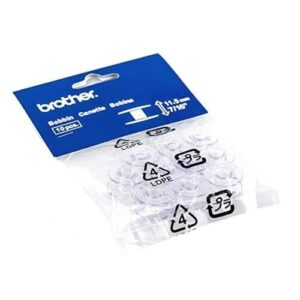
Sold as SA156 and packaged ten to a set, these bobbins target Brother’s embroidery line—PE770, XL2600i, SE400—though most Class 15 machines will accept them without fuss. The security notch keeps thread from slipping mid-wind, a small detail that saves you from lopsided tension on dense costume topstitching.
At 11.5mm deep, capacity runs generous enough for color-heavy embroidery without constant reloading. Transparent housing means you’re never guessing how much thread’s left mid-motif, which matters when deadlines don’t leave room for surprises.
| Best For | Embroiderers and sewists who own compatible Brother machines (like the PE770, XL2600i, or SE400) and want a reliable way to pre-wind and stock multiple thread colors for quicker project turnaround. |
|---|---|
| Material | Plastic |
| Quantity | 10 |
| Machine Compatibility | Brother PE770, XL2600i, SE400 |
| Weight | 0.288 oz |
| Model Number | SA156 |
| Thread Monitoring | Transparent |
| Additional Features |
|
- Transparent design makes it easy to monitor thread levels at a glance
- Security notch keeps thread winding consistent and prevents slipping
- Comes in a pack of 10, making it convenient to keep several colors ready to go
- Only works with specific Brother models, so you’ll need to confirm compatibility first
- Plastic construction can crack or break if dropped on a hard surface
- Small size (1 x 1 x 1 inches) means they’re easy to misplace among sewing supplies
3. Singer Class 66 Metal Bobbins
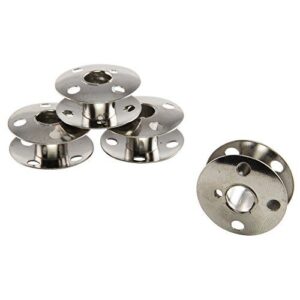
Restoration projects on vintage red-eye Singers demand metal, and this is where Class 66 shines: 20.5mm diameter, 10.8mm height, part number 172222, built for machines that plastic simply wasn’t designed to serve.
Domed flanges stabilize thread delivery through long costume seams, resisting the heat buildup that warps lesser bobbins. Pair them strictly with a metal Class 66 case—mixing materials throws tension off balance, forcing recalibration mid-project when you least want it.
| Best For | These metal Class 66 bobbins are best for owners of vintage Singer machines (like the 66-1 through 66-18, 99CL, 185, 192, 201, 609, and 717) who need durable, direct-fit replacement parts for restoration or regular sewing use. |
|---|---|
| Material | Metal |
| Quantity | 4 |
| Machine Compatibility | Singer 66-1 to 717 |
| Weight | 13.61 g |
| Model Number | 2139 |
| Thread Monitoring | Not visible |
| Additional Features |
|
- Durable metal construction that holds up well in older, heat-prone machines
- Direct replacement fit for a wide range of classic Singer models
- Domed flanges help keep thread delivery steady during long seams
- Must be paired with a matching metal bobbin case, or tension issues can occur
- Requires checking your machine’s manual first to confirm correct sizing
- Partially wound bobbins shouldn’t be topped off, so leftover thread may go to waste
4. Singer Class 66 Transparent Bobbins
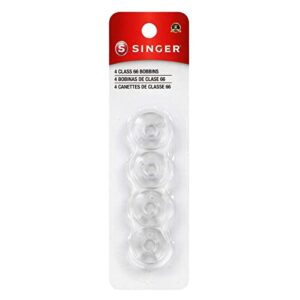
Not every project calls for metal’s heft, though. When you’re switching thread colors mid-costume—chasing down that last bobbin of gold trim thread—transparent Class 66 bobbins save real time by letting you see remaining yardage at a glance.
Sold in packs of four or five, they suit lighter garment work and quilting details where visibility matters more than brute durability. Just keep them fully wound before loading; partial winds invite tangling you don’t want mid-seam.
| Best For | Sewers and quilters using older Singer Class 66 or select drop-in machines who frequently switch thread colors and want to monitor bobbin thread levels at a glance. |
|---|---|
| Material | Plastic |
| Quantity | 4 |
| Machine Compatibility | Older Singer, drop-in |
| Weight | 0.32 oz |
| Model Number | 2141 |
| Thread Monitoring | Transparent |
| Additional Features |
|
- Transparent design makes it easy to track remaining thread without stopping to check
- Durable plastic construction holds up well to regular use across garment, quilting, and décor projects
- Curved Class 66 shape ensures a proper fit for compatible older Singer and drop-in models
- Not compatible with Bernina, Elna, Husqvarna/Viking, Pfaff, or Janome/New Home machines
- Must be fully wound before use, or tension and tangling issues can occur
- Compatibility isn’t universal, so checking your machine manual is required before purchase
5. Janome Genuine Plastic Bobbins 10 Pack
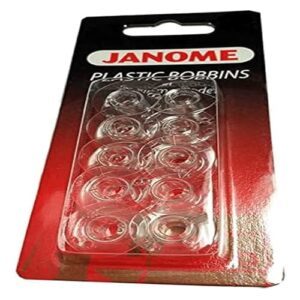
For sheer reliability across your machine roster, genuine Janome bobbins (part number 200122614) are hard to beat. This 10-pack of clear plastic bobbins fits most top and front loading Janome models—excluding the MB4, MB7, and 1600P—and keeps thread visibility high for color-matching trim work.
Each bobbin winds evenly, reducing tension irregularities that plague budget knockoffs. Store them somewhere dry; plastic warps under humidity, which throws off stitch consistency exactly when you can’t afford it, mid-hem, deadline looming.
| Best For | Sewists who own multiple top or front loading Janome machines and want genuine, reliably-tensioned bobbins for everyday and detail work like color-matching trim. |
|---|---|
| Material | Plastic |
| Quantity | 10 |
| Machine Compatibility | Janome top/front load |
| Weight | 0.01 oz |
| Model Number | 200122614 |
| Thread Monitoring | Transparent |
| Additional Features |
|
- Genuine Janome replacement parts ensure proper fit and stitch tension
- Clear plastic design makes it easy to monitor thread levels and colors at a glance
- Pack of 10 offers great value for organizing multiple thread colors
- Not compatible with Janome models 1600P, HD9, MB4, and MB7
- Must match the correct size and type, or risk damaging your machine
- Plastic construction can warp if stored in humid conditions, affecting stitch consistency
6. Steel bobbins for Bernina machines
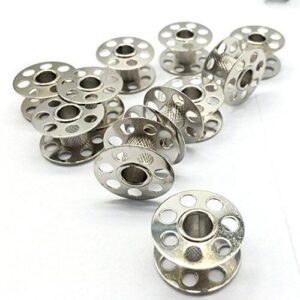
Bernina owners know a truth other machines rarely demand: steel isn’t optional, it’s proprietary. A 20-pack (model 4337000022, replacement part 0115367000-B) spins freely in cases 0015347200 and 0015347301, covering everything from the 120 through the 1530 series, plus Activa 210, B215, and B330.
Nickel plating fights corrosion; the tight center keeps velvet and brocade seams from fluttering under high torque. Check diameter—22mm, 5.5mm thickness—before buying, since mismatched sizing throws off timing fast.
| Best For | Bernina owners with 120 through 1530 series machines (including Activa 210, B215, and B330) who sew frequently and want a reliable bulk supply of properly fitting steel bobbins on hand. |
|---|---|
| Material | Steel |
| Quantity | 20 |
| Machine Compatibility | Bernina 120-1530 |
| Weight | 0.64 oz |
| Model Number | 4337000022 |
| Thread Monitoring | Not visible |
| Additional Features |
|
- High-quality steel construction spins freely within compatible bobbin cases
- Bulk pack of 20 offers great value and keeps you stocked up
- Fits a wide range of Bernina models, from vintage 120 series to modern 1530
- Only compatible with specific bobbin cases (0015347200 and 0015347301), so double-check your machine first
- Not a universal fit—won’t work with non-Bernina machines or incompatible models
- Limited to one replacement part specification, so no flexibility if your machine needs something different
7. Gutermann Sulky Pre Wound Bobbins
Skip the winding altogether when deadlines close in—Gutermann Sulky’s pre-wound bobbins arrive ready, loaded with 60-weight polyester that resists lint buildup during long embroidery runs. Each tube holds four bobbins, sized for standard L or SA cases, so tension stays consistent across satin stitches and appliqué work.
The low-lint construction keeps bobbin cases cleaner through costume production marathons, while abrasion resistance holds up against dense, sequined designs without fraying. It’s a smart efficiency trade for anyone juggling multiple embroidery sessions.
| Best For | These pre-wound bobbins are best for machine embroiderers who want a fast, reliable setup for heavy-duty projects that need to withstand frequent, high-temperature washing. |
|---|---|
| Material | Polyester |
| Quantity | 5 |
| Machine Compatibility | Universal embroidery |
| Weight | N/A |
| Model Number | N/A |
| Thread Monitoring | Not visible |
| Additional Features |
|
- Comes pre-wound, saving setup time before embroidery projects
- Withstands washing up to 95°C, making it ideal for durable, heavy-duty items
- Delivers consistent tension throughout machine embroidery work
- Only available in fixed packs of five bobbins
- Requires precise color matching for projects needing an exact thread match
- Limited to 100% polyester, which may not suit projects needing natural fibers
8. Dritz Class 15 Plastic Bobbins
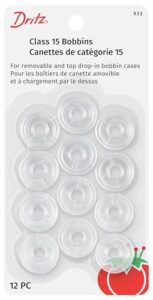
Twelve bobbins per pack means you’re rarely caught mid-seam without a spare, and Dritz built these specifically for removable and top drop-in cases. They fit Singer, Baby Lock, Brother, Riccar, Simplicity, and White machines running standard Class 15 hubs—handy when your costume shop juggles several brands.
The clear plastic lets you monitor thread supply through dense topstitching, while the lightweight profile eases fabric feeding on multi-layer builds. Just inspect edges for burrs before loading; nicked plastic disrupts tension fast.
| Best For | costume shops, tailors, and home sewers who run multiple Class 15 machine brands and need reliable spare bobbins on hand. |
|---|---|
| Material | Plastic |
| Quantity | 12 |
| Machine Compatibility | Singer, Baby Lock, Brother, more |
| Weight | 0.32 oz |
| Model Number | 933 |
| Thread Monitoring | Transparent |
| Additional Features |
|
- Twelve-pack keeps spares ready for busy or multi-layer projects
- Clear design makes it easy to monitor thread supply at a glance
- Works across several major brands, including Singer, Brother, and Baby Lock
- Compatibility isn’t universal, so machine specs must be checked first
- Plastic edges may have burrs that require inspection before use
- Imported manufacturing may be a drawback for some buyers
Pre-Wound Bobbins for Faster Projects
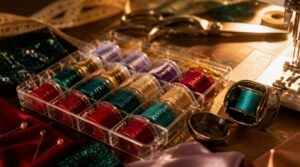
When a costume deadline is looming, winding your own bobbins is often the first task to sacrifice. Pre-wound options let you skip that step entirely, handing you consistent tension without the guesswork. Here’s what to know before you build your own stash of ready-to-sew colors.
Saving Time on Deadlines
Every hour spent hand-winding bobbins is an hour stolen from actual costume construction. Prewound bobbins eliminate that bottleneck entirely, feeding straight into task batching efficiency and daily standup benefits when deadlines loom.
Every hour spent hand-winding bobbins is an hour stolen from actual costume construction
Stock plastic bobbins pre-filled in your key thread colors, and your sewing machine stays productive during crunch weeks—no mid-project scrambling, no broken momentum on cosplay construction deadlines.
Avoiding Uneven Tension Errors
Hand-wound bobbins vary thread pull with every rotation, but prewound bobbins deliver consistent tension from first stitch to last. That consistency matters more than most costumers realize—thread path alignment and needle thread consistency only hold up if your bobbin case feeds evenly.
Keep tension sensor calibration current, clear lint regularly, and mind humidity, since damp thread swells and throws off even the most reliable bobbin case.
Building a Color Library
A well-built color library turns guesswork into instant recall. Organize prewound bobbins using color coding systems tied to your fabric swatches, then verify shades through lighting simulation testing under stage conditions.
Pair physical storage with digital palette tools for cross-referencing. Smart swatch curation strategies and material texture matching keep your sewing accessories shelf efficient—turning your sewing supplies shop run into a quick, targeted errand.
Single-use Vs Rewinding Limits
Once your color library’s organized, the question becomes whether to rewind or replace.
Rewinding limits depend on bobbin material—plastic wears at the inner hub, causing wobble, while metal resists deformation longer. For precision costume stitching, track rewind counts and retire bobbins showing burrs.
Reused thread also risks contamination, so dedicate one spool for winding and keep fresh plastic bobbins ready for critical seams.
Choosing The Right Bobbin for Your Project
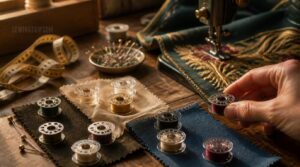
With all these bobbin types on the table, narrowing down your actual purchase still comes down to your specific project. Fabric weight, design complexity, and your machine’s quirks all pull you toward different answers. Here’s how to work through those factors before you buy.
Costume Fabric Weight Considerations
Weigh your fabric before you thread your machine. Fabric weight impact dictates bobbin performance directly:
- Under 150 g/m² — standard bobbins, light wind
- 150–300 g/m² — balanced tension, minimal adjustment
- Over 350 g/m² — heavy-duty bobbins, higher torque
Match thread weight to fabric density, mind drape movement, and watch for lint buildup on textured materials. Layered fabrics demand tighter bobbin tension throughout.
Detailed Vs Heavy-duty Designs
Once fabric weight sets your baseline, the real choice comes down to precision versus strength. Detailed work wants lightweight, dimensionally stable bobbins; heavy-duty sewing needs steel for load-bearing durability.
| Factor | Detailed Designs | Heavy-Duty Designs |
|---|---|---|
| Material | Lightweight, stable | Steel, reinforced |
| Maintenance | Frequent calibration | Periodic gear checks |
| Tension | Fine-tuned control | High-torque management |
Your bobbin cases should match this logic too.
Budget-friendly Bobbin Options
Costume budgets rarely stretch as far as ambition does, so stock smart. Plastic bobbins run 2 to 5 cents apiece in bulk—cheapest option going—while generic brands fit Class 15 and 66 machines reliably.
- Bulk plastic multipacks
- Generic Class 15 bobbins
- Clear thread-monitoring styles
- Reusable budget metal bobbins
- Pre-wound economy packs
Metal costs more but reduces vibration and lasts longer.
Machine-specific Buying Checklist
Ever bought bobbins that looked perfect but jammed on arrival? Before checkout, run this against your machine’s manual:
| Check | Why It Matters |
|---|---|
| Machine compatibility verification | Confirms bobbin case and needle system alignment |
| Winding density, flange integrity | Prevents tension shifts and thread slips |
| Component age tracking | Avoids brittle plastic or corroded metal |
Match your machines make and model to compatible options every time—guessing costs fabric and time.
Frequently Asked Questions (FAQs)
How do I know what bobbins I need?
Guessing your bobbin like guessing shoe size by eyeballing feet: risky. Check your machine’s manual first, confirm the bobbin class and model, then test scrap fabric before committing thread and time to your costume piece.
What do cosplayers use to make their costumes?
Cosplayers combine EVA foam and Worbla thermoplastic for armor fabrication, PVC for structural framing, spandex for stretch garments, and paints for weathering—while a reliable sewing machine with properly matched bobbins keeps every seam clean and durable.
What can I use instead of a bobbin?
Skipping bobbin cases entirely isn’t impossible: serger overlock stitching, hand-guided backstitching, or fusible webbing bonding all finish seams. Magnetic closures and decorative embellishment handle fastenings and accents your sewing machine’s bobbin mechanism would otherwise manage.
Is bobbin lace still made today?
Yes—modern lace practitioners keep bobbin lace alive through heritage skill training, pattern exchanges, and endangered craft revival efforts, preserving historical styles like Honiton and Bedfordshire while supplying contemporary lace fashion with authentic trims, collars, and bridal detailing.
Can bobbin lace tools be used for costume trims?
Picture a lace pillow bristling with dozens of wooden bobbins—that patience translates directly to costuming.
Handmade trim creation via traditional bobbin lace patterns yields custom edging no machine bobbin replicates, perfect for period pieces demanding authentic, one-of-a-kind textile craftsmanship.
How many bobbins does a large costume project need?
Budget 15 to 25 bobbins per fabric color, plus 10 for color palette planning, 5-8 specialty thread reserves, and 20% extra for parallel production—your sewing machine and bobbin cases stay stocked through batch sewing without mid-seam interruptions.
Do magnetic bobbins work for costume embroidery details?
Like a steady hand guiding a needle through velvet, magnetic bobbins deliver tension stability exactly where dense fabric and satin stitches demand it—reducing puckering, managing lint, and speeding color changes across your costume’s most detailed embroidery work.
Can pre-wound bobbins be rewound for reuse?
With correct winding tension settings and matching bobbin class, most sewing machine bobbins rewind fine—but check the bobbin’s condition first. Cardboard sides and magnetized centers rarely hold a reliable wind twice, so test for uneven stitches before trusting them to a project.
What causes bobbins to warp or develop burrs?
Wind too tight, store too hot, drop too often—each habit invites trouble. Winding tension errors create micro dents, heat-induced deformation softens plastic rims, and improper handling damage or poor storage environment conditions accelerate material fatigue, producing burrs that snag thread.
Conclusion
Yes, a five-dollar bobbin seems trivial—until a warped one derails your beading session at midnight. That small spool carries real consequences: tension, timing, and whether your seams survive a full day under stage lights.
Matching bobbins for costume making to your machine’s class isn’t fussy perfectionism; it’s the difference between a hem that holds through three acts and one that unravels backstage. Choose deliberately, stock a few spares, and your machine becomes a partner, not an obstacle, in every build.
- https://hoopingstation.com/blogs/news/types-of-bobbins-your-complete-guide-to-sizes-materials-and-machine-compatibility
- https://blog.wawak.com/post/bobbin-size-chart
- https://www.qualitysewing.com/blogs/news/all-about-bobbins
- https://www.servicethread.com/blog/common-bobbin-styles-for-industrial-sewing-machines
- https://aspenleitervacuum.com/sewing-machine-bobbins