This site is supported by our readers. We may earn a commission, at no cost to you, if you purchase through links.
abandoned sewing projects share one thing in common—the pattern was the wrong fit for the person making it. Not the fabric, not the machine, not the skills gap. The pattern. Choosing something too complex too soon creates a chain reaction: confusing instructions, wasted yardage, and a half-finished garment stuffed in a drawer.
Knowing how to choose sewing patterns for your skill level changes all of that. The right pattern keeps you moving forward, builds real technique, and actually gets finished. Whether you’re working through your first tote bag or eyeing your first zip-front jacket, matching the pattern to where you are right now makes the difference between momentum and frustration.
Table Of Contents
- Key Takeaways
- Why Pattern Choice Affects Success
- Assess Your Current Sewing Skills
- Decode Pattern Difficulty Ratings
- Match Projects to Your Experience
- Spot Beginner-Friendly Pattern Features
- Check Fabric and Technique Demands
- Choose Patterns That Help You Progress
- Frequently Asked Questions (FAQs)
- Conclusion
Key Takeaways
- The pattern you choose matters more than your fabric or skill gap — picking one that’s too complex, too soon, kills momentum before you finish cutting.
- Honest self-assessment beats optimism: know what you can already do confidently, then match your next pattern to that reality, not your goals.
- Difficulty labels vary by brand, so flip to the flat sketch and count the pieces — that line drawing tells you more than any "beginner" tag ever will.
- Build your progression by adding just one or two new techniques per project, and you’ll finish more, waste less, and actually enjoy the process.
Why Pattern Choice Affects Success
The pattern you choose can make or break your entire project — before you even cut a single piece of fabric. Getting that match right has a real impact on how often you finish what you start.
Pairing the right pattern with the right fabric for your skill level means fewer frustrating restarts and more finished pieces you’re proud of.
Here’s why it matters more than most beginners expect.
Building Confidence With Achievable Projects
Start small, and your confidence will follow. Choosing beginner friendly sewing projects with simple shapes and few pattern pieces is the foundation of stepwise skill building.
Set micro-goals you can finish in a weekend. Snap progress photos to keep a progress photo journal — it’s positive reinforcement you can actually see.
Celebrating small wins keeps you moving forward on your skill progression journey.
Reducing Wasted Fabric, Time, and Effort
Confidence is great — but it stings when you cut into beautiful fabric and the project falls apart. That’s where pattern selection criteria really pay off.
Choose minimal piece patterns with efficient cutting layouts, and you’ll waste less fabric from the start.
Look for standardized notion sets and simplified construction steps too.
Smart optimized fabric usage protects your time, your materials, and your momentum.
Finishing More Projects With Better Pattern Matches
Better pattern matches mean more finished projects on your shelf. When seam finishing techniques, thread tension control, and notion compatibility all line up with your current ability, you stop second-guessing and start sewing.
Selecting sewing patterns by skill level removes the guesswork — and that’s what keeps projects moving.
Grainline alignment tips and pattern scaling strategies feel manageable when the pattern isn’t fighting you.
Learning New Techniques Without Feeling Overwhelmed
Learning one new thing at a time keeps momentum alive. That’s the idea behind Microlearning Sessions — short, Focused Practice Loops of 15 minutes that prevent burnout.
Technique Chunking and Mental Reset Strategies let you absorb skills without spinning out. Progressive Skill Building works best when choosing sewing patterns by skill level, so Beginner-friendly pattern features guide you forward — not sideways.
Assess Your Current Sewing Skills
Before you pick a pattern, take an honest look at where you actually are as a sewist. Knowing your real skill level helps you choose projects you’ll finish — and enjoy.
Start by asking yourself these five questions.
Techniques You Already Sew Confidently
Think of your skill set as a toolkit — what’s actually in there right now? Before picking a pattern, take stock of what you can do without second-guessing yourself.
- Sewing straight seams with consistent topstitching consistency
- Installing zippers smoothly using proper zipper foot usage
- Placing buttonholes with accurate buttonhole placement
Choosing sewing patterns by skill level starts with honest self-assessment — not what you hope to do, but what you already do well.
Projects You Have Completed Successfully
Your finished projects tell you more than any skill quiz ever could. Look at your favorite finished items — that tote bag, the elastic‑waist skirt, those signature garments you actually wear.
Completed tote bags and finished skirt projects are real‑life examples of successful pattern matches. They show exactly where your skills sit and guide smart, confident pattern selection going forward.
Your Comfort With Fitting, Seams, and Closures
Knowing where you stand with fitting, seams, and closures helps you pick patterns that actually work for you. Ask yourself honestly:
- Can you sew clean, straight seams with consistent seam allowance?
- Do elastic waists and drawstring closures feel easy — or still tricky?
- Are basic fit adjustments manageable without frustration?
- Does your seam reinforcement hold up after washing?
Your answers reveal your real skill level.
How Many New Skills to Learn at Once
Two or three new techniques per project are your sweet spot. Push past that, and your error rate climbs fast — cognitive load management matters here. Technique batch size isn’t just a buzzword; it’s the difference between finishing confidently and unraveling halfway through.
Limit yourself to two or three new techniques per project, or your error rate will climb faster than your skills
Follow learning pace guidelines: one skill per session, spaced across days. That’s how skill progression actually sticks.
Signs You Should Repeat Simpler Patterns First
Sometimes a half-finished project says more than a finished one. If these signs sound familiar, step back to simpler patterns first:
- Frequent errors keep appearing on basic seams
- Stalled progress leaves projects untouched for weeks
- Unclear markings feel confusing, not just unfamiliar
- Long setup time and excess fabric scraps signal poor pattern-skill fit
Skill progression and building confidence through appropriate pattern choices beat rushing toward intermediate too soon.
Decode Pattern Difficulty Ratings
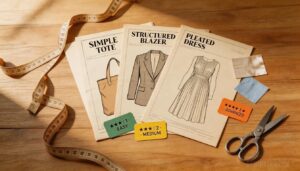
Pattern labels seem straightforward — but they’re not always what they appear. A "beginner" tag from one brand might feel like an intermediate challenge from another.
Here’s what ratings actually mean and how to read them with confidence.
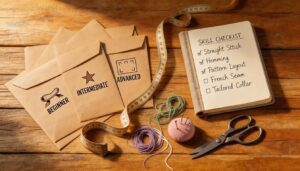
Beginner, Easy, Intermediate, and Advanced Labels
Most pattern brands use four core labels — Beginner, Easy, Intermediate, and Expert — to map difficulty against your skill tier.
Beginner sewing patterns stick to simple silhouettes and straight seams. Intermediate sewing patterns introduce zippers and darts. Expert sewing patterns demand tailoring and precise shaping.
This skill level rating context and brand terminology help you decode pattern difficulty rating before cutting a single thread.
Why Pattern Ratings Are Only Guidelines
Those labels are a starting point, not the whole story.
A pattern rated "easy" by one brand might hide collar stands or understitching that trips you up fast — that’s the reality of rating system limitations.
Hidden construction details, fabric-dependent difficulty, and personal skill perception all shape how hard a pattern actually feels. Understanding pattern difficulty ratings means looking past the label entirely.
What Pattern Envelopes and Product Pages Reveal
Once you look past the label, the pattern envelope itself becomes your best pattern difficulty guide.
The back panel shows yardage charts, size range, suggested notions, fabric width requirements, and construction notes — everything you need for choosing sewing patterns based on skill level.
Product pages go further, listing customer reviews and view-specific details.
Use them as your personal pattern envelope information checklist before buying anything.
How Line Drawings Show True Construction Complexity
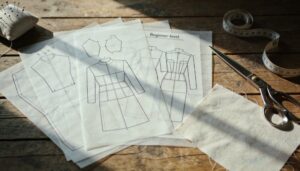
Line drawings are where the real story hides. Forget the label for a moment — flip to the flat sketch and count what you see.
Seam count, dart mapping, closure placement, and layered relationships between pieces all show up there.
Dense clusters of small pieces signal complex construction techniques.
Fabric orientation arrows tell you if cutting will be tricky.
That sketch doesn’t lie about pattern difficulty or skill level.
Why Brand-to-brand Difficulty Levels Can Vary
Not all beginner labels mean the same thing. One brand grades difficulty by technique alone, while another factors in piece count, notions, and hardware.
Brand Rating Systems differ enough that a beginner pattern from one company might include darts or curved seams — skills another brand considers intermediate.
Always check Piece Count Variability, Notion Requirement Differences, and Fabric Weight Guidance before trusting any label.
Match Projects to Your Experience
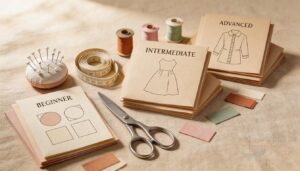
Picking the right project is just as important as picking the right pattern. Your experience level should guide what you try next — not what looks prettiest on the cover.
Here’s how to match your skills to the right type of project.
Best Beginner Projects for Early Success
Start with something that builds real confidence — tote bag basics, pillowcase projects, and mini bag patterns are perfect first wins. These beginner sewing patterns use easy, straight seams with minimal pieces.
A-line skirt patterns step things up slightly without overwhelming you.
fabric kit starter keeps your material choices simple.
Stick to patterns with a beginner-friendly pattern difficulty rating and a clear skill level label.
When to Move From Simple Items to Garments
You’ll know you’re ready for garments when the basics feel automatic — not just familiar.
Here are four signs it’s time to make the leap:
- You’ve cleared the Four Project Threshold — at least four finished items with clean, consistent seams.
- Your Straight Seam Accuracy holds reliably within a quarter inch.
- You’ve practiced each skill separately — that’s the Technique Isolation Rule.
- You’ve done a Muslin Fit Test before cutting fashion fabric.
These Beginner-friendly pattern features and gradual steps are your clearest Garment Complexity Cue.
Intermediate Projects With Darts, Facings, and Zippers
Once you’ve mastered straight seams, intermediate sewing patterns open up real garment shaping — and that’s where things get exciting.
| Technique | What to Expect |
|---|---|
| Darts | Dart grading tapers to 0.5 cm at the top |
| Facings Reinforcement | Interfacing prevents warping and adds clean edges |
| Invisible Zipper Installation | Stitch within 1 mm of teeth for neat results |
| Fabric Grain Alignment | Stable cottons control bias seam allowance drift |
Advanced Projects With Tailoring and Detailed Shaping
Sophisticated sewing patterns are a different world — one where garment construction complexity demands real precision.
Princess Seam Design contours your bust and waist with fitted, shaped seams. Boning Integration strengthens structured bodices. Sleeve Head Shaping creates smooth shoulder curves, while Collar Lapel Construction uses graded interfacing to hold crisp edges. Canvas Interfacing adds weight and form.
These tailoring methods reward patience and careful technique.
Choosing Patterns Based on Your Sewing Goals
Your goals should steer every pattern decision you make. Goal-oriented selection means choosing patterns that build toward a real wardrobe — not just random projects.
Seasonal wardrobe planning helps you prioritize what you actually need.
Balance functional aesthetic balance with budget-friendly patterns and sustainable fabric use to avoid waste. Choosing project type based on goals keeps your progress focused and your motivation strong.
Spot Beginner-Friendly Pattern Features
Not all beginner-friendly patterns look the same, but they do share a handful of common traits. Once you know what to look for, spotting a good starting pattern gets much easier.
Here’s what to check before you commit.
Fewer Pattern Pieces and Simpler Silhouettes
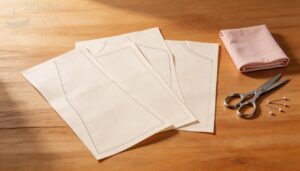
Fewer pattern pieces make a real difference when you’re starting out. A low piece count — think four or fewer — means reduced seam allowances to press, less cutting stress, and more efficient fabric nesting on your layout.
Simple designs with minimal darts usage and straight line cutting keep beginner patterns manageable. This simplified piece count is your best pattern difficulty guide.
Straight Seams and Gentle Curves
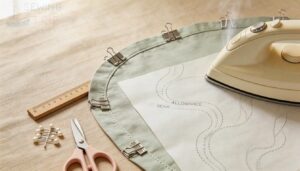
Once you’ve got fewer pieces sorted, look at the seam types. Straight seams keep Seam Allowance Basics simple — standard 5/8 inch, no complex clipping.
Gentle curves are manageable too, but use Staystitching Techniques before sewing to prevent stretching. Edge Alignment Tips matter here: pins or clips every few inches help.
When Pressing Curve Allowances, a warm iron smooths everything flat. Both features signal a beginner-friendly pattern difficulty rating.
Elastic Waists, Drawstrings, and Easy Closures
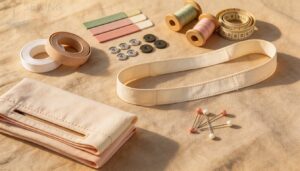
Closures are where beginners often hit a wall — but they don’t have to. Elastic waists use simple Elastic Tension Techniques, stretching comfortably without complex fitting. Drawstring Channel Construction is just a folded, stitched tunnel — easy to sew and adjust.
Hook-and-Loop Fasteners and Snap Closure Integration skip zipper stress entirely. Magnetic Closure Options exist for quick-finish projects. These beginner-friendly pattern features make selecting sewing patterns by skill level much easier.
Minimal Fitting and Fewer Construction Stages
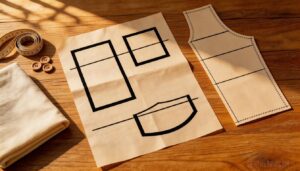
When closures feel manageable, the next question is: how complicated is the actual build?
Beginner sewing patterns work best when they skip complex shaping. Look for these signs of low pattern difficulty:
- Dartless Silhouettes that skip bust shaping
- Single-Piece Sleeves with minimal seam joins
- Simplified Seam Finishes along the natural grain
- Minimal Notching with bold, clear markings
- Low pattern piece count with simple shapes
Bias-Cut Construction and multi-stage lining? Save those for later.
Clear Instructions, Diagrams, and Cutting Layouts
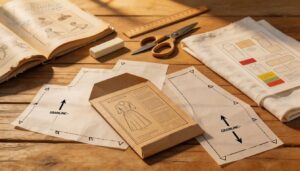
Good instructions don’t just tell you what to do — they show you.
Look for numbered steps paired with diagrams at each stage. Visual sequencing removes guesswork fast. Grainline indicators and color-coded layouts help you place pieces correctly and support fabric waste reduction.
| Feature | What to Look For |
|---|---|
| Numbered Steps | Sequential, clearly labeled stages |
| Visual Guides | Photos or illustrations per step |
| Clear Cutting Layout Diagrams | Grain line arrows, piece placement |
| Color-Coded Layouts | Zones by size or view |
| Grainline Indicators | Arrows aligned to selvage |
Step-by-step written instructions with strong pattern instruction clarity make all the difference.
Check Fabric and Technique Demands
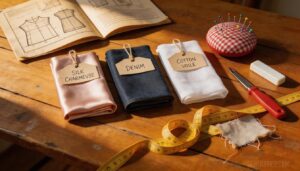
Picking the right pattern isn’t just about the design — the fabric and techniques it calls for matter just as much. Some combinations can stop a project cold before you’ve sewn a single seam.
Here’s what to check before you commit.
Why Stable Woven Fabrics Are Easier to Sew
Stable fabrics are a beginner’s best friend.
Woven cottons and cotton poplin stay flat under your needle, giving you Consistent Tension without puckering. Their Minimal Stretch means Grain Alignment stays true from cutting to stitching.
You get Predictable Finishes — seams that press flat, hems that behave. Easy Mark Transfer with chalk keeps your pattern accurate. Stable fabrics make fabric handling feel manageable at any skill level.
Fabrics Beginners Should Avoid First
Some fabrics will fight you every step of the way. Silk fraying ruins edges before you finish a seam. Satin slippage makes straight cuts nearly impossible. Linen wrinkling adds constant pressing frustration. High-stretch knit distorts seams as you sew. Delicate organza snags on every pin.
For beginner sewing patterns, these fabric recommendations matter — choosing easy fabrics matched to your skill level makes fabric handling so much smoother.
Closures, Sleeves, Collars, and Seam Finishes
Pattern selection gets tricky when closures, sleeves, collars, and seam finishes enter the picture. Invisible zipper placement requires careful seam allowance work.
Raglan sleeve construction is far easier than set-in styles.
Mandarin collar styling demands precise interfacing.
Button placket width matters on knits.
French seam technique adds clean finishes — but takes practice.
Match these details to your current skills first.
Interfacing, Lining, and Piece Count as Difficulty Clues
Three things quietly signal how hard a pattern really is:
- Interfacing types — fusible or sew-in versions add steps and fabric compatibility decisions.
- Lining benefits come with a cost: extra pattern pieces and construction sequencing.
- Piece count indicators — more pieces mean more seams, shaping, and time.
When pattern difficulty ratings feel vague, count the pieces. That number rarely lies.
Using Size Charts and Muslins Before Cutting Final Fabric
Before you cut into your good fabric, check the size chart against three measurements — high bust, full bust, and hip. That’s your starting point for Size Chart Interpretation.
Then sew a quick muslin using inexpensive fabric. Muslin Fit Testing catches shoulder placement, waist ease, and silhouette issues early.
Adjust Pattern Ease based on your results. Fabric Weight Matching with your muslin predicts how the final piece will actually behave.
Choose Patterns That Help You Progress
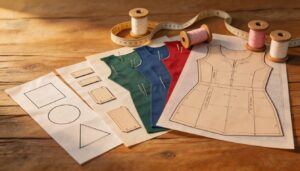
Picking the right pattern isn’t just about today’s project — it’s about where you want to be six months from now. The smartest sewists treat every pattern as a stepping stone, not just a finished item.
Here’s what to keep in mind as you build a pattern plan that actually moves you forward.
The One-or-two-new-techniques Rule
One new technique per project — that’s the rule. This kind of chunked learning and technique pacing turns skill scaffolding into something manageable.
Instead of juggling zippers, darts, and facings at once, you build controlled progression through small confidence bursts. Each project becomes a skill checkpoint you can actually reach. Pick patterns that match this pace, and your progression path stays steady.
How to Challenge Yourself Without Stalling
Growth stalls when every project feels either too easy or too hard. Incremental Skill Building keeps you moving — pair one familiar technique with one new challenge using a Technique Pairing Strategy.
Timed Mini-Projects help too; finishing a simple piece over a weekend builds real momentum.
Set Key Goals to track Progressing Sewing Skills Gradually through pattern difficulty, Balancing Challenge and Simplicity.
- Sew a mastered pattern twice before upgrading the difficulty
- Try Creative Fabric Exploration — swap cotton for linen on a familiar silhouette
- Use a pattern difficulty guide to plan your next three projects
- Add one notch per month to your skill level, no more
Common Mistakes When Choosing Patterns
Even with a solid progression plan, a few habits can quietly derail your work. Ignoring Skill Labels is the most common of all Common Mistakes When Choosing Patterns — that "easy" tag exists for a reason.
Overlooking Fabric Requirements, making Wrong Size Assumptions, Skipping Test Garments, or Underestimating Piece Count all add up fast.
Respect the pattern difficulty ratings, and you’ll waste far less fabric.
Using Reviews, Tutorials, and Community Feedback
Before you buy, let others do the heavy lifting. Pattern reviews give you real rating vs reality checks — star counts often reflect instruction clarity more than fit. Photo feedback shows how a project actually behaves on different bodies.
- Check review credibility cues: hands-on time, seam allowance notes, and size chart accuracy
- Watch tutorial video reviews — tutorial length relevance matters, so 5–20 minutes per segment signals complexity
- Browse online sewing forums for community hack sharing and fit solutions
Evaluating your sewing skill level for pattern selection gets sharper when the sewing community guides you.
Creating a Smart Sewing Progression Path
Community feedback shapes your pattern picks — and so does having a clear plan.
Map out your sewing skill progression by grouping projects that build on each other.
Think of it as Adaptive Pattern Sequencing: elastic waistbands first, zippers next, then custom collars.
Reassess every four to six projects using Feedback Loop Evaluation.
That steady rhythm builds real confidence and keeps your skill level climbing.
Frequently Asked Questions (FAQs)
Can I sew patterns without a sewing machine?
Yes, you can.
Hand sewing lets you complete simple, portable projects using basic stitches. With the right hand sewing tools and stitch consistency, beginner sewing patterns are well within reach — no machine needed.
How do I store and organize printed PDF patterns?
Store printed PDF patterns flat in labeled folders — use color coded tabs by category and difficulty.
Add moisture protection and a digital index or QR code labeling for quick access to your pattern libraries.
What sewing tools do beginners actually need to start?
You don’t need much to get started.
A sharp pair of Essential Scissors, an Adjustable Ruler, a Seam Gauge, a Thread Spool Set, and a Needle Variety Pack cover your basic beginner sewing accessories.
How do pattern sizes compare to standard clothing sizes?
Pattern sizes and clothing sizes aren’t the same — don’t get tripped up by that.
Always measure your bust, waist, and hips, then match those numbers to the pattern’s size chart instead.
Can I mix pieces from two different patterns together?
You can mix pieces from two different patterns — just align seam allowances and grainlines carefully.
Keep closure types consistent, test with a muslin first, and make sure the style lines flow naturally together.
Conclusion
Imagine drowning in a sea of abandoned projects and scraps of fabric — a quilter’s nightmare. But what if you could navigate through patterns like a pro?
By learning how to choose sewing patterns for your skill level, you’ll open up a world of creativity and accomplishment. Match your skills to the right project, and watch confidence and momentum soar. Make every stitch count by choosing patterns that help you progress, not stall—and sew on!