This site is supported by our readers. We may earn a commission, at no cost to you, if you purchase through links.
A skein of embroidery floss seems indestructible—until you pull it out six months later and find the red has bled into the pink, the cotton feels brittle, and something vaguely suspicious is growing near the blue.
Storage conditions quietly do more damage than any needle ever could. Heat weakens fibers, UV light strips dye from pale colors faster than you’d expect, and humidity turns a tidy collection into a tangled, musty mess.
The good news: keeping embroidery floss fresh takes less effort than most crafters think, once you know what’s actually working against you.
Table Of Contents
Key Takeaways
- Heat, UV light, and humidity are the real enemies of your floss — not your needle — so where and how you store it matters more than anything else.
- Airtight containers with silica gel packets, kept in a cool spot between 60–70°F, are the simplest way to protect your threads long-term.
- Treating your floss collection like a pantry — oldest in front, newest in back — keeps fibers from quietly aging out while newer skeins hog the spotlight.
- Small habits like washing your hands before handling, wiping dust with a microfiber cloth, and doing a quick inspection every six months can add years to your floss’s life.
How to Keep Embroidery Floss Fresh
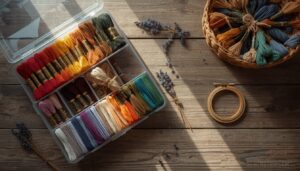
Good floss doesn’t stay good on its own — how you store it makes all the difference. A few simple habits go a long way toward keeping your threads vibrant, tangle-free, and ready to use.
From choosing the right bobbins to winding thread the smart way, these five simple ways to prevent embroidery thread tangling will save you real time at the hoop.
Here’s what actually works.
Protect Floss From Dust, Hair, and Dirt
Dust, pet hair, and airborne grime are quiet little enemies of your thread collection. That’s why a solid thread organization system starts with physical barriers.
Vacuum-sealed bags remove nearly all trapped air, while fabric barrier covers block particles before they settle.
A quick pass with a lint roller or microfiber dust cloth keeps things clean. Anti-static sprays help repel dust for months, protecting threads from dust and moisture between projects.
Reduce Light Exposure to Prevent Fading
Light sneaks up on your threads the same way it fades a favorite t‑shirt — slowly, then all at once. UV light breaks down dye pigments fast, especially in pale or translucent colors.
Stick UV‑blocking film on nearby windows, switch to LED lighting, and tuck skeins into dark storage cabinets or light‑filtering sleeves. Keeping a simple light exposure log helps too.
Using low‑E glass reduces UV on windows can further protect your floss.
Control Humidity to Avoid Weakening Fibers
Moisture is just as sneaky as light as far as damaging your threads. Keep relative humidity between 45 and 60 percent — a simple hygrometer monitoring setup near your storage spot makes this easy.
RH data logging helps you spot seasonal RH management problems before fibers weaken or fading accelerates. Humidity buffering with silica gel packets and dehumidifier installation in damp rooms keeps your embroidery floss organization protected year‑round.
Keep Storage Areas Cool and Dry
Temperature matters more than most crafters realize. Once humidity is under control, cool zone placement seals the deal for material preservation.
- Aim for 60–70°F — above 80°F weakens cotton fibers quickly
- Basements and north-facing closets are natural cool zones for craft storage
- Airflow management prevents sneaky heat pockets near walls and electronics
- Temperature alerts from a digital thermometer catch dangerous spikes early
Good thermal insulation and moisture absorbers keep your home organization setup solid year‑round.
Rotate Older Floss Before Newer Skeins
Think of your floss collection like a pantry — older stock goes to the front, newer stock waits its turn.
Treat your floss like a pantry: oldest threads to the front, newest ones waiting their turn
Start by adding date stamps or simple age labeling to each skein. Then use a small rotation checklist at the start of every session.
Front placement keeps older threads visible, and a quick stock audit every few months keeps your thread organization and floss organizer system honest.
Best Storage Methods for Floss
Good storage doesn’t have to be complicated — it just has to work for your collection. The right setup keeps your floss organized, protected, and ready to grab whenever inspiration hits.
five storage methods worth considering.
Use Airtight Containers for Long-term Freshness
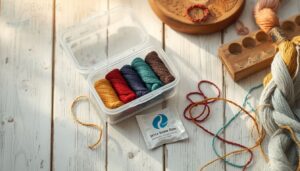
Airtight containers are honestly one of the best things you can do for your floss long-term. Go for BPA-free materials — they won’t leach chemicals into your threads.
Toss in a silica gel packet for moisture control, and keep an eye on the color-change indicator for silica gel replacement timing.
Airtight seal testing is simple: press the lid and listen for that satisfying click.
Colorfastness assurance starts here.
Try Drawer Organizers for Color Separation
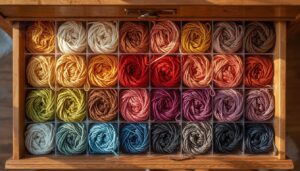
Drawer organizers turn color chaos into a system you’ll actually enjoy using. With the right modular divider materials — think clear acrylic or interlocking grids — you can build a full color gradient layout from whites to darks in minutes.
Here’s what makes drawer compartmentalization work:
- Labeling strategies: Mark each slot with DMC shade numbers for an instant color coding system.
- Ergonomic access: Face labels upward so your floss labeling is readable at a glance.
- Maintenance routine: Wipe dividers monthly and rotate skeins to keep your thread organization system fresh.
Store Skeins in Stackable Plastic Bins
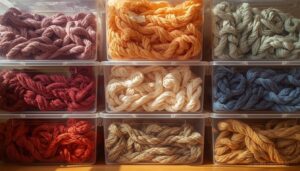
Stackable plastic bins are a quiet, real asset for anyone serious about keeping their thread organization system tidy. Their interlocking design locks each layer firmly in place, while clear visibility through translucent walls lets you spot color families instantly.
| Feature | Why It Matters |
|---|---|
| Vertical Stacking | Saves floor space in small craft rooms |
| Gasketed Lids | Seals out dust and humidity |
| Modular Depths | Fits under tables or on shelves |
| Clear Visibility | No lid-lifting needed to find colors |
| Interlocking Design | Keeps bins stable under weight |
Use these craft bins with silica gel packets inside to organize your thread stash cleanly — and protect every skein long‑term. These storage containers simply work.
Hang Floss on Rods, Dowels, or Pegboards

Hang your embroidery floss up and watch your whole workflow change. A pegboard hanging system lets you see every color at a glance — no digging required.
Space dowels 3 to 4 inches apart, following rod spacing guidelines, and use adjustable slotted hooks for flexible pegboard color coding by family. Choose smooth wooden dowels for safe, snag-free material selection.
Mount securely into studs — safety mounting practices matter more than you’d think.
Add Silica-gel Packets to Storage Boxes
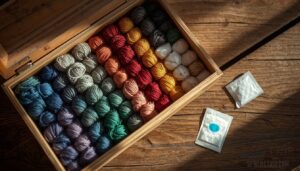
Silica gel packets are one of the quietest heroes in your craft storage solutions toolkit. Tuck them into the corners of your boxes — that’s your first placement strategy — and use several small packets instead of one large one for better coverage. One packet per two or three skeins keeps humidity in check.
Watch for color-changing humidity indicators, follow basic safety guidelines around kids and pets, and recharge saturated packets in a low oven when needed — that’s your go-to regeneration method, budget-friendly and simple.
Top 5 Embroidery Floss Organizers
The right organizer can change everything about how you stitch — no more digging through tangled skeins or losing that one perfect shade mid‑project. There are some genuinely clever options out there, from compact travel‑friendly holders to label‑everything systems that’d make any organized crafter smile.
Here are five worth knowing about.
1. Action Bag Embroidery Floss Organizer
Organizing a big floss collection doesn’t have to mean hours of winding bobbins. The Action Bag FL100 keeps it simple — just drop your skein into one of the 100 clear 3×5 inch zip-close bags and you’re done.
Each bag has a write-on label area for your DMC number, so flipping through your ring binder to find the right color takes seconds. The thin plastic stays clean and lets you see exactly what’s inside without opening a thing.
| Best For | Embroiderers and thread collectors who want a fast, no-fuss way to organize a large floss stash without winding a single bobbin. |
|---|---|
| Primary Use | Floss storage bags |
| Organization Type | Individual bagging |
| Color ID Support | Write-on label area |
| Material | Transparent thin plastic |
| Quantity Included | 100 bags |
| Price (USD) | Not listed |
| Additional Features |
|
- Just drop your floss in and zip — no winding or assembling needed
- Clear plastic means you can spot the right color instantly
- Write-on label area makes flipping through a ring binder super quick
- Thinner plastic than older versions, so it feels a little flimsy
- Slightly narrower than legacy bags, which can cause fit issues with some organizers
- The plastic can turn cloudy over time, making it harder to see the thread inside
2. LGS Embroidery Floss Holder
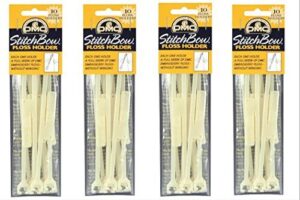
If you want something a little more structured than zip bags, the LGS Embroidery Floss Holder is worth a look. Each pack comes with 40 holders — enough to make a real dent in a growing collection.
The hollow, flexible design keeps your skeins full and round, not squished flat. There’s even a notch to hold your DMC tag, so you always know exactly which color you’re grabbing.
fits neatly into drawers or binders without any fuss.
| Best For | Embroidery enthusiasts who want to keep their floss collection organized, labeled, and tangle-free — whether you’re a casual hobbyist or a serious stitcher. |
|---|---|
| Primary Use | Floss skein holders |
| Organization Type | Skein wrapping |
| Color ID Support | DMC tag notch |
| Material | Flexible plastic |
| Quantity Included | 40 holders |
| Price (USD) | $9.99 |
| Additional Features |
|
- 40 holders in one pack gives you solid coverage without buying in bulk separately
- Hollow design keeps skeins round and full, which is a lifesaver for metallic threads
- The built-in DMC tag notch means no guessing which color is which
- Floss needs to be trimmed to fit, so longer skeins require a bit of prep work
- Not ideal for bulkier yarns or thicker threads — it’s built for standard floss
- The flexible plastic can wear down over time if you’re rough with it
3. DMC Stitch Bow Mini Binder Insert
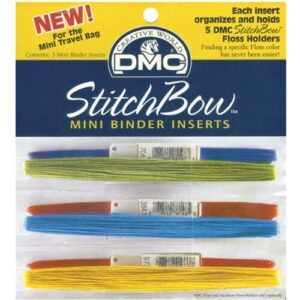
Ready to take things up a notch? The DMC Stitch Bow Mini Binder Insert slots right into your Stitchbow binder or travel bag, holding up to five floss skeins per insert.
Each pack includes three clear inserts, giving you room for 15 skeins total. The transparent plastic makes color-spotting instant, and the stylus loops keep your DMC shade numbers front and center.
At $7.45 for a three-pack, it’s a tidy, no-guesswork system for anyone juggling multiple projects at once.
| Best For | Embroiderers who want a clean, travel-friendly way to organize their DMC floss by color without the mess of tangled skeins. |
|---|---|
| Primary Use | Binder floss inserts |
| Organization Type | Binder paging |
| Color ID Support | Stylus ID loops |
| Material | Clear reinforced plastic |
| Quantity Included | 3 inserts |
| Price (USD) | $7.45 |
| Additional Features |
|
- Clear inserts make it easy to spot the right color at a glance
- Stylus loops keep shade numbers visible, so there’s no guessing
- Works with the Stitchbow binder and travel bag for a fully portable setup
- Only holds 5 skeins per insert, so big collections stack up fast
- Some users run into fit issues with the Mini Travel Organizer and have to modify the holes
- At $7.45 for three inserts, it’s pricier than basic DIY storage options
4. DMC StitchBow Mini Needlework Travel Bag
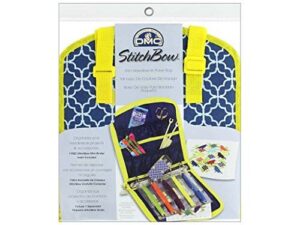
If you’re already using the StitchBow binder inserts, this travel bag was practically made to pair with them. The DMC StitchBow Mini Needlework Travel Bag opens flat with a three-quarter zipper, giving you a clear view of everything inside.
Five clear vinyl pockets plus elasticized tool slots keep your needles, scissors, and pattern sheets sorted. It weighs under a pound and folds down to 10 by 9 inches — easy carry-on friendly for weekend trips or class days.
| Best For | Cross-stitchers and embroidery lovers who already use StitchBow inserts and want a lightweight, organized bag for travel or classes. |
|---|---|
| Primary Use | Needlework travel bag |
| Organization Type | Pocket sorting |
| Color ID Support | Clear vinyl pockets |
| Material | Polyester canvas with vinyl |
| Quantity Included | 1 bag with insert |
| Price (USD) | $24.51 |
| Additional Features |
|
- Opens completely flat so you can see and grab everything without digging around
- Clear vinyl pockets keep floss, needles, and pattern sheets visible and sorted
- Weighs under a pound and folds small enough to toss in a carry-on
- Binder insert holes don’t always line up with metal clips, so you may need to bend things into place
- Stuffing it full makes the zipper a pain to close
- Not great if you’re juggling multiple larger projects at once
5. DMC Floss Number Stickers
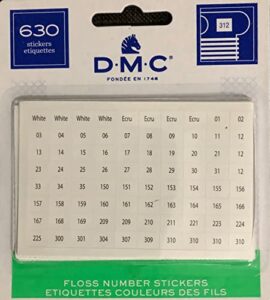
Few things kill a project’s momentum like hunting for a single color bobbin in a jumbled pile. That’s where DMC Floss Number Stickers earn their keep.
Each pack includes 630 pre-printed self-adhesive labels covering all 472 solid and variegated DMC shade numbers, plus popular extras and blank labels for custom shades.
You simply apply them directly to your cardboard or plastic bobbins after winding.
At $5.14, it’s a small investment that makes a big difference.
| Best For | Embroiderers and cross-stitchers who want a quick, affordable way to keep their DMC floss collection organized and easy to navigate. |
|---|---|
| Primary Use | Bobbin label stickers |
| Organization Type | Label identification |
| Color ID Support | Pre-printed DMC numbers |
| Material | Plastic label backing |
| Quantity Included | 630 stickers |
| Price (USD) | $5.14 |
| Additional Features |
|
- Covers all 472 DMC solid and variegated shades, so you’re not hunting down missing numbers
- Blank labels are included for custom or non-DMC colors, which is a nice touch
- At $5.14, it’s basically a no-brainer investment for anyone with a growing floss stash
- The stickers are tiny, so reading the numbers can be a squinting exercise without good lighting or magnification
- Adhesion on plastic bobbins can be hit or miss, especially around molding seams
- Some packs have been reported to include duplicate or missing numbers, and labels can peel off the sheet before you even use them
Care Habits That Prevent Damage

Good storage gets you halfway there — how you handle your floss does the rest. A few simple habits make a real difference in keeping your threads looking fresh and lasting longer.
Here’s what to do.
Wash Hands Before Handling Floss
Your hands carry more than you think — oils, dirt, and bacteria that transfer straight to your floss the moment you reach in.
Before handling embroidery floss, use Proper Soap Technique: wet, lather for a full 20-Second Lather, rinse, then Dry Hands Properly with a clean towel.
No sink nearby? A Hand Sanitizer Backup works fine.
It’s one of the simplest embroidery hobby tips to Prevent Cross Contamination.
Gently Separate Tangled Skeins Without Pulling
Tangled skeins happen to everyone — but yanking them apart is how you end up with broken threads and frustration. Instead, try these three moves:
- Finger Comb Method — gently work fingers through knots using small sideways strokes.
- Needle Teasing Technique — lift stubborn thread kinks with a spent needle.
- Layered Unwinding Approach — unwind outer layers slowly, keeping tension even.
Patience beats pulling every time.
Wipe Dusty Floss With a Dry Cloth
Dust settles quietly on stored floss — and a quick wipe keeps it from becoming a problem. Your best tool here is a microfiber cloth choice: it’s gentle, lint-free, and won’t snag fibers.
Use a linear wipe technique, stroking along each length with light pressure. Follow a consistent dust removal direction — outside to center — for even coverage.
Fold to a fresh cloth section as it collects dust, keeping your cloth maintenance routine clean. Once done, your post-wipe storage prep matters: confirm the floss is fully dry before returning it to your craft storage solutions, whether you hang your embroidery floss up on rods or tuck skeins into creative storage ideas like pegboards or labeled bins.
Hand-wash Heavily Soiled Floss With Mild Soap
Sometimes a dry cloth just won’t cut it. When floss gets seriously grimy, a gentle hand-wash is your best move.
Start with a Cool Water Rinse to loosen dirt, then use a tiny Mild Soap Amount — just a drop — to avoid residue.
Keep it brief for Fiber Swelling Prevention, then squeeze gently and prioritize Drying Airflow.
Finish with Post-wash Labeling so your craft room organization stays tight.
Inspect Floss Regularly for Fading, Fraying, or Mold
A quick inspection every six to twelve months can save your whole collection. Think of it as a wellness check for your threads.
- Color shift detection — look for yellowing or gray tones that weren’t there originally
- Fiber integrity check — gently bend the floss; brittleness means it’s past its prime
- Mold spotting guide — discard anything showing dark specks or fuzzy patches immediately
- Odor evaluation and texture feel test — musty smells or tacky surfaces signal moisture damage
Trust your senses here.
Frequently Asked Questions (FAQs)
Why use beeswax on thread?
Beeswax isn’t just old-fashioned advice — it genuinely works.
It coats fibers for enhanced glide, delivers static reduction, and reinforces thread strengthening, so you get reduced fraying and better fabric compatibility with every stitch.
Can embroidery floss be stored with other supplies?
Yes, embroidery floss can share a cabinet with other craft supplies — just keep it away from solvents, paints, and oils to avoid cross-contamination risks and fiber damage.
How long does embroidery floss typically last?
Think of floss like a good wine — it ages well with care.
Cotton floss lasts 5–10 years, while polyester blends stretch even further, especially when shielded from UV degradation and moisture damage.
Does floss color bleed onto other threads?
Most floss is colorfast, but reds and purples carry higher bleed risk.
Always pre-wash dark threads before stitching on light, absorbent fabric — a quick colorfast testing step saves your whole project.
Can you restore faded embroidery floss at home?
Sadly, home dyeing risks mean you can’t fully restore faded floss. Use color matching guides and a color chart reference to find the closest replacement skein instead.
Is vintage or old floss still safe to use?
Old floss can still work, but give it a close look first. Check for fiber brittleness, mold, or coating degradation.
If anything smells off or sheds, swap it for a fresh skein.
Conclusion
Funny how the smallest habits—washing your hands, tucking floss into an airtight bin, slipping in a silica packet—end up doing more for your craft than hours of careful stitching ever could. Neglect the storage, and your colors fade before the project even starts.
But once you know how to keep embroidery floss fresh, your collection practically takes care of itself. Treat it well now, and it’ll be ready when inspiration finally strikes.
- https://oralb.com/en-us/oral-health/solutions/floss/how-to-use-dental-floss/
- https://nepis.epa.gov/Exe/ZyPURL.cgi?Dockey=9101E61F.TXT
- https://essremodel.com/how-to-buid-climated-controlled-storage/
- https://kitchensterling.com/what-temperature-should-dry-storage-rooms-be/
- https://foodsafetydaily.blogspot.com/2017/09/7-simple-rules-for-effective-and.html