This site is supported by our readers. We may earn a commission, at no cost to you, if you purchase through links.
Most sewists never replace their needles often enough—but choosing the wrong needle type costs you just as much.
Grab a universal needle for embroidery thread, and you’re threading a tightrope: workable on standard wovens, risky on dense, high‑stitch‑count designs.
The eye’s a touch small, the scarf a touch shallow, and metallic thread will punish you for it.
That said, the right universal needle—properly sized, titanium-coated, matched to your thread weight—manages more than most give it credit for.
These six picks prove it.
Table Of Contents
Key Takeaways
- Titanium-coated needles last up to eight times longer than chrome-plated ones and dramatically cut thread friction, making them a smarter investment for anyone doing serious embroidery work.
- Matching needle size to thread weight is non‑negotiable — an 80/12 handles standard 40‑weight rayon or polyester cleanly, while metallic threads demand a 90/14 with an elongated, polished eye.
- Universal needles work fine for light‑to‑medium woven fabrics, but dense designs, specialty threads, or knits call for a dedicated embroidery or ballpoint needle instead.
- Replace your needle every 8–10 hours of stitching — skipped stitches and thread breaks aren’t machine problems, they’re worn‑needle problems.
Top 6 Universal Embroidery Needles
Not every needle earns a spot in a serious embroidery kit.
Each one earns its place based on the task at hand, just like the types of needles commonly included in sewing kits vary widely depending on the work they’re built for.
These six made the cut because they actually solve real problems — thread breaks, fabric drag, misalignment.
Here’s what’s worth your attention.
1. SCHMETZ Gold Titanium Embroidery Needle
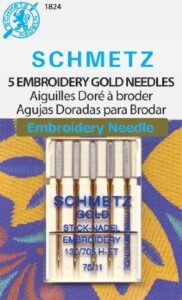
The SCHMETZ Gold Titanium Embroidery Needle earns its place at the top for good reason. That titanium nitride coating isn’t just cosmetic — it lasts up to eight times longer than chrome-plated needles and resists heat buildup during long stitching sessions.
The enlarged eye accommodates polyester, rayon, and even metallic threads without shredding them. Size 75/11 hits the sweet spot for most standard embroidery work.
Five needles per card, model 1824 — straightforward, reliable, and built for projects that demand consistency.
| Best For | Embroiderers and sewists who regularly work with medium-to-heavy fabrics like denim or fleece and want a needle that holds up through long, detailed projects. |
|---|---|
| Needle Size | 75/11 |
| Pack Quantity | 5 |
| Shank Type | Flat shank |
| Material | Titanium-coated steel |
| Machine Compatibility | Universal home machines |
| Fabric Weight | Medium to heavy |
| Additional Features |
|
- Titanium nitride coating seriously extends needle life — less swapping mid-project
- The enlarged eye handles metallic and specialty threads without the usual shredding headaches
- Works with most home sewing and embroidery machines, so no brand-matching guesswork
- One card gets you five needles, which can run out fast on bigger projects
- Packaging sometimes arrives partially open, which raises questions about the needles inside
- Not the best pick for lightweight or delicate fabrics — you’d want a finer needle for those
2. HLARTNET Universal 90/14 Sewing Needles
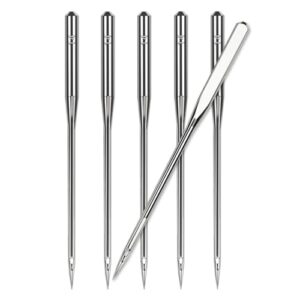
When you’re pushing through denim, canvas, or stacked fabric layers, you need a needle that won’t flinch. The HLARTNET Universal 90/14 delivers exactly that.
This pack of 50 — five sets of ten — keeps your workflow moving without constant supply runs.
The flat shank fits standard household machines, and the sharp tip cuts cleanly through heavy materials.
Iron alloy construction resists bending under pressure.
One honest note: skip these for delicate fabrics. They’re built for tough work, not silk.
| Best For | Home sewers and hobbyists who regularly work with heavy fabrics like denim, canvas, or leather and want a reliable bulk supply on hand. |
|---|---|
| Needle Size | 90/14 |
| Pack Quantity | 50 |
| Shank Type | Flat shank |
| Material | Iron alloy |
| Machine Compatibility | Universal home machines |
| Fabric Weight | Heavy duty |
| Additional Features |
|
- 50 needles at once means you’re stocked for a long time — no mid-project scrambles
- Iron alloy construction holds up under pressure without bending or snapping
- Fits most standard household machines, including popular brands like Singer
- Not a good fit for delicate fabrics like silk or chiffon — you’ll want a finer needle for those
- Point type isn’t specified, so stretchy knits or very soft leather might be hit or miss
- Won’t work on specialty or industrial machines that need a tapered shank
3. Universal Heavy Duty Stainless Steel Embroidery Needles
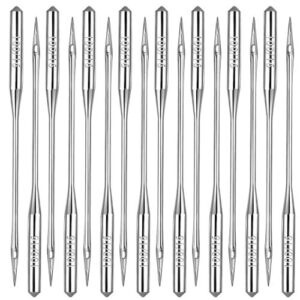
Stainless steel changes the game when durability is non-negotiable.
The FdcLixuvol 100/16 pack gives you 50 heavy-duty needles built to pierce leather, denim, and warp-knitted fabrics without deforming mid-run.
The reinforced shaft holds tight through dense layers, and the polished eye keeps metallic and rayon threads moving smoothly.
Each needle sits in a compact transparent case — no rummaging, no mix-ups.
At size 100/16, these are purpose-built for serious yardage, not delicate cotton.
| Best For | Sewers and crafters who regularly work with heavy fabrics like leather, denim, or warp-knit materials and need a reliable supply of durable needles on hand. |
|---|---|
| Needle Size | 100/16 |
| Pack Quantity | 50 |
| Shank Type | Flat shank |
| Material | Stainless steel |
| Machine Compatibility | Universal home machines |
| Fabric Weight | Medium to heavy |
| Additional Features |
|
- Stainless steel construction holds up through tough materials without bending or breaking mid-project
- 50-needle pack means you’re not scrambling for replacements anytime soon
- The clear storage case keeps everything organized and easy to grab when you need a quick swap
- Only works with machines that take 100/16 needles, so double-check compatibility before buying
- No extras included — you’ll need to source thread, bobbins, and lubricant separately
- The case is sized just for these needles, so it won’t work as general needle storage
4. HLARTNET 80 12 Universal Sewing Needles
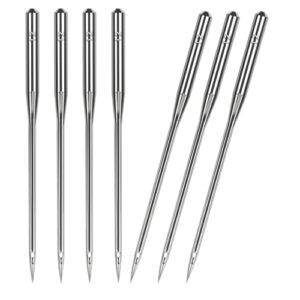
Not every project needs brute force. When you’re working with shirts, quilted panels, or lightweight cotton blends, the HLARTNET 80/12 Universal Sewing Needles hit the sweet spot.
Their size 12 gauge keeps stitch tension balanced across fabric weights, so you’re not fighting puckers on a simple cotton tee.
You get 100 needles — ten packs of ten — so downtime for restocking stays off your radar. The flat-shank design seats cleanly in Brother, Janome, Singer, and most other home machines using the 130/705 H system. Hardened iron alloy construction keeps the shaft straight under steady use. Reliable, practical, and ready to run.
| Best For | Home sewers who work daily with medium-weight fabrics like shirts, quilts, and cotton blends and want a reliable needle supply that fits most standard machines. |
|---|---|
| Needle Size | 80/12 |
| Pack Quantity | 100 |
| Shank Type | Flat shank |
| Material | Iron alloy |
| Machine Compatibility | Universal home machines |
| Fabric Weight | Medium weight |
| Additional Features |
|
- 100 needles in one pack means you’re set for a long time — no scrambling mid-project for a replacement.
- Fits most home machines (Brother, Singer, Janome, and more), so one stash works across your whole setup.
- Hardened iron alloy keeps the needles straight and sharp through steady, regular use.
- Tip sharpness can vary between needles, which may cause issues on finer or more delicate fabrics.
- Not built for heavy materials like denim or leather — you’ll need a sturdier needle for those jobs.
- Won’t work in machines that require a round shank or specialty needle plates.
5. Schmetz Gold Embroidery Needle
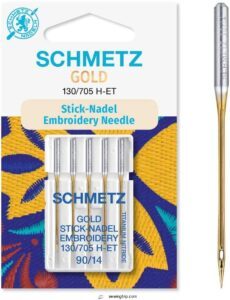
When metallic threads start shredding or your dense design keeps breaking mid-run, the Schmetz Gold Embroidery Needle is the fix. Its titanium nitride coating cuts heat buildup during high stitch-count work — that gold finish isn’t decorative, it’s functional.
The enlarged eye reduces friction on specialty threads, and the medium ballpoint glides through woven fabrics cleanly.
Available in 90/14, it fits the 130/705 H system and works across Brother, Janome, Singer, and Bernina home machines.
| Best For | Home embroidery enthusiasts working with metallic, specialty, or heavyweight fabrics like denim and fleece who want cleaner stitches and fewer thread breaks. |
|---|---|
| Needle Size | 90/14 |
| Pack Quantity | 5 |
| Shank Type | Flat shank |
| Material | Titanium-coated steel |
| Machine Compatibility | Universal home machines |
| Fabric Weight | Medium to heavy |
| Additional Features |
|
- Titanium nitride coating reduces heat and friction, so metallic threads stop shredding mid-project.
- The enlarged eye handles delicate specialty threads gently, cutting down on breakage and skipped stitches.
- Fits all the major home machine brands — Brother, Bernina, Janome, Singer, and more — no compatibility headaches.
- One card of five needles isn’t much if you’re running high-volume work; you’ll be restocking pretty quickly.
- Packaging sometimes arrives partially opened, which raises fair questions about whether the needles have been handled.
- Not rated for industrial or commercial machines, so it’s strictly a home-use option.
6. HLARTNET Universal Size 12 Embroidery Needles
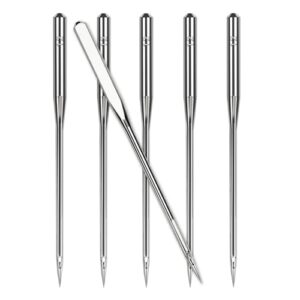
Fifty needles for under $10 — that’s the HLARTNET Universal Size 12 briefly. The 80/12 sizing hits the sweet spot for mid-weight cottons, linens, and blends, and the flat‑shank design drops straight into most home machines without fuss.
It works with rayon, polyester, and cotton embroidery thread cleanly, with no shredding on standard densities. Just don’t push it through denim or heavy canvas.
Swap needles every 8–12 hours, and this pack keeps you stitching for months.
| Best For | Home sewers who stitch regularly and want a solid stash of size 12 needles without spending a lot. |
|---|---|
| Needle Size | 80/12 |
| Pack Quantity | 50 |
| Shank Type | Flat shank |
| Material | Iron alloy |
| Machine Compatibility | Universal home machines |
| Fabric Weight | Light to medium |
| Additional Features |
|
- 50 needles for under $10 is genuinely good value, especially if you swap needles often
- Flat-shank design fits most home machines — Singer, Brother, and similar — with no hassle
- Holds up well through light-to-medium fabrics like cotton, linen, and blends
- Not built for heavy fabrics like denim or canvas — expect faster dulling or breakage
- Some batches have been inconsistent, with occasional duds right out of the pack
- Won’t work with every machine, so double-check compatibility if you have an older or specialty model
Universal Needles for Embroidery Thread
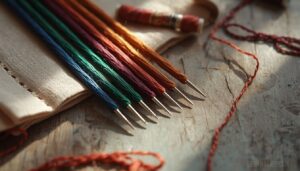
Universal needles can handle embroidery thread — but only when the conditions are right. Knowing when they work and when they fall short saves you from skipped stitches, shredding thread, and wasted fabric.
Universal needles handle embroidery thread well — until they don’t; knowing the difference saves your fabric
Here’s what you need to understand before threading up.
Can You Use a Universal Needle for Embroidery Thread?
Yes — a universal point needle can handle embroidery thread, but with trade‑offs. Eye size compatibility matters most: too small an eye increases thread tension impact, causing fraying and stitch quality variation.
Selecting appropriate embroidery needles by matching needle size and needle tip to your thread prevents fabric distortion risks.
For casual projects, the cost‑benefit analysis favors universals. For dense designs, don’t gamble.
For knit fabrics, a ballpoint needle size such as 75/11 prevents puckering.
When Universal Needles Work Best
Universal needles hit their sweet spot on standard woven fabrics — think muslin, poplin, and cotton blends. Light Fabric Compatibility is where they genuinely shine, offering Needle Hole Minimization without sacrificing stitch quality.
- Use size 80/12 for Medium Thread Weight like 40-weight rayon on woven fabric
- Balance Stitch Density with a Universal point on low-pile home décor textiles
- Refine Thread Tension Optimization by matching Needle Size to your Thread weight classification
- Apply Fabric type selection logic: Matching Needle Size to Thread and Fabric Weight prevents distortion.
When to Choose an Embroidery Needle Instead
Sometimes a universal needle just isn’t enough. When you’re working with thick thread, multiple strands, or high stitch density designs, switch to a dedicated embroidery needle.
It’s built for heavier fabrics, offers the right machine shaft size, and reduces breakage with specialty threads. Matching needle size to thread and fabric weight — using a needle size chart for fabric type selection — keeps every stitch clean.
Differences Between Universal and Embroidery Needles
Think of them as cousins, not twins.
Universal needles use a medium eye size and modest scarf length — fine for mixed-fabric sewing.
Embroidery needle types and applications demand more: a larger eye, deeper scarf length, and excellent shaft alignment for specialty threads. Tip geometry and coating materials differ too, making needle compatibility and the right needle size critical for clean, consistent embroidery stitches.
Home Machine Compatibility Considerations
Your home machine likely uses a flat-shank needle system — that’s non-negotiable for proper needle bar alignment. Before loading any universal embroidery needle, confirm shank type matching against your manual.
Run firmware updates if available; modern machines use needle sensors that need calibration.
Check thread path clearance and hoop size alignment too.
Mismatched specs cause skipped stitches before you’ve even started.
Needle Size and Thread Weight
Getting the needle size wrong is the fastest way to ruin a good design. Thread weight drives that decision more than anything else.
Here’s what you need to know to match them correctly.
Best Universal Needle Size for 40-weight Embroidery Thread
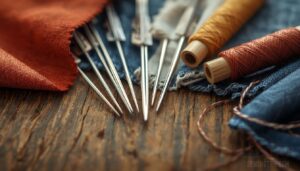
For 40-weight thread, needle size isn’t a suggestion — it’s a variable that controls everything from thread tension balance to stitch visibility impact. The go-to is an 80/12 universal embroidery needle. Its needle eye size lets 40-weight thread pass cleanly without shredding.
Match your choice to fabric and thread:
- Woven cotton/linen → 80/12 universal
- Polyester blends → 80/12 with wider eye
- Delicate silk → 75/11 for tighter holes
- Denim/canvas → size up; universals bend fast
- Metallic 40-weight → needs smoother eye surface to cut friction
Watch for needle wear indicators — fraying thread or skipped stitches mean it’s done. Check your needle size chart before every project change.
Using 75/11 Needles for Standard Rayon and Polyester Thread
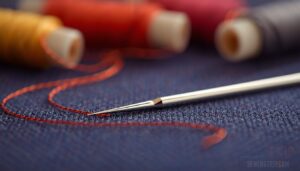
The 75/11 hits the sweet spot for standard rayon and polyester. Its eye size compatibility accommodates 40-weight thread cleanly — less friction, fewer shreds.
| Thread | Tip Type | Key Concern |
|---|---|---|
| Rayon 40wt | Universal | Scarf clearance issues |
| Polyester 40wt | Universal | Thread tension settings |
| Blended | Universal | Stitch density adjustment |
Needle wear indicators. Fresh needle, cleaner stitches. Simple.
When to Size Up to 80/12 or 90/14
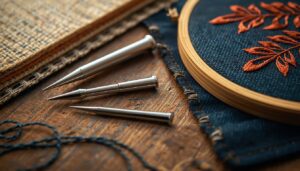
The 75/11 manages everyday fabrics beautifully — but dense canvas stitching and multi-layer fabric demand more blade. That’s where size 80 sewing machine needle steps in. It resists flexion on heavy weaves and keeps stitches tight.
For industrial torque needs, denim stacks, or large hoop precision projects, the 90/14 eliminates needle deflection and manages thread friction management without compromise.
Needle Choices for Metallic Embroidery Thread
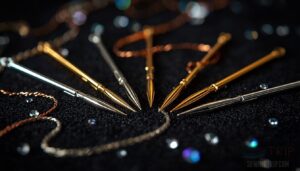
Metallic thread is unforgiving — it shreds fast if your needle isn’t built for it. Choose metallic needles with an elongated eye and polished eye finish to reduce friction at the source.
Titanium-coated needles handle long runs without heat degradation. For standard 40-weight metallics, a 90/14 hits the sweet spot. Tip geometry selection and tension tuning matter just as much as size here.
Avoiding Thread Shredding and Breakage
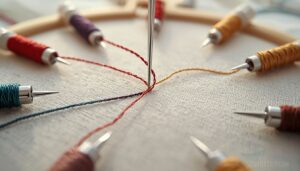
Thread breakage is almost always preventable — if you know where to look.
- Align needle tine with the thread path to stop snagging cold
- Dial thread tension settings per thread type; metallics need slack, not grip
- Maintain a clean thread path — lint kills consistency
- Proper stabilizer use reduces fabric pull and stress on the thread
- Schedule regular needle replacement every 8 hours; universal point tips dull fast
Fabric Matching for Better Stitches
The needle you pick matters more than most people think—wrong tip, wrong fabric, wrecked stitch.
Universal needles cover a lot of ground, but knowing where they shine and where to swap them out is what separates clean work from frustrating rework. Here’s how to match your needle to your material.
Universal Needles for Woven Fabrics
Woven fabrics are where universal embroidery needles genuinely shine. The slightly rounded tip navigates fabric grain orientation without tearing fibers, while proper scarf alignment keeps thread feed consistency smooth at higher speeds.
For most cotton, twill, and polyester blends, a 90/14 is your go-to — especially with a titanium needle coating for extended runs.
Speed optimization becomes easy when your needle and fabric are matched correctly.
Ballpoint Alternatives for Knits and Stretch Fabrics
Knits don’t forgive a sharp tip — one wrong needle and you’ve got runs, skipped stitches, or puckered seams.
That’s the ballpoint needle advantage: the rounded tip displaces fibers instead of cutting them.
For jersey ballpoint use, start at 75/11. Elastane blend fit demands a stretch needle choice with a larger eye.
On heavyweight knits, a reinforced ballpoint protects knit seam integrity, stitch after stitch.
Sharp Needle Alternatives for Denim and Canvas
Denim doesn’t lie — a dull or mismatched needle shows up immediately in skipped stitches.
For heavy canvas and dense denim, sharp point needles with a Microtex tip create clean perforations without fraying.
A reinforced shaft prevents bending mid-run, while a polished shaft finish reduces snagging.
The extended shank reaches through stacked layers cleanly.
Chrome needles handle occasional use; titanium needles outlast them considerably for HeavyDuty Embroidery on Denim and Canvas.
Heavy-duty Universal Needles for Thick Materials
Heavy materials demand a needle built for the fight. HeavyDuty Needles in 90/14 or 80/12 handle canvas embroidery and Heavy denim stitching without shaft deflection.
Their gold titanium coating improves Heat Dissipation Effects at speed, while Scarf Design Impact keeps loop formation consistent. Pair them with proper Stabilizer Compatibility and Thread Tension Management, and UniversalEmbroidery Needles become surprisingly capable on any fabric weight classification.
Fit, Care, and Troubleshooting
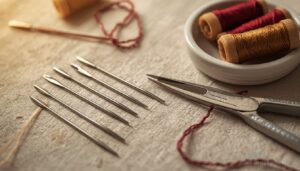
Even the best needle won’t perform if it’s installed wrong, worn out, or stored carelessly.
Getting these basics right separates clean, consistent embroidery from a frustrating afternoon of rethreading.
Here’s what you need to know about fit, care, and keeping your machine running smoothly.
Flat-shank Needles for Home Embroidery Machines
Most home embroidery machines require flat-sided shanks — and getting shank orientation wrong means skipped stitches from the start. Insert the needle with the flat side facing away from you for correct clamp seating every time.
Universal embroidery needles with flat shanks deliver:
- Coating durability — titanium variants outlast chrome considerably
- Stable thread tension — no rotation during high-speed runs
- Easy needle plate care — flat design limits lint buildup
Checking Needle System Compatibility
Getting your shank machine match right is the first real checkpoint. Beyond flat-shank fit, verify eye thread alignment — a mismatched needle eye frays thread fast.
Use this quick-reference needle chart before loading any project:
| Check | What to Verify |
|---|---|
| Shank Machine Match | Flat vs. round shank per machine spec |
| Eye Thread Alignment | Eye size matches thread weight |
| Length Groove Check | Groove faces thread path correctly |
| Presser Foot Clearance | No collision during needle drop |
| Automatic Threader Compatibility | Shank design enables auto-threading |
Needle shaft thickness and needle sizing directly affect stitch tension — don’t skip this step.
Signs Your Needle Needs Replacement
Once your compatibility checks are solid, shift your attention to needle condition. A dull tip drags instead of pierces — you’ll notice fuzzy stitches and fabric puckering fast.
Watch for bent eye misalignment, rust spots, or coating flaking on titanium needles. Misaligned needles throw off stitch evenness immediately.
Keep a firm needle replacement schedule: eight hours of run time, no exceptions.
Fixing Skipped Stitches and Thread Breaks
Skipped stitches almost always trace back to three culprits: needle installation, tension, or timing.
Start with a Thread Path Inspection — rethread completely with the presser foot up. Then check Bobbin Tension Adjustment and confirm the bobbin seats are snug. Persistent skipping? That’s a Hook Timing Check situation. Also verify Needle Clamp Tightening and Presser Foot Height.
Correct those, and thread breakage disappears fast.
Storing Embroidery Needles Safely and Clearly Labeled
Think of your needle storage as the last line of defense for your embroidery toolkit.
- Dry Storage with Moisture Absorption Packs prevent rust and extends needle life.
- Color-Coded Labels separate sharps from ballpoints instantly.
- Needle Point Orientation — tips inward — stops accidental pricks.
- A Regular Inspection Schedule every 3–6 months keeps your needle replacement schedule and needle sizing records accurate.
Frequently Asked Questions (FAQs)
What kind of needle do you use with embroidery thread?
For most embroidery threads, a needle with the right universal point, correct shank fit, and large enough eye size is essential.
These features control thread friction and directly determine stitch quality metrics across fabric types.
Can I use a universal needle for embroidery?
Yes, you can — but with trade-offs.
Universal needle manages light decorative stitching well, yet it lacks the enlarged eye and optimized geometry that keep embroidery threads running clean and break-free.
Can I use a regular sewing needle for embroidery thread?
Technically, yes — but it’ll cost you. A regular sewing needle’s smaller eye causes thread fraying, breakage, and skipped stitches.
For clean stitch quality, the eye size simply isn’t built for embroidery thread demands.
How often should you replace embroidery needles?
Replace your needle every 8–10 hours of stitching. Metallic and dense threads accelerate needle wear faster.
Watch for skipped stitches or thread breaks — those are your clearest wear indicator signs that it’s time.
Can titanium needles outlast chrome-plated ones?
Think of titanium needles as the marathon runners of your needle kit.
They outlast chrome-plated ones by up to eight times, thanks to improved coating wear rates, heat resistance, and dramatically lower thread friction over long runs.
Do needle coatings affect embroidery stitch quality?
Coatings absolutely affect stitch quality.
Titanium needles cut friction by 40%, reducing heat build-up and thread breakage. Chrome needles maintain surface smoothness for consistent runs.
Metallic needles need elongated eyes — coating alone won’t save a mismatched point shape.
What needle tip works best for jersey fabric?
Ballpoint beats all here. Its rounded tip glide separates fibers rather than piercing them, delivering minimal distortion on knit fabric embroidery. Scarf geometry and eye size matching seal the deal.
Does needle brand matter for consistent embroidery results?
Yes, brand matters more than most stitchers expect.
Shaft rigidity, eye smoothness, tip sharpness consistency, and coating longevity all vary by manufacturer — and those differences quietly shape every stitch you make.
Conclusion
The right universal needle for embroidery thread isn’t a compromise—it’s a calculated choice. Picture your thread gliding through a titanium-coated eye, tension steady, stitches landing cleanly on every pass.
That only happens when size, coating, and fabric are aligned.
Change your needle every eight hours of stitching.
Match your weight, respect your fabric, trust your setup.
When those three align, the machine disappears—and only the work remains.