This site is supported by our readers. We may earn a commission, at no cost to you, if you purchase through links.
spool of thread sitting in your grandmother’s sewing kit might look perfectly fine — same color, same neat wind — but looks lie.
Old thread can snap mid-seam, leave lint trails through your needle, or quietly sabotage an entire project before you realize the real culprit.
Knowing how to tell when sewing thread is too old could save your next garment from an embarrassing unraveling.
few simple checks — things you can do at your sewing table in under two minutes — tell you everything you need to know about whether that spool is still a workhorse or just taking up space.
Table Of Contents
- Key Takeaways
- How to Know When Sewing Thread is Too Old
- Test Thread Strength Before Sewing
- What Ages Sewing Thread Fastest
- Cotton Vs Polyester Vs Silk
- Safe Uses for Aged Thread
- Top 5 Products for Old Thread
- Store Thread to Prevent Damage
- Replace Thread Before It Fails
- Frequently Asked Questions (FAQs)
- Conclusion
Key Takeaways
- Old thread reveals its age through fuzz, brittleness, color fading, and snapping under light tension — any one of these means it’s time to replace it.
- simple pull test or needle passage check takes under two minutes and tells you whether a spool is still worth sewing with before it wrecks your project.
- Sunlight, humidity swings, and biggest killers — storing thread in opaque, airtight containers in a cool, dry spot dramatically extends its life.
- expired thread isn’t trash: basting, tailor’s tacks, and low-stress hand repairs are perfect jobs for spools that can’t handle a real seam anymore.
How to Know When Sewing Thread is Too Old
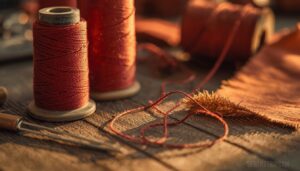
Thread doesn’t announce when it’s past its prime — it just quietly causes problems.
Knowing how long embroidery thread actually stays usable can save you from a frustrating mid-project unraveling.
Before you blame your machine or your technique, take a close look at the thread itself.
Here’s what to watch for.
Signs of Fuzz, Fraying, or Shedding
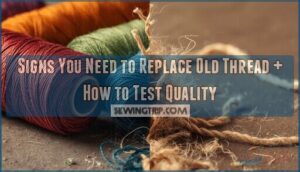
Look closely at your spools — fuzz buildup is one of the clearest signs of Thread Aging you can spot without any tools. That soft Thread Halo Glow forming along the edges? That’s Halo Edge Formation, a sign of Fiber Loosening Indicators at work.
Frayed Seam Patterns, Surface Lint Accumulation, and visible shedding all signal thread degradation. If it’s fuzzy or fraying, trust that instinct.
Color Fading, Yellowing, or Uneven Dye
Color tells you a lot. If your thread looks faded, yellowish, or patchy, that’s not just cosmetic — it’s a sign of real thread degradation.
UV lightfastness failure, yellowing mechanisms from pollutants and moisture, and uneven dye patterns from poor pretreatment influence all point to weakened fibers.
Dye bleeding during a wash test confirms it. Discoloration means your thread’s lifespan is likely up.
Exposure to nitrogen oxide yellowing can accelerate thread degradation.
Dry, Dusty, or Brittle Texture
Beyond color, your fingers will tell you what your eyes might miss. Run a spool between your thumb and forefinger — old thread has a dry, friable feel, almost a fine grit feel, like chalk dust.
That powdery crumble and brittle snap when you bend a strand signal serious material degradation. Dust accumulation in the grooves and surface friability? Classic texture loss from age.
Thread Snapping Under Light Tension
That chalky feel is one thing — but the real red flag is when your thread snaps the moment you apply any pressure. Aged thread suffers from Thread Elasticity Loss, meaning it can no longer handle a normal Tension Curve Analysis during sewing.
Even Needle Entry Stress through regular fabric causes breakage. If a simple pull test snaps it, don’t second-guess it — toss it.
Test Thread Strength Before Sewing
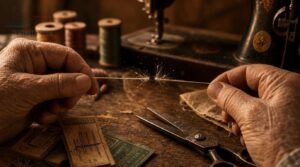
Before you load your machine, take a minute to actually test your thread. A few quick checks can tell you whether it’s still worth sewing with — or headed straight for the bin.
Here are four simple ways to find out.
Forearm-length Knot Test
This one’s simple but surprisingly revealing. Cut a piece of thread from elbow to wrist — that’s your standardized knot length — tie a single knot in the middle, then follow these steps:
- Hold both ends and apply steady, increasing pull tension.
- Watch for any slip — secure knots move less than 2mm.
- Wear eye protection; thread snaps fast.
If it breaks, toss it.
Gentle Pull Test
No special tools needed for the gentle pull test — just your hands and a short piece of thread. Hold it taut between both hands and pull steadily.
Good thread resists without slipping or snapping. Think of it like slip detection timing: the moment it gives tells you everything.
This low-tech method is surprisingly reliable for identifying weak or old thread before it ruins your seams.
Scrap-fabric Machine Test
For a real-world check, run your thread through a scrap-fabric machine test. Sew a few offcuts at 2.5–3.0 mm stitch length and watch closely.
Inconsistent stitch consistency, lint accumulation on the needle, or needle deflection on frayed edges all signal weak or old thread. feed dog grip and presser foot pressure issues compound the problem fast — thread breakage mid-seam confirms it’s time to replace.
Needle Passage Test for Shredding
Thread shredding is sneaky — it often starts long before you notice skipped stitches. Try this simple needle passage test:
- Thread your needle and pull it through scrap fabric ten times.
- Watch for Microfiber Shedding Rate — tiny fibers peeling away signal breakdown.
- Check for Needle Deflection Analysis — bending or dragging means weak tensile strength.
Shredding early? Toss it.
What Ages Sewing Thread Fastest

Thread doesn’t just get old on its own — your storage environment does most of the damage. A few specific culprits break thread down faster than anything else.
Here’s what you need to watch out for.
Sunlight and UV Exposure
Sunlight is basically kryptonite for your thread. UV exposure — especially UVA rays hitting between 10 a.m. and 4 p.m. — triggers UV degradation mechanisms that silently eat away at fiber strength.
These light exposure effects can slash tensile strength by up to 50%, and cause fading.
UV filtering storage, like opaque containers, blocks this damage.
No UV rating standards on a spool? Keep it out of direct light entirely.
Humidity and Moisture Swings
Humidity swings are sneakier than sunlight.
When moisture levels cycle between dry and damp, your thread absorbs and releases water repeatedly — causing spool swelling effects, fiber fraying, and moisture-induced lint, you’ll notice clogging your machine.
Condensation on needles transfers dampness directly to thread.
Humidity cycle monitoring keeps you ahead of damage.
Use desiccant pack placement inside airtight containers stored in cool, dry, dark places to stop humidity damage before it starts.
Heat and Dry Storage Conditions
Heat is just as sneaky as moisture — and often more damaging.
Storing spools near vents, radiators, or sunny windows dries out fibers fast, making them brittle long before their time. Temperature fluctuation mitigation matters here:
- Keep spools in cool dry dark places, ideally 60–70°F
- Use insulation strategies to buffer outdoor temperature swings
- Rely on thermostat zoning for consistent, stable storage conditions
Dust, Lint, and Airborne Pollutants
quieter culprits are quieter culprits than heat, but just as ruthless. Tiny particles settle right onto your spools, chemically abrading fibers over time — that’s dust-induced thread wear happening slowly, invisibly.
Lint buildup from textiles floats through your sewing room constantly.
Airborne pollutant mitigation helps: run HEPA filtration nearby, practice lint source control by cleaning regularly, and keep spools covered.
Particle size health risks aside, your thread pays the first price.
Cotton Vs Polyester Vs Silk
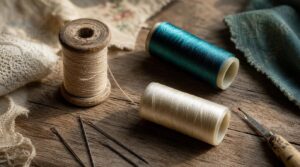
Not all thread is created equal, and that really shows regarding aging. The fiber your thread is made from plays a huge role in how long it stays strong and stitch-ready.
Here’s how the most common types hold up over time.
Why Polyester Lasts Longer
Of all the threads in your stash, polyester thread is the quiet overachiever. Its hydrophobic surface repels moisture, so humidity swings don’t weaken it the way they do natural fibers. Built-in UV stabilizers fight sun damage, and its chemical inertia means everyday exposure barely touches it. That combination of tensile integrity and abrasion durability is exactly why proper storage methods for sewing thread matter less with polyester — it’s just tougher by nature.
Polyester thread outlasts the rest because moisture, UV, and everyday wear simply cannot touch it
| Property | Polyester Thread | Natural Fiber Thread |
|---|---|---|
| UV Resistance | High — UV stabilizers protect fibers | Low — fades and weakens quickly |
| Moisture Response | Hydrophobic, dries fast | Absorbs water, weakens over time |
| Thread Lifespan | 50–100 years stored well | Under 10–20 years typical |
Testing sewing thread strength on older synthetic thread often surprises people — it holds up far longer than expected.
Why Cotton Weakens Sooner
Cotton doesn’t have an expiration date stamped on the spool, but its structure tells the whole story.
Unlike polyester, cotton fibers have a hollow lumen that traps moisture, feeding humidity damage from the inside out.
Cuticle layer erosion strips away protection, leaving fibers exposed to ozone oxidation and cellulose chain breakdown. That’s when micro-fibril shear kicks in — tiny internal tears that no strength test catches until the thread snaps.
| Cotton Threat | What It Does |
|---|---|
| Lumen Moisture Retention | Swells fibers, loosens twist |
| Cellulose Chain Breakdown | Causes silent fiber degradation |
Why Silk Needs Careful Storage
Silk thread is the diva of your sewing kit — beautiful, but high‑maintenance. Unlike polyester, it’s protein‑based, meaning UV light shielding isn’t optional; sunlight yellows and weakens it fast.
Tuck spools into archival boxes with acid‑free packaging and moisture absorbent packs to control humidity between 45–60%. Pest deterrent strategies like cedar blocks matter too. Temperature stability around 65–75°F keeps silk strong and lustrous longer.
| Storage Factor | Risk If Ignored | Best Practice |
|---|---|---|
| UV Light Exposure | Fading, fiber weakening | Dark, opaque containers |
| Humidity Swings | Mildew, fiber fatigue | Moisture absorbent packs |
| Temperature Fluctuation | Yellowing, brittleness | Cool, stable environment |
| Pest Activity | Fiber damage | Cedar blocks, regular checks |
| Improper Packaging | Abrasion, odor absorption | Acid‑free tissue, archival boxes |
How Rayon and Metallic Threads Age
Rayon and metallic threads age differently — but neither ages gracefully. Rayon suffers from moisture swelling and micro-fissure formation inside its fibers, causing brittleness progression that makes it snap unexpectedly.
Metallic threads develop coating delamination and oxidation effects, dulling their shine and weakening the core. Environmental factors hit both hard. Testing sewing thread strength early saves frustration later.
| Thread Type | Key Aging Problem |
|---|---|
| Rayon | Brittleness and strength loss from moisture swings |
| Metallic | Coating delamination and oxidation effects over time |
| Rayon | Micro-fissure formation causing sudden snap under tension |
| Metallic | Dullness and core weakening from environmental factors |
Safe Uses for Aged Thread

Old thread doesn’t have to go straight in the trash. Even when it’s too weak for a real seam, it can still earn its keep in a few low-stakes situations.
aged thread actually works just fine.
Basting and Temporary Stitching
Old thread that snaps under pressure isn’t trash — it’s your basting buddy. Since basting only needs temporary stitching to hold layers briefly, weakened thread is perfectly fine here.
Use a contrasting thread choice so stitches stay visible.
Try diagonal baste stitches for fabric slippage control on slippery materials, and a curved needle application in tight spots.
Quick release technique makes removal smooth after final seams.
Tailor’s Tacks and Markings
Tailor’s tacks are another smart job for aged thread. Since these marks are temporary stitching by design, Transfer Accuracy matters more than strength — and that’s exactly where old thread earns its keep.
Your Thread Selection here is simple: anything that loops cleanly through the needle. Focus your Placement Strategy on darts and pocket spots, choose thread with Fabric Compatibility in mind, and use a clean Removal Technique to lift tacks without snagging.
Hand Sewing Low-stress Repairs
Hand stitching a loose hem or a small tear? That’s where aged thread quietly earns its place. Just keep Thread Tension Adjustment light — you’re not reinforcing a seam under stress. Stick to Simple Stitch Patterns like running or slip stitch, and nail your Thread Color Matching so the fix stays invisible.
- Choose a Repair Fabric Choice that’s lightweight and low-pull
- Use Quick Fix Techniques for hems, buttons, and minor tears
- Test thread strength before starting — snap it gently first
- Keep stitches short to reduce tension on weakened fibers
- Discard immediately if the thread breaks mid-stitch
Practice Seams on Scrap Fabric
Scrap fabric is honestly the perfect place to put aging thread to work. Practice stitching on scraps lets you observe Stitch Length Variation, check Tension Adjustment, and spot weak thread before it wrecks your real project.
Testing Sewing Thread Strength and Integrity here costs nothing. Match Needle Size, watch your Seam Allowance Accuracy, and respect Fabric Grain Alignment — you’ll learn a lot fast.
Top 5 Products for Old Thread
Sometimes old thread still has life in it — you just need the right supplies to put it to good use. Whether you’re repurposing aged thread into art projects or patching low-stress seams, a few key products make the job easier.
Here are five worth keeping on hand.
1. Metrosene Premium Sewing Thread Set
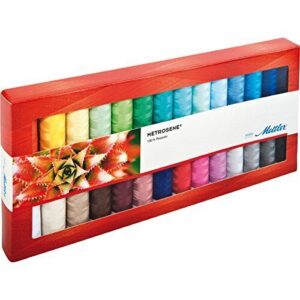
If you’re ready to ditch the aging thread and start fresh, the Metrosene Premium Sewing Thread Set is a solid first pick. You get 28 popular colors on 100% polyester spools — each with about 164 yards — packed in a handy tray.
Polyester is your best bet for longevity, and Metrosene backs that up with colorfast dyes, heat resistance, and a smooth, low-lint finish. It works on everything from knits to linen without fussing over tension settings.
| Best For | Home sewers and crafters who want a reliable everyday thread set with a wide color range for apparel, quilting, and fabric projects. |
|---|---|
| Material | 100% Polyester |
| Volume/Size | 164 yd per spool |
| Finish/Color | 28 assorted colors |
| Primary Use | Fabric sewing |
| Waterproof/Heat | Heat-resistant |
| Origin | Made in China |
| Additional Features |
|
- 28 popular colors on one organized tray — easy to find what you need without digging through a drawer
- 100% polyester holds up through machine washing, dry cleaning, and ironing without losing color or strength
- Works across a variety of fabrics — knits, linen, silk — without needing to mess with tension settings
- Color selection might not cover specialty or niche fabric shades, so you could still end up mismatched
- Some users report the thread frays or breaks under higher tension, which can be frustrating mid-project
- Listed as "Made in USA" on some sites but actually made in China — worth knowing before you buy
2. XACTO Number Two Precision Knife Safety Cap
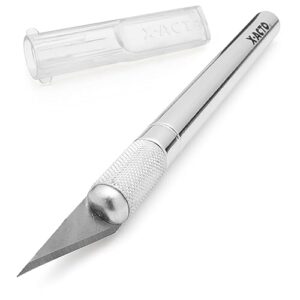
Once you’ve stocked up on fresh thread, you’ll want a clean way to snip it. That’s where the X-Acto No. 2 Precision Knife earns its place at your cutting table.
The aluminum handle keeps it light at under an ounce, and the integrated safety cap means you’re not hunting for a stray blade in your supply drawer.
It works with paper, thin plastic, and cardboard cleanly — perfect for trimming stabilizer or cutting pattern pieces with precision.
| Best For | Crafters, hobbyists, and students who need clean, precise cuts in paper, cardboard, plastic, or lightweight materials. |
|---|---|
| Material | Aluminum |
| Volume/Size | 9 inches overall |
| Finish/Color | Silver |
| Primary Use | Precision cutting |
| Waterproof/Heat | Not applicable |
| Origin | Not specified |
| Additional Features |
|
- Lightweight aluminum handle (under an ounce) makes it easy to control for detail work
- Built-in safety cap keeps the blade covered when you’re not using it
- Quick-change blade mechanism means swapping blades takes seconds
- Blade can loosen up when cutting through thicker or denser materials
- The safety cap fits loosely for some users, which cuts down on the protection it’s supposed to offer
- Only works with size 2 blades — wrong replacements can strip the threads
3. Beacon Fabri Tac Permanent Fabric Glue

When thread just won’t hold, sometimes glue does the job better. Beacon Fabri-Tac is worth keeping on your worktable for exactly those moments.
It bonds fabric, lace, leather, and canvas without leaving a visible seam — and it dries crystal clear, so your finish stays clean. The formula is waterproof and flexible after curing, which means it won’t crack on items that get handled often.
Just go easy with the nozzle — too much gets gummy fast.
| Best For | Crafters, sewers, and DIYers who need a strong, invisible bond on fabric, leather, or mixed-material projects without picking up a needle. |
|---|---|
| Material | Liquid Adhesive |
| Volume/Size | 4 oz (113 mL) |
| Finish/Color | Crystal clear |
| Primary Use | Fabric bonding |
| Waterproof/Heat | Waterproof formula |
| Origin | Made in USA |
| Additional Features |
|
- Dries completely clear, so there’s no visible residue or haze on your finished project
- Waterproof and flexible once cured — holds up on outdoor gear, cushions, and anything that gets regular use
- Works on a wide range of materials: fabric, lace, leather, canvas, wood, and more
- Easy to over-apply — the gel consistency can get stringy and webby on narrow surfaces
- Thick formula can be tricky to spread evenly on delicate or very flexible materials
- May irritate sensitive skin, so gloves are a good idea during use
4. Mod Podge Gloss Glue Sealer
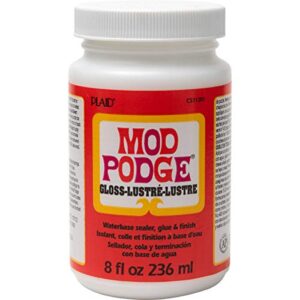
Mod Podge is a surprising addition to any sewer’s toolkit — but hear me out.
When you’re repurposing aged thread into decorative work like paper flowers, fabric collages, or mixed-media art, a sealer makes all the difference. Mod Podge Gloss acts as glue, sealer, and top coat in one step.
It dries completely clear with a glossy finish, holds lightweight materials firmly, and cleans up with just soap and water. Perfect for protecting those creative second-life projects without fuss.
| Best For | Crafters, hobbyists, and teachers who want an easy all-in-one solution for decoupage, collage, and mixed-media projects. |
|---|---|
| Material | Water-Based Liquid |
| Volume/Size | 8 fl oz (237 mL) |
| Finish/Color | Clear gloss |
| Primary Use | Decoupage & sealing |
| Waterproof/Heat | Moisture-resistant |
| Origin | Made in USA |
| Additional Features |
|
- Does the job of three products at once — glue, sealer, and top coat — which saves time and keeps your supply list short.
- Dries clear with a nice glossy finish, so your work looks clean and intentional rather than coated in something obvious.
- Non-toxic and easy to clean up with soap and water, which makes it a no-stress choice for kids or classroom settings.
- You have to brush it on carefully — too much at once and it can run or leave visible stroke marks on your project.
- Not built for heat or heavy moisture, so anything that’ll see a dishwasher or steam is going to need something tougher.
- Thick layers take longer to dry than you’d expect, which can slow things down if you’re working in multiple coats.
5. Golden Heavy Gel Gloss
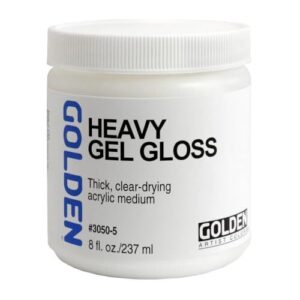
If you’re turning old thread into sculptural art or dimensional collages, Golden Heavy Gel Gloss is worth keeping close. This clear-drying acrylic gel holds peaks, builds texture, and dries to a glossy finish without yellowing over time.
Mix it into your aged thread projects to add structure and shine — think faux frosting effects or layered fiber art.
It’s UV and water resistant once cured, so your repurposed creations actually last. A little goes a long way from that 8 oz jar.
| Best For | Artists and crafters who want to add texture, structure, and shine to acrylic-based projects like collage, sculpture, and fiber art. |
|---|---|
| Material | Acrylic Gel |
| Volume/Size | 8 fl oz (237 mL) |
| Finish/Color | Transparent clear |
| Primary Use | Acrylic art medium |
| Waterproof/Heat | Water & UV resistant |
| Origin | Made in USA |
| Additional Features |
|
- Dries clear and glossy without yellowing, so your work stays looking sharp over time
- Flexible once cured and holds up against water, UV light, and everyday wear
- Works as both a thickener and an adhesive, so it pulls double duty in mixed-media projects
- Only plays nice with acrylic paints — oil and watercolor artists need to look elsewhere
- The thick consistency can be tricky to work with for fine details or thin glazes
- An 8 oz jar can run out fast on bigger projects, which adds up cost-wise
Store Thread to Prevent Damage
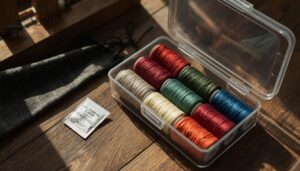
Good storage is honestly the easiest way to add years to your thread’s life. The right setup blocks light, moisture, and dust before they quietly do their damage.
Here’s what actually works.
Keep Spools in Opaque Containers
Light is one of thread’s worst enemies — UV rays fade dyes and silently weaken fibers over time. That’s why material choice matters: opaque, airtight containers beat clear bins every time.
Good seal integrity keeps humidity out, while smart desiccant placement inside larger boxes controls moisture further. Add a simple labeling system with purchase dates, and your light blocking, protective storage containers do the rest.
Use Cool, Dry Storage Spaces
Temperature matters more than most sewists realize. Aim to store your spools somewhere between 60–70°F — think cool basement shelf, not a sunny craft room windowsill.
Airflow Optimization, UV Shielding, and Dust Prevention all improve dramatically when you nail Temperature Stabilization from the start.
Good Proper Storage Methods for Sewing Thread start here:
- Keep spools away from radiators and heating vents
- Choose a cool dry place with consistent temps year-round
- Use airtight containers made from opaque, non-reactive materials for smart Container Material Choice
Maintain Balanced Humidity Levels
Humidity is sneaky — too much and your thread goes sticky and weak, too little and it turns brittle.
Keep storage spaces between 45–55% relative humidity. A simple hygrometer calibration check once a year keeps your readings accurate.
For moisture damage prevention, seasonal RH adjustment matters: add a humidifier in dry winters, run a dehumidifier in humid summers. That balance seriously extends thread lifespan.
Store Spools Upright and Sealed
Think of your spools like little soldiers — they work best standing at attention. Storing them upright in airtight containers with Rack Stability Features keeps thread ends aligned and flanges safe from damage. Before sealing up, try Seal Integrity Testing by pressing the lid firmly and checking for gaps.
- Moisture Indicator Strips to catch humidity changes early
- Anti‑Dust Lining Materials to block fiber contamination
- Color‑Coded Labeling so older stock gets used first
Replace Thread Before It Fails
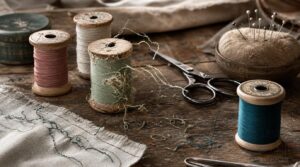
Sometimes the kindest thing you can do for your sewing is know when to let a spool go. Holding onto thread that’s past its prime costs you more in frustration and failed seams than any replacement spool ever would.
Here’s how to recognize the clear signs that it’s time to swap it out.
Discard Thread That Breaks Often
If your thread snaps during a simple seam, that’s not bad luck — that’s expired thread telling you it’s done. Frequent thread breakage is a real thread breakage risk you shouldn’t ignore.
Test sewing thread strength with a quick pull: if it breaks easily, discard it responsibly as part of your Thread Waste Management routine. Keeping a basic Maintenance Checklist helps you catch weak or old thread before it ruins your work.
Replace Thread That Leaves Excess Lint
Breakage isn’t the only red flag. Old sewing thread that’s degrading sheds — a lot.
If you’re seeing fuzz buildup caking your bobbin area or throat plate after just a few seams, that’s thread degradation talking.
Swap in low-lint thread types and pair them with lint-reducing needles. Machine lint management stays easier when your thread isn’t falling apart mid-stitch.
Retire Thread That Skips Stitches
Skipped stitches don’t always mean bad needle condition or bobbin maintenance issues. Sometimes thread itself is just done. When you’ve already checked machine timing, thread path friction, and stitch length consistency — and the skipping keeps happening — swap the spool. Identifying weak or old thread early saves your project.
Watch for these tell-tale skip patterns:
- Gaps clustering near the seam’s start
- Inconsistent stitch length across straight runs
- Skips that return even after rethreading
Rotate Older Stock Before New Spools
Old spools don’t announce themselves — they just quietly fail you mid‑seam. That’s why a simple FIFO Rotation System keeps your thread working, not waiting.
| Rotation Step | Why It Matters |
|---|---|
| Batch Date Tags on every spool | Shelf Life Tracking at a glance |
| Spool Labeling Protocol by arrival | Makes identifying old sewing thread easy |
| Rotation Schedule Alerts each shift | Keeps Best Practices for Thread Inventory and Rotation consistent |
| Thread inventory system review monthly | Extends thread lifespan extension across your whole stash |
Frequently Asked Questions (FAQs)
How do you know if sewing thread is expired?
Like milk without a label, expired thread doesn’t announce itself — but the clues are there. Watch for snapping under light tension, dye migration, fuzz, and poor stitch uniformity.
Your thread is silently telling you it’s done.
How do you know if a thread is too old?
Your thread tells you when it’s done.
Watch for fuzzing, fading, or snapping under light tension — those are classic fiber degradation signs that signal poor thread longevity and weak seam integrity ahead.
What happens if polyester thread is too old for sewing?
Even the toughest thread has its limits — and when polyester finally gives out, it causes stitch failure, elasticity loss, and seam durability issues that ruin finished work fast.
Can you use old sewing thread?
Yes, you can — just not for everything. Weakened old sewing thread still works great for basting, tailor’s tacks, or DIY Thread Crafts and Non-Structural Embellishments where strength simply doesn’t matter.
What Are the Best Thread Storage Containers?
Good storage is half the battle.
opaque box with UV-resistant plastics blocks light damage, while silica gel moisture packs fight humidity.
Modular divider systems and portable zippered cases keep everything organized and protected.
Should I Toss Threads With Just a Few Meters Left?
Don’t toss them yet. A few meters can still handle basting, tailor’s tacks, or a quick hand repair.
Match the thread to low-stress tasks, and you’ve got smart Thread Meter Management with zero waste.
How Do I Know if Thrift Store Threads Are Still Usable?
That thrift store spool might be a steal — or a trap. Run a quick Fiber Blend Identification check and Spool Condition Rating scan before trusting it with your next project.
Does Thread Quality Impact the Lifespan of Finished Projects?
Absolutely — thread quality metrics directly shape how long your finished seams hold up.
Better fiber fatigue resistance means fewer split seams after washing, boosting overall sewing project longevity more than most sewists realize.
Does thread actually expire?
Sewing thread does indeed expire — not with a stamped expiration date, but through chemical degradation and polymer breakdown over time.
Old sewing thread quietly loses its material longevity, making shelf life and expiration myths worth understanding before you stitch.
Can old thread damage a sewing machine internally?
brittle thread sheds lint into tension discs, clogs your bobbin case, and creates hook friction heat.
That extra stress causes needle bar wear and drive gear jamming, turning a cheap spool into an expensive repair.
Conclusion
It’s funny how the moment you finally learn how to know when sewing thread is too old, you’ll start noticing suspicious spools everywhere — tucked in old tins, forgotten in drawers, lurking in inherited kits.
That’s not bad luck. That’s awareness kicking in.
Your seams are only as strong as what holds them together, and now you know exactly what to look for before the fabric ever touches your machine. Trust the tests, not the label.