This site is supported by our readers. We may earn a commission, at no cost to you, if you purchase through links.
Fabric layers have a mind of their own. Silk slides forward, knit stretches sideways, and a quilt sandwich creeps in three directions at once—all while your regular presser foot holds the bottom layer in a death grip and does nothing about the top.
That’s where things go wrong, and it happens to every sewist eventually.
A walking foot solves this by gripping both layers simultaneously, moving them through your machine in perfect sync. Understanding what a walking foot does changes how you approach everything from slippery charmeuse to a chunky denim hem—and it might be the single upgrade that stops you from fighting your fabric.
Table Of Contents
- Key Takeaways
- A Walking Foot Feeds Fabric Evenly
- How a Walking Foot Works
- Walking Foot Versus Regular Presser Foot
- Best Fabrics for Walking Foot Use
- Why Quilters Use Walking Feet
- Preventing Slippage, Puckering, and Stretching
- Matching Plaids, Stripes, and Prints
- Installing a Walking Foot Correctly
- Best Settings for Walking Foot Sewing
- Walking Foot Limits and Problems
- Frequently Asked Questions (FAQs)
- Conclusion
Key Takeaways
- A walking foot grips both the top and bottom fabric layers at the same time, so slippery, stretchy, or thick fabrics stop shifting, and your seams come out even.
- It works by pairing its own built-in feed teeth with your machine’s lower feed dogs, creating a synchronized "dual feed" that moves every layer at the exact same pace.
- Quilters rely on it heavily because it keeps three layers of a quilt sandwich — top, batting, and backing — from creeping apart stitch by stitch.
- It’s not a one-size-fits-all tool — tight curves, free-motion quilting, and decorative stitches are better handled with a different foot.
A Walking Foot Feeds Fabric Evenly
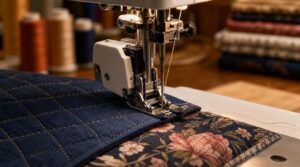
A walking foot does something a regular presser foot simply can’t — it feeds both layers of fabric at the same time, from top to bottom. That one difference changes everything about how your seams turn out.
That synchronized feed is exactly why a sewing machine built for heavy denim pairs so well with a walking foot — thick layers become far less of a battle.
A walking foot feeds both fabric layers at once—and that single difference changes everything about your seams
Here’s what’s actually happening when you sew with one.
What a Walking Foot Does on a Sewing Machine
A walking foot is basically a dual feed foot — it adds its own set of feed teeth on top to work alongside your machine’s lower feed dogs. Together, they move every layer in perfect sync, which is the secret to even fabric feed.
That synchronized motion manages needle timing coordination naturally, making it far more effective than a regular sewing foot at preventing fabric slippage and puckering.
How It Grips The Top Fabric Layer
The secret lies in the sole. Its micro-tooth design features tiny serrated points that grip the fabric’s top layer without snagging fibers. This innovative structure ensures secure hold while preventing damage.
A friction coating enhances grip further, proving particularly useful on slippery fabrics like satin or silk. This additional layer provides extra "bite," maintaining control even on challenging materials.
Some models incorporate adjustable pressure mechanisms and material-specific grip settings. These allow users to tailor surface texture patterns to match the fabric being fed, optimizing performance for diverse textiles.
That’s smart fabric grip built right in.
Why It Helps The Top and Bottom Layers Move Together
That grip on the top layer is only half the story. The real magic happens when the walking foot’s built-in feed teeth sync perfectly with your machine’s lower feed dogs — creating a uniform feed rhythm that moves multiple layers together as one.
These layer cohesion mechanics keep balanced fabric tension from top to bottom, so even feeding and consistent layer motion happen naturally, producing even stitch formation throughout.
How It Prevents Shifting, Bunching, and Puckering
That synchronized feeding rhythm does more than keep layers moving—it actively fights the three problems that wreck projects: shifting, bunching, and puckering.
Here’s what pucker‑free stitching and fabric drift prevention actually give you:
- Layer sync optimization keeps every layer advancing at the same rate
- Tension balance control distributes pressure evenly across the seam line
- Seam line stabilization prevents wavy, uneven stitches
- Even fabric feeding for multiple layers eliminates bunching at thick spots
- Fabric drift prevention maintains layer alignment from start to finish
How a Walking Foot Works
So what’s actually happening inside that foot when it moves across your fabric? A few key mechanisms work together to make it all possible. Here’s a closer look at how each part does its job.
Built-in Feed Teeth on The Walking Foot
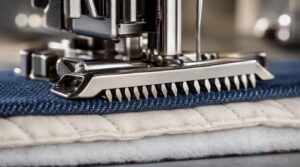
Those little metal teeth on your walking foot are doing serious work.
Arranged in a precise row, they bite lightly into the top fabric layer — enough grip to advance it evenly, never enough to leave marks.
Here’s what makes them effective:
| Feature | Detail | Why It Matters |
|---|---|---|
| Tooth Material | Stainless or hardened steel | Wear Resistance on thick fabrics |
| Replaceable Tooth Blocks | Swappable on some models | Easy maintenance, longer foot life |
| Hardness and Grip | Firm but fabric-friendly | Teeth Alignment Precision with feed dogs |
When paired with a walking foot, dual feed interaction enhances layer synchronization.
How The Foot Works With Lower Feed Dogs
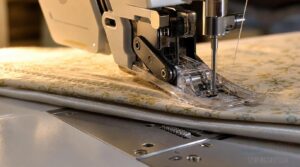
Your machine’s feed dogs aren’t working alone — the walking foot joins that effort from above.
Here’s how Feed Dog Coordination plays out in practice:
- The foot’s teeth drop with the Needle Cycle Sync, catching the top layer right as the bottom feed dogs engage.
- Dual Feed Timing keeps Fabric Tension Control balanced so neither layer races ahead.
- Pressure Balance distributes movement evenly across the whole fabric stack.
Together, they nail how walking foot works with feed dogs seamlessly.
Why Synchronized Feeding is Called Dual Feed
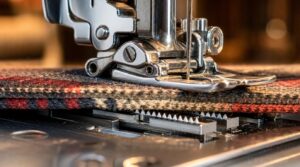
The name "dual feed" says exactly what’s happening: two independent feed paths — one from the feed dogs below, one from the walking foot above — move your fabric at the same time. That’s the Dual Feed Definition in brief.
Instead of one layer dragging the other, the Two‑Path Mechanism gives each layer its own driver, eliminating fabric layer shifting through true Top‑Bottom Synchronization.
How The Foot “walks” as The Needle Stitches
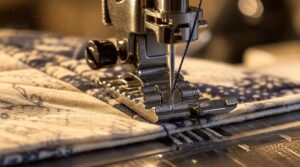
Think of it like a perfectly choreographed dance. As the needle drops into your fabric, the foot presses down to hold everything steady — then lifts just enough to step forward between stitches.
That Lift‑Press Cycle creates Dual‑Feed Rhythm through precise Foot‑Needle Synchronization. The Timing Mechanism and Micro‑Movement Control keep machine feed dogs’ synchronization seamless, so fabric feeding stays consistent and layer alignment never slips.
Walking Foot Versus Regular Presser Foot
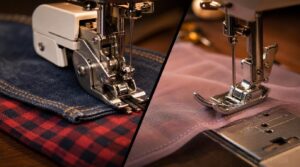
Both feet hold your fabric down, but that’s about where the similarities end. difference between them comes down to how each one actually moves fabric through your machine.
what you need to know about when each one earns its place at the needle.
How a Regular Presser Foot Holds Fabric Down
Your regular presser foot works like a hand pressing fabric flat on a table — simple, steady, reliable. It applies downward pressure through its sole shape, pushing the bottom layer firmly against the feed dogs for consistent feed dog contact.
Most machines offer adjustable presser foot pressure, letting you fine-tune fabric tension control for different weights.
This alone manages most everyday sewing beautifully.
Why Regular Presser Feet Can Let Layers Shift
Here’s the honest truth: a regular presser foot has no top teeth. That’s the root of the problem. Without them, there’s no real grip on the upper layer — just downward pressure. This creates feed dog mismatch, where the bottom moves faster than the top.
- Fabric slip tendency increases on slippery or layered materials
- Uneven pressure application lets layers creep apart over long seams
- Top teeth absence means zero synchronized control, causing puckering and layer alignment failures
When a Walking Foot Gives Better Control
So when does the walking foot truly shine? Any time you’re dealing with slippery, stretchy, or layered fabrics.
It gives you fabric grip calibration that a regular foot simply can’t match — keeping thread tension balance steady and stitch consistency control locked in across every layer. Handling stretchy and slippery fabrics with a walking foot means even stitching, precise needle path precision, and real layered fabric flatness throughout your seam.
When a Regular Presser Foot is Still Enough
That said, your regular presser foot still manages plenty of jobs just fine. Single Layer Work, Beginner Projects, and Quick Repairs rarely need the walking foot’s extra grip.
- Simple Straight Seams on stable cotton or linen
- Edge Stitching Accuracy on flat, non-slippery fabric
- Basic hemming on single layers
- Quick repairs on plain seams
- Entry-level topstitching on non-bulky material
Best Fabrics for Walking Foot Use
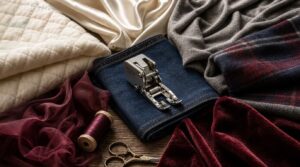
Not every fabric plays by the same rules, and that’s exactly where a walking foot earns its keep. Some materials slip, stretch, or bunch the moment a regular presser foot touches them.
Here are the fabric types that truly benefit from this tool.
Slippery Fabrics Like Silk, Satin, and Rayon
Silks, satins, and rayon are gorgeous — and notoriously stubborn. These slippery fabrics love to creep forward while you sew, leaving you with crooked seams.
A walking foot grips both layers evenly, stopping fabric shifting before it starts.
| Challenge | Walking Foot Fix |
|---|---|
| Silk sliding forward | Synchronized dual-feed grip |
| Satin seam creep | Even top-and-bottom feeding |
| Rayon layer drift | Consistent presser foot pressure |
| General slippage | Stabilizing sprays + pinning techniques |
Pair it with proper needle selection — a sharp, fine needle — and smart pressing methods before you cut. Good seam finishing keeps everything clean.
Stretch Fabrics Like Knits, Lycra, and Spandex
Stretch fabrics pose unique challenges. Knits, Lycra, and spandex stretch during sewing, distorting seams and creating wavy edges. A walking foot handles knit fabric tension beautifully, feeding both layers evenly to prevent fabric slippage and puckering.
This is especially critical for elastane recovery blends, where fiber blend ratios significantly influence drape and moisture management.
Always adhere to heat care guidelines as well, as improper handling can compromise the fabric’s performance and longevity.
Bulky Fabrics Like Denim, Canvas, and Fleece
Denim, canvas, and fleece can feel like a wrestling match under your needle. These heavy fabrics stack up fast, and a regular presser foot just can’t keep both layers moving evenly. That’s where your walking foot earns its place.
- Use heavy-duty needles (90/14 or 100/16) to pierce thick fabrics cleanly
- Pre-wash considerations matter — shrinkage can throw off seams later
- Seam reinforcement and edge finishing prevent fraying on bulky raw edges
Thread choice and stitch length make a real difference too.
Coated, Textured, or Layered Materials
Coated vinyl, faux leather, and layered fleece present a sneaky challenge — their surfaces resist grip and slide unpredictably. That’s where a dual feed foot truly shines.
| Material | Walking Foot Benefit |
|---|---|
| Coated vinyl | Prevents fabric slippage |
| Faux leather | Improves layer bonding |
| Textured canvas | Controls texture depth evenly |
| Laminated cotton | Facilitates coating adhesion |
| Layered fleece | Stops fabric puckering prevention |
Surface hardness and wear resistance vary — test first.
Why Quilters Use Walking Feet
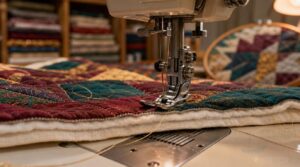
Quilting is where the walking foot really earns its keep. You’re working with three layers at once — the quilt top, batting, and backing — and keeping all of them moving together is no small task.
Here’s exactly why quilters reach for this foot every time.
Feeding Quilt Top, Batting, and Backing Evenly
A quilt sandwich — top, batting, and backing — is where the walking foot really earns its keep. Its Feed Dog Synchronization keeps all three layers moving at exactly the same pace, so you get true Quilt Sandwich Uniformity from edge to edge.
That Layer Tension Balance and Fabric Slip Prevention means your Stitch Line Uniformity stays consistent, even through the thickest spots.
Preventing Quilt Layers From Creeping
Layer creep is sneaky — it builds up stitch by stitch until your quilt top looks like it shifted sideways. The walking foot fights this through Tension Balancing and Weight Distribution Control, keeping Quilting Multiple Layers locked in sync.
Here’s what prevents that frustrating drift:
- Use smart Pinning Strategies — pin every 3–4 inches
- Achieve proper Throat Space Clearance for smooth sandwich passage
- Rely on the Walking Foot’s dual feed for layer alignment
- Apply Vibration Damping Techniques by sewing at steady, slower speeds
- Consistent tension prevents fabric slippage and puckering during multilayer sewing
Sewing Straight Quilting Lines
Straight quilting lines are where needle alignment really earns its keep. Your walking foot — an even feed foot by design — keeps fabric feeding smoothly while you focus on seam guide use to stay on track.
Dial in your stitch length adjustment to around 3 mm, maintain a steady pace for stitch density control, and those machine quilting straight lines will practically sew themselves.
Improving Stitch Consistency on Thick Quilt Sandwiches
Thick sandwiches are where a walking foot — or dual feed foot — truly proves its worth. Achieving stitch consistency across multiple thick layers demands more than just slowing down.
Key techniques include:
- Needle Pressure Adjustment keeps layers feeding without compression dips
- Thread Tension Balancing prevents loops on the back side
- Batting Density Management distributes loft evenly so fabric feeding stays smooth
- Stitch Density Monitoring catches compression shifts before they snowball
Preventing Slippage, Puckering, and Stretching
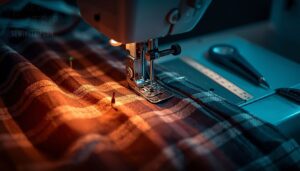
A walking foot does more than just move fabric forward — it actively fights the common problems that ruin a seam. Slippage, puckering, and stretching each happen for slightly different reasons, but the walking foot handles all of them the same way: by keeping every layer under equal control.
Here’s how it works across four common sewing scenarios.
How a Walking Foot Reduces Fabric Drag
Fabric drag is sneaky — it’s what causes one layer to creep ahead while the other lags behind. walking foot fights this with staggered teeth that grip the top layer while the lower feed dogs hold the bottom.
synchronized layer motion, paired with balanced pressure, keeps everything moving as one unit.
| Factor | Standard Foot | Walking Foot |
|---|---|---|
| Layer grip | Bottom only | Top + bottom |
| Fabric resistance | High on slippery fabrics | Minimized fabric resistance |
| Feed control | Inconsistent | Controlled feed speed |
Keeping Seams Flat on Lightweight Fabrics
Lightweight fabrics like silk and rayon need a little extra love. With a walking foot acting as your even feed foot, thread tension stays balanced and seam allowance stays true.
Add these habits for preventing fabric slippage and puckering during sewing:
- Baste first using the basting method before committing to your final seam
- Use a fabric stabilizer under slippery fabrics to anchor the fabric feed mechanism
- Finish with gentle pressing techniques to set seams without distortion
Avoiding Wavy Seams on Knits
Knits are a different beast. Unlike silk, they stretch — and that’s exactly what makes wavy seams happen.
Start with ballpoint needle choice to protect those fibers, then loosen your upper tension control slightly. Engage your feed dogs fully, pick a zigzag stitch length that gives seams room to flex, and always do knit fabric testing on a scrap first.
Even stitches depend on balanced fabric tension and zero fabric shifting.
Reducing Puckers in Hems, Topstitching, and Quilting
Puckering is usually a tension problem. The walking foot addresses a big part of it by balancing how both layers feed — but pair it with slightly looser needle tension and a longer stitch for cleaner topstitching and quilting techniques.
Use Edge Stabilizer Application on tricky hems, run a Test Swatch Evaluation first, and keep those feed teeth lint-free for consistent puckering prevention.
Matching Plaids, Stripes, and Prints
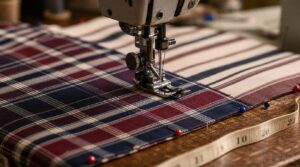
Matching plaids, stripes, and prints is where a walking foot really earns its keep. Without it, the top layer creeps forward and your pattern lines end up mismatched — which is beyond frustrating after all that careful cutting.
Here’s how to keep everything lined up from the first stitch to the last.
Keeping Patterned Layers Aligned
Pattern matching is where good sewing meets real precision.
Before you stitch, mark your pattern start points on both layers — these are your layer registration marks. Use pins or clips to lock fabric alignment at key intersections.
Always do a test swatch validation on scrap first.
Seamline tracking and fabric tension balancing keep your patterned fabric honest, so seams meet exactly where they should.
Preventing The Top Fabric From Advancing Too Fast
The top fabric loves to race ahead — that’s where Adaptive Pressure Control saves you.
Your walking foot’s built-in teeth sync with the machine feed dogs through Layer Sync Timing, so both layers advance together.
Think of it as Real-time Feed Adjustment happening stitch by stitch.
This Foot Lift Modulation prevents fabric shifting, keeps Fabric Tension Monitoring consistent, and stops that sneaky top layer from outpacing the bottom.
Using Pins or Clips With a Walking Foot
Even with a walking foot doing the heavy lifting, pins and clips are still your best friends for fabric handling. Your Pin Placement Strategy matters — place them perpendicular to the seam, about an inch apart, through all fabric layers.
- Clip vs Pin: Use sewing clips on bulky layers; fine pins on wovens
- Curved Seam Pinning: Stagger clips along curves to prevent fabric shift
- Safety Removal Timing: Pull each pin before the needle reaches it
Always do Layer Alignment Checks before you start.
Sewing Accurate Seams on Checks and Directional Prints
Checks and stripes are unforgiving—one wrong stitch, and the whole seam screams ‘mismatch’.
Your Pin Placement Strategy is everything here: pin perpendicular to the seam, aligning motifs exactly at the seam line.
A walking foot keeps layers moving together, so Print Continuity Checks stay accurate.
Maintain Seam Allowance Consistency, use Thread Color Matching, and finish with Pressing Directional Prints for clean, even stitches.
Installing a Walking Foot Correctly
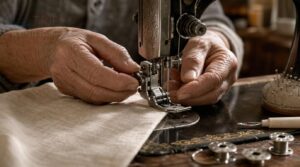
Installing a walking foot isn’t complicated, but the order you do it in really matters. few simple steps will get you set up without frustration or guesswork.
Here’s what to do, from removing your old foot to making sure your machine is ready to go.
Removing The Standard Presser Foot
Before you attach the walking foot, the regular presser foot has to go. Start with a simple safety precaution — turn off your machine and raise the needle to its highest position.
Lift the presser foot lever fully, then press the release button at the back of the holder. The foot drops right off.
Set it somewhere safe.
Positioning The Walking Foot Lever
Now for the part that trips people up — the lever. This arm on your walking foot needs to wrap around the needle bar screw, sitting snugly inside the shank groove fit.
Get the lever angle right, and the foot’s feed teeth will move perfectly with your machine feed mechanism. Lever height matters too — check clearance adjustment so the foot clears your needle plate evenly, and confirm needle alignment before moving on.
Securing The Foot to The Machine Shank
With the lever set, it’s time to lock things down. Slide the foot flush against the shank adapter, then use your mounting screw to secure it — snug, not white‑knuckle tight. Good screw alignment keeps the foot stable without stressing the needle clamp screw.
- Seat the foot flat against the shank
- Thread the clamp lever into position
- Tighten to the torque specification in your manual
Give it a gentle tug — zero wobble means you’re ready.
Checking Machine Compatibility Before Sewing
Once the foot is secure, don’t start sewing just yet — a quick machine compatibility check saves you from headaches later.
Confirm your Shank Type Verification first, since foot compatibility with various shank types varies by brand.
Use your manufacturer’s Model Compatibility Chart to match Presser Foot Mount, Needle Plate Clearance, and Adapter Compatibility Check needs.
| Check | What to Verify |
|---|---|
| Shank type | Low or high shank fit |
| Needle plate clearance | No rubbing or binding |
| Adapter compatibility | OEM vs third-party fit |
| Feed dogs synchronization | Engaged and operational |
| Model compatibility chart | Matches your machine year |
Best Settings for Walking Foot Sewing
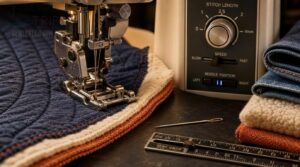
Getting your settings right makes all the difference when you’re sewing with a walking foot. A few small adjustments — things like stitch length, speed, and needle size — can take your results from frustrating to perfect.
Here’s what to dial in before you start sewing.
Using Engaged Feed Dogs
Before you sew a single stitch, check that your feed dogs are raised and engaged — this is non‑negotiable for walking foot success. Your machine’s feed dogs synchronization with the dual feed foot creates a smooth, even pull on both fabric layers. Think of it as a handshake between top and bottom.
Skipping this step breaks the whole system.
Choosing a Suitable Stitch Length
Now that your feed dogs are doing their job, stitch length becomes your next dial to get right.
Fabric-Based Stitch Length matters more than most sewers realize. A solid starting point is 2.5 mm — then adjust from there.
- Woven cotton: 2.0–3.0 mm for clean, flat seams
- Bulk material adjustment for denim or fleece: try 3.5–4.0 mm
- Knits and spandex: 2.5–3.0 mm keeps stretch without distortion
- Zipper seam length calls for a tighter 2.0–2.5 mm
- Always run a Test Strip Calibration on scrap first — six inches tells you everything
Tension stitch balance follows naturally once your length is set. An adjustable stitch length paired with your walking foot keeps thread tension honest across every layer.
Sewing at a Slower, Steady Speed
Think of speed like seasoning — a little too much ruins everything. Slow Stitch Execution is your secret weapon here.
Pedal Speed Modulation keeps your cadence smooth, so Hand Rhythm Consistency follows naturally. Let Needle Drop Timing do the work while you guide gently.
Fabric Tension Balance stays honest when your sewing speed adjustment is deliberate. Slower stitch speed paired with adjustable stitch length? That’s control you can actually feel.
Adjusting Presser Foot Pressure
Pressure Calibration isn’t a one-size-fits-all deal. Your presser foot needs the right balance — too firm and it drags; too loose and layers wander. Start at medium, then fine-tune with scrap fabric.
- Use Pressure Dial Adjustment to match fabric weight
- Lower Delicate Fabric Pressure to prevent puckering
- Raise pressure for thick multi-layer projects
- Check Stitch Quality Pressure after any speed change
- Use Pressure Troubleshooting when seams go wavy
Matching Needle Size to Fabric Thickness
Needle size matters more than most people realize. Match your needle to your fabric weight — sizes 60/8 to 75/10 for lightweight silks, 80/12 to 90/14 for medium cottons, and 100/16 to 110/18 for thick fabrics and bulky fabrics like denim.
Consult Needle Size Charts and Fabric Weight Guides to simplify your choice. Always check Thread Compatibility, then run Stitch Quality Testing on scrap before committing.
Your walking foot performs best when needle and thread selection are dialed in together.
Walking Foot Limits and Problems
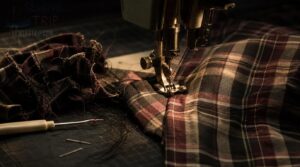
The walking foot is a powerhouse tool, but it does have a few things it simply can’t do well. Knowing its limits saves you time, frustration, and a few ruined projects.
Here’s what to watch out for.
Why It is Not Ideal for Free-motion Quilting
Free-motion quilting needs you to guide fabric freely in any direction — but a walking foot wasn’t built for that.
Its synchronized dual-feed with the machine’s feed dogs creates Footprint Bulkiness and Pivot Freedom Reduction, making those swooping curves nearly impossible. Fabric Drag Increase and Stitch Variation Restriction kick in fast.
For free-motion quilting, swap it out for a darning foot instead.
Decorative Stitches to Avoid
Some stitches just don’t play nice with a walking foot. Satin stitch sag happens because the foot’s grip fights those long thread spans. Chain stitch distortion warps curved seams on jersey.
Heavy couching creep pushes layers out of place. Large motif bulk strains the feed. And metallic thread corrosion wears tension fast.
Stick to straight or basic stitches here.
Reduced Visibility Around Tight Curves
tight curves are where the walking foot earns its reputation as a bit clumsy. Its added bulk cuts into your Foot Visibility, making Seam Alignment tricky on sharp bends.
Poor Lighting Angle deepens shadows under the foot, so Contrast Markings really help here.
Try shorter Stitch Length Tweaks and build in an Operator Pause at each curve peak to stay on track.
Common Causes of Skipped Stitches
Curves tested your patience — skipped stitches might test it even more. Most happen for fixable reasons:
- A Bent Needle misses the thread loop on the way down
- Improper Tension throws off the stitch timing
- Wrong Needle Type for your fabric causes skips
- Feed Dog Issues disrupt how layers advance past the needle plate
- Low Thread Quality or mismatched thread weight breaks the rhythm
Slow your speed control down and check stitch length first.
Cleaning Lint From The Walking Foot Teeth
Lint sneaks into those feed teeth faster than you’d think. Power off first, then remove the walking foot before any cleaning begins. Your brush selection matters — a small sewing machine brush reaches between teeth easily. Use tweezers technique for stubborn fibers without bending anything.
| Task | Tool | Frequency |
|---|---|---|
| Brush teeth | Sewing brush | Every session |
| Extract lint | Fine tweezers | As needed |
| Light lubrication | Oil on cloth | Monthly |
Store your foot in a lint-free container — smart storage practices prevent recontamination between projects.
Frequently Asked Questions (FAQs)
What is the benefit of a walking foot?
A walking foot keeps every layer moving together — no slipping, no puckering.
You get cleaner seams, tension stability improvement, and fabric feed control across quilts, knits, and bulky stacks.
Can you use a walking foot for everything?
No tool does every job. The walking foot shines on thick, slippery, or layered fabrics — but for free-motion work, decorative stitches, or tight curves, you’ll want a different foot.
Can a walking foot work on all sewing machines?
Not quite. Machine compatibility depends on shank types — low, mid, or high — and adapter availability. Industrial machines often use proprietary dual-feed integration. Always check your brand’s compatibility chart before buying.
How long does a walking foot typically last?
A good walking foot lasts 5–10 years with regular home use. Metal ones outlast plastic ones.
Keep the feed teeth clean, oil moving parts occasionally, and yours could easily push past that range.
Can you quilt patterns other than straight lines?
Beyond straight lines, you can explore spiral stitch fills, arc template quilting, and organic motif quilting.
Variegated thread textures and multi-scale pattern layering add even more depth and visual interest to your quilt.
Should you oil a walking foot after every use?
No, don’t oil your walking foot after every use. Oil only when you notice friction, squeaking, or grinding.
Over-oiling traps lint and can stain your fabric. Oil frequency matters — less is more.
Conclusion
Once you’ve got a walking foot in your toolkit, there’s no going back. Understanding what a walking foot does transforms frustrating projects into satisfying ones—silk stays put, knits stop stretching, and quilt layers move like they’re finally working with you instead of against you.
It won’t solve every sewing challenge, but for slippery, stretchy, or layered fabrics, it’s the tool that brings everything into alignment.
Attach it once, and you’ll wonder how you ever sewed without it.