This site is supported by our readers. We may earn a commission, at no cost to you, if you purchase through links.
Your sewing machine hums along beautifully—until it doesn’t. One day you’re mid-seam and suddenly the stitches skip, the tension goes haywire, or something starts making a sound like a coffee grinder. Nine times out of ten, the culprit isn’t a broken machine. It’s a neglected one.
Most sewists don’t realize how much lint, dried oil, and tiny debris accumulate inside their machine after just a few projects. That buildup quietly wears down moving parts, throws off tension, and turns smooth sewing into a frustrating guessing game.
A solid sewing machine tune up checklist catches all of it—before small problems become expensive repairs. Grab a screwdriver and ten minutes.
Table Of Contents
Key Takeaways
- Lint, dried oil, and debris are the hidden culprits behind most sewing machine problems, not a broken machine.
- A proper tune-up requires five key tools: sewing machine oil, a horsehair brush, a precision screwdriver set, tweezers, and scrap fabric for testing.
- Always unplug the machine, remove the needle, bobbin case, and presser foot before cleaning or lubricating anything.
- After cleaning and oiling, test on scrap fabric to confirm straight stitches, zigzag stitches, tension balance, and forward/reverse movement are working correctly.
Gather Your Tune-Up Tools
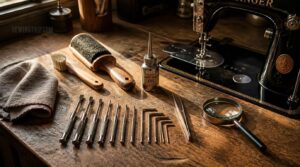
Before you touch a single screw, make sure you’ve got the right tools within arm’s reach. Nothing slows down a tune-up faster than hunting for a screwdriver mid-job. Here’s exactly what you’ll need:
A quick read through this bobbin case lint removal guide can also save you from one of the most common — and easily overlooked — maintenance headaches.
Sewing Machine Oil
Think of oil as your machine’s best friend — without it, metal grinds against metal. Grab a bottle of clear mineral oil before anything else. It’s low-viscosity, meaning it slips fast into tight moving parts.
Using the right sewing machine oil helps reduce friction and prevent mechanical issues.
- Synthetic oils last longer between applications
- Silicone-based options prevent fabric staining on delicate projects
- Avoid over-oiling — buildup stains thread fast
One drop. That’s all you need.
Lint and Horsehair Brushes
You’ve got the oil sorted. Now it’s time to grab your horsehair brush.
Horsehair bristles are naturally soft and non-static, which means they lift lint without scratching delicate fabrics or clinging to fibers. That’s a big deal around feed dogs and tight corners.
Store it bristles-down in a dry spot — moisture warps the binding and ruins the shape fast.
Small Screwdriver Set
A soft brush takes care of lint beautifully, but screws need a different tool entirely.
A compact precision screwdriver set is your best friend here. Sewing machines use tiny fasteners — Phillips and flathead mostly — in spots that feel impossibly tight. Look for sets with S2 or chrome vanadium bits so tips won’t round off mid-job. A magnetic bit holder keeps screws from disappearing forever.
Tweezers and Pipe Cleaners
Screwdrivers handle the big stuff, but tight corners need something finer.
Fine-point tweezers pull stray threads from the bobbin case area and feed dogs without scratching anything. Pair them with pipe cleaners — those bendy little tools reach lint buildup in spots no brush touches.
- Use fine-point tweezers for thread removal
- Bend pipe cleaners to fit narrow channels
- Wipe tweezers with alcohol after each use
- Store tweezers in a protective pouch
- Keep pipe cleaners away from young children
Scrap Fabric for Testing
Keeping a small scrap fabric stash nearby pays off fast. Sort scraps by weight — lightweight cotton tests tension stability, while nylon or polyester reveals needle heat on slippery plates.
After oiling, stitch test all patterns on scraps first. That way, any oil residue or tension drift shows up on scrap, not your actual project.
Prepare The Machine Safely

Before you touch anything inside your machine, you need to set it up safely first. Think of it like prepping your workspace before a big project — a few quick steps now can save you from a costly mistake later. Here’s exactly what to do before you start cleaning:
If lint buildup is often the culprit behind skipped stitches and loose thread, it’s worth reading up on fixing uneven bobbin thread tension before you dive into your cleaning routine.
Unplug Before Cleaning
Unplug at the wall first — always. Grab the plug head itself; never yank the cord.
- Dry your hands before touching any outlet
- Grip the plug, not the cord
- Can’t reach the outlet? Trip the circuit breaker
- Confirm the machine is fully inactive before touching anything
This one habit blocks electrical shock and protects against cord damage. It’s the foundation of any smart sewing machine maintenance checklist.
Remove Needle and Thread
Slide the needle out slowly — no rushing. Loosen the needle screw just enough so it drops straight down. Never yank it sideways; that bends the needle bar.
Check for burrs or dull tips before tossing it. Dispose of old needles safely in a small cup or container.
Then trim thread tails short and gently ease them free using tweezers.
Take Out Bobbin Case
The bobbin case is like a tiny spool house — handle it with respect.
- Lift it straight up, no twisting
- Note the rear cutout orientation before removal
- Avoid bending the tension spring
- Check for lint buildup in the housing
- Inspect the case for scoring or wear
Set it on a clean surface when done.
Remove Presser Foot
That little foot has a release lever at the back — press it down, lift the foot away. Done.
| Foot Type | How to Remove |
|---|---|
| Snap-on | Press release lever fully |
| Screw-on | Loosen retaining screw first |
| Walking foot | Remove entire holder |
Always raise the needle first. After removal, check the foot holder slot for debris — a dirty clamp means a crooked foot on reattachment.
Check Your Manual
Your manual isn’t just a pamphlet — it’s your machine’s blueprint. It lists manufacturer-approved oil specs, safety warnings, and exact unplugging steps before any cleaning. That’s why skimming it first saves real headaches later.
It also includes a troubleshooting guide and exploded view diagrams so you know exactly what you’re looking at inside.
Clean Lint and Thread Buildup
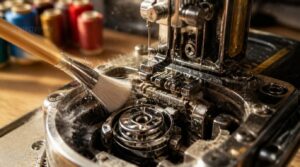
Lint is basically the enemy of a smooth-running machine — and it builds up faster than you’d think. A good cleaning hits several key spots, each one worth a few minutes of your attention. Work through these areas one by one and you’ll clear out everything that’s been slowing your machine down.
Brush Feed Dogs
Think of feed dog teeth like tiny conveyor belts — when they’re clogged, your fabric stalls. Use a lint brush to sweep buildup from between the teeth, working in short strokes along the grooves.
Bent or worn teeth cause skipped stitches, so check alignment while you’re in there. Consistent fabric feeding starts here.
Clean Needle Plate Area
Once the feed dogs are clear, lift off the needle plate. You’ll often find a hidden layer of lint underneath — the kind that builds quietly until stitches start skipping.
- Sweep debris with a soft lint brush
- Wipe residue using a lint-free cloth
- Check for burrs around the needle hole
- Remove metal shavings with a magnetized brush
- Reinstall the plate flush and flat
Plate alignment matters more than most people realize. Even a tiny gap causes fabric to bunch or snag mid-seam.
Clear Bobbin Holder Lint
The bobbin holder is a lint magnet. Every project drops fiber into those grooves, and over time it quietly chokes bobbin movement.
- Use a soft lint brush along the groove
- Grab tweezers for stubborn clumps
- Run a pipe cleaner around tight corners
- Wipe residue with an isopropyl-dampened cloth
Check this area every 40–60 sewing hours — or sooner after textured fabrics.
Wipe Tension Discs Carefully
Tension discs are sneaky — lint hides between them without a trace. Start by unplugging the machine completely. Fold a microfiber cloth into a thin strip and slide it gently between the discs.
- Use a cotton swab lightly dampened with isopropyl alcohol for sticky residue
- Wipe center-outward to protect the spring housing
- Check disc alignment stays even throughout
Thread should glide freely after — no drag, no sticking.
Avoid Compressed Air
Skip the compressed air can — it’s more trouble than it’s worth. High-pressure blasts drive lint deeper into seams and gears instead of removing it. Worse, misdirected air can seriously injure your eyes.
Skip compressed air — it drives lint deeper into your machine and risks serious eye injury
Grab your horsehair or lint brush instead. A pipe cleaner gets into tight corners. Both options pull debris out gently, keeping your machine and your face safe.
Lubricate and Inspect Moving Parts
Now that the lint is gone, it’s time to give your machine’s moving parts some love. A little oil in the right spots goes a long way toward keeping everything running smooth and quiet. Here’s exactly what to check and lubricate:
Oil Approved Points Only
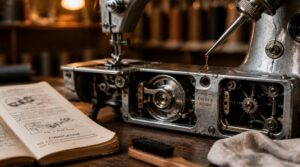
Your machine’s manual lists approved oil points — don’t guess. Every manufacturer tests specific spots for lubrication compatibility, so oiling the wrong area causes more damage than skipping it entirely.
Check these before touching the oil:
- Hook race or shuttle track
- Needle bar guide
- Designated oil holes on the machine body
- Center wick (if present)
- Any marked lubrication ports
Manufacturer approval protects your warranty — and your machine.
Use One Small Drop
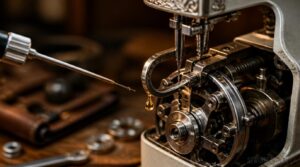
Too much oil is worse than none. One small drop is all it takes — enough to bead on metal without spreading.
Deliver it with a clean tip, straight onto the approved point. If it runs, wipe it fast. Oil near electrical parts or the bobbin case spells trouble.
Log each application. Your maintenance log keeps lubrication consistent across sessions.
Check Gears and Pulleys
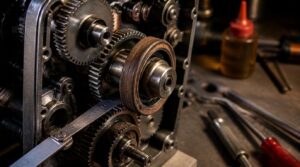
Think of gears like dance partners — if one’s off, both stumble. Grinding noises at low speeds? That’s your cue to inspect immediately.
Spin each pulley by hand and feel for roughness or wobble; pulley runout should stay within 0.02–0.05 mm. Check gear tooth wear for chips or rounding, and measure gear backlash with a feeler gauge.
Inspect Belts and Wiring
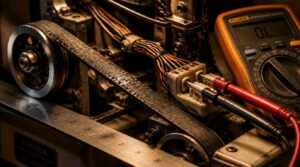
Your belt is like a timing chain — if it slips, everything downstream suffers.
Check for surface cracking or glazing, and replace any belt showing 2–3 cracks per inch. Belts must run true with less than 1 mm lateral movement.
- Check belt alignment with a straightedge
- Test tension gauging at the midpoint
- Inspect wiring insulation for frays or brittleness
- Verify connector continuity with a multimeter
Run Machine Unthreaded
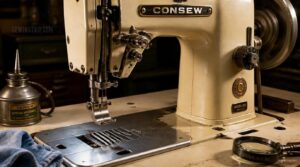
Plug in and let her spin — no thread, no needle, no bobbin. Just listen. A healthy machine runs smooth and quiet.
Clunks, grinding, or rhythmic resistance? That’s a gear or shuttle issue, not thread drag. Watch the feed dogs cycle and the take-up lever sweep freely. Once everything sounds right, rethread and run a quick seam to confirm timing held.
Test Stitches and Tension
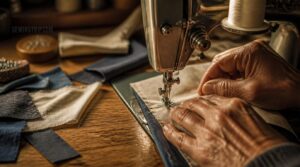
Now comes the moment of truth — it’s time to put your machine to the test. Grab a few scraps of fabric and thread her up, because this is where you’ll see if all that cleaning and oiling actually paid off. Here’s what to check, one step at a time.
Test Straight Stitches
Grab a scrap that matches your project fabric — weight matters here. Set your stitch length between 2.0 and 3.0mm, then sew a short seam.
Flip it over. Both sides should look identical, with no loops and no puckering. If the fabric bunches, loosen your presser foot pressure slightly. Skipped stitches? Swap that needle. A clean straight stitch means your machine’s ready to work.
Check Zigzag Stitches
Now switch your machine to zigzag. Set the stitch width between 1.5 and 3.0mm depending on your fabric weight — lighter fabrics need narrower, heavier ones wider.
Stitch along a scrap edge. The pattern should be even, with no loopy sides or skipped points. Zigzag works well with stretch and raw edge finishing, so uneven stitches here mean tension needs attention.
Balance Thread Tension
Thread tension is like a tug-of-war. Both sides need equal pull or someone loses.
Try two-color testing — different top and bottom threads. If one color shows on the wrong side, that thread’s too tight. Adjust one number at a time on your dial. Puckering usually means your upper tension is too tight. Looping underneath? Loosen the bobbin screw slightly.
Test Forward and Reverse
Once tension feels balanced, put your machine’s movement to the test. Stitch forward on scrap fabric, then reverse. Reverse stitch integrity matters here — backstitches should be small, tight, and locked, not loopy or skipped.
Watch for fabric puckering at seam ends. That’s a sign your stitch length is too long for the fabric weight. Shorten it slightly and try again.
Note Needed Repairs
Keep a small notebook nearby during testing. Jot down anything odd — skipped stitches, uneven tension, or strange sounds. Identifying mechanical noises like grinding or thumping often points to timing errors or worn gears.
Spotting electrical frays on cords means stop immediately. Some fixes are DIY-friendly; others need a qualified technician. Knowing the difference protects your machine — and your next project.
Frequently Asked Questions (FAQs)
Does a sewing machine need a tune up?
Yes, your machine absolutely needs periodic tune-ups. Lint builds up, oil dries out, and parts wear down. Routine servicing prevents skipped stitches, extends machine life, and keeps everything running like it just left the factory.
How much is a tune up for a sewing machine?
Most shops charge $75 to $150 for a basic mechanical machine. Computerized or embroidery models run $100 to $300. Parts replacement can add another $20 to $200 on top.
How often should I schedule a professional sewing machine tune-up?
Sew lightly, service yearly. Sew daily, service every 6 to 9 months. Sew heavily, aim for every 3 to 6 months. Your usage intensity drives the schedule — don’t guess, log your hours.
Can I use a sewing machine during pregnancy safely?
For most people, sewing during pregnancy is fine with a few adjustments. Limit long sessions, use a supportive chair, make sure there’s good ventilation, and unplug before any maintenance. Listen to your body — rest when you need to.
What signs indicate my machine needs immediate replacement?
Sometimes your machine sends clear distress signals. Persistent electrical smells, frequent mechanical breakdowns, excessive motor heat, or obsolete replacement parts mean it’s time to stop repairing and start replacing.
Does machine age affect how frequently I should tune up?
Yes — machine age matters. Older machines need tune-ups more often. Worn belts, degraded motor insulation, and sticky old oil demand closer attention. Heavy use speeds that up even more.
Should I tune up a brand-new sewing machine before use?
A brand-new machine isn’t always ready to sew straight out of the box. Factory residue and packaging oils can affect stitch quality early on. A quick wipe-down and light initial oiling go a long way.
Conclusion
A seasoned mechanic once said he could hear a healthy engine the moment it turned over. Your machine tells you the same story. When it hums without protest, tension holds true, and stitches land perfectly—that’s a well-loved tool doing its job.
Your sewing machine tune up checklist is what keeps that story going. Don’t wait for the grind or the skipped stitch. Ten minutes of care today saves hours of frustration tomorrow.
- http://www.palindromedrygoods.com/2015/09/how-to-service-your-sewing-machine.html
- https://www.servicethread.com/blog/how-to-industrial-sewing-machine-preventative-maintenance
- https://sewcanshe.com/diy-sewing-machine-maintenance-guide
- https://sewingmachineman.substack.com/p/the-sewing-machine-technicians-checklist
- https://blog.moodfabrics.com/sewing-machine-care-and-maintenance