This site is supported by our readers. We may earn a commission, at no cost to you, if you purchase through links.
Teaching sewing to a group of students is chaotic in the best way — fabric sliding off tables, pins rolling onto the floor, and patterns shifting the moment someone sneezes. The culprit behind most cutting errors isn’t rushing or inexperience. It’s unsecured fabric.
Pattern weights for teaching sewing classes solve this quietly and effectively. A well-placed weight holds your pattern in position while students focus on the cut, not on chasing slippery tissue paper across the table. The right set also keeps hands away from pins, which matters when you’re managing a room full of beginners.
Choosing weights for a classroom isn’t the same as picking them for personal use — you need durability, safety, and enough sets to go around.
Table Of Contents
Key Takeaways
- Match your pattern weights to fabric density—light weights (around 50g) suit chiffon, while heavy fabrics like denim need 200g or more to stay put during cutting.
- In a classroom, prioritize weights with rounded edges, non-toxic materials, and flame-resistant covers so beginners can handle them safely without added risk.
- Always anchor weights at diagonal corners first, then secure curves at regular intervals, so the entire pattern stays stable and grain lines don’t shift mid-cut.
- DIY fabric weights made from scrap pouches filled with steel washers or BB pellets are a smart beginner project—cheap to make, practical to use, and pest-safe for shared storage.
Choosing Classroom Pattern Weights

Not all pattern weights work equally well in a classroom setting — what suits a home sewer won’t always hold up when a dozen students are reaching across shared cutting tables.
Choosing the right option gets even trickier in tight setups, so these tips on pattern weights for small sewing spaces can help you figure out what actually works at a shared cutting table.
Before buying a set, there are a few key factors worth thinking through. Here’s what to keep in mind when choosing pattern weights that actually work for teaching.
Match Weight to Fabric
Think of fabric weight as a dial — turn it wrong and your pattern pieces shift, stretch, or distort before the first cut lands. Weight requirements range from around 50g for chiffon to over 200g for denim or heavy quilts.
Dial fabric weight wrong and your pattern pieces shift, stretch, or distort before the first cut lands
Match your weights to your fabric’s textile mass, and you’ll get clean, stable cuts every time. Understanding grams per square meter helps you accurately gauge the density of your material.
Choose Student-safe Materials
Once you’ve matched weight to fabric, the next question is what those weights are actually made of.
In a classroom, non-toxic, low VOC materials matter. Look for fabric weights with flame-resistant fabric covers, antibacterial surface coatings, and rounded hardware edges — no sharp corners that snag hands mid-lesson. Certified non-toxic fillers keep younger students safe, making these sewing supplies practical alternatives to pins without added risk.
Consider Table Space
Table size shapes how well your fabric weights actually do their job. A 120 cm by 60 cm rectangle table gives you enough room to spread a full pattern sheet flat, position your sewing pattern weights at all four corners, and still have clear workspace on the sides for your rotary cutter and sewing accessories.
Table height matters just as much. At 72 cm to 80 cm, students can apply downward pressure on fabric weights without hunching or overreaching — both of which throw off cutting precision.
Don’t overlook the floor. At least 90 cm of aisle clearance around each cutting station keeps students from bumping into each other mid-cut, which can shift fabric weights and ruin an otherwise clean layout line. Pair that with a non-slip table cover, and pattern shifting drops a lot during tracing. Lay a self-healing cutting mat on top, and you’ve got a measurement grid, rotary cutter protection, and a stable base for your fabric weights — all in one sewing supply.
Prioritize Easy Handling
Once your table is set up, the weights you reach for should work with your hands, not against them.
Sewing pattern weights at around 28 grams hit a practical sweet spot — light enough to lift and reposition one-handed, heavy enough to hold fabric steady. Rounded edges and textured surfaces prevent accidental pinches and improve grip, even during long cutting sessions.
Plan Storage Needs
Storing weights well is half the battle. Wall-mounted racks free up 2–3 square meters of floor space — room your students genuinely need. Color-coded bins grouped by weight type mean no hunting during lessons.
Keep shelves between 110–130 cm high so seated students reach them easily, and store everything near cutting stations to cut walking time a lot.
Top 6 Pattern Weights for Classes
Not every weight will work for every classroom, so knowing your options makes the decision a lot easier. These six picks cover a range of materials, weights, and price points to suit different teaching needs. Here’s what each one brings to the cutting table.
1. Wisemen Glass Pattern Weights
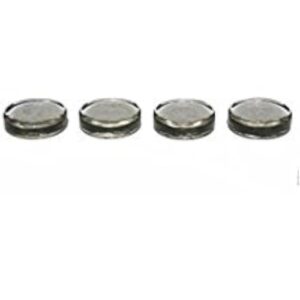
Glass weights might seem like an unusual classroom pick, but Wisemen’s clear glass discs solve one of teaching’s trickiest problems: keeping patterns visible while holding them flat. Each disc weighs about 5.5 ounces and measures roughly 2¾ inches across — substantial enough to anchor silk or satin without pinning.
The transparent design lets students confirm alignment marks underneath without lifting anything. One caution: glass breaks when dropped, so these work best for supervised settings with older students cutting lighter fabrics.
| Best For | Sewing teachers and advanced students working with delicate fabrics like silk or satin in supervised classroom settings. |
|---|---|
| Material | Lead-free soda glass |
| Pieces Per Set | 4 discs |
| Unit Weight | ~5.5 oz |
| Surface Finish | Ultra-smooth glass |
| Storage Solution | Standard 4-pack |
| Fabric Suitability | Delicate fabrics only |
| Additional Features |
|
- Transparent glass lets you see alignment marks and pattern details without lifting the disc
- Smooth surface glides over fabric without causing wrinkles or snags
- Lead-free, food-grade glass makes them safe to handle during extended cutting sessions
- Glass can break if dropped, making them less ideal for unsupervised or younger students
- May not be heavy enough to hold down thick or heavy fabrics like denim or canvas
- Physical size (~2¾ inches) might feel bulkier than expected for detailed or small-scale work
2. Quilted Bear Pattern Weights
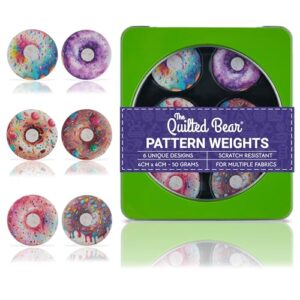
Six decorative weights in a reusable tin — the Quilted Bear set brings a touch of personality to any cutting station without sacrificing function. The scratch-resistant acrylic finish protects both fabric and tissue paper patterns from surface damage, and the flat, low-profile design stays out of your rotary cutter’s path.
One honest limitation: these aren’t built for heavy fabric. Denim, canvas, or multiple quilt layers will need something sturdier. For standard quilting cotton or dress-weight fabric, though, they hold steady and store cleanly.
| Best For | Quilters and crafters working with standard-weight fabrics who want a pin-free, decorative alternative to traditional pattern weights. |
|---|---|
| Material | Acrylic shell, plastic interior |
| Pieces Per Set | 6 weights |
| Unit Weight | Not listed |
| Surface Finish | Scratch-resistant acrylic |
| Storage Solution | Reusable decorative tin |
| Fabric Suitability | Light to medium fabrics |
| Additional Features |
|
- Scratch-resistant acrylic finish keeps fabric and tissue paper patterns safe from surface damage
- Reusable tin makes storage and transport easy and organized
- Cheerful, decorative design adds a personal touch to any sewing or crafting space
- Not heavy enough for thick or heavy fabrics like denim, canvas, or stacked quilt layers
- Original packaging can be difficult to open initially
- The internal plastic holder may crack over time with regular use
3. Zonon Cast Iron Fabric Weights
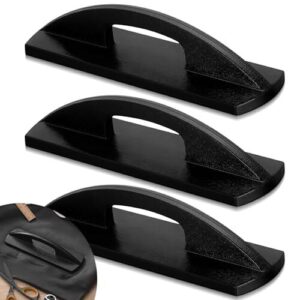
When your students are working with denim, upholstery fabric, or stacked quilt layers, light weights simply won’t cut it. The Zonon Cast Iron set gives you three generously sized bars — each measuring about 9.8 × 2.8 inches and weighing 3.5 lb — that hold multiple layers flat without shifting.
The built-in hand grip makes lifting straightforward, even mid-project. One caution: the ridges near the handle can feel rough, so remind students to handle them carefully.
| Best For | Dressmakers, tailors, and sewing instructors who regularly work with heavy or layered fabrics like denim, upholstery, and quilts and need reliable, no-pin fabric control. |
|---|---|
| Material | Paper with scratch-resistant coating |
| Pieces Per Set | 6 weights |
| Unit Weight | ~66 g (~2.3 oz) |
| Surface Finish | Scratch-resistant coating |
| Storage Solution | Reusable decorative tin |
| Fabric Suitability | Light to medium fabrics |
| Additional Features |
|
- Three large, heavy bars (3.5 lb each) hold multiple fabric layers firmly in place without shifting
- Generously sized at ~9.8 × 2.8 inches, providing stable, even pressure across wide areas
- Built-in hand grip makes lifting and repositioning easy mid-project
- Rough ridges near the handle can irritate skin with repeated use
- Heavier weight may be tiring or difficult for users with limited hand strength
- Higher price point than smaller plastic or metal alternatives, and the black coating may need upkeep to prevent rust
4. Blue Canvas Sewing Pattern Weights
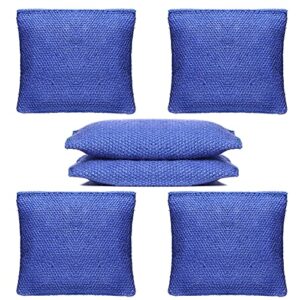
These compact blue canvas weights are a practical middle-ground option — small enough for beginners to handle confidently, yet effective on lightweight to midweight fabrics. Each square pad measures roughly 1.77 × 1.77 inches, filled with steel beads for steady, even pressure.
The set includes six pieces, which covers most standard pattern layouts. One thing to keep in mind: individual weights are light, so students may need to stack two units when working with thicker materials like interfaced cotton or medium-weight denim.
| Best For | Beginners and hobbyists working with lightweight to midweight fabrics who want a pin-free way to hold patterns in place. |
|---|---|
| Material | Paper with scratch-resistant coating |
| Pieces Per Set | 6 weights |
| Unit Weight | ~1–2 oz |
| Surface Finish | Scratch-resistant coating |
| Storage Solution | Reusable decorative tin |
| Fabric Suitability | Light to medium fabrics |
| Additional Features |
|
- Stackable design lets you add weight as needed for different fabric thicknesses
- Compact size makes them easy to store and carry to classes or craft sessions
- Six-piece set covers most standard pattern layouts without needing extras
- Individual weights are light, so thicker fabrics often require stacking two or more units
- Not practical for large-scale or heavy-duty projects like upholstery or thick canvas
- The full set’s modest total weight may disappoint users expecting heavier bench-style weights
5. Longwin Glass Pattern Weights
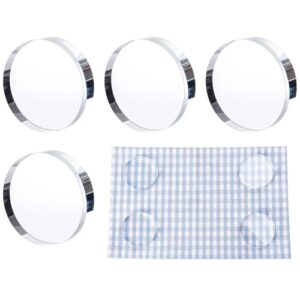
Clear glass has a practical advantage most fabric weights can’t match — you can see straight through it. The Longwin Glass Pattern Weights let students read pattern markings without lifting a single piece, which keeps cuts accurate and layouts intact.
Each weight measures 60 mm across and 15 mm thick, delivering 104g of steady, non-abrasive pressure. The polished edges won’t snag delicate fabrics, and the transparent surface stays clean between classes with just a damp wipe.
| Best For | Sewing students and crafters who need hands-free pattern visibility and a secure, pin-free hold on delicate or layered fabrics. |
|---|---|
| Material | Cast iron, black finish |
| Pieces Per Set | 3 weights |
| Unit Weight | 3.5 lb (1.6 kg) |
| Surface Finish | Smooth flat bottom |
| Storage Solution | No dedicated storage |
| Fabric Suitability | Heavy to thick fabrics |
| Additional Features |
|
- Clear glass lets you read pattern markings without moving the weights, keeping layouts accurate while you cut
- Smooth-polished edges are safe on delicate and sheer fabrics with no snagging or abrasion
- Compact and stackable with a reusable gift box, making them easy to store or take to class
- Glass can chip or break if dropped, so they require more careful handling than plastic or metal alternatives
- At 104g each, they may be too heavy for very lightweight or sheer fabrics
- A set of four may not be enough for larger patterns, meaning you might need to buy additional pieces
6. Cast Iron Sewing Pattern Weights
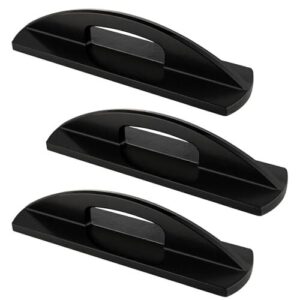
Where glass weights shine with visibility, cast iron wins on raw holding power. These weights measure 9.8 × 2.8 inches and weigh nearly 11 pounds per set — enough to anchor multiple fabric layers, heavy denim, or upholstery without budging.
The wear-resistant black coating keeps the smooth bottom from snagging fabric, and the ergonomic handle lets students reposition with one hand mid-cut. One caution: inspect the surface regularly, since the casting process can leave minor imperfections over time.
| Best For | Quilters, garment makers, and crafting students who work with heavy or layered fabrics and need serious holding power during cutting and pattern work. |
|---|---|
| Material | Canvas exterior, steel bead fill |
| Pieces Per Set | 6 pieces |
| Unit Weight | ~1.84 oz |
| Surface Finish | Soft canvas exterior |
| Storage Solution | No dedicated storage |
| Fabric Suitability | Light to medium fabrics |
| Additional Features |
|
- Exceptional holding power anchors multiple fabric layers, heavy denim, or upholstery without shifting
- Smooth, wear-resistant black coating protects fabric from snags during use
- Ergonomic handle makes one-handed repositioning easy mid-cut
- Casting process can leave minor surface imperfections that may worsen over time
- Nearly 11 pounds per set makes them difficult to handle for users with limited hand strength
- Black coating may gradually wear down with heavy, repeated use
Teaching Accurate Cutting With Weights
Getting the cut right is half the battle in sewing — and weights make that part a whole lot easier.
Once your students know how to place them properly, you’ll notice cleaner lines, fewer mistakes, and faster workflow across the board. Here are five techniques to teach your class for more accurate cutting with pattern weights.
Place Weights at Corners
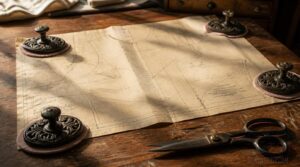
Anchor your pattern at the corners first. Diagonal mass distribution — placing weights at opposite corners — keeps the entire piece balanced as you cut.
- Use soft corner materials like fabric discs or felt pads
- Stay just inside the edge, never over alignment notches
- Align diagonally opposite corners to balance the load
- Don’t cover notches needed for corner alignment accuracy
Preventing fabric curling starts here.
Secure Curves and Notches
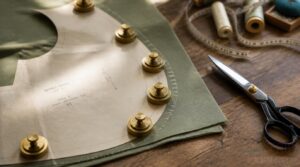
Corners are anchored — now curves need attention. Along curved seams, place weights at regular intervals rather than clustered in one spot. This prevents the fabric from shifting mid-cut and keeps your seam allowance consistent.
Cut notches just to the stitching line — never through it. A weight placed too close can obscure notch markings, causing misalignment that affects the final fit.
Prevent Fabric Distortion

Shifting fabric is the silent enemy of a clean cut. Before placing any weights, make sure your fabric has been relaxed and rested flat — stretched or stressed fabric distorts the moment the blade moves.
Distribute weights evenly across the full surface, not just the edges, so there’s no tension pulling the grain off-center while you cut.
Combine With Rotary Cutters
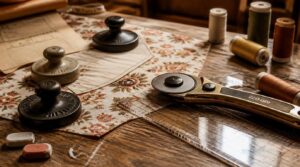
Pairing pattern weights with a rotary cutter is where your workflow speed really climbs. Weights hold fabric flat while the blade moves — no pinning, no stopping.
Use this setup for:
- 45 mm blades for standard garment patterns
- 60 mm blades for wide, multi-layer cuts
- Sharp blades only — dulled edges shift fabric
- Blade guard engaged whenever you pause cutting
Together, they deliver clean, accurate results every pass.
Reposition Patterns Efficiently

Lift a weight, slide the pattern, set it back down — repositioning is that clean when you ditch pins. Mark two reference points at opposite corners first, then shift slowly toward your new position.
Recheck grain alignment after every move, and confirm any motif centering before you cut. Small adjustments preserve symmetry without restarting the layout.
DIY Pattern Weights for Students
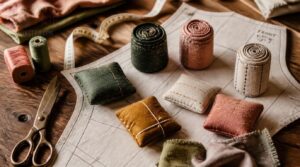
Making your own pattern weights is one of the best beginner projects you can assign in a sewing class — students practice basic skills while building a tool they’ll actually use.
The good news is that you don’t need much: a few fabric scraps, a simple filler, and about twenty minutes. Here’s what works best when building DIY weights for the classroom.
Beginner Scrap-fabric Project
Making your first DIY fabric weight doesn’t require special supplies — just scraps you’d otherwise toss. Cut an 8×4 inch rectangle from any medium-weight scrap, fold it right sides together, and stitch around three edges. Turn it right side out, fill it, and close the opening.
Students who’ve made envelope pillow covers will recognize this construction immediately.
Best Classroom Fillers
What goes inside your weight matters as much as the fabric shell.
- Steel washers — dense, consistent, and cheap
- BB gun pellets — compact and high-density
- 42 pennies — surprisingly heavy and free from your change jar
- Fish tank gravel — pest-resistant and classroom-safe
Skip rice or beans. They attract pests during long-term storage, which makes shared classroom supplies a problem fast.
No-sew Weight Options
Not every weight needs a needle and thread. Dry beans in a zip-lock bag, metal washers wrapped in fabric scraps, or a paperweight layered with felt all work without any sewing. These options are ideal for beginners who aren’t ready for machine work yet.
Smooth, non-abrasive surfaces matter most — rough edges snag delicate fabric fast.
Add Ribbon Storage Loops
A small ribbon loop sewn into each handmade weight turns a basic tool into an organized one. Stitch a 2-inch ribbon loop to the top before closing the seam, then hang finished weights on a classroom hook or pegboard.
- Wall mount hooks for quick access
- Drawer storage for compact organization
- Portable organizers for workshop travel
Students love it.
Avoid Pest-prone Materials
What goes inside your handmade pattern weights matters more than you’d think. Dried rice or beans might seem like easy fillers, but they attract pantry pests and moisture over time. Opt instead for non-cellulose fillers — steel washers, BB pellets, or fish tank gravel — which offer no food source for insects.
Store finished weights in sealed plastic bins, and clean your workspace of lint after every class.
Classroom Safety and Organization Tips
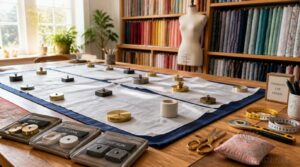
Running a tidy, well-organized classroom makes every sewing lesson smoother — for you and your students.
A few simple habits around labeling, storing, and handling pattern weights can prevent lost tools, damaged fabrics, and chaotic cleanup. Here’s what works best when you’re managing weights across multiple students and shared cutting tables.
Label Class Weight Sets
Three labels can save a chaotic cleanup.
- Mark each weight with class period or name
- Sort by fabric weight category: light, medium, or heavy
- Use colors to balance class representation across groups
Labeled sets prevent mix-ups, so every student’s sewing project prep starts correctly. When weights reflect the right fabric category, unnecessary loss of time — and good fabric — drops noticeably.
Store Weights Between Lessons
Labeling gets you halfway there — proper storage closes the loop.
Keep weights in clear trays with dividers, sorted by size, on a low shelf to reduce trip hazards. Wipe metal weights dry before storing to prevent corrosion and rust. Sealed containers block dust, lint, and pests. A simple door checklist tracking counts and last-used dates keeps everything audit-ready between lessons.
Protect Delicate Fabrics
Weights do the heavy lifting, but fabric snag prevention starts with what’s underneath them. Lay a soft cotton or microfiber cloth between the weight and your fabric to distribute pressure evenly and avoid puckering.
Keep weights off printed pattern markings — direct contact can cause ink transfer, especially on light silks or chiffon. That small habit protects both your fabric and your pattern.
Manage Shared Cutting Tables
A busy cutting table can throw off even the best lesson plan. Keep at least 36 inches of walkway clearance on the main side, and use under-table storage or rolling caddies to move rulers and mats off the surface.
Mark designated zones for pattern placement and trimming directly on the table. One pattern per table prevents crowding and keeps grain lines visible.
Teach Cleanup Routines
End-of-class habits protect your tools as much as your lesson plan does. Build a 2-minute station reset ritual — students return weights to labeled containers, gather loose pins into magnetic trays, and wipe surfaces with disinfectant wipes.
Rotate student cleanup roles weekly so everyone learns the routine. That consistency prevents tool loss and keeps your workspace ready for the next project.
Frequently Asked Questions (FAQs)
Do you need a sewing weight?
Pins pierce. They snag, distort, and leave permanent marks on delicate fabrics. A pattern weight holds your fabric flat without touching the weave — giving you cleaner cuts and a faster, damage-free workflow.
What are pattern weights & how do I use them?
Pattern weights are heavy objects placed directly on paper patterns to hold them flat while you trace or cut. They replace pins, protect delicate fabrics from snags, and keep your layout stable for accurate cuts.
How do you use sewing weights?
Place weights at corners first, then along curves and edges. Use them with a rotary cutter for clean, fast cuts. Lift and slide to reposition without disturbing your fabric layout.
What are the different types of fabric weights?
Fabric weight is measured in GSM (grams per square meter) or oz/yd², ranging from 50 GSM sheers to 300+ GSM denim. Fiber content, weave density, and finishing all affect how heavy a fabric feels and drapes.
What is the best filling for pattern weights?
Metal washers and poly pellets pack the perfect punch — dense, durable, and dependably safe. Coins offer reliable weight and stability, while sand risks leakage through split seams. For DIY fabric weights, poly pellets remain the smartest choice.
How to make sewing pattern weights?
Sew scrap fabric rectangles into small pouches, fill them with dense fillers like BB pellets or steel washers, and stitch closed. For a no-sew option, wrap yarn tightly around a metal washer.
How heavy should a pattern weight be?
Think of weight like pressure on a page — too little and things slide, too much and you’re wrestling with your tools. For most fabrics, 4 to 8 ounces hits the sweet spot.
Are pattern weights worth it?
Yes — pattern weights are worth it. They cut layout time, protect delicate fabrics from pin damage, and keep patterns stable for cleaner cuts. For any sewing workspace, they’re a practical, reusable upgrade over traditional pins.
Can pattern weights replace pins entirely in sewing?
Weights handle fabric stability well, but they can’t fully replace pins. For intricate curves or slippery textiles, you’ll still need pins to lock edges in place. A hybrid securing method gives you the best cutting accuracy.
What fabric weight works best for thick upholstery?
Like armor on a knight, thick upholstery fabric needs real density to hold up. For most applications, 12–16 oz/yd² (340–550 gsm) hits the sweet spot — durable, stable, and resistant to heavy daily wear.
Conclusion
A chaotic classroom full of beginners will always test your patience. The right pattern weights for teaching sewing classes quietly removes one of your biggest headaches — fabric that won’t stay still long enough for a clean cut.
Less chasing. More teaching. When students aren’t wrestling with slipping patterns, they’re actually learning to sew. That shift, from frustration to focus, is what separates a stressful lesson from one where every student walks away with something finished.
- https://so-sew-easy.com/make-sewing-pattern-weights-11-ways
- https://theruffledpurse.com/how-to-make-pattern-weights
- https://madamsew.com/blogs/sewing-blog/make-your-own-pattern-weights
- https://www.mixmeasuremake.com/pattern-weights
- https://uark.pressbooks.pub/teachingappareldesign/chapter/sewing-machine-parts-and-safety-teaching-apparel-production