This site is supported by our readers. We may earn a commission, at no cost to you, if you purchase through links.

Your sewing machine tells you when something’s wrong — you just have to know the language. A skipped stitch here, a faint grinding sound there, and suddenly a project that should take an hour turns into a frustrating troubleshooting session.
Most sewists wait until something breaks before calling a technician. The problem with that approach? Internal damage compounds quietly. Gears wear against each other, lint packs into tight spaces, and tension components drift out of balance — all while the machine keeps running well enough to fool you.
Knowing how often to service your sewing machine — and catching the early warning signs — keeps small problems from becoming expensive ones.
Table Of Contents
Key Takeaways
- Service your machine every one to two years if you sew lightly, and annually if you sew several times a week — more use means more wear.
- Internal damage builds quietly, so catching early warning signs like grinding sounds, skipped stitches, or a stiff handwheel saves you from costly repairs later.
- Clean the bobbin area, feed dogs, and tension disks weekly, because lint buildup is the leading cause of tension problems and skipped stitches between professional tune-ups.
- Stop sewing immediately if you smell burning or see sparks — these signal electrical failure that only a certified technician should handle.
Why Sewing Machine Servicing Matters

Your sewing machine works hard for you, and like any hardworking tool, it needs regular attention to keep running right. Skipping maintenance doesn’t just affect your stitches — it can lead to bigger problems down the road. Here’s why staying on top of servicing is worth every bit of effort.
For a deeper dive into routines that actually make a difference, sewing machine upkeep advice covers everything from daily habits to the signs that tell you a professional service is overdue.
Prevent Costly Repairs
Skipping regular service is like ignoring a slow oil leak — small problems quietly become expensive ones. Early warning signs like grinding sounds or skipped stitches often mean lubrication mistakes or component wear has already begun. Catching these early prevents timing failures and full mechanical breakdowns.
Small problems ignored become expensive repairs — catch the warning signs before your machine catches you
Watch for:
- Unusual noises signaling poor lubrication
- Stiff movement indicating component wear
- Tension issues hinting at timing failures
Preventative maintenance protects your investment. Using age-replacement maintenance strategies can help get the most out of the longevity and reliability of your equipment.
Improve Stitch Quality
Regular service does more than prevent breakdowns — it directly sharpens how your stitches look and hold.
Clean tension disks weekly to keep thread flowing evenly. Pair that with needles sized to your fabric, and you eliminate most puckering before it starts.
| Problem | Likely Cause | Quick Fix |
|---|---|---|
| Puckering | Tension too tight | Lower upper tension |
| Thread nesting | Bobbin misaligned | Re-insert bobbin correctly |
| Skipped stitches | Wrong needle size | Match needle to fabric weight |
Proper bobbin winding and the right stabilizer keep every stitch consistent.
Extend Machine Lifespan
Good stitches matter, but so does the machine making them. Every internal component — gears, needle bar, hook — wears down over time.
Lubricate moving parts every 8–12 hours of use to cut friction and heat. Plan to replace feed dogs every 3–5 years and internal gears every 5–7.
Think of it like car maintenance: stay ahead of wear, and your machine runs strong for decades.
Protect Warranty Coverage
Your warranty is only as good as the proof behind it. Keep your receipt or order number somewhere safe — no proof of purchase, no claim.
What many sewists miss: unauthorized repairs void coverage. Always use an authorized technician for any servicing. Log every maintenance date too. Manufacturers can deny claims if you can’t show routine servicing was done properly.
Service Every One to Two Years

How often you need professional servicing really comes down to how much you sew. A light weekend quilter has very different needs than someone running a machine for hours every day. Here’s how to figure out the right schedule for you.
As a general rule, the more demanding your projects — like sewing knit fabrics on a home machine — the more frequently your machine will need professional attention.
Light Home Sewing Schedule
If you sew mainly on weekends or for the occasional project, professional servicing every one to two years is the right rhythm. Think of it like a car’s annual checkup — nothing feels wrong, but a technician catches small issues before they become costly ones.
Between appointments, keep your workspace well-lit with a 5000–6500K LED task light to spot lint buildup and worn parts early.
Frequent Sewing Schedule
If you sew several times a week, your machine works harder — and needs care to match. Short 30 to 60-minute session blocks keep fatigue low and help you spot problems early.
Watch for these signs it’s time to book a service:
- Skipped stitches mid-project
- Inconsistent thread tension
- Unusual resistance when stitching
Schedule professional servicing annually to stay ahead of wear.
Heavy-use Hourly Guideline
Heavy-duty sewing runs on a tighter clock. Keep your machine between 1,800 and 2,400 stitches per minute to protect the motor from unnecessary strain.
Take a 15-minute cooldown break every two hours — heat is a quiet killer of internal components. Check needle temperature and thread tension every 30 minutes, and always plug into a dedicated 15-amp circuit to keep voltage stable throughout long sessions.
Before Major Sewing Projects
Think of a big project like a dress or quilt as a dress rehearsal for your machine, not just your skills.
Before cutting a single piece, run through these checks:
- Test tension on fabric scraps matching your project material
- Verify needle type and size against fabric weight
- Confirm thread compatibility with a scrap seam
- Create a muslin prototype for complex patterns
- Inspect the bobbin area for lint
Your machine deserves the same preparation your fabric gets.
After Long Storage Periods
A machine that’s been sitting for months is like a car after a long winter — it needs a once-over before you trust it with real work.
Check for lubricant dryness, inspect electrical cords for cracking, and look for corrosion on the needle and bobbin case. Spin the handwheel by hand to test for binding. Run a test stitch before starting any project.
Clean Your Machine More Often
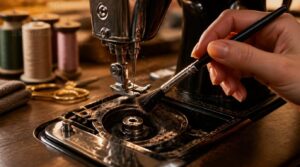
Professional servicing keeps your machine healthy long-term, but regular at-home cleaning is what keeps it running well in between appointments. Lint, dust, and thread debris build up faster than you’d think, and ignoring them leads to tension problems and skipped stitches. Here’s what you should be cleaning — and how often.
After Every Project
Every finished project leaves behind a trail of lint, thread scraps, and fabric dust. Take two minutes to wipe down the exterior with a soft microfiber cloth and clear any visible debris before putting your machine away.
Think of it as a quick debrief — catching small issues now keeps your records clean and your next project starting strong.
Weekly Lint Removal
Once your post-project wipe-down becomes habit, a weekly deep clean is the natural next step.
Hit these lint hotspots every week:
- Bobbin case and housing
- Feed dog slots and edges
- Thread path guides and tension disks
Use a small angled brush to dislodge buildup, then follow with a microfiber cloth. Compressed air works too — just keep the can upright to avoid moisture. Clear feed dog slots carefully; trapped fibers cause fabric snagging mid-stitch.
Bobbin Area Cleaning
The bobbin area collects lint faster than anywhere else. Remove the needle plate, lift out the bobbin case, and sweep lint away with a small nylon brush — never compressed air, which pushes debris deeper.
Check the hook race for hidden buildup, then apply one drop of sewing machine oil to the contact points. Wipe any excess immediately.
Feed Dog Debris Removal
The feed dogs sit just below where lint from the bobbin area usually drifts. Remove the needle plate first, then sweep the slots clean with a natural rubber bristle brush — it grabs fuzz without scratching.
Use a vacuum crevice attachment for stubborn buildup, and tweezers to pull any thread wedged between teeth.
Needle Plate Inspection
While the needle plate is off, take a moment to look it over closely. Run your fingertip across the surface — it should feel smooth, like glass. Scratches deeper than 0.2 mm can snag threads and cause skipped stitches.
Check that the needle holes stay round, not elongated, and look for burrs along the edges that quietly shred thread with every pass.
Know When Service is Urgent
Some problems can’t wait for your next scheduled tune-up. Your machine will usually tell you something’s wrong — you just need to know what to listen and look for. Here are the warning signs that mean it’s time to stop sewing and call a technician.
Skipped or Uneven Stitches
Skipped stitches are your machine’s way of waving a red flag. They often point to needle size compatibility issues, tension disk clogging from lint, or subtle bobbin timing problems.
A thread weight mismatch with your fabric can throw off tension entirely. If rethreading and swapping the needle don’t fix it, a technician needs to check your timing.
Thread Nesting Underneath
That tangled mess under your fabric — loops piling up like a knot — is called thread nesting, and it almost always traces back to a tension imbalance between your upper thread and bobbin.
- Re-thread with the presser foot raised so tension discs open fully
- Match your needle size to fabric weight to prevent stitch collapse
- Clear lint from the bobbin area before each session
Grinding or Clicking Sounds
Your machine is talking — grinding and clicking are its distress signals. Bearing wear inside the motor gear train, debris in the shuttle race, or a slipping drive belt can all trigger these sounds. Even dirty tension disks create friction as surfaces rub unevenly.
| Sound | Likely Cause |
|---|---|
| Rhythmic grinding | Worn needle bar bearings |
| Periodic clicking | Chipped gear teeth or backlash |
| Chirping under load | Loose or slipping drive belt |
| Faint grinding while feeding | Shuttle debris or bobbin misalignment |
Don’t ignore these noises. Metal-on-metal contact worsens fast — book a technician before minor wear becomes a costly repair.
Stiff Handwheel Movement
A handwheel that fights back is warning you right now. Three causes are common:
- Lint buildup in the bobbin creates gummy resistance
- Dry or over-lubricated gears increase shaft friction
- Worn components transmit binding to the wheel
One drop of sewing machine oil every 8 hours often fixes it. If stiffness stays, worn gears or a bent shaft need a technician.
Burning Smell or Sparks
Stop sewing immediately — a burning smell means electrical components are overheating, and sparks signal active arcing inside the machine. Unplug it right away and move it away from fabric or flammable materials.
Don’t open the housing yourself. Scorched wiring or a failing motor needs a certified technician, not a DIY fix. Continued use risks fire and costly permanent damage.
DIY Care Between Services
Professional servicing takes care of the deep work, but what you do in between makes a real difference. A few simple habits can keep your machine running smoothly and help you catch small problems before they grow. Here’s what to stay on top of between your annual or biannual tune-ups.
Replace Needles Regularly
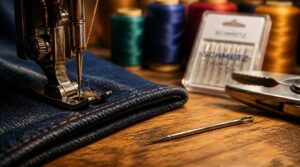
Think of your needle like a razor blade — it dulls faster than you’d expect. Replace it after every major project, or sooner if you’re sewing silk, chiffon, or heavy denim. For specialty threads like metallics, a fresh needle prevents shredding.
Store spares in their original packaging to protect the tip, and always handle them with pliers during installation.
Use Proper Machine Oil
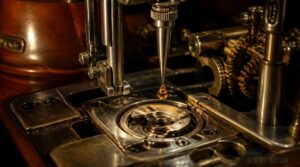
Just as the right fuel keeps an engine running clean, the right oil protects your machine’s moving parts without gumming them up. Mineral oils work well for general home use, while synthetic blends handle heat better during long sessions.
Apply one small drop to designated points like the needle bar or shuttle race. Too much oil stains fabric fast.
Check Your Manual First
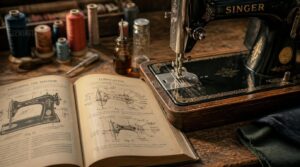
Your manual isn’t just a pamphlet — it’s the definitive guide for your specific model.
Here’s what it covers that generic advice often misses:
- Approved lubricant grades and exact lubrication points
- Needle type selection for different fabrics
- Threading path accuracy for various thread weights
- How to interpret error codes or indicator lights
When in doubt, open it first.
Cover Between Sewing Sessions

Once you know what oil to use and where to put it, the next small habit that pays off big is covering your machine when you’re done.
A snug machine cover blocks dust, lint, and light from settling in while you’re away. Dust sneaks into the bobbin area and throws off thread tension — a cover slows that down considerably.
Track Service Dates

A cover keeps dust out — and a service date log keeps you in control. Write down the date of every cleaning and tune-up, then set a reminder two weeks before your next one is due. Color-code by status: green means you’re on track, red means you’re overdue.
- Log the service type — cleaning, oiling, or timing
- Record stitch count or hours if your machine tracks them
- Save your technician’s receipt number with each entry
- Set automatic reminders so nothing slips through
Frequently Asked Questions (FAQs)
What does a professional sewing machine tune-up cost?
A basic tune-up runs $75 to $100 for mechanical machines. Computerized models cost more — usually $95 to $150. Some shops charge a $25 diagnostic fee upfront before starting any work.
How do I clean sewing machine tension disks properly?
Think of your tension disks like a pinch grip — any lint between them throws off your thread tension completely. Lift the presser foot, then use a dry lint brush to floss gently between the disks.
Can I use kitchen oil on my sewing machine?
No, skip the kitchen oils. Olive oil and cooking fats attract lint and rancidify, leaving sticky residue that clogs gears. Always use clear mineral-based sewing machine oil — it protects without buildup.
How long do sewing machine feed dogs last?
Feed dogs on domestic machines usually last 3–5 years, though heavy fabrics and high-speed stitching accelerate wear. Watch for tooth tip flattening or reduced grip — those are your clearest replacement signals.
Does my sewing machine need firmware updates regularly?
Only computerized machines need firmware updates. Check your manufacturer’s site when performance issues arise or new accessories release. Most sewers rarely need updates, but network-connected models should stay current for security and stitch consistency.
Conclusion
Think of your sewing machine the way a seasoned sailor treats a vessel — you don’t wait for a leak to inspect the hull. Small signs speak loudly if you’re paying attention.
Knowing how often to service your sewing machine isn’t just maintenance advice; it’s how you protect every project, every hour, every thread of work you’ve put in. Stay ahead of the damage. A well-kept machine never lets you down when the fabric’s ready and so are you.
- https://permies.com/t/243134/sewing/sewing-machine-reeeeally-oiling
- https://scissortailquilting.com/tutorials-instruction/clean-maintain-sewing-machine-maintenance
- https://whip-stitch.com/sewing-machine-maintenance-a-sample-schedule
- https://blog.wawak.com/post/how-to-oil-a-sewing-machine
- https://prizzisewing.com/blogs/news/how-to-oil-an-industrial-sewing-machine