This site is supported by our readers. We may earn a commission, at no cost to you, if you purchase through links.
You can’t build a reputation on perfect hems and invisible seams if your machine fights you on every stitch. Most sewers who tackle alterations learn this the hard way—after their third jammed zipper or fourth puckered waistband.
The difference between amateur work and professional results often comes down to having a machine that delivers consistent tension, smooth feeding, and the right stitch variety for everything from delicate silks to heavy denim.
Whether you’re hemming pants in your spare bedroom or running a full-time alteration business, the machine you choose determines how fast you work, how clean your stitches look, and whether clients come back.
Here’s what separates the machines that help you build a solid business from the ones that just take up space on your sewing table.
Table Of Contents
- Key Takeaways
- Key Features in Sewing Machines for Alterations
- Types of Sewing Machines for Alteration Tasks
- Factors to Consider Before Buying
- Top 10 Sewing Machines for Alterations
- 1. Singer Compact Sewing Machine
- 2. Brother Lightweight Sewing Machine
- 3. Bernette Computerized Sewing Machine
- 4. Janome Blue Couture Sewing Machine
- 5. Bernina Sewing Machine B530
- 6. Singer Sewing Machine Beginners Kit
- 7. Juki Portable Sewing Machine
- 8. Bernette Sewing Quilting Machine
- 9. Brother Computerized Sewing Embroidery Machine
- 10. Brother GX37 Sewing Machine
- Essential Accessories and Maintenance Tips
- Frequently Asked Questions (FAQs)
- Conclusion
Key Takeaways
- You can’t build a solid alteration business without a machine that delivers consistent tension, smooth feeding, and the right stitch variety across fabrics from delicate silks to heavy denim.
- The difference between amateur and professional results comes down to essential features like reliable straight stitch performance, uniform stitch density, and accessible controls that reduce finger fatigue during long sessions.
- Mechanical machines offer direct control and fewer points of failure compared to computerized models, while the right accessories—presser feet, needles matched to fabric type, and quality thread—make difficult tasks easier.
- Regular maintenance like weekly lint removal, oil application every eight to twelve hours of use, and immediate needle replacement prevents breakdowns and extends your machine’s lifespan beyond what most reviews promise.
Key Features in Sewing Machines for Alterations
You can’t alter clothes properly without a machine that keeps every stitch clean and reliable. The right features make the difference between struggling through repairs and finishing work you’re proud of.
Start by learning how to troubleshoot common bobbin holder problems so tension issues don’t ruin your repairs.
Here’s what actually matters when you’re choosing a machine built for alterations.
Stitch Consistency and Quality
Stitch quality separates amateur work from impeccable alterations. You need a machine that delivers uniform stitch density and balanced thread tension so your seams lay flat without puckering.
Look for models that maintain consistent seam allowances and offer reliable straight stitch performance across different fabric types. When stitch uniformity stays rock-solid from delicate silk to heavy denim, you’ll tackle any alteration with confidence.
Ease of Control and User Comfort
Control panels with high-contrast markings and soft-grip dials reduce finger fatigue when you adjust stitch length or tension. Speed control lets you manage pace without wrestling the machine.
An ergonomic design places the hand lever 6 to 8 inches from your working height for quick presser foot access. Accessible interfaces with tactile buttons improve your sewing machine experience and keep alterations smooth.
Essential Stitch Types for Alterations
You need straight stitches for most garment alteration work—they hold seams together and create clean hems.
Zigzag techniques prevent fraying on woven fabrics and add flexibility to knits. Reinforcement stitches like topstitching strengthen heavy seams on jeans.
Hem finishing options, including blind hem and edge binding, let you tackle everything from invisible hems to decorative borders without switching sewing machines.
For a deeper understanding of techniques, you can explore machine sewing versus hand stitching.
Portability and Compact Design
If you’re tackling alterations at home or on the go, portability matters. A sewing machine under 10 pounds with a compact footprint fits small spaces and travels easily. Integrated grips and travel cases make lifting and storage simple.
Space savings and cord management mean you won’t wrestle with clutter. Choose portability and compact design for real control over your sewing machine selection.
Durability and Construction Materials
Metal frames are the backbone of a tough sewing machine. If you want real gear durability, look for steel or die-cast aluminum. Surface coatings like chrome or powder finish fight rust and wear. Smart alloy selection means your machine won’t bend or crack under pressure. You get a workhorse, not a show pony.
- Steel frames resist heavy loads
- Chrome coatings ease cleaning
- Modular parts simplify repairs
Types of Sewing Machines for Alteration Tasks
For sewing machines tailored for alterations, you’ve got plenty of choices. Each type brings its own strengths for handling different tasks.
Let’s look at what’s out there so you can find the best fit for your needs.
Mechanical Vs. Computerized Models
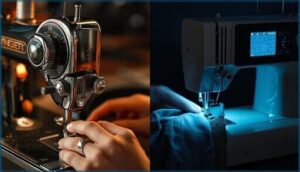
Ever wonder why some tailors swear by mechanical sewing machines? You get direct control interfaces—knobs, dials, and levers—so every stitch lands exactly where you want.
Computerized sewing brings machine learning and fancy features, but more electronics mean more chances for failures.
If you crave stitch precision, hardware upgrades, and hands-on mastery, mechanical sewing offers reliability for alterations.
Straight Stitch and Zig-Zag Machines
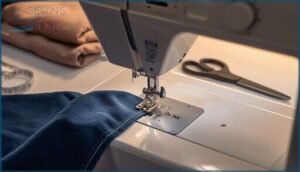
Precision matters. A straight stitch sewing machine gives you clean seams and tight control over stitch length, fabric tension, and sewing speed—ideal for basic alterations. If you want more flexibility, a zigzag sewing machine lets you finish edges and handle stretch fabrics.
Thread quality and machine noise also set the tone for a smooth, focused workflow. Choose features that match your pace.
Overlock, Coverstitch, and Serger Options
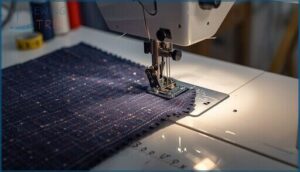
For tougher garment alteration jobs, sergers handle edge finishing at high speed using multiple threads. Proper thread tension and stitch formation depend on fabric compatibility—knits need differential feed while wovens require a balanced setup.
Consider these sewing machine features:
- Built-in cutting knives trim edges as you sew
- 2 to 4 thread configurations for varied seam strength
- Adjustable tensions control width and fabric gather
- Regular serger maintenance keeps performance sharp
Mastering these sewing techniques gives you professional control.
Electric Vs. Manual Operation
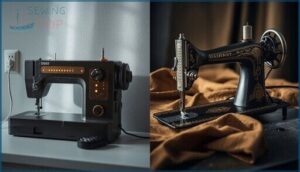
Electric sewing machines deliver motor efficiency through foot pedal speed control, giving you hands-free fabric handling at consistent speeds. Manual machines offer precise hand control for delicate work but demand more physical effort.
Power sources differ—electric models need wall outlets while manual types work anywhere.
Consider user experience: electric operation means lower operational costs over time, simpler sewing machine maintenance, and better speed variance for complex alterations.
Factors to Consider Before Buying
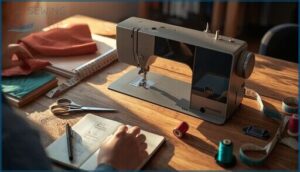
You can’t just walk into a store and grab any machine off the shelf. The right choice depends on how you’ll actually use it and what your workspace can handle.
Let’s break down the key factors that separate a smart purchase from a dust collector in your closet.
Frequency of Use and Project Types
Your sewing session habits and alteration tasks should drive your sewing machine choice. A pro handling daily repairs and garment modification across fabric variety needs power and durability, while a beginner tackling simple hems weekly can skip heavy-duty sewing machine features.
- Hem adjustments and seam tweaks take 30 to 90 minutes per garment
- Project complexity increases with user skill from basic repairs to structured fittings
- Frequent alterations demand consistent stitch quality and quick setup under 10 minutes
- Zipper replacements and sleeve adjustments require precise control across multiple fabric types
User-Friendly Controls and Interface
Beyond picking a machine that fits your workload, you need user-friendly design and button layout that won’t frustrate you mid-repair. Look for clear sewing machine controls with visual feedback and error alerts that guide you through each stitch.
Speed control and menu navigation should feel natural, letting you adjust settings without hunting through confusing panels. Machine ease boosts user comfort and keeps you focused on sewing machine features that actually matter.
Versatility and Available Stitch Options
Once you’ve nailed down controls that work for you, check the stitch variety each machine offers. Your alteration arsenal grows with smart stitch selection:
- Straight and zigzag stitches for most repairs and fabric compatibility.
- Blind hem and stretch stitches for invisible fixes on knits.
- Overcast options for quick edge finishing without fraying.
- Automatic buttonholes and decorative stitches for custom touches.
More versatility means fewer roadblocks.
Maintenance, Servicing, and Longevity
With stitch options locked in, longevity depends on what you do after each job. Smart maintenance scheduling—checking tension, replacing needles, and regular cleaning—keeps your sewing machine running strong. Think of oil filter replacement and preventative checks as your insurance policy against breakdowns.
| Task | Frequency |
|---|---|
| Clean lint and debris | After every project |
| Oil moving parts | Monthly or per manual |
| Professional service | Every 2 years |
Dry storage conditions prevent rust and seized components between sessions.
Budget and Cost-Effectiveness
Proper upkeep protects your investment, but cost analysis starts before you buy. Budget planning means weighing machine time against operator experience—professional alterations charge by the hour. Price comparison reveals hidden expenses:
- Thread type selection affects finish quality and waste reduction costs
- Presser feet compatibility determines accessory expenses
- Replacement part availability influences long-term maintenance costs
Energy consumption varies by motor type, impacting your bottom line.
Top 10 Sewing Machines for Alterations
You’ve weighed the features and thought through what matters most for your alterations. Now it’s time to see which machines actually deliver on those promises.
Here are ten solid options that handle everything from quick hems to complex garment repairs.
1. Singer Compact Sewing Machine
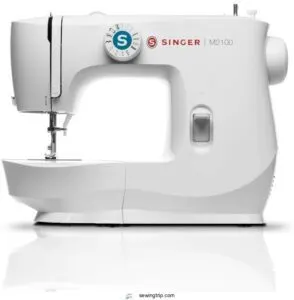
You’ll find the Singer M2105 delivers solid performance without draining your wallet. This lightweight 10-pound workhorse comes with 8 built-in stitches and a four-step buttonhole function that manages closures fast. The free arm conversion lets you tackle sleeves and cuffs with ease.
Its metal frame keeps things sturdy while the compact footprint saves precious workspace. You get essential presser feet right out of the box, plus a straightforward dial system that won’t leave you guessing.
It’s designed for basic alterations, not industrial marathons.
| Best For | Beginners and casual sewers who need a portable, affordable machine for basic projects like hemming, simple garments, and lightweight home decor. |
|---|---|
| Built-in Stitches | 8 |
| Buttonhole | 4-step |
| Weight | 13.23 lbs |
| Material | Metal, Plastic |
| Needle Threader | Quick threading |
| Free Arm | Yes |
| Additional Features |
|
- Lightweight at 13 pounds with a compact design that’s easy to store and move around
- Straightforward dial selection and preset stitch settings make it beginner-friendly
- Comes with essential accessories and a free arm for handling sleeves and curved seams
- Users report frequent thread snapping and jamming issues that disrupt workflow
- Not built for heavy fabrics or demanding projects without careful needle selection
- Customer support and repair process can be slow and frustrating when problems arise
2. Brother Lightweight Sewing Machine
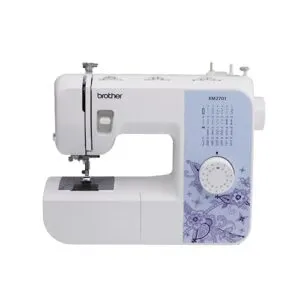
Brother’s XM2701S strips away the gimmicks and hands you 27 built-in stitches that won’t quit. At 12.6 pounds, you can haul this machine anywhere without breaking a sweat.
The automatic needle threader and drop-in bobbin system keep you moving instead of fumbling with thread. You get six presser feet and a free arm that turns sleeves and cuffs into quick work.
It runs quiet enough to sew late without waking anyone, and the one-step buttonholer delivers clean results every time.
| Best For | Beginners and home sewers who want a lightweight, versatile machine that handles everyday projects without the learning curve of complicated features. |
|---|---|
| Built-in Stitches | 27 |
| Buttonhole | Automatic 1-step |
| Weight | 12.6 lbs |
| Material | Metal |
| Needle Threader | Automatic |
| Free Arm | Versatile |
| Additional Features |
|
- Automatic needle threader and drop-in bobbin system save time and cut out the frustration of manual threading
- 27 built-in stitches plus a one-step buttonholer give you enough variety for most common sewing tasks
- Lightweight at 12.6 pounds and quiet enough to use in apartments or shared spaces
- Only works with 120V US outlets, so international use voids the warranty
- Spool pin can be flimsy and may break with regular use
- Not built for heavy fabrics like thick upholstery or multiple layers of denim
3. Bernette Computerized Sewing Machine
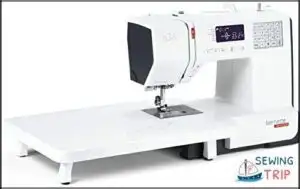
You get real power with the Bernette computerized model that packs over 50 stitches into a 22-pound frame. The LCD display shows your stitch length and width in real time, so you’re never guessing.
This machine manages delicate silks and heavy denim without choking, thanks to variable speed control that accommodates any fabric.
The automatic thread cutter and built-in LED lighting keep your workflow smooth, while the free arm manages sleeves and pant legs without the wrestling match.
| Best For | Sewers who want a reliable workhorse that handles everything from delicate fabrics to heavy-duty projects without constantly adjusting settings. |
|---|---|
| Built-in Stitches | Advanced computerized |
| Buttonhole | Automatic |
| Weight | 22 lbs |
| Material | Metal |
| Needle Threader | Automatic |
| Free Arm | Yes |
| Additional Features |
|
- LCD display shows stitch settings in real time so you’re not playing guessing games
- Automatic thread cutter and tie-off function keep you moving without stopping to snip and knot
- Handles both lightweight silks and thick denim without jamming or struggling
- Makes a noticeable humming noise even when you’re not actively sewing
- Foot pedal placement can make you hunch over, and lifting the presser foot takes some arm strength
- Needs regular cleaning and oiling to keep running smoothly
4. Janome Blue Couture Sewing Machine
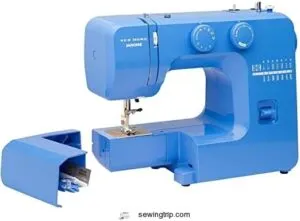
The Janome Blue Couture delivers 15 built-in stitches and a metal frame that won’t flex when you’re pushing through thick denim. At 12 pounds, it moves between your workspace and storage easily.
You’ll appreciate the front-loading bobbin system that keeps thread changes fast, while the free arm lets you tackle sleeves and cuffs without fighting the fabric.
The four-step buttonhole function manages garment openings without tedious manual work, and adjustable stitch length gives you precise control over hems.
| Best For | Beginners and intermediate sewists who want a reliable, lightweight machine that can handle everything from delicate silk to heavy denim without breaking the bank. |
|---|---|
| Built-in Stitches | 15 |
| Buttonhole | 4-step |
| Weight | 12 lbs |
| Material | Metal |
| Needle Threader | Easy threading |
| Free Arm | Removable |
| Additional Features |
|
- Heavy-duty metal frame keeps the machine stable even when working with thick fabrics like denim
- Front-loading bobbin system and free arm make threading and detail work (like sleeves and cuffs) much easier
- Portable at just 12 pounds, so you can move it around or store it without hassle
- Can be noisier than some users expect during operation
- Thread breaks happen occasionally, which might be frustrating for beginners (though better thread quality can help)
- Instruction manual only comes in English, which limits accessibility for non-English speakers
5. Bernina Sewing Machine B530
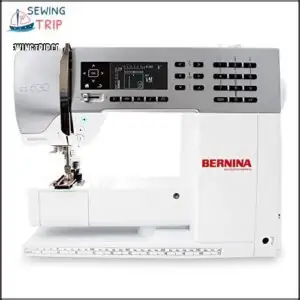
The Bernina B530 puts 395 stitch patterns at your fingertips, with adjustable length up to 5 mm and width to 5.5 mm for complete control over every seam. Its steel frame stays rock-solid through heavy alterations, while 11 needle locations let you place stitches exactly where you need them.
The memory function stores 100 stitch combinations you can pull up instantly. At 900 stitches per minute, you’ll power through hemming pants and taking in jackets without the machine skipping a beat.
| Best For | Ambitious sewers and quilters who want precision control over stitch placement and settings for alterations, quilting, and detailed sewing projects. |
|---|---|
| Built-in Stitches | Wide range |
| Buttonhole | Automatic 1-step |
| Weight | 32 lbs |
| Material | Metal |
| Needle Threader | Built-in |
| Free Arm | Yes |
| Additional Features |
|
- 395 stitch patterns with memory for 100 combinations give you endless creative options and quick access to your favorite settings
- Steel frame construction and 900 stitches per minute handle heavy alterations and large projects without losing stability
- 11 needle positions and adjustable stitch parameters (up to 5mm length, 5.5mm width) let you place every stitch exactly where you want it
- Heavy weight (32 lbs) makes it difficult to move around or transport to classes
- Small bobbin area and awkward needle threader take some getting used to for new users
- Old-style presser feet won’t fit, so you may need to buy additional feet separately
6. Singer Sewing Machine Beginners Kit
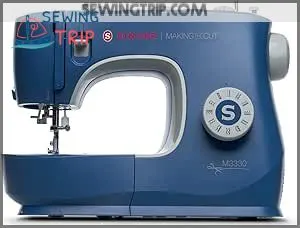
You’ll need more than a machine to tackle alterations with confidence. The Singer Sewing Machine Beginners Kit packs 12 to 43 essential pieces into a zippered case you can grab and go.
You get pins with a magnetic dish, a tape measure for precise adjustments, a seam ripper for quick fixes, and fabric marking tools to transfer pattern lines.
The 100% polyester threads work across most fabrics, while universal needles handle light to medium weights without fuss.
| Best For | Beginners and hobbyists who want a reliable machine for basic repairs, DIY projects, and sewing a variety of fabrics from sheer to denim. |
|---|---|
| Built-in Stitches | 23 |
| Buttonhole | Simple 1-step |
| Weight | 11.79 lbs |
| Material | Metal, Plastic |
| Needle Threader | Built-in |
| Free Arm | Yes |
| Additional Features |
|
- Comes with 23 built-in stitches and over $75 worth of accessories, including pins, seam ripper, and thread
- Features beginner-friendly tools like a built-in needle threader, one-step buttonhole, and free arm for tricky spots
- Handles multiple fabric types well, from lightweight materials to stretch knits and heavier denim
- Front-loading bobbin can jam or tangle thread, requiring frequent troubleshooting
- Instructions are basic and many users need YouTube videos to figure out proper setup and adjustments
- The needle threader is fragile and the machine can be finicky, needing tweaks to run smoothly
7. Juki Portable Sewing Machine
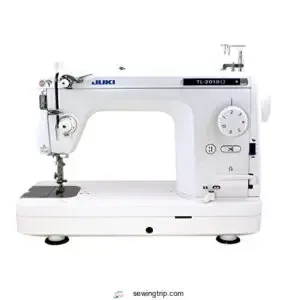
You’ll find real freedom in a machine that travels with you. The Juki portable weighs just 38 pounds and fits easily into tight spaces, so you can set up shop wherever you need to work.
It runs on electric power and delivers straight stitches with automatic thread trimming that saves you seconds on every seam. The knee lifter lever keeps your hands free to guide fabric through bulky hems, while the automatic needle threader cuts down setup time when you’re switching between projects.
| Best For | Quilters and sewers who need a lightweight machine that handles bulky materials and straight stitching without sacrificing performance. |
|---|---|
| Built-in Stitches | Straight stitch focused |
| Buttonhole | No |
| Weight | 38 lbs |
| Material | Aluminum |
| Needle Threader | Automatic |
| Free Arm | Yes |
| Additional Features |
|
- Automatic thread trimming and needle threader speed up your workflow between seams
- Knee lifter lever frees up both hands for guiding thick fabrics through the machine
- Weighs only 38 pounds, making it easy to move between workspaces or store when not in use
- Doesn’t include a dedicated scant 1/4″ foot, which quilters often need
- Built-in lighting falls short for detailed work
- Needle threader takes practice to use smoothly
8. Bernette Sewing Quilting Machine
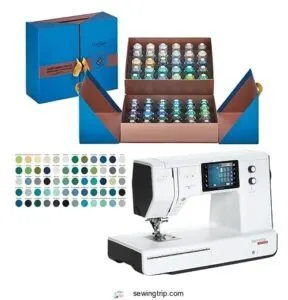
Computerized control gives you precision most mechanical machines can’t match. The Bernette 77 packs 500 built-in stitches, including 35 quilting options and 17 buttonholes, all navigated through a color touch screen that responds instantly.
You get dual feed for even layering, automatic thread cutting, and a semi-automatic needle threader that speeds up your workflow. The 9-inch workspace accommodates bulky alterations without cramping your hands.
At 1000 stitches per minute, you’ll finish hems and seam adjustments faster than expected.
| Best For | Sewers and quilters who want computerized precision and a wide range of stitch options without the learning curve of industrial machines. |
|---|---|
| Built-in Stitches | 240 |
| Buttonhole | 10 auto-size styles |
| Weight | 30.6 lbs |
| Material | Various fabrics compatible |
| Needle Threader | Automatic |
| Free Arm | Large workspace |
| Additional Features |
|
- 500 built-in stitches with a responsive color touch screen make it easy to switch between projects
- Dual feed system and automatic thread cutter speed up workflow and keep layers even
- Large 9-inch workspace handles bulky quilts and thick fabrics comfortably
- Thread tension issues and stitch securing problems reported by some users
- Automatic needle threader can break or stop working over time
- Customer support and warranty claims may be frustrating to deal with
9. Brother Computerized Sewing Embroidery Machine
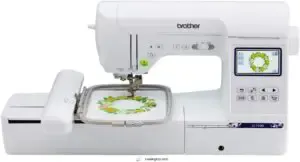
The Brother SE1900 shifts your focus to embroidery and decorative work alongside alterations. You get 240 built-in stitches and 138 embroidery designs, all controlled through a 3.2-inch color touchscreen that makes navigation quick.
The automatic needle threader and drop-in bobbin cut prep time, while the 5×7-inch embroidery field manages monograms and custom patches. At 22 pounds, it stays put during detailed work.
Import your own designs via USB for unique touches on repaired garments.
| Best For | Sewers who want to add embroidery and decorative touches to their alteration work without investing in a separate embroidery machine. |
|---|---|
| Built-in Stitches | 138 embroidery designs |
| Buttonhole | Yes |
| Weight | 22 lbs |
| Material | Metal |
| Needle Threader | Advanced |
| Free Arm | Yes |
| Additional Features |
|
- 240 stitches and 138 embroidery designs give you tons of creative options for customizing repairs
- Touchscreen interface and automatic needle threader make setup fast and frustration-free
- USB port lets you import custom designs for truly unique embroidery work
- Extension table sold separately, which you’ll probably want for larger sewing projects
- Requires specific 60-weight bobbin thread for embroidery, adding to supply costs
- US-only voltage means it won’t work overseas without a converter
10. Brother GX37 Sewing Machine
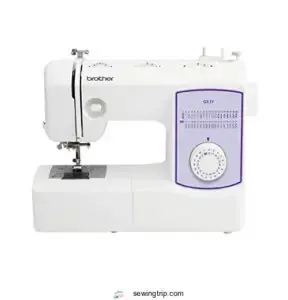
The GX37 strips away embroidery and returns to alteration essentials. You control 37 stitches through a simple dial, including blind hem for invisible fixes on trousers and skirts.
The automatic needle threader saves your eyesight during long sessions, while the jam-resistant drop-in bobbin keeps thread flowing smoothly.
At just over 10 pounds, you can move it from room to room without strain. Six included feet handle buttonholes, zippers, and edge finishing—everything you need for daily garment repairs.
| Best For | Beginners and casual sewists who need a reliable machine for everyday clothing repairs, alterations, and simple quilting projects without the complexity of embroidery features. |
|---|---|
| Built-in Stitches | 37 |
| Buttonhole | Yes |
| Weight | 10.14 lbs |
| Material | Metal, Plastic |
| Needle Threader | Automatic |
| Free Arm | Versatile |
| Additional Features |
|
- 37 built-in stitches with easy dial control give you plenty of options for different fabrics and projects
- Automatic needle threader and drop-in bobbin make setup quick and frustration-free
- Lightweight at just over 10 pounds, so you can easily move it around or take it with you
- Not powerful enough for heavy-duty fabrics or serious quilting work
- Changing needles requires a screwdriver instead of a quick-release system
- LED light can be too dim for detailed work in low-light conditions
Essential Accessories and Maintenance Tips
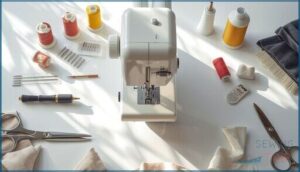
You can’t rely on a great machine alone if you want clean hems and lasting repairs. The right accessories make difficult tasks easier, and basic upkeep prevents breakdowns when you need your machine most.
Here’s what you need to keep your sewing machine running smoothly for every alteration project.
Presser Feet and Needle Selection
Matching the right presser foot types to your fabric is the secret to stitch precision that rivals any pro tailor. A zipper foot slides along narrow seams, while a walking foot grips slippery textiles without shifting.
Needle materials matter too—ballpoint needles prevent runs in knits, and sharp points pierce wovens cleanly. Check foot compatibility with your sewing machine before you buy any sewing accessories for maximum sewing efficiency.
Bobbins and Thread Recommendations
You can transform every alteration project by choosing the right bobbin materials and sewing thread. Polyester works across most fabrics thanks to its elasticity and strength. Cotton gives natural textiles a softer finish.
Here are three sewing tips that enhance your work:
- Match thread weight between top and bobbin—60 to 90 weight prevents bulk.
- Select fiber types that mirror your fabric for balanced tension.
- Keep pre-wound bobbins sorted by color for quick changes.
Cleaning, Oiling, and Basic Repairs
Smooth operation depends on a consistent cleaning schedule and machine oil tips. Remove lint from feed dogs weekly with a soft brush, then place one drop of sewing machine oil on the hook race every eight to twelve hours of use.
For troubleshooting guide needs, replace bent needles immediately to prevent skip stitches. These repair techniques keep daily repairs simple and restore your sewing machine to full power.
Preventative Maintenance for Longevity
Regular lubrication schedules protect your sewing machine from premature wear. Apply oil every six to twelve hours of use, replace needles after eight to ten hours, and check tension weekly. Bobbin maintenance and needle calibration prevent skipped stitches during daily repairs.
Schedule electrical inspections monthly and professional servicing annually. These textile repair methods extend your sewing equipment lifespan beyond what most sewing machine reviews promise.
Frequently Asked Questions (FAQs)
What are the best sewing machines?
You’re stepping into a world where one out of every three sewers manages alterations at home.
The best sewing machines deliver consistent stitches, reliable controls, and the durability your alteration techniques demand.
What are sewing machine reviews?
Sewing machine reviews assess performance across stitching quality, ease of use, and durability. They offer comparison tools, user feedback, and machine ratings that guide your buying decisions when evaluating different sewing machine types for your alteration projects.
How do I choose a good sewing machine?
Focus on your project needs first. Match stitch types to alterations you’ll tackle most.
Check durability through metal frames and motor quality. Test controls for comfort.
Balance budget against long-term reliability.
Which Brother Sewing Machine is best?
The best tool isn’t the fanciest—it’s the one you’ll actually use. For alterations, the Brother GX37 stands out with solid stitch variety, reliable speed control, and budget-friendly pricing that beginners and home sewing enthusiasts appreciate in user reviews.
Which sewing machine has more stitches?
Computerized models generally pack 60 to 200+ built-in stitches, while entry-level mechanical machines offer 8 to More stitch variety means expanded utility stitches, decorative options, and adjustable stitch length for diverse sewing capacity.
What sewing machine is good for hemming jeans?
When hemming jeans is your bread and butter, a SINGER Heavy Duty machine gives you the muscle you need.
Its denim stitch quality and fabric handling turn thick seams into child’s play.
Which machine does a tailor use?
A tailor usually relies on a straight stitch domestic or industrial sewing machine for most alterations.
This professional equipment delivers consistent lockstitch performance essential for hemming garments and executing precise seam repairs during garment construction.
What is the common sewing machine used by tailors and dressmakers?
You’d think tailors would chase fancy features, but mechanical models dominate workrooms for their sheer reliability.
Most professionals prefer sturdy straight-stitch machines with adjustable tension—simple tools that handle daily alterations without breaking down.
What is the best all-purpose sewing machine?
The best all-purpose sewing machine balances solid stitch quality, reliable motor power, and adaptable features for home sewing needs.
Look for automatic thread trimming, wide presser foot options, and strong warranty coverage to master alteration techniques.
What is the best machine for delicate fabrics?
You need a machine with adjustable thread tension and low presser foot pressure to protect delicate fibers.
Look for fine needle options and smooth feed dogs that prevent snags during home sewing projects.
Conclusion
Your workspace doesn’t need a showroom full of equipment—just one reliable machine that won’t quit halfway through a hemline.
The best sewing machine for alterations earns its keep by delivering clean, consistent stitches on everything from bridal silk to work jeans.
Pick the model that matches your workload and skill level, keep it maintained, and watch your reputation grow with every finished garment that walks out your door.