This site is supported by our readers. We may earn a commission, at no cost to you, if you purchase through links.
Mastery isn’t measured by how many garments you’ve finished—it’s measured by the ones that made you stop, reconsider, and start over. At a certain point, basic patterns stop teaching you anything.
Your hands know the motions, your machine hums on autopilot, and nothing challenges you anymore. That’s the moment most experienced sewers either plateau or push forward.
Challenging sewing machine projects force you to think differently: about fabric behavior, structural integrity, and the engineering hidden inside every well-made garment.
From bound seams in cashmere trench coats to boned bodices and reinforced leather panels, the projects ahead will test every technique you’ve built.
Table Of Contents
Key Takeaways
- Mastery comes from projects that force you to stop, rethink, and rebuild — not from finishing more of the same.
- Tailored garments, formal wear, and technical fabrics each demand a different skill set, so tackling all three is how you close your gaps quickly.
- Difficult materials like leather, velvet, and stretch knits won’t forgive guesswork — know your needle, foot, and heat settings before you cut.
- Precision accessories and home décor projects test the same construction discipline as garments, making them worth adding to your practice rotation.
Tailored Garments That Test Skill
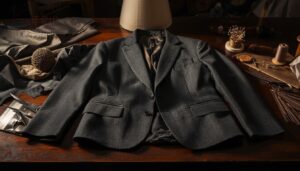
Custom garments don’t forgive shortcuts — every seam, dart, and detail has to earn its place. If you’re ready to push past the basics, these projects will put your skills to the test.
Before diving into custom work, building confidence with beginner sewing projects and easy ideas gives your hands the muscle memory that complex garments demand.
Here’s where experienced sewers prove what they’re made of.
Cashmere Trench Coats With Bound Seams and Lining
Cashmere demands respect. Before you cut a single panel, master your bound seam technique — it’s what keeps this coat’s interior clean and flat without bulk.
Choose lining material wisely; silk or viscose blends glide easily and reduce armhole wear.
Storm flap construction and belt integration require precise seam allowances.
Reference Angela Wolf’s Chic Cashmere Trench Coat Part 4 for refined tailoring that ties everything together.
Structured Blazers With Shoulder Shaping and Lapels
Blazers are where refined tailoring gets real. Full Canvas Structure runs the length of the chest panel — that’s what holds the shape, not interfacing alone.
Shoulder Padding Techniques with light foam to anchor the silhouette. Canvas Lapel Construction keeps lapels from curling.
Lapel Stiffening Methods with proper Interfacing Selection. Your notched lapels should measure 2.5 to 4.5 centimeters — no guessing.
For adaptable styling, consider the standard notch lapel choice(https://www.rampleyandco.com/blogs/the-journal/the-complete-guide-to-a-tailored-jacket-or-blazer).
Fitted Jackets With Precise Topstitching and Welt Pockets
Lapels sorted. Now the real test: welt pockets and topstitching that never lies.
Pocket Placement Accuracy starts before you cut. Mark everything.
- Anchor welt openings with two parallel topstitch lines
- Press pocket openings before stitching for a crisp edge
- Apply Interfacing Selection behind the pocket area to keep welts flat
- Use Stitch Tension Control to avoid puckering on fine wool
- Follow Pressing Technique with a cloth over every Seam Line Symmetry check
Pants With Fly Fronts, Darts, and Clean Waistbands
Welt pockets mastered? Now shift your focus downward.
Pants demand the same discipline — maybe more. Fly Front Alignment starts at the center seam and won’t forgive guesswork.
Nail your Dart Placement before cutting; front darts sculpt the abdomen, back darts balance the curve.
Use Waistband Interfacing for a crisp finish, and consider a Bias Cut Waistband for comfort.
Smooth Topstitching ties it all together.
Formalwear With Advanced Construction
Formalwear doesn’t forgive shortcuts — every seam, stitch, and structural choice shows. If you’re ready to push your skills, these projects will challenge you in all the right ways.
Here’s what’s worth tackling next.
Special Occasion Dresses With Boning and Corsetry

Special occasion dresses demand real structural thinking. Boned bodice construction is your foundation — spiral steel boning distributes pressure evenly so the silhouette holds all night.
Stitch boning channels into multilayer lining stability systems that keep everything locked in place.
Lace-up back detailing allows precise fit adjustments, while a satin silk overlay adds polish.
Refined tailoring separates a dress from a gown.
Evening Gowns With Draping, Lining, and Hidden Zippers

Draping an evening gown is where refined sewing techniques and projects truly reveal your skill level. Silk Draping Techniques demand bias cut fluidity — fabric must glide, not fight. Your choices here define everything.
Evening gown draping reveals true skill: silk must glide on the bias, or it fights you
- Anchor draped sections with internal tacking stitches
- Use lining color contrast for visual depth
- Apply invisible zipper placement along back or side seams
- Finish panels with smooth edge finishes using rolled hems
- Line with lightweight acetate for comfort and structure
Little Princess Dresses With Ruffles and Layered Skirts
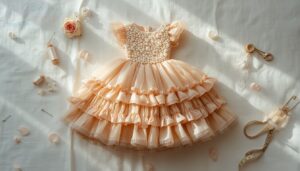
Little princess dresses demand real skill. Tiered Skirt Construction means mastering Ruffle Gathering Methods — hand-gather each tier for even fullness.
Use Silk Ruffle Layers and nylon chiffon for Tulle Skirt Volume without bulk.
Add a Pearl Embellished Bodice, Adjustable Shoulder Straps, and elastic back for fit flexibility.
Janice Ferguson’s DIY Cute Ruffled Spring Outfit for Kids, and Little Princess Special Occasion Dress Part 1 shows Expert Pattern Drafting and Layout done right.
Jumpsuits With Tailored Bodices and Set-in Sleeves

Jumpsuits are where tailoring gets real. Every fit decision compounds — get the bodice wrong, and the whole garment fights you.
- Shape the torso using Princess Seam Integration and Bodice Darts
- Engineer Armhole Ease for clean shoulder movement
- Finish edges with Bias Bound Armholes
- Define seams through Topstitch Detailing
- Test everything in muslin before cutting final fabric
Refined tailoring starts with knowing where the fit lives.
Hard Fabrics and Technical Materials
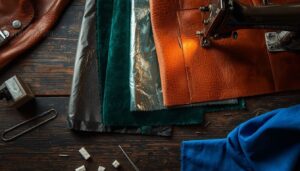
Some fabrics don’t play nice — and that’s exactly what makes them worth tackling. Leather, velvet, laminated cloth, and stretch knits each come with their own rules, and skipping those rules shows up fast in your finished work.
Here’s what you need to know to handle them right.
Leather Projects With Heavy Needles and Reinforced Seams
Leather doesn’t forgive mistakes.
Heavy-Duty Needle Selection starts at size 90/14 and goes up to 110/18 depending on hide thickness.
Use the SINGER Heavy Duty 4452 or SINGER Heavy Duty 4423 for Layered Leather Paneling — both handle thick fabrics without stalling.
Set Stitch Length Optimization around 3.0 mm. Apply Box Stitch Reinforcement at stress points. Finish with Leather Edge Sealing to lock structured seams tight.
Velvet Garments With Nap Matching and Careful Cutting
Velvet is unforgiving — one wrong cut and your nap alignment is gone for good.
Master these before you touch the fabric:
- Mark nap direction with chalk on the wrong side before any Velvet Cutting begins.
- Use pattern weights, not pins, to protect Pile Preservation.
- Cut one layer at a time for true Seam Nap Matching.
- Back Lightweight Interfacing with low heat and a press cloth.
- Keep nap flowing downward across every panel for consistent drape.
Laminated or Oilcloth Bags With Low-heat Finishing
Nap direction demands respect — so does laminate. oilcloth and laminated cotton, your margin for error shrinks fast.
Use the Teflon Foot Technique to stop sticking mid-seam. Keep heat below 140°C for Low Heat Pressing. Polyester Topstitching holds clean under stress.
Finish edges with Laminate Edge Binding, and seal joins using Heat Activated Sealing for durable DIY bag and purse constructions.
| Step | Key Tip |
|---|---|
| Needle choice | Size 80/12 universal |
| Presser foot | Teflon foot only |
| Seam finishing | Laminate Edge Binding |
| Heat setting | Below 140°C |
Stretch Knits With Twin Needles and Differential Feed
Where oilcloth punishes mistakes, knits punish impatience.
Twin Needle Tension balances both threads against the bobbin — get it wrong, and your hem tunnels.
Nail your Differential Feed Settings around 1.5 for jersey, then test.
- Knit Seam Stabilization prevents stretch creep
- Walking Foot Application keeps layers feeding evenly
- Stitch Length Optimization stops hem wave
- Use 3.0–4.0 mm twin needles for most knits
- Ballpoint needles avoid fabric laddering
Advanced Home Décor Projects

Home décor projects are where your technical skills really start to show. Getting curtains, shades, cushions, and table linens right takes the same precision as any custom garment — sometimes more.
Here’s what to tackle next.
Pinch Pleat Curtain Panels With Precise Spacing
Pinch pleat curtain panels demand discipline from the start. Mark pleat centers and space intervals using Pleat Marking Techniques before you cut a single thread.
Header Tape Alignment locks your spacing in place — slot locations must match your pre‑marked lines exactly.
Pleat Depth against total panel width, account for Fabric Grain Matching, and use Spacing Adjustment Tools to correct drift after hanging.
Roman Shades With Clean Folds and Structured Lining
Roman shades demand the same discipline as any custom piece. Fold Spacing Precision sets your pleat intervals — inconsistent spacing shows immediately. Choose your lining with Lining Weight Balance in mind; heavier lining keeps folds crisp.
Cordless Lift Mechanism ensures even stacking. Pattern Alignment Techniques for directional prints, and finish every fold edge with Edge Stitch Reinforcement.
Upholstered Cushions With Piping and Invisible Closures
Cushions look simple — until you add piping and a hidden closure. Bias-Cut Piping demands fabric strips cut at 45 degrees so they bend cleanly around corners without bunching.
Seam Allowance Precision keeps your piping flush and consistent.
For Concealed Zipper Installation, use a dedicated zipper foot.
Finish with Corner Pressing Techniques for sharp, defined edges.
Durable Fabric Selection determines how long your work lasts.
Decorative Table Linens With Rolled Hems and Embroidery
Table linens reward patience and punish shortcuts. Get these four steps right:
- Linen Fabric Choice — Pre-wash to prevent shrinkage before cutting.
- Embroidery Motif Placement — Stitch motifs first, then finish edges.
- Rolled Hem Technique — Use narrow stitch width and consistent tension.
- Thread Colorfastness — Choose washable floss; protect with a pressing cloth.
Stain Resistant Finishing seals your work.
Precision Bags and Wearables

Bags and wearable accessories are where structure meets serious skill. Getting them right means mastering interfacing, hardware, and construction sequences that leave no room for shortcuts.
Here’s what’s worth tackling next.
Structured Handbags With Interfacings and Boxed Corners
Structured handbags don’t forgive guesswork. Every decision — from Interfacing Selection to Panel Grain Alignment — determines whether your Box Bag holds its shape or collapses after a week.
| Element | Purpose | Key Action |
|---|---|---|
| Boxed Corner Construction | Creates flat base | Cut and clip precisely |
| Hardware Reinforcement | Anchors straps | Rivet at load points |
| Finishing Edge Binding | Seals raw edges | Apply bias or paint |
These are the details that separate Handmade bag and purse constructions from amateur DIY bag and purse constructions.
Backpack or Tote Builds With Multiple Compartments
Multi-compartment totes and backpacks demand the same discipline as structured handbags. Plan your Modular Insert System before cutting a single panel.
Build in a Laptop Sleeve Design sized for 15.6-inch devices, add Water-Resistant Zippers at every access point, and reinforce External Daisy Chains at stress seams.
An Adjustable Sternum Strap completes the build.
These Sophisticated sewing techniques and projects reward precision.
Corset-style Accessories With Grommets and Strong Lacing
Corset-style belts and cinchers aren’t just decorative — they’re engineering problems.
Grommet Materials matter: brass resists corrosion, nickel blends with silver hardware, and antique brass suits vintage work.
Choose your Lacing Pattern Variations carefully; tunnel lacing distributes tension evenly across Reinforced Seam Zones.
Match Metal Finish Options to your hardware.
Follow proper Care and Maintenance — wipe grommets, skip bleach, store dry.
Denim Upcycling Into Custom Bags, Aprons, or Jackets
Denim upcycling turns worn jeans into precision projects. Start with these three builds:
- Handmade bag and purse constructions — use Patchwork Reinforcement panels, Bar Tack Grips, and Canvas Lining for load-bearing strength.
- DIY apron — repurpose belt loops as ties and finish edges with double-fold hems.
- Custom clothing items — rebuild jackets with heavy needles and Wax Sealant to lock in color. Add Metal Hardware last.
Frequently Asked Questions (FAQs)
What is the best sewing machine for an experienced sewer?
The best machine balances Motor Power, a wide Stitch Library, Differential Feed, and a Metal Frame.
The SINGER SE9185 Sewing Embroidery Machine and SINGER Professional C430 both deliver reliable, Self-Lubricating Mechanism performance for complex work.
What is a good sewing machine for an intermediate sewer?
A good intermediate sewing machine offers variable speed, solid metal frame construction, and ergonomic controls. The SINGER Professional C430 manages diverse fabrics well.
Add a walking foot and focus on stitch selection for clean, confident results.
What are the big 4 in sewing?
The Big Four are McCall’s, Simplicity, Butterick, and Vogue.
They set standard sizing, offer tissue paper patterns, publish seasonal releases, and include fit adjustments and fashion garment construction guides for all skill levels.
How to choose the best sewing machine for Advanced sewers?
Look for motor torque, needle compatibility, differential feed, and presser foot variety. A solid memory stitch library saves time.
SINGER sewing machines cover these bases well for sophisticated sewing techniques and projects.
What are the best sewing projects for beginners?
Start simple.
A Simple Tote Bag, Pillowcase Project, Elastic Waist Skirt, Basic Tee Top, or Zipper Pouch build core skills fast.
These beginner sewing projects cover seams, hems, and basic closures effectively.
Are there different types of sewing machines for Advanced sewers?
Yes. Sophisticated sewers choose machines by project type.
Options include Industrial Heavy-Duty models, Servo Motor Precision machines, Quilting Long-Arm setups, and Computerized Stitch Library systems.
Mechanical Simplicity machines remain reliable for focused work.
How many sewing projects are there in the article?
Wondering how much ground this covers? The project tally comes to 20 total.
The section breakdown runs five sections, each with four projects — a clean count summary of sophisticated sewing techniques and projects.
What are the 7 common sewing machine troubles?
The 7 common sewing machine troubles are Thread Tension Issues, Bobbin Placement Errors, Needle Breakage, Fabric Feed Problems, Bird Nest Tangling, skipped stitches, and uneven seams. Each one has a fix.
What are the hardest things to sew?
Cashmere trench coats, corset making with boning alternatives, and sophisticated tailoring demand your sharpest focus. Lace overlay, tulle layering, and buttonhole precision separate skilled sewers from true masters.
What are the six sewing machine troubles?
There are five core sewing machine troubles: Tension Issues, Needle Problems, Bobbin Balance, Feed Dog Malfunction, and Thread Quality.
Sewing machine maintenance catches most of these before they derail your work.
Conclusion
A master tailor once said a coat isn’t finished when the last stitch is placed—it’s finished when you can’t find a single thing left to improve. That’s the standard challenging sewing machine projects for experienced sewers are built around.
Each project you complete rewires how you see fabric, structure, and craft.
Don’t chase completion. Chase the moment you look at your work and realize you’ve outgrown who you were when you started.