This site is supported by our readers. We may earn a commission, at no cost to you, if you purchase through links.
Most sewists spend way too much on gear before they’ve finished their second project. A rotary cutter and a self-healing mat changed how fast I cut fabric more than any machine upgrade ever did—and together they cost less than a takeout dinner.
The right cheap sewing tools don’t just save money; they remove the friction that makes sewing feel harder than it should. A wobbly seam ripper, dull scissors, or a marker that bleeds through fabric turns a relaxing hobby into a frustrating one.
These ten tools fix that, covering everything from cutting and marking to finishing—without emptying your wallet.
Table Of Contents
- Key Takeaways
- Top 10 Cheap Sewing Tools
- 1. Fiskars Stick Rotary Cutter 28 mm
- 2. Fiskars Self Healing Cutting Mat
- 3. Fiskars Acrylic Sewing Quilting Ruler
- 4. Fiskars Premier Micro Tip Fabric Scissors
- 5. Gingher Gold Lion Tail Embroidery Scissors
- 6. Aipker Sharp Seam Ripper
- 7. Dritz Quick Turn Fabric Tube Turner
- 8. Clover Hera Fabric Marker
- 9. Wooden Handle Awl Tool Set
- 10. Mundial Industrial Forged Bent Trimmer Scissors
- Cutting Tools That Save Time
- Marking and Measuring Made Simple
- Budget Helpers for Easier Stitching
- Choosing The Best Cheap Tools
- Frequently Asked Questions (FAQs)
- Conclusion
Key Takeaways
- A rotary cutter paired with a self-healing mat will speed up your fabric prep more than any machine upgrade — and both together cost less than a nice dinner out.
- tools that frustrate you most (wobbly seam rippers, dull scissors, bleeding markers) are exactly the ones worth replacing first, because friction kills the joy of sewing faster than anything else.
- You don’t need to spend big to build a capable kit — most of the highest-impact tools on this list land under $20, and several come with lifetime warranties.
- Matching your tools to your actual projects — mending, quilting, or DIY — matters more than chasing the most expensive option on the shelf.
Top 10 Cheap Sewing Tools
You don’t need to spend spend a lot to sew well — the right tools just need to work. These ten picks cover cutting, marking, and turning without draining your budget.
From scissors to sewing clips, this beginner sewing kit checklist walks you through all ten must-haves without the guesswork.
Here’s what made the list.
1. Fiskars Stick Rotary Cutter 28 mm
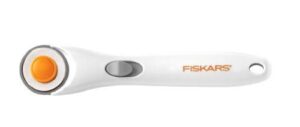
The Fiskars Stick Rotary Cutter is one of those tools that quietly earns its keep. At $13.22, you get a 28 mm titanium-carbide blade that stays sharp through quilting, appliqué, and fussy cutting without fuss.
It works for both hands, so no awkward repositioning mid-cut.
The sliding blade guard snaps open and closed in a second — genuinely handy when you’re moving fast.
Compact enough to toss in your project bag, precise enough to handle detail work. Solid value, full stop.
| Best For | Quilters, crafters, and hobbyists who need a lightweight, affordable rotary cutter for detail work, fussy cutting, and everyday fabric or paper projects. |
|---|---|
| Brand | Fiskars |
| Price | $13.22 |
| Material | Steel/Titanium-carbide |
| Warranty | Lifetime |
| Quantity | 1 |
| Primary Use | Fabric cutting |
| Additional Features |
|
- Sharp titanium-carbide blade handles quilting fabric, paper, and thin plastics with clean, precise cuts
- Ambidextrous design means lefties and righties can both use it comfortably without any adjustments
- Sliding blade guard and lifetime warranty make it a safe, low-risk buy at just $13.22
- The 28 mm blade can dull faster on very thick or bulky materials — a larger cutter would serve heavy-duty bulk work better
- Cutting wheel may need a little loosening right out of the box before it rolls smoothly
- Stacking too many layers at once reduces accuracy and adds extra wear on the blade
2. Fiskars Self Healing Cutting Mat
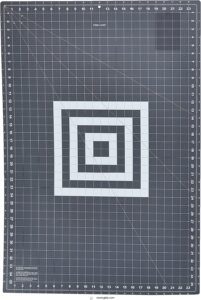
A good rotary cutter deserves an equally good surface — and that’s where this mat earns its spot.
The Fiskars 24" × 36" self-healing mat gives you serious real estate for full-width fabric cuts. The double-sided design means you flip it when one side gets worn out.
Built-in grids with 30°, 45°, and 60° angle lines take the guesswork out of bias cuts. At $68, it’s not the cheapest, but it protects your table and your blades for years.
| Best For | Quilters and sewists who regularly work with full-width fabric and want a durable, large-format surface that doubles as a measuring guide. |
|---|---|
| Brand | Fiskars |
| Price | $68.08 |
| Material | Self-healing polymer |
| Warranty | Not listed |
| Quantity | 1 |
| Primary Use | Surface protection |
| Additional Features |
|
- Double-sided self-healing surface means it lasts way longer than a standard mat
- Built-in 30°, 45°, and 60° angle lines make bias cuts simple — no extra ruler needed
- Big 24" × 36" surface handles full-width fabric in one pass
- At $68, it’s a real investment compared to basic cutting mats
- Only 0.06" thick, so it feels a bit flimsy if you’re used to heavier professional mats
- Shipping packaging is often poor — don’t be surprised if it arrives with scuffs or sticker residue
3. Fiskars Acrylic Sewing Quilting Ruler
Once your mat’s in place, you need a ruler that keeps up. The Fiskars 6" × 24" acrylic quilting ruler is one of those tools that quietly does a lot.
It’s clear, so you can actually see the fabric beneath — no guessing about grain lines or pattern repeats.
The bold red markings and angle guides for 30°, 45°, and 60° cuts make bias tape and diagonal strips surprisingly straightforward.
Removable non-slip feet keep it from sliding mid-cut.
Backed by a lifetime warranty too.
| Best For | Quilters and sewists who need accurate, no-slip cuts and want to see their fabric clearly while working. |
|---|---|
| Brand | Fiskars |
| Price | $15.99 |
| Material | Acrylic |
| Warranty | Lifetime |
| Quantity | 1 |
| Primary Use | Measuring/cutting |
| Additional Features |
|
- Crystal-clear acrylic lets you see fabric patterns, grain lines, and seam details right through the ruler
- Bold red markings and built-in angle guides make bias tape and diagonal cuts quick and easy
- Removable non-slip feet keep it steady mid-cut, and a lifetime warranty backs the whole thing up
- Rotary cutter blades can nick the acrylic edge over time, which can dull your blades faster
- The broken-grid section is only on one side, so you have to flip it if you need that feature
- A few buyers reported the ruler arrived damaged — packaging could definitely be better
4. Fiskars Premier Micro Tip Fabric Scissors
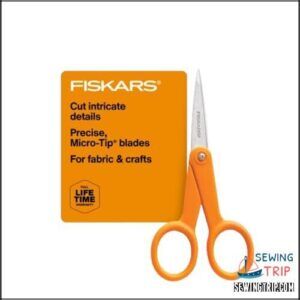
Precision matters just as much as speed.
And for those fiddly finishing moments — snipping a rogue thread, trimming a seam allowance, cutting cleanly into a tight corner — Fiskars Premium Micro Tip Scissors ($15.99) are hard to beat.
The blades reach all the way to the tip, so nothing slips past uncut.
They’re ambidextrous, lightweight, and surprisingly comfortable during long sessions.
For under $16 with a lifetime warranty, that’s serious value in a small package.
| Best For | Sewers, quilters, and crafters who need pinpoint accuracy for trimming threads, snipping seam allowances, and cutting into tight corners. |
|---|---|
| Brand | Fiskars |
| Price | $15.99 |
| Material | Stainless steel |
| Warranty | Lifetime |
| Quantity | 1 pair |
| Primary Use | Precision cutting |
| Additional Features |
|
- Blades cut all the way to the tip — no missed threads or ragged edges
- Works for both right- and left-handed users, great for shared studios or classrooms
- Lifetime warranty on a $15.99 pair is genuinely hard to argue with
- Too small for heavy-duty jobs like cutting through multiple thick fabric layers
- The fine tip can get damaged if you use them on the wrong materials
- Thumb holes run small, so if you’ve got bigger hands, they might feel a little cramped
5. Gingher Gold Lion Tail Embroidery Scissors
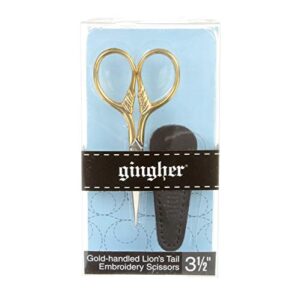
There’s something almost too pretty about the Gingher Gold Lion Tail Embroidery Scissors — but don’t let the looks fool you. At $19.99, these little 3.5-inch beauties earn their place at your sewing table.
If $19.99 feels like a splurge, it helps to know what actually separates a quality pair from a cheap one — and what to look for in embroidery scissors before you spend a cent.
The finely ground blades reach tight spots without snagging, and that chrome-over-nickel finish keeps them sharp for years. They come with a leather sheath, a lifetime warranty, and even a magnetic tip for sticking to your ironing board.
Functional and gorgeous — honestly, the best kind of sewing tool.
| Best For | Embroiderers, hand-sewers, and quilters who want a precision tool that looks as good as it performs. |
|---|---|
| Brand | Gingher |
| Price | $19.99 |
| Material | Nickel-plated steel |
| Warranty | Lifetime |
| Quantity | 1 pair |
| Primary Use | Thread/embroidery cutting |
| Additional Features |
|
- Finely ground blades snip thread and fine fabric cleanly without snagging
- Comes with a leather sheath and a lifetime warranty — solid value at $19.99
- Magnetic tip lets you stick them to your ironing board for easy grabbing
- Extremely sharp blades mean you need to be careful — these aren’t casual scissors
- Too small for heavier fabrics or thick materials
- Niche design means they can be hard to find in stock
6. Aipker Sharp Seam Ripper
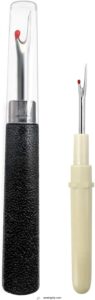
Every sewer needs a reliable seam ripper — and the Aipker Sharp Seam Ripper delivers two for just $4.99. You get a compact 3.5-inch and a longer 5-inch version, both with hardened steel blades that stay sharp through real use.
The non-slip embossed handle keeps your grip steady, and the little red ball on the tip protects delicate fabric from accidental tears.
At this price, keeping a spare in your kit is a no‑brainer.
| Best For | Sewers of all skill levels who want a dependable, budget-friendly seam ripper set for everyday projects, repairs, and delicate embroidery work. |
|---|---|
| Brand | Aipker |
| Price | $4.99 |
| Material | Hardened steel |
| Warranty | Not listed |
| Quantity | 2 pieces |
| Primary Use | Seam removal |
| Additional Features |
|
- Two sizes in one pack — the 3.5" and 5" rippers cover everything from tight buttonholes to longer seams
- Hardened steel blades hold their edge well, and the red rubber ball tip keeps delicate fabrics safe
- At $4.99 for the pair, it’s easy to stash one in every sewing kit
- The plastic handle can feel flimsy under heavy, repetitive force — metal would hold up better long-term
- One blade may be noticeably sharper than the other, which can be frustrating mid-project
- The larger ripper has no cap or cover, so storing it safely takes a little extra thought
7. Dritz Quick Turn Fabric Tube Turner
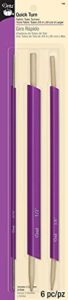
Turning a tiny fabric tube inside out used to be the task I dreaded most — until I found the Dritz Quick Turn Fabric Tube Turner. The set includes three plastic cylinders and wooden rods in 3/16", 3/8", and 1/2" sizes, covering most common strap and tie widths.
You just slip your sewn tube over the cylinder, push the rod through, and it’s done in seconds. If you make bag grips, spaghetti straps, or doll limbs regularly, this one’s worth every penny.
| Best For | Sewers who regularly make fabric tubes — think bag straps, spaghetti straps, ties, or doll limbs — especially anyone with arthritis or limited hand dexterity. |
|---|---|
| Brand | Dritz |
| Price | Not listed |
| Material | Plastic/Wood |
| Warranty | Not listed |
| Quantity | 3 pairs |
| Primary Use | Tube turning |
| Additional Features |
|
- Turns fabric tubes in seconds instead of minutes, saving a ton of frustration
- Three sizes (3/16", 3/8", 1/2") cover most common strap and tie widths
- Gentle on fabric — the smooth plastic cylinders won’t snag or stretch your material
- Only works within the three listed size ranges, so very tiny or very wide tubes are out of luck
- The plastic can feel a bit brittle if you push too hard
- No storage case included, and some people feel the price is a little steep for what you get
8. Clover Hera Fabric Marker
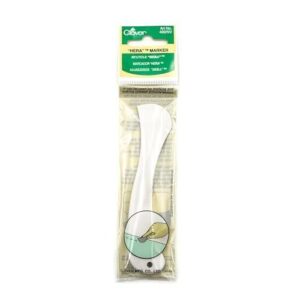
No chalk dust. No ink bleeding through to the right side. The Clover Hera Marker ($7.05) works by pressing a crease directly into your fabric — clean, temporary, and removable with steam.
It’s made from smooth white plastic, so it won’t snag delicate fabric, and it works just as well for straight seam lines as it does following a curved template.
Quilters especially love it for consistent stitch guides.
At under $10, it’s one of those quiet tools you’ll reach for constantly.
| Best For | Quilters, sewists, and beginners who want clean, residue-free fabric markings without the mess of chalk or ink markers. |
|---|---|
| Brand | Clover |
| Price | $7.05 |
| Material | Plastic |
| Warranty | Not listed |
| Quantity | 1 |
| Primary Use | Fabric marking |
| Additional Features |
|
- Leaves no ink or chalk residue — marks disappear with a quick steam
- Gentle on fabric, so no snagging or damage to delicate materials
- Super affordable at $7.05, and it’ll last you a long time
- Lines are pressure-based, so you’ll want a ruler or guide for perfectly straight marks
- May not show up as clearly on very thick or dense batting
- Only comes in one size, which might not work for every project
9. Wooden Handle Awl Tool Set
A good awl is one of those tools you don’t think you need — until you do.
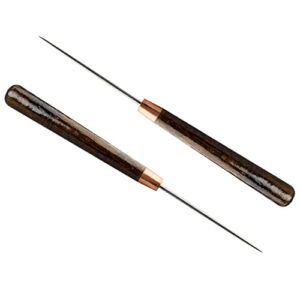
The Wooden Handle Awl Tool Set gives you a metal needle tip on a comfortable hardwood handle, making it easy to pierce leather, mark dart points, or guide fabric through tight spots.
Each tool weighs almost nothing and comes with a protective tip cover. At a budget-friendly price, it’s a solid little workhorse for leatherwork, pattern marking, and general hand-craft projects.
| Best For | Crafters, sewers, and DIY hobbyists who work with leather, fabric, or paper and need a simple, reliable tool for piercing and marking. |
|---|---|
| Brand | Pengxiaomei |
| Price | Not listed |
| Material | Metal/Wood |
| Warranty | Not listed |
| Quantity | 2 pieces |
| Primary Use | Hole piercing |
| Additional Features |
|
- Comes as a set of two, so you’ve always got a backup on hand
- Lightweight and easy to control, great for detailed work
- Protective tip covers keep the needles sharp and your fingers safe
- Thin needles can bend if you push too hard or use them on dense materials
- Wooden handles don’t love moisture — they can swell or splinter over time
- Not built for heavy-duty jobs like thick leather or hard plastics
10. Mundial Industrial Forged Bent Trimmer Scissors
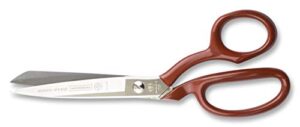
These scissors mean business. The Mundial Industrial Forged Bent Trimmer is built for people who cut fabric all day — tailors, upholsterers, costume designers — but it works just as well for serious home sewers. The bent blade keeps your fabric flat on the table while you cut, which makes a bigger difference than you’d expect.
High-carbon forged steel, nickel-plated blades, micro-serrated edge.
At $33.50, it’s an investment, but one that pays off the moment you feel how clean and controlled every single cut is.
| Best For | Tailors, upholsterers, and costume designers who cut fabric all day and need a reliable, precision tool that holds up under heavy use. |
|---|---|
| Brand | Singer |
| Price | $33.50 |
| Material | High-carbon steel |
| Warranty | Not listed |
| Quantity | 1 pair |
| Primary Use | Fabric cutting |
| Additional Features |
|
- The bent blade keeps fabric flat on the table, so your cuts stay straight and accurate without awkward hand positioning.
- Micro-serrated edge grips slippery or layered fabrics really well — less fraying, more control.
- Forged high-carbon steel with nickel plating means these will last a long time, even in tough working conditions.
- They can feel stiff right out of the box, and adjusting the pivot screw might dull the tip a bit.
- Heavier than typical fabric scissors, so long delicate tasks could tire your hand out faster.
- At $33.50, hobbyists might find it hard to justify the price compared to cheaper options.
Cutting Tools That Save Time
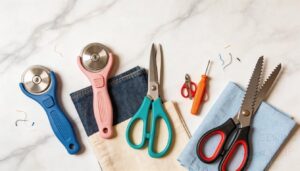
Good cutting tools do more than just slice fabric — they shave serious time off every project. The right ones make prep work almost easy, whether you’re cutting through denim or snipping a loose thread.
Here’s what’s worth having in your kit.
Why Rotary Cutters Speed Up Fabric Prep
Even if you’re just starting out, a rotary cutter’s sharp circular blade glides along fabric in a continuous cutting path. That means less hand fatigue and fewer snags—especially on curves. You’ll prep fabric faster, with clean edges every time.
For affordable sewing tools for beginners, this DIY sewing tool offers precise curve control and fits any budget-friendly sewing accessories under 10.
Self-healing Mats for Safer, Cleaner Cuts
A rotary cutter is only as good as what’s underneath it. That’s where a self-healing mat earns its keep.
The multi-layer surface offers real Blade Protection, absorbing cuts so your table stays scratch-free. Slip Resistance keeps it planted while you work.
Surface Healing closes minor nicks automatically, giving you Longevity Benefits and Easy Maintenance — genuinely budget-friendly sewing accessories under 10. Its multiple flexible layers enable the self-healing action that prolongs blade life.
Micro-tip Scissors for Detail Trimming
Once your mat is sorted, the next thing you’ll want nearby is a pair of micro-tip scissors. That sharp 3–6mm point slips into tight buttonholes and embroidery stitches without lifting surrounding threads.
Blade Geometry keeps cuts clean, while Coating Benefits and Tip Durability handle hundreds of trims.
Ergonomic Design reduces hand fatigue.
Budget-friendly sewing tools and affordable craft supplies don’t get more practical than these.
Bent Trimmers for Quick Thread Cleanup
After detail trimming, loose threads are next — and bent trimmers handle that faster than anything else in your kit.
That offset Blade Angle keeps fabric flat while you snip, so nothing lifts or snags.
These budget-friendly sewing accessories under $10 are genuinely worth grabbing:
- Rust-Resistant Steel blades stay sharp longer
- Ergonomic Grip allows true One-Handed Operation
- A Blade Cover keeps the Thread Snipper travel-safe
Seam Rippers for Easy Mistake Removal
Mistakes happen — that’s just sewing. A sharp seam ripper is your best recovery tool, and you don’t need to spend much.
ergonomic handle design to reduce hand fatigue, and follow basic safety practices: always cut away from your body.
Budget-friendly sewing accessories under $10 with replacement blade care options last surprisingly long. Check your fabric compatibility guide before tackling delicate silk or stretch knits.
When Cheap Cutting Tools Outperform Basics
Here’s the thing — cheap cutting tools often punch above their weight. A budget rotary cutter with ergonomic grip and built-in safety mechanisms delivers precision edge consistency that cheap scissors simply can’t match.
Blade longevity holds up through dozens of cuts, and the cost efficiency is real. Pair it with a thread snipper or buttonhole cutter, and these budget-friendly sewing accessories under $10 become serious workhorses.
Marking and Measuring Made Simple
Good cuts mean nothing if your markings are off. The right measuring and marking tools are what turn a rough idea into something that actually fits.
Here’s what makes the biggest difference.
Acrylic Rulers for Straight, Repeatable Cuts
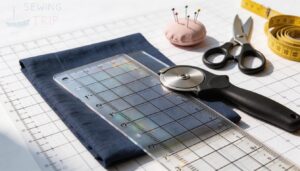
A good acrylic ruler is honestly one of those tools you don’t appreciate until you’ve wrestled with a flimsy plastic one. Rigid acrylic holds its edge, and laser-etched graduations don’t fade after a season of heavy use.
Silicone foot pads keep it from sliding mid-cut, while square ruler corners lock onto fabric grain perfectly. Smooth blade glide means cleaner, repeatable cuts every time — no guesswork.
Seam Gauges for Hems and Seam Allowances
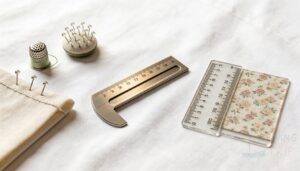
A seam gauge is one of those small tools that quietly transforms your accuracy. Most come in stainless steel or clear acrylic — the stainless steel edge stays rust‑free and straight for years, while acrylic transparency lets you see your fabric markings underneath.
Both include a metric imperial scale, making them handy budget‑friendly sewing accessories under $10. The edge stopper feature and flexible curve gauge options make seam allowance measurement genuinely foolproof.
Fabric Markers for Accurate Pattern Transfer
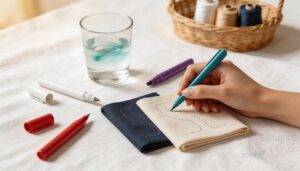
Not all fabric markers are created equal — and the wrong one can leave permanent ghost lines on your best fabric. Here’s what actually matters:
- Ink Formulation Types: Water-soluble inks wash out in cold water; pigment-based inks need heat-setting techniques to lock or remove marks
- Color Contrast Strategies: White pencil crayons and wax crayons shine on dark fabrics; kids washable markers give bolder lines on light ones
- Tip Size Selection: Narrow tips for detail work, wider for bold guidelines
- Marker Storage Solutions: Keep caps tight — dried-out fabric marking tools are frustrating mid-project
Always test any washable marking tool on a scrap first.
How to Use an Awl in Sewing
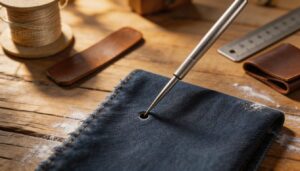
A tailor’s awl might look like nothing more than a sharp stick — but it punches well above its weight. It’s one of those budget-friendly sewing tools that earns its keep quickly, especially on denim and leather.
| Awl Task | Key Tip |
|---|---|
| Awl Hole Placement | Mark spots with a ruler first |
| Perpendicular Awl Angle | Keep it straight |
| Pre-Threaded Awl | Feed waxed thread ahead |
| Awl Tip Sharpening | Use a strop |
| Safety Glasses Use | Always wear them on tough materials |
Learning how to use an awl in sewing is genuinely straightforward — steady pressure, slight rotation, clean hole.
Soap Shards, Wax Crayons, and Washable Markers
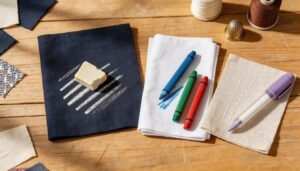
Beyond the awl, your marking game matters just as much.
Soap shards wash away cleanly with minimal soap shard residue — great for delicates. Wax crayon grip holds firm through multiple layers, and heat-activated wax dissolves easily after cutting. Washable marker fade disappears with laundering, perfect for detailed transfers.
These color-coded marking options are honestly some of the smartest budget-friendly sewing accessories under $10, you’ll find.
Budget Helpers for Easier Stitching
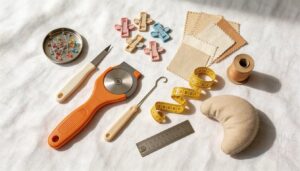
Good cutting and marking tools are only half the story. The other half is having the right helpers to keep your stitching smooth, straight, and frustration‑free.
Here are six budget‑friendly tools that make a real difference at the machine.
Hump-jumpers for Bulky Seams and Denim
If you’ve ever watched your machine stutter and skip stitches at a denim seam intersection, humpjumper fixes that instantly. tiny wedge manages layer thickness compatibility across two to six layers, keeping your presser foot level for denim seam stability.
- Prevents needle deflection on belt loops and pocket corners
- Enables foot height adjustment without machine modifications
- Lightweight, budget-friendly sewing accessory — clean lint after each use
Point Turners for Crisp Corners and Straps
A point turner is one of those budget-friendly sewing accessories under $10, you’ll wonder how you managed without. Sharp tip precision pushes out pocket and collar corners cleanly, while flat surface flattening smooths seams after turning. Lightweight construction means no wrist fatigue.
Options like the Dritz Point Turner or Simplicity Bamboo Turner also handle straps and bias tape — genuine multi-tool use for pennies.
Tube Turners for Belts and Spaghetti Straps
Straps are where most sewers get humbled — turning a spaghetti strap by hand is genuinely tedious. That’s where a tube turner earns its spot.
The Dritz Quick Turn comes with multiple cylinders, so your size selection guide is built right in: narrow tubes for delicate straps, wider ones for belt rails.
Budget-friendly sewing tools don’t get more practical than this.
Quilting Bar Guides for Straight Stitching
If straight, parallel rows feel like a guessing game; a quilting bar guide changes everything. This budget-friendly sewing accessory slots behind your presser foot and gives you instant guide alignment — no measuring between passes.
Adjustable bar guides fit most low‑shank machines, and guide installation takes under five minutes. Lightweight aluminum or plastic bar guide materials resist lint buildup, so guide maintenance is basically a quick wipe‑down.
Wonder Tape Vs Basting Pen
Both tools earn their spot in the budget-friendly sewing accessories under $10 category — but they work differently. Wonder Tape bonds fabric layers physically; a basting pen uses ink or thread to mark placement.
- Adhesive vs Ink: Dritz Wonder Tape dissolves in the wash; SewLine Basting Pen marks wash away too, but suits delicate fabrics better
- Fabric Compatibility: Tape grips knits without stretching; ink-based pens shine on silk or lightweight weaves
- Needle Cleanliness: Always check your needle for adhesive residue after using Wonder Tape
Magnetic Pincushions and Thread Snippers
A magnetic pincushion might just be the unsung hero of budget-friendly sewing tools. It manages Magnetic Pin Organization effortlessly — pins snap on, stay put, and clean up in seconds.
Pair it with Thread Snippers for clean thread trimming after each seam, and you’ve got smart Tool Integration Design without spending much.
Both qualify as budget-friendly sewing accessories under $10, and honestly, you’ll wonder how you stitched without them.
Choosing The Best Cheap Tools
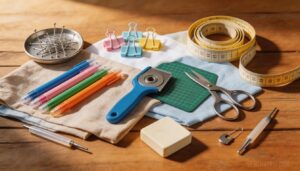
Not every cheap tool is worth your money, but the right ones genuinely change how you sew. A few simple questions — what you’re making, what your machine needs, how you like to stay organized — can point you straight to the best picks.
Here’s what to look for before you buy.
Best Sewing Tools for Beginners Under $10
You don’t need to spend a fortune to build a solid kit. For under $10, budget-friendly sewing tools like seam rippers, ergonomic tool grips, and basic needle sets cover most beginner needs.
Fabric prep tips get easier with cheap rotary cutters and measuring tapes. Sustainable sewing supplies and smart thread storage solutions round out a capable, less-than-10-dollar starter setup.
Which Tools Give The Biggest Time Savings
If time is money, your tool choices are where you either save or waste both. Rotary cutters slash fabric prep by up to 40 percent, while self-healing mats eliminate constant repositioning.
The right cutting tools save time — rotary cutters alone can slash fabric prep by 40 percent
Time-saving ergonomics matter here — fast tool switching and minimal setup time keep your flow uninterrupted.
A thread snipper for clean thread trimming, basting pen for quick holds, and multi-tool integration across budget-friendly sewing accessories under 10 dollars add up fast.
Matching Tools to Mending, Quilting, and DIY
Not every project calls for the same kit. For mending, a fixed-blade seam ripper and micro-tip scissors handle delicate work cleanly.
Quilting rewards you when you pair a quilting bar guide for straight stitching with a seam gauge for precise stitching.
DIY sewing hacks like upcycled sewing supplies and tool substitutions stretch your budget further.
Ergonomic grips reduce fatigue across all three.
Durability Vs Price in Budget Accessories
Budget-friendly sewing tools earn their keep — until they don’t. Stainless steel scissors hold up roughly 6–12 months with hobby use, but rubber grips wear down faster with daily handling. That’s where Cost per Use matters most.
- Material Longevity drops on dense fabrics like denim
- Wear Resistance varies wildly between plastic and metal builds
- Repair Feasibility is often poor — replacements nearly match full price
Machine Compatibility for Bobbins and Presser Feet
Cheap tools can surprise you — but only if they fit your machine. Most home machines take low shank feet and Class 15 bobbins, though Bobbin Depth Compatibility varies even within the same brand.
Always check Thread Path Matching and Needle Plate Alignment before buying budget-friendly sewing accessories under $10.
| Feature | What to Check | Why It Matters |
|---|---|---|
| Low Shank Feet | Shank height and snap-on groove | Prevents skipped stitches |
| Bobbin Depth Compatibility | Bobbin case depth | Avoids feed dog jams |
| Foot Adapter Options | Adapter included or sold separately | Expands tool versatility |
Smart Storage for Low-cost Sewing Supplies
Once your tools fit your machine, keeping them organized is the next win. Clear storage boxes let you spot notions instantly, while pegboard hooks free up your cutting table fast. A rolling cart with tiers keeps everything within arm’s reach.
- Drawer dividers separate pins, bobbins, and needles
- Color-coded labels speed up thread matching
- A magnetic pincushion corrals stray pins instantly
- Upcycling household items like jars doubles as frugal crafting hacks
Frequently Asked Questions (FAQs)
Does sewing release dopamine?
Yes — sewing genuinely triggers dopamine release through reward pathways in your brain.
Every finished seam, sharp corner, or completed project delivers a small but real hit of satisfaction that keeps you coming back for more.
How to make sewing easier?
Sewing gets easier when you set up smart: good lighting, ergonomic seating, and thread management cut frustration fast.
Stitch planning before you cut saves rework.
Even small DIY sewing tools make a real difference.
How can I make hand sewing easier?
The devil’s in the details with hand sewing. Ergonomic Needle Design and an Adjustable Needle Threader deliver real Finger Fatigue Relief, while a simple Thread Management System keeps everything tangle-free.
How do you ease when sewing?
Pin the longer fabric piece on top, then gently stretch and redistribute the extra fabric evenly as you sew.
A mindful pace keeps your fabric tension balance smooth and prevents unwanted puckers.
What tool takes out sewing mistakes?
seam ripper is your go-to unpicking tool and error correction aid — it slips under stitches and slices cleanly without tearing fabric, making it the most reliable stitch removal gadget in any sewing kit.
How to maintain sewing machine for longevity?
Keep your machine running smoothly with regular Oil Lubrication, Needle Replacement every 8–12 hours, Bobbin Care, and a Dust Cover.
Schedule Timing Inspection annually to catch wear before it becomes a costly problem.
What are common beginner sewing mistakes?
Stitching happens — usually when you least expect it. Tension misadjustment, wrong needle choice, pulling fabric, skipping pressing, and ignoring seam finishes are the classic culprits.
Always test on a scrap first.
How to select the right sewing needle?
Match your needle to the fabric weight and needle type needed. Lightweight fabrics need size 9–11, heavier ones size 16– Thread thickness and stitch purpose matter too.
What is the best thread type for denim?
For denim, go with a polyester core or cotton blend thread.
It’s got the tensile strength and colorfastness rating to handle heavy fabrics without fading or snapping after a few washes.
How to troubleshoot tension issues in sewing?
Start with a Thread Path Inspection — re-thread completely.
Do a Needle Condition Check and swap dull needles.
Adjust Bobbin Tension, check Presser Foot Pressure, and confirm Fabric Feed Alignment for clean, even stitches.
Conclusion
Like a trusty steampunk gadget, these 10 cheap sewing tools can transform your workflow. By now, you’ve seen how they tackle tedious tasks with ease.
The right tools aren’t just about saving money; they’re about making sewing enjoyable. With these essentials, you’ll breeze through projects, and your creativity will flourish. Embracing these affordable helpers means you’ll spend less time wrestling with fabric and more time bringing your ideas to life with cheap sewing tools that make sewing easier.