This site is supported by our readers. We may earn a commission, at no cost to you, if you purchase through links.
You can’t master what you can’t afford—and computerized sewing machines span a brutal $120 to $3,000+ price range that’ll make or break your creative ambitions. The gap between entry-level and professional models isn’t just about stitch count or fancy touchscreens. It’s about whether you’re stuck fighting your machine or actually bringing your designs to life.
Brother dominates the budget-friendly zone with solid performers under $350, while Janome commands premium dollars for bulletproof durability that outlasts cheaper alternatives by years.
Smart buyers know that seasonal discounts, refurbished options, and understanding which features actually matter can slash your investment by 30-40%. We’ve compared seven top machines across every price bracket, breaking down what each dollar buys you in real-world performance.
Table Of Contents
- Key Takeaways
- Top 7 Computerized Sewing Machine Prices
- 1. Brother Computerized Sewing and Quilting Machine
- 2. Brother Computerized Sewing Machine
- 3. Brother Computerized Sewing Quilting Machine
- 4. Brother HC1850 Sewing and Quilting Machine
- 5. Janome JW8100 Computerized Sewing Machine Bundle
- 6. Singer Computerized Sewing Machine Plus
- 7. Singer Computerized Sewing Machine
- Key Features Impacting Price
- Price Ranges by Model Type
- Brand Reputation and Value Comparison
- Where to Find The Best Deals
- Frequently Asked Questions (FAQs)
- Conclusion
Key Takeaways
- Computerized sewing machines range from $120 for basic Brother models to $3,000+ for professional-grade equipment, with mid-range models ($500-$900) offering the best balance of features like 100-200+ stitches, touchscreens, and automatic threading without overpaying for capabilities you won’t use.
- Smart timing slashes costs dramatically—seasonal sales during Black Friday through Cyber Monday drop prices 15-25% on entry-level machines and 10-20% on mid-range models, while refurbished units deliver 20-40% savings with warranties intact.
- Brand choice matters more than price alone: Brother dominates value with lower maintenance costs and broad accessories, Singer offers rock-bottom prices with excellent parts availability, and Janome commands premium pricing but delivers superior durability and stitch quality that outlasts cheaper alternatives.
- The features driving higher prices—built-in stitch count (60-200+), touchscreen interfaces, wireless connectivity, and automatic needle threaders—only justify the investment if they match your actual projects, since overspending on unused capabilities wastes money while underspending leaves you fighting limitations instead of creating.
Top 7 Computerized Sewing Machine Prices
If you’re searching for the best value in computerized sewing machines, you need to know where each model stands on price.
The market offers a wide range, from budget picks to feature-packed options. Here’s how the top choices compare right now.
1. Brother Computerized Sewing and Quilting Machine
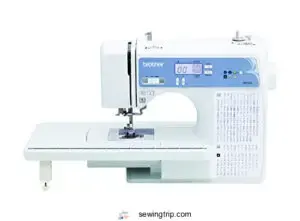
Brother’s computerized sewing and quilting machine puts 165 built-in stitches at your fingertips—110 utility, decorative, and heirloom options that let you break free from basic patterns. You’ll command 8 auto-size buttonholes and 55 alphanumeric stitches with precision.
The LCD display simplifies stitch selection, while the automatic needle threader and drop-in bobbin give you thread management without the hassle.
Eight presser feet and a wide table accommodate large quilt projects. This machine delivers bobbin control and versatility, backed by a 25-year limited warranty that proves Brother stands behind their craft.
Best For: Sewing and quilting enthusiasts who want creative flexibility with 165 built-in stitches and automatic features, without needing industrial-grade power for heavy fabrics.
- 165 stitches including decorative, utility, and alphanumeric options give you serious creative range for garments and quilts
- Automatic needle threader and drop-in bobbin system eliminate the fiddly setup work that slows you down
- 25-year limited warranty and wide quilting table show Brother built this for long-term projects
- Struggles with heavy-duty fabrics and thick materials, so forget upholstery or denim projects
- Reverse button placement feels awkward during operation according to user feedback
- Top cover doesn’t latch securely, making it risky for frequent travel or storage
2. Brother Computerized Sewing Machine
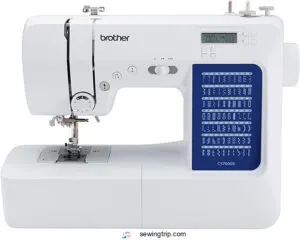
If you’re chasing control and versatility, look at the Brother Computerized Sewing Machine. It packs 70 built-in stitches, an automatic needle threader, and a crisp LCD display—tools that make you feel like you own the fabric.
The wide table and ten presser feet let you tackle quilting or basic repairs without missing a beat.
You’ll find machine maintenance straightforward, thanks to its smart design. With sewing accessories included, this model stands out for those who want more than just basic computerized features.
Best For: Sewers who want a feature-packed machine that handles everything from simple repairs to complex quilting projects without needing to upgrade later.
- 70 built-in stitches and 7 buttonhole styles give you tons of creative options for any project
- Automatic needle threader and LCD display make setup quick and frustration-free
- Wide table and 10 included presser feet mean you’re ready to tackle bigger projects right out of the box
- Automatic needle threader can be finicky to use despite being a time-saver in theory
- Only comes with one bobbin, so you’ll need to buy extras or swap thread colors constantly
- Some plastic components might not hold up as well as metal parts over heavy use
3. Brother Computerized Sewing Quilting Machine
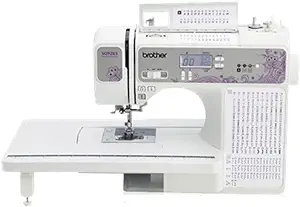
For those who demand more from their Computerized Sewing Machine, this Brother Sewing and Quilting powerhouse delivers 140 built-in stitches and 55 alphanumeric options—giving you command over everything from Quilting Patterns to monograms.
The extra-large LCD display and 10 presser feet transform your Fabric Selection into finished masterpieces. Thread Management stays smooth with the automatic needle threader, while Machine Maintenance is minimal.
If your Sewing Techniques lean toward ambitious quilting or decorative work, this Computerized Quilting Machine won’t hold you back.
Best For: Sewers and quilters who want a versatile machine with tons of stitch options and automatic features to handle everything from basic repairs to complex decorative projects.
- 205 built-in stitches give you plenty of creative freedom for quilting, monogramming, and decorative work
- Automatic needle threading and bobbin winding save time and frustration, especially for beginners
- 10 included presser feet cover most sewing tasks right out of the box without buying extra accessories
- Needle threader can be tricky to use if you have larger hands or limited dexterity
- Tight space around the presser foot area makes maneuvering bulky fabric harder than it should be
- As a refurbished unit, quality varies and some buyers report missing accessories like the foot pedal
4. Brother HC1850 Sewing and Quilting Machine
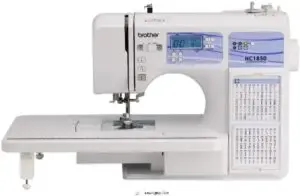
When you need versatility without breaking the bank, the Brother HC1850 Sewing and Quilting Machine hits that sweet spot—around $120 to $170 depending on promotions. You get 185 built-in stitches, an LCD display for quick selections, and 8 presser feet to tackle diverse sewing projects.
The automatic needle threader and drop-in bobbin simplify thread management, while the wide table accommodates larger fabric selections. Computerized quilting machines at this price rarely offer such smooth machine maintenance.
Check sewing machine reviews for real-world quilting tips before you buy.
Best For: Beginners and intermediate sewers who want a feature-rich machine for quilting, garment-making, and home decor projects without spending a fortune.
- 185 built-in stitches with LCD display give you tons of creative options for decorative work and monogramming
- Automatic needle threader and drop-in bobbin make setup quick and painless, even for first-timers
- Wide table and included presser feet handle everything from small crafts to large quilts
- At 10.1 pounds, it’s heavier than some models and might feel bulky if you move it often
- Only works with 120V AC, so it’s not an option if you’re outside North America
- You’ll need to spend time dialing in tension settings for different fabrics to get the best results
5. Janome JW8100 Computerized Sewing Machine Bundle
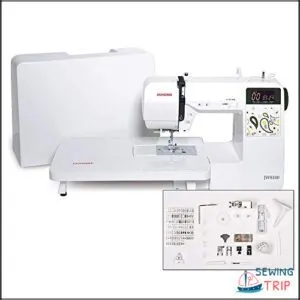
The Janome JW8100 Computerized Sewing Machine Bundle commands $499 to $699, delivering 100 built-in stitches and 7 auto buttonhole styles that put creative control in your hands. You’ll master machine maintenance with its drop-in bobbin and automatic needle threader—no wrestling with thread.
This Janome features a metal frame for durability and includes game-changing sewing accessories: an extra-wide table, even feed foot, and quarter-inch foot. Computerized sewing machines at this price rarely bundle so much power.
Check sewing machine reviews before committing—you deserve transparency on computerized models and sewing machine technology.
Best For: Intermediate sewers and quilters who want a reliable, feature-rich machine without spending thousands, plus beginners ready to grow into advanced projects.
- 100 built-in stitches and 7 buttonhole styles give you creative flexibility for garments, quilts, and decorative work
- Easy threading system with drop-in bobbin and automatic needle threader saves setup time and frustration
- Bundled accessories like the extra-wide extension table and specialty feet add serious value without separate purchases
- Light bulb could be brighter for detailed work or low-light sewing sessions
- Specialized stitches like the star pattern may not execute as cleanly as you’d expect
- Speed and sensitivity take some getting used to—new users might find the pedal touchy at first
6. Singer Computerized Sewing Machine Plus
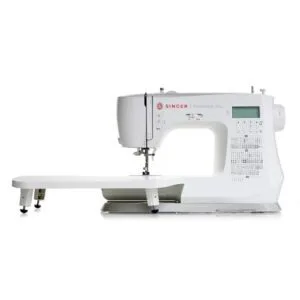
The Singer Computerized Sewing Machine Plus ($399–$599) unleashes 417 built-in stitches and programmable needle locations—you won’t find this level of customization options in basic sewing machines.
This computerized sewing machine delivers quilting capabilities through its extension table and heavy-duty metal frame, built for ambitious projects. Sophisticated threading features and adjustable speed settings give you complete control.
When comparing computerized features across sewing machine comparison charts, the Singer stands out with its ergonomic LCD screen and LED workspace lighting—tools that transform your creative vision into reality.
Best For: Sewists and quilters who want extensive stitch options and programmable features for both detailed work and large-scale projects.
- 417 built-in stitches give you tons of creative flexibility for decorative work, lettering, and quilting patterns
- Extension table and heavy-duty metal frame handle big quilts and thick fabrics without struggling
- Programmable needle positioning and adjustable speed let you dial in exactly the control you need
- No physical manual included—you’ll need to download it online, which some users found frustrating
- Automatic threader can be finicky and may require troubleshooting or manual threading as backup
- Steeper learning curve if you’re new to computerized machines, so expect some practice time upfront
7. Singer Computerized Sewing Machine
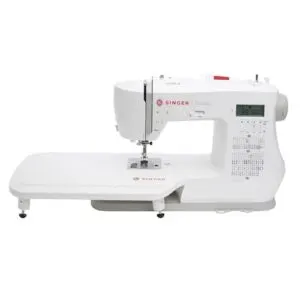
The Singer C7290Q ($399–$599) packs 417 stitch applications and one-touch speed control, giving you command over every pass through fabric. This computerized sewing technology delivers automatic sewing features like the built-in thread cut button and adjustable sewing speed that veteran sewists demand.
Machine durability comes from its sturdy frame, while the LCD user interface simplifies stitch selection.
When evaluating sewing machines for stitch quality and Singer features, this model bridges affordability with professional-grade sewing equipment performance across quilting and home décor projects.
Best For: Sewists who want professional-level stitch variety and computerized controls without spending over $600, whether they’re tackling quilts, home décor, or everyday garments.
- 417 stitch applications give you serious creative range—way more than most machines in this price bracket
- One-touch controls and LCD screen make adjustments quick, so you’re not fumbling through menus mid-project
- Extension table and 12 presser feet mean you can handle bigger quilting work right out of the box
- Some users report inconsistent stitch quality, so you might need to fiddle with tension settings more than expected
- The standard throat plate can be tight for large quilting projects, limiting workspace
- Requires a solid read-through of the manual to unlock all features—not the most intuitive setup for complete beginners
Key Features Impacting Price
Not all computerized sewing machines are priced the same, and the gap often comes down to what’s packed inside. You’ll pay more for models that simplify your workflow or open up creative possibilities you didn’t know you needed.
Let’s break down the features that push prices up—and whether they’re worth it for your projects.
Number of Built-in Stitches
You’ll find stitch variety is where your money talks—entry-level computerized sewing machines deliver 60–100 stitches, while mid-range models push 100–180 with quilting options and embroidery designs built in. High-end machines break past 200 stitches, unlocking serious automatic sewing features and computerized sewing technology.
More sewing stitches mean more creative freedom, but budget models cap around 30–60 to keep costs down.
Understanding AP study resources can help students balance their hobbies and academic pursuits.
Touchscreen and On-Screen Editing
Touchscreen interface changes everything—72% of modern machines with on-screen editing cut thread changes by 15%, while gesture controls and onscreen zoom let you tweak stitch density before the needle drops. Touchscreen latency averages 120 milliseconds, keeping quilting projects smooth. Auto stitch optimization and editing precision mean you’re in command, not guessing.
Some sewing and embroidery machines even sync embroidery design software through wireless LAN and mobile app integration. Understanding the importance of a systematic review process is essential for evaluating sewing machine features.
Wireless Connectivity and Mobile Integration
Wireless connectivity transforms how you control your craft—92% of modern machines use Bluetooth Connectivity for pattern transfers and firmware updates. Mobile Apps on iOS and Android let you monitor bobbin levels and thread tension in real time, while Mobile App Integration through Wireless LAN delivers cloud pattern libraries straight to your touchscreen.
Wireless Security with encrypted data transmission keeps your designs protected, and Smart Textiles adoption is driving 7% annual growth.
Auto Needle Threader and Threading System
You’ll shave 12–18 seconds every time you thread with an Auto Needle Threader—78% of Automatic Threading systems cut setup hassle compared to manual methods. Lever-based Threader Mechanics deliver tactile clicks for Needle Calibration, while 71% handle standard Thread Compatibility from size 40 to 90.
System Maintenance every 20 bobbins keeps Threading Speed smooth, and machines with this Sewing Technology cost 8–18% more but boost resale value up to 12%.
Included Accessories and Presser Feet
Bundle value jumps 8–15% when you grab machines with durable Accessory Kits—entry‑level units pack 10+ Presser Feet for zigzag, buttonholes, and blind hems, while premium models deliver 20–80 QuickChange Presser Feet.
Here’s what matters:
- Adjustable walking feet for quilts and denim
- Zipper and narrow‑hem specialized feet
- Threading Systems that sync with Automatic Threader tech
- Warranty‑backed accessory loss protection
- Sewing Notions bundled for instant project starts
Long‑term cost drops when Quilting Tools ship in‑box.
Price Ranges by Model Type
You’re not shopping blind—every price bracket unlocks different capabilities. Knowing what you’ll actually get at each tier helps you zero in on machines that match your ambitions without wasting cash on features you’ll never touch.
Let’s break down what separates a $200 starter from a $5,000 powerhouse.
Entry-Level Computerized Sewing Machines
You’ll find entry-level computerized sewing machines priced between $120 and $350, offering 60–100 built-in stitches that deliver solid stitch variety without breaking the bank. Brother and Singer dominate this space with reliable options under $200, featuring automatic threading and intuitive interfaces.
These machines balance machine durability with affordability, though you’ll trade sophisticated features for accessible pricing. Most include basic sewing machine accessories and 1–2 year warranties.
Mid-Range Models and Their Costs
Once you step beyond entry-level territory, mid-range models hit between $500 and $900, giving you 100–200+ stitches and serious quilting muscle. These computerized quilting machines pack touchscreens, auto threading, and bundles with extra sewing accessories—features that justify the bump in sewing machine costs. You’ll see Brother, Janome, and Singer models dominating price comparisons, with warranties stretching 2–5 years for long-term confidence.
- Brother models usually range $350–$900 with extensive accessory ecosystems
- Janome options sit in the $500–$1,000 band emphasizing metal-frame durability
- Singer mid-range picks span $250–$800 for value-focused budget options
- Refurbished machines offer 60–80% of new pricing for savvy shoppers
High-End and Professional-Grade Prices
Premium models break the $1,200 ceiling, pushing professional features like 200+ stitches, laser-guided precision, and embroidery modules into the $1,500–$4,000 range. Sewing and embroidery machines with sophisticated sewing technology can exceed $5,000, especially luxury brands with industrial pricing.
Computerized quilting machines in this tier include automated sewing systems, extended warranties, and service plans—sewing machine models built for mastery, not hesitation.
Used and Refurbished Machine Pricing
You’ll slash 20–40% off new prices in the used market, where Brother computerized quilting machines run $150–$450 and Janome units hit $200–$600. Refurbished costs add 10–25% for certification effects—inspections, warranties, and peace of mind.
Sewing and embroidery machine resale values climb with touchscreens and connectivity.
Price trends favor post-holiday hunting, when computerized quilting machines drop 5–15% and smart buyers seize control.
Brand Reputation and Value Comparison
You can’t pick the right machine by price alone—brand reputation tells you what you’re really getting for your money. Some companies nail reliability and support, while others leave you stranded with a broken needle threader and no one to call.
Choosing a sewing machine isn’t just about price—brand reputation can mean the difference between lasting reliability and frustrating breakdowns
Let’s break down how Brother, Singer, and Janome stack up, what real customers say, and which warranties actually protect your investment.
Brother Vs. Singer Vs. Janome
You’re probably wondering which brand delivers the best bang for your buck. Brother models dominate the value game with broad accessory ecosystems and lower maintenance costs—expect to save 20–40% over time. Singer offers unbeatable parts availability and community support at rock-bottom upfront prices. Janome commands premium pricing but rewards you with outstanding machine durability, excellent stitch quality, and precision that lasts.
| Brand | Key Strengths |
|---|---|
| Brother | Strong value, lower maintenance costs, wide accessories |
| Singer | Budget-friendly, excellent parts availability, community support |
| Janome | Premium build, excellent stitch quality, long-term durability |
| User Interface | Brother: user-friendly touchscreens; Singer: simple controls; Janome: professional-grade displays |
| Sewing Speed | Singer leads in speed; Brother balances speed and features; Janome prioritizes precision |
Customer Ratings and Reviews Analysis
Real users don’t lie—and their review score analysis tells you everything. Brother HC1850 crushes it with 4.7 out of 5 stars from over 2,000 reviews, proving customer feedback matters. Janome JW8100 computerized quilting machines score between 4.5–4.8 stars for rock-solid product reliability. Singer 6800C hits 4.6 stars but faces occasional customer service complaints affecting user experience satisfaction rates.
| Brand/Model | Average Rating | Key Feedback |
|---|---|---|
| Brother HC1850 | 4.7/5 stars | Multi-year reliability, excellent quilting performance |
| Janome JW8100 | 4.5–4.8/5 stars | Consistent stitch quality, minimal tension issues |
| Singer 6800C | 4.6/5 stars | Strong motor, some needle threader complaints |
Warranty and Support Considerations
Warranty terms separate the players from the pretenders. Most brands offer 1–5 years on electronics, but you’ll pay $60–$150 per repair once that window closes. Extended coverage adds 10–20% to your upfront cost.
Check support channels before buying—toll-free help, online chat, and authorized service centers keep you stitching. Maintenance schedules matter: skip them, void your warranty.
| Brand | Warranty Coverage | Support Channels | Repair Costs (Out-of-Warranty) | Maintenance Requirements |
|---|---|---|---|---|
| Brother | 1–3 years electronics | Phone, email, chat | $75–$150 + parts | Regular cleaning recommended |
| Singer | 1–5 years standard | Phone, authorized centers | $60–$120 + parts | Oiling schedule documented |
| Janome | 2–5 years coverage | Phone, online, in-store | $80–$150 + parts | Annual checkup advised |
Where to Find The Best Deals
You don’t have to settle for full price when you’re ready to buy. Smart shoppers know that timing and strategy can knock hundreds off the sticker price of a quality computerized sewing machine.
Here’s where to hunt for the deals that actually matter.
Online Retailers and Price Promotions
You’ll find the best prices by hunting across major retailers—four giants control 72% of U.S. sales. Flash sales slash prices fast, compressing your decision window to 24–72 hours.
Online coupons from newsletters knock off another 3–7%, while bundle deals boost value by 12%. Price matching and smart retail strategies win; free shipping above $50 saves 6–9%.
Check product returns and Costco.com for flexibility.
Seasonal Discounts and Savings
Holiday sales crush prices when you strike at the right time. November’s Black Friday through Cyber Monday drops top-end models 18% on average. You’ll catch entry-level machines at 15–25% off, mid-range at 10–20%. Bundle deals push savings another 8–12%.
Christmas gift shopping peaks early—promotions start two to four weeks before holidays. Watch for year-end clearance: refurbished units hit 25–40% off new pricing.
Factors Affecting Long-Term Value
Discounts matter today, but your machine’s lifetime cost matters more. Smart buying protects your wallet years down the road.
- Maintenance costs: Professional-grade models require fewer repairs and replacement parts over 5–10 years
- Durability tests: Heavy-duty frames outlast plastic housings in sewing and embroidery machine applications
- User support: Authorized retailers simplify warranty claims and parts sourcing
- Resale value: Popular brands like Brother hold 40–50% of original price
- Upgrade options: Modular computerized quilting machines accept new presser feet and software updates
Frequently Asked Questions (FAQs)
How much do industrial computerized sewing machines cost?
Industrial computerized sewing machines range from $2,500 to $25,000, depending on automation levels and build quality. Entry-level models with basic sewing automation start around $2,500, while high-end professional units exceed $12,
Are computerized sewing machines worth the extra cost?
Sure, you’ll pay more upfront—but computerized sewing machines deliver faster sewing efficiency, enhanced user experience, and machine durability that crushes manual models.
Budget options exist, proving the cost benefit justifies every penny for serious sewers.
What maintenance costs should I budget annually?
You’ll spend 2–8% of your machine’s purchase price annually on maintenance costs. Budget $50–$100 for professional servicing, $20–$60 for needles and parts replacement, plus regular cleaning supplies.
Can I finance a computerized sewing machine purchase?
Breaking the bank isn’t your only option. Yes, you can finance computerized quilting machines through online shopping retailers—most offer payment plans with varied interest rates, credit scores requirements, and loan terms. Check the return policy first.
Conclusion
Picture yourself six months from now: either wrestling with a machine that can’t keep pace with your vision, or confidently tackling projects you once thought impossible. Your computerized sewing machine price decision shapes that reality.
The sweet spot? Mid-range models delivering professional features without the premium tax. Don’t gamble on false economy or overspend on unused bells and whistles. Match your budget to your actual ambitions, hunt those seasonal deals, and claim the creative freedom you’ve been chasing.