This site is supported by our readers. We may earn a commission, at no cost to you, if you purchase through links.
Most beginners don’t quit sewing because they lack talent. They quit because the first attempt feels like a tangle of thread, crooked seams, and fabric that won’t behave.
At home, with a kitchen table, a decent light, and one small project, sewing starts to make a lot more sense.
That’s the good news if you’re figuring out how to learn sewing from scratch at home. You don’t need a studio or a closet full of tools. You need a clear place to begin, a few supplies that pull their weight, and practice that builds skill without burning you out. From there, each stitch starts to feel steady.
Table Of Contents
- Key Takeaways
- Set Your Sewing Goals at Home
- Build a Simple Sewing Workspace
- Choose Your First Sewing Machine
- Gather Essential Sewing Supplies
- Pick Beginner-Friendly Fabrics
- Learn Machine Setup Basics
- Practice Basic Hand and Machine Stitches
- Sew Easy First Projects
- Follow a Weekly Home Practice Plan
- Top 4 Beginner Sewing Items
- Frequently Asked Questions (FAQs)
- Conclusion
Key Takeaways
- You can learn sewing at home without a big setup by starting with a clear goal, a small workspace, a few essential tools, and simple projects that feel easy to finish.
- Beginners build skill fastest by choosing stable fabrics like cotton, learning basic machine setup and stitches, and practicing on scrap fabric before sewing real projects.
- Home projects like napkins, pillowcases, tote bags, and simple elastic-waist skirts are better first choices than fitted clothing because they teach useful skills without the stress of complicated sizing.
- Steady progress comes from short, regular practice sessions, simple notes and photos to track improvement, and using tutorials or sewing communities for feedback and encouragement.
Set Your Sewing Goals at Home
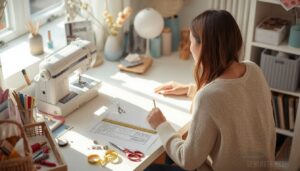
Before you start sewing at home, take a minute to get clear on what you want to learn first.
A beginner-friendly basic sewing skills training guide can help you choose the right first techniques and tools.
simple plan will help you stay focused, choose easier projects, and make steady progress without feeling lost. next steps will help you set goals that fit your time, space, and skill level.
Decide What You Want to Sew First
Choose your first project with care. Look for Project Inspiration that fits your Skill Matching, Material Availability, Time Commitment, and Personal Style.
The best first sewing projects for beginners are beginner sewing projects with steps and straight seams. Simple beginner sewing projects, beginner project ideas, and DIY sewing projects should feel doable, useful, and exciting enough to finish this week.
Start With Home Projects Before Clothing
Once you know what sounds fun, start with home decor before clothing.
Beginner sew projects like napkins, pillow covers, or bins give fast Confidence Building and better Fabric Handling without tricky fit issues. That means Skill Transfer later.
DIY Sewing Projects also sharpen Project Planning and Time Management, especially when you follow StepByStep Sewing Tutorials, or online sewing tutorials home.
Create a Simple Beginner Sewing Checklist
Home projects make this easier: write a quick checklist before you sew.
- Tool Inventory: Gather essential sewing supplies for beginners and sewing equipment essentials.
- Fabric Selection: Pick stable cotton for sewing basics and beginner sewing fundamentals.
- Safety Checks: Note pins, cords, needle, plus project planning and time management.
These are the tools you need to get started at home today.
Set a Realistic Weekly Practice Schedule
That checklist becomes your weekly map: plan 4-6 hours across three sessions, with Rest Days between.
| Focus | Plan |
|---|---|
| Session Timing | 60-90 minutes |
| Skill Rotation | technique plus weekly projects |
| Checkpoint Logging | one checkmark |
| Flexible Adjustments | project based learning, skill building routine, practice routines for sewing beginners, confidence building |
Keep the first twenty minutes for your hardest task and stop before fatigue.
Track Progress With Sewing Notes and Photos
Start a simple notebook or Digital Log for your sewing journey. Use Photo Journaling to capture before, during, and after shots.
Mark Progress Milestones like cutting, stitching, and finishing. Add a Project Rating, a Tool Usage Tracker, and short notes for project planning, weekly projects, skill progression, and sewing confidence.
Small records show how far you’ve come week by week.
Build a Simple Sewing Workspace
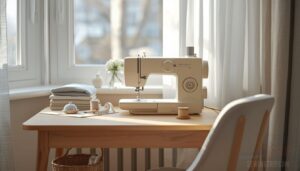
A simple sewing space makes learning feel easier from the start. You don’t need a full craft room, just a setup that helps you stay comfortable and focused.
Here’s how to put together a beginner-friendly workspace at home.
Choose a Well-lit Table or Desk
Think of your table as mission control: choose a dedicated space with Task Lighting Intensity around 300 lux, CRI Color Accuracy above 80, Adjustable Lamp Arms, Table Height Alignment at elbow level, and a Non-Reflective Surface.
In your home sewing studio, Setting Up an Organized Sewing Workspace helps sewing workspace organization before organizing your tools and supplies from day one.
Keep Tools Organized and Easy to Reach
Keeping a simple Tool Zone Layout saves time and stress.
For smooth sewing workspace organization, keep sewing tools, sewing accessories, and sewing equipment within 12 inches, use Pegboard Organization, a Magnetic Tool Tray, and Labeled Storage Bins, and add a Cord Management System under your table.
This way, organizing your tools and supplies feels easy, fast, and calm each day.
Store Fabric Flat and Thread Neatly
Neat storage feels like a deep breath for your sewing room.
A tidy sewing space brings instant calm and makes every project feel easier
- Use Flat Fabric Storage with Interleaving Paper for fabric preparation.
- Add a Labeling System for fiber and width.
- Try Thread Rack Organization with Humidity Control.
- Keep thread guide diagrams near how to thread a sewing machine, so threading your machine and fabric handling stay easy.
Set Up Ironing and Cutting Areas
A smooth setup saves real frustration.
For Ironing Station Layout, keep a Heat-Resistant Surface, clear space, and good Pressing Area Lighting with gentle Ventilation and Steam control.
For Cutting Mat Essentials, place rulers, fabric scissors, and sewing equipment essentials nearby for fabric preparation and cutting fabric with a Rotary Cutter.
Even a small Tissue Holder project feels easier to handle.
Follow Basic Sewing Safety at Home
Safety is your sewing seatbelt at home.
- Wear Protective eyewear when rotary cutting.
- Use Heat-resistant gloves near the iron; keep a first aid kit nearby.
- Practice Safe needle handling with sewing machine basics and essential sewing supplies.
- Do Electrical safety checks, follow essential safety guidelines, and balance beginner sewing safety and budgeting with smart sewing safety habits every single time.
Choose Your First Sewing Machine
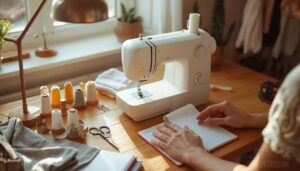
Choosing your first sewing machine can feel like a big step, but it doesn’t have to be complicated. You only need a simple, reliable starting point that fits the kind of sewing you want to do at home.
The points below will help you compare your options and pick one with more confidence.
Mechanical Vs Computerized Beginner Machines
While choosing a beginner sewing machine, start with Sewing Machine Basics: comparing basic mechanical vs computerized machines. Basic mechanical machines use manual Tension Adjustment Methods, have lower Stitch Pattern Variety, and have simpler Maintenance Requirements. Computerized models add memory and easier controls, but may affect Portability and Storage.
Do a Noise Level Comparison too; heavier mechanical machines sound steadier, less buzzy.
Features Beginners Actually Need
After weighing mechanical against computerized options, look for a beginner-friendly machine that keeps Sewing Basics and Sewing Machine Basics simple. Helpful extras matter more: clear controls, easy threading, good lighting, and step-by-step tutorials.
Pair it with essential sewing supplies, strong Thread Quality, Pattern Simplicity, Ergonomic Seating, Adjustable Table Height, and basic Tool Maintenance Tips for steady progress daily.
Straight Stitch, Zigzag, and Reverse Stitch Basics
Once your machine feels easy to use, learn its Basic Stitch Types and Their Uses.
Straight stitch manages most seams with Stitch Length Control around 1.5 to 3.0 mm.
Zigzag stitch helps finish edges, and Zigzag Width Variations change stretch and coverage.
Reverse Stitch Reinforcement locks seams.
Add Thread Tension Balance, Needle Size Selection, and beginner sewing tips.
How to Match Your Machine to Your Budget
After learning stitch basics, match your sewing budget to Entry Price Points: basic mechanical vs computerized models run from 60 to 200 euros or 200 to 350 euros. Budget Friendly Brands can help, but check Financing Options, Repair Cost Considerations, and Upgrade Path Planning.
Budget planning for a sewing hobby starts with Choosing and using a sewing machine, and Understanding your sewing machine.
When Hand Sewing is Enough to Start
Although a machine helps later, hand sewing fundamentals are enough for Quick Repairs, Button Replacement, Simple Appliqué, and Fabric Mending. You can practice basic hand stitches in minutes and start first sewing projects for beginners almost anywhere at home first.
Hand Sewing Benefits build confidence in Hand and machine sewing basics through simple, portable Hand Sewing Methods and Practices.
Gather Essential Sewing Supplies
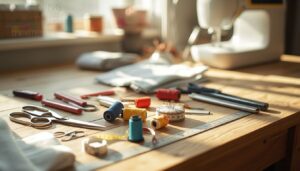
You don’t need a huge sewing stash to get started at home. A few basic tools will make learning smoother and help you feel more in control right away.
Here are the supplies worth keeping within reach as you begin.
Fabric Scissors and Thread Snips
Sharp fabric scissors and thread snips make sewing feel easier from day one. In your basic sewing kit, these basic supplies belong at the top of the list of essential sewing supplies.
Ergonomic Scissor Grips, study Blade Material Comparison, follow Scissor Sharpening Tips and Scissor Storage Solutions, practice fabric cutting techniques, and remember Thread Snip Safety always at home.
Pins, Clips, and Pin Cushion
Pins and clips are the unsung heroes of your basic sewing kit. Without them, fabric shifts and seams go crooked fast. Here’s what belongs in your essential sewing supplies:
- Nylon-coated pins glide through fabric without snagging
- Magnetic pin cushions catch stray pins instantly
- Alligator clip uses include holding multiple layers during hand techniques
- Color-coded pin organization speeds up your workflow
Practice pin cushion maintenance by replacing bent pins regularly.
Measuring Tape and Seam Gauge
A good measuring tape is your roadmap for sewing basics, from measurement taking to fabric cutting techniques. Choose one with Metric vs Imperial markings and check Tape Length Accuracy over time.
Your seam gauge manages seam allowance, Fold Line Marking, and quick hems, so Seam Gauge Calibration matters too. Follow Tape Care Tips: roll neatly, wipe clean, replace stretched tapes.
Hand Sewing Needles and Machine Needles
Needles are tiny, but they make or break your stitches.
Use this Needle Types Overview and Needle Size Systems to Choose The Right Needle for hand sewing fundamentals, hand sewing, or any machine threading procedure. Check Needle Eye Design, follow a simple Needle Maintenance Guide, and keep a Needle Compatibility Chart nearby so different needle types match fabric and thread.
Seam Ripper, Chalk, and Pressing Tools
Think of these tools as your rescue crew for hand sewing fundamentals and neat hand techniques.
- Seam Ripper Selection: choose a capped Y-blade; follow blade safety tips.
- Chalk Marking Techniques: mark seam allowance lightly, based on fabric selection.
- Transfer Pen Alternatives: help with slippery synthetics.
- Pressing Tool Maintenance: care for iron, ham, and mat under essential safety guidelines at home.
Pick Beginner-Friendly Fabrics
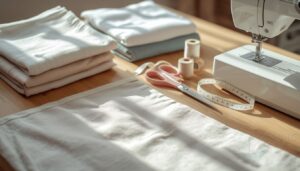
The fabric you choose at the start can make sewing feel simple or surprisingly frustrating. Beginner-friendly options are easier to cut, pin, and stitch, which helps you build confidence faster.
Here’s what to look for before you pick up your first piece of fabric.
Why Cotton is Best for Beginners
Because cotton gives you Soft Fiber Texture, Easy Handling, and Low Stretch, it takes the wobble out of Sewing for Beginners. In home sewing, cotton quilting fabric presses crisply, marks clearly, and feeds smoothly through machines.
Its Affordable Availability and Gentle Care also make fabric selection less stressful while you’re understanding fabric types and selection with confidence from day one.
Light to Medium Fabrics to Start With
Since cotton quilting fabric feels friendly, keep your fabric selection simple and compare fabric types by weight first:
- Lightweight Cotton Picks
- Medium Weight Twill
- Multipurpose Polyester Blends
- Fabric Weight Chart
- Stitch Selection Guide
Use fabric prewashing before fabric cutting techniques, so light 60–90 gsm and medium 150–260 gsm fabrics behave better under your needle, and press flat for smoother, steadier seams.
Fabrics to Avoid at First
Keep fabric selection simple. Some fabric types trip beginners fast: Leather Suede, Vinyl Leather, Thick Wool, Heavy Jersey, and Silk Velvet. They slip, crack, fray, curl, or feel bulky, which makes fabric cutting techniques and fabric grain orientation harder.
| Avoid | Problem |
|---|---|
| Leather Suede | Heavy, slippery |
| Vinyl Leather | Cracks, sticks |
Leave fabric prewashing for easier cloth first on your first projects.
Prewashing and Pressing Before Sewing
- After tricky fabric types, start smart.
- Prewash Benefits include Fabric Shrinkage Control and Colorfastness Testing.
- Wash by fabric selection, using mild soap and cool-to-warm water.
- Dry low or line dry for sustainable sewing practice.
- Use Iron Temperature Settings and gentle Pressing Techniques to straighten fabric grain orientation before fabric cutting techniques. Press after washing to relax wrinkles and prevent distortion.
How Fabric Type Affects Stitches and Seams
Although fabric types feel different in your hands, they change stitch techniques fast: fabric selection affects Fabric Grain Alignment, Thread Compatibility, stitch tension adjustment, and Seam Finish Options.
Lightweight cloth may need Interfacing Use; knits need stretch stitches for Stitch Skipping Prevention; heavier wovens need longer stitches, while seam finishes control fraying.
| Fabric | Feeling |
|---|---|
| Cotton | steady |
| Knit | forgiving |
| Denim | strong |
Learn Machine Setup Basics
Before you start your first project, it helps to get comfortable with your machine.
A few simple setup steps can save you time, frustration, and tangled thread later on. Here’s the basic order to follow so everything feels easier from the start.
Read The Manual Before Sewing
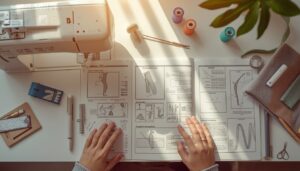
Think of your manual as your sewing road map.
Good Manual Navigation helps you find Technical Specs, Warranty Info, Operating Guidelines, and the Error Code Guide fast.
It also builds Understanding your sewing machine, shows how to Adjust Your Machine Tension, Insert and Remove A Machine Needle, and review Threading and machine setup procedures before you Thread Your Machine safely.
How to Thread The Upper Thread
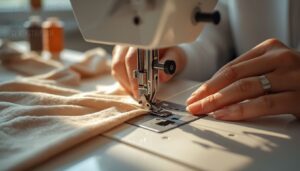
Before you thread your machine, follow the thread path diagram and check spool placement so machine threading stays smooth.
- Seat thread in the tension discs for balanced thread tension
- Confirm needle eye alignment and front-to-back threading
- Match thread type selection to fabric, then use gentle tension disc adjustment for clean stitches
This small habit builds understanding machine tension and threading.
How to Wind and Insert a Bobbin
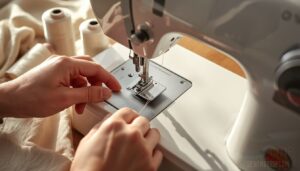
Start with Bobbin Winding Tips: use even bobbin winding, proper Thread Matching, and trim loose ends. Next, follow Bobbin Insertion Steps, so the thread feeds the right way and seats fully.
If stitches look off, check Bobbin Tension Adjustment. These sewing machine basics prevent Common Bobbin Issues and support sewing machine maintenance, machine maintenance, and sewing tutorials at home daily.
Test Stitch Length and Tension on Scraps
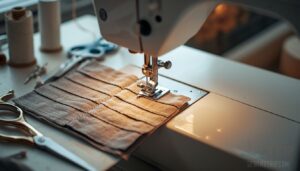
A quick test saves hours later: use the Scrap Test Method on scrap fabric after machine threading. Try basic stitches with stitch length adjustment at 1.0, 2.0, and 3.0 mm to spot Stitch Length Variation.
Do a Stitch Consistency Check, then use Tension Adjustment Tips for balanced thread tension and Fabric Feed Calibration before sewing your real project each time.
Practice Sewing Straight Lines Slowly
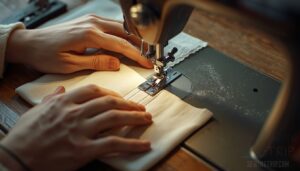
- Practice routines for sewing beginners begin with a Straight stitch on scraps, using Marking line accuracy.
- Add Foot pedal control, Consistent stitch speed, and gentle Fabric feed guidance.
- For learning how to sew in a straight line, use Muscle memory drills, straightline projects, and step by step tutorials.
Sew five parallel rows slowly in each session.
Practice Basic Hand and Machine Stitches
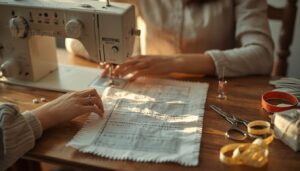
This is the point where sewing starts to feel more natural in your hands. You’ll practice few simple stitches slowly, so you can build control and confidence without feeling rushed.
Start with the basics below, and let each one help you get a little steadier.
Running Stitch, Backstitch, and Whip Stitch
Although Hand stitching feels simple, Running stitch helps with basting and gathering, while Backstitching gives you a stronger seam for repairs and hems. Whip stitch is one of the easiest Edge Finishing Methods.
Use Stitch Tension Control, a Thread Selection Guide, and Stitch Uniformity Tips from step by step tutorials to master Beginner Sewing Techniques and Repair Stitch Uses well.
Straight Stitch and Zigzag Stitch Uses
Once you’re comfortable by hand, your machine opens more options.
Straight Stitch deals with seams, hems, and Decorative Topstitching on stable fabric. Zigzag stitch helps with Edge Finishing, Seam Reinforcement, Stretch Fabric Assembly, and even Buttonhole Creation.
These Basic Stitch Types and Their Uses sit at the heart of Beginner Sewing Techniques, especially in step-by-step sewing lessons at home for beginners.
How to Start and End Seams Securely
To keep Machine Stitches from unraveling, secure every seam with calm, repeatable sewing techniques so your work stays neat and strong:
- Backstitch start and finish.
- Check Thread Tension Control.
- Use Stitch Length Selection wisely.
- Hold layers with Seam Alignment Tools.
- Try Seam Stabilization Techniques, Edge Finishing Options, Basic Stitches, Hand stitching, and Finishing Techniques, French Seam, Mitered Corners, Scalloped Edges.
How to Sew Corners and Curves
Once your seams feel secure, guide corners slowly and let curves happen in small steps, not one hard turn. For curves, sew a longer stitch on woven fabric and pivot neatly.
| Area | Tip |
|---|---|
| Curves | Stay Stitching, Clip Curves |
| Inner corners | Notch Cutting |
| Outer corners | Mitered Corners |
| Finishing | Bias Binding, Scalloped Edges, French Seam, Walking Foot, Fabric Gathering and Draping Techniques |
Fix Uneven Stitches, Puckering, and Thread Jams
Whenever stitches loop or fabric puckers, start small: Bobbin Tension Tuning, Thread Path Cleaning, Fabric Stabilization Techniques, and Walking Foot Usage with fresh sewing machine needles can fix jams fast.
Review error codes; a steady Machine Maintenance Routine helps troubleshoot sewing machine problems, maintenance and troubleshooting of sewing machines, and what to look for in a sewing machine for beginners.
Sew Easy First Projects
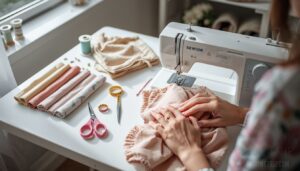
Once you’ve practiced few basic stitches, it helps to make simple projects that let you use those skills without feeling overwhelmed. The best first projects are quick, useful, and easy to finish, so you can build confidence as you go.
Here are a few beginner-friendly sewing projects to start with at home.
Fabric Squares for Straight-line Practice
Think of practice squares as your sewing driving range: Square Size Selection starts with 6-inch cotton pieces. Use Grid Marking Techniques and Marking Visibility Tips with chalk and a measuring tape.
Choose Durable Cotton Options, trim with Fabric Cutting Techniques, then sew a straight stitch and Basic Stitches on a basic machine.
Finish with Reusable Square Maintenance after each session.
Napkins and Kitchen Towels
Cotton napkins and towels make Sewing for Beginners feel useful right away, for daily drying and simple table use.
- Absorbent Fabric Choices: prewashed cotton
- Napkin Stitch Patterns: simple hems
- Edge Finishing Techniques shape Kitchen Towel Designs
- Eco-friendly Napkins become simple projects, handmade decor, and DIY home decor.
Use Fabric cutting techniques carefully, and you’ll build confidence with every neat corner.
Pillowcases and Simple Pillow Covers
Nothing builds confidence faster than a neat Pillowcase. For Sewing for Beginners, simple clear guidance from stepbystep tutorials and Online Sewing Education helps you practice Thread Color matching, Edge Binding, Envelope Closure, and basic Zipper Placement. Use breathable cotton or cool percale first; add an Embroidered Border later if you want a personal touch without making the project harder overall.
Tote Bags and Drawstring Bags
Ready for a project that feels useful right away?
A Tote Bag teaches straight seams, Handle Reinforcement, Pocket Design Ideas, and Interfacing Choices, while drawstring bags introduce channels, reinforced corners, and smart Cord Lock Techniques.
Follow step-by-step sewing lessons in a beginner’s course or online tutorials, then try Bottom Support Options or even your first zipper pouch later for practice.
Elastic-waist Skirts as a First Garment
Why not make an elastic waist skirt as one of your first sewing projects? It teaches Waistband Construction, Gathering Techniques, Hem Style Choices, and Skirt Length Options without feeling hard.
Soft elastic waistbands fit many bodies comfortably, often from 22 to 38 inches. In beginner sewing education, step-by-step sewing lessons also introduce Button Placement, turning practice into DIY fashion projects.
Follow a Weekly Home Practice Plan
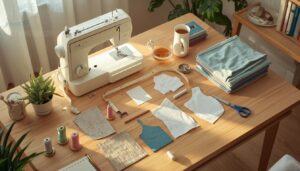
A simple weekly plan helps you practice sewing without feeling lost or rushed. When you know what to work on each day, it gets easier to build skill and stay motivated.
Here’s a beginner-friendly way to structure your home sewing practice each week.
Daily 15-minute Stitch Practice
Often, fifteen minutes a day is enough to build sewing skill development without being overwhelmed. Use Speed Control Drills and Basic Stitches to create Focused Muscle Memory.
A Daily Stitch Log and Visual Progress Chart help you see improvement quickly. Think of it as developing muscle memory through daily practice, with Mini Project Integration using scraps from simple projects at home.
Weekly Small Projects for Confidence
After your daily stitches, give yourself a small win each week. Sew a Scrunchie, Double Sided Placemat, or Zipper Pouch in 2 to 4 hours for real Confidence Boosters.
These step-by-step sewing lessons support Skill Stacking, clear Weekly Stitch Goals, and gentle Project Reflection. Even Creative Material Swaps can spark a confidence boost while your hands grow steadier with practice.
Use Scrap Fabric to Reduce Waste
Small projects lead to scrap fabric, and that helps. Try this:
- Practice Zero-Waste Cutting before tossing offcuts.
- Sort pieces by size with Labeling Scrap Bins for Scrap Upcycling Ideas.
- Turn leftovers into Patchwork Recycling Projects, or share at Fabric Swap Events.
sustainable sewing practices support material cost saving while you learn how to sew from scratch.
Learn From Video Tutorials and Printable Guides
Those scrap pieces are perfect while you learn through YouTube video tutorials and online tutorials.
Look for stepbystep sewing lessons with Visual Aids and On-screen Captions, so you can Pause Repeat tricky parts with real Learning Pace Flexibility.
A free learn to sew course, plus free patterns and Printable Checklists, gives you clear practice at your table there every week.
Join Sewing Communities for Feedback and Motivation
Join a sewing community and build feedback loops that keep you going.
- Online critique groups
- Live stitching sessions
- Mentor matching
Use online sewing forums like Reddit or PatternReview for community photo shares, sewing mentorship, and a welcoming craft community. That kind of Community Support for Sewers turns solo practice into real progress, with steady advice and encouragement. Participating in a sewing circle fosters an exchange of ideas that accelerates skill growth.
Top 4 Beginner Sewing Items
If you’re not sure what to buy first, it helps to start with a few simple items that make sewing easier.
The next four picks are beginner-friendly and practical for learning at home.
Here’s a quick look at the tools and supplies worth keeping on your radar.
1. Dritz Craft Needle Storage Compact
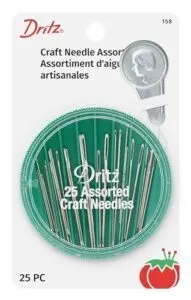
If loose needles keep disappearing, this little compact can feel like a lifesaver.
The Dritz Craft Needle Storage Compact holds 25 assorted hand needles in one portable case, so you can quickly grab the right type for mending, embroidery, quilting, or simple hand sewing.
The labeled back helps you identify sizes fast, and the included needle threader makes setup easier on tired eyes.
Just note that the rotating case can feel stiff, and the threader needs separate storage at times.
| Best For | Sewers, quilters, and crafters who want a small, organized needle set they can keep handy for everyday repairs and needlework projects. |
|---|---|
| Brand | Dritz |
| Material | Alloy steel/plastic |
| Item Type | Hand needle set |
| Primary Use | Hand sewing |
| Operation | Manual hand use |
| Best For | Mending and embroidery |
| Additional Features |
|
- Keeps 25 assorted hand needles in one compact case, so they are easier to organize and less likely to get lost.
- Includes a labeled back for quick size and style identification, which makes picking the right needle faster.
- Comes with a needle threader and offers a mix of needle types for sewing, quilting, embroidery, and crewel work.
- The rotating dispenser can feel stiff, which may make needle access a little frustrating.
- The housing may crack or loosen over time with repeated use.
- The threader does not store inside the compact, so it is easier to misplace.
2. Janome 712T Treadle Sewing Machine
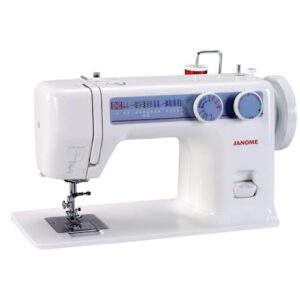
If you like simple tools that slow you down in a good way, the Janome 712T is worth a look. This treadle machine runs without electricity, so you can sew during outages or in an off‑grid space.
Its metal body feels sturdy, and the extra‑high presser foot lift helps with thicker fabrics.
You also get built‑in stitches, drop‑feed for free‑motion work, and quiet operation. Just remember, it needs a compatible treadle cabinet to work all right from the start.
| Best For | Sewers who want a sturdy, fully manual machine for off-grid use, quiet everyday sewing, and free-motion work, and who already have or are willing to set up a compatible treadle cabinet. |
|---|---|
| Brand | Janome |
| Material | Metal housing |
| Item Type | Treadle sewing machine |
| Primary Use | Machine sewing |
| Operation | Treadle-powered |
| Best For | Off-grid sewing |
| Additional Features |
|
- Runs without electricity, which makes it great for power outages, off-grid spaces, and low-energy sewing setups.
- Offers useful features like 10 built-in stitches, drop-feed for free-motion quilting or darning, and an extra-high presser foot lift for thicker fabrics.
- Quiet, sturdy, and versatile enough for garment sewing, mending, alterations, and home-decor projects.
- Requires a compatible treadle cabinet, and some cabinets may need trimming or modification to fit the machine properly.
- Has a learning curve for belt setup, treadle use, and flywheel direction, and incorrect use can jam the bobbin mechanism.
- Lacks built-in lighting, and the bobbin winder can feel slow compared with electric machines.
3. NGOSEW 9mm Wide Zigzag Foot
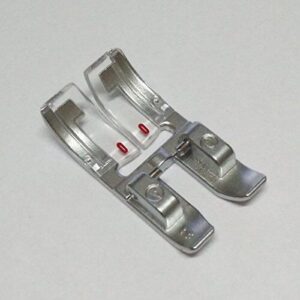
Need a little more room for decorative stitching? NGOSEW 9mm Wide Zigzag Foot gives you that extra space, so wide zigzags, stretch stitches, and heirloom details feed more smoothly.
It’s a metal snap-on foot made for many PFAFF home machines with IDT, so check compatibility before you buy.
For beginners, it’s a simple way to upgrade results on knits, quilts, and home projects.
Test on scrap fabric first, and use your manual for setup and tension tweaks there too.
| Best For | PFAFF home sewing machine owners with IDT who want an affordable replacement foot for wide decorative, stretch, heirloom, and everyday stitching. |
|---|---|
| Brand | NGOSEW |
| Material | Metal |
| Item Type | Zigzag presser foot |
| Primary Use | Decorative stitching |
| Operation | Snap-on attachment |
| Best For | Wide zigzag stitches |
| Additional Features |
|
- Lets you use extra-wide 9 mm zigzag, decorative, stretch, and straight stitches more smoothly.
- Metal snap-on design feels durable and works as a direct replacement for many compatible PFAFF basic feet.
- A budget-friendly upgrade for quilting, garment sewing, and home décor projects.
- Only fits certain PFAFF machines with IDT, so compatibility is limited and needs to be checked carefully.
- No setup guide is included, so beginners may need to rely on their machine manual for installation and tension adjustments.
- The metal build can add a little weight, which may increase vibration on delicate fabrics.
4. Hygloss Assorted Craft Buttons

Buttons may seem small, but they can teach you a lot. Hygloss Assorted Craft Buttons give you a colorful mix of sizes, shapes, and mostly two-hole or four-hole styles, so you can practice hand sewing, simple repairs, and fun embellishments.
The resin material is smooth, durable, and easy to attach with thread, glue, or ribbon.
Just keep expectations realistic: counts vary, colors aren’t always evenly mixed, and a few packs may include broken pieces. Still, they’re useful for beginners too.
| Best For | Beginners, teachers, and crafters who want an affordable assorted button pack for simple sewing, classroom activities, and DIY projects. |
|---|---|
| Brand | Hygloss |
| Material | Resin |
| Item Type | Assorted button pack |
| Primary Use | Repair and crafts |
| Operation | Glue or sew-on |
| Best For | Button replacement crafts |
| Additional Features |
|
- Wide mix of colors, sizes, and shapes makes the pack flexible for crafts, repairs, and decorative projects.
- Smooth, durable resin buttons are waterproof and easy to attach with thread, glue, tape, or ribbon.
- Bulk 4-ounce bag helps keep the per-button cost low for frequent crafting or classroom use.
- Actual button count often falls short of the advertised approximately 125 pieces.
- Color and shape assortment can be uneven, with some colors or specialty buttons showing up rarely.
- Some packs may include broken pieces, stray fragments, or loose packaging from shipping.
Frequently Asked Questions (FAQs)
Can sewing help with stress relief?
Picture your hands guiding soft fabric while the needle hums steadily.
Yes, sewing can ease stress by narrowing your focus, creating a calm rhythm, and giving you a useful finish that feels grounding and satisfying.
How long does it take to learn sewing?
Most beginners can sew straight lines and finish a simple project in 4 to 8 hours of practice.
With 2 to 3 weeks of short sessions, you’ll feel confident threading, stitching, and fixing basic mistakes.
What basic sewing terms should beginners know?
Sewing can feel like learning a whole new language overnight: know seam, bobbin, presser foot, needle plate, and tension first.
Add straight stitch, zigzag stitch, backstitch, grainline, and selvage, and patterns suddenly make more sense.
Do I need a serger to start?
No, you don’t need a serger to start. A regular sewing machine can handle straight stitches, zigzag finishes, and simple projects like bags, cushions, and easy garments.
You can always add a serger later easily.
When should I replace my sewing needle?
Replace your sewing needle every 4 to 6 hours, or sooner if stitches skip, thread breaks, or fabric snags.
After denim, canvas, or a bent needle, swap it right away for clean, smooth sewing results.
How do I sew in a zipper?
Like a zipper finding its track, align pressed zipper teeth to the seam, pin or baste, use a zipper foot, stitch each side evenly, then press and test it.
If it puckers, realign and resew.
Conclusion
Learning to sew from scratch from home is like planting a garden: you start with a few seeds, nurture them with patience and practice, and soon you’ll be harvesting beautiful creations. As you master the basics, your confidence will grow, and you’ll find joy in every stitch.
With persistence and the right guidance on how to learn sewing from scratch at home, you’ll transform your space into a haven of creativity, one seam at a time, effortlessly.