This site is supported by our readers. We may earn a commission, at no cost to you, if you purchase through links.
Your closet already holds the raw material for half your wardrobe—it’s just wearing the wrong shape.
A thrifted button-down becomes a breezy wrap top. A dress gets deconstructed into a two-piece set. Scraps that felt too small to matter turn into something you’d actually reach for on a Tuesday.
Sewing your own clothes used to mean decoding dense instructions and hoping for the best, but modern sewing project ideas for apparel have shifted toward faster builds, smarter techniques, and fabrics that actually drape the way trends demand. Whether you’ve got an afternoon or a full weekend, there’s a project here that fits your skill level—and your style.
Table Of Contents
Key Takeaways
- Your closet already has everything you need—old button-downs, worn dresses, and forgotten scraps can all be cut, stitched, and restyled into pieces you’ll actually wear.
- Beginners do best starting with no-zipper patterns like wrap dresses and jogger pants, since simpler closures mean you actually finish what you start.
- 2026’s biggest handmade fashion trends—fluid silhouettes, visible seams, lace accents, and layered skirts—are genuinely easier to pull off when you sew them yourself.
- Three habits separate polished garments from sad drawer-dwellers: press every seam, finish your raw edges, and cut with the grain aligned.
Upcycled Modern Apparel Projects
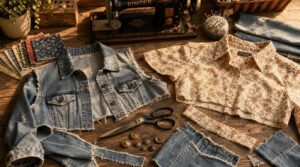
Your closet might already have everything you need for your next sewing project. A few smart cuts and some simple stitching can turn forgotten pieces into things you’ll actually reach for. Here’s what you can make with what you’ve already got.
From basic tucks to full redesigns, these simple sewing hacks for clothes show just how much you can do without buying a single new thing.
Button-Down Shirt Refashions
That old button-down gathering dust in your closet? It’s basically a blank canvas.
A wrap front conversion turns it into a breezy tie top in one afternoon. Crop the hem by 2–5 inches, remove the collar for a clean scoop neck, and shorten the sleeves. Even the button placket becomes a built-in design detail. Instant thrift flip.
For best results, use an oversized button-down as your base fabric.
Dress-To-Two-Piece Sets
One dress can quietly become two outfits. Cut it at the waist, finish the raw edges, and you’ve got a matching crop top and high-waisted bottom — a full coordinated set.
Keep the fabric color and print aligned across both pieces so everything looks intentional. The two pieces can be worn separately, too, which doubles your options without doubling your wardrobe.
Curtain Fabric Cover-Ups
Curtain fabric is an unlikely fashion hero. Raid your local Creative Reuse Center or pull down panels you no longer love, and you’ve got gorgeous material for a drape mastery cover-up. Lightweight cotton or rayon curtains move beautifully.
A simple open front with a tie closure keeps fit flexible, and a narrow hem finishes raw edges cleanly. Always air dry care to protect that fluid drape.
T-Shirt Bike Shorts
From flowy curtain cover-ups to something a little more form-fitting — jersey T-shirt bike shorts are a great upcycle. Old kids’ tees get new life as adult shorts through smart cutting and seaming.
Use a nylon-spandex blend for four-way stretch and shape retention. Flatlock seams reduce chafing, and a wide elastic waistband keeps everything in place.
Machine wash cold, air dry, done.
Patchwork Scrap Garments
Patchwork scrap garments are where your fabric pile finally becomes something worth wearing. Sort scraps by weight, drape, and color family before you start — this makes Fabric Patch Assembly feel less chaotic and more intentional.
| Technique | Best For |
|---|---|
| Scrap Seam Finishes | Preventing fraying on mixed fabrics |
| Reclaimed Denim Panels | Structured jackets and skirts |
Finish edges with zigzag or French seams, and you’re good.
Beginner-Friendly Clothing Patterns
Starting with the right pattern makes all the difference when you’re new to garment sewing. These picks skip the frustrating parts — no zippers, no complicated closures, no custom grading — so you can actually finish what you start. Here are five beginner-friendly styles worth adding to your rotation.
Once you’ve got a few basics under your belt, small finishing details start to matter — like learning to mitre corners cleanly in sewing so your hems look polished instead of bulky.
Easy Woven Tops
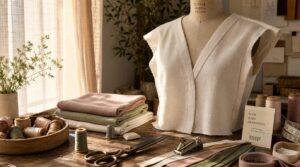
Woven tops are a perfect entry point into garment sewing. Cotton poplin, linen, and rayon challis all work beautifully — they breathe, drape, and press like a dream.
Here’s what to nail first:
- Sew shoulder seams and press toward the back
- Finish your neckline with bias binding
- Close side seams in one continuous seam
Stay stitch curved edges before assembly. You’ll thank yourself later.
Simple Jogger Pants
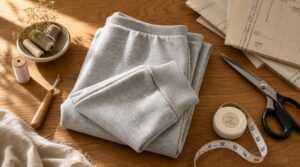
Jogger pants might just be the most satisfying beginner sewing project out there. They look polished, wear like pajamas, and come together faster than you’d think. French terry or brushed cotton gives you that soft, cozy feel right away.
| Feature | Beginner Tip |
|---|---|
| Waistband | Use enclosed elastic for a clean finish |
| Ankle cuffs | Sew ribbed cuffs to keep shape after washing |
| Seam construction | Topstitch seams to reduce chafing |
| Sizing | Choose graded patterns for inclusive fit |
Press every seam. It makes a real difference.
Drawstring Sport Shorts
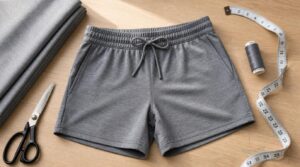
Sport shorts are one of those budget-friendly sewing wins that actually get worn. Use a lightweight polyester-spandex blend for stretch and quick-dry performance.
Keep your inseam between 5 and 9 inches.
Flatlock seams prevent chafing, and a simple elastic waistband design with a drawstring channel lets you dial in the fit perfectly.
Bias-Bound Necklines
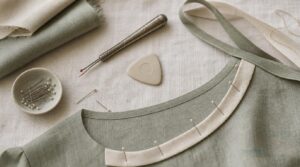
A bias-bound neckline is honestly one of those small details that makes your handmade top look genuinely polished. Bias binding techniques work because fabric cut on the diagonal naturally curves around necklines without puckering.
For neckline comfort, finish width matters — aim for ¼ to ½ inch on lightweight fabrics. Your fabric choice guide starts here: use knit binding on stretch fabrics, woven binding on structured ones.
No-Zipper Dress Patterns
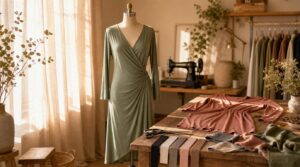
Zippers are honestly the #1 reason beginners abandon a project halfway through. Skip them entirely.
No-zipper dress patterns like the Wrap Dress or Knit Pull-Over use draped fronts, elastic waist panels, and raglan sleeves so the garment slips right on. A draped front holds its shape beautifully without closures—your self-sewn clothing looks intentional, not accidental.
Quick One-Day Wardrobe Ideas
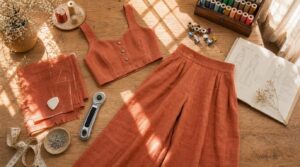
Sometimes you just want to sew something today and wear it tomorrow. No week-long project, no complicated fitting sessions — just a finished piece you’re actually excited about. Here are a few one-day ideas that deliver exactly that.
Fast Summer Dresses
Few sewing wins feel better than finishing a dress in a single day. That’s the whole point of fast summer dress patterns — they’re built for speed without sacrificing style. Think the Smocked Midi Sundress with its stretchy smocked bodice, no zippers needed, or the breezy Tiered Babydoll Dress in cotton lawn.
These beginner-friendly patterns keep things simple:
- Satin Charmeuse Dress — cool, drapey, all-day comfortable
- Wrap Front Maxi — adjustable fit, flowing rayon fabric
- Linen Slip Dress — breathable, minimal, effortlessly chic
- Smocked Midi Sundress — no closures, easy construction
One-Hour T-Shirts
Dresses done — now let’s talk tees. A one-hour T-shirt is exactly what it sounds like.
Using DTG or DTF printing on a pre-shrunk cotton blend blank, you get a finished shirt fast.
Most services stock sizes XS to 3XL, run a quick quality check for color and alignment, and you’re done. Simple, satisfying, no machine required.
Scrap Fabric Scrunchies
Now for the tiniest wardrobe win: scrap fabric scrunchies.
These little accessories use almost nothing — a 4 to 5‑inch fabric strip, about 7 to 9 inches of elastic, and ten minutes of your time. Cotton, satin, velvet, denim — whatever scraps you have work perfectly.
Less waste, zero new materials needed, and honestly? They’re adorable.
Easy Layering Tops
From tiny scrunchies to something you’ll reach for every single day — easy layering tops are exactly that.
The Elly Top or a simple oversized T-shirt both work great here. Pick a cowl neckline for simple style, choose bamboo or Tencel for a smooth drape, and keep sleeves short or capped. Done in a day. Seriously.
Trendy 2026 Handmade Fashion
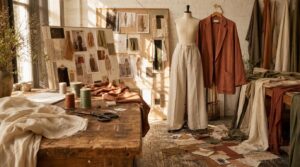
Handmade fashion in 2026 is having a real moment, and honestly, the trends are made for sewists. Structured and stiff is out — loose, expressive, and personal is very much in. Here’s what’s worth making right now.
Relaxed Fluid Silhouettes
Relaxed, fluid silhouettes are having a real moment in 2026. Think soft shoulder seams, generous ease through the bust and hips, and lengths that hit mid to maxi.
Fabrics like rayon crepe and viscose are your best friends here — they move beautifully without clinging. A bias cut makes everything hang just right, effortlessly skimming your curves.
Visible Seam Details
Visible seams aren’t a mistake anymore — they’re the whole point. In 2026, intentional exposed construction is a genuine design move, and your handmade pieces are perfectly positioned to pull it off.
In 2026, exposed seams aren’t flaws — they’re the design
Here’s what makes it work:
- Flat felled seams enclose raw edges cleanly while staying visible on the right side
- Contrast topstitch thread turns functional stitching into a bold graphic detail
- Coverstitch lines on knit hems add flexible, decorative structure
Keep your stitch density at 12–14 stitches per inch on woven fabrics to avoid puckering. On knits, coverstitch width between 4–6 millimeters distributes stretch evenly. Pick a thread color that pops — that single choice transforms a plain seam into a statement.
Lace Accent Tops
Lace accent tops are having a serious moment in 2026, especially under the Glamouratti and Poetcore aesthetic. Think delicate Chantilly or embroidered tulle lace sewn into bodice panels or along necklines — subtle enough for everyday wear, pretty enough to turn heads.
| Technique | Lace Type | Styling Tip |
|---|---|---|
| Lace insertion | Embroidered tulle | Layer over a nude camisole |
| Sheer panel styling | Stretch lace | Pair with high-waisted denim |
| Vintage lace ribbon trim | Guipure lace | Add contrast topstitching in black |
| Bias-bound neckline | Chantilly lace | Use cool-water hand washing only |
For color contrast pairing, nude or black base fabrics let lace patterns breathe without competing.
Layered Skirts
A layered skirt is basically movement made fabric. Stack two to five tiers of cotton voile, chiffon, or organza, and suddenly your handmade piece flows like something off a runway.
Here’s what makes them work:
- Tiered hem styles create a stepped, cascading silhouette
- Gathered layer volume adds fullness without stiffness
- Sheer overlay effect floats over opaque underlayers beautifully
- Waistband reinforcement with interfacing supports all that extra fabric weight
- Layered fabric choices like satin midlayers add subtle, gorgeous sheen
Try the Abbie Skirt sewing pattern — it’s a beginner-friendly introduction to tiered construction with clear, graded sizing. Finish hems with rolled or narrow zigzag stitching to keep bulk down and drape intact.
Handmade Denim Jackets
A handmade denim jacket might be the most rewarding fashion DIY project you’ll ever tackle. Start with selvage denim selection — 12 to 14 ounce fabric holds its shape beautifully.
Nail your button placket construction, add some custom patch placement, and try vintage dye techniques for a worn-in finish.
Denim jacket distressing with light abrasions makes it truly yours.
Sewing Tips for Better Apparel
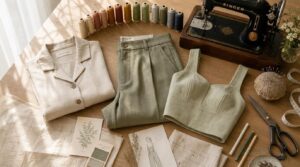
Good sewing habits make the difference between a garment you love and one that sits unworn in a drawer. A few small tweaks to how you work can seriously level up your results. Here’s what to keep in mind as you sew your next piece.
Choosing Apparel Fabrics
The fabric you pick can make or break a project. Natural fibers like cotton are soft, breathable, and absorb moisture well — great for everyday tops. Linen stays cool but wrinkles fast. Silk drapes beautifully. For durability on a budget, polyester blends hold up well. Top picks for beginners:
- Cotton jersey — forgiving and easy to sew
- Linen-cotton blends — breathable with less wrinkling
- Thrifted curtain fabric — sustainable and often free
Cutting Patterns Accurately
Once your fabric is chosen, it’s time to cut — and this step rewards patience. Align every pattern piece with the grainline first; misaligned grain causes twisting and pulls that no amount of pressing will fix.
Use pattern weights or pins to keep pieces flat, mark all notches with tailor chalk, and always cut with a sharp blade for clean, accurate edges.
Pressing Seams Properly
Once your pieces are cut, pressing is what separates a polished garment from a homemade‑looking one.
Press seams flat right after sewing to set your stitches, then open the allowances using vertical iron motions — never sliding side to side.
On delicate knits, hover steam instead of direct contact.
Always use a press cloth on silky or synthetic fabrics to avoid shine.
Finishing Raw Edges
Seams pressed? Good. Now let’s make sure those raw edges don’t unravel your hard work.
- Zigzag edge finish — Set width to 1.5 mm, length to 2.5 mm, and stitch 1–2 mm from the edge.
- Turned under hem — Fold 6 mm under, press, then stitch close to the fold.
- French seam finish — Sew wrong sides first at 3 mm, trim, flip, then sew again at 6 mm.
- Bias bound edge — Wrap a 12–16 mm bias strip around curves for a clean, flexible finish.
- Flat felled seam — Two rows of stitching enclose the edge completely, perfect for denim selfsewn clothing.
Using Step-By-Step Tutorials
Good tutorials do more than list steps — they show you why each action matters.
Look for guides with close-up photos and action captions so you can see exactly where to place your needle or how a finished seam should look.
Progress checkpoints after each stage help you catch mistakes early, before they snowball into a full unpick session.
Frequently Asked Questions (FAQs)
What are your favorite sewing projects?
Honestly? The Nelly Coat, the Elly Top, and a good jersey T-shirt never get old. They build real skills, suit your personal style, and the time investment always feels worth it.
Where can I find free sewing patterns?
Free Pattern Websites like Mood Fabrics, So Sew Easy, and FreeSewing.org are great starting points. AllFreeSewing also hosts thousands of downloadable PDF patterns across apparel and accessories categories.
What are the best sewing projects for beginners?
The best beginner sewing projects are straight-seam basics: pillows, drawstring bags, and scrunchies. They build confidence fast, use minimal fabric, and skip tricky closures. Start simple, finish strong.
Are there free sewing patterns for women’s clothes?
Yes, absolutely. Dozens of sites offer free downloadable patterns for women’s clothes, complete with printable PDFs, sizing charts, and seasonal updates. Some need a free account, but access is quick and totally worth it.
What is a beginner sewing project?
Simple, satisfying, speedy — that’s a beginner sewing project. Think drawstring bags, bow scrunchies, or basic tees. They use straight stitches, elastic waistbands, and prewashed cotton, and most finish in under three hours.
How many clothing sewing patterns are there?
There are tens of thousands of clothing sewing patterns available globally — spanning every garment category, size range, and skill level. Digital libraries alone host countless downloadable options, with new patterns dropping every season.
What is the easiest item of clothing to sew?
A basic knit top is hands-down the easiest first sewing project. Minimal pieces, simple seams, no zippers — just straight stitching on forgiving stretch fabric that hides small mistakes beautifully.
What is the best business in sewing?
The best sewing business depends on your strengths. Custom clothing services and online stores selling digital patterns or DIY kits offer strong profit margins. Eco branding through upcycled fashion also pulls in loyal, conscious buyers fast.
How to make sewing projects look professional?
Press every seam, finish raw edges, and topstitch hems for a clean look. Matching thread and precise cutting close the gap between homemade and store-bought fast.
What is easy to sew and sell?
Scrunchies, tote bags, and one-hour T-shirts are your sweet spot. They’re low-cost staples with fast turnaround, minimal fabric, and no zippers. Simple market hits that practically sell themselves.
Conclusion
Picture Maya, who turned an oversized thrifted blazer and two worn-out tees into a sharp coord set she now wears to meetings.
No store run. No compromise.
That’s exactly what modern sewing project ideas for apparel make possible—you stop chasing trends and start setting them yourself.
Your machine, your scraps, and a little confidence are genuinely all it takes.
The next piece hanging in your closet? You’ll have made it yourself.
- https://www.thunderbirdhandcrafted.com/blogs/genavieves-blog/top-7-sewing-trends-to-watch-in-2025
- https://thefoldline.com/blogs/trending/sew-the-trends-spring-part-1-2025
- https://www.sadieseasongoods.com/easy-sewing-projects
- https://secondlifeupcycling.com.au/clothes-upcycling-sewing-projects
- https://christinehaynes.com/blog/2016/3/24/my-20-favorite-beginner-sewing-patterns