This site is supported by our readers. We may earn a commission, at no cost to you, if you purchase through links.
I’ve repaired enough Singer machines to know that buyers fall into two camps: those chasing the cheapest stitch count and those who actually want a workhorse. The Singer 9100 sits in a sweet spot—404 stitches, computerized controls, metal frame construction—but raw specs don’t tell you how it performs a quilt sandwich at 2 a.m. or whether that LCD screen becomes unreadable after six months.
Real-world performance separates marketing hype from machines that earn their keep on your sewing table. This review cuts through the feature list to show you what the 9100 actually delivers for home sewers, quilters, and craft makers who need reliability without the industrial price tag.
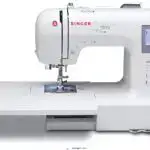
I’ve serviced hundreds of machines, and the Singer 9100 hits that sweet spot where features meet reliability. The 404 built-in stitches give you serious creative range—way more than most people need, honestly, but it’s nice having options when you’re tackling monograms or specialty work. The self-adjusting tension system works most of the time, though I’ve seen it struggle with slippery rayons or heavy upholstery threads. You’ll want to override it manually in those cases.
The top drop-in bobbin is brilliant for quick changes, and that speed control slider? Absolute must-have for precision work. I appreciate the metal construction at this price point—means fewer plastic gears wearing out down the line. The built-in needle threader takes practice (I’ve replaced plenty after users forced them), but once you nail the technique, it’s a timesaver. The instruction manual is bare-bones, so you’ll be watching YouTube tutorials for anything beyond basics. Still, for beginners ready to grow and experienced sewists who don’t need industrial power, this machine delivers solid performance without the boutique price tag.
Best For: Intermediate sewists ready to expand their skills and beginners willing to learn through online resources, especially those working on decorative projects, garment construction, and home décor items.
- 404 stitches plus two alphanumeric fonts provide extensive creative options for personalization and decorative work
- Self-adjusting tension handles most standard fabrics well, reducing manual adjustments during typical sewing sessions
- Metal construction and top drop-in bobbin design offer durability and convenient thread changes
- Tension system requires manual override with specialty threads like rayon or when sewing thick upholstery fabrics
- Needle threader mechanism is delicate and demands careful technique to avoid breaking the threading hook
- Minimal instruction manual forces users to seek online tutorials for advanced features and troubleshooting
Table Of Contents
Key Takeaways
- The Singer 9100 delivers 404 stitches, computerized controls, and a metal frame that keeps it stable through demanding projects—handling everything from quilting to monograms without the industrial price tag.
- Real-world performance shows it excels at speed control (1,100 stitches/minute) and medium-weight fabrics, but struggles with very thick seam junctions and delivers inconsistent lettering quality that disappoints monogram enthusiasts.
- Automation features like the automatic threader, built-in thread cutter, and programmable needle position genuinely save time instead of creating extra hassle, making it a practical workhorse for home sewers who need efficiency.
- At around $900 new (or $350 used), it’s the sweet spot for hobbyists and intermediate sewers who’ve outgrown entry-level machines but don’t need industrial-grade equipment—just expect routine maintenance like lint cleaning and occasional servicing to keep it running strong.
Singer 9100 Overview and Key Features
The Singer 9100 isn’t your grandmother’s mechanical machine—it’s a computerized workhorse that brings serious tech to your sewing table.
If you’re comparing models, the Singer 4432 heavy-duty machine offers similar reliability with a focus on raw stitching power.
At first glance, you’re getting over 400 stitches, a backlit LCD screen, and a metal frame that won’t rattle apart after a few dozen projects. Let’s break down what makes this machine tick, starting with the features that actually matter when you’re knee-deep in fabric.
Computerized Design and LCD Interface
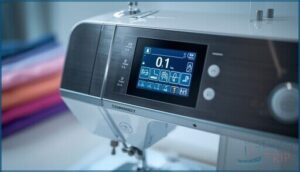
The Singer 9100’s computerized sewing machine features center on a backlit LCD that shows stitch numbers, length, width, and icon indicators in real time. You’ll navigate display settings using dedicated buttons—no menu diving required.
- Screen brightness stays readable in typical room light
- Menu modes cycle through utility, decorative, and alphabet groups
- Speed control and needle position appear on-panel
- Sewing technology includes memory for stitch sequences
For a thorough breakdown of its specifications and features, see the detailed available online.
Built-in Stitches and Monogram Fonts
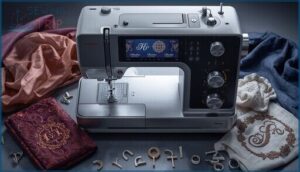
You’ll find 404 built-in stitches on this computerized sewing machine—utility, decorative, quilting, and heirloom options that cover most projects.
The Singer 9100 includes nine buttonhole styles and two alphabet fonts (block and script) for monograms. Stitch variety is solid, though monogram limits keep lettering small-scale.
Customization options let you adjust width, length, and mirror patterns for sewing precision without guesswork. For troubleshooting and care advice, refer to the detailed Singer 9100 maintenance section.
Sturdy Metal Frame and Portability
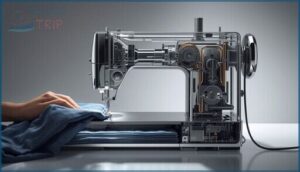
Beyond the stitch library, you’re getting real metal construction—an internal frame that keeps moving parts aligned, even when you’re flying through denim layers.
The 9100 weighs around 9 kg, heavy enough for stability enhancement but light enough to carry. That weight distribution and frame durability mean no table-walking during speed runs, and the portability features (built-in handle, compact footprint) let you haul this professional sewing machine to classes without drama.
Stitching Performance and Versatility
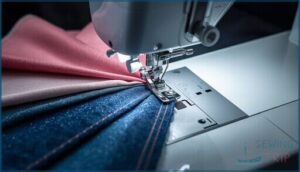
The Singer 9100 runs fast—1,100 stitches per minute fast—but speed‘s only part of the story. What really matters is how well it manages different fabrics, whether you can tweak settings on the fly, and if those automation features actually save you time or just create headaches.
If you’re comparing speed across different models, check out our guide to the best Janome sewing machines to see how stitch rates stack up against features like stitch quality and ease of use.
The Singer 9100’s 1,100-stitch speed means nothing if it can’t handle real fabrics and deliver automation that actually works
Let’s break down how this machine performs when you’re pushing fabric through it.
Speed Control and Stitch Customization
You’ll love the front slider speed control on this Singer 9100—it caps your maximum stitching pace, no matter how hard you mash the foot pedal. Dial it low for detailed seams, high for blazing through hems.
The custom stitch settings let you tweak width and length on the fly, refining stitch quality until it’s exactly what you need. The programmable needle position and hands-free sewing button? Total game-changers.
Handling Thick Fabrics and Layered Projects
Domestic‑grade power means the Singer 9100 processes medium denim and canvas just fine, but hesitates at bulky seam junctions unless you slow down.
Thick fabrics demand the right needle selection—size 90/14 or 100/16—plus reduced presser foot pressure so your feed dogs can pull layers without skipped stitches. A walking foot helps layered sewing; strong polyester thread beats cotton every time for fabric thickness and stitch quality.
Automation Features (Threader, Cutter, Tie-Off)
Three convenience features deliver actual time savings on the Singer 9100. The automatic threading lever pushes a loop through the needle eye in seconds, cutting setup frustration. A thread cutter blade sits right on the machine body—snip and move on. The tie off button locks seams with programmed anchor stitches, no reversing required.
You also get:
- Programmable needle control that stops up or down for pivoting
- Start stop button operation without the foot pedal
- Speed limiter cap for detailed work at lower RPM
- Stitch sequencing memory that chains letters into monograms
Sewing automation on this level keeps your hands on fabric instead of fussing with controls.
User Experience and Included Accessories
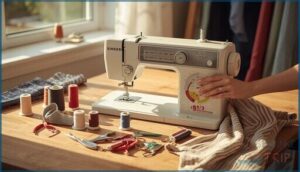
The Singer 9100 strikes a solid balance between accessibility and capability, which matters whether you’re threading your first bobbin or tackling your hundredth quilt.
Singer didn’t skimp on the accessories either—you get a handful of practical tools and additions that expand what you can do right out of the box. Let’s break down how this machine manages day-to-day use and what comes in the package.
Ease of Use for Beginners and Advanced Users
The Singer 9100 walks you through threading basics—printed paths, automatic threader, backlit LCD—so the learning curve flattens fast.
Direct-select buttons and pull-out stitch cards let you jump into sewing basics without flipping manuals.
Once you’re ready, mirror-imaging, memory slots, and 400+ built-in stitches (including easy buttonhole modes) reveal sophisticated techniques. It scales with your skill level.
Extension Table and Hardshell Cover
You get two accessories that stretch the Singer 9100’s reach—literally and protectively.
The extension table clips onto the free arm (no tools needed), creating a level sewing surface that holds quilts and garment panels so fabric weight won’t drag at the needle. Table stability shines here: multiple contact points prevent wobble, and the smooth plastic glides cotton without pulling.
- Quilting backbone: Aligns quilt blocks and borders across a flat plane
- Dressmaking ally: Holds long skirts and jacket pieces steady during side seams
- Pivot-friendly: Keeps pockets flat while you corner-stitch
- Quick-release design: Swap between flat bed and free arm in seconds
The hardshell cover (Singer’s universal hard case) shields your investment with rigid molded plastic, metal latches, and a built-in handle. Cover durability beats soft cases when you’re hauling gear to classes or tucking the machine under a shelf. Inside dimensions—roughly 18″ × 9″ × 12.5″—fit the 9100 snugly, though you’ll store the extension table separately since accessory compatibility in the case focuses on the machine body.
Both pieces solve real sewing equipment headaches: uneven seams from sagging fabric and dust-damaged electronics from careless storage.
Stitch Matrix Cards and Standard Tools
Pull-out matrix cards stored at the machine’s base map every stitch—utility, decorative, alphabets—so you skip LCD menu hunting. Tap mode, key the number from the card, and that pattern loads instantly with factory settings.
Standard Kit Breakdown
| Category | Items Included | Purpose |
|---|---|---|
| Presser Feet | 10 snap-on feet (all-purpose, zipper, buttonhole, blind hem, satin stitch, overcasting, darning, gathering, rolled hem, button sewing) | Match specific stitches and fabric types |
| Small Tools | Screwdrivers, seam ripper with lint brush, multiple bobbins | Maintenance, stitch removal, bobbin swaps |
| Thread Management | Spool caps (various sizes), spool pin felt | Secure spools, reduce friction and noise.” |
Buttonhole foot holds your actual button to auto-size the opening—stitch synergy at work.
Pros, Cons, and Common Issues
Let’s cut through the fluff and talk about what actually matters when you’re spending real money on a machine.
The 9100 has some genuine strengths that users love, but it’s not without its quirks and frustrations.
Here’s what you need to know before you commit.
Strengths Highlighted by Users
When you’re checking real world feedback, the Singer Professional 9100 earns consistent praise for its daily reliability and quiet operation. Users in sewing machine reviews highlight features that keep projects moving.
- Smooth speed control that prevents jerky starts, perfect for precision work
- Generous built-in stitches (over 200) offer creative stitches for decorative and utility sewing
- Easy-to-use interface with a bright LCD screen makes stitch selection fast
- Drop-in bobbin system with low thread warning keeps workflow uninterrupted
- Spacious work area accommodates larger quilts without fabric dragging
Reported Limitations and Complaints
No machine is perfect, and sewing machine reviews for the 9100 do surface some real frustrations. Stitch quality hiccups—skipped stitches, tension struggles on single layers—pop up when threading isn’t spot-on.
Fabric limitations show on thick seams; you’ll hand-guide heavy quilts. Lettering issues disappoint folks expecting crisp monograms. The user manual leaves gaps, and reliability concerns (bobbin slippage, rare early breakdowns) keep sewing machine maintenance top of mind.
Durability and Maintenance Insights
Frame longevity starts with that metal core—keeps the 9100 stable through years of home projects. Motor care means gentle hand-guiding on thick layers, not forcing through.
Routine cleaning (brush out lint every few sessions), oil maintenance on metal joints, and storage tips like using the hard cover all extend machine durability. Think of sewing machine maintenance as insurance; pros service it yearly to catch hiccups early.
Value, Ratings, and Buying Considerations
The Singer 9100 usually lands in the mid-range price bracket for computerized machines, though exact pricing shifts depending on where you buy (and whether you’re grabbing a refurbished unit).
Warranty coverage varies by retailer, so you’ll want to check what’s actually included before you commit. This machine isn’t for everyone, but it fits a specific type of sewer perfectly.
Pricing and Warranty Information
Your wallet needs to know this upfront: new Singer 9100 units run close to $900 through specialty retailers, though savvy discount strategies can land you open-box deals or used machines around $350. Warranty terms for professional 9100 models usually follow Singer’s 25-5-1 structure (25 years on the head, 5 on electronics), but you’ll want to confirm exact coverage when shopping. Extended coverage plans through dealers add peace of mind, especially if you’re hunting retail options with promotional financing.
Local dealers sometimes throw in service perks or sewing equipment for sale packages that offset the higher sticker price. Just keep your proof of purchase—warranty claims live and die by that receipt.
Key price comparison checkpoints:
- New versus secondhand often differs by $500 or more
- Online shopping for sewing machines expands your discount options beyond local stores
- Factor in sewing machine accessories bundles that some sellers sweeten the deal with
Who Should Consider The Singer 9100
If you’re a home sewing hobbyist who undertakes garments, quilting enthusiasts projects, or craft makers pieces a few times weekly, the Professional 9100 fits your workflow.
Sewing beginners gain confidence through computerized sewing features and clear LCD guidance, while experienced hands appreciate programmable controls for home decor details. Skip it if you’re running constant production—this computerized sewing machine targets creative home sewing, not factory floors.
Frequently Asked Questions (FAQs)
What is the Singer Stylist 9100 sewing machine?
The Singer Stylist 9100 is a computerized domestic sewing machine with an LCD screen, built-in memory, and about 400 stitches. It’s built on a solid metal frame for stability and durability.
Which Singer sewing machine is most reliable?
Picking a sewing machine is like choosing a workhorse—you want steady power over flashy tricks.
Singer’s Heavy Duty 4452 wins longevity tests and user reviews, handling thick fabrics where computerized models sometimes stumble.
Is the Singer M2100 a good sewing machine?
Budget options start here—the M2100 is a solid beginner sewing machine for light fabrics and repairs, though household sewing machines with more features offer better durability for serious projects.
What is a singer professional 9100 sewing machine?
Like a Swiss Army knife for fabric, the Singer Professional 9100 is a computerized sewing machine offering over 400 stitches, lettering fonts, and professional-grade automation—ideal for mastering home sewing basics and tackling ambitious projects at adjustable speed.
What is the start/stop button on the singer professional 9100?
This button lets you sew without pedal—just press once to start stitching, press again to stop.
It works with the speed control slider for hands-free operation on the Professional
What stitch options does the singer professional 9100 offer?
The Professional 9100 packs 404 built-in stitches—utility, decorative, quilting modes, and heirloom patterns. You get two monogram fonts, eight buttonhole styles, plus stretch and applique options that rival many embroidery machines.
What types of needles does a singer 9100 have?
Think of the needle as your machine’s handshake with fabric.
The 9100 accepts standard flat-shank household needles—regular point for wovens, ballpoint for knits, plus denim and universal types for varied fabric selection.
Is the singer 9100 good for quilting?
Yes, the Singer 9100 processes quilting well for hobbyists. You get drop-feed control, quilting stitches, an extension table, and solid fabric handling.
It’s perfect for lap quilts, though very thick layers require patience.
What is the most sought after Singer sewing machine?
Sewists hunt the Singer Quantum Stylist 9960 and Heavy Duty 4423 most aggressively, but the Professional 9100 draws quieter devotion—a midrange workhorse balancing decorative stitches, alphabets, and price for informed buyers over first-time shoppers.
What is the stylist 9100 sewing machine?
The Stylist 9100 is a computerized model from Singer’s lineup, packing over 200 stitches, monogram fonts, and an LCD screen into a portable metal-frame machine that accommodates everyday sewing to light quilting.
Conclusion
The 9100 isn’t perfect—let’s call its occasional quirks “character-building moments”—but it delivers where it counts. You get professional stitch variety, solid construction, and automation that actually saves time instead of creating headaches.
For sewers ready to move beyond entry-level machines without financing industrial equipment, this review of the Singer 9100 confirms what repair techs already know: it’s built to handle your projects, not just sit pretty on promotional photos. Worth your workbench space.
- https://www.singermachines.co.uk/sewingmachines/intermediate-range/singer-stylist-9100.html
- https://www.quiltingboard.com/main-f1/singer-9100-a-t273110.html
- https://www.singer.com/pages/singer-machine-faqs-helpful-tips-and-troubleshooting-guide
- https://sewing-machine-reviews.com/review/singer-9100-professional-computerized-sewing-machine-review/
- https://www.sewing.sg/products/singer-9100-computerised-sewing-machine-easy-threading-model