This site is supported by our readers. We may earn a commission, at no cost to you, if you purchase through links.
Singer introduced the lockstitch machine in 1851, and nearly 175 years later, collectors still hunt vintage models with the same obsession that audiophiles reserve for tube amplifiers.
That kind of staying power doesn’t happen by accident.
What separates Singer from the sea of sewing machines that came and went is engineering that solved real problems—slant-needle geometry that cuts deflection on thick seams, vibrating shuttle timing so precise, it still outperforms many modern knockoffs, and aluminum alloy frames light enough to carry to a quilting circle, but rigid enough to punch through denim without complaint.
Whether you’re drawn to a Singer sewing machine with unique characteristics for its heritage or its horsepower, the features behind the legend are worth knowing.
Table Of Contents
- Key Takeaways
- Unique Characteristics That Define Singer Sewing Machines
- Iconic Singer Models With Standout Traits
- How Singer’s History Shaped Its Unique Machines
- Singer Heavy-Duty Machines: Built Different
- Top Singer Sewing Machines With Unique Features
- Singer’s Computerized Models and Modern Innovations
- Vintage Singer Machines Collectors Still Seek Today
- Fabric Versatility Across Singer Machine Types
- Choosing The Right Singer Model for Your Needs
- Maintaining Your Singer Machine for Lasting Performance
- Frequently Asked Questions (FAQs)
- Conclusion
Key Takeaways
- Singer’s slant-needle geometry, vibrating shuttle timing, and drop-in bobbin system aren’t just legacy features — they’re engineering decisions that still outperform many modern machines on thick seams and stitch consistency.
- The Singer 221 Featherweight remains the crown jewel for collectors, holding strong investment value that climbs 5–7% annually thanks to its 11-pound frame, flawless stitch quality, and documented provenance.
- Heavy-duty models like the 4423 and 4432 sustain 1,100 stitches per minute through all-metal frames and torque-optimized motors, making them the only Singer options you should trust with denim, canvas, or upholstery.
- Consistent maintenance — oiling every 8–12 hours, cleaning feed dogs after each session, and monitoring belt tension — is what separates a Singer that lasts decades from one that fails mid-project.
Unique Characteristics That Define Singer Sewing Machines
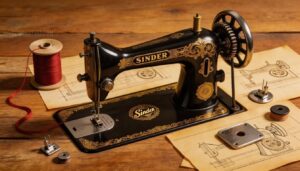
Singer machines have always had a personality all their own — built into every gear, needle, and badge. What sets them apart isn’t just history; it’s a deliberate design choices that show up across models old and new.
That combination of craft and character comes through clearly in Singer sewing machines built for modern sewists, where timeless construction meets the demands of today’s makers.
Here’s what makes a Singer unmistakably a Singer.
Slant-Needle and Straight-Needle Designs
Two design philosophies define Singer’s mechanical identity — and knowing the difference gives you real control over your results.
- Needle Bar Arc traces a subtle forward tilt in slant machines like the SlantOMatic, reducing deflection on thick seams
- Thread Path Angle shifts tension geometry, minimizing puckering on fine fabrics
- Needle Clamp Offset maintains precise alignment through the angled stroke
- Fabric Feed Control and Stitch Width Variation both improve with slant geometry near the throat plate
Drop-in Bobbin Systems
Where slant geometry shapes the needle’s path above the plate, the drop-in bobbin quietly commands control below it. Singer’s system lets you make a Quick Bobbin Change without dismantling anything — just lift, swap, done. The Clear View Window keeps Thread Tension Control visible mid-seam. A Metal Bobbin Case resists wear, and Standard Bobbin Compatibility means you’re never hunting for obscure parts.
| Feature | Benefit |
|---|---|
| Clear View Window | Monitor thread supply without stopping |
| Quick Bobbin Change | Swap colors mid-project in seconds |
| Metal Bobbin Case | Resists wear from repeated loading |
| Thread Tension Control | Consistent lower-thread feed every seam |
| Standard Bobbin Compatibility | Works across multiple Singer models |
This system provides a drop-in bobbin offers visual monitoring for better thread management.
Vibrating Shuttle and Rotary Hook Mechanisms
Below the plate, the real mechanical story unfolds.
The vibrating shuttle — found in legendary mechanical models like the Singer 221 and Featherweight 221 — moves in a controlled arc to catch and release thread with timing precision that defines stitch quality. Rotary hooks, by contrast, spin continuously, delivering quieter mechanism noise and broader speed capability.
Both reward disciplined maintenance practices rooted in the history of Singer sewing machines.
Portable and Lightweight Construction
That same engineering discipline extends to how Singer approached portability. The Singer 221 Featherweight — built on an aluminum alloy frame — weighs just eleven pounds, yet its compact bed design loses nothing in throat space or stability.
A brushless DC motor cuts power draw substantially, opening portable power options for field use. The integrated carry handle makes it genuinely grab-and-go.
Distinctive Aesthetic and Badge Elements
Look closely at any Singer machine, and the visual language speaks volumes. Badge Color Schemes — usually a red oval with gold lettering — paired with Emblem Placement on the face plate, signal authenticity at a glance.
Ornamental Engraving along lid edges, Limited Edition Badges, and Patina Dating help collectors verify production periods.
The cast iron Singer logo on an ornate wood cabinet captures retro aesthetics that modern machines like the Singer 160 Limited Edition still honor.
Iconic Singer Models With Standout Traits
Singer has built some genuinely legendary machines over the years — the kind that sewists still hunt down decades after they left the factory floor. Each model earned its reputation through something specific, whether it was weight, stitch quality, or a mechanical trick nobody else had thought of yet.
Here are the iconic Singer models that still stand out today.
Singer 221 Featherweight: Compact Portability
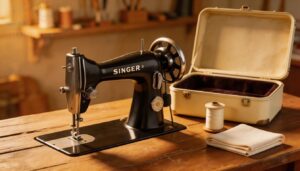
At just over 11 pounds, the Singer 221 Featherweight proves that serious craftsmanship doesn’t need to be heavy. Its aluminum alloy body fits snugly into a case with a quick-release lid and built-in carrying handle — ready to travel wherever you sew.
Non-slip feet keep it steady on any surface, and low-shank compatibility means your favorite presser feet work without compromise.
This antique sewing machine still earns its place.
Singer 301: Innovative Slant-Needle Design
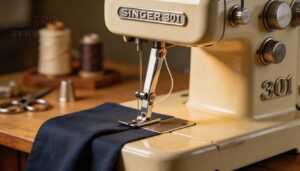
The Singer 301 changed how sewists interact with their machines. Its 9-degree slant needle brought the stitch point into direct view — no awkward craning, just clarity.
Three things that made it iconic:
- Needle Visibility improved precision across speeds
- Slant Shank Feet ensured perfect foot-to-fabric geometry
- Classroom Durability made it a staple in home economics programs
Its Legacy Influence still shapes the Singer model lineup today.
Singer 66: Revolutionary Bobbin System
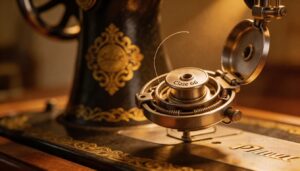
The Singer 66 didn’t just hold thread — it transformed how thread behaved. Its Front-Loading Bobbin and Class 66 Bobbins delivered high consistency through precise Bobbin Case Seating and Thread Path Optimization.
Bobbin Rotation Direction — counterclockwise — wasn’t arbitrary; it synchronized perfectly with the rotating hook.
For vintage Singer models and mechanical sewing machine enthusiasts, this system remains a standard in vintage sewing machine design.
Singer 201: Renowned Stitch Quality
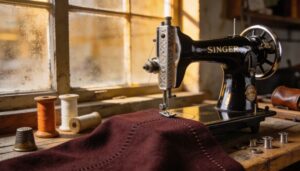
Few mechanical sewing machines earn a reputation that outlasts decades — the Singer Model 201 is one of them. Its rotary hook delivers Precision Stitch Timing and High-Speed Stitch Uniformity that vintage Singer models rarely matched:
- Consistent Tension Control across cotton, wool, and dense fabrics
- Even Stitch Formation with near-zero puckering
- Strong Motor Torque sustaining stitch length adjustment under pressure
That’s mastery built in metal.
Singer 401: Fully Automatic Stitch Selection
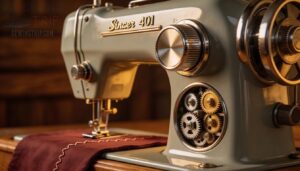
The Singer 401 puts automatic stitch control in your hands through a clever Cam Stack Mechanics system — no guesswork, just turn the Dual Dial Interface and let the machine do the thinking.
Automatic Zigzag Activation, Stitch Width Presets, and optional Cam Disk Extensions expand your creative range far beyond what most Vintage Singer models offered.
Among Singer sewing machines, the 401 remains a masterclass in Sewing machine features and innovations.
How Singer’s History Shaped Its Unique Machines
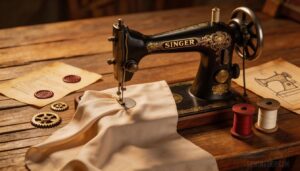
Singer didn’t stumble into greatness — it was built, decade by decade, through bold decisions that permanently changed how machines were designed and used. Every innovation the brand introduced left a fingerprint on the models that followed.
Singer’s greatness was never accidental — it was built deliberately, one bold innovation at a time
Here’s how those defining moments shaped what Singer became.
Isaac Merritt Singer and The Lockstitch Patent
When Isaac Merritt Singer filed his 1851 sewing machine patents, he wasn’t just staking a legal claim — he was rewriting what a lockstitch machine could do.
His straight needle, reciprocating shuttle, Friction Pad Tension system, and Adjustable Spool Arm delivered genuine Lockstitch Reliability at scale.
His Patent Licensing Strategy pooled competitors into cooperation, fueling Early Production Scale that launched the entire Singer machine model lineup we still recognize today.
Civil War Era Production and Expansion
That 1851 patent momentum didn’t stay in the courtroom — it hit the factory floor hard when war broke out.
The History of Singer sewing machines accelerates sharply here:
- Factory Output Surge — Northern plants grew production ~50% between 1861–1864
- Women Workforce Expansion — Women filled precision manufacturing roles by the tens of thousands
- Standardized Parts Initiative — Interchangeable components sped repairs across field and factory
- Rail Logistics Boost — Expanded rail contracts moved finished units faster than ever
Military Contract Influence reshaped Singer’s Sewing Machine Evolution permanently.
First Electric Domestic Machine Milestones
From wartime factories to the home parlor — that pivot happened faster than you’d think.
While early electric washing and first electric refrigerator appliances reshaped domestic life around 1901–1910, Singer answered with compact motor design, electrifying its mechanical models.
The vibrating shuttle, already proven in Turtleback and Fiddlebase machines, translated beautifully into electric-powered form — and the Singer 221 later perfected that quiet, controlled precision.
Evolution From Treadle to Computerized Models
From foot-powered rhythm to digital precision — Singer’s arc tells the whole story.
The Singer treadle sewing machine gave way to motor integration as electric drives replaced manual effort around the early 20th century. Beltless drive systems smoothed that power shift, while mechanical models evolved steadily toward computerized models with digital control and simple user interface — culminating in machines like the Singer Quantum Stylist 9960.
Singer Heavy-Duty Machines: Built Different
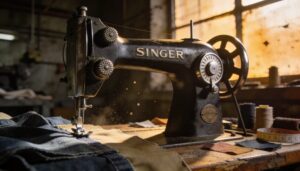
Singer’s heavy-duty machines aren’t just built to last — they’re engineered to handle the jobs that would stop a standard machine cold. If you’ve ever fought through thick denim or multiple layers of upholstery fabric, you already know why that difference matters.
Here’s what actually sets these machines apart from the rest of the lineup.
All-Metal Frames and Reinforced Components
Metal frame rigidity isn’t just a spec — it’s the backbone of everything the Heavy Duty series gets right. solid metal interiors and cast iron hardware keep reinforced feed dogs locked in position, delivering consistent stitch length even through dense layers.
With reduced needle deflection and stable high-speed sewing, machines like the Singer 4423 Heavy-Duty simply don’t flex under pressure.
High-Speed Motors for Thick Fabrics
What powers the Heavy Duty series through denim, canvas, and layered upholstery? The answer lies in torque optimization built into every drive mechanism.
Both the Singer 4423 HeavyDuty Sewing Machine and Singer 4432 HeavyDuty Sewing Machine sustain 1,100 stitches per minute without stalling. Direct-drive design, closed-loop control, and thermal management keep performance steady — the kind of precision industrial sewing machines demand under real workload pressure.
Reduced Vibration and Noise at Top Speeds
Running 1,100 stitches per minute creates real mechanical stress — but Singer’s Heavy-Duty design addresses it head‑on. Vibration Isolation Pads under the motor and Acoustic Foam Enclosures around critical housings absorb what lesser machines transmit straight to your hands.
Here’s keeps things quiet:
- Balanced Drive System counters lateral wobble
- Precision Needle Guides eliminate side‑play clicking
- Thermal Noise Dampening reduces heat‑expansion sounds
- Double-wall shell disrupts standing‑wave amplification
Extended Durability Through Steel Construction
Steel isn’t just a material choice — it’s a promise. Singer’s Heavy-Duty frames deliver Steel Frame Longevity through Hardened Steel Gears, Precision Steel Couplings, and Corrosion-resistant Finishes that hold up across decades of use.
Thermal Sprayed Coatings protect high-heat zones, while the cast iron base anchors mechanical sewing machines against distortion. For sewing machine durability across decades, nothing in the heavy-duty sewing machine alternatives overview comes close.
Top Singer Sewing Machines With Unique Features
Singer’s lineup covers a lot of ground, and a few models really stand out from the rest. Whether you’re threading your first project or pushing through heavy denim, the right machine makes all the difference.
Here are four Singer models worth knowing about.
1. Singer M3330 Easy Sewing Machine
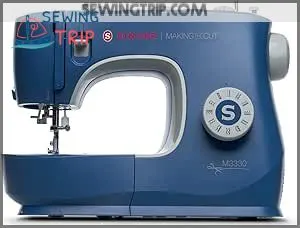
The M3330 isn’t just a beginner’s machine — it’s a capable workhorse dressed in a compact, portable frame. With 97 stitch applications drawn from 23 built-in stitches, you’ve got everything from basic utility work to decorative embellishment within reach.
The full metal frame keeps vibration low even at 800 stitches per minute, and the free arm makes sewing sleeves or cuffs genuinely easy.
Whether you’re patching denim or finishing delicate knits, this machine adapts without fuss.
| Best For | Beginners and hobbyists who want a reliable, versatile machine that can grow with their skills — from simple repairs to decorative projects. |
|---|---|
| Built-in Stitches | 23 stitches, 97 applications |
| Auto Needle Threader | Yes |
| Buttonhole Function | One-step |
| Frame Material | Metal and plastic |
| Included Accessories | $75+ worth |
| Weight | 11.8 lbs |
| Additional Features |
|
- 97 stitch applications give you a lot of variety without needing a second machine
- Free arm makes tricky spots like sleeves and cuffs way easier to handle
- Works on a wide range of fabrics, from sheer and knit all the way up to denim
- The automatic needle threader can be frustrating and takes some getting used to
- Front-loading bobbin is prone to jamming, especially for newer users
- No printed manual included — you’ll need to look everything up online
2. Singer 160 Anniversary Computerized Sewing Machine
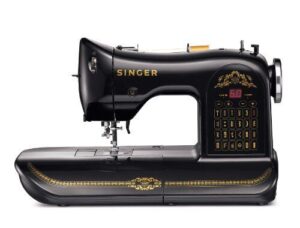
The Singer 160 Anniversary isn’t just a machine — it’s an achievement wearing its history on its sleeve. Built to mark 160 years of craft, it pairs a computerized OneTouch stitch system with 24 built-in stitches, LED display, and SwiftSmart threading that cuts setup time considerably.
The wider sewing surface accommodates quilts and larger projects with ease.
At 18.5 lb, it’s portable without feeling fragile.
If you want modern control wrapped in classic Singer identity, this limited edition delivers.
| Best For | Home sewers and beginners to intermediate crafters who want a reliable, easy-to-use machine with enough stitch variety to handle everyday garments, quilts, and decorative projects. |
|---|---|
| Built-in Stitches | 24 built-in stitches |
| Auto Needle Threader | Yes, SwiftSmart system |
| Buttonhole Function | One-step automatic |
| Frame Material | Plastic housing, stainless-steel internals |
| Included Accessories | Bobbin case, basic tools |
| Weight | 18.5 lbs |
| Additional Features |
|
- SwiftSmart threading and OneTouch stitch selection make setup and changes genuinely fast and simple.
- 24 built-in stitches cover a solid range — from basic seams to stretch fabrics and decorative work.
- Quiet, compact, and portable enough for home studios or shared spaces without sacrificing storage room.
- The plastic exterior scratches easily and the small foot pedal is hard to keep steady during long sessions.
- The automatic needle-up can overshoot slightly after you lift your foot, which messes with seam allowance.
- Struggles with heavy fabrics like thick canvas and can jam — not the right pick for heavy-duty work.
3. Singer Heavy Duty 4432 Sewing Machine
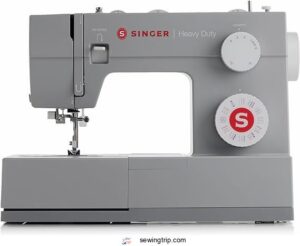
Where the 160 Anniversary leans into elegance, the Heavy Duty 4432 is built for ambition.
Its all-metal frame and 1,100-stitch-per-minute motor push through denim, canvas, and upholstery without flinching — that’s 60% more power than a standard machine.
You get 110 stitch applications, a top drop-in bobbin with a clear cover, automatic needle threader, and adjustable presser foot pressure.
When your projects demand raw capability over refinement, this machine doesn’t ask permission.
| Best For | Sewers who regularly work with heavy fabrics like denim, canvas, or upholstery and want a machine that can keep up without constant babysitting. |
|---|---|
| Built-in Stitches | 110 stitch patterns |
| Auto Needle Threader | Yes |
| Buttonhole Function | One-step |
| Frame Material | Full metal steel frame |
| Included Accessories | Feet, needles, bobbins, tools, dust cover |
| Weight | 14.6 lbs |
| Additional Features |
|
- All-metal frame and 1,100 spm motor power through thick materials that would stall a standard machine
- 110 built-in stitches plus handy features like auto needle threading and a clear drop-in bobbin make it versatile and easy to manage
- Adjustable presser foot pressure means it handles everything from lightweight cotton to heavy canvas without a separate machine
- Manual isn’t in the box — you’ll need to download it, which is a bit of a hassle right out of the gate
- Skipping regular oiling can cause the reverse-stitch mechanism to jam, so maintenance isn’t optional
- The fixed LED light works fine up close but might leave you squinting on bigger projects without extra lighting nearby
4. Singer Heavy Duty 4423 Sewing Machine
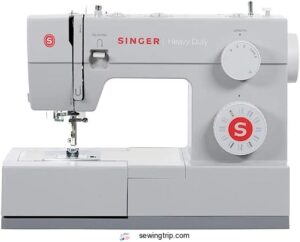
Think of the 4423 as the 4432’s more approachable sibling — same heavy-duty DNA, slightly leaner feature set, but no less capable where it counts.
You get 23 built-in stitches, a stainless steel bedplate, and that same 1,100-stitch-per-minute motor that chews through denim like it’s tissue paper. The all-metal frame keeps things rock-solid at top speed.
For sewists who want serious horsepower without paying for extras they’ll never use, this one earns its place on the table.
| Best For | Beginners and home sewers who want a reliable, fast machine for everyday projects like mending, denim, and home decor without spending a lot. |
|---|---|
| Built-in Stitches | 23 stitches, 97 applications |
| Auto Needle Threader | Yes |
| Buttonhole Function | Yes |
| Frame Material | Heavy-duty metal frame |
| Included Accessories | Presser feet, needles, bobbins |
| Weight | 14.6 lbs |
| Additional Features |
|
- Punches through thick fabrics and multiple layers thanks to a 1,100 SPM motor and solid metal frame
- 23 stitches cover everything from basic seams to decorative work — plenty for most sewers
- Automatic needle threader and free tutorial app make it genuinely beginner-friendly
- The manual lacks detail, which can leave you hunting for answers on your own
- Light is pretty dim — you’ll probably want a separate lamp nearby
- Some users ran into tension and bobbin winding issues, which can be frustrating mid-project
Singer’s Computerized Models and Modern Innovations
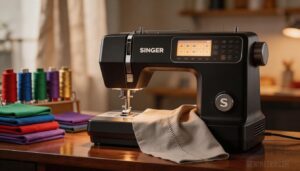
Singer’s computerized models have come a long way from the clunky treadle days, and today’s lineup is genuinely impressive.
Whether you’re a weekend crafter or a serious sewist, the modern features are built to make your work faster and smarter.
Here’s what sets Singer’s computerized machines apart.
LCD Screens and Digital Stitch Selection
When you step up to a modern Singer computerized model, the LCD screen does the thinking with you. Real-time Parameter Updates reflect every adjustment instantly, while On-screen Stitch Preview confirms your selection before a single stitch drops.
LCD Maintenance Alerts, User Profile Settings, and OneTouch stitch selection keep your workflow fluid.
Quickview stitch setting and computerised sewing functionality put genuine control exactly where it belongs — your fingertips.
Built-in Stitch Libraries and Decorative Patterns
Beyond the LCD interface, your creative toolkit really opens up.
Modern Singer computerized machines pack over 100 preloaded stitches — including 24 built-in utility and decorative stitches — organized through a Color-Coded Stitch Display for instant navigation.
Pattern Editing Tools let you adjust Stitch Density Control and Stitch width adjustment on the fly.
USB Pattern Expansion, User-Defined Motifs, OneTouch stitch selection, and 2 automatic one-step buttonholes round out the package.
Automatic Needle Threading and Thread Cutting
When setup eats your momentum, the SwiftSmart threading system takes back control. Singer’s automatic needle threader uses a precision hook to guide thread through the eye instantly — but watch for Hook Wear Indicators, because a bent hook quietly kills accuracy.
The on board thread cutter pairs with Thread Tension Sensors and Needle Size Compatibility checks, while a simple Power Cycle Reset clears most jams before Cutter Blade Replacement becomes necessary.
Touchscreen Interfaces on Mid-Range Models
Mid-range Singer models now put a capacitive panel design right at your fingertips — color-coded menus, live stitch previews, and a quick-access toolbar that learns your favorites.
Stylus navigation keeps precision sharp for detailed pattern edits, while screen brightness settings adapt to your workspace.
Run a firmware update process when prompted, and touchscreen calibration keeps every tap responsive.
Modern sewing features, genuinely within reach.
Vintage Singer Machines Collectors Still Seek Today
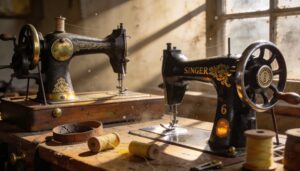
Some Singer machines have outlasted trends, workshops, and entire generations of sewists — and collectors are still hunting them down. Knowing what drives their value can make the difference between a smart find and an overpriced impulse buy.
Here’s what you actually need to know.
What Makes Certain Models Rare and Valuable
Not every vintage Singer machine is created equal — and serious collectors know exactly what separates a $150 shelf piece from a $1,500 trophy.
Rarity comes down to a few decisive factors:
- Limited Edition Badges and Factory Stamps on the bedplate signal short production runs.
- Rare Stitch Plates, original bobbins, and complete accessory sets boost perceived completeness.
- Provenance Documentation — think Original Sales Receipts or factory letters — can dramatically shift antique Singer sewing machine pricing.
Condition and cabinet originality seal the deal.
Serial Number Identification and Dating
Your Singer’s serial number is its birth certificate. Factory Prefixes encode the country of origin, while Date Plate Mapping pinpoints the production year and quarter.
Use a Cross-Reference Database for accurate Sewing machine serial number identification — Serial Code Decoding reveals which vintage Singer sewing machine models rolled off which line, and when.
A Serial Location Guide helps you find stamps on the front bed, handwheel hub, or needle plate.
How Original Wood Cabinets Affect Value
An original wood cabinet isn’t just decoration — it’s a major value driver.
Solid oak or walnut cases with authentic hardware, period-correct decals, and Cabinet Provenance documentation can push prices considerably higher than bare machines.
Original Finish Impact is real: moisture staining drops value up to 20%.
Restoration Documentation and Hardware Authenticity matter too — collectors treating these as serious collector items reward originality every time.
Where to Find Authentic Vintage Singer Models
Knowing where to look separates serious collectors from casual browsers. Specialized vintage shops and restoration expert referrals remain your most reliable starting points, since reputable restorers document every part and cross‑check Singer sewing machine serial numbers for authenticity.
- Auction house catalogs with provenance photos
- Serial number databases for model dating
- Online collector forums sharing rare finds
- Online auction platforms filtering by production year
Fabric Versatility Across Singer Machine Types
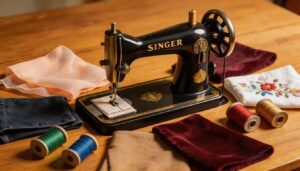
Not every Singer machine processes every fabric the same way, and knowing the difference can save you a ruined project.
Each model type has its sweet spot, whether you’re working with airy cottons or heavy upholstery.
Here’s a look at how Singer machines stack up across the most common fabric types.
Natural Fibers: Cotton, Linen, and Wool
Natural fibers reward you with predictable, satisfying results — and Singer machines handle them beautifully.
Cotton breathability, linen coolness, and wool insulation each demand slightly different approaches to thread tension control and stitch width adjustment.
| Fiber | Key Strength | Moisture Management |
|---|---|---|
| Cotton | Fiber strength when dry | Absorbs 8% of weight |
| Linen | Dimensional stability | Dries quickly |
| Wool | Natural insulation | Absorbs 30% of weight |
The Singer 160’s fabric compatibility with these naturals — including decorative stitch options — makes it an adaptable workhorse.
Delicate Fabrics: Silk, Satin, and Velvet
Silk, satin, and velvet test your machine’s precision — and reward you when you get it right. The Singer 160 Limited Edition manages these beautifully with proper setup:
- Needle Selection: Microtex 60/8–80/12 for silk and satin; 80/12–90/14 for velvet
- Thread Choice: Fine polyester reduces bulk on lightweight seams
- Presser Foot: Walking or roller foot prevents pile shift and surface drag
- Stitch Length: 2.0–2.5mm straight stitch protects delicate weaves
- Stabilizer Techniques: Tissue paper beneath silk prevents feed-dog pull
Thread tension control and decorative stitch options stay reliable across all three fabrics.
Synthetic and Upholstery Fabric Compatibility
Move from delicate fabrics to synthetics and upholstery, and the rules shift noticeably.
For the Singer 160 Limited Edition, Needle Selection matters — use a 90/14 or 100/16 for medium-weight blends. Stitch Length, between 2.5–4.0 mm, balances seam strength without puckering.
Pair Nonstick Teflon Presser Foot Types with proper Fabric Stabilization, and your sewing machine fabric compatibility expands considerably across polyester, rayon, and upholstery textiles.
Fabrics to Avoid on Specific Singer Models
Not every fabric belongs in your Singer’s path. Lightweight Satin snags easily, and Slant-Needle Silk can skip stitches on older feed dog designs. Portable Denim strains low-torque motors, while Retro Burlap grinds against feed dogs and accelerates wear. Domestic Leather demands torque most domestic machines can’t deliver.
For Fabric suitability for Singer 160 Limited Edition, avoid:
- Thick leather and faux leather — gums up the bobbin area
- Heavy denim layers — deflect needles and breaks thread
- Coarse burlap — wears guides and causes feeding inconsistency
Choosing The Right Singer Model for Your Needs
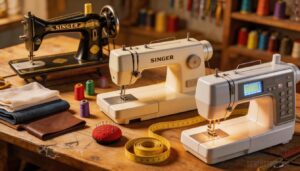
Picking the right Singer isn’t just about budget — it’s about matching the machine to how you actually sew. Whether you’re threading your first bobbin or tackling upholstery on a Sunday afternoon, there’s a model built for your pace.
what to think about before you decide.
Key Differences Between Vintage and Modern Features
Vintage and modern Singer machines speak entirely different languages. One runs on steel gears and instinct; the other on electronic stitch control and software logic.
| Feature | Vintage Singer | Modern Singer |
|---|---|---|
| Stitch control | Manual dial | Electronic stitch control |
| Construction | All-metal frame | Reinforced composite |
| Fabric sensing | None | Material compatibility sensors |
| Updates | Not applicable | Wireless firmware updates |
| Power | Low motor power rating | High motor power rating |
Best Options for Beginners Vs. Experienced Sewists
Whether you’re threading your first needle or tackling thick denim layers, Singer has a machine built for your level.
Beginners benefit from Stitch Simplicity, drop-in bobbins, and Adjustable Speed controls that build confidence without overwhelm.
Experienced sewists will want Enhanced Foot Options, higher torque motors, and programmable memory stitches.
Learning Resources and Beginner Pricing make entry easy — while the Singer 160 Limited Edition rewards those ready to master every seam.
Quilting, Heavy-Duty, and Specialized Comparisons
Picking the right Singer comes down to what you’re actually making.
- Walking Foot Performance keeps quilt layers feeding evenly — no shifting, no puckering.
- Free Motion Precision demands drop-feed capability and low presser foot pressure.
- Motor Torque and Frame Rigidity separate the Singer Heavy Duty 4423 from lighter alternatives.
- Bobbin Capacity matters on long quilting runs — fewer interruptions, cleaner results.
Evaluating Durability and Long-Term Performance
A Singer built right doesn’t just last — it compounds value over time.
Frame Rigidity keeps your needle aligned through thousands of passes, while Motor Heat Tolerance and Gear Wear determine how hard you can push it.
Here’s how key durability factors compare:
| Factor | Vintage Models | Modern Heavy-Duty |
|---|---|---|
| Component Fatigue | Low (all-metal) | Moderate |
| Maintenance Frequency | Higher | Lower |
| Sewing Machine Parts | Widely available | Standardized |
Maintaining Your Singer Machine for Lasting Performance
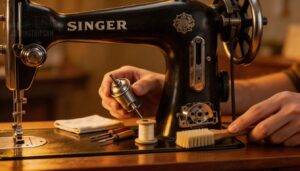
A Singer machine that’s well cared for can outlast just about anything else in your sewing room. The good news is that keeping it in top shape doesn’t require a lot of time or guesswork — just a few consistent habits.
Here’s what actually matters for long-term maintenance.
Cleaning Feed Dogs and The Bobbin Area
Think of your feed dogs and bobbin area as the engine room — neglect them, and everything above starts to suffer. Unplug first, always.
Use a soft nylon brush for lint removal techniques around the feed dogs, then vacuum safely with a narrow nozzle.
A lint-free cloth with isopropyl alcohol removes embedded oils. Complete your bobbin case inspection by checking springs and the race for corrosion.
Oiling Intervals and Lubrication Best Practices
Oil is the quiet guardian of your machine’s longevity — skip it, and you’ll hear the consequences.
- Follow a Lubrication Schedule every 8–12 hours of use
- Use only lightweight Oil Types made for sewing machine maintenance
- Apply a needle-tip drop per point; wipe excess immediately
- Keep a Maintenance Log to track your oil application intervals
Your sewing machine repair costs drop dramatically with consistent care.
Motor and Mechanical Component Upkeep
Beyond lubrication, your machine’s mechanical heart needs regular attention.
Belt Tension Checks keep needle timing sharp — even a slight slip costs you precision. Schedule Gear Alignment Inspection every 10,000 cycles, and don’t overlook Pulley Alignment Adjustment — proper alignment cuts belt wear by 40 percent.
Monitor Brush Wear; carbon brushes on synchronous motors last six to twelve months under daily use.
Keep Armature Shaft Runout under 0.05mm for consistent stitches.
Parts Availability and Aftermarket Accessories
Once your mechanical components are dialed in, keeping them running depends on smart sourcing. Universal Foot Adapters, Aftermarket Bobbin Sets, and OEM Replacement Motors are all accessible through Online Parts Marketplaces — no hunting required.
LED Lighting Kits brighten vintage setups instantly.
Whether you’re deep into vintage sewing machine restoration or maintaining a modern model, replacement needles, belts, and bobbin cases usually cost under $20 each.
Frequently Asked Questions (FAQs)
What is the rarest Singer sewing machine?
The rarest antique Singer sewing machine is perhaps the 1851 Patent Model 8, followed closely by the Turtleback Pocket and the Crinkle Finish 221 — each carrying museum provenance and limited production serial documentation that makes them notable finds.
What is the most sought after sewing machine?
Singer Featherweight 221 reigns unparalleled.
Its 11-pound aluminum frame, whisper-quiet operation, and flawless stitch quality make it the crown jewel of vintage Singer sewing machine collecting, consistently commanding top auction premiums.
What is the most sought after Singer sewing machine?
Singer 221 Featherweight is the undisputed collector’s item.
Its 11-pound frame, perfect stitch quality, and rich provenance documentation make it a vintage Singer machine value standard that online marketplace trends consistently confirm.
What’s the best vintage Singer sewing machine?
The Singer 221 Featherweight consistently tops collector rankings. Weighing just 11 pounds, it’s portable, precise, and holds strong investment potential — with vintage Singer machine value climbing 5–7% annually.
What is the best Singer model?
There’s no single "best" Singer model — it depends on your goals. The Singer 160 Limited Edition suits mid-range sewists, while heavy-duty options win for longevity. Match the machine to your project.
What makes a Singer sewing machine valuable?
Rarity, condition, and provenance documentation drive value most. Original accessories, limited production runs, and historical significance push prices higher.
Collectors prize complete sets with verified serial numbers and original wood cabinets.
How do Singer machines handle unconventional or synthetic fabrics?
Think of your machine as a skilled translator — it speaks the language of slippery synthetics through adjustable presser pressure, feed dog height, stretch stitch options, and tension sensors that keep every seam honest.
What maintenance practices are specific to unique Singer models?
Each model has its own quirks.
Check needle angle alignment, bobbin spring tension, and shuttle race polishing regularly. Don’t skip pedal cord inspection or dust cover cleaning — small steps protect big investments.
Can Singer machines be modified for left-handed users?
Yes — Singer sewing machines can be modified for left‑handed users through Control Reconfiguration, Pedal Extension Kits, and Thread Path Reversal, with Ergonomic Seating adjustments and authorized service centers offering individualized setups for comfortable, confident left‑handed sewing.
Are there Singer machines designed for sewing leather?
Singer’s heavy-duty models absolutely handle leather.
With the right Leather Needle Options, Walking Foot Compatibility, and Specialized Leather Thread, machines like the 4423 tackle hides confidently — built tough through Sewing Machine Durability Across Decades.
Conclusion
Imagine your Singer sewing machine as a trusted companion, humming along as you create. With its rich heritage and modern features, this machine has earned its place in the hearts of sewists.
A Singer sewing machine with unique characteristics offers more than just stitches—it’s a gateway to limitless creativity.
By understanding its history, features, and capabilities, you’ll open a world of possibilities, from quilting to fashion design, and make your mark with precision and style, always.
- https://www.singer.com/products/singer-heavy-duty-4432-sewing-machine
- https://europe.singer.com/products/singer-heavy-duty-4432-sewing-machine-de
- https://www.singermachines.co.uk/sewingmachines/heavy-duty-range/singer-black-heavy-duty.html
- https://www.sewingpartsonline.com/products/singer-heavy-duty-4432-mechanical-sewing-machine
- https://en.matri.eu/sewing-machine-singer-heavy-duty-4432