This site is supported by our readers. We may earn a commission, at no cost to you, if you purchase through links.
Your domestic machine just choked on a wallet panel. The needle bent, thread snapped, and that premium leather you splurged on now has a row of uneven holes punched through it. Standard sewing machines weren’t built for leather’s density—they buckle under the friction, skip stitches on thick seams, and turn what should be clean construction into a frustrating guessing game.
The gap between hobbyist gear and leather-ready equipment isn’t subtle. Machines designed for leather work deliver the motor torque, specialized feed mechanisms, and needle penetration force that transform resistant hide into professional finished goods. Whether you’re stitching belts, bags, or upholstery, the right machine doesn’t just make the job easier—it makes it possible.
Table Of Contents
Key Takeaways
- Standard home sewing machines fail on leather because they lack the motor torque (550-750 watts vs 60-100 watts), specialized feed mechanisms, and needle penetration force needed to handle material density and friction without breaking needles or skipping stitches.
- The right leather machine features matter more than brand names—prioritize adjustable presser foot pressure, compound or walking feed systems, 18-24 gauge cutting-point needles, and stitch length control between 3-5mm to match your hide thickness.
- Heavy-duty consumer machines like the Singer 4423 handle light-to-medium leather projects at home, but continuous production work or saddle-grade thickness demands true industrial models with metal frames, servo motors, and 3,000+ stitches per minute.
- Success with leather sewing depends on matching needle size to material weight (70/10 for thin watch straps up to 230/26 for heavy saddlery), using bonded nylon thread sized 138-277, and testing tension settings on scrap before committing your hide.
Why Use a Leather Sewing Machine
Leather isn’t your average fabric—it fights back. Your trusty home machine might handle cotton like a champ, but throw thick leather at it and you’re looking at broken needles, skipped stitches, and a motor that sounds like it’s begging for mercy.
Leather fights back against home sewing machines, breaking needles and straining motors built for softer fabrics
Here’s why a specialized leather sewing machine isn’t just nice to have—it’s the difference between frustration and actually finishing your project.
Challenges of Sewing Leather
Why does leather fight back when you try to sew it? The material’s inherent properties create real headaches:
- Leather thickness above 0.64 mm dramatically increases flexural rigidity, making the hide resist bending under your needle.
- Needle penetration struggles with dense substrates, causing deflection and skipped stitches.
- Friction issues make leather stick to standard presser feet, dragging and bunching.
- Thread breakage spikes when tension meets thick seams.
- Material rigidity overloads domestic machines quickly.
To achieve professional results, understanding leather sewing tips is essential for working with this challenging material.
Benefits of Specialized Machines
Specialized leather sewing machines deliver measurable advantages you won’t get from standard models. Industrial sewing machines with heavy-duty motors operate at 3,000 to 5,000 stitches per minute, slashing production time by over 50%.
You’ll see improved accuracy through consistent tension control, which minimizes skipped stitches and rework. Enhanced durability means tackling multiple thick layers without stalling, while ergonomic designs reduce fatigue during long sessions.
Better results become your baseline. The key to achieving these benefits lies in using the right leather sewing machine.
Differences From Standard Sewing Machines
Understanding what sets these machines apart helps you invest wisely. Heavy-duty sewing machines built for leather differ dramatically from standard models:
- Motor Comparison: Industrial sewing machines pack 550-750 watt servo motors versus the anemic 60-100 watts in domestic units, delivering the torque leather demands.
- Feed Systems: Compound or triple feed mechanisms keep thick hides moving smoothly, unlike single bottom-feed standard machines.
- Needle Design: Size 18-24 cutting-point needles slice through dense material, not the size 9-16 universal tips.
- Industrial Tables: Reinforced surfaces support 30+ kilogram machine heads through continuous high-speed operation.
Key Features for Leather Sewing Machines
Not every machine can wrestle thick leather into submission. The difference between frustration and perfect stitches comes down to a handful of critical features that separate hobby machines from serious workhorses.
Let’s break down what you actually need when you’re ready to command leather instead of fighting it.
Motor Power and Type
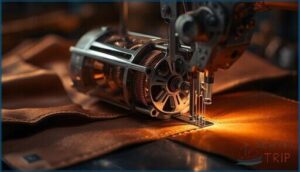
Think of your motor as the heart of any heavy-duty sewing machine—underpowered, and you’ll stall mid-project. Industrial sewing machines rely on servo systems rated between 550 and 750 watts, delivering high torque control for thick hides.
Modern servo motors cut power consumption by 60–80% while maintaining speed regulation from 50 to 3000 RPM, giving you precision and muscle when it matters most.
Needle and Thread Compatibility
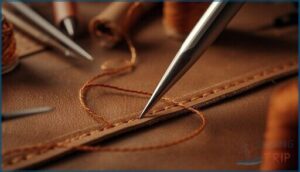
The wrong needle tears through your project like a serrated knife through silk—ruining hours of work in seconds. Leather needles feature cutting tips (diamond, triangular, or twist-point) designed to slice fibers cleanly, not push through them.
Match your setup with precision:
- 90/14 needles handle garment-weight leather (2–3 oz) without puncturing oversized holes
- 110/18 or larger sizes tackle belts and bags (3–6 oz) where standard needles snap
- Bonded nylon thread (sizes 92–207) delivers abrasion resistance and tensile strength for daily wear
- Polyester alternatives resist UV degradation on outdoor gear and automotive upholstery
- Thread-to-needle ratio (eye 40% larger than thread diameter) prevents friction breakage and skipped stitches
SCHMETZ leather machine needles and JANYUN waxed threads simplify compatibility, while proper thread tension ensures your stitch quality matches professional standards.
Presser Foot and Feed Mechanism
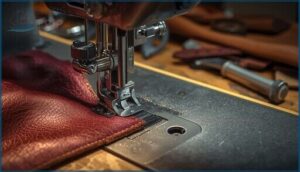
Your presser foot and feed mechanism determine whether leather glides smoothly or bunches into frustration. Standard drop-feed systems slip on thick hides—compound feed walking foot machines tackle up to 12.7 mm (1/2 inch) by synchronizing needle and presser foot movement. Gear-driven roller systems handle 7/16 inch thickness with consistent traction across curved work.
Adjust presser foot pressure between 4 N and 25 N to match your leather’s density without crushing surface grain.
Stitch Length and Type Options
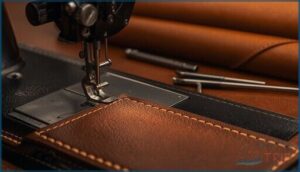
Straight lockstitch dominates leather sewing machines because it delivers maximum seam strength without bulk. Set your stitch length between 3.0 and 4.0 mm for general work—about 7 to 9 stitches per inch—balancing thread tension and stitch density to prevent perforation tear-out.
Push to 5.0 or 6.0 mm for bold topstitching on thick hides, where longer runs handle heavy-duty sewing techniques without compromising structural integrity.
Adjustable Presser Foot Pressure
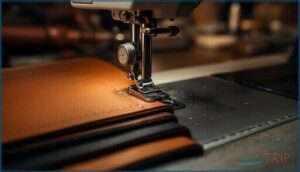
Your sewing machine accessories for leather become useless if you can’t dial in foot adjustment. Pressure control transforms how material moves under the presser foot—too light and layers wander; too heavy and you’ll drag and pucker every seam.
Here’s what proper machine calibration does for leather feeding:
- Prevents floating thick hides that skip stitches
- Stops compression that shortens stitch quality
- Balances force across strap intersections
- Reduces need for constant walking foot tweaks
- Lets your heavy duty sewing machine handle bulky transitions
Test every setting on scrap before committing your hide.
Top 5 Sewing Machines for Leather
You’ve learned what makes a leather sewing machine tick—now let’s talk real machines. I’ve handpicked five powerhouses that’ll handle everything from thin garment leather to thick upholstery hides without breaking a sweat.
Each one brings something different to your workbench, so you can match the machine to your ambitions.
1. Singer Heavy Duty Sewing Machine
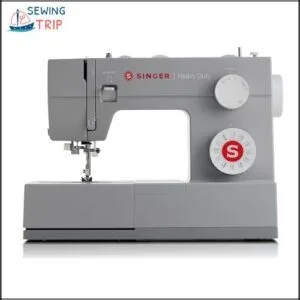
You’ll find the Singer Heavy Duty 4423 pushes through thick leather at 1,100 stitches per minute—double what most home machines manage. This leather sewing machine delivers 60% more motor power than standard models, handling multiple layers of hide without breaking stride.
Its metal frame kills vibration dead, while 23 built-in stitches and adjustable presser foot pressure give you serious control over heavy-duty sewing machine work. Singer Heavy Duty models like the 4432 share this beast-mode architecture.
For machine comparison and sewing machine reviews, it’s a solid entry point into leather projects.
Best For: Home sewers and hobbyists tackling leather bags, denim projects, and heavy upholstery who need serious power without jumping to an industrial machine.
- Sews at 1,100 stitches per minute with 60% more motor power than standard machines, making it fast enough to punch through multiple layers of leather, canvas, and thick denim without stalling
- Metal frame and stainless steel bedplate provide rock-solid stability during high-speed work, reducing vibration and maintaining consistent stitch quality on heavy fabrics
- Adjustable presser foot pressure and 23 built-in stitches give you the flexibility to handle everything from soft leather to rigid vinyl with proper needle and thread setups
- Some users report durability issues and inconsistent performance over time, suggesting it may not hold up to continuous heavy-duty use despite its claims
- Not a true industrial machine—while it handles medium to medium-heavy leather well, it’s not built for factory-level production or the thickest hides
- Mixed reviews on threading ease and bobbin tension, with some customers experiencing frustrating setup problems that cut into actual sewing time
2. Singer Quantum Stylist Sewing Machine
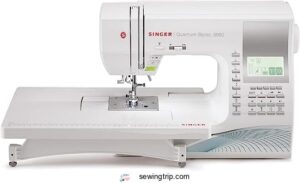
You want creative flexibility with your leather stitching? The Singer 9960 Quantum Stylist delivers 600 built-in stitches and 850 stitches per minute—serious sewing speed for decorative topwork on leather accents.
This leather sewing machine manages faux leather and medium-weight hides with DC motor power that auto-adjusts through thick layers. Machine comparison shows it’s not industrial-grade like Singer Heavy Duty models, but for garment trims and bag projects, its walking foot, 25 needle spots, and LCD control nail precision.
Heavy duty sewing machine reviews confirm it’s built for mixed fabric handling, not continuous production leather work.
Best For: Sewers who want to add leather accents and decorative stitching to garments, bags, and craft projects without investing in an industrial machine.
- 600 built-in stitches and 850 stitches per minute give you tons of creative options for decorative leather topstitching and personalized details
- DC motor automatically adjusts power through thick layers, keeping speed consistent when you’re working with faux leather or layered materials
- Walking foot and 25 needle positions help you nail precise edge stitching and seam placement on leather—important since needle holes are permanent
- Not built for heavy-duty or continuous leather production—it’s a home machine that handles light to medium leather, not thick saddle leather
- Automatic presser foot pressure means you can’t manually fine-tune tension like you could on industrial models
- Some users struggle with the automatic needle threader at first and report occasional bobbin winder or thread tension issues
3. Brother Heavy Duty Sewing Machine
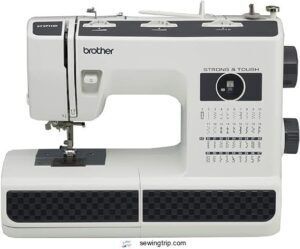
Looking for budget-smart leather sewing machine performance? Brother’s ST371HD pushes 800 stitches per minute through denim and light leather with its metal needle plate and heavyweight needles—your gateway to leather projects without the industrial price tag.
Machine comparison reveals 37 stitches and a free arm for bag construction, though heavy-duty features don’t match true industrial torque. Brother accessories like roller feet improve sewing techniques on supple hides.
The ST150HDH variant adds 50 stitches at 850 SPM, but both Brother models excel at garment leather, not saddle-grade thickness.
Best For: Beginners and hobbyists who want to tackle light leather projects like bags and garment accessories without spending on industrial equipment.
- Metal needle plate and heavyweight needles handle leather, denim, and canvas with less skipping than plastic-frame machines
- Fast 800–850 stitches per minute with adjustable stitch length up to 5mm for cleaner leather seams
- Free arm and multiple presser feet make it easier to sew tubular leather goods and add zippers
- Not built for thick saddle leather or continuous heavy-duty commercial work—best for garment-weight hides
- Some users report threading issues and skipped stitches on challenging fabrics despite the “heavy-duty” label
- No carrying case included, and customer support can be hit-or-miss according to reviews
4. Janome Heavy Duty Sewing Machine
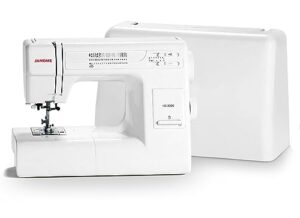
Janome’s HD3000 delivers 860 stitches per minute through leather with its aluminum body and 7-piece feed dogs—real muscle for wallet and strap projects. Machine comparison shows this heavy duty sewing machine outpaces budget models with 6.5mm stitch width and extra-high presser foot lift that clears thick seams.
Janome features like adjustable pressure and snap-on feet adapt your sewing techniques to different hide weights. The HD1000 offers 14 stitches at lower cost, but both Janome HD3000 and entry models handle leather projects that would choke standard machines—just pair them with proper leather needles.
Best For: Crafters and home sewers who need a reliable workhorse for leather accessories, bags, and thick fabrics without jumping to industrial equipment.
- Aluminum frame and 0.75 amp motor power through multiple layers of leather and dense materials that stall lighter machines
- Extra-high presser foot lift and 7-piece feed dogs (HD3000) handle thick seams and sticky materials smoothly
- Manual controls for stitch length, tension, and presser foot pressure let you dial in settings for different leather weights
- Short power and foot pedal cords limit workspace flexibility for some users
- No speed control means you’re relying entirely on foot pedal finesse when working delicate leather
- Reverse stitch function and feed dog drop instructions leave some users confused during setup
5. Singer Sewing And Quilting Machine
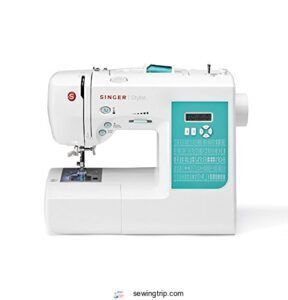
Singer’s 9960 Quantum Stylist brings 600 stitches and 850-per-minute sewing speed to your bench—overkill for belts, perfect when leather stitching meets quilting features on mixed-material bags.
Sewing machine reviews for leather flag this computerized model for light hides and vinyl, not the saddle-grade work you’d tackle with Singer Heavy Duty models like the Singer 4423 or Singer 4432.
Its walking foot and thread tension controls handle layered projects, but think leather accents on fabric rather than full gear construction. Machine durability here favors versatility over raw piercing power.
Best For: Sewists who want a versatile machine for quilting and light leather accents on bags or mixed-material projects, not for heavy-duty leather work like saddle-making or belt production.
- 600 built-in stitches and 850 stitches per minute give you speed and variety for decorative work on fabric-leather combinations
- Walking foot included handles slippery vinyl and light leather layers without the shifting you’d get from standard presser feet
- Heavy-duty metal frame adds stability when sewing through denim, canvas, and thin leather compared to plastic-body machines
- Limited to 1–2 mm leather thickness—thicker hides cause skipped stitches and motor strain unlike true industrial leather machines
- Domestic motor (around 90–120W) can overheat during continuous leather sewing, not built for production work
- Designed primarily as a quilting machine, so piercing power and durability fall short for frequent or heavy leather projects
How to Choose The Best Leather Sewing Machine
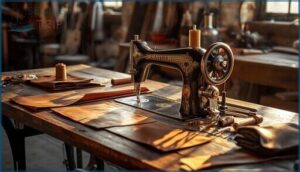
You’ve seen the best machines for leather, but picking the right one comes down to what you actually need from it. Not all leather sewing machines are built the same—some handle occasional projects while others are workhorses designed for daily use.
Let’s break down the factors that’ll help you match a machine to your specific work and budget.
Heavy-duty Vs. Industrial Models
Heavy-duty machines handle leather well enough for short sessions, but they’re not built for the long haul. Industrial sewing machines bring 400 to 750 watts of motor power compared to the 70 to 120 watts you’ll find in heavy-duty models—that’s real penetration through thick leather.
They’ll run all day without overheating, hit 3,000 stitches per minute, and servo motors deliver energy efficiency your power bill will thank you for.
Build Quality and Durability
Metal frames are essential when you’re pushing thick hides through a machine day after day. Plastic-framed units warp after just a few years of leather work, while cast-metal frames hold their geometry for decades. Here’s what separates machines that last from those that don’t:
- Frame materials: All-metal internal frames need 37% fewer repairs over ten years
- Metal gears: Steel gears tolerate exponentially more cycles than plastic teeth
- Structural integrity: Cast-iron frames resist flex under needle penetration force
- Wear resistance: Metal components maintain tight tolerances in oil-rich environments
- Component lifespan: Purpose-built leather sewing machines operate for decades with proper maintenance
Heavy-duty sewing machines with solid construction weigh 2–3 kg more—that mass translates directly into vibration control and stitch consistency.
Speed and Reliability
Reliability in leather work starts with stitch speed control that you can dial down to sub-1-stitch-per-second for corners—essential because every needle hole in leather is permanent.
Servo motor efficiency delivers around 8.6 newton-meters of torque, powering through multiple layers without stalling.
Heavy-duty motors calibrated from 50 to 3,000 stitches per minute give you error reduction during topstitching and speed when you need throughput on long seams.
Warranty and Support
When leather jams at midnight, warranty terms matter—look for 25-year head coverage and at least three years on motors. Support services vary wildly: some brands ship replacement units within weeks, others leave you hunting distant repair options. Check customer feedback on responsiveness before buying.
Heavy duty sewing machines demand service contracts that cover industrial-grade use, not just household stitching.
Essential Tips for Sewing Leather
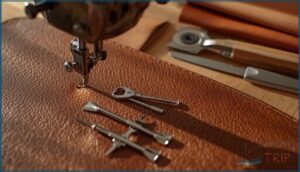
You’ve got your leather sewing machine picked out and ready to go—now it’s time to make sure you’re actually set up for success.
Working with leather isn’t quite the same as stitching cotton or polyester, and a few smart adjustments can mean the difference between professional results and a frustrating mess.
Let’s cover the essential moves that’ll keep your projects running smooth and your stitches looking sharp.
Selecting The Right Needle and Thread
Getting your needle selection and thread compatibility right is the difference between clean work and a frustrating mess. Match needle size to leather thickness—watch straps need 70/10 with Tex 16 thread, while heavy saddlery demands 230/26 with Tex 270.
Here’s what matters:
- Use SCHMETZ leather machine needles with cutting points for tough fibers
- Pick polyester thread materials for UV resistance on outdoor goods
- Test needle care and stitch quality on scrap before committing
Adjusting Stitch Length and Tension
Think of tension and length as the pulse and stride of your machine—when they’re off, every seam screams it. Start with 3–3.5 mm stitch length for garment-weight leather; bump to 4 mm on thick hides to avoid perforation lines. Balance thread tension so lock points sit buried in the material, not riding the surface. Test on scrap before committing—this duo makes or breaks your work.
| Leather Thickness | Stitch Length (mm) | Tension Adjustment |
|---|---|---|
| Garment-weight (0.8–1.2 mm) | 3.0–3.5 | Moderate top tension |
| Medium-weight (1.5–2.5 mm) | 3.5–4.0 | Increase top slightly |
| Heavy-weight (3.0+ mm) | 4.0–5.0 | Higher top, check bobbin |
| Decorative topstitch | 2.0–2.5 | Loosen slightly |
| Multi-layer construction | 3.5+ | Raise top, test balance |
Using Walking or Roller Feet
When you’re sewing leather, your foot choice dictates feed efficiency and finish quality. Walking mechanisms sync top and bottom layers, essential for heavy-duty belts or bags, while roller feet glide over finished surfaces with less foot pressure, perfect for thin wallets.
Multi-layer builds demand a walking foot; appearance-critical singles favor rollers. Match your leather thickness and project weight to the right tool.
Maintenance and Accessories for Leather Sewing
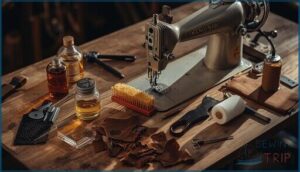
Your leather sewing machine won’t take care of itself—treat it right, and it’ll handle years of heavy-duty projects without breaking a sweat.
Keeping up with basic maintenance and stocking the right accessories makes the difference between smooth stitching and constant frustration.
Here’s what you need to know about caring for your machine and gearing up for serious leather work.
Cleaning and Lubrication
Your machine’s longevity depends on routine care. After every session, clear lint from the bobbin and hook area—this debris wrecks tension and accelerates wear.
Apply light sewing machine oil to moving parts roughly every seven to eight hours of stitching. Skip household oils or grease; they gum up internals fast.
Use soft brushes for debris removal instead of compressed air, which forces particles deeper into mechanisms and invites rust.
Feed Dogs and Presser Foot Care
Worn feed dogs grip poorly and leave stitch gaps on thick hides. Inspect them after every heavy project—flattened teeth can’t move leather reliably.
Teflon presser feet scratch over time and increase drag, so swap them when feeding stutters. Match your presser foot adjustment to hide thickness: too much pressure compresses layers and shortens stitches by 10–20%, while too little lifts material and skips stitches.
| Component | Maintenance Action |
|---|---|
| Feed dogs | Check for wear; clean after each leather session |
| Teflon presser feet | Replace when scratched or feeding becomes uneven |
| Pressure dial | Set lower for thick leather to prevent compression |
Recommended Accessories for Leather Projects
Beyond the machine itself, your leather arsenal needs a solid supporting cast. Leather needles sized 90/14 through 110/18 match light-to-heavy hides. A walking foot or roller foot cuts layer shifting by 50% and keeps feeding even. Round out your bench with hole punches, edge bevelers, leather cutters, and a 14 oz mallet for hardware setting:
- Leather needles (90/14 to 110/18) for varying hide weights
- Walking foot or roller foot to eliminate shifting
- Hole punches with interchangeable 1/16″ to 3/16″ tubes
- Edge bevelers for professional finishing touches
- Leather mallets (14 oz) for rivets and snap installation
Proper Storage and Handling
Once you’ve built your toolkit, leather preservation and handling techniques separate weekend hobbyists from seasoned pros. Climate control matters—store hides flat or loosely rolled between 50 and 70°F with humidity management holding steady around 50%. Skip plastic bags; breathable cotton covers prevent mold while dust stays away.
Your heavy duty sewing machine and materials both deserve storage solutions that respect their craft-grade investment.
Frequently Asked Questions (FAQs)
What thread weight works best for thick leather?
Thread selection for thick leather sewing hinges on matching bonded nylon sizes to material strength. Sizes 138 through 277 handle heavy hides best, ensuring stitch quality, needle compatibility, and seam durability in demanding leather crafting techniques.
How do you prevent leather from stretching while sewing?
You’ll prevent stretching by dialing down presser foot pressure, adding twill tape for seam stabilization, and switching to a walking foot that grips both layers—backing off surface friction keeps grain aligned beautifully.
Whats the maximum leather thickness most machines handle?
Think of your sewing machine like a gearbox: most household models tap out around 2–3 mm of soft leather, while heavy-duty machines push 3–4 mm, and true industrial workhorses conquer 10–15 mm stacks.
Conclusion
Leather doesn’t negotiate—it demands respect, the right tools, and zero compromises. Settling for underpowered equipment turns every project into a battle you’ll lose.
The best sewing machine for leather work isn’t just an upgrade; it’s the difference between amateur frustration and controlled craftsmanship. You’ve seen what works, what matters, and where corners can’t be cut.
Now stop wrestling with inadequate gear and start building pieces that actually hold up under real-world stress.
- https://www.gminsights.com/industry-analysis/industrial-sewing-machine-market
- https://straitsresearch.com/report/industrial-sewing-machine-market
- https://www.fortunebusinessinsights.com/industry-reports/industrial-sewing-machines-market-100613
- https://www.indexbox.io/blog/industrial-sewing-machine-united-states-market-overview-2024-3/
- https://thegnomestudio.com/heavy-duty-sewing-machine/