This site is supported by our readers. We may earn a commission, at no cost to you, if you purchase through links.
Your seams tell the truth. Crooked cuts, skipped stitches, puckered hems—these aren’t skill problems. They’re tool problems. A sharp rotary blade slices through four fabric layers like they’re tissue paper. A quality needle threader turns a frustrating two-minute squint-fest into a three-second click.
The difference between a garment that looks homemade and one that looks handcrafted often comes down to what’s sitting on your cutting table. These sewing tool upgrade options won’t change your technique—they’ll finally let your technique show.
Table Of Contents
- Key Takeaways
- Why Upgrade Sewing Tools
- Top 10 Sewing Tool Upgrades
- 1. Dritz Needle Threader Tool
- 2. Dritz Beeswax Thread Conditioner
- 3. Clover Colored Tracing Paper Sewing
- 4. Clover Adjustable Multi Purpose Sewing Gauge
- 5. Omnigrip Non Slip Quilting Ruler
- 6. Singer Pearlized Straight Sewing Pins
- 7. Fiskars Premium Rotary Cutter
- 8. Fiskars Self Healing Cutting Mat 18 by 24
- 9. Universal Pattern Notcher One Quarter Inch
- 10. Linxiao Wooden Tailor Clapper
- Cutting and Measuring Upgrades
- Threading and Stitching Helpers
- Marking and Pressing Tools
- Choosing The Best Upgrades
- Frequently Asked Questions (FAQs)
- Conclusion
Key Takeaways
- Your seams reveal the truth about your tools — sharp blades, quality threaders, and non-slip rulers let your actual skill finally show through.
- Ergonomic upgrades like lightweight rotary cutters and soft-grip handles cut hand fatigue by up to 40%, so you can sew longer without paying for it the next day.
- You don’t need to overhaul your whole setup at once — one targeted upgrade, like a self-healing mat or adjustable gauge, solves your biggest frustration and lifts every project after it.
- The gap between "homemade" and "handcrafted" lives in the details — proper pressing tools, consistent notching, and calibrated machine tension are what closes it.
Why Upgrade Sewing Tools
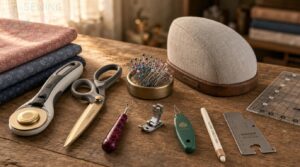
Your tools shape your results more than you might think. A few smart upgrades can mean the difference between a project you’re proud of and one you’d rather hide in a drawer.
Upgrading to one of the best mini irons for precision sewing can genuinely transform how clean and polished your finished work looks.
Here’s what’s worth adding to your sewing space.
Faster Project Setup
Before you even thread a needle, the right setup saves you serious time. Template Libraries and Kickoff Sessions help you plan before you cut.
Standardized Naming keeps your patterns organized.
Automated Setup tools—like Auto Threaders, an LED task light, a magnetic pin holder, sewing clips, and a self-healing mat—mean everything’s ready when you’re.
Cleaner Stitching Results
Setup saves time, but clean stitching is where your work really shows.
Getting that right comes down to a few key things: needle sharpness, thread tension, and presser foot pressure. Sharp needles pierce cleanly, balanced tension stops puckering, and correct presser foot pressure keeps fabric tracking straight.
Add proper machine calibration and smart fabric compatibility choices, and your seams will look genuinely professional.
Better Cutting Accuracy
Clean stitching means nothing if your cuts are off. That’s where tools like a rotary cutter and Self-Healing Rotary Cutting Mat earn their keep.
Precision alignment jigs guide your fabric edges within a hair’s width.
Mat cleanliness prevents blade deflection, while blade sharpness maintenance keeps lines true.
Good fabric cutting precision starts before the machine ever runs.
Less Hand Fatigue
Long sessions take a real toll on your hands. That’s where ergonomic tools change everything. Lightweight tools require up to 40% less hand force — your forearms will thank you by hour three. Soft handle coatings absorb vibration, while adjustable grips fit your grip instead of fighting it.
Ergonomic tools require up to 40% less hand force — your forearms will thank you by hour three
- Ergonomic grips contour to your hand naturally
- Vibration absorption reduces muscle micro-fatigue
- Ergonomic Rotary Cutter with soft handle coatings eases repetitive cuts
- Lightweight tools lower forearm strain across long projects
More Professional Finishes
The right tools don’t just finish a project — they finish it beautifully. Sharp seam rippers, magnetic seam guides, and LED task lighting make the difference between "homemade" and handcrafted.
| Tool | Technique | Result |
|---|---|---|
| Walking Foot | Edge Binding | Flat, even edges |
| Coverstitch Machine | Topstitch Detailing | Store-bought look |
| Professional Pressing | Interfacing Techniques | Crisp, structured seams |
| Professional Seam Ripper | Seam Sealing | Clean corrections |
Top 10 Sewing Tool Upgrades
These ten tools cover the upgrades that actually make a difference in your everyday sewing. Each one targets a specific frustration — slow setup, shaky cuts, uneven marks — and fixes it without a big learning curve.
Here’s what made the list.
1. Dritz Needle Threader Tool
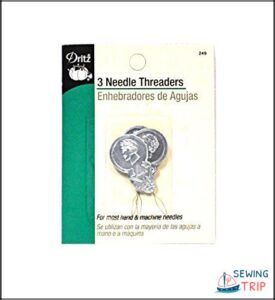
Threading a needle shouldn’t feel like a test of patience. The Dritz Needle Threader makes it genuinely easy — slip the wire loop through the eye, pull your thread through, and you are done. No squinting, no cursing.
It’s especially great for those with long nails, arthritis, or anyone who dislikes wasting time. The tool includes a built-in cutter, eliminating the need for separate trimming steps.
Small, light, and travel-friendly, it earns its spot in every sewing kit.
| Best For | Anyone who struggles with threading needles — especially people with arthritis, long nails, or just not enough patience for the squinting and fumbling. |
|---|---|
| Material | Metal |
| Primary Use | Needle threading |
| Pack Quantity | 3 threaders |
| Skill Level | Beginner |
| Durability | Low (fragile wire) |
| Approx. Price | Low |
| Additional Features |
|
- Threads most hand-sewing and machine needles in one quick motion — no squinting required
- Lightweight and small enough to toss in any sewing kit or travel bag
- Comes in a 3-pack, so you’ve got backups when one goes missing
- The wire loop is delicate and can break with repeated use or if it gets bent
- Not built for heavy-duty needlework with large or rough-edged holes
- A bit pricey for something that’s essentially disposable
2. Dritz Beeswax Thread Conditioner
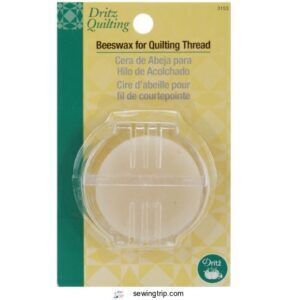
Ever pulled a thread through fabric and watched it fray mid-stitch? That’s exactly what the Dritz Beeswax Thread Conditioner fixes. A quick swipe across the wax block coats your thread with a thin, smooth layer that fights tangling, shredding, and knots before they start.
It works beautifully on embroidery floss, hand-quilting thread, and even slippery silk. The molded plastic holder keeps application controlled and mess-free.
At $7.78, this little block lasts years and punches well above its weight.
| Best For | Hand sewers, quilters, and embroidery enthusiasts who want smoother stitching and less thread frustration. |
|---|---|
| Material | Beeswax |
| Primary Use | Thread conditioning |
| Pack Quantity | 1 wax block |
| Skill Level | Beginner |
| Durability | High (years of use) |
| Approx. Price | Low ($7.78) |
| Additional Features |
|
- Stops tangling, fraying, and knots before they happen — works great on floss, silk, and quilting thread
- The plastic holder makes application easy and keeps the wax lasting for years
- Bonus uses around the house — sticky drawers, window tracks, even iron surfaces
- Too much wax leaves a white residue that can discolor delicate thread or transfer to beads
- Not for sewing machines — over-waxed thread can mess with machine performance
- The plastic holder is fragile and can crack if dropped
3. Clover Colored Tracing Paper Sewing
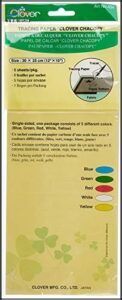
Pattern markings that vanish before you finish cutting? Frustrating. Clover’s Colored Tracing Paper solves that in seconds. Slip one of the five wax-coated sheets between your pattern and fabric, run a tracing wheel along the lines, and you’ve got clean, visible marks exactly where you need them.
The chalk-based formula washes out after sewing — no permanent staining. At $8.25 for five sheets in contrasting colors, it’s a small investment that keeps your darts, notches, and seam lines perfectly on point.
| Best For | Sewists and embroidery enthusiasts who want fast, clean pattern transfers without risking permanent marks on their fabric. |
|---|---|
| Material | Wax-coated paper |
| Primary Use | Pattern transfer |
| Pack Quantity | 5 sheets |
| Skill Level | Beginner / Intermediate |
| Durability | Medium (5 sheets) |
| Approx. Price | Low ($8.25) |
| Additional Features |
|
- Wax-based marks stay put while you stitch but wash out cleanly after laundering — no ghosting, no staining.
- Five colors per pack mean you can pick a shade that actually shows up on your fabric.
- Quick and easy to use — just slip a sheet under your pattern, trace, and go.
- Doesn’t play well with textured or coated fabrics like glitter or polyester brocade — marks can come out faint or not at all.
- At 30 × 25 cm, the sheets are on the small side, so larger garment patterns mean a lot of repositioning and taping.
- Some colors perform better than others, and lighter shades can disappear on dark or printed fabrics.
4. Clover Adjustable Multi Purpose Sewing Gauge
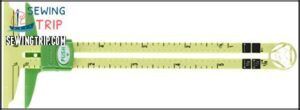
The Clover Adjustable Multi-Purpose Sewing Gauge is one tool doing the job of five. Designed for precision, it slides seamlessly from 0 to 5 inches in clean 1/8-inch increments, ensuring perfectly consistent seam allowances, hems, and buttonhole placements—every single time.
Its lock-in release button securely holds your chosen setting while you work, eliminating shifts or slips. Crafted from durable metal, the gauge won’t flex or smudge your marks, guaranteeing reliable accuracy for intricate tasks.
Ideal for garment sewers and quilters alike, this compact, indispensable tool streamlines workflows with unmatched versatility and steadfast performance.
| Best For | Sewers, quilters, and crafters who want one compact tool that handles seam allowances, hems, buttonholes, and more without juggling a drawer full of gauges. |
|---|---|
| Material | Plastic |
| Primary Use | Measuring / marking |
| Pack Quantity | 1 gauge |
| Skill Level | Beginner / Intermediate |
| Durability | Medium (plastic wear) |
| Approx. Price | Low-Medium |
| Additional Features |
|
- Does the job of four or five tools in one — great for keeping your workspace tidy and your wallet happy.
- Slides smoothly from 0 to 5 inches in 1/8-inch steps, so your measurements stay consistent every time.
- The lock button holds your setting in place while you work, no slipping or second-guessing.
- It’s plastic, so it can feel a little flimsy if you’re used to metal gauges or pressing down hard.
- Tops out at 5 inches, which won’t cut it for larger pattern layouts or big fabric pieces.
- The lock mechanism may loosen up over time with heavy use, which can affect how reliably it holds.
5. Omnigrip Non Slip Quilting Ruler
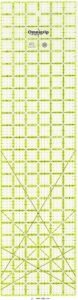
Rulers slip. It’s one of those small frustrations that quietly ruins a perfectly good cut. The Omnigrip Non-Slip Quilting Ruler fixes this with a textured backing that grips fabric securely—eliminating the need for extra silicone dots.
At 6 by 24 inches, it effortlessly handles long strips and border trims. The neon-green lines ensure visibility on any fabric color, while bidirectional numbering accommodates both left- and right-handed users.
Whether squaring up blocks or cutting jelly rolls, this ruler delivers consistent performance. Its thoughtful design transforms precision cutting into a seamless task.
| Best For | Quilters and sewists who want a reliable, easy-to-read ruler that stays put without any extra grip accessories. |
|---|---|
| Material | Plastic |
| Primary Use | Fabric cutting guide |
| Pack Quantity | 1 ruler |
| Skill Level | Intermediate |
| Durability | Medium (plastic) |
| Approx. Price | Medium ($31.86) |
| Additional Features |
|
- Non-slip backing keeps the ruler steady on fabric and cutting mats—no sliding, no frustrating miscuts
- Neon-green markings show up clearly on any fabric color, and the bidirectional numbering works for both lefties and righties
- At 6 by 24 inches, it handles everything from long border strips to squaring up quilt blocks with ease
- Only comes in inches—no metric markings, which is a dealbreaker if you work in centimeters
- Plastic construction means it could crack or chip under rough handling over time
- A few buyers have received damaged rulers out of the box, so packaging quality can be hit or miss
6. Singer Pearlized Straight Sewing Pins
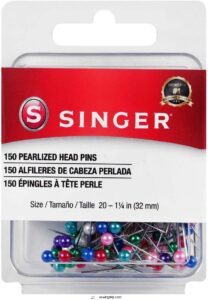
Good cuts deserve good pins. Singer’s Pearlized Straight Sewing Pins make holding freshly cut pieces effortless. Ideal for tasks like pinning quilt layers or basting a fitted bodice, these pins combine practicality with thoughtful design.
Each pack contains 150 nickel-plated alloy steel pins, measuring 1¼ inches long. Their smooth shafts glide through delicate fabrics without snagging, while the colorful pearlized heads ensure easy visibility and grip.
Built to last, these pins resist rust and maintain their shape under pressure. The ball-shaped heads prevent fabric damage, ensuring your projects stay pristine.
Simple, reliable, and genuinely useful — a must-have for any sewing kit.
| Best For | Quilters, hobbyists, and beginner sewers who need a reliable, affordable pin supply for lightweight fabrics and everyday projects. |
|---|---|
| Material | Nickel-plated steel |
| Primary Use | Fabric pinning |
| Pack Quantity | 150 pins |
| Skill Level | Beginner |
| Durability | Medium (may bend) |
| Approx. Price | Low |
| Additional Features |
|
- Colorful pearlized heads make it easy to spot pins and color-code fabric sections at a glance
- Nickel-plated steel resists rust and glides smoothly through delicate fabrics without snagging
- 150 pins per pack gives you plenty to work with for quilting, basting, and general crafting
- Pins are soft enough to bend under pressure, so they’re not great for heavier or tougher materials
- A small percentage of pins may arrive with missing points, bent shafts, or detached heads
- Nickel plating only goes so far — leave them in a damp spot and you’ll still see corrosion over time
7. Fiskars Premium Rotary Cutter
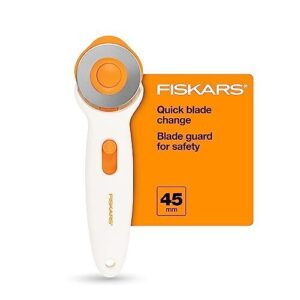
Pins keep your fabric in place — but a sharp rotary cutter is what gives you that clean, confident cut.
The Fiskars Premium Rotary Cutter excels here. Its 45 mm titanium carbide blade effortlessly slices through multiple layers of fabric, felt, and vinyl with minimal pressure. The symmetrical handle accommodates both left- and right-handed users, while the sliding safety lock ensures secure storage between uses. It also includes a full lifetime warranty.
| Best For | Sewers, quilters, and crafters who want a reliable, ambidextrous rotary cutter that handles multiple materials with ease. |
|---|---|
| Material | Stainless steel / titanium carbide |
| Primary Use | Rotary cutting |
| Pack Quantity | 1 cutter |
| Skill Level | Intermediate |
| Durability | High (lifetime warranty) |
| Approx. Price | Medium-High |
| Additional Features |
|
- The 45 mm titanium carbide blade cuts through multiple layers of fabric, felt, and vinyl with very little effort.
- Works equally well for left- and right-handed users thanks to the symmetrical handle design.
- Comes with a full lifetime warranty on the cutter, so you’re covered for the long haul.
- The blade isn’t covered by the warranty, so replacements come out of pocket.
- Some users have run into the blade stopping mid-cut, which can disrupt your workflow.
- You’ll need a self-healing cutting mat to get the best performance and protect your surfaces.
8. Fiskars Self Healing Cutting Mat 18 by 24
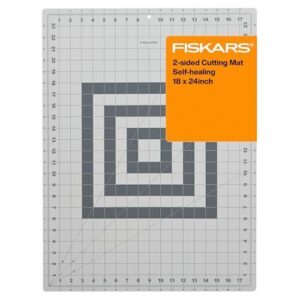
A sharp blade deserves an equally sharp surface to work on. That’s where the Fiskars Self-Healing Cutting Mat earns its place on your table. At 18 by 24 inches, it fits most cutting stations and accommodates full-width fabric without repositioning. The multi-layer surface seals blade grooves after each pass, so it stays smooth longer.
Built-in grid lines — including 30°, 45°, and 60° bias guides — mean fewer ruler swaps and more accurate cuts every time.
| Best For | Quilters, sewers, and paper crafters who cut often and want a durable, accurate surface that pulls double duty as a measuring guide. |
|---|---|
| Material | Flexible plastic |
| Primary Use | Cutting surface |
| Pack Quantity | 1 mat |
| Skill Level | Intermediate |
| Durability | High (self-healing) |
| Approx. Price | Medium-High |
| Additional Features |
|
- Self-healing surface stays smooth after repeated cuts, so you’re not replacing it every few months
- Built-in 30°, 45°, and 60° angle guides make bias cuts easy without grabbing a separate ruler
- Backed by a lifetime warranty from Fiskars — solid peace of mind for a tool you’ll use constantly
- At 1.5 lbs and 18 × 24 inches, it’s not something you’re tossing in a craft bag for travel
- Stickers on delivery can leave residue, so you’ll need to clean it before your first use
- It costs more than basic mats, which might sting if you’re just starting out
9. Universal Pattern Notcher One Quarter Inch
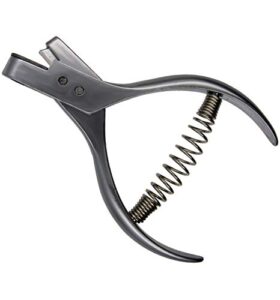
Pattern alignment starts long before you thread the machine. The Universal Pattern Notcher ensures your pieces line up every single time. At just $10.95, it punches clean quarter-inch notches into oak tag or cardboard patterns with one simple click. No measuring, no guessing. That ‘click-clip’ mechanism is especially handy if hand fatigue is a real concern for you.
Consistent notches mean consistent seams — and that kind of repeatability separates a polished garment from a frustrating one.
| Best For | Sewists and pattern makers who work with heavy-weight papers like oak tag or cardboard and want fast, consistent notches without the hand strain. |
|---|---|
| Material | Plastic |
| Primary Use | Pattern notching |
| Pack Quantity | 1 notcher |
| Skill Level | Intermediate |
| Durability | Low-Medium (basic plastic) |
| Approx. Price | Low ($10.95) |
| Additional Features |
|
- One-click operation makes notching quick and easy, even if your hands tire easily
- Cuts the same notch every time, so your front and back pattern pieces always line up
- At $10.95, it’s an affordable upgrade from marking notches by hand
- Won’t work on thin tissue paper patterns unless you back them with something heavier
- Build quality is basic — don’t expect a professional-grade tool at this price
- Sometimes leaves the notch partially attached, and the plate may need realigning for a clean cut
10. Linxiao Wooden Tailor Clapper
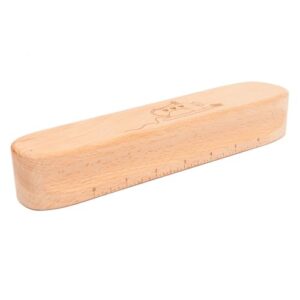
The Linxiao Wooden Tailor Clapper elevates seams from "good enough" to truly polished. After steaming, this tool ensures a crisp, flat finish unattainable with an iron alone.
Press the solid hardwood block firmly onto the seam and hold—that’s all. The unfinished wood absorbs heat and steam, locking in a professional result.
At roughly 9.5 inches, it effortlessly handles collars, cuffs, and quilt bindings. Its compact size ensures precision without bulk.
Lightweight, balanced, and dead simple to use, this clapper streamlines your workflow with minimal effort.
| Best For | Quilters, sewists, and garment makers who want sharp, professional-looking seams without a lot of extra effort. |
|---|---|
| Material | Hardwood |
| Primary Use | Seam pressing |
| Pack Quantity | 1 clapper |
| Skill Level | Intermediate / Advanced |
| Durability | High (hardwood) |
| Approx. Price | Low-Medium |
| Additional Features |
|
- The unfinished hardwood actually absorbs heat and steam, so it locks in crisp seams better than an iron alone
- At under a pound and about 9.5 inches long, it’s easy to control — great for detail work on collars, cuffs, and bindings
- Dead simple to use: steam, press, hold — that’s it
- Can develop a waxy or crystalline residue on the surface over time, so you’ll need to wipe it down with a damp cloth now and then
- The unfinished wood soaks up moisture, so don’t leave it sitting in a humid spot or near water
- A bit small for large fabric panels — if you’re working with big pieces, you might wish you had more surface area
Cutting and Measuring Upgrades
Your cutting and measuring tools set the tone for everything that follows. Get them wrong, and even the best sewing machine can’t save a crooked seam.
Upgrades worth making.
Rotary Cutter Benefits
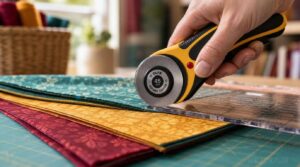
Rotary cutters with ergonomic grips are genuinely game-changing. The secret lies in Blade Rolling—a smooth, circular motion that glides through fabric instead of chopping it, delivering reduced fabric fraying and cleaner cuts every time.
Multi-Layer Cutting allows you to stack and slice several pieces at once, boosting efficiency. This technique maintains edge consistency, especially when paired with a ruler, ensuring precision across projects.
A Quick Blade Swap system keeps your workflow uninterrupted, preserving the momentum of precision fabric cutting.
Self-healing Mat Value
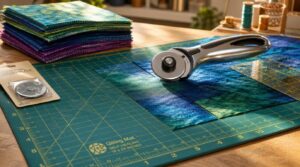
Your self-healing cutting mat quietly does the heavy lifting. After every pass of your rotary cutter, the self-healing cutting mat closes surface cuts on its own — that’s Repair speed working for you.
Surface consistency stays intact across thousands of cuts, giving you Reduced blade wear over time.
Upgrade to a larger self-healing rotary cutting mat, and you’ll stretch its Extended lifespan even further, making it a genuinely sustainable replacement investment.
Non-slip Ruler Accuracy
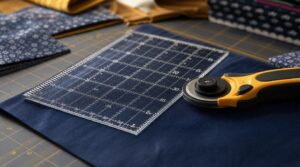
A slipping ruler ruins an otherwise perfect cut. That’s where Friction Coating changes everything — rubberized or silicone backing grips your fabric so the ruler stays put.
Acrylic rulers and Clear Sewing Graph Rulers offer high contrast markings with blade guidance grooves for steady, confident cuts. Ruler rigidity ensures long edges remain true.
Pair yours with a Magnetic Seam Guide for a perfect seam allowance ruler setup every time.
Adjustable Gauge Uses
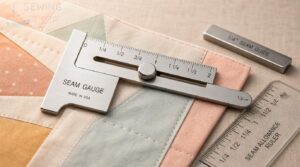
Think of an adjustable gauge as your silent co-pilot for precision. It slides to your exact seam allowance, locks in place, and repeats that measurement every single time.
Use it to check fabric thickness before layering, nail buttonhole depth, or keep quilt block uniformity on point.
Pair it with a seam allowance ruler or magnetic seam guide, and your layer alignment stays perfect — no guesswork, just clean results.
Pattern Notching Precision
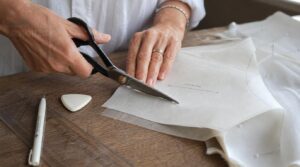
A misplaced notch can unravel hours of careful work — literally. That’s why notching precision isn’t optional; it’s your blueprint in action.
- Notch Depth Consistency at 1/4 inch keeps seams aligned across every piece
- Double Notching Technique locks complex intersections without guesswork
- Grainline Alignment preserves your fabric’s drape and silhouette
- Erasable Fabric Marking Pens and Triangle Tailors Chalk nail clean Notch Transfer Methods every time
Threading and Stitching Helpers
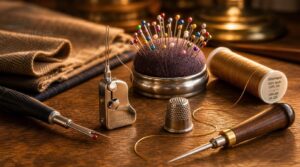
Threading sounds simple until you’re squinting at a needle at 11 p.m. The right helpers make that whole process faster, smoother, and a lot less frustrating.
Here are the threading and stitching upgrades worth adding to your setup.
Needle Threader Advantages
Threading a needle shouldn’t slow you down. With Rapid Threading tools, you’re through the eye in under five seconds — that’s a 75% drop in setup time.
These threading assistance devices also deliver Reduced Eye Strain and Hand‑Friendly Design, so long sessions feel easier.
Their Universal Needle Compatibility and Consistent Stitch Entry make them essential sewing accessories for anyone chasing real sewing efficiency.
Thread Conditioner Benefits
A needle threader saves seconds — but a thread conditioner saves your whole project. A little beeswax or synthetic coating delivers real friction reduction, so your thread glides cleanly and skips less.
It’s a quiet strength boost too, cutting breakage on delicate fibers. You get better thread tension, smoother tangling prevention, and serious longevity maintenance across a wide compatibility range of thread types.
Pinning Upgrade Options
Pins matter more than most sewists admit. Magnetic Pin Bowls hold up to 120 pins, ensuring smooth retrieval during projects.
Pearlized Pin Heads enhance visibility against dark fabrics, while Anti-Rust Coatings maintain sharp tips in humid environments, preserving tool longevity.
For precision work, Grid Pin Boards enable accurate fabric alignment, and a Spring-Loaded Tusher accelerates pin insertion efficiently.
Complement your setup with a Magnetic Wrist Sewing Pincushion, Sewing Clips, or Magic Pins—transforming your workflow with seamless integration.
Smoother Hand Sewing
Hand sewing gets so much better with the right gear. Ergonomic Needles glide through tight weaves cleanly, reducing snagging by around 25%. Waxed Thread Flow keeps your stitches even and tangle-free — beeswax alone boosts abrasion resistance by 40%.
Adding Finger Guard Comfort and a Sewing Fingerthing Pusher for dense fabrics helps you achieve your Smooth Stitch Rhythm without the usual hand strain.
Cleaner Machine Stitching
Your machine does the heavy lifting—but only if it’s dialed in right. A few smart habits make all the difference:
- Tension Calibration keeps stitches balanced on both the front and back.
- Needle Selection prevents snags on both woven and knit fabrics.
- Bobbin Maintenance clears lint that can cause skipped stitches.
- Feed Dog Alignment delivers consistently straighter seams.
- Hook Timing ensures every stitch lands cleanly.
A Digital Sewing Machine with Smart Features manages automatic thread tension beautifully. Pair that with a Magnetic Seam Guide and Stainless Steel Hemming Clips, and you’re sewing like a pro.
Marking and Pressing Tools
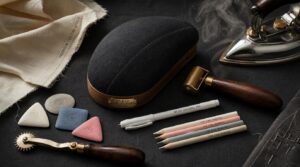
Marking and pressing might be the most underrated part of sewing well. Getting them right separates a polished result from something that just looks homemade.
Here are the tools that make that difference.
Tracing Paper Uses
Tracing paper is one of those quiet workhorses hiding in plain sight. It’s perfect for Fabric Template Creation—just lay it over your original pattern and trace cleanly.
Use the Graphite Transfer Method or Lightbox Tracing for precision. It facilitates Pattern Overlay Alignment across multiple sizes and works beautifully for Technical Blueprint Drafting.
A simple, underrated gem in your garment construction tools kit.
Temporary Marking Accuracy
Mark Visibility can make or break a project. Good fabric marking tools — like Pilot Frixion pens — vanish with heat, leaving zero residue.
Ink Fade Resistance matters too, especially as humidity can disrupt timelines.
Pressure Consistency while tracing keeps lines crisp.
Always consider Fabric Surface Interaction — dark fabrics require contrast-friendly pattern marking solutions.
LED Task Lighting helps you see every mark clearly.
Tailor Clapper Benefits
A tailor clapper is one of those sewing tools that quietly transforms your work. Press a seam, lay the clapper on top, and it pulls moisture absorption into action — locking crispness in as it cools.
Even pressure across bulky seams eliminates waves and shine, while heat dispersion protects delicate fabrics.
For seam fidelity and craft efficiency improvements, it beats hovering an iron any day.
Crisp Seams and Hems
Crisp seams don’t happen by accident. Start with the right stitch length for your fabric weight — too long causes gaps, too short leads to puckering.
Pressing damp fabric locks the seam allowance flat every time. Add topstitch reinforcement, bias binding, or a magnetic seam guide for cleaner edges.
Specialty presser feet and a walking foot make finishing seams practically foolproof.
Garment Construction Finishing
The final stretch is where your garment either looks handmade or hand-crafted — and that gap is real. Coverstitch edging and blind hemming keep hems invisible and clean. Edge binding wraps necklines beautifully, while interfacing integration adds structure to collars and cuffs without stiffness.
Pair professional pressing with a serger upgrade, specialty presser feet, and solid seam finishing accessories. These elements elevate craftsmanship, ensuring your results speak for themselves.
Choosing The Best Upgrades
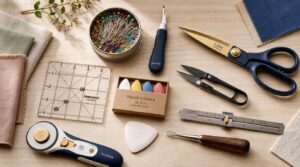
Not every upgrade makes sense for every sewer — it really comes down to what you make and how you work. A quilter’s must-haves look very different from a garment maker’s, and your budget plays a role too.
Here’s a practical breakdown to help you figure out which upgrades are actually worth it for you.
Match Tools to Projects
Choosing the right tool starts with knowing your project inside out. A rotary cutter and self-healing cutting mat make sense for quilting — but are overkill for a simple hem. Think about Scope Alignment and Skill Fit first.
Specialty presser feet, a serger upgrade, or ergonomic sewing accessories only earn their place when your Workflow Integration, Reliability Assessment, and Cost-Benefit Analysis all point in the same direction.
Beginner Upgrade Priorities
Starting out doesn’t mean starting small — it means starting smart. Before eyeing a Digital Sewing Machine or Digital Stitch Regulator, nail your basics first:
- A Self Healing Mat protects your work surface and your blade
- Ergonomic Grips reduce strain during long cutting sessions
- A Magnetic Pin Holder keeps everything within reach
- LED Task Lighting eliminates guesswork on dark fabrics
- Adjustable Speed Control builds confidence stitch by stitch
Quilting Tool Essentials
Quilting has its own toolkit — and it’s non-negotiable. A rotary cutter, self-healing mat, and quilting rulers give you the Fabric Alignment Tools you need for clean, precise cuts.
Add a quilting foot for Stitch Regulation across quilt batting layers, and use Quilt Templates for repeatable shapes.
Seam reinforcement keeps everything together. These quilt making tools are your foundation.
Garment Sewing Must-haves
Garment sewing demands a different toolkit than quilting. You’ll want sharp pins, a rotary cutter, and a Self-healing Mat for clean fabric prep.
A Magnetic Pin Holder keeps things tidy, while a Magnetic Seam Guide locks in straight seams.
Pair those with a Smart Sewing Machine or WiFi-enabled sewing machine, and a walking foot manages tricky layers with ease.
Cost Versus Long-term Value
Most sewing tools pay for themselves faster than you’d think. A quality rotary cutter performs 200-plus cuts before needing a blade swap — that’s real Tool Longevity. Affordable sewing tools with long-term tool durability beat cheap ones every time.
Factoring in Maintenance Expenses, Resale Potential, and fewer replacements reduces your Total Ownership Cost considerably. Smart tool investment always wins the long game.
Frequently Asked Questions (FAQs)
What are the five categories of sewing tools?
Think thousands of tools exist? Really, they boil down to five: Cutting Instruments, Measurement Devices, Marking Supplies, Pinning Accessories, and Finishing Implements — the core toolkit every confident sewist actually needs.
Is it worth upgrading a sewing machine?
A newer machine brings motor reliability, warranty benefits, and energy savings right out of the box.
Smart features like sewing machine automation and WiFi-enabled sewing machine connectivity offer serious resale potential and software compatibility down the road.
Which singer is best for heavy fabrics?
Here, "Singer" refers to the brand, not a vocalist. For heavy fabrics, the SINGER Heavy Duty 6800C stands out.
It features strong motor torque, advanced needle strength, and excellent stitch length control.
Does sewing release dopamine?
Finishing a project triggers your brain’s reward pathways, giving you a genuine mood boost.
Mindful stitching creates dopamine release, while stress reduction occurs naturally through focused, repetitive movement.
Which rotary cutter blade size works best?
The 45 mm blade is your go-to for most projects — it manages tight curve cutting and bulk fabric cutting equally well. Matching blade longevity to your material compatibility needs, and you’re set.
The 45 mm cutter is the best all‑purpose size for quilting.
How often should I replace sewing needles?
Change your needle every eight hours of sewing — or at the start of each new project.
Heavy fabrics, high-frequency usage, and skipped stitches are your clearest indicators of needle wear, signaling it’s time for a replacement.
Can I upgrade older machine presser feet?
Absolutely — most older machines accept snap-on upgrades with ease.
Low‑shank conversion adapter kits enable modern feet like a retrofit walking foot, delivering precision foot lift and professional results without replacing your entire machine.
Whats the difference between servo and clutch motors?
Servo motors use closed-loop control for torque precision and quiet energy efficiency. Clutch motors rely on a mechanical clutch — simpler, but louder. For home sewing upgrades, servos win every time.
Do fabric clips damage delicate materials permanently?
Fabric clips won’t permanently damage delicate fabrics — if you use them right. Watch clip pressure effects on silk; imprint risk is real.
Test clip impact on scraps first, and choose padded clip alternatives for high-quality fabrics.
How do magnetic accessories improve sewing workspace organization?
Picture your pins scattered everywhere — chaos. A magnetic pin holder or magnetic pin cushion fixes that fast.
Seam guide magnets keep lines straight.
Magnetic needle cases and tool pads bring calm, efficient sewing organization instantly.
Conclusion
A craftsperson is only as good as their tools. That’s not just an old saying—it’s something every sewist discovers the moment they make one smart sewing tool upgrade.
Suddenly, cuts are cleaner. Seams lie flat. Projects actually look the way you imagined them.
You don’t need to overhaul everything at once. Start with one upgrade that solves your biggest frustration. Then watch how quickly your work starts speaking for itself.