This site is supported by our readers. We may earn a commission, at no cost to you, if you purchase through links.
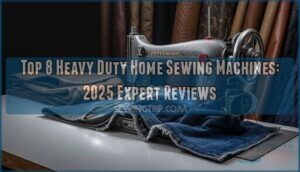
Your trusty home machine just refused to sew through that third layer of denim. The needle bent, the motor whined, and your upholstery project ground to a frustrating halt.
Standard sewing machines aren’t built for the thick fabrics, multiple layers, and demanding projects that serious sewers tackle regularly. Heavy duty home sewing machines change everything with metal frames that absorb vibration, powerful motors that punch through 12+ layers of fabric, and industrial-strength components designed for years of intensive use.
Whether you’re crafting leather bags, hemming raw denim, or quilting thick batting, these workhorses deliver the torque and stability your projects demand. The right machine transforms impossible projects into achievable goals.
Table Of Contents
- Key Takeaways
- Key Features of Heavy Duty Home Sewing Machines
- Benefits of Heavy Duty Sewing for Home Use
- Types of Heavy Duty Sewing Machines
- Top 8 Heavy Duty Home Sewing Machines
- Maintenance Tips for Heavy Duty Sewing Machines
- Best Practices for Heavy Duty Sewing Projects
- Frequently Asked Questions (FAQs)
- Conclusion
Key Takeaways
- Heavy duty home sewing machines feature metal frame construction, powerful motors (1.0-1.2 amps), and the ability to handle 6mm+ thick fabrics with 12+ layers—transforming impossible projects like leather bags and raw denim into achievable goals.
- These machines deliver long-term cost savings through durability that extends lifespan, reduces needle breakages and maintenance costs, and provides consistent professional-grade performance for both business owners and serious hobbyists.
- Top models like the Singer 4452 (1,100 SPM), Janome HD series, and Brother ST371HD combine speed, versatility, and specialized features (walking feet, automatic threaders, serging capabilities) to tackle everything from quilting to upholstery.
- Proper maintenance—weekly bobbin cleaning, oiling every 8-40 hours, correct needle selection (90/14 to 110/18), and matching thread weight to fabric thickness—protects your investment and ensures peak performance for years.
Key Features of Heavy Duty Home Sewing Machines
What separates a heavy duty home sewing machine from standard models? It’s all about the engineering and features that let you tackle challenging projects without hesitation.
Let’s break down the four essential characteristics that define a true workhorse machine.
Metal Frame Construction and Durability
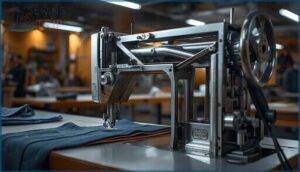
Metal frames are the backbone of true heavy-duty sewing machines! Unlike plastic-bodied models, metal frame construction delivers rock-solid structural integrity that won’t flex or wobble when you’re pushing through layers of denim or leather.
This exceptional durability means your machine can handle continuous use without degrading—essential for professionals and enthusiasts tackling demanding projects. Frame materials matter when you need reliable performance year after year.
To maintain this level of performance, it’s vital to follow proper writing clear guidelines for documentation and maintenance.
Motor Power and Stitching Speed
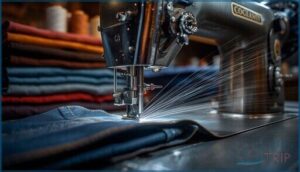
But a sturdy frame means nothing without serious motor power to drive through those heavy materials! Heavy duty sewing machines deliver 1.0 to 1.2 amperes of motor efficiency, unleashing torque output that overcomes thick seams without hesitation.
Speed control lets you adjust from 700 to 1,000 SPM for ideal stitch quality. Consider these motor power advantages:
- Variable speed control adapts power delivery for different fabric densities
- High torque at low speeds prevents needle deflection on challenging projects
- Servo motors fine-tune sewing speed while maintaining consistent performance
Your machine won’t stall when it matters most! Understanding the main topic details is essential for making informed decisions about heavy-duty sewing machines.
Handling Thick Fabrics and Multiple Layers
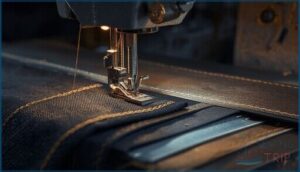
Your powerhouse motor won’t help if you can’t manage fabric thickness and layer management! Heavy-duty sewing machines handle materials up to 6mm thick using needle sizes 90/14 to 110/18 for ideal stitch reinforcement.
Walking feet distribute pressure evenly across multiple layers, preventing shifting during sewing thick fabrics. Refined feed systems and tension control guarantee secure seams when heavy fabric sewing demands precision!
Built-in Convenience Features
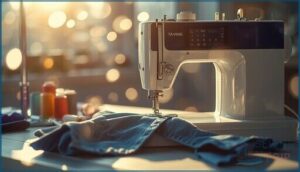
Beyond raw power, you’ll appreciate smart sewing machine features that simplify your workflow. Automatic needle threader eliminates eye strain, while precise stitch selection and thread tension adjustment deliver professional results. Needle positioning and bobbin management systems keep projects moving smoothly.
Free arm sewing handles sleeves and cuffs effortlessly, and customizable foot pedal controls let you command speed with confidence. These automatic threaders and conveniences transform demanding tasks into enjoyable craft sessions!
Benefits of Heavy Duty Sewing for Home Use
Why invest in a heavy-duty sewing machine for your home workspace? These powerhouse machines deliver benefits that go far beyond basic stitching—they transform how you approach every project.
Let’s explore the key advantages that make heavy-duty sewing machines worth every penny for home sewers like you.
Versatility for Various Projects
Heavy duty sewing machines release project variety you’ve only dreamed about! Your fabric handling expands dramatically—from delicate quilting to rugged leather craft applications. These powerhouses adapt to every sewing technique you throw at them.
- Garment construction: Tackle jeans, jackets, and heavy coats with ease
- Upholstery projects: Reupholster furniture using dense fabrics and multiple layers
- Leather work: Create bags, belts, and accessories without skipped stitches
- Quilting quality: Handle bulky batting and intricate topstitching effortlessly
Long-Term Cost Savings
Investing in quality often slashes your long-term sewing expenses dramatically. Metal frames and sturdy motors extend machine lifespan, delaying costly replacements while spreading your initial investment over years.
You’ll witness fewer needle breakages on thick fabrics, reducing maintenance costs and consumable spending. Stronger feed dogs minimize fabric waste, lowering material expenses across projects.
Budget planning becomes predictable when your machine delivers reliable sewing performance through continuous use!
Suitability for Professionals and Enthusiasts
Whether you’re launching a sewing business or perfecting enthusiast projects, heavy-duty sewing machines bridge skill levels effortlessly! Professional sewing machines deliver consistent sewing performance during marathon sessions, while the sewing community values their approachable learning curve.
- Durability retains resale value through sturdy construction and premium component quality over time
- Professionals benefit from reliability during extended sessions without performance degradation or frustrating interruptions
- Enthusiasts gain confidence handling thicker fabrics with consistent stitch quality on challenging materials
- Intuitive features balance sophisticated capability with accessibility for both expert and hobbyist sewers
- Compatible accessories expand your project scope with specialized feet, needles, and heavy-duty tips
Enhanced Sewing Efficiency
Speed transforms your sewing workflow when you’re managing multiple projects! Heavy-duty sewing machines deliver 1,000–1,300 stitches per minute, slashing completion time on upholstery and quilts while maintaining outstanding stitch quality.
Built-in features like automatic thread cutters and quick-change bobbin systems eliminate tedious interruptions. Machine calibration and premium fabric handling keep your needle moving smoothly through canvas, denim, and leather—maximizing your sewing efficiency every single session!
Types of Heavy Duty Sewing Machines
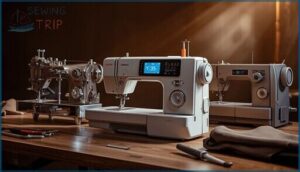
Not all heavy duty machines are built the same—understanding the different types helps you choose the right powerhouse for your projects.
From simple mechanical workhorses to sophisticated computerized models, each category brings distinct advantages to your sewing table.
Let’s break down the main types so you can find your perfect match!
Mechanical Vs. Computerized Models
You’ll face a clear fork in the road when choosing between mechanical and computerized heavy-duty sewing machines. Mechanical models deliver raw power through analog gearing—perfect for straightforward stitching with hands-on control and lower maintenance costs.
Computerized sewing machines offer electronic controls, LCD user interfaces, and enhanced stitch precision through automated tension adjustments. Motor comparison reveals both excel at powering through thick fabrics, but computerized options provide programmable settings that improve your workflow.
Frame durability matters equally in both types, though sewing machine reviews show mechanical units edge ahead for pure ruggedness while computerized versions shine in feature breadth and convenience!
Sergers and Overlock Machines
Sergers slice, stitch, and finish edges all at once—unleashing professional results you won’t find on standard heavy-duty sewing machines! These overlock powerhouses transform raw fabric edges into polished seams at speeds reaching 1,500 stitches per minute.
Heavy-duty sewing machine reviews confirm sergers excel at rolled hems and overcast edges on knits and wovens alike!
- Differential feed handles stretchy or slippery fabrics to prevent puckering on thick materials.
- Thread tension systems minimize bird’s-nest tangles behind the needle plate.
- Blade adjustment controls cutting allowance for precise edge trimming.
- Stitch length settings adapt to your fabric weight for consistent seam finishing.
Quilting and Embroidery Options
Beyond edge finishing, your heavy-duty machine can conquer quilting and embroidery projects with the right setup! Quilting techniques demand specialized presser feet—free-motion quilting foot and walking foot systems move multiple batting layers smoothly without puckering. Embroidery machines with compatible hoops let you digitize custom embroidery designs at controlled stitch speeds. Thread management becomes critical: 100% cotton thread prevents breakage during dense stitch patterns on thick fabric selections!
| Feature | Quilting Application |
|---|---|
| Free-motion foot | Channel quilting motifs |
| Walking foot | Layered fabric movement |
| Embroidery hoops | Design placement accuracy |
| Tension calibration | Multiple batting layers |
| Stitch speed control | Thread breakage prevention |
Industrial-Grade Vs. Home Models
Now let’s compare industrial sewing machines to heavy-duty home sewing machines—the differences matter! Industrial models feature cast iron frames delivering superior rigidity, while home heavy-duty sewing machines use aluminum or lighter steel. Motor torque separates these categories dramatically: industrial sewing demands continuous-duty ratings that home motors can’t match. Industrial pricing reflects this, with units costing thousands more!
- Frame materials: Cast iron versus aluminum construction affects stability during heavy-duty sewing
- Heavy duty motors: Continuous power delivery versus intermittent household ratings
- Industrial pricing: Professional-grade investment starts where consumer budgets usually end
Top 8 Heavy Duty Home Sewing Machines
Ready to find the machine that’ll power through your toughest projects? We’ve tested and reviewed eight heavy-duty home sewing machines that can handle everything from thick denim to leather upholstery.
Here’s your lineup of powerhouse machines that won’t quit when the fabric gets tough.
1. Singer Heavy Duty Sewing Machine
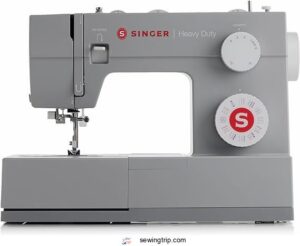
The Singer Heavy Duty 4452 delivers professional power right to your sewing table! This powerhouse Singer Machine features a sturdy Metal Frame that anchors every stitch with rock-solid stability.
You’ll experience superior Stitch Quality at an impressive Sewing Speed of 1,100 stitches per minute—perfect for blasting through denim and canvas. The Singer 4452 manages multiple fabric layers effortlessly, making it one of the most reliable HeavyDuty Sewing Machines for home use.
Whether you’re tackling alterations or ambitious upholstery projects, this Heavy Duty Sewing Machine won’t let you down.
| Best For | Sewers who need a reliable machine that can handle heavy fabrics like denim, canvas, and upholstery without slowing down, whether you’re doing alterations, home decor projects, or working with multiple layers. |
|---|---|
| Built-in Stitches | 11 |
| Frame Material | Metal |
| Buttonhole | One-step |
| Needle Threader | Built-in |
| Bobbin Type | Top drop-in |
| Weight | 14.6 lbs |
| Additional Features |
|
- Blazing fast speed of 1,100 stitches per minute with a sturdy metal frame that keeps everything stable, even on thick materials
- Top drop-in bobbin with a clear cover makes it super easy to monitor your thread without stopping mid-project
- Built-in features like one-step buttonholes, adjustable presser foot pressure, and automatic needle threader take the hassle out of setup
- The internal gears can dry out and get gummy over time, so you’ll need to stay on top of regular cleaning and oiling
- Some users report issues with the reverse lever and bobbin case that might need troubleshooting
- The manual isn’t included in the box—you have to download it separately, and cheap needles don’t work well, so stick with Singer brand
2. Janome Heavy Duty Sewing Machine
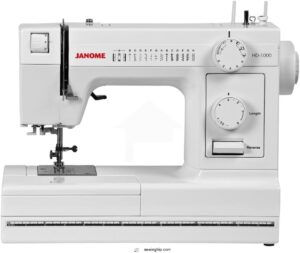
Janome Models bring legendary reliability to your workbench with outstanding Machine Durability! The Janome HD1000 features a sturdy aluminum frame with 14 built-in stitches, while the Janome HD3000 cranks up performance with 860 stitches per minute Sewing Speed.
Need serious muscle? The Janome HD5000 packs Heavy Duty Motors rated at 0.67 amps—perfect for conquering Fabric Thickness up to 6 layers of denim! These HeavyDuty Sewing Machines handle leather, canvas, and upholstery with confidence.
Your Heavy Duty Sewing projects deserve Janome’s proven track record for tackling demanding materials without breaking a sweat.
| Best For | Sewers who need a reliable workhorse that can handle thick fabrics like denim, canvas, and upholstery without struggling through multiple layers. |
|---|---|
| Built-in Stitches | 14 |
| Frame Material | Aluminum |
| Buttonhole | 4-step |
| Needle Threader | Automatic |
| Bobbin Type | Drop feed |
| Weight | 23 lbs |
| Additional Features |
|
- Built like a tank with aluminum frames and powerful motors that push through 4-6 layers of heavy fabric without choking
- Speeds up to 860-1,600 stitches per minute depending on the model, so you’re not waiting around on big projects
- Handles everything from delicate silk to thick leather, giving you serious range for different projects
- You’re limited to 14-22 stitches depending on the model, which might feel restrictive if you want fancy decorative options
- These machines are heavy (around 23 pounds), so forget about easily moving them from room to room
- No automatic tension adjustment means you’ll need to dial it in yourself when switching between fabric types
3. Brother Heavy Duty Sewing Machine
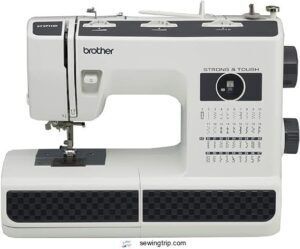
Brother Machines deliver serious performance when you tackle demanding fabrics! The Brother ST371HD rocks 37 built-in stitches and a Metal Frame that keeps vibration under control at 800 stitches per minute Sewing Speed. Want computerized convenience? The Brother ST150HDH adds sophisticated features while maintaining that Heavy Duty backbone.
Need professional finishing? The Brother 1034D serger manages Thread Tension adjustments like a dream across multiple layers! These HeavyDuty Home Sewing Machines blend durability with intuitive threading systems—perfect for conquering denim, canvas, and heavyweight projects without skipping a beat.
| Best For | Sewers who need a reliable workhorse for thick fabrics like denim and canvas but want beginner-friendly features like automatic threading and simple stitch selection. |
|---|---|
| Built-in Stitches | 37 |
| Frame Material | Metal |
| Buttonhole | Auto-size |
| Needle Threader | Automatic |
| Bobbin Type | Drop-in top |
| Weight | 18.4 lbs |
| Additional Features |
|
- Metal frame construction keeps the machine stable at 800 stitches per minute, even when working through multiple layers of heavy material
- 37 built-in stitches plus an auto-size buttonhole give you plenty of options for both utility sewing and creative projects
- Comes with 6 different feet and a free arm design, so you can handle everything from hemming jeans to sewing sleeves without buying extras
- The bobbins don’t work with other Brother models, so you’ll need to keep a separate stash if you own multiple machines
- Some users report the foot pedal cord feels short and occasionally gives off a burning plastic smell during extended use
- Customer support can be hard to reach if you run into problems or need help troubleshooting
4. Heavy Duty Sewing Machine Singer
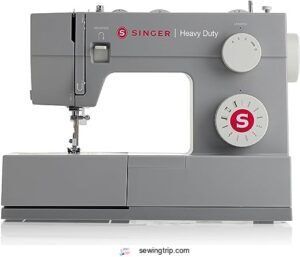
You can’t beat the power-to-price ratio of Singer Models in the heavy-duty arena! The Singer 4411 delivers 1,100 Stitches Per Minute with rock-solid metal construction—perfect for tearing through leather and canvas layers.
Need more stitch variety? The Singer Heavy Duty 4452 cranks up the Sewing Speed while adding 32 built-in stitches for creative flexibility. Machine Comparison shows these HeavyDuty Home Sewing Machines dominate budget-friendly categories!
Singer Features like drop-in bobbins and extra-high presser foot lift make thick-fabric projects feel easy.
| Best For | Sewers who need a reliable, affordable machine that can handle heavy fabrics like denim, canvas, and leather without breaking the bank. |
|---|---|
| Built-in Stitches | 69 |
| Frame Material | Metal |
| Buttonhole | Multiple styles |
| Needle Threader | Not specified |
| Bobbin Type | Top drop-in |
| Weight | 14.6 lbs |
| Additional Features |
|
- Powerful motor with 1,100 stitches per minute makes quick work of thick materials and multiple layers
- Durable metal frame provides stability and reduces vibration during high-speed sewing
- Includes 69 stitch applications and four presser feet, giving you plenty of options for different projects
- Struggles with stretchy knits and may not handle them as smoothly as other fabric types
- LED work light isn’t bright enough for some users, especially in low-light conditions
- Plastic thread spool holder and tendency for bobbins to over-fill can be frustrating during longer projects
5. Heavy Duty Sewing Machine
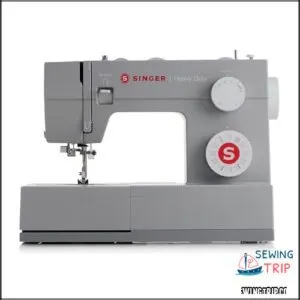
When you’re ready to access professional results, choosing the right HeavyDuty Sewing powerhouse changes everything! Machine Durability Tests prove that Heavy Duty Features like reinforced metal frames and sturdy motors define true performance.
The Singer Heavy Duty 4452 exemplifies Heavy Duty Stitching quality—piercing denim stacks and canvas with ease. Sewing Machine Comparison data reveals that Fabric Handling Tips matter most when tackling thick layers.
Heavy Duty Sewing Machines with Sewing Speed Control let you dominate challenging projects while Sewing Machine Reviews confirm: high-quality construction delivers years of impeccable heavy-duty performance!
| Best For | Sewers who need to tackle heavy fabrics like denim, canvas, and upholstery with a reliable machine that won’t struggle through multiple layers. |
|---|---|
| Built-in Stitches | 110 |
| Frame Material | Metal |
| Buttonhole | 1-step |
| Needle Threader | Built-in |
| Bobbin Type | Top drop-in |
| Weight | 14.6 lbs |
| Additional Features |
|
- Strong motor and metal frame handle thick materials without skipping stitches or losing power, so you can sew through bulky projects confidently.
- 110 stitch options give you plenty of versatility for everything from basic repairs to quilting and decorative work.
- Drop-in bobbin, built-in needle threader, and LED lights make setup and visibility easy, even when you’re working on challenging fabrics.
- Mechanical design means you’ll need to clean and oil it regularly to keep it running smoothly, which takes more effort than low-maintenance digital machines.
- The upright spool pin can cause thread tangles and jams if you’re not careful, which interrupts your workflow.
- At 14.6 pounds, it’s heavier than many home machines, so moving it around or taking it to classes isn’t as convenient.
6. Juki Sewing And Quilting Machine
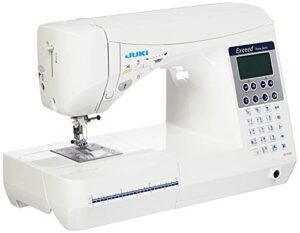
When precision meets power, the Juki HZL-F300 transforms your quilting and sewing experience! This Quilting Machine delivers 106 stitch patterns and automatic sensor-controlled buttonholes—features that Heavy Duty Sewing Machines enthusiasts crave.
Juki Model Options like the TL2000QI showcase industrial-grade build quality with high torque motors that tackle thick layers effortlessly. Sewing Machine Reviews consistently praise Juki’s metal frame construction and box feed system for impeccable Quilting Techniques.
Whether you’re mastering upholstery or perfecting garment construction, this Juki Machine Review proves: Heavy Duty Features deliver professional results every time!
| Best For | Intermediate sewers and quilters who want a reliable, versatile machine that handles everything from garment construction to multi-layer quilts without breaking the bank. |
|---|---|
| Built-in Stitches | 106 |
| Frame Material | Metal |
| Buttonhole | 16 automatic |
| Needle Threader | Automatic one-touch |
| Bobbin Type | Box feed system |
| Weight | 25 lbs |
| Additional Features |
|
- 106 stitch patterns and 16 automatic buttonholes give you tons of creative options for different projects
- Box feed system and metal construction mean smooth, consistent stitching even on thick fabrics
- Automatic needle threader and thread cutter save time and frustration on every project
- Missing some useful feet like the walking foot and free motion foot that quilters often need
- Fewer stitch options than higher-end Juki models if you want more advanced features
- Only works with 120V electricity, so you’ll need a converter if you’re in a 240V country
7. Brother Sewing And Embroidery Machine
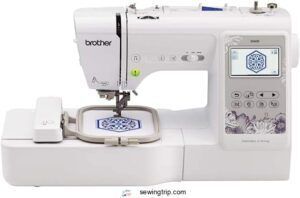
You’ve mastered thick fabrics—now release your creative side with the Brother SE600 Sewing And Embroidery Machine! This powerhouse delivers 103 built-in stitches and 80 embroidery designs through a vibrant 3.2″ LCD touchscreen, making Machine Comparison easy when evaluating Heavy Duty Sewing Machines.
Thread Management shines with automatic needle threading, while the 4″ x 4″ embroidery field creates opportunities for custom lettering and intricate designs. Sewing Machine Reviews highlight its 710 Sewing Speed stitches per minute and top-loading Bobbin Maintenance system.
Master Embroidery Tips on denim, cotton, and polyester—this Brother model transforms every project into art!
| Best For | Sewers and quilters who want to combine everyday sewing projects with creative embroidery work, from beginners learning the basics to experienced crafters adding personalized touches to their designs. |
|---|---|
| Built-in Stitches | 103 |
| Frame Material | Metal |
| Buttonhole | 10 auto-size styles |
| Needle Threader | Automatic |
| Bobbin Type | Drop-in top |
| Weight | 26.2 lbs |
| Additional Features |
|
- 103 built-in stitches and 80 embroidery designs with a user-friendly 3.2″ color touchscreen make it easy to switch between sewing and embroidery projects
- Automatic needle threader and drop-in bobbin system speed up setup time so you can spend more time creating
- Handles multiple fabric types including denim, cotton, and polyester at speeds up to 710 stitches per minute
- Automatic needle threader can be unreliable, with some users reporting it works less than 20% of the time
- Thread breakage and needle breaking issues pop up frequently enough to be frustrating during projects
- 4″ x 4″ embroidery field limits the size and complexity of designs you can create in one hooping
8. Juki Long Arm Sewing Machine
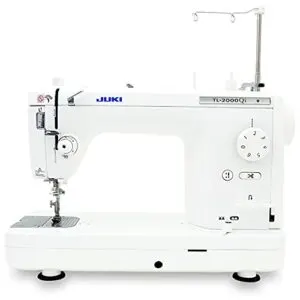
Take your quilting game to the next level with the Juki TL2000QI Long Arm Sewing Machine! This aluminum powerhouse features extended throat space perfect for Long Arm Quilting and free-motion techniques.
Heavy Duty Motors drive 1,500 stitches per minute, while the automatic thread cutter streamlines your Sewing Efficiency. The walking foot and specialized presser feet tackle thick layers with ease.
Juki Maintenance requires regular oiling every 20 hours to keep precision needle timing sharp. Master sophisticated Quilting Techniques on this professional-grade Quilting Machine—your Heavy Duty Sewing Machines collection demands this Long Arm Sewing champion!
| Best For | Advanced quilters and serious sewers who want professional-grade performance for large quilting projects and heavy-duty fabrics. |
|---|---|
| Built-in Stitches | Not specified |
| Frame Material | Aluminum |
| Buttonhole | Available |
| Needle Threader | Not specified |
| Bobbin Type | Standard |
| Weight | Not specified |
| Additional Features |
|
- Extended throat space and long arm design make free-motion quilting and handling large quilts much easier than standard machines
- Powerful motor delivers 1,500 stitches per minute with automatic thread cutter for faster, more efficient work
- Comes with walking foot and specialized presser feet that handle thick layers and heavy fabrics without struggle
- Steep learning curve—not beginner-friendly and takes practice to master the long arm features
- Requires regular maintenance with oiling every 20 hours to keep it running smoothly
- Some users report occasional issues with the bobbin winder and thread cutter that need troubleshooting
Maintenance Tips for Heavy Duty Sewing Machines
Your heavy-duty machine is a workhorse, but it won’t last without proper care. Regular maintenance keeps your sewing smooth, prevents costly repairs, and extends your machine’s lifespan by years.
Let’s cover the essential maintenance habits every heavy-duty sewing machine owner needs to master.
Cleaning and Oiling for Longevity
Your heavy duty sewing machine thrives on consistent care! Clean the bobbin area and feed dogs weekly using a small brush to remove lint buildup. Apply light machine oil to designated pivot points every 8 to 40 hours of use—never over-lubricate. This simple sewing maintenance protects your investment and keeps stitches perfect for years.
| Task | Frequency |
|---|---|
| Clean bobbin area | Weekly during peak use |
| Oil moving parts | Every 8-40 hours |
| Professional service | Every 1-3 years |
Needle and Thread Selection
Your heavy duty sewing machines demand the right needle sizes and thread tension! Match needle gauges 90/14 to 110/18 with fabric compatibility—sharp points for leather, microtex for dense materials.
Choose high-tensile polyester or nylon threads (27/3 to 40/3 weight) to maintain stitch quality. Never mix needle types mid-project. This material selection transforms challenging sewing techniques into perfect results!
Troubleshooting Common Issues
Thread breakage and tension issues often surface when you push your sewing machine through thick layers. Check for bent needles causing stitch problems—replace them immediately to prevent fabric snags.
Feed errors signal incorrect presser foot pressure or mismatched needle size for your fabric weight. Inspect your thread path for tangles and adjust upper tension settings.
Regular sewing machine maintenance prevents these needle damage headaches before they derail your heavy duty sewing machines projects!
Keeping The Bobbin Area Lint-Free
Lint buildup sabotages your bobbin system faster than you’d think! Grab a lint-free brush or compressed air to clean the bobbin race after every project. For stubborn fiber prevention, use cotton swabs with isopropyl alcohol on the bobbin case.
Cover your sewing machine between sessions—this simple sewing machine maintenance trick keeps dust and thread debris from clogging your heavy duty sewing machines’ precision components.
Best Practices for Heavy Duty Sewing Projects
You’ve got the machine and you’ve nailed the maintenance—now it’s time to master the actual work. Heavy duty projects demand a different approach than everyday sewing, especially when you’re wrestling with leather, denim, or multiple fabric layers.
Let’s break down the essential techniques and setup strategies that’ll take your results from good to outstanding.
Techniques for Sewing Thick Fabrics
Mastering dense stitch techniques starts with fabric preparation—test swatches let you dial in the perfect needle size (90/14 to 110/18) and stitch length before you commit.
Thick seam management means using a backstitch to lock those bulky layers tight! Switch to a walking foot for heavy material handling, and slow your speed to keep alignment precise.
These sewing tips and tricks transform your heavy-duty sewing machines into powerhouses for thick fabrics.
Tips for Leather and Upholstery Projects
Leather stitching demands heavier threads—92/14 or 92/16 weight—and a needle sized 90/14 to 100/16 to punch through without deflection. Condition your leather before sewing to prevent damage, then dial your stitch length down to 2.0–3.0 mm for strong seams.
Upholstery fabric calls for similar precision: stack layers evenly, use a walking foot, and backtitch at seam ends to lock everything tight!
Workspace Setup and Safety
Your workspace setup can make or break your heavy-duty sewing machine experience. Position your machine at elbow height to keep shoulders relaxed, and ensure workspace lighting hits at least 1000 lux for crisp seam alignment.
Ergonomic setup matters—keep your foot pedal at a 90-degree knee angle. Practice cable management to prevent tripping, and always follow sewing safety precautions to protect yourself during intense projects!
Improving Project Outcomes
Want perfect seams every time? Start with fabric selection—match your needle size to material thickness and adjust presser-foot pressure for ideal control.
Project planning transforms outcomes: map your stitch optimization strategy before you begin.
Master material handling by testing tension on scrap pieces, and follow proven sewing techniques to harness your heavy duty sewing machine’s full potential!
Frequently Asked Questions (FAQs)
What needle types work best for denim?
Threading success depends on picking the right point! For denim, grab a sharp jeans needle in size 90/14 or 100/16—it’ll pierce thick fabrics without skipping stitches or snagging threads.
How often should I replace machine belts?
Replace your sewing machine belt every 3–5 years with regular use, or sooner if you spot cracks or slipping stitches.
Belt inspection during routine machine maintenance protects motor longevity and keeps your sewing efficiency at peak performance!
Can heavy duty machines handle outdoor canvas?
Heavy duty machines with all-metal frames handle 8 layers of canvas using 90/14 to 110/18 needles, walking feet, and UV-stabilized polyester threads—perfect for outdoor awnings and boat covers.
What thread weight prevents frequent needle breaks?
Think of thread weight as your needle’s lifeline. For thick fabrics and breakage prevention, 40-weight thread strikes the perfect balance—strong enough for durability yet gentle on needle stress, maximizing sewing efficiency on heavy duty sewing machines.
Do all models include walking foot attachments?
Most heavy-duty sewing machines don’t include walking foot attachments standard—you’ll need to purchase them separately.
Popular brands like Brother, Singer, and Janome offer compatible walking feet as accessories for thick fabrics and leather projects.
Conclusion
Think about what separates average sewers from true fabric masters: the right equipment backing their vision. These heavy duty home sewing machines don’t just handle challenging projects—they release creative possibilities you’ve been postponing.
Your leather tote, denim jacket, or quilted masterpiece awaits the muscle and precision only purpose-built machines deliver. Stop fighting inadequate tools. Invest in capability that matches your ambition and watch impossible projects become your proudest accomplishments.
- https://en.wikipedia.org/wiki/Sewing_machine
- https://www.singer.com/collections/singer%C2%AE-portable-sewing-machines?srsltid=AfmBOoqo_sJb7jJjZi5onqzeDJlg3WIavNFdikrZOvIeASfa4f6o1ruF
- https://www.britannica.com/dictionary/subtopic
- https://www.sciencedirect.com/science/article/pii/S0749208123000268
- https://onelook.com/?loc=beta3&w=subtopic&related=1