This site is supported by our readers. We may earn a commission, at no cost to you, if you purchase through links.
The first time you watch a quilter slice through six layers of fabric in one clean sweep, it feels like magic. No scissors, no sawing motion, no frayed edges—just a smooth roll and perfectly cut strips ready for piecing. That’s the power of a rotary cutter, and once you master this game-changing tool, you’ll wonder how you ever survived with scissors alone!
Learning how to use a rotary cutter for sewing unlocks faster cutting, sharper precision, and way less hand fatigue. Whether you’re trimming seam allowances or speed-cutting quilt squares, the right technique turns intimidating circles of steel into your new best friend.
Table Of Contents
- Key Takeaways
- What is a Rotary Cutter for Sewing?
- Choosing The Right Rotary Cutter Size
- Essential Tools for Rotary Cutting
- Preparing Your Workspace for Cutting
- Step-by-Step: How to Use a Rotary Cutter
- Safety Tips for Using a Rotary Cutter
- Maintaining and Replacing Rotary Cutter Blades
- Top 5 Rotary Cutting Tools and Accessories
- Frequently Asked Questions (FAQs)
- Conclusion
Key Takeaways
- Rotary cutters slice through multiple fabric layers with clean edges and less hand fatigue than scissors, making them essential for quilting and precision sewing projects that require speed and accuracy.
- Choosing the right blade size matters—28mm for curves and intricate work, 45mm for everyday quilting tasks, and 60mm for thick fabrics and long straight cuts through multiple layers.
- Safety comes first: always lock the blade between cuts, push the cutter away from your body, and pair it with a self-healing mat and acrylic ruler to protect both your workspace and your fingers.
- Regular blade maintenance extends tool life—clean after each project, apply light machine oil to prevent rust, and replace blades when you notice snagging, extra pressure needed, or visible nicks.
What is a Rotary Cutter for Sewing?
If you’ve ever wrestled with fabric scissors that just won’t cooperate, a rotary cutter might be your new best friend! Think of it as a pizza cutter’s cooler cousin—designed specifically to slice through fabric like butter.
It’s one of those basic sewing supplies that makes cutting straight lines and curves so much easier, especially for quilting or precision work.
Let’s break down what makes this handheld tool so special and why sewists everywhere can’t stop raving about it.
Rotary Cutter Design and Function
A rotary cutter is your ticket to cutting freedom! This handheld powerhouse features a sharp, round rotary blade that spins on a fixed axis as you roll it forward, shearing through fabric with minimal fraying.
If you’re new to using one, check out this beginner’s guide to rotary cutters to learn proper technique and safety tips.
Here’s what makes rotary cutting tools special:
They feature a sharp circular blade that rotates as you guide it along fabric, and maintaining proper sewing machine pattern tips ensures clean, accurate cuts every time.
- Blade sharpness determines clean edges—double-sided edges reduce snagging
- Handle design balances weight distribution for precision control
- Safety features include blade locks and retractable guards
- Cutter ergonomics with soft-grip materials fight hand fatigue
- Mat interaction optimizes blade wear and cutting accuracy
For more details on rotary cutter types and safety, explore this dedicated overview.
Benefits Over Fabric Scissors
Now that you’ve seen how that blade spins, let’s talk about why it outperforms fabric scissors! Rotary cutting delivers game-changing advantages:
Professional quilters and garment makers rely on rotary cutters because they slice through multiple layers at once while maintaining perfectly straight edges—essential skills covered in advanced pattern cutting techniques.
| Feature | Rotary Cutter | Fabric Scissors |
|---|---|---|
| Cutting Efficiency | Slices multiple layers in seconds—strips in one pass! | Slower, manages 1-2 layers at a time |
| Edge Quality | Clean, fray-resistant edges for professional finish | Can leave jagged steps from snipping |
| User Comfort | Rolling motion reduces hand strain during quilting marathons | Repeated squeezing tires thumbs and fingers |
| Fabric Precision | Lies flat on mat—zero distortion or stretching | Lifts fabric, risking shifts and wobbles |
Pro Tip: That clean rotary-cut edge means your patchwork seams nest flatter for a truly polished sewing project!
For a deeper look at the benefits and challenges of both tools, explore this helpful overview of.
Common Sewing and Quilting Uses
These handheld fabric heroes shine in so many sewing projects! Rotary cutting techniques power lightning-fast strip piecing for quilts—those 2½-inch strips practically fly off your mat.
They’re perfect for trimming seam allowances on garment sewing, slicing binding tape, and cranking out precise shapes for appliqué.
Crafting ideas multiply when your rotary blade handles everything from fabric scraps to interfacing with one smooth roll!
Choosing The Right Rotary Cutter Size

Not all rotary cutters are created equal! The blade size you choose can make or break your cutting experience, affecting everything from precision to how many layers you can slice through.
Let’s explore the three main blade sizes and how to pick the perfect one for your next sewing adventure.
28mm, 45mm, and 60mm Blade Options
Think of blade size as your cutting superpower—each one unlocks different abilities! The three most popular rotary cutter sizes give you total control over fabric cutting precision and speed.
Here’s your blade size comparison breakdown:
- 28mm blades slice through curves and intricate shapes with ninja-like precision
- 45mm rotary cutter blades handle everyday sewing and quilting tasks like a dream
- 60mm options power through thick fabric layers and long straight cuts effortlessly
- Olfa offers all three sizes with compatible cutting mat selection for each
- Blade replacement tips: match your cutter brand to guarantee perfect fit every time
Pro Tip: Start with a 45mm—it’s the Goldilocks of rotary cutting techniques! ✂️
Matching Blade Size to Fabric and Project
Your fabric whispers which blade it needs! Lightweight silks and delicate knits demand 28mm precision cutting to prevent fraying.
Cotton blends and most quilting techniques shine with 45mm blade selection—perfect material compatibility for two to three layers.
Denim, canvas, and thick fabric cutting? Grab that 60mm powerhouse! Match your rotary cutter blade size to fabric thickness, and you’ll master cutting techniques that deliver pro-level results every time.
Ergonomic Vs. Standard Handles
Grip security changes everything when you’re cutting! Ergonomic design means molded finger grooves and trigger-style blade control that cradle your hand—the Olfa 45mm Ergonomic Rotary Cutter rocks this setup with squeeze-to-cut safety features.
Standard grips? They’re simple straight cylinders that work great for pen-like precision.
Choose grip comfort based on your sewing tips needs and crafting tools budget!
Essential Tools for Rotary Cutting

Your rotary cutter is only as good as the tools you pair it with! To get those crisp, professional cuts you’re aiming for, you’ll need a few essential companions that work together like a dream team.
Let’s break down the must-have gear that’ll set you up for cutting success.
Self-healing Cutting Mats
Your rotary cutter needs a trustworthy partner, and a self-healing cutting mat is exactly that! These mats feature a flexible PVC surface with tiny fibers that spring back together after each cut, preserving cutting accuracy for years.
Popular options like the Fiskars Self-Healing Cutting Mat offer printed grids for fabric cutting precision.
- Mat thickness matters—aim for at least 3mm to prevent blade penetration
- Blade durability improves when sharp cutters glide through flexible surfaces
- Mat maintenance is simple: store flat, avoid heat, and clean gently with cool water
Acrylic Quilting Rulers
Pro Tip: Transparent acrylic rulers transform your rotary cutter into a precision machine! These clear boards let you see fabric edges while cutting techniques deliver pin-sharp accuracy. Most rulers feature frosted gridline accuracy marks that pop against both light and dark quilting fabrics.
Edge Durability Matters: Choose rulers with smooth, beveled edges that glide alongside your cutting mat without snagging. Proper ruler storage—laying flat away from sunlight—prevents warping and keeps those gridlines crisp for years of quilting adventures!
| Ruler Materials | Size Range | Best For |
|---|---|---|
| Clear acrylic (1/8″-1/4″ thick) | 6″ × 24″ | Long strips & borders |
| Frosted acrylic with grids | 12″ × 6″ | General sewing |
| Non-slip backed rulers | 6″ × 6″ | Squaring blocks |
| Beveled-edge acrylic | 3″ × 18″ | Narrow cuts |
| Dual-scale (imperial/metric) | 12″ × 12″ | All-purpose projects |
Rotary Cutter Safety Features
Think of blade guard technology as your invisible safety net! Modern rotary cutter safety locks and ergonomic grips work together to prevent accidents before they happen. Here’s how top-tier safety features protect your fingers during cutting techniques:
- Auto-Retract Blades: Release the grip and the blade zips back into its housing instantly—no exposed edges between cuts!
- Dual-Lock Systems: A dedicated safety lock keeps the blade secured during storage, resisting accidental pops even if dropped.
- Trigger Guards: You control exactly when the blade appears, adding fail-safe protection against slips during your rotary cutter tutorial sessions.
Sewing safety tips start with choosing cutters that prioritize accident prevention through smart engineering!
Preparing Your Workspace for Cutting
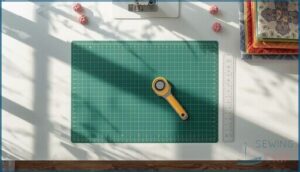
Before you make your first cut, you need to set yourself up for success! A well-organized workspace isn’t just about looking tidy—it’s about keeping your fingers safe and your cuts razor-sharp.
Here’s how to create the perfect cutting station that’ll have you slicing through fabric like a pro.
Setting Up a Safe, Clutter-free Area
Your cutting zone is command central—let’s make it work for you! Start with workspace optimization by clearing non-sewing items into labeled bins. Keep at least 18×24 inches dedicated to cutting tasks.
Here’s your clutter control checklist:
| Safety Protocols | Storage Solutions |
|---|---|
| Post safety cheat sheet nearby | Store blades in snap-lid cases |
| Keep first aid kit accessible | Use magnetic strips for rulers |
| Lock blade when not in use | Place notions in shallow trays |
| Establish weekly tidy routine | Return tools to designated spots |
Pro Tip: Bright, even lighting rated at 5000K mimics natural daylight—perfect for sewing safety precautions! Position your ergonomic setup with anti-glare mats and organized cords.
This craft room organization keeps rotary cutter safety front and center while boosting your crafting safety game!
Laying Fabric Flat on The Mat
Once your workspace is ready, it’s time for proper Fabric Smoothing! Lay your fabric on the Cutting Mat with zero wrinkles—press from the center outward. This Fabric Relaxation prevents warping during Fabric Cutting.
Here’s your Edge Alignment power move:
- Align grain lines with mat gridlines
- Keep fabric slack, not stretched tight
- Weight corners lightly to prevent curling
- Double-check squareness before ruler placement
Perfect Mat Preparation = Cutting Accuracy every time!
Using Gridlines for Accuracy
Your Cutting Mat’s gridlines aren’t just decoration—they’re your Grid Alignment superpower! Match the Acrylic Ruler edge to vertical gridlines for Fabric Orientation, then lock in your Cutting Precision. Cross-check horizontal lines for perfect 90° angles during Fabric Cutting and Quilting.
Pro Tip: Regular Mat Maintenance keeps those gridlines crisp, and Ruler Calibration ensures your Rotary Cutter glides true every single time!
Step-by-Step: How to Use a Rotary Cutter
Okay, you’ve got your mat laid out and your fabric ready to go—now it’s time to make some magic happen! The key to clean, confident cuts is mastering three simple techniques that work together like a well-oiled machine.
Let’s break down exactly how to position, hold, and cut your way to fabric-cutting freedom.
Positioning The Ruler and Fabric
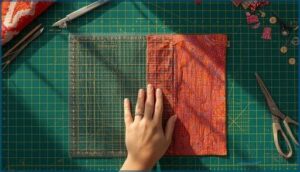
Before you roll that blade, fabric alignment is everything! Match your fabric’s woven threads to the cutting mat gridlines, then position your acrylic ruler so the measurement line sits fully on the fabric—not floating beyond it.
For edge trimming, let the rough edge extend past a gridline. Hold your quilting ruler firmly with your non-cutting hand to prevent shifting during fabric cutting. Pro tip: Use the “spider hand” technique for maximum stability!
Holding and Guiding The Cutter
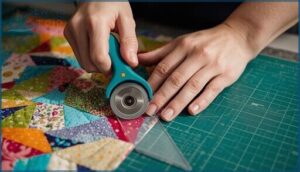
Now here’s where the magic happens—gripping your rotary cutter right makes all the difference! Use these hand placements for total blade control:
- Curl your fingers around the handle with a firm but relaxed grip
- Rest your thumb on top to guide steady pressure
- Keep your wrist neutral—no bending!
Roll the Olfa smoothly along your nonslip ruler’s edge, letting the blade glide rather than pressing hard.
Cutting Multiple Fabric Layers
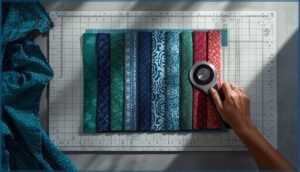
Stack up to seven layers of woven fabric for maximum efficiency—just make sure those edges align perfectly! Use weights or pins for layer alignment, then let your sharp rotary blade slice through the stack in one smooth pass.
For fabric stacking success, trim edges flush first and slide a transparent acrylic ruler over your layers to maintain precision techniques throughout multi-layer cutting.
Safety Tips for Using a Rotary Cutter
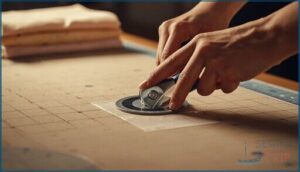
Rotary cutters are excellent tools, but they’re also incredibly sharp—so safety isn’t optional!
A few simple habits can protect your fingers and keep your cutting experience smooth and worry-free. Let’s cover the essential safety practices every sewist needs to master.
Proper Hand Placement and Grip
Think of your rotary cutter as an extension of your hand—not a power tool! Your thumb rests on top while your index finger curves around the front edge for cutter control. Keep your wrist alignment neutral and fingers relaxed.
Light, steady grip techniques prevent hand fatigue and give you precision with Olfa or any rotary cutter during fabric cutting techniques!
Safe Cutting Techniques
Stand up for better cutting posture and blade control—your back (and fabric!) will thank you. Always push the rotary cutter away from your body, keeping your arm straight and wrist aligned. Lock your safety guards between every pass!
Use firm fabric tension with your ruler hand while maintaining steady cutting angles. These fabric cutting techniques and sewing techniques keep quilting essentials safe and precise.
Storing and Locking The Blade
A locked blade is your best defense against surprise cuts—always engage that safety lock the second you finish a cut! Most rotary cutters feature slide or snap locking mechanisms that secure the blade with a satisfying click.
Store your cutter with blade guards in place, away from moisture and curious hands. Check that lock every single time—those blade storage habits protect everyone around your fabric cutting tools!
Maintaining and Replacing Rotary Cutter Blades
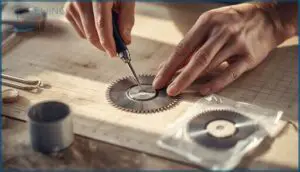
A sharp blade is your best friend regarding clean, smooth cuts—but it won’t stay sharp forever! Regular maintenance keeps your rotary cutter performing like new, and knowing when to swap out that blade saves you from frustrating snags and uneven edges.
Let’s break down how to care for your blade, spot the telltale signs it’s time for a replacement, and dispose of old blades safely.
Cleaning and Oiling The Blade
Your rotary cutter deserves a spa day! Regular blade maintenance keeps cuts crisp and prevents rust on your favorite fabric cutting tools. Here’s your cleaning checklist:
- Wipe the blade with a lint-free cloth after each project to banish dust and fibers
- Use isopropyl alcohol or mild dish soap to dissolve stubborn residue
- Dry thoroughly to prevent water spots and corrosion
- Apply light machine oil or sewing-specific blade oil with a clean cloth
- Store with blade locked in a dry spot away from humidity
Pro Tip: Oil after every cleaning session for smooth cutting action and rust prevention!
Signs Your Blade Needs Replacing
Your blade’s giving you clues it’s time to retire! Watch for dull edge signs like fabric snagging or requiring extra pressure—cutting inefficiency kills your mojo.
Check for visible nicks, rust detection spots, or bent sections that ruin straight lines.
OLFA and other rotary cutter blades need swapping every 1-2 months with heavy use. Don’t compromise safety or fabric cutting precision—fresh blades = happy quilting!
Safe Blade Disposal Methods
Once you’ve swapped out that dull blade, proper disposal keeps everyone safe! Pop used rotary cutter blades into a rigid, puncture-resistant sharps container—never toss them loose in the trash. Label your safety containers clearly and store them out of reach.
Check local waste management rules for blade storage and drop-off spots. Cut-resistant gloves add extra protection during sharps handling!
Top 5 Rotary Cutting Tools and Accessories
You’ve got your rotary cutter ready to roll—now let’s talk about the sidekick tools that’ll make your cutting game unstoppable!
The right accessories don’t just help; they transform your workspace into a precision cutting station.
Here are five must-have tools and accessories that’ll take your rotary cutting from “meh” to superb.
1. Creative Grids Quilting Ruler
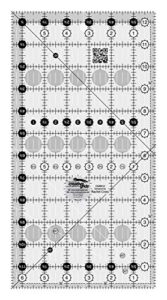
Precision meets ease when you pair your rotary cutter with the Creative Grids 6-1/2″ x 12-1/2″ Quilting Ruler! This USA-made gem features bold black-and-white markings that pop on any fabric, plus a game-changing non-slip grip that keeps your ruler planted while you cut.
You’ll love the 1/8″ increments, dashed 1/4″ seam allowance lines, and those handy 45-degree angles for trimming half-square triangles. The Turn-a-Round feature makes cutting 1/2″ strips a breeze—no more second-guessing your measurements!
| Best For | Quilters and sewers who need precise, reliable cuts for trimming blocks, sub-cutting strips, and working with half-square triangles. |
|---|---|
| Brand | Creative Grids |
| Primary Use | Measuring and cutting |
| Material | Plastic/Acrylic |
| Weight | 5.6 ounces |
| Skill Level | All levels |
| Country of Origin | USA |
| Additional Features |
|
- Non-slip grip keeps the ruler steady during cutting, so you get clean, accurate lines every time
- Clear markings with 1/8″ increments and helpful angle guides make measurements super easy to read on any fabric color
- Turn-a-Round feature and dashed seam allowance lines speed up common tasks like cutting 1/2″ strips and trimming blocks
- Higher price point compared to basic acrylic rulers from other brands
- The 6-1/2″ x 12-1/2″ size might feel limiting if you work on larger projects that need bigger rulers
- Non-slip grip requires careful storage to stay effective and prevent the ruler from getting damaged
2. Singer Sewing Machine Oil

Your rotary cutter deserves some TLC too! Singer Sewing Machine Oil (3.38 fl oz) isn’t just for machines—it’s perfect for keeping your rotary cutter blade gliding smoothly. Apply a tiny drop to the pivot point and wipe away excess to prevent fabric stains.
This light mineral oil reduces friction and prevents rust on metal parts, extending your tool’s life. Oil after cleaning lint buildup for best results! Store it in a cool spot, and you’ll enjoy whisper-quiet cuts every time.
| Best For | Anyone who wants to keep their sewing machine, rotary cutter, or other household tools running smoothly without spending a fortune on specialized lubricants. |
|---|---|
| Brand | SINGER |
| Primary Use | Machine lubrication |
| Material | Metal/Oil |
| Weight | 3.38 ounces |
| Skill Level | All levels |
| Country of Origin | Not specified |
| Additional Features |
|
- Works on way more than just sewing machines—rotary cutters, bike chains, locks, you name it
- A little goes a long way, so this 3.38 oz bottle lasts forever
- Keeps blades and moving parts from rusting and reduces that annoying squeaky noise
- The bottle doesn’t have a screw-top, which can be messy if you’re not careful
- It does expire after about 5 years, though most people won’t use it up that fast
- The bottle’s bigger than you’d think for how little oil you actually need per use
3. Olfa Deluxe Rotary Cutter
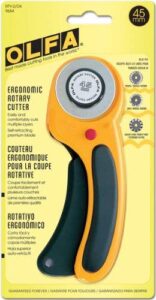
Need power and precision in one package? The Olfa Deluxe Rotary Cutter features a 45mm tungsten steel blade that slices through six layers of fabric like butter! Its squeeze trigger activates the blade and retracts it automatically for safety between cuts—genius for marathon quilting sessions.
The curved handle fits both righties and lefties comfortably, reducing wrist strain during long projects. Plus, you can swap in specialty blades like wave or pinking edges! The dual-action safety lock keeps everything secure when you’re not cutting.
| Best For | Quilters and crafters who work with multiple fabric layers and need a reliable, safe cutter that works comfortably for extended periods. |
|---|---|
| Brand | OLFA |
| Primary Use | Rotary cutting |
| Material | Metal/Rubber |
| Weight | Not specified |
| Skill Level | All levels |
| Country of Origin | Not specified |
| Additional Features |
|
- 45mm tungsten steel blade cuts through up to six layers of fabric with ease
- Squeeze trigger with automatic retraction keeps your fingers safe between cuts
- Ergonomic curved handle reduces wrist fatigue and works well for both right and left-handed users
- Safety shield can sometimes interfere with visibility for left-handed users
- Requires a cutting mat underneath to protect your work surface
- Extremely sharp blade needs careful handling and storage
4. Olfa Ergonomic Rotary Fabric Cutter
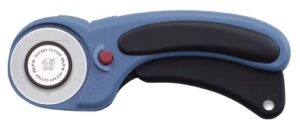
Comfort meets cutting power with this squeeze-to-cut wonder! The Olfa Ergonomic Rotary Fabric Cutter sports a 60mm tungsten carbide steel blade that powers through multiple fabric layers while your hand stays happy. That contoured, anti-slip handle? It’s designed for both right and left-handed sewists—no wrist fatigue, even during marathon cutting sessions!
Pro Tip: The dual-action safety lock lets you lock the blade open for continuous cutting or closed for safe storage. The auto-retract feature kicks in when you release the trigger—ingenious for keeping fingers safe between cuts!
| Best For | Sewists, quilters, and crafters who do a lot of cutting and want an ergonomic tool that reduces hand strain during long projects. |
|---|---|
| Brand | OLFA |
| Primary Use | Rotary cutting |
| Material | Rubber/Steel |
| Weight | 4.3 ounces |
| Skill Level | All levels |
| Country of Origin | Not specified |
| Additional Features |
|
- Ergonomic squeeze-trigger design works for both righties and lefties, cutting down on wrist fatigue during extended use
- Sharp 45mm tungsten steel blade slices through multiple fabric layers plus materials like vinyl, leather, and paper
- Smart safety features including dual-action lock and auto-retract trigger keep your fingers protected between cuts
- May need to tweak blade tightness to get it cutting just right
- Struggles with really thick fabrics or too many layers stacked up
- Blade will need replacing after heavy use, adding to long-term costs
5. Fiskars Self Healing Cutting Mat
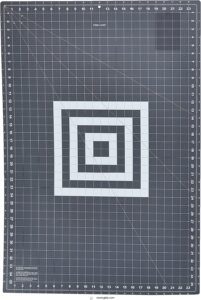
Your rotary blade deserves a stage that can take the spotlight—and this 24″ x 36″ gray beauty delivers! The Fiskars Self Healing Cutting Mat gives you room to cut full-width fabric straight off the bolt without shifting or repositioning.
Its dual-sided surface closes over shallow cuts automatically, keeping the grid crisp and your cuts straight session after session. Bold angle lines at 30, 45, and 60 degrees make triangle cutting a breeze!
Pro Tip: Store flat away from heat and sunlight—warped mats mean wonky cuts!
| Best For | Quilters, sewers, and crafters who need a large, durable workspace for cutting full-width fabric and precise angle work. |
|---|---|
| Brand | Fiskars |
| Primary Use | Cutting surface |
| Material | Multi-material |
| Weight | 2.61 pounds |
| Skill Level | All levels |
| Country of Origin | Not specified |
| Additional Features |
|
- Extra-large 24″ x 36″ surface handles full fabric widths and big projects without repositioning
- Self-healing double-sided design extends lifespan and keeps grid lines accurate
- Clear angle guides at 30, 45, and 60 degrees simplify triangle and bias cuts
- May arrive with warped corners that need heat treatment to flatten
- Requires careful flat storage away from heat and sunlight to prevent warping
- Higher price point compared to smaller cutting mats
Frequently Asked Questions (FAQs)
Do you push or pull a rotary cutter?
You’ll want to push the cutter away from your body—it’s the safer move! This keeps the blade moving away from you, reducing injury risk if your grip slips or the guard retracts unexpectedly.
What two things must you use with the rotary cutter?
You’ll need a self-healing cutting mat and an acrylic quilting ruler! These essential partners protect your work surface, guide your blade for straight cuts, and keep your fingers safely away from that sharp edge.
Can rotary cutters be used on paper or leather?
You can cut paper and thin to medium leather with rotary cutters. Use 28mm or 45mm blades for paper crafts, and grab 45mm or 60mm blades for supple leather projects.
How do you sharpen a dull rotary blade?
Grab a dedicated sharpener designed for circular blades! Rotate your blade slowly in one direction, following the manufacturer’s instructions. Always test on scrap fabric before cutting your project.
What causes fabric to slip during rotary cutting?
Fabric slips when your ruler isn’t pressed firmly enough, the blade is dull and drags, or you’re cutting slippery materials like satin without proper grip on your mat!
Are left-handed rotary cutters available for purchase?
Left-handed rotary cutters exist and are easy to find. Brands like Olfa, Fiskars, and Bold Notion Quilting offer dedicated left-handed models with mirrored grips, plus ambidextrous designs that work beautifully for both hands.
How do you cut curves with a rotary cutter?
Start by choosing a smaller 28mm blade—it hugs tight arcs beautifully! Rotate your fabric slowly while pushing the cutter forward in one smooth motion. Pause, pivot slightly, then keep rolling for smooth curves!
Conclusion
From clumsy cuts to confident quilter—that’s the transformation waiting for you! Now that you know how to use a rotary cutter for sewing, those perfect strips and precise seams are yours for the taking.
Remember: sharp blade, steady pressure, safety first. With practice, your hands will fly across the mat like a pro.
So grab that cutter, roll into your next project, and watch your fabric craft dreams slice right into reality! ✨
- https://joann.prf.hn/click/camref:1011l3xpmt/destination:https%3A%2F%2Fwww.joann.com%2Fp%2Folfa-45mm-magenta-ergonomic-rotary-cutter%2F19756907.html
- https://youtu.be/gf9QefscvfU
- https://www.youtube.com/watch?v=QaI-flblEJU
- https://www.directsewing.co.nz/blogs/news/how-to-use-a-rotary-cutter-what-you-need-how-it-helps-choosing-the-right-blade-size
- https://www.sailrite.com/scissors-or-rotary-cutters