This site is supported by our readers. We may earn a commission, at no cost to you, if you purchase through links.

I learned the hard way that a dull blade can ruin hours of careful piecing work—and that was after watching a student accidentally slice through her measuring tape with a brand-new rotary cutter she didn’t know how to handle safely.
The right rotary cutter transforms quilting from a frustrating chore into a precise, enjoyable craft. You need sharp blades that glide through multiple fabric layers, comfortable grips that won’t cramp your hand during marathon cutting sessions, and safety features that protect your fingers without slowing you down.
Whether you’re a beginner piecing your first lap quilt or an experienced quilter tackling intricate designs, choosing the right rotary cutter means smoother cuts, less wasted fabric, and fewer trips to sharpen or replace blades.
Table Of Contents
- Key Takeaways
- Top 9 Rotary Cutters for Quilting
- 1. Rotary Cutter For Fabric And Crafting
- 2. Olfa Rotary Cutter Tool
- 3. Fiskars Rotary Fabric Cutter Tool
- 4. SOMOLUX Rotary Cutter Blades
- 5. Martelli Right Handed Ergonomic Fabric Rotary Cutter
- 6. Clover Rotary Fabric Cutter
- 7. Kai Rotary Cutter Tool
- 8. June Tailor Rotary Cutter Tool
- 9. Truecut Ergonomic Rotary Cutter Tool
- Key Features to Look for in Rotary Cutters
- Essential Accessories for Rotary Cutting
- Rotary Cutter Safety and Maintenance Tips
- Choosing The Best Rotary Cutter for Your Needs
- Frequently Asked Questions (FAQs)
- Conclusion
Key Takeaways
- A sharp blade with proper ergonomic design transforms quilting from frustrating to precise, reducing hand fatigue and wasted fabric while maintaining clean cuts through multiple layers.
- The 45mm rotary cutter handles most quilting projects effectively, while 60mm blades work best for thick materials and 28mm sizes excel at curves and detailed trimming.
- Essential accessories like self-healing mats, clear acrylic rulers, and quality replacement blades are just as critical as the cutter itself for achieving professional results.
- Safety features including blade guards, retractable mechanisms, and proper storage practices protect your fingers while extending the tool’s lifespan through regular cleaning and maintenance.
Top 9 Rotary Cutters for Quilting
You’ve got plenty of choices among rotary cutters, but not all of them deliver the same performance. I’ve tested dozens of these tools over the years, and I know what really works for quilters at every skill level.
If you’re serious about fabric work, choosing from the best rotary cutters for professional seamstresses can transform how efficiently you cut through multiple layers.
Here are nine rotary cutters that stand out for their sharpness, comfort, and reliability.
1. Rotary Cutter For Fabric And Crafting
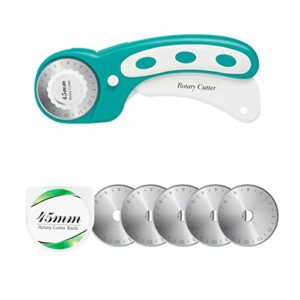
The Headley Tools 45mm Rotary Cutter really stands out for versatility. You get a sharp SKS7 stainless steel blade that cuts fabric, vinyl, leather, and paper with ease. Five replacement blades are included.
The soft-grip handle fits comfortably in your hand, reducing fatigue during long sessions. It works for both right- and left-handed users, which is a nice touch.
At 5 ounces and measuring 6.49 inches long, it feels balanced and controlled in your palm.
| Best For | Crafters and quilters who need a versatile rotary cutter for fabric, paper, and other materials without heavy daily use. |
|---|---|
| Blade Size | 45mm |
| Handle Design | Ergonomic soft-grip |
| Hand Compatibility | Both hands |
| Safety Feature | Lock button |
| Material Quality | SKS7 stainless steel |
| Weight | 5 ounces |
| Additional Features |
|
- Sharp SKS7 stainless steel blade cuts through fabric, vinyl, leather, and paper smoothly
- Ergonomic soft-grip handle reduces hand fatigue and works for both righties and lefties
- Comes with 5 replacement blades included in the package
- Durability issues reported by some users, especially with frequent use
- Bearings can wear out over time and affect cutting performance
- Safety lock mechanism could be more reliable and easier to operate
2. Olfa Rotary Cutter Tool
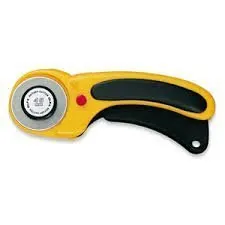
The Olfa 156B rotary cutter brings tungsten steel durability to your cutting table. You’ll notice the ergonomic yellow handle with its textured grip right away—it’s designed to reduce hand fatigue during those marathon cutting sessions.
This cutter manages up to six layers of fabric at once, making strip cutting faster. The blade self-retracts into the handle when you release pressure, protecting your fingers between cuts. It weighs just 4.6 ounces and works equally well for right- and left-handed quilters.
| Best For | Quilters and crafters who need a reliable, ambidextrous rotary cutter that can handle multiple fabric layers with comfortable, fatigue-free use. |
|---|---|
| Blade Size | 45mm |
| Handle Design | Comfort-grip |
| Hand Compatibility | Both hands |
| Safety Feature | Self-retracting blade |
| Material Quality | Alloy steel |
| Weight | 4.6 ounces |
| Additional Features |
|
- Cuts through up to six layers of fabric at once, speeding up strip cutting and large projects
- Ergonomic comfort-grip handle works for both right- and left-handed users without hand strain
- Self-retracting blade adds safety between cuts and includes a replacement blade
- Instructions may be in Japanese, requiring you to look up guidance online
- Takes some getting used to if you’re new to rotary cutters
- Blade sharpness decreases over time and needs replacement
3. Fiskars Rotary Fabric Cutter Tool
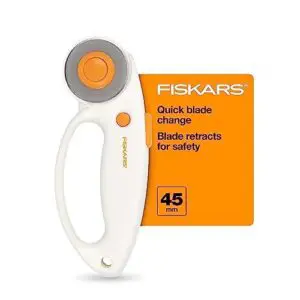
Fiskars brings a spring-loaded trigger to your cutting routine, and you’ll feel the difference in comfort. The curved handle fits naturally whether you’re right- or left-handed, guiding your pressure through straight strips and gentle curves alike.
This 45mm cutter slices through multiple fabric layers without fraying edges. The blade locks into place when you’re done cutting, and replacement blades are easy to find. That ergonomic loop design really stands out during long sessions at your cutting mat.
| Best For | Quilters and crafters who cut multiple fabric layers frequently and want a comfortable rotary cutter that works for extended sessions. |
|---|---|
| Blade Size | 45mm |
| Handle Design | Loop grip |
| Hand Compatibility | Both hands |
| Safety Feature | Sliding lock button |
| Material Quality | Premium steel |
| Weight | Not specified |
| Additional Features |
|
- Ergonomic loop grip reduces hand fatigue during long cutting projects
- 45mm steel blade cuts cleanly through multiple layers without fraying
- Easy blade replacement with snap-in design keeps your cutter performing like new
- Blade sharpness decreases over time and needs periodic replacement
- No storage case included to protect the blade when not in use
- Not designed for cutting very thick or hard materials
4. SOMOLUX Rotary Cutter Blades
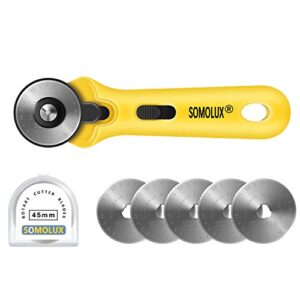
SOMOLUX replacement blades give you a budget-friendly way to keep your cutter performing sharp. These 45mm blades are made from Japanese SKS-7 steel and go through four sharpening stages, so they’ll slice cleanly through multiple fabric layers without snagging.
You get five blades per pack, and they fit most standard 45mm rotary cutters. Just watch for that protective oil coating before your first use, and wipe each blade down carefully to avoid fingerprints or rust later on.
| Best For | Quilters and crafters who go through a lot of blades and want a solid backup set without spending too much. |
|---|---|
| Blade Size | 45mm |
| Handle Design | Anti-slide |
| Hand Compatibility | Both hands |
| Safety Feature | Standard safety |
| Material Quality | Japanese SKS-7 steel |
| Weight | 1.13 ounces |
| Additional Features |
|
- Five-pack gives you plenty of replacements at a price that won’t hurt your budget
- Sharp enough to cut multiple fabric layers cleanly thanks to the four-stage sharpening process
- Fits most standard 45mm rotary cutters, so you’re not locked into one brand
- Oil coating means extra prep work before you can actually use them
- Quality can be hit or miss—some users report uneven sharpening straight out of the package
- Won’t last as long as pricier titanium options, so you’ll replace them more often
5. Martelli Right Handed Ergonomic Fabric Rotary Cutter
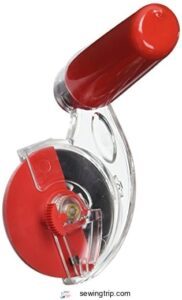
If your wrist aches after a few hours of cutting, the Martelli right-handed cutter really stands out. This 45mm rotary tool shifts pressure from your wrist to your whole palm and arm, making long sessions far more comfortable.
Many rotary cutters for crafts now feature this same ergonomic design, helping quilters and sewers avoid hand fatigue during extended projects.
The blade guard flips open with one finger for quick changes. Martelli blades last three to five times longer than standard ones, and you’ll notice that sharpness holds up through straight lines and angled cuts alike. Just remember it’s built exclusively for right-handed quilters.
| Best For | Right-handed quilters and sewers who experience wrist pain or have arthritis and need a comfortable cutter for long projects. |
|---|---|
| Blade Size | 60mm |
| Handle Design | Ergonomic |
| Hand Compatibility | Right-handed only |
| Safety Feature | Standard safety |
| Material Quality | Precision engineered |
| Weight | Not specified |
| Additional Features |
|
- Ergonomic design shifts pressure to your palm and arm, reducing wrist fatigue during extended use
- Blades last three to five times longer than standard rotary cutter blades
- One-finger blade guard makes blade changes quick and easy
- Only works for right-handed users, no left-handed option available
- Takes some getting used to if you’re switching from a traditional rotary cutter
- Requires periodic blade replacement as blades wear down over time
6. Clover Rotary Fabric Cutter
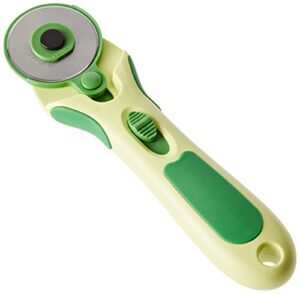
A soft-cushion handle makes the Clover cutter feel natural in your hand for hours at a time. You’ll get precise cuts whether you hold it straight up or at an angle, since the blade exposure is calibrated for control.
This 45mm tool works for both lefties and righties—just rotate the safety cover to match your grip. The blade guard retracts when you’re ready to cut and locks back into place when you’re done.
Replacement blades keep it running for years.
| Best For | Quilters and sewers who need a comfortable, ambidextrous rotary cutter that works for extended cutting sessions and handles various fabric thicknesses. |
|---|---|
| Blade Size | 45mm |
| Handle Design | Soft-cushion |
| Hand Compatibility | Both hands |
| Safety Feature | Standard safety |
| Material Quality | Alloy steel |
| Weight | 0.48 ounces |
| Additional Features |
|
- Soft-cushion handle reduces hand fatigue during long projects and works equally well for right or left-handed users
- 45mm blade cuts through multiple fabric layers and leather with good control at any angle
- Easy blade replacement system keeps the tool functional for years without needing to buy a new cutter
- Blades can dull faster than expected, especially with heavy use on thicker materials
- Some units arrive with defective blades or may need screw tightening out of the box
- Requires careful handling since the exposed blade can cause injury if not properly locked
7. Kai Rotary Cutter Tool
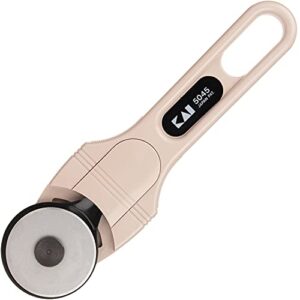
If you cut for hours, the Kai cutter won’t tire your hand. Its tungsten steel blade stays sharp through stack after stack of fabric, so you’re not stopping to swap blades every other project.
The universal grip works for both righties and lefties without any adjustment. You’ll appreciate the safety lock—it keeps the 45mm blade tucked away when you set the cutter down.
Blade changes are quick since there’s no fiddly spring to lose. This tool delivers clean cuts and holds up over time.
| Best For | Quilters and sewers who need a reliable, comfortable rotary cutter for extended cutting sessions with fabric. |
|---|---|
| Blade Size | 45mm |
| Handle Design | Natural grip |
| Hand Compatibility | Both hands |
| Safety Feature | Automatic retraction |
| Material Quality | Carbon tool steel |
| Weight | 3.17 ounces |
| Additional Features |
|
- Sharp tungsten steel blade cuts through multiple fabric layers without frequent replacement
- Ambidextrous design works comfortably for both right and left-handed users
- Safety lock automatically retracts the blade to prevent accidents when not in use
- Blade screw can loosen over time and needs occasional tightening
- Not designed for heavy-duty or industrial cutting tasks
- Automatic retraction feature may slow down workflow for some users
8. June Tailor Rotary Cutter Tool
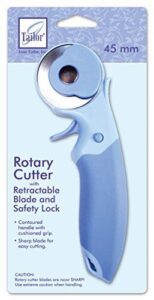
The June Tailor cutter gives you a 45mm blade and a cushioned grip that makes long cutting sessions more comfortable. You can use it with either hand—the design works for everyone.
When you press the button, the blade exposes for cutting. Release it, and the blade retracts automatically to keep things safe. The contoured handle fits naturally in your palm.
You’ll find it works well with standard mats and rulers for precise cuts. Just keep the blade housing clean to maintain smooth action.
| Best For | Quilters and sewers who need a reliable rotary cutter for straight cuts through multiple fabric layers and want a comfortable grip for extended projects. |
|---|---|
| Blade Size | 45mm |
| Handle Design | Contoured cushioned |
| Hand Compatibility | Both hands |
| Safety Feature | Retractable with lock |
| Material Quality | Standard steel |
| Weight | 1.41 ounces |
| Additional Features |
|
- Ambidextrous design with cushioned grip reduces hand fatigue during long cutting sessions
- Automatic blade retraction and safety lock provide extra protection when not in use
- Compatible with standard 45mm replacement blades and works with specialty blades like skip-cut and wavy patterns
- Blade sharpness can be inconsistent, sometimes requiring multiple passes for clean cuts
- Safety button placement feels awkward and can interrupt your cutting flow
- Some units arrive with quality issues like bent parts or misaligned components
9. Truecut Ergonomic Rotary Cutter Tool
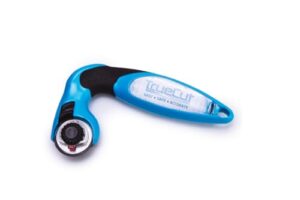
The TrueCut My Comfort Cutter stands out with its curved Comfort Curve Grip that keeps your wrist in a natural position while cutting. You’ll notice less strain because the handle places cutting force directly over the blade.
This cutter comes in 28mm, 45mm, and 60mm sizes to match your project needs. The ruler track guide system interlocks with TrueCut rulers to prevent slipping and keep your cuts straight.
It works for both left- and right-handed quilters, and the sliding blade guard keeps the edge protected when you’re not cutting.
| Best For | Quilters, crafters, and sewers who work on detailed projects and need an ergonomic tool that reduces hand and wrist strain during long cutting sessions. |
|---|---|
| Blade Size | 28mm |
| Handle Design | Ergonomic |
| Hand Compatibility | Both hands |
| Safety Feature | Standard safety |
| Material Quality | Durable steel |
| Weight | 4.3 ounces |
| Additional Features |
|
- Curved Comfort Curve Grip keeps your wrist in a natural position and reduces strain, making it ideal for people with arthritis or anyone doing extended cutting work
- Works seamlessly with TrueCut rulers through the ruler track guide system to prevent slipping and ensure precise, straight cuts
- Versatile design that accommodates both left- and right-handed users with multiple blade size options (28mm, 45mm, 60mm) for different project needs
- You’ll need to buy TrueCut rulers separately to get the full benefit of the interlocking track system
- Takes some time to adjust if you’re used to traditional rotary cutters, as the ergonomic design changes how you hold and use the tool
- The unique grip shape may feel awkward or uncomfortable for some users, and it won’t work well with all ruler brands
Key Features to Look for in Rotary Cutters
Not all rotary cutters are created equal, and knowing what to look for can save you time, frustration, and money. The right features make the difference between a tool that feels like an extension of your hand and one that sits in your drawer collecting dust.
Let’s break down the essential features that separate excellent rotary cutters from the rest.
Blade Sharpness and Material
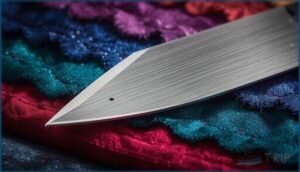
A sharp blade is your best friend when precision matters. Look for rotary cutters with tungsten tool steel blades—they deliver exceptional edge retention and cutting efficiency.
The 45mm Endurance Rotary Blade, for instance, stays sharp twice as long as standard options. Material science drives performance: high-grade steel maintains blade geometry through repeated use, ensuring clean cuts without pulling fabric.
Ergonomic and Ambidextrous Designs

Your hands shouldn’t ache after an hour at the cutting mat. Ergonomic grips with contoured finger grooves and soft rubber grips reduce palm pressure by 18 percent during extended sessions.
Ambidextrous designs featuring symmetrical bodies and reversible blade housings let lefthanded and righthanded quilters work comfortably.
Balanced tools maintain a neutral wrist position, cutting wrist torque by 12 percent—comfort grips with adaptive controls make all the difference.
Safety Locks and Blade Guards
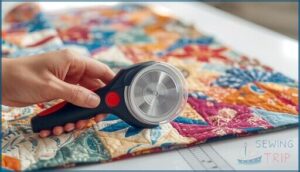
Comfort means nothing if your cutter isn’t safe. Look for a safety lock that prevents accidental blade engagement when you set the tool down—a smart locking system secures the blade with one intentional motion.
- Top-mounted guards retract smoothly during cuts, then snap back into place
- Transparent blade guards let you see the cutting line while protecting your fingers
- Interlocking mechanisms disable operation if the guard isn’t fully closed
- Red lock indicators show when the blade is secured and not ready to cut
Clean guards regularly to prevent sticky buildup that slows protection.
Blade Size Options for Quilting
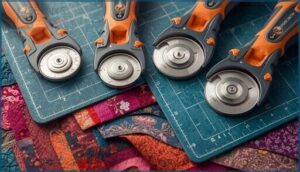
Your rotary cutter blade size directly impacts cutting efficiency and quilting accuracy. The 45mm blade manages most standard fabric cutting jobs with precision, cutting through two to four layers easily. For thick fabrics like fleece, the 60mm blade speeds up your work. Smaller 18mm and 28mm blades excel at curves and detailed trimming, while specialty pinking blades add edge finishing options.
For a detailed overview of the, check out this helpful resource.
Ease of Blade Replacement

You want blade changes to feel quick, not frustrating. Tool-free designs let you swap blades in under 30 seconds without hunting for tiny wrenches. Look for rotary cutters with clear alignment guides and secure safety locks that keep everything steady during replacement. A well-designed mechanism means you’ll actually maintain blade sharpness instead of putting it off.
- Quick release levers eliminate the hassle of searching for lost tools
- Two-stage safety locks protect your fingers while you work confidently
- Visual alignment indicators guarantee your replacement blades seat perfectly every time
- Universal blade compatibility gives you freedom to choose quality over brand loyalty
Essential Accessories for Rotary Cutting

A rotary cutter won’t reach its full potential without the right accessories backing it up. You need a few essential tools to protect your workspace, guarantee accurate cuts, and keep your blades in top shape.
Let’s look at the must-have accessories that’ll take your rotary cutting from good to great.
Self-healing Cutting Mats
You can’t make accurate cuts without the right foundation. A self-healing mat protects your work surface while extending your rotary cutter blade life through its five-layer PVC construction. The soft outer layers and hard center core let the surface close minor cuts and maintain flatness through countless projects.
| Feature | Benefit | Care Tip |
|---|---|---|
| Grid markings (imperial/metric) | Precise alignment for straight cuts | Clean with damp cloth and mild soap |
| Multi-layer PVC structure | Resists warping and blade dulling | Store flat in cool, dry place |
| Self-healing surface | Recovers quickly after each cut | Rotate usage area to distribute wear |
| Non-glare coating | Easier measurement reading | Avoid direct heat and harsh solvents |
The gridded cutting surfaces provide measurement guides that work seamlessly with your fabric cutting and rotary cutter. These mats maintain their rigidity under repeated use, and proper mat maintenance—like rotating your cutting area—really extends their lifespan for years of quilting projects. For more on how the unique semi-solid mat structure works, explore detailed guides from cutting mat manufacturers.
Quilting Rulers and Measuring Tools
Precision in patchwork starts with the right quilting rulers and measuring tools. Clear acrylic rulers give you visibility over fabric while grid patterns guarantee cutting accuracy on your cutting mat.
- Long rectangular rulers (6″ x 24″) keep edge alignment consistent when cutting strips and borders
- Square rulers up to 6.5″ with 45-degree lines help you square blocks and trim half-square triangles
- Specialty triangle and diamond rulers provide fixed angles for complex shapes
High-contrast markings in 1/8″ and 1/4″ increments support precise measurement techniques, while non-slip grips keep these quilting tools stable during rotary cutter work.
Replacement Blades and Blade Kits
You’ll keep your rotary cutter performing sharp cuts by stocking the right replacement blades. Carbon steel blades achieve precise edges, while ceramic blades stay sharper longer between changes. Titanium coating extends blade life during heavy quilting sessions.
| Blade Material | Key Benefit |
|---|---|
| Carbon Steel | Sharpest initial edge |
| Stainless Steel | Rust resistance |
| Ceramic | Longest lasting sharpness |
| Titanium Coated | Reduces fabric residue |
Standard 45mm rotary blade packs include safety locks and blade storage cases.
Storage Solutions for Tools and Accessories
Your quilting tools deserve organized protection. Rolling tool cabinets with 5 to 8 drawers keep rotary cutters and sewing accessories secure, while adjustable drawer organizers create custom compartments for blades and rulers.
Wall mounts free up valuable workspace for your cutting mat.
Portable crates let you move your entire setup to classes or retreats without hunting for missing pieces.
Rotary Cutter Safety and Maintenance Tips

A sharp rotary cutter is only as safe as the person using it. I’ve seen too many quilters rush through blade changes or skip basic maintenance, and that’s when accidents happen.
Let’s cover the essential practices that’ll keep your tools performing beautifully and your fingers intact.
Proper Handling and Storage Practices
Your rotary cutter deserves the same respect you’d give a chef’s knife. Always retract the blade and engage the safety lock after each cut, then store your tool in a dedicated pouch on a high shelf away from children. Proper storage protects both you and your investment.
- Keep blades facing inward in protective sheaths to prevent accidental contact
- Store cutters in dry environments between 60-80°F to maintain ergonomic handle integrity
- Use padded cases when transporting tools to prevent blade damage from jostling
Cleaning and Lubricating Mechanisms
A clean cutter works like a dream, and you’ll notice the difference after just a few simple steps. Remove debris from the blade housing with a soft brush, then apply a light film of silicone oil to pivot points and the safety lock.
I recommend this tool maintenance routine after every 20 hours of use to keep your ergonomic handle smooth and extend your rotary blade’s lifespan.
Safe Blade Changing Procedures
Your tools stay sharp, but blade changes demand extra caution. I always wear cut-resistant gloves and safety glasses when handling replacement blades—this rotary blade safety step protects you from serious injury.
Follow these blade safety tips:
- Engage the safety lock before removing old blades
- Handle sharp blade care by gripping edges only, never the cutting surface
- Use manufacturer tools for bolt removal, not makeshift substitutes
- Check that self-retract mechanisms work properly after installation
- Dispose of used blades in rigid containers
Proper tool handling best practices make rotary cutter precautions second nature.
Extending Blade and Tool Lifespan
Sharp blades cut better and last longer with consistent care. Store your rotary cutter in a dry cabinet with the blade locked to prevent rust. Wipe the blade with a lightly oiled cloth after each session, and apply a drop of machine oil to pivot points monthly—this simple tool maintenance and longevity routine keeps edge preservation strong.
| Maintenance Task | Frequency |
|---|---|
| Blade sharpening check | Every 20 hours |
| Cutter calibration | Quarterly |
| Durability testing | Monthly |
Track your cuts to predict when replacement blades are needed, and keep spare kits on hand for uninterrupted work.
Choosing The Best Rotary Cutter for Your Needs

You’ve learned how to keep your rotary cutter safe and running smoothly. Now it’s time to find the perfect tool for your quilting style.
Let’s break down exactly what to look for so you can cut with confidence and comfort every time you sit down to work.
Comparing Cutters for Beginners Vs. Advanced Quilters
Your skill level shapes what you need in a rotary cutter. Beginners do best with lightweight 28mm models that feature simple blade changes and obvious safety locks to build confidence. Experienced quilters often grab heavier 45mm or 60mm cutters with ergonomic holds and quick-change systems for all-day precision.
Both groups benefit when comfortable grips reduce hand strain during those long cutting sessions.
Adapting for Left- and Right-handed Users
Hand orientation matters more than most quilters realize. Whether you’re right-handed or left-handed, your cutter should feel like a natural extension of your grip. Look for these features:
- Ambidextrous Design with symmetric ergonomic grips
- Reversible blade guards for safe blade accessibility from either side
- Ergonomic considerations for crafters — triggers and knobs adjustable for both orientations
Left-handed crafting solutions exist, so don’t settle.
Evaluating Value and Durability
Quality outlasts price every time when you’re choosing quilting tools. A rotary cutter with full metal grips and tungsten carbide blades usually lasts 5+ years with proper maintenance.
Here’s a quick value comparison:
| Feature | Budget Cutter | Premium Cutter |
|---|---|---|
| Blade Life | 3-6 months | 6-12 months |
| Warranty | 1 year | Lifetime |
| Handle Material | Plastic | Metal/Reinforced |
| Cost Per Use | Higher | Lower |
| Repairability | Limited | Modular Parts |
Durability tests show that ergonomic design and rust-resistant coatings markedly extend tool longevity, making premium options the smarter investment for serious quilters.
Considering Comfort for Long Quilting Sessions
When you’re cutting for hours, comfort isn’t optional—it’s essential. An ergonomic handle with soft grips distributes pressure across your palm, reducing wrist pain and hand fatigue during marathon sessions.
Watch for these comfort features:
- Ergonomic design that maintains neutral wrist posture
- Cushioned grips preventing hand strain reduction needs
- Proper cutting posture setup minimizing eye strain
- Wrist support through curved grips fitting naturally in your hand
Your body will thank you after those all-day projects.
Frequently Asked Questions (FAQs)
What is the best rotary cutter for quilters?
You’d think one rotary cutter would suit everyone, but the best choice depends on your preferences—whether you prioritize cutting precision, quilting efficiency, or brand reputation in fabric cutting tools and rotary cutter reviews.
What is the difference between a bush hog and a rotary cutter?
Bush hogs tackle thick brush and small trees with free-swinging blades, while rotary cutters handle grass and light weeds with fixed blades—completely different tools than the fabric rotary cutters quilters use.
What size rotary cutter do I need for quilting?
You’ll face a million fabric cutting decisions, but cutter size boils down to your quilting tasks.
The 45mm rotary cutter manages most projects, while 60mm manages thick layers and 28mm navigates curves beautifully.
Can rotary cutters work on thick batting layers?
Yes, rotary cutters handle thick batting when you use a sharp blade and steady pressure. A 60mm blade with a quality self-healing mat really stands out for cutting dense batting layers cleanly.
How often should I replace my rotary blade?
Replace your rotary blade when it skips or tears fabric. For light quilting on cottons, blades usually last 2 to 4 projects. Heavier fabrics require more frequent replacement blades after 1 to 2 projects.
What causes rotary cutter blades to skip stitches?
Think of skipped stitches as your rotary cutter waving a white flag. Dull blades, worn mats, incorrect blade alignment, fabric type mismatches, and poor cutting technique all contribute—regular maintenance tips and timely replacement blades restore precision cutting.
Are rotary cutters safe for children to use?
Rotary cutters aren’t recommended for young children due to razor-sharp blades.
Kids under 12 need continuous adult supervision, safety locks, and protective gloves. Older children with proper training can use them under direct oversight.
Can I sharpen rotary cutter blades at home?
With the right technique, you can sharpen rotary cutter blades at home using sandpaper or sharpening stones. Hold the blade at about 20 degrees, working from coarse to fine grit for best results.
Conclusion
Picture your next quilt block: clean edges meeting perfectly, no frayed threads or crooked seams. That’s what happens when you match the right rotary cutter to your quilting style.
Your hands stay comfortable, your cuts stay accurate, and those safety features keep you focused on the fabric instead of worrying about accidents.
Take what you’ve learned here, test a few options, and discover how the right tool transforms your cutting time from tedious prep work into creative momentum.
- https://www.sewingmachinesplus.com/Grace-Ultimate-Cutting-Collection.php?srsltid=AfmBOoq71IXGvaKWyKSdsGS6zhcdX4dkwNu_Q-x7qIcqiCEGEIRgrPoi
- https://meissnersewing.com/products/grace-my-comfort-rotary-cutter
- https://www.jbsewing.com/en/truecut-my-comfort-cutter
- https://www.kenssewingcenter.com/grace-truecut-straight-rotary-cutter-60mm.html
- https://www.allbrands.com/products/54996