This site is supported by our readers. We may earn a commission, at no cost to you, if you purchase through links.
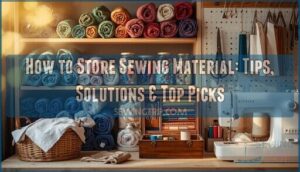
A tangled pile of fabric on the floor isn’t just an eyesore—it’s a slow drain on your time and creativity. Every minute you spend hunting for that half-yard of linen or untangling a bolt of cotton is a minute you’re not sewing.
Most sewists underestimate how much their storage setup shapes their whole workflow, from the projects they start to the ones they actually finish.
The good news is that storing your sewing materials doesn’t require a dedicated room or an expensive overhaul. A few smart habits and the right solutions can transform even a cramped corner into a system that works with you.
Table Of Contents
Key Takeaways
- Rolling works best for lightweight cottons and long yardage, while folding suits fat quarters and bulky knits—mixing both methods prevents fabric creasing over time.
- Keeping your storage space between 60°F and 75°F with 40–50% humidity protects your fabric from mold, fading, and pest damage before it ever starts.
- Clear bins sorted by fabric type and color, combined with simple labels showing fiber content and yardage, turn a chaotic stash into a system you’ll actually stick with.
- Delicate fabrics like silk and chiffon need breathable containers and acid-free tissue between layers, while cedar blocks or lavender sachets in airtight bins keep moths and silverfish away from everything else.
Essential Tips for Storing Sewing Material
Good storage habits don’t just keep your sewing room tidy — they protect your fabric and save you real time when a project calls. A few practical shifts in how you think about your collection can make a big difference.
A dedicated sewing accessories storage case means everything has a home, so you spend less time searching and more time actually making.
Here are the essential tips to get you started.
Assessing Your Fabric Collection
Before diving into fabric storage solutions, take stock of what you actually own. A solid fabric inventory starts with counting your cuts, measuring yardage, and noting fiber identification details for each piece. Do a quick damage assessment too — check for stains, weak fold lines, or fraying edges.
Good collection prioritization means keeping only what fits your current projects and sewing style. Effective sewing also requires managing your pattern collection to optimize space and efficiency.
Folding Vs. Rolling Fabric
Once you know what you have, decide how to store it. Rolling works well for lightweight cottons and long yardage — it reduces fabric wrinkles and improves storage efficiency. Folding techniques suit fat quarters and bulky knits better.
Fabric creasing is a real concern with long-term fold storage, so mix both methods. Good roll storage and smart folding together make fabric storage and organization much easier.
Organizing by Fabric Type and Color
Once your fabric is folded or rolled, sorting it makes everything faster. Start with type sorting — group quilting cottons, knits, and denim separately. Then apply color coding within each group.
- Use fabric organizer boards for yardage
- Try fabric bolts display for larger pieces
- Keep fabric grouping consistent per shelf
This simple fabric organization system turns a chaotic stash into a proper storage system you’ll actually use. Effective fabric storage solutions involve using fabric storage tips to optimize space.
Labeling and Inventory Systems
Once your stash is sorted, labeling keeps it that way. A simple label maker works great — note fiber content, yardage, and care instructions right on each bin.
Want to go further? Inventory apps like Cora let you photograph and track everything digitally. Barcode systems and RFID tags take labeling and inventory management to the next level, making fabric tracking almost automatic.
Creative Fabric Storage Solutions
Once you’ve got a handle on your fabric basics, the fun part begins — figuring out where to actually put everything. The right storage solution can turn a chaotic pile of fabric into something you’re genuinely proud to show off.
Here are a few creative options worth considering.
Clear Plastic Bins and Visibility
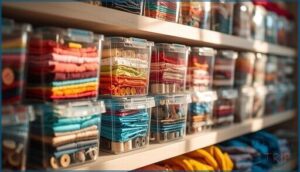
Clear plastic bins are a revolutionary tool for sewing organization. Storage visibility means you can spot exactly what you need without digging through every container.
For even more ways to maximize your space, these sewing room design and organization ideas show how clear bins fit beautifully into a well-planned setup.
These bins offer real plastic durability — BPA-free polypropylene that holds up for years. They’re solid fabric storage and sewing storage picks for protecting your materials from dust and pests.
Use simple labeling systems on the outside, and bin selection becomes straightforward.
DIY and Decorative Fabric Bins
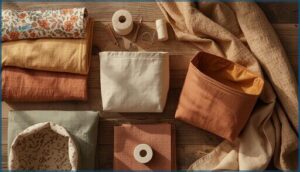
Making your own storage is one of the smartest DIY Storage Solutions you can try. Bin Construction is simpler than it sounds — canvas or linen outer layers, a cotton lining, and fusible interfacing give your DIY Fabric Bins real structure.
Great Fabric Bin Designs start with:
- Outer fabric: canvas or home decor prints
- Lining: smooth cotton broadcloth
- Structure: Pellon 987F or fusible fleece
Custom Fabrication means your Decorative Storage actually fits your space.
Hanging and Vertical Organizers
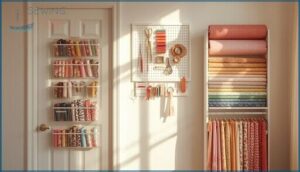
Vertical space is your secret weapon. Over-the-door shoe organizers give you 20 clear pockets — perfect for small cuts, notions, and tools. Wall-mounted systems and hanging fabric organizers free up your floor fast.
Closet organizers with hooks and hangers keep bolts wrinkle-free, while vertical panels and folding shelves let you see everything at a glance without digging.
Utilizing Rolling Carts and Pegboards
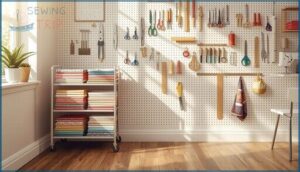
Rolling carts and pegboards are a power duo for sewing organization. Roll your cart to wherever you’re working — the ironing board, cutting table, anywhere.
Keep tools on the pegboard, fabric on the cart. That simple split makes pegboard design and cart organization work together for real storage efficiency.
Your whole workspace stays clear, and everything you need stays close.
Protecting and Maintaining Fabric Quality
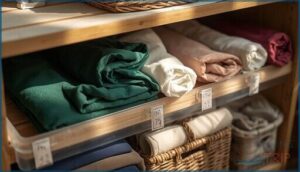
Storing fabric the right way is about more than just keeping things tidy. The wrong conditions — too much moisture, direct sunlight, or even dust — can quietly ruin your materials before you ever get to use them.
Moisture, sunlight, and dust can quietly ruin your fabric before you ever get to use it
Here’s what you need to know to keep every piece of your collection in great shape.
Controlling Humidity and Temperature
Think of your fabric like a sponge — it reacts to everything around it. For proper moisture and humidity control, keep your space between 60°F and 75°F with humidity levels at 40 to 50 percent.
A small dehumidifier manages moisture management beautifully in damp rooms. Add a digital hygrometer for easy climate monitoring, and check it weekly to stay ahead of any problems.
Preventing Sun Exposure and Fading
Sunlight is one of the sneakiest threats to your fabric stash. UV protection isn’t optional — it’s essential fabric care. Here’s how to keep your colors vibrant through smart textile management:
- Store fabrics in opaque storage containers away from windows
- Apply UV-blocking window film for effective light filtering
- Use blackout curtains to block direct sun from shelves
- Practice fabric rotation every few months for fading prevention
- Choose closet storage for complete, reliable fabric shielding
Safe Storage for Delicate Materials
Delicate fabrics like silk, lace, and chiffon need a little extra love. Breathable containers made from muslin or cotton are your best bet for fabric storage — they let air circulate without trapping moisture.
Tuck acid-free tissue between layers for solid material preservation. For folding techniques, align along the grain and roll when you can.
Good delicate fabric care really does make a difference.
Pest and Dust Prevention Strategies
Moths and silverfish don’t need much of an invitation. For solid pest prevention and control, tuck lavender sachets or cedar blocks into your bins — they work as natural pest repellents for weeks.
Airtight bins with gasket seals act as reliable dust barriers. Pair that with moisture control and breathable containers, and your fabric preservation and conservation efforts stay strong season after season.
Top 5 Storage Products for Sewing Material
The right storage product can make your sewing space feel calm and controlled instead of cluttered. There are a few standout options worth knowing about, each one suited to a different kind of space or habit.
Here are five products that sewing enthusiasts keep coming back to.
1. Winsome White Storage Cabinet
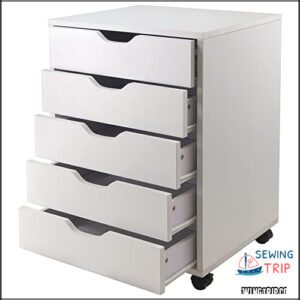
The Winsome White Storage Cabinet is a solid choice if you want your sewing space to feel more put-together. It stretches nearly 48 inches wide, giving you plenty of room to spread out your collection.
Eight adjustable shelves — four open cubbies and four behind doors — let you mix display with hidden storage. Each shelf holds up to 50 pounds, so bolts of fabric sit easily.
The clean white finish keeps things bright, and rubber feet protect your floors.
| Best For | Anyone who needs flexible storage for craft supplies, office gear, or even makeup — and wants something that looks clean without taking up a ton of space. |
|---|---|
| Material | Composite Wood |
| Primary Color | White |
| Weight | 40.3 lbs |
| Assembly Required | Yes |
| Portability | Optional casters |
| Multi-Room Use | Yes |
| Additional Features |
|
- Five drawers give you a good amount of storage without hogging floor space
- The white finish looks fresh and works in pretty much any room
- Optional casters make it easy to move around whenever you need to
- Assembly can take a while, and the instructions aren’t always clear
- Drawers don’t pull out all the way, so reaching items in the back can be a pain
- The composite wood can be tricky to work with — screws may strip if you’re not careful
2. Iris Usa Rolling Storage Cart Organizer
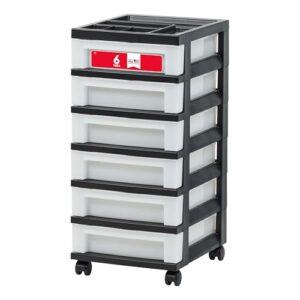
If the cabinet manages your display needs, you might want something that moves with you — and that’s where the IRIS USA Rolling Storage Cart shines.
Its six shallow drawers are clear, so you can spot your fat quarters or thread spools at a glance. Each drawer holds up to five pounds, and the whole cart rolls easily between your cutting table and machine.
A divided top keeps pins, bobbins, and small notions right where you need them.
| Best For | Anyone who needs flexible, on-the-move storage for craft supplies, office essentials, or household odds and ends. |
|---|---|
| Material | Plastic |
| Primary Color | Black/Pearl |
| Weight | 7.43 lbs |
| Assembly Required | Partial |
| Portability | Removable wheels |
| Multi-Room Use | Yes |
| Additional Features |
|
- Rolls wherever you need it, so your supplies are always close at hand
- Made in the USA from durable plastic, so it’s built to last
- The top lid organizer is perfect for small items that always seem to disappear
- Drawers are shallow, so bulkier items won’t fit well
- Opening too many drawers at once can cause it to tip over
- Some shoppers feel the price is a bit steep for what you get
3. HORSTORS Tall Bathroom Storage Cabinet
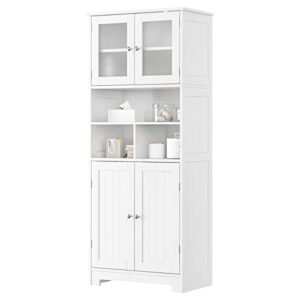
Sometimes a tall, narrow cabinet is exactly what a sewing space needs. The HORSTORS cabinet stands 58 inches high but only 11.8 inches deep, so it tucks neatly against a wall without eating up floor space.
Frosted glass doors keep your fabric dust-free while still letting you see what’s inside. Adjustable shelves mean you can fit fabric bolts of different heights, and two base drawers are perfect for notions like pins and bobbins.
It’s a clean, organized setup that just works.
| Best For | Sewists with a small bathroom or narrow wall space who need tidy, visible storage for fabric and notions. |
|---|---|
| Material | Engineered Wood |
| Primary Color | White |
| Weight | 110 lbs |
| Assembly Required | Yes |
| Portability | Stationary |
| Multi-Room Use | Yes |
| Additional Features |
|
- At 58 inches tall and under 12 inches deep, it fits in tight spots without taking over the room
- Frosted glass doors keep dust off your fabric while still letting you see everything at a glance
- Adjustable shelves mean you can rearrange as your stash grows or changes
- The cabinet runs shallower than it looks, so bulky fabric bolts or taller items may not fit as well as you’d hope
- Assembly takes patience — the instructions need close attention and it can eat up a chunk of your afternoon
- A few users noticed a plastic smell out of the box, so plan to air it out before loading it up
4. Iris Usa Plastic Storage Box
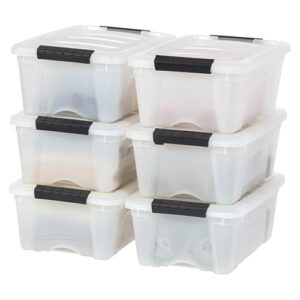
If you’ve got a growing fabric stash, the IRIS USA 47-quart plastic storage box might be your new best friend. Each box holds up to 65 pounds and measures nearly 25 inches long, so bulky cuts, batting, and project kits all fit without a fight.
Heavy-duty latches keep the lid secure, and the stackable design means you can build neat rows in your closet or craft room. A pack of four lets you sort by project, season, or fabric type.
| Best For | Anyone who wants a clean, organized space for shoes, seasonal clothes, or hobby supplies like yarn and crafts. |
|---|---|
| Material | Plastic |
| Primary Color | Pearl |
| Weight | 1.2 lbs |
| Assembly Required | No |
| Portability | Stackable/nestable |
| Multi-Room Use | Yes |
| Additional Features |
|
- Made in the USA with BPA-free, acid-free plastic — safe for storing baby clothes and everyday items
- Stackable with locking buckles and a built-in pull handle, making closet organization a breeze
- Nestable design means they store flat when empty, so they’re not eating up space when you don’t need them
- Not built for heavy loads — skip these if you’re storing anything bulky or dense
- Some buyers have received units that arrived cracked or damaged
- The handles can feel flimsy and may not hold up well over time with frequent use
5. StorageWorks Fabric Storage Bins
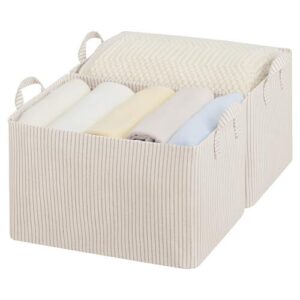
StorageWorks fabric bins are a tidy, shelf-friendly choice for sewists who want their space to look as good as it functions. Each bin measures 16.5 x 12 x 10.25 inches, giving you room for fleece, denim, or bulkier cuts.
The reinforced MDF base keeps its shape, and the soft interior lining won’t snag delicate fabrics. They fold flat between projects, too.
Available in neutral khaki and beige stripes, they blend right into any sewing room without looking cluttered.
| Best For | Sewists and crafters who want practical, good-looking storage that keeps fabric and supplies organized without making the room feel chaotic. |
|---|---|
| Material | Fabric |
| Primary Color | Khaki/Beige |
| Weight | 2.79 lbs |
| Assembly Required | No |
| Portability | Collapsible handles |
| Multi-Room Use | Yes |
| Additional Features |
|
- Roomy enough to hold bulkier fabrics like fleece or denim, yet light enough to move around easily
- The reinforced base keeps the bin upright and holds its shape on shelves
- Folds flat when not in use, so they’re not taking up space between projects
- May arrive with wrinkled fabric or bent leather pulls straight out of the box
- Not the best fit for really heavy or oversized items
- Some quality control inconsistencies reported, so what you get can vary bin to bin
Frequently Asked Questions (FAQs)
What is the best way to store fabric for sewing?
Keep fabric in clear bins, sorted by color or type, in a cool and dark spot.
Aim for 40–65% humidity and 20–25°C to stop fading, mold, and pest damage before it starts.
Is it okay to store fabric in plastic bags?
Plastic bags work fine for short-term storage, but they trap moisture over time, which can lead to mildew on natural fibers like cotton and linen. For anything you’re keeping longer than a few weeks, breathable containers are a smarter choice.
How to store half yard fabric?
Fold half yard cuts selvage to selvage into neat 7 by 10 inch rectangles, then stand them upright in clear bins like filing cards. This keeps every piece visible and easy to grab.
What is the best way to store fabric scraps?
Sort scraps by size first — strings, crumbs, and chunks each get their own container. Then organize by color. Clear bins let you spot what you need without digging through everything.
How do I prevent fabric from getting dusty?
To keep fabric dust-free, store it in airtight bins with tight lids, or use cotton garment bags for breathability.
Wash and dry fabric before storing, and place containers on shelves, away from floor-level dust and air vents.
Should I prewash fabric before storing it?
Think of your fabric like fresh bread — store it without prep, and it goes stale fast. Yes, prewash first.
It removes dye, chemicals, and shrinkage risk before your project even begins.
How do I store fabric that is prone to wrinkling?
Hang silks, rayon, and taffeta whenever you can — gravity gently relaxes creases over time.
For fabrics you must fold, smooth them flat first and tuck tissue paper between layers to prevent sharp lines.
What is the best way to store fabric in a humid climate?
Humidity is no joke — it’s basically fabric’s worst enemy. Keep storage between 30–50% relative humidity, use silica gel packets, and choose breathable cotton or muslin bags over sealed plastic bins.
Should fabric be washed before storing long-term?
Yes, washing fabric before long-term storage is a smart move. It removes sizing, excess dye, and residues that can cause problems later.
Natural fabrics like cotton can shrink up to 10 percent.
How often should stored fabrics be aired out?
Aim to air out your stored fabrics every three to six months.
In humid spaces, do it more often — every two to three months keeps mildew and musty smells from sneaking in.
Conclusion
Sorted shelves, smooth surfaces, and a sewing space that finally makes sense—that’s what happens when you take how to store material for sewing seriously. Your fabric stops being a source of frustration and starts being an invitation.
Every neatly folded piece, every labeled bin, every protected delicate weave puts you closer to the projects you actually want to make. A well-organized space doesn’t just hold your materials—it holds your momentum.
- https://www.museumsgalleriesscotland.org.uk/advice-article/protecting-your-textiles/
- https://sewcanshe.com/how-to-organize-fabric-at-home-25-stress-free-ways-that-work/
- https://www.thelaststitch.com/20-ways-to-organise-sewing-patterns-your-best-tips/
- https://apps.apple.com/us/app/my-couture-inventory-stash/id6745474909
- https://journals.sagepub.com/doi/10.1177/00405175241231811