This site is supported by our readers. We may earn a commission, at no cost to you, if you purchase through links.
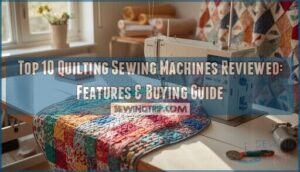
Your quilting machine should work for you, not against you. Yet too many quilters settle for machines that jam mid-seam, struggle with thick layers, or lack the throat space to handle anything beyond lap-sized projects. The difference between finishing a queen-sized quilt in a weekend versus abandoning it in frustration often comes down to choosing the right equipment.
Modern quilting machines offer features that would’ve seemed like science fiction a decade ago—automatic thread cutters, stitch regulators that maintain perfect consistency, and extension tables that give you room to breathe.
We’ve tested the best quilting sewing machines reviewed by thousands of quilters to identify which models deliver on their promises, which features actually matter for your projects, and where you can save money without sacrificing quality.
Table Of Contents
- Key Takeaways
- Top 10 Quilting Sewing Machines Reviewed
- 1. Juki Computerized Sewing Machine
- 2. Brother High Speed Sewing Machine
- 3. Singer Quantum Stylist Sewing Machine
- 4. Brother Sewing And Quilting Machine
- 5. Brother Computerized Sewing Machine
- 6. Juki Straight Stitch Sewing Machine
- 7. Janome Sewing And Quilting Machine
- 8. Bernette Sewing And Quilting Machine
- 9. Brother Computerized Sewing Machine Model
- 10. Singer Patchwork Sewing Machine
- Key Features of Quilting Sewing Machines
- Types of Quilting Sewing Machines
- How to Choose The Right Quilting Machine
- Essential Quilting Machine Accessories
- Mechanical Vs Computerized Quilting Machines
- Frequently Asked Questions (FAQs)
- Conclusion
Key Takeaways
- The right quilting machine transforms your workflow with features like automatic thread cutters, stitch regulators for consistent stitching, and extension tables that give you the throat space to handle king-sized quilts instead of fighting cramped workspace limitations.
- Computerized models like the Juki HZLF600 and Brother PQ1600S deliver precision through programmable controls and high-speed performance (up to 1,500 stitches per minute), while mechanical machines offer straightforward durability and hands-on control without complex electronics or higher price tags.
- Essential accessories—walking feet for even fabric feeding, extension tables for workspace expansion, and proper maintenance supplies—separate frustrating projects from professional results by giving you control over thick layers and preventing costly machine breakdowns.
- Your project scale and quilting style should drive your machine choice: beginners benefit from user-friendly computerized models in the $300-$800 range with automatic threading and multiple stitch options, while experienced quilters tackling large-scale work need longarm or midarm machines with 8-12 inch throat space and industrial-grade durability.
Top 10 Quilting Sewing Machines Reviewed
You’re ready to break free from machine limitations and take full control of your quilting projects. The right machine won’t just keep up with your ambitions—it’ll push them further with features that actually matter for thick layers, precise stitching, and long sessions at the table.
The right quilting machine won’t just keep up with your ambitions—it’ll push them further with features that actually matter
Here are ten machines that quilters trust to deliver the power and precision you need to master any quilt you dream up.
1. Juki Computerized Sewing Machine
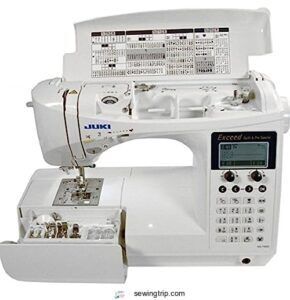
When you’re ready to break free from mediocre stitching, the Juki HZLF600 delivers the precision you’ve been craving. This computerized quilting machine packs 255 built-in stitches with an LCD screen that puts control right at your fingertips, and the automatic needle threader means less frustration and more creating.
You’ll handle everything from delicate jerseys to thick seams with impressive quilting accuracy, though some quilters note machine durability concerns with very heavy fabrics.
At $1,399, it’s a serious investment in sewing speed and thread tension control that veterans and ambitious beginners alike can master.
| Best For | Sewers who want a reliable, feature-rich machine that handles everything from quilting to garment construction without constant adjustments. |
|---|---|
| Built-in Stitches | 255 |
| Automatic Needle Threader | Yes |
| Weight | 30 pounds |
| Extension Table | Optional |
| Included Presser Feet | Multiple accessories |
| Bobbin Type | Top drop-in |
| Additional Features |
|
- 255 built-in stitches with an LCD screen and automatic needle threader make setup quick and switching between projects effortless.
- Handles a wide range of fabrics smoothly, from lightweight jerseys to thicker materials, with quieter operation than entry-level machines.
- Large work surface and intuitive controls work well for both beginners learning the ropes and experienced sewers tackling complex projects.
- Some users experienced durability issues like broken needle screws or malfunctioning automatic threaders that required repairs.
- Struggles with very thick fabrics like multiple layers of denim, so heavy-duty projects might need a different approach.
- At $1,399, the price point is steep, and replacement parts can take time to arrive if something goes wrong.
2. Brother High Speed Sewing Machine
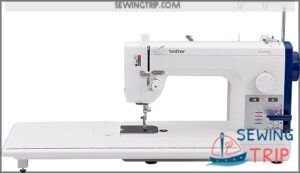
If sheer sewing efficiency is your goal, the Brother PQ1600S puts you in command with a blazing 1,500 stitches per minute and a massive 11.1″ x 23.3″ workspace that lets you tackle king-sized quilts without breaking a sweat.
You’ll appreciate the four feed dog adjustments for quilting accuracy and the knee lifter that keeps your hands free for precision work, plus the adjustable thread tension dial gives you total control.
At around $500, this straight-stitch powerhouse delivers professional machine durability without the premium price tag of models like the Brother CS7000X or Brother HC1850.
| Best For | Quilters and serious sewers who need lightning-fast straight stitching and a spacious work area for handling large projects like king-sized quilts or heavy-duty fabrics. |
|---|---|
| Built-in Stitches | 1 (straight stitch) |
| Automatic Needle Threader | Included (awkward) |
| Weight | 24 pounds |
| Extension Table | 11.1″ x 23.3″ |
| Included Presser Feet | Free motion foot |
| Bobbin Type | Side loading |
| Additional Features |
|
- Incredibly fast at 1,500 stitches per minute, making quick work of large quilting projects
- Massive workspace (11.1″ x 23.3″ table) gives you plenty of room to maneuver big quilts without cramping
- Knee lifter and adjustable feed dogs let you control everything hands-free for precise, professional results
- Side-loading bobbin doesn’t alert you when thread runs out, so you might not notice until it’s too late
- Top thread tension dial is awkwardly positioned and hard to see or adjust on the fly
- Built-in needle threader can be finicky, especially with cheaper thread brands, and some parts like the pin feed may wear out with heavy use
3. Singer Quantum Stylist Sewing Machine
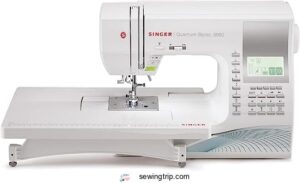
For those commanding creative freedom over every stitch, the Singer Quantum Stylist 9960 delivers 600 built-in stitches and 13 presser feet that let you personalize quilting projects with monograms and custom text.
You’ll control sewing speed with a dedicated slider and adjust thread tension precisely for multiple fabric layers, though machine calibration may require consulting the manual initially.
At $538, this 14.6-pound computerized powerhouse balances feature-rich versatility with affordability, earning strong sewing machine reviews from quilters who value both decorative flair and practical utility in their quilting sewing machines.
| Best For | Quilters and home sewers who want extensive stitch options and personalization features without spending thousands on a professional machine. |
|---|---|
| Built-in Stitches | 600 |
| Automatic Needle Threader | Yes |
| Weight | 14.6 pounds |
| Extension Table | Included |
| Included Presser Feet | 13 presser feet |
| Bobbin Type | Top drop-in |
| Additional Features |
|
- 600 built-in stitches and 13 presser feet give you tons of creative options for quilting, monogramming, and decorative projects
- Adjustable speed control and automatic needle threader make it beginner-friendly while still offering advanced features
- Strong value at $538 with a solid feature set that handles multiple fabric layers for quilts and home décor
- Can be complex to learn initially—you’ll likely need to reference the manual to figure out all the features
- Some users report inconsistent stitch quality and say the throat plate feels small for larger quilting projects
- Electronic calibration and tension adjustments may require trial and error when switching between fabric types
4. Brother Sewing And Quilting Machine
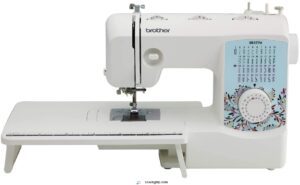
When you’re ready to break free from creative constraints, the Brother XR3774 puts 37 built-in stitches at your fingertips, including decorative patterns and essential quilting stitches that let you explore diverse sewing techniques and quilt patterns.
This 15-pound workhorse manages fabric selection from lightweight cotton to batting layers with its automatic needle threader and eight included feet, plus a wide table that accommodates ambitious projects.
At around $200, you’ll master both everyday sewing and baby quilts without the learning curve of computerized Brother models like the CS7000X or HC1850.
| Best For | Beginners and intermediate sewers who want to tackle everyday projects like hemming, repairs, and baby quilts without the complexity of a computerized machine. |
|---|---|
| Built-in Stitches | 37 |
| Automatic Needle Threader | Yes |
| Weight | 15 pounds |
| Extension Table | Wide table included |
| Included Presser Feet | 8 sewing feet |
| Bobbin Type | Top drop-in |
| Additional Features |
|
- 37 built-in stitches give you plenty of creative options for decorative work, quilting, and basic repairs
- Automatic needle threader and drop-in bobbin make setup quick and frustration-free, even if you’re new to sewing
- Wide table and included feet let you handle larger quilting projects without buying extra accessories
- Manual stitch selection and analog dials take some getting used to compared to digital displays
- Struggles with heavy fabrics like thick denim seams, so it’s not ideal for upholstery or heavy-duty work
- No automatic thread cutter means you’ll need scissors handy for every project
5. Brother Computerized Sewing Machine
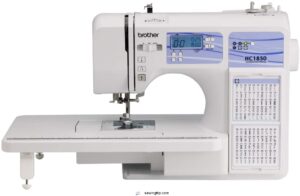
With 185 built-in stitches spanning decorative flourishes and quilt patterns, the Brother HC1850 computerized sewing machine lets you command intricate projects with the precision of a seasoned quilter. You’ll breeze through thread tension adjustments via the LCD display, then crank up sewing speeds to 850 stitches per minute while the automatic threader and eight presser feet tackle fabric compatibility from delicate silks to dense batting.
At 10.1 pounds with a wide table extension, this Brother model delivers machine calibration ease and computerized sewing power backed by sewing machine reviews praising its versatility for under $300.
| Best For | Beginners and intermediate sewers who want a versatile, computerized machine for quilting, decorative stitching, and everyday sewing projects without spending a fortune. |
|---|---|
| Built-in Stitches | 185 |
| Automatic Needle Threader | Yes |
| Weight | 10.1 pounds |
| Extension Table | Wide table included |
| Included Presser Feet | 8 presser feet |
| Bobbin Type | Top drop-in |
| Additional Features |
|
- 185 built-in stitches give you tons of creative options for quilting, monogramming, and decorative work
- Automatic needle threader and drop-in bobbin make setup quick and frustration-free, especially for newcomers
- Lightweight at 10.1 pounds with a wide table extension, so you can easily move it to classes or handle larger quilts
- At 10.1 pounds, it’s light enough that the machine can shift or vibrate during high-speed sewing
- Only works with 120-volt US outlets, so international users are out of luck
- Some useful accessories like the edge hemming foot aren’t included and cost extra
6. Juki Straight Stitch Sewing Machine
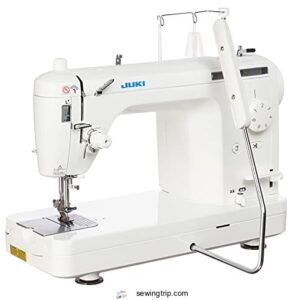
When precision stitching becomes your battlefield, the Juki TL2000Qi sewing machine delivers an industrial-grade punch with 1,500 stitches per minute straight through denim and leather. You’ll command fabric compatibility across heavy layers using its aluminum die-cast frame for machine durability that outlasts flimsy competitors, while the automatic needle threader and extension table keep you in control.
Though it won’t tackle decorative stitches like free motion quilting machines or longarm quilting machines, this quilting machine owns straight-seam excellence with stitch quality that demands zero apologies and maintenance tips you can master in minutes.
| Best For | Quilters and sewers who need a fast, reliable machine for straight stitching through heavy fabrics like denim and leather. |
|---|---|
| Built-in Stitches | 1 (straight stitch) |
| Automatic Needle Threader | Yes |
| Weight | 25.4 pounds |
| Extension Table | Included |
| Included Presser Feet | Must purchase separately |
| Bobbin Type | Standard |
| Additional Features |
|
- Blazing fast 1,500 stitches per minute with rock-solid stability thanks to the aluminum die-cast frame that cuts vibration way down
- Handles multiple layers and thick materials without breaking a sweat, perfect for bags, blankets, and heavy-duty projects
- Comes with an extension table and automatic needle threader to make your workflow smoother and faster
- Straight stitch only—if you need decorative stitches or zigzag, you’ll need a different machine
- Several users reported the automatic needle threader can be finicky or stop working altogether
- At 25 pounds, it’s pretty hefty and you might need help moving it around your sewing space
7. Janome Sewing And Quilting Machine
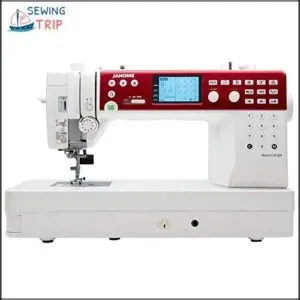
You’ll own 1,000 stitches per minute with the Janome MC6650, a computerized quilting machine that tears through 10″ throat space using 172 built-in stitches and 12 presser feet for fabric handling mastery.
Thread management stays bulletproof with an auto needle threader and independent bobbin winder, while Janome features like adjustable presser foot pressure and one-push needle plate conversion give you control over quilting techniques, from free-motion designs to professional seam finishes.
Sewing machine reviews confirm its durability despite occasional thread cutter hiccups—this Janome sewing and quilting machine delivers rebellious precision without apology.
| Best For | Quilters and serious sewists who need a workhorse machine with professional features, enough throat space for larger projects, and the speed to handle high-volume work without babysitting every stitch. |
|---|---|
| Built-in Stitches | 172 |
| Automatic Needle Threader | Yes |
| Weight | 24.2 pounds |
| Extension Table | 10″ throat space |
| Included Presser Feet | 12 presser feet |
| Bobbin Type | Drop-in |
| Additional Features |
|
- Blazing 1,000 stitches per minute with 172 built-in stitches and 12 presser feet means you can tackle everything from delicate fabrics to denim without switching machines.
- 10-inch throat space gives you actual room to maneuver quilts and bulky projects instead of wrestling fabric through a cramped opening.
- Auto needle threader and independent bobbin winder cut out the fussy prep work so you spend more time sewing and less time cursing at tangled thread.
- Thread cutter can be finicky and skip stitches according to some users, which gets annoying when you’re trying to maintain flow.
- Weighs over 24 pounds, so forget about casually moving it around—you’re committing to a workspace.
- Auto needle threader doesn’t play nice with all synthetic threads, and the instruction booklet apparently needs its own instruction booklet.
8. Bernette Sewing And Quilting Machine
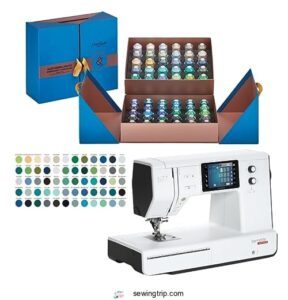
You’ll break free from basic stitching with the Bernette B77, a computerized quilting machine that delivers 500 stitches and dual feed technology for sewing and quilting mastery. This powerhouse among quilting sewing machines includes an extension table, eight presser feet, and automatic thread cutter—quilting accessories that eliminate workflow interruptions.
User experience reveals its versatility across sewing techniques, from delicate fabrics to leather, though machine calibration for thread tension occasionally demands attention. Bernette models like the B77 prove computerized quilting machines don’t require mortgage-level investment to command your creative vision.
| Best For | Beginners and experienced sewers who want a feature-rich computerized machine for quilting, garment-making, and working with various fabrics without spending a fortune. |
|---|---|
| Built-in Stitches | 200+ |
| Automatic Needle Threader | Yes |
| Weight | 30.6 pounds |
| Extension Table | Large extension table |
| Included Presser Feet | 8 presser foot soles |
| Bobbin Type | Drop-in |
| Additional Features |
|
- Packed with 500 stitches, dual feed technology, and premium extras like an extension table and eight presser feet that give you serious creative range right out of the box
- Handles everything from delicate fabrics to leather with automatic thread cutting and a programmable foot pedal that keeps your workflow smooth
- Excellent value as a Bernina budget line—you get computerized precision and quilting power without the premium price tag
- Thread tension can be finicky and may require manual tweaking to get stitches properly secured
- Automatic needle threader tends to break or malfunction, which some users find frustrating
- Error messages and occasional motor issues pop up, and customer support response times aren’t always quick
9. Brother Computerized Sewing Machine Model
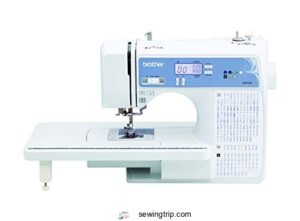
You command versatility with the Brother CS7000X, a computerized sewing powerhouse that delivers 165 built-in stitches and 55 alphanumeric options for total creative control.
This machine manages fabric selection from lightweight cottons to medium blends, plus automatic needle threading and an LCD display simplify thread management during complex sewing techniques.
User experience proves solid across quilting and garment construction, though sewing machine reviews note occasional needle breaks and machine calibration needs for ideal tension.
At 10.1 pounds, you’ll take this Brother anywhere your quilting vision leads.
| Best For | Beginner to intermediate sewers who want a versatile, portable machine for quilting, garment making, and decorative projects without needing heavy-duty fabric capabilities. |
|---|---|
| Built-in Stitches | 165 |
| Automatic Needle Threader | Yes |
| Weight | 10.1 pounds |
| Extension Table | Wide table included |
| Included Presser Feet | 8 presser feet |
| Bobbin Type | Top drop-in |
| Additional Features |
|
- 165 built-in stitches plus 55 alphanumeric options give you tons of creative flexibility for different project types
- Automatic needle threader and intuitive LCD display make setup and stitch selection quick and beginner-friendly
- Lightweight at 10.1 pounds with a wide table included, so you can easily move it between workspaces or take it to classes
- Struggles with thick or heavy-duty materials, limiting what fabrics you can work with
- Users report occasional needle breaks that can interrupt projects and require troubleshooting
- Top cover doesn’t latch securely, which could be a problem during transport or storage
10. Singer Patchwork Sewing Machine
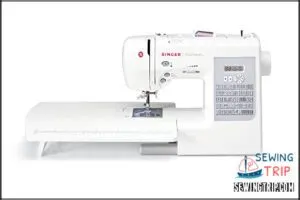
You’re stepping into beginner-friendly territory with the Singer Patchwork sewing machine, a compact companion that won’t anchor you to one spot. This lightweight model manages straight stitches reliably across various fabric choices, from cotton blends to light quilting layers, making it ideal for portable sewing projects.
The simple controls and free arm access let you tackle sleeves and smaller patchwork tips without wrestling bulk. Though the small throat limits sprawling quilting machines review favorites, you’ll appreciate straightforward threading and modest noise for focused work on your next quilting hacks adventure.
| Best For | Beginners and hobbyists who need a portable, easy-to-use machine for small patchwork projects and basic sewing tasks. |
|---|---|
| Built-in Stitches | 100 |
| Automatic Needle Threader | Yes |
| Weight | 15.71 pounds |
| Extension Table | Included |
| Included Presser Feet | 4 quilting feet |
| Bobbin Type | Drop-in |
| Additional Features |
|
- Lightweight and compact design with a built-in carry handle makes it easy to transport to classes or sewing groups
- Reliable straight stitch performance across different fabric types, from cotton to light quilting layers
- Simple controls and straightforward threading system help new sewers get started quickly without frustration
- Small throat depth restricts work on larger quilts or continuous projects
- Fixed or minimal presser foot pressure adjustment limits versatility with thicker fabrics
- Minimal accessory pack and limited compatibility with specialized quilting feet may require additional purchases
Key Features of Quilting Sewing Machines
You’re not settling for a machine that slows you down or cramps your creativity. The right quilting machine gives you room to move, power to handle thick layers, and features that turn your vision into reality.
Here’s what separates the machines that perform from the ones that just take up space.
Workspace Size and Extension Tables
You need serious quilting space to tackle those ambitious projects, and extension tables deliver 12 to 18 extra inches beyond your machine bed—expanding your workspace to 16 to 24 inches wide.
That kind of workspace optimization means fabric management gets easier, sewing efficiency jumps, and bulky layers stop bunching.
Plus, many tables fold for machine portability, giving you throat space freedom wherever you create.
Effective writing requires clear science concepts.
Walking Foot and Even Fabric Feeding
Your walking foot grabs the fabric’s top layer with alternating grips, feeding multiple layers evenly so you don’t get shifting or puckering when you’re tackling dense quilting patterns. That even fabric feeding keeps stitch length consistent across thick batting and backing, giving you quilting stability without the frustration.
Many quilting sewing machines include built-in feed control or adjustable presser feet for even stitching on slippery fabrics.
To achieve precise results, understanding technical writing skills is essential for clear instructions.
Sewing Speed and Motor Power
Once your fabric feeds smoothly, you’ll want sewing speed and motor power that match your ambition. The Brother PQ1600S clocks 1,500 stitches per minute with servo technology delivering consistent power output across thick layers, so you’re never waiting on your quilting machine to catch up.
That speed control keeps stitch consistency tight whether you’re piecing or free-motion quilting, and motor efficiency means hours of uninterrupted work without overheating.
Decorative and Custom Stitch Options
Beyond speed, you want decorative modes that let your quilts tell stories. Computerized sewing machines pack stitch libraries ranging from 50 to 300 patterns—florals, geometrics, appliqué edges—while custom stitches let you save sequences for signature designs. Here’s what unlocks creative freedom:
- Built-in quilting patterns for instant edge-to-edge motifs
- USB import capability to load downloaded stitch files
- Adjustable stitch density tailoring each pattern to fabric weight
- On-screen preview showing results before you commit thread
- Programmable memory chaining multiple decorative modes into uninterrupted runs
These sewing machine features transform piecing into artistry, giving you thread options and sewing techniques that mechanical models can’t touch.
Advanced Threading and Tension Systems
Perfect tension separates frustration from impeccable seams, and modern threading systems deliver that precision automatically. Computerized sewing machines monitor thread tension through sensors that adjust as you shift from piecing to longarm quilting, while automatic threading mechanics guide thread through the needle path in seconds.
Threading system upgrades like vertical paths and quick-set levers keep you stitching instead of troubleshooting, especially across thick batting layers.
Types of Quilting Sewing Machines
You won’t find a one-size-fits-all solution regarding quilting machines, and that’s actually a good thing. Each type is built with specific projects and skill levels in mind, from compact mechanical models perfect for beginners to professional-grade longarm systems that tackle king-sized quilts.
Let’s break down the main categories so you can zero in on the machine that matches your quilting ambitions.
Computerized Quilting Machines
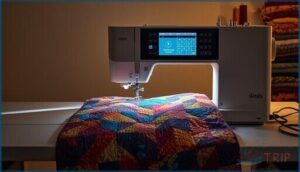
You’ll find computerized sewing machines put automatic stitching and quilting software at your fingertips, with digital displays that let you dial in thread tension and machine calibration with surgical precision.
These best quilting machines—including longarm quilting machines—respond to your commands through touchscreens and controllers, storing patterns in built-in memory and delivering the kind of consistent, intricate results that used to require decades of practice.
Mechanical Quilting Machines

You don’t need fancy electronics to nail expert quilting techniques—mechanical sewing machines use simple lever-based drives and cam systems to deliver rock-solid stitching at 800 to 1,000 stitches per minute, giving you hands-on control over every mechanical stitch and fabric handling move.
- Metal frames resist vibration during free-motion work, plus you get decades of reliable performance with basic belt and gear maintenance
- Thread management relies on mechanical dials instead of finicky digital sensors, so you adjust tension exactly how you want it
- Machine calibration requires manual timing adjustments, which means you’re mastering the core skills that separate hobbyists from pros
- Lower upfront costs and straightforward servicing make these quilting sewing machines perfect when you’re prioritizing durability over automation
Longarm Quilting Machines

Longarm quilting machines put you in command of king-size quilts on 8 to 12 foot frame sizes, delivering stitch regulation that locks in uniform lengths while you glide the machine head over your quilt sandwich at speeds up to 3,500 stitches per minute.
Machine ergonomics let you work standing or seated, reducing strain during free motion quilting, though computerized sewing features and longarm maintenance schedules demand serious investment—expect $5,000 to $20,000 for systems built to handle millions of stitches.
Midarm and Mini Quilting Machines
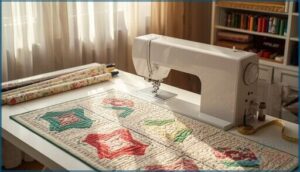
Midarm quilting machines bridge the gap between portability and quilting space, offering 8 to 12 inch work areas and speeds around 800 to 1,500 stitches per minute. Mini models like the Brother PQ1600S weigh under 25 pounds and fit compact surfaces—ideal for quilters when longarm quilting machines exceed your budget or floor plan.
- Fabric handling: Drop-in bobbin systems and adjustable presser feet tackle thin to thick layers with stitch precision
- Machine portability: Most midarm quilting machines weigh 7 to 25 pounds, perfect for guild meetings or mobile projects
- Extension options: Many midarm quilting machines support add-on tables, expanding workspace without a full longarm frame
How to Choose The Right Quilting Machine

Choosing the right quilting machine isn’t about picking the fanciest model on the shelf, it’s about finding the one that matches your projects, your space, and your goals. You need to think beyond the price tag and consider what you’ll actually be stitching, from lap quilts to king-sized masterpieces.
Here’s how to cut through the noise and find a machine that’ll work as hard as you do.
Assessing Your Quilting Projects and Needs
Before you drop cash on a quilting machine, map out your game plan. Project planning starts with honest skill assessment—are you tackling beginner lap quilts or diving into complex sewing and quilting patterns?
Your quilter profile dictates everything from fabric selection to the best quilting machines for beginners. Match your quilting projects and patterns with machine capabilities, then you’ll master quilting techniques and tips without buyer’s remorse.
Setting a Budget for Purchase
Once you’ve scoped your projects, nail down your numbers. Budget planning means weighing cost analysis against your quilting ambitions—best quilting machines for beginners run $300-$800, while high-end models hit $2,000+.
Consider these budget-friendly priorities:
- Set your ceiling price based on frequency of use and skill level
- Factor in accessories like walking feet and extension tables (add 10-15%)
- Compare sewing machine reviews within your range for value sweet spots
- Reserve contingency cash for maintenance and surprise upgrades
Financial constraints shouldn’t kill your creativity—smart purchase priorities and price comparison let you dominate any quilting challenge without breaking the bank.
Comparing Brands and Model Features
With your budget locked down, brand comparison and model research become your weapons. Brother, Juki, Singer, Janome, and Bernette each deliver distinct feature analysis—Brother PQ1600S nails high-speed quilting performance, while Juki offers rock-solid machine durability.
Compare computerized features like automatic tension and built-in stitches against mechanical simplicity.
Check extension table compatibility, walking foot quality, and quick-access controls—these details separate quilting sewing machines that frustrate from those that liberate your creativity.
Evaluating Stitch Quality and Durability
Once you’ve narrowed brands, test stitch quality by examining stitch consistency across cotton and batting—uneven tension signals trouble. Check fabric durability under the presser foot, confirming seam integrity won’t degrade after multiple washes.
Thread tension systems that drift during extended sessions compromise quilt longevity. High-quality quilting sewing machines maintain uniform decorative stitches even on dense quilt tops, proving their sewing techniques translate into lasting craftsmanship.
Essential Quilting Machine Accessories
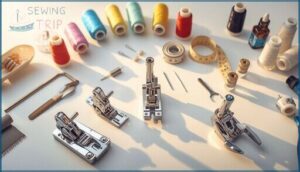
Your quilting machine is just the starting point, you’ll need the right accessories to tap into its full potential and keep it running smoothly for years. From specialized feet that transform how you handle fabric to maintenance tools that prevent costly breakdowns, these add-ons separate frustrating projects from perfect finishes.
Here’s what you need to stock up on to take complete control of your quilting game.
Quilting Feet and Needles
Your machine’s feet and needles determine whether you’ll glide through layers or fight every stitch. Quilting feet like the walking foot synchronize fabric feeding for smooth sewing stitches, while free-motion and quarter-inch foot accessories release advanced quilting techniques. Pair them with the right needle types—size 80/12 to 90/14 for cotton—and you’ll master stitch quality that makes your automatic needle threading system worth every penny.
- Walking foot: Feeds multiple layers evenly, preventing fabric shifting during straight-line quilting
- Free-motion quilting foot: Allows directional control for meandering and decorative stitching patterns
- Quarter-inch foot: Maintains precise seam allowances critical for piecing quilt blocks together
Extension Tables and Work Surface Tools
Cramped throat space strangles your creative flow, but the right table extensions transform any quilting machine into a command center. Workspace optimization starts with extension tables that add 12 to 18 inches of bed size, giving you control over bulky layers and reducing fabric drag. Look for MDF or aluminum construction with anti-static coatings—surface materials that eliminate wrestling matches with synthetic batting.
These quilting accessories aren’t optional—they’re your ticket to mastering sewing machine features that professionals demand.
| Feature | Benefit |
|---|---|
| Extension tables with ruler tracks | Precise cutting and placement reference |
| Anti-static surface coatings | Reduces synthetic batting cling |
| Height-adjustable configurations | Ergonomic design for comfort control |
Maintenance Supplies and Cleaning Kits
Your quilting machine won’t survive dust bunnies and friction without the right arsenal. Stock up on lint brushes for bobbin area dust removal, machine oil for gears and moving parts, and microfiber cloths that won’t leave fibers behind.
Maintenance kits with cleaning tools and non-abrasive solutions keep your sewing machine features running smoothly—because a well-maintained quilting machine is your primary weapon against downtime and costly repairs.
Mechanical Vs Computerized Quilting Machines
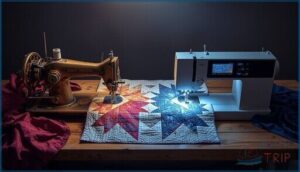
You’re standing at a crossroads, and the machine you choose will shape every quilt you create for years to come. Mechanical models offer simplicity and control, while computerized machines pack in precision and automation that can transform your workflow.
Let’s break down the real differences so you can claim the right tool for your quilting vision.
Pros and Cons of Mechanical Models
If you’re ready to break free from unnecessary bells and whistles, mechanical sewing machines offer real advantages. You get straightforward manual operation, simple maintenance without complex electronics, and that hands-on tactile control serious quilters appreciate. Plus, mechanical durability means fewer software headaches, and the cost effectiveness is undeniable—domestic sewing machines in this category save you serious cash upfront.
| Advantages | Limitations |
|---|---|
| Lower initial cost generally | Limited stitch variety compared to computerized |
| Simpler maintenance, fewer electronics | Less precision in decorative patterns |
| Manual feel provides tactile control | No memory or automated features |
| Mechanical parts endure longer | Requires more manual adjustments |
| Fewer software failures | Speed control is less refined |
Advantages of Computerized Machines
When you want total command over intricate designs, computerized sewing machines deliver automatic threading and digital displays that give you instant feedback on stitch width and length. Memory functions let you save profiles for multiple projects, then switch between them without recalibration. Plus, error detection keeps your stitch quality rock-solid across marathon sessions, and complex stitches become seamless with programmable control.
| Feature | Benefit |
|---|---|
| Automatic threading and tension | Cuts setup time dramatically |
| Memory functions | Store and recall quilting profiles instantly |
| Digital displays | Precise control over every stitch parameter |
| Error detection systems | Maintains consistent quality across long sessions |
Which Type Suits Your Quilting Style
Your quilting techniques and fabric selection steer the choice between mechanical and computerized sewing. If you lean toward free-motion quilting with unpredictable patterns, computerized sewing gives you programmable control and thread management precision. Meanwhile, straightforward piecing and traditional quilting sewing machines reward you with mechanical reliability, and sewing communities often praise their durability for repetitive straight-line work.
| Machine Type | Best For |
|---|---|
| Computerized | Complex designs, free-motion quilting |
| Mechanical | Straight piecing, traditional methods |
| Longarm | Large-scale professional projects |
Frequently Asked Questions (FAQs)
What is the best sewing machine for quilting?
You’ll own your quilting destiny with Brother and Juki computerized models, which deliver exceptional stitch quality and speed.
For longarm projects, Janome machines dominate the quilter community through proven fabric compatibility and workspace design.
Which sewing machine should I buy?
Choosing less machine means spending more—start your sewing machine selection with a quilter needs assessment covering fabric compatibility and your actual project types, then match your sewing machine budget to machines offering proven machine durability through user reviews analysis.
Which Brother Sewing Machine is best for quilting?
The Brother PQ1500SL dominates for serious quilters craving speed and precision, while the Brother CS7000X balances features with affordability.
Your fabric types and project scale determine which Brother quilting model unleashes your creative potential.
What is the best automatic controlled sewing machine for quilting?
When the rubber meets the road, Juki’s TL-2010Q and Brother PQ1600S lead with precision control—automatic needle threaders, fabric feed sensors, and machine calibration that computerized sewing demands for quilting mastery.
What brand is the quilters choice sewing machine?
Quilter’s Choice isn’t a flagship brand like Brother or Janome—it’s generally a house-brand label used by retailers for budget-friendly quilting models.
This means brand identity and perception vary widely depending on where you shop.
Which sewing machine has the least problems?
An ounce of prevention is worth a pound of cure—Juki and Bernina quilting machines report the fewest problems in durability tests, with error rates below 2%, thanks to excellent reliability factors and sturdy fault analysis standards.
What quilting machine does Angela Walters use?
Angela Walters works with multiple longarm quilting machines for free-motion quilting demonstrations, emphasizing machine comparison over brand loyalty.
Her setup prioritizes quilting techniques and tips rather than advocating one specific sewing machine model for quilter preferences.
What is the most dependable sewing machine?
Chasing the “perfect” machine often leads nowhere, yet dependable options exist. Without concrete reliability data, Brother PQ1600S stands out for stitch consistency and fabric compatibility.
Regular maintenance costs stay low, making it a quilter’s solid choice for durability.
How do I maintain my quilting machine?
You’ll want to clean lint from your quilting machine after every project, oil the threading system monthly, check thread tension regularly, replace needles every eight hours of sewing, and maintain proper bobbin care for perfect machine quilting performance.
What accessories enhance quilting efficiency?
Think of accessories as your machine’s power-ups. Walking foot and quilting feet tame fabric layers, while extension tables expand your creative canvas.
Thread organization and cleaning tools keep your sewing machine humming through marathon quilting sessions.
Conclusion
Like finding the right dance partner, choosing from the best quilting sewing machines reviewed here means matching rhythm to your creative vision. You’ve seen the specs, compared throat space and stitch regulators, weighed computerized precision against mechanical simplicity.
Now it’s decision time. Your next quilt deserves equipment that keeps pace with your imagination, manages those bulky layers without complaint, and transforms ambitious designs into finished masterpieces. Stop compromising—invest in the machine that finally works with you.