This site is supported by our readers. We may earn a commission, at no cost to you, if you purchase through links.
Your seven-year-old just asked for a sewing machine, and you’re caught between excitement and mild panic. Teaching kids to sew unlocks creativity and builds real-world skills, but handing them a machine with a fast-moving needle requires the right equipment.
Not all machines marketed for children actually balance safety with genuine functionality—some are too toy-like to complete real projects, while others lack essential safeguards for small hands. The best sewing machines for kids reviewed here combine finger guards, adjustable speed controls, and simple threading systems with enough durability to handle enthusiastic beginners who’ll accidentally sew through multiple fabric layers or forget to raise the presser foot.
Table Of Contents
- Key Takeaways
- Top 6 Sewing Machines for Kids Reviewed
- Essential Safety Features for Kids
- Age and Skill Level Considerations
- Built-in Stitches and Creative Options
- Ease of Use and Setup
- Durability and Build Quality
- Included Accessories and Feet
- Portability and Compact Design
- Price and Value for Money
- Teaching Kids to Sew Safely
- Frequently Asked Questions (FAQs)
- Conclusion
Key Takeaways
- The best kids’ sewing machines balance real functionality with critical safety features like adjustable speed controls (capping at 600-850 stitches per minute), finger guards around needles, and automatic threading systems that prevent frustration while keeping small hands protected.
- Most children are developmentally ready to start learning on a sewing machine between ages 7-9 when their fine motor skills, attention spans, and safety awareness align, though younger kids can begin with supervised hand sewing on paper or felt.
- Entry-level machines from Brother, Singer, and Janome in the $90-$160 range offer the sweet spot of 15-27 built-in stitches, lightweight portability (under 13 pounds), and long warranties without overwhelming beginners with unnecessary complexity.
- Active adult supervision remains non-negotiable for children under 8, and even older kids benefit from parental presence during sewing sessions since most injuries happen when attention drifts from the needle area.
Top 6 Sewing Machines for Kids Reviewed
You want your kid to learn sewing without the frustration of a machine that’s too complicated or fast.
A beginner-friendly machine with safety features and adjustable speed lets them practice at their own pace, especially when paired with colorful thread sets designed for kids that make each project more engaging.
After testing dozens of options, I’ve narrowed it down to six machines that actually work for young hands and beginner skills.
I’ve covered everything in this guide to the best embroidery machines for kids, from safety features to creative possibilities for every age group.
Here’s what made the cut based on safety features, ease of use, and real-world durability.
Each model also includes thoughtful design choices that help you unsew seams safely without snagging fabric or risking finger slips.
1. Brother Sewing Machine XM2701
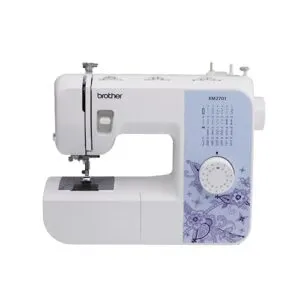
The Brother XM2701 hits that sweet spot for kids learning to sew. You get 27 built-in stitches, including decorative options for fun projects, plus an automatic needle threader that saves young eyes from frustration.
It’s lightweight at 12.5 pounds, so kids can handle it with confidence. The machine comes with 6 presser feet and features a free arm for tricky sleeves and cuffs. Brother backs it with a 25-year warranty, showing they’re serious about durability—perfect for beginners who’ll actually stick with sewing.
| Best For | Beginners and kids who want a reliable, easy-to-use machine with enough features to grow into more advanced projects. |
|---|---|
| Built-in Stitches | 27 stitches |
| Buttonhole Feature | One-step automatic |
| Free Arm | Yes |
| Frame Material | Metal |
| Weight | 12.6 lbs |
| Power Source | Corded electric |
| Additional Features |
|
- Automatic needle threader and drop-in bobbin make setup quick and frustration-free for new sewers
- 27 stitches give you plenty of creative options beyond basic sewing, from decorative patterns to buttonholes
- Lightweight at 12.6 pounds, so it’s easy to move around or store when you’re done
- The spool pin can be flimsy and might break with regular use
- Struggles with thick or heavy fabrics—the presser foot doesn’t handle them well
- Takes some practice to learn all the features, and you’ll probably need the manual handy at first
2. Singer Portable Sewing Machine
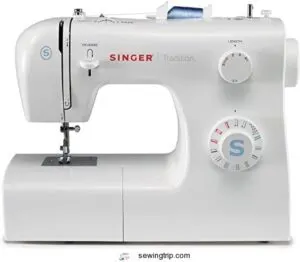
Looking for something even lighter? The Singer 2259 weighs just 13.6 pounds with a sturdy metal frame that supports beginner sewing projects without toppling. Your kids get 19 built-in stitches and a 4-step buttonhole—plenty for creative kids sewing projects.
The portable design includes onboard accessory storage, so you won’t lose those tiny presser feet. Automatic threading makes setup simple for sewing machines for beginners. The user interface stays straightforward with adjustable stitch controls, though sewing speed runs through the foot pedal only.
It’s reliable for weaving kids through basic sewing for kids without overwhelming them.
| Best For | Beginners and kids who want a lightweight, easy-to-use machine for basic sewing projects and simple garment alterations. |
|---|---|
| Built-in Stitches | 19 stitches |
| Buttonhole Feature | 4-step |
| Free Arm | Yes |
| Frame Material | Metal |
| Weight | 13.6 lbs |
| Power Source | Corded electric |
| Additional Features |
|
- Weighs only 13.6 pounds with a durable metal frame, making it easy to move and store
- Comes with 19 built-in stitches and automatic threading for quick setup
- Free arm design allows easy access to cuffs, collars, and pant hems
- No speed control dial—you can only adjust speed through the foot pedal
- Bobbin winding and tension adjustment can be tricky and may require practice
- Struggles with very thick fabrics or more than 4-6 layers of material
3. Singer Simple Sewing Machine
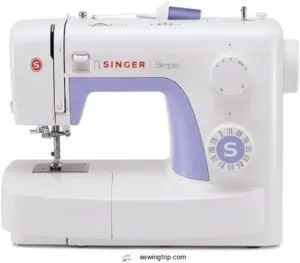
The Singer 3232 Simple drops to just 12.6 pounds but packs 110 stitch applications—talk about overdelivering for beginner sewing. Your kids get Simple Controls with that clear stitch selector dial, plus automatic threading to skip the squinting step.
For comparison, most beginner-friendly sewing machines start around $250, making the 3232 a competitive entry-level pick.
The free arm design means sewing for kids handles sleeves and cuffs without wrestling fabric around the machine. User Reviews mention occasional thread jamming on thicker materials, so stick with lighter fabrics for kids sewing projects. Machine Maintenance stays minimal—no frequent oiling—making this one of the smarter sewing machines for children who just want to create.
| Best For | Beginners and kids who want a lightweight, easy-to-use machine with plenty of stitch options for everyday projects like garments, home decor, and simple repairs. |
|---|---|
| Built-in Stitches | 6 stitches |
| Buttonhole Feature | 4-step |
| Free Arm | Yes |
| Frame Material | Not specified |
| Weight | 11.5 lbs |
| Power Source | Corded electric |
| Additional Features |
|
- 110 stitch applications give you tons of creative options without adding complexity
- Automatic needle threader and simple controls make setup quick and frustration-free
- Lightweight at 12.6 pounds with a free arm design for handling sleeves and curved seams
- Struggles with heavy-duty or thick fabrics—best to stick with lighter materials
- Some users report thread jamming issues and inconsistent speed control
- Instruction manual can be unclear, and the automatic needle threader takes practice to master
4. Cool Maker Sewing Machine
Battery-powered portability makes the Cool Maker Sewing Machine your go-to for kids crafting on kitchen tables or bedroom floors without outlet hunting. This felting machine uses friction instead of traditional threading—perfect for sewing projects with felt and yarn but frustrating if your child expects regular fabric capabilities.
Machine features include snap-on presser feet and push-button controls that make kid safety almost foolproof for ages 6+. The pom-pom maker attachment adds creative options, though you’ll need extra felt sheets since beginner modes burn through starter materials fast.
| Best For | Parents looking for a safe, battery-powered craft machine that teaches kids basic sewing concepts through felt projects without the complexity of traditional sewing machines. |
|---|---|
| Built-in Stitches | 110 stitches |
| Buttonhole Feature | 1-step |
| Free Arm | Yes |
| Frame Material | Metal |
| Weight | 12.6 lbs |
| Power Source | Corded electric |
| Additional Features |
|
- Battery-powered design means kids can craft anywhere without needing an outlet
- Simple push-button controls and snap-on feet make it safe and easy for beginners aged 6
- Pom-pom maker attachment adds extra creative options to basic felting projects
- Only works with felt and yarn—can’t handle regular fabric like a traditional sewing machine
- Starter materials run out quickly, requiring parents to buy additional felt sheets
- Some kids struggle to understand the felting mechanism since it works differently than expected
5. Brother Disney Sewing Machine
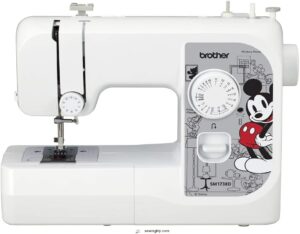
Four interchangeable Disney faceplates transform this Brother model (SM1738D) into a teaching tool your kids won’t outgrow fast. Sewing speed stays beginner-friendly while 17 built-in stitches let you tackle real projects—not just felt bookmarks—since this machine accommodates clothing repairs and simple garments.
The drop-in bobbin system and free arm design make threading less frustrating than other sewing machines for kids. At 13.2 pounds, machine durability meets portability without feeling flimsy.
Sewing tips for kids: those Disney stickers might bump the price, but the stitch quality justifies it.
| Best For | Parents teaching kids to sew who want a machine that’ll last beyond the beginner phase, plus anyone who values hassle-free threading and bobbin systems. |
|---|---|
| Built-in Stitches | Felting only |
| Buttonhole Feature | Not applicable |
| Free Arm | No |
| Frame Material | Plastic |
| Weight | 2.41 lbs |
| Power Source | 4 AA batteries |
| Additional Features |
|
- 17 stitches give you enough variety for actual projects like fixing clothes or making simple garments, not just crafts
- Drop-in bobbin and free arm design cut down on the usual threading headaches that make beginners quit
- Sturdy enough at 13.2 pounds to handle regular use without tipping over, but still light enough to move around
- You can’t adjust stitch length or width, which limits what you can do as you get better
- Missing features like needle up/down, auto-threader, and storage compartment that other machines in this price range include
- Those Disney faceplates are just stickers that probably inflate the cost without adding real functionality
6. Janome Hello Kitty Sewing Machine
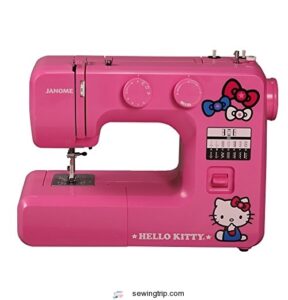
The Hello Kitty Design on this Janome machine captures attention, but 15 built-in stitches and automatic needle threading earn its spot here. Kids get beginner-friendly controls plus a four-step buttonhole function that actually works—not always a given in kid-oriented sewing machines.
Parents looking for affordable machines with kid-friendly features will appreciate that this model balances fun design with genuinely useful functionality.
Sewing machine maintenance stays simple with front-loading bobbin access, while machine accessories like multiple presser feet support growth beyond basic projects. At under $200, it’s a serious beginner tool disguised as cartoon fun. Sewing tips for kids: the drop feed option unlocks free-motion embroidery when they’re ready.
| Best For | Parents looking for a reliable starter machine that kids will actually enjoy using, without sacrificing quality for the cute design. |
|---|---|
| Built-in Stitches | 17 stitches |
| Buttonhole Feature | Not specified |
| Free Arm | Yes |
| Frame Material | Metal |
| Weight | 13.2 lbs |
| Power Source | Corded electric |
| Additional Features |
|
- Automatic needle threading and front-loading bobbin make setup easy for beginners
- 15 built-in stitches plus drop feed option give room to grow beyond simple projects
- Handles thick fabrics surprisingly well for a machine under $200
- Some units have bobbin winding issues due to inconsistent quality control
- Manual isn’t always clear—you might need YouTube tutorials to figure things out
- Machine may be discontinued, which could make finding parts or support tricky down the line
Essential Safety Features for Kids
Before you hand your child a sewing machine, you need to know it won’t send anyone to the emergency room.
The best kids’ machines come with built-in safety features that let young sewists explore their creativity without the white-knuckle worry. Here are the three safety features that separate the good machines from the “maybe we should wait a few years” ones.
Speed Control and Safety Lock
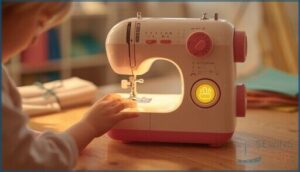
Kids deserve a machine that won’t run away from them, and that’s where adjustable speed sliders become your secret weapon.
Many beginner-friendly sewing machines cap speeds at 700–800 stitches per minute, giving you real pedal control without surprise bursts.
Look for models with three-step speed limits or pedal-free start buttons—both let you dial down chaos while your child learns sewing safety at their own pace.
For guidance on selecting entry-level machine features, you can explore additional recommendations online.
Finger Guards and Needle Protection
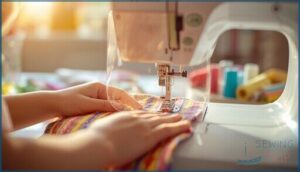
Finger guards give you a clear line between curious hands and moving needles, and they work best when paired with clear safety rules.
Smart designs put protective barriers front and center:
- Transparent plastic shields wrap around the needle so kids see their stitching but can’t reach danger zones
- Clip-on guards attach to the presser bar in under a minute with one small screwdriver
- Cage-style guards on machines like Cool Maker Sew N Style block small fingers from every angle
- Safety presser feet add a built-in finger guard without changing the whole machine
Stable and Non-Slip Base
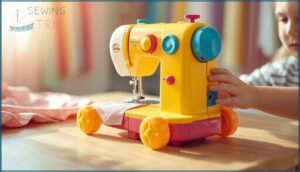
A wide base design keeps the machine planted while your beginner navigates their first seams. Look for models with rubberized foot grip at each corner—they cling to kitchen tables and craft desks without leaving marks.
Weight distribution matters too: machines that concentrate mass low in the chassis resist tipping when kids pull fabric. Good vibration control means fewer wobbles and straighter stitches, which builds confidence fast.
Safety is also a priority, so be sure to think about options with features for young sewists.
Age and Skill Level Considerations
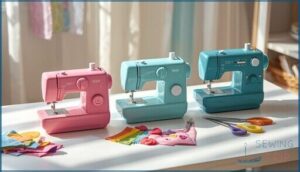
Not every kid is ready for a sewing machine at the same age, and that’s perfectly okay. Some five-year-olds can handle the basics with close supervision, while others might be better off waiting until they’re eight or nine.
Let’s look at what works for different ages and skill levels so you can find the right match for your child.
Recommended Starting Age
Most experts point to ages 7 to 9 as the sweet spot for introducing kids to beginner sewing machines, since developmental milestones around hand-eye coordination and attention span really line up then. That said, you know your child best—some kids are ready earlier with hand sewing, while others shine closer to age 10.
Key age appropriateness markers to watch for:
- Fine motor skills develop enough between ages 6 and 8 for basic buttonhole practice and thread handling
- Attention spans stretch to 10-15 minutes by early elementary years, perfect for focused sewing projects for kids
- Safety awareness strengthens around ages 7 to 9, helping kids follow rules consistently without constant reminders
- Sequencing abilities mature by age 8, so children can tackle multi-step sewing tips for beginners with less guidance
- Spatial reasoning kicks in around age 7, supporting simple project planning and fabric layout with your help
Schools usually reserve beginner classes for ages 8 to 12, aligning with childhood development patterns and skill assessment benchmarks. Before you invest in sewing machines for kids, test learning readiness by observing finger dexterity, patience during tasks, and whether they can follow step-by-step instructions without frustration.
Features for Young Beginners
Once your child shows readiness, focus on youth sewing essentials that build confidence without overwhelming them. Kid-friendly interfaces matter most—large color-coded knobs make selecting beginner stitch options feel logical, while a separate start-stop button gives you both control during sewing lessons.
Here’s what actually helps young beginners succeed:
| Feature | Why It Matters for Kids |
|---|---|
| Large color-coded knobs | Simplifies stitch selection without confusion |
| Start-stop button | Safer than pedal-only for supervised sewing tips for beginners |
| Pull-out stitch guide | Printed diagrams show common stitches at a glance |
| LCD indicators | Shows active settings in real time during sewing lessons |
Easy project guides built into sewing machines help kids tackle their first pencil case or simple hem with preset stitch sequences—no guesswork needed. Sewing machine safety features like adjustable speed (maxing at 600 stitches per minute) and automatic stops prevent runaway stitching disasters that discourage beginners.
Options for Advanced Young Sewists
When your child masters those early projects, they’re ready for machine upgrades that enable enhanced stitches and creative projects beyond straight seams. Full-size beginner models with 20 to 30 built-in options let confident kids explore sewing techniques like blind hems and decorative topstitching—the same sewing machines adults rely on.
Consider these sewing tips for growing skills:
- Top speed limiters (750 to 850 stitches per minute) let fast sewists maintain control during fabric selection challenges
- One-step buttonholes turn bags and garments into real wearables without complex sewing lessons
- Drop-in bobbin systems reduce tangling frustration on longer creative projects
Built-in Stitches and Creative Options
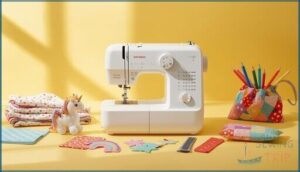
Your child’s first sewing machine doesn’t need 200 fancy stitches, but a few good ones will foster their creativity without overwhelming them.
The sweet spot sits between too simple (just straight stitches) and too complex (a computerized beast they’ll never master). Here’s what you should actually look for in the built-in stitch options.
Types of Built-in Stitches
Most beginner sewing machines give kids a solid stitch variety—straight stitches for basic seams, zigzag stitches to finish raw edges, and a few stretch options for knit fabrics.
You’ll usually find 10 to 45 built-in sewing patterns on entry-level models, which is plenty for young sewists learning thread control and fabric settings without feeling overwhelmed by needle options.
Decorative and Utility Stitches
Utility stitches handle the working seams—hems on pajama pants, repairs on stuffed animals, and zigzag edges that stop fabric from fraying.
While decorative stitches let kids personalize tote bags or pillows with scallops, hearts, and geometric lines.
When your child combines different thread colors and machine settings across sewing patterns, simple DIY sewing projects turn into custom fabric choices that actually look hand-stitched.
Buttonhole Functions for Kids
Real buttonholes separate beginner projects from polished garments your kids will actually wear. Many kid-friendly machines offer one-step or four-step systems that guide children through each bar and seam, while a dedicated buttonhole foot with clear markings keeps placement accurate.
Here’s what matters for young sewers:
- Brother models often include automatic threading paired with a marked buttonhole foot, so kids can align fabric edges before they start.
- Four-step patterns on compact sewing machines let you pause between stages to check length and teach how zigzag stitches build professional closures.
- Practice runs on scrap fabric prevent frustration—kids adjust width and density dials until buttons slip through smoothly, building confidence before tackling real beginner projects.
Ease of Use and Setup
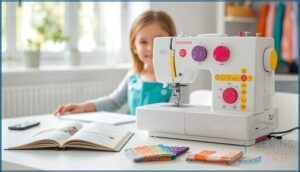
Getting a kid excited about sewing machines is one thing—getting them actually using the machine without frustration is another.
The best kids’ machines don’t require an engineering degree to set up or a manual the size of a phone book to operate. Let’s look at what makes a sewing machine truly beginner-friendly, from controls that actually make sense to features that get kids sewing in minutes, not hours.
Simple Controls and Interface
Great machines for kids transform intimidating controls into simple, confidence-building tools. The single dial with numbered speed settings keeps starting straightforward, while color-coded buttons help young sewists identify start and stop without second-guessing.
Visual guides printed right on the cover show threading paths step by step, and audible clicks confirm each setting change—turning confusion into I’ve got this! moments.
Labeled Settings for Beginners
Icon charts showing straight and zigzag stitches live right on the front panel, so your child won’t need to flip through manuals mid-project. Color coding groups similar stitches together, turning dial confusion into visual matching.
Tension controls marked with clear numbers guide kids toward that magic 4 or 4.5 sweet spot, while part labels identify needle, presser foot, and bobbin at a glance—perfect for beginner sewing projects.
Quick Start Features
Automatic threading gets your kid sewing in seconds—some machines hook thread through the needle eye with one lever push.
Drop-in bobbins snap into place under a clear cover, eliminating the traditional draw-up step that frustrates beginners.
These quick setup features mean less adult help and more instant sewing, which keeps enthusiasm high during those first beginner sewing projects when patience runs thin.
Durability and Build Quality
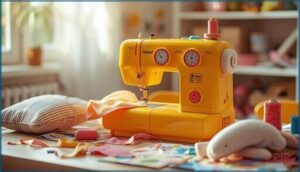
Kids aren’t exactly gentle with their belongings, so you need a sewing machine that can handle a few bumps without falling apart.
The best machines balance sturdy construction with lightweight portability—tough enough to survive childhood but still easy for small hands to manage. Let’s look at what separates the machines built to last from the ones that’ll end up in pieces after the first dropped thread spool.
Materials Used in Kids’ Machines
Most kids’ sewing machines blend plastic bodies with metal gears to keep them light yet long-lasting. Here’s what you’ll find inside:
- ABS or polycarbonate plastic for colorful, impact-resistant casings that survive classroom chaos
- Steel shafts and gears in the drive mechanism for smooth, reliable stitching
- Safety coatings with soft-touch surfaces and rounded edges to protect little fingers
- Eco materials like recyclable plastics that meet child safety standards
Drop Resistance and Portability
Portable designs matter when your child hauls that sewing machine from bedroom to playroom.
Brother and other compact frames use wide bases with rubber feet to resist sliding, and those non-slip pads double as drop testing champions—many kids’ models survive a tumble from waist height thanks to impact-resistant shells.
Built-in carry grips keep little hands safe during transport, so machine stability follows your young sewist everywhere.
Longevity and Warranty Coverage
Your child’s machine can last years when manufacturers back it with strong warranty terms. Brother and Singer often include 25-year mechanical protection on their kids’ models, so that chassis stays covered long after your young sewist masters buttonholes.
Here’s what longevity looks like:
- 25-year limited warranty on mechanical parts for many beginner Brother machines
- Shorter electronics coverage—usually 1–6 years on electrical components
- Free labor only during year one, then you pay for service
- Proof of purchase required to validate warranty claims
- Service networks offering local repair and official parts
Parts coverage keeps repair costs predictable, while authorized dealers provide maintenance you can trust.
Included Accessories and Feet
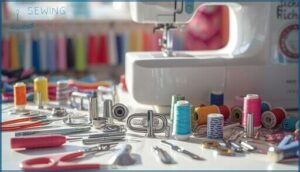
A sewing machine without the right accessories is like giving your kid a skateboard without wheels—technically possible, but not very useful.
Most machines come with a starter set of presser feet and tools, but the quantity and quality vary wildly between models. Let’s look at what actually comes in the box and whether those extras justify the price tag.
Presser Feet for Kids’ Projects
Most beginner sewing machines include an all-purpose presser foot for everyday seams and zigzag stitches on cottons your child will use for pillows and totes.
You’ll also find a zipper foot for pouches and a buttonhole foot that guides fabric automatically. As kids advance with sewing patterns for beginners, you can add specialty machine attachments like walking feet for small quilts, making stitch selection and foot compatibility easy to manage.
Starter Kits and Bonus Items
Many sewing machines bundle project materials like pre-cut fabric, matching thread, and simple sewing patterns for kids so your child can start right away.
You’ll often see bonus items such as small fabric scissors, sewing clips instead of pins, and a basic seam ripper for mistakes. Some kits add practice fabrics, colorful buttons, and ribbon to build confidence before tackling real projects.
Storage Solutions for Accessories
Once your kid has those starter goodies, keeping everything tidy matters. Built-in accessory trays under the extension table hide bobbins and needles out of sight, while soft carry cases with mesh pockets organize foot pedals and presser feet for travel to sewing classes. Thread organizers and magnetic pin caddies keep sewing tools visible and safe between projects.
- Compartment trays separate extra needles from bobbins so cleanup goes faster
- Padded totes protect sewing accessories from bumps with elastic straps inside
- Magnetic pin holders sweep up dropped pins quickly, keeping the floor safe
Portability and Compact Design
Kids don’t have dedicated sewing rooms with built-in workbenches—they’re working at kitchen tables, desks, or tucked into bedroom corners.
You need a machine that won’t hog precious space or require a forklift to move from storage to sewing spot.
Let’s look at what makes a sewing machine truly portable and kid-friendly in tight quarters.
Lightweight Machines for Kids
Most sewing machines for kids tip the scales under 10 pounds, making them easy to lift and stash away. You’ll find Kid Friendly Designs from Brother and other brands using compact plastic frames that keep Machine Weight down without sacrificing Sewing Ease.
These Portable Options let your child move their sewing machine from desk to table, building confidence while keeping Safety Features intact.
Carry Handles and Storage
A machine with a built-in Carry Handle Design lets your child grab and go without adult help.
Look for these practical features:
- Integrated top grips that balance the machine’s weight while your kid moves it between rooms
- Storage Compartments hidden under the free arm for bobbins and spare needles
- Dust Cover Options with side pockets that protect the Sewing Machine and keep threads tidy
Proper Cord Management prevents tangled foot pedals.
Best Machines for Small Spaces
Space Saving starts with models under 15 inches wide that tuck onto a kitchen counter or dorm shelf.
Compact Designs from Brother and other brands weigh just 8 to 12 pounds, so your child can lift the Portable Units solo.
Look for Mini Machines with a Small Footprint and built-in carry grips—perfect for apartments where every inch counts.
Price and Value for Money
You don’t need to spend a fortune to get your kid started with sewing. The trick is finding machines that offer the right features without charging for bells and whistles your beginner won’t actually use.
Let’s break down where your money goes and which options give you the best bang for your buck.
Budget-Friendly Options
You don’t need to drain your wallet to launch your child’s sewing journey. Entry-level Brother and Singer models usually land between $90 and $160 at major retailers, giving you solid machines without the sticker shock.
- Toy kits like Cool Maker sets run $25–$40 and include fabric and accessories for instant projects
- Brother XM2701 averages around $129 but drops to $70 during sales—track prices before buying
- Janome Hello Kitty models bridge playful aesthetics with real capability in the low-to-mid $100 range
- Warehouse retailers occasionally bundle machines with starter kits using stackable coupons for extra savings
Comparing Features Vs. Cost
When you’re choosing a sewing machine for kids, features and cost dance a delicate tango. A $70 machine might offer 15 to 25 stitches and a free arm, while a $40 toy barely manages straight seams—so value assessment means weighing real capability against price.
Feature comparison reveals that automatic needle threading and buttonholes justify spending $100 to $150, since those extras make learning faster and postpone costly upgrades.
Long-Term Value for Families
A solid kids sewing machine can serve your whole family for a decade or more when you think beyond the first child. Smart family budgeting means choosing machine durability over short-term savings, since one $150 model often outlives three cheap toys.
- Multi child use works best with standard presser feet and adjustable speed control
- Resale options stay strong when you keep accessories and pick well-known brands
- Long term costs drop when warranty coverage spans 25 years on mechanical parts
- Sewing education stays consistent when siblings share one dependable machine
Teaching Kids to Sew Safely
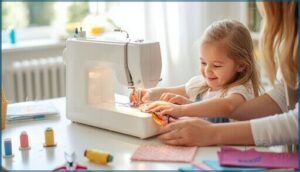
Getting your child started with sewing basics is exciting, but safety comes first. You’ll want to set clear ground rules and stay involved, especially during those first few projects.
Here’s how to teach the basics while keeping little fingers safe and building their confidence from day one.
Adult Supervision and Guidance
Usually, young children under eight should never sew alone—their reaction time simply isn’t fast enough. You’ll want to sit right beside them, watching the needle area constantly since most injuries happen when attention drifts.
Even older kids around ten to twelve benefit from parental guidance in the same room. Set clear safety rules from day one: fingers behind the presser foot, foot off the pedal before adjusting fabric, and always unplug when finished.
Introducing Sewing Basics
Start your kid with hand stitching on paper or thick felt before firing up the sewing machine. Teaching words like seam, bobbin, and right side early helps them follow sewing patterns for kids and learn to sew with confidence.
Show them how to guide fabric with both hands, keeping fingers clear of the needle—these sewing fundamentals and machine basics build safer, smoother sessions.
Fun Beginner Projects for Kids
Once they grasp those machine basics, try fabric crafts like felt animals—two 3-inch shapes whipstitched and stuffed make quick wins.
Fat quarter drawstring bags and fabric scrunchies work well on a sewing machine, teaching straight seams through real DIY projects.
Sewing patterns for kids that include simple aprons or elastic waist skirts turn craft ideas into wearable wins, and older kids love sewing games that challenge buttonhole skills or decorative stitches for DIY costumes.
Frequently Asked Questions (FAQs)
What is the easiest sewing machine to use for beginners?
Think of sewing basics as building blocks—you need simple machine controls first.
For beginners and kids, machines like the Brother XM2701 offer clear user interface dials, automatic threading, and straightforward sewing lessons right from the box.
What can a 10 year old sew?
Your 10-year-old can sew simple projects like scrunchies, pillowcases, tote bags, and doll clothes. Beginner wearables like elastic-waist skirts work great too.
Fun crafts build confidence while teaching essential sewing tips and techniques.
How to choose the right sewing machine for your child?
Match machine size and learning curve to your child’s age and sewing needs.
Prioritize child safety features like speed control, then balance budget options with durability so the sewing machine grows alongside their skills.
Which sewing machine is best for kids?
For kids serious about sewing education, the Brother XM2701 balances kid-friendly features with durability—27 stitches, automatic threading, and a 25-year warranty make it the smartest long-term investment for sewing safety and education.
What is the best sewing machine for beginners?
The Singer Simple stands out with its 15-stitch pattern set, front-loading bobbin, and automatic needle threader—features that make sewing machine basics approachable for beginners keen to join the sewing community.
Are sewing machines kid-friendly?
Real machines with proper protection prove perfectly kid-friendly.
Children around six can start sewing machines featuring speed control, finger guards, and parental guidance—making creative learning curve manageable while honoring child development and kid safety features.
What’s a good sewing machine for kids?
A good sewing machine for kids combines beginner sewing tips with kid-friendly features like speed control, top loading bobbins, and 10 to 20 built-in stitches for creative projects while ensuring machine durability.
Can a 7 year old use a sewing machine?
Yes, with active supervision and a simple machine. Most sewing educators recommend ages 7-8 as an ideal starting point, once children can follow multi-step directions and demonstrate solid hand-eye coordination.
What is the easiest sewing machine to learn on?
Ironically, the “easiest” machine isn’t always the fanciest.
The Brother XM2701 and Singer Simple 3337 top beginner models for kids because automatic needle threaders and clear dial controls flatten the learning curve fast.
What is the most dependable sewing machine?
Brother, Janome, and Singer machines top reliability rankings for sewing performance and durability.
The Brother XM2701 and Janome Hello Kitty balance dependable stitching with kid-friendly design, earning strong user reviews from families.
Conclusion
Like training wheels on a bicycle, the best sewing machines for kids reviewed here won’t stay beginners’ tools forever—but they’ll launch confident makers who won’t fear the needle.
Your choice hinges on balancing that first fascinated “I made this!” moment with features that won’t send you running for bandages. Pick the machine matching your child’s current abilities, supervise those early wobbly stitches, and watch creativity become second nature.