This site is supported by our readers. We may earn a commission, at no cost to you, if you purchase through links.
Your chair matters more than your machine. Sewists pour hours into fabric choices, thread weights, and stitch settings—then sit hunched on a kitchen stool wondering why their back aches by noon.
The right chair keeps your hips level, your shoulders relaxed, and your eyes at the perfect angle to your work.
Whether you’re pricing out ready-made options or sketching plans for a custom build, the difference between a good sewing session and a painful one often comes down to what’s under you.
ten picks cover every budget, body type, and workspace—so you can find your best sewing chair and get back to making.
Table Of Contents
- Key Takeaways
- Best Sewing Chairs to Buy
- 1. Arrow Sewing Adjustable Chair with Storage
- 2. Lorell Adjustable Office Stool
- 3. Boss Cream Furry Office Desk Chair
- 4. Amazon Basics Ergonomic Mesh Office Chair
- 5. Flash Furniture Purple Mid Back Chair
- 6. BestMassage Pink Mesh Office Chair
- 7. Arrow Oak Sewing Chair With Storage
- 8. Neo Chair Ergonomic Lumbar Office Chair
- 9. BOLISS Ergonomic Drafting Chair
- 10. BOLISS Ergonomic Mesh Office Chair
- Build or Buy Sewing Chair
- Key Sewing Chair Features
- Adjustable Seat Height for Sewing Tables
- Lumbar Support for Long Sewing Sessions
- Swivel Base and Caster Mobility
- Cushioned Seat Thickness and Foam Quality
- Breathable Mesh, Vinyl, or Fabric Upholstery
- Weight Capacity and Frame Durability
- Armrests Versus Armless Sewing Chairs
- Built-in Storage for Sewing Tools
- Ergonomic Sewing Chair Benefits
- Choosing Your Best Sewing Chair
- Frequently Asked Questions (FAQs)
- Conclusion
Key Takeaways
- Your chair height matters as much as your machine — if your hips aren’t level and your forearms aren’t resting naturally at the table height, you’ll feel it in your back long before the project is done.
- Lumbar support, breathable mesh, and a solid weight capacity aren’t premium extras — they’re the features that keep you sewing comfortably for hours instead of quitting early.
- Buying a ready-made chair usually beats building one — you get certified safety standards, a warranty, and proven ergonomics without the guesswork or hidden costs of DIY materials.
- The best sewing chair for you depends on your table height, floor type, room size, and how long you sit — so match those details before you spend a dollar.
Best Sewing Chairs to Buy
Finding the right sewing chair doesn’t have to be a guessing game. These ten picks cover a range of styles, budgets, and body types — so there’s something here for every sewer.
Whether you’re just starting out or shopping for a beginner-friendly setup, pairing your chair with a simple sewing machine for learning makes the whole workspace come together.
Take a look and see which one fits your setup best.
1. Arrow Sewing Adjustable Chair with Storage
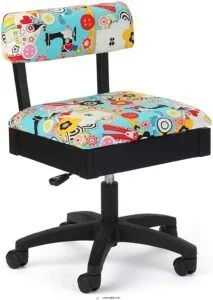
If you spend hours at your sewing table, the Arrow H6880 is worth a serious look. It adjusts from 18 to 22 inches — right in line with most sewing tables — so you can sit at just the right height without straining. The built-in lumbar support keeps your lower back comfortable through long sessions.
There’s also a hidden compartment under the seat, measuring about 15 by 13 inches, perfect for storing notions within easy reach.
| Best For | Sewers and quilters who spend long hours at their craft table and want built-in lumbar support, easy mobility, and a little extra storage close at hand. |
|---|---|
| Seat Height Range | 18–22 in |
| Weight Capacity | 250 lb |
| Swivel Base | 360° five-star |
| Caster Wheels | Heavy-duty smooth-roll |
| Lumbar Support | Targeted lumbar support |
| Seat Material | Foam with upholstery fabric |
| Additional Features |
|
- Lumbar support and adjustable height (18–22 in) make it genuinely comfortable for long sewing sessions
- The hidden under-seat compartment keeps threads, notions, and small tools off your workspace
- Smooth-rolling casters and 360° swivel let you move around your table without getting up
- Priced higher than a lot of comparable sewing chairs, so it’s a harder sell if you’re on a budget
- Tops out at 22 inches, which may not be enough for taller users
- Only one fabric print available, so you’re stuck with it whether it matches your space or not
2. Lorell Adjustable Office Stool
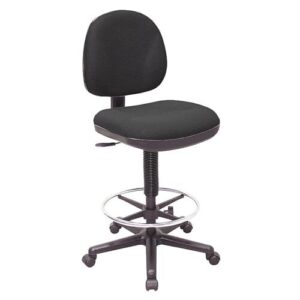
If your sewing table runs taller than standard, the Lorell Adjustable Office Stool is worth considering. Its pneumatic seat adjusts from roughly 22 to 34 inches — higher than most sewing chairs — making it a solid match for counter-height worktables or standing-desk setups.
The 360° swivel and rolling caster base let you reach your tools without twisting.
At $129.99, it’s an affordable pick. Just note the seat runs narrow, so it suits smaller frames best.
| Best For | Sewists working at counter-height or taller-than-standard tables who need flexible seating height and easy mobility around their workspace. |
|---|---|
| Seat Height Range | 22–32 in |
| Weight Capacity | Not specified |
| Swivel Base | 360° swivel |
| Caster Wheels | May need nylon glides |
| Lumbar Support | Adjustable backrest |
| Seat Material | Molded microfiber |
| Additional Features |
|
- Seat height adjusts up to ~34 inches, making it one of the few stools that genuinely works with tall worktables
- The 360° swivel and rolling base mean you can reach supplies without straining or getting up
- At $129.99, it’s a budget-friendly option with solid ergonomic features like an adjustable backrest and footring
- The seat runs narrow and shallow, so it’s not the most comfortable fit for larger frames or long sessions
- Minimum seat height is higher than advertised, which can be a real problem for shorter users
- The pneumatic height adjustment can feel rough or jerky rather than smooth
3. Boss Cream Furry Office Desk Chair
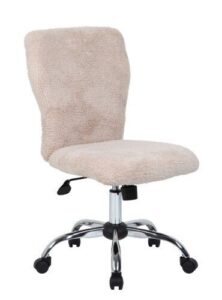
If comfort is your top priority, the Boss Cream Furry Office Desk Chair is a fun departure from the usual.
That plush Sherpa fabric feels genuinely soft during long cutting or hand‑stitching sessions.
The pneumatic gas lift adjusts height smoothly, and the five‑star chrome base with dual‑wheel casters keeps you moving freely.
It holds up to 275 pounds and manages daily use well.
Just note the seat runs a bit shallow — taller sewists may want something deeper for marathon sessions.
| Best For | Sewists and crafters who want a cozy, comfortable seat for shorter sessions at a cutting table or art desk. |
|---|---|
| Seat Height Range | Adjustable (pneumatic) |
| Weight Capacity | Not specified |
| Swivel Base | 360° swivel |
| Caster Wheels | Hooded double-wheel |
| Lumbar Support | Spring tilt mechanism |
| Seat Material | Faux fur (Sherpa) |
| Additional Features |
|
- The plush Sherpa fabric is genuinely soft — great if you’re sensitive to scratchy or stiff upholstery.
- Height adjusts smoothly with the pneumatic lift, and the chrome casters roll easily across most floors.
- Sturdy enough for daily use and holds up to 275 lbs without feeling wobbly.
- The seat is on the shallow side, so taller users may find it uncomfortable during long sessions.
- The faux fur flattens and dulls over time, so it’ll need some upkeep to stay looking fresh.
- The hydraulic lift can slowly sink under heavy use, which gets annoying fast.
4. Amazon Basics Ergonomic Mesh Office Chair
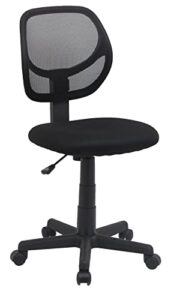
Not every sewing chair needs to cost a fortune. The Amazon Basics Ergonomic Mesh Office Chair comes in at around $57 and covers the basics well.
The breathable mesh back keeps air moving during those long sessions — no sticking, no sweating.
Height adjusts from 22.5 to 28 inches, which works for most standard sewing tables.
It holds up to 275 pounds and rolls smoothly on any floor.
Assembly is quick, too, with no real tools required.
| Best For | Sewers and crafters who want a budget-friendly, breathable chair for home studios or shared workspaces without spending a lot. |
|---|---|
| Seat Height Range | 22.5–28 in |
| Weight Capacity | 275 lb |
| Swivel Base | 360° swivel |
| Caster Wheels | Replaceable casters |
| Lumbar Support | No backrest adjustment |
| Seat Material | Black mesh |
| Additional Features |
|
- Mesh back keeps you cool during long sewing sessions — no sweaty back
- Height adjusts from 22.5 to 28 inches, fitting most standard sewing tables and a wide range of heights
- Easy to put together with no real tools, and rolls smoothly on any floor
- The seat cushion is thin foam, so it may not hold up well with heavy daily use over time
- No armrests or backrest tilt, which means less ergonomic flexibility if you need more support
- The 275 lb weight limit leaves out some users, and those near that limit are advised to look elsewhere
5. Flash Furniture Purple Mid Back Chair
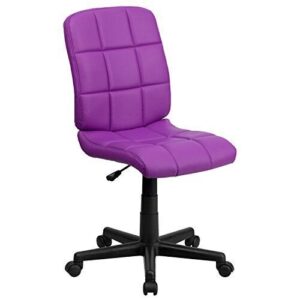
If purple is your color, this chair brings both personality and purpose to your sewing room.
Flash Furniture Mid Back Chair features a contoured mesh back that stays breathable during long sessions — no heat, no sticking. Built-in lumbar support keeps your lower back aligned, and the pneumatic height adjustment lets you dial in the perfect fit for your table.
The 5-star nylon base with dual casters rolls smoothly across most floors. It’s a solid, comfortable pick with a fun twist.
| Best For | People who want a pop of color in a small home office, dorm, or sewing room and need a compact, easy-to-clean chair that slides neatly under a desk. |
|---|---|
| Seat Height Range | 16.75–21.75 in |
| Weight Capacity | ~250 lb |
| Swivel Base | 360° five-star nylon |
| Caster Wheels | Dual wheel |
| Lumbar Support | Mid-back support |
| Seat Material | Vinyl with foam |
| Additional Features |
|
- Armless design slides fully under most desks, which is a real space-saver in tight rooms
- Vinyl wipes down in seconds — great if you share the space or just want easy cleanup
- No-tool height adjustment makes it simple to get comfortable fast
- No tilt, recline, or armrests, so it’s a pretty rigid setup for longer work sessions
- The seat runs small, and taller or heavier users (especially over 6 ft or 250 lb) may find it uncomfortable
- Vinyl can get sticky and sweaty after sitting for a while, especially in warmer rooms
6. BestMassage Pink Mesh Office Chair
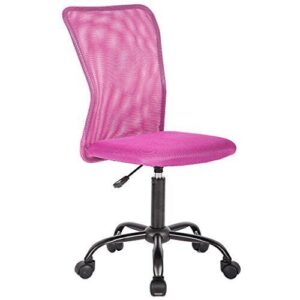
Want a chair that’s easy on the eyes and your back? The BestMassage Pink Mesh Office Chair delivers both.
Its breathable mesh seat and backrest keep airflow moving so you stay cool through long sewing sessions. The gas-lift cylinder adjusts seat height from 18.3 to 23 inches — plenty of range for most sewing tables. A five-point nylon base with dual casters enables smooth movement across hard floors or carpet. The knee-tilt mechanism with a tension knob lets you personalize your recline with ease.
| Best For | Home office users or hobbyists who want a stylish, budget-friendly chair for light to moderate sitting sessions. |
|---|---|
| Seat Height Range | 18.3–23 in |
| Weight Capacity | Not specified |
| Swivel Base | Five-star base |
| Caster Wheels | Integrated casters |
| Lumbar Support | Height-adjustable backrest |
| Seat Material | Mesh |
| Additional Features |
|
- The breathable mesh keeps things cool, so you’re not sweating through a long afternoon at your desk.
- Height and tilt adjustments are easy to dial in without any tools — great if multiple people share the space.
- That bold pink finish is genuinely fun and adds a pop of personality to any room.
- No published weight capacity is a real gap — hard to know if it’s built for you without that info.
- The mesh is on the thin side, so it may not hold up well to pets or rougher daily use.
- Lumbar support is pretty minimal, which could be a problem if you’re sitting for hours at a stretch.
7. Arrow Oak Sewing Chair With Storage
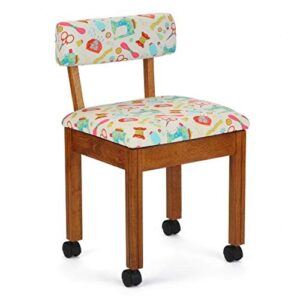
If storage and style matter as much as comfort, the Arrow Oak Sewing Chair earns a second look. Built from solid oak with a clean white finish, it blends into any sewing room without looking out of place.
Lift the padded seat and you’ll find a hidden compartment — about 15½ inches wide and 13¼ inches deep — perfect for notions, patterns, and small tools.
The gas-lift mechanism adjusts height from 18 to 22 inches, and the 360° swivel base keeps everything within reach.
| Best For | Sewers who want a tidy workspace and don’t mind trading some sturdiness for built-in storage and a clean, classic look. |
|---|---|
| Seat Height Range | Not specified |
| Weight Capacity | Not specified |
| Swivel Base | Yes |
| Caster Wheels | Heavy-duty casters |
| Lumbar Support | Targeted lumbar support |
| Seat Material | Solid oak wood |
| Additional Features |
|
- Hidden storage compartment under the seat keeps notions and small tools right where you need them
- Solid oak with a white finish looks polished and fits most sewing room setups
- Heavy-duty casters make it easy to move around without scratching up your floors
- The seat back has some flex to it — a few users found it wobblier than expected
- Casters can pop off during use, which gets annoying fast
- For what you pay, the build quality might leave you wanting a little more
8. Neo Chair Ergonomic Lumbar Office Chair
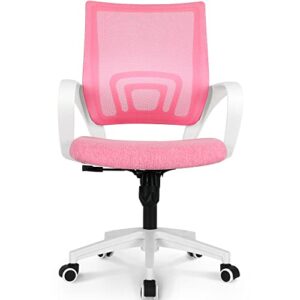
The Neo Chair keeps things breathable and supportive without overcomplicating your setup. Its 3-D air mesh back promotes airflow during long sewing sessions, and the adjustable lumbar curve targets exactly where your lower back needs it most.
Height adjusts from 36.5 to 40.5 inches, so it pairs well with taller tables too.
The compact seat — about 18.5 inches wide — works nicely in a smaller sewing room. Just note the 250 lb weight limit, and that assembly can take a little patience.
| Best For | Lighter-weight users under 150 lbs who want a breathable, compact chair for a small home office, student desk, or casual work setup. |
|---|---|
| Seat Height Range | 36.5–40.5 in (overall) |
| Weight Capacity | 250 lb |
| Swivel Base | Yes |
| Caster Wheels | Dual-wheel casters |
| Lumbar Support | Lumbar support curve |
| Seat Material | 3-D air mesh with foam |
| Additional Features |
|
- The 3-D air mesh back keeps airflow going, so you’re not stuck sweating through long sitting sessions
- Adjustable lumbar support and height range (36.5"–40.5") let you dial in a comfortable fit pretty easily
- Compact footprint slides into tight spaces without taking over the room
- The 250 lb weight limit and narrow seat can feel cramped or uncomfortable for bigger frames over longer stretches
- Assembly can be a bit of a hassle — the wheels especially may need a hammer and some patience to get in right
- A few users have noticed wobbling, slight leaning, and minor color or surface inconsistencies that raise some durability questions
9. BOLISS Ergonomic Drafting Chair
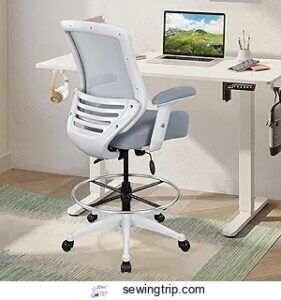
If you use a standing desk or a taller sewing table, the BOLISS Ergonomic Drafting Chair is built for you.
Its gas cylinder adjusts from 23.6 to 30.9 inches — that’s a generous range that standard office chairs can’t match.
The molded foam seat is 4 inches thick, so your comfort holds up through long sessions.
It can hold up to 300 lb and includes a foot ring for leg support. Just know that the foot ring can slip under pressure and may need a quick DIY fix.
| Best For | People who work at standing desks or elevated workstations and need a chair that can keep up with the height. |
|---|---|
| Seat Height Range | 23.6–30.9 in |
| Weight Capacity | 300 lb |
| Swivel Base | Yes |
| Caster Wheels | Standard casters |
| Lumbar Support | Not specified |
| Seat Material | Molded foam |
| Additional Features |
|
- The seat height adjusts from 23.6 to 30.9 inches, making it a solid fit for standing desks that standard chairs can’t reach.
- The 4-inch molded foam seat stays comfortable during long work sessions and holds its shape over time.
- Armrests adjust to five different heights, and assembly takes about 15–25 minutes with no tools required.
- The foot ring tends to slip downward under load — a lot of users end up rigging a DIY fix to keep it in place.
- The minimum seat height is taller than a standard office chair, so it may not work well with a regular desk.
- At nearly 400 pounds, it’s a heavy chair to move around, and it can develop a squeak after extended use.
10. BOLISS Ergonomic Mesh Office Chair
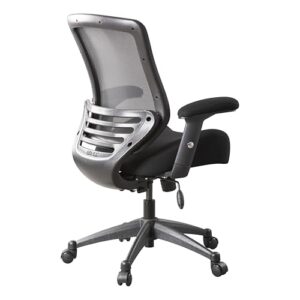
The BOLISS Ergonomic Mesh Office Chair punches well above its $165.99 price tag.
The breathable nylon mesh back keeps you cool during marathon sewing sessions, and the 5-inch high-density foam seat holds its shape — no flat cushion after a few weeks.
It accommodates up to 300 lb and adjusts to fit most body types comfortably.
Silent PU casters glide on hard floors without scratching.
The one-year warranty is modest, but the build quality earns it a spot on this list.
| Best For | Remote workers and desk-bound professionals who spend long hours sitting and want solid ergonomic support without spending $300+. |
|---|---|
| Seat Height Range | Adjustable (reclinable) |
| Weight Capacity | 300 lb |
| Swivel Base | 360° swivel |
| Caster Wheels | Silent PU casters |
| Lumbar Support | Contoured lumbar support |
| Seat Material | High-density molded foam |
| Additional Features |
|
- Breathable mesh back keeps air flowing, so you stay cool even during long work sessions
- Thick 5-inch foam seat holds up well and supports a wide range of body types up to 300 lb
- Silent casters glide smoothly on hard floors without leaving a mark
- Armrest padding tends to flatten out after a few weeks of regular use
- No headrest included, so taller users or those with neck tension will need to buy one separately
- Some users report the gas lift slowly loses pressure over time, causing the chair to sink
Build or Buy Sewing Chair
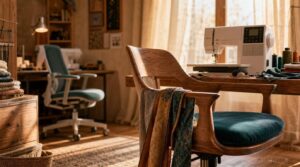
Choosing between building and buying a sewing chair comes down to your budget, your skill level, and what you actually need. Some sewists do better with a ready-made chair that’s built for long sessions — others want something custom that fits their space perfectly.
Here’s what to think about before you decide.
When Building a Sewing Chair Makes Sense
Sometimes, the perfect sewing chair just doesn’t exist off a shelf.
If you want a truly individualized fit — seat height, lumbar curve, even tool integration for threads and scissors — building one gives you full control.
DIY crafting lets you choose material durability and breathability in chair upholstery, match your aesthetic, and dial in adjustability options for made-to-order seating that no catalog can replicate.
A height adjustable seat ensures alignment with a standard 28‑inch sewing table.
- Tune seat height precisely to your sewing table
- Add built-in tool integration for notions and scissors
- Choose breathable, durable material selection for your climate
- Achieve aesthetic matching with your sewing room décor
- Reduce noise reduction concerns with custom caster choices
When Buying a Sewing Chair is Better
Building isn’t always the answer. For most sewists, buying wins on Immediate Availability alone — no sawdust, no guesswork.
Purchased chairs meet Certified Safety Standards, come with Manufacturer Support, and offer Warranty Assurance that protects your investment. When weighing Budget vs. premium sewing chair options, a ready-made chair often delivers better Resale Value and proven Ergonomic considerations for sewing enthusiasts than anything cobbled together at home.
DIY Sewing Chair Modification Ideas
Maybe you already own a decent chair — it just needs some love. Swap in Custom Cushion Covers with closed-cell foam for better moisture resistance.
Add Adjustable Armrest Brackets to align with your table. Install Floor-Friendly Casters that won’t scratch hardwood. A shallow Under Seat Storage bin keeps scissors close.
Small upgrades like these turn an average chair into Customizable Seating built around your workflow.
Cost Comparison Between Building and Buying
Those small upgrades add up — and so does your overall spend. The Initial Investment for a DIY chair often looks cheaper upfront, but Material Volatility means foam, casters, and brackets can shift in price quickly.
A budget-friendly sewing chair like the Amazon Basics starts around $100, offering real Affordability vs functionality in sewing chairs without the Financing Fees or Opportunity Cost of building from scratch.
Comfort Risks of Homemade Sewing Chairs
What feels good enough today can quietly wear your body down.
Improper Cushion Density causes foam to flatten fast, creating Pelvis Misalignment that strains your lower back. Insufficient Breathability traps heat, turning long sessions uncomfortable fast. Uneven Leg Support cuts circulation in your thighs.
Without proper lumbar support for crafters and adjustable chair height, homemade options carry real health risks of improper sewing chair use.
Safety and Stability Considerations
A wobbly chair is more than annoying — it’s a real safety hazard. Look for a base footprint width of at least 24 inches and anti-tip bracing to keep things grounded.
Caster lock mechanisms stop unexpected rolling mid-seam. Weight distribution design and a weight capacity of 250 lbs or more guarantee your sturdy build holds up.
Always check stability testing standards before committing.
Key Sewing Chair Features
Not every sewing chair is built the same, and the difference often comes down to a handful of features that really matter. Knowing what to look for saves you from buying something that feels fine in a showroom but fails you after a long cutting session.
Here’s what to check before you commit.
Adjustable Seat Height for Sewing Tables
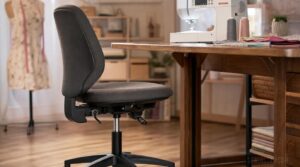
Your chair height can make or break a sewing session. Most ergonomic sewing chairs use a pneumatic seat height system or gas spring adjustments to let you dial in the perfect fit — usually between 18 and 22 inches.
Some electric lift mechanisms even offer Memory Height Presets via foot pedal control, so you’re always at the right height the moment you sit down.
Lumbar Support for Long Sewing Sessions
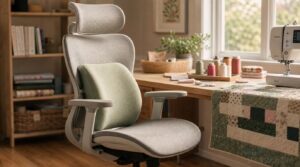
Long sewing sessions can quietly wreck your lower back — especially when you’re leaning in for detailed stitching. That’s why lumbar support for crafters matters more than most people realize.
Look for a Memory Foam Lumbar core with a Gel Cooling Layer and Breathable Lumbar Cover to stay comfortable for hours. An Adjustable Tension Support or Responsive Lumbar Mechanism adapts as you shift stances, giving you real sewing posture support and back pain relief without interrupting your flow.
Swivel Base and Caster Mobility
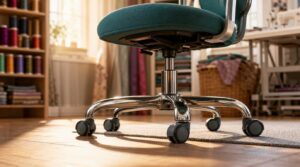
A good 360-degree swivel lets you spin to your cutting table, grab your thread, and get back to stitching without missing a beat.
Caster Material Selection matters here — soft rubber Noise Dampening Casters protect hardwood floors, while dual wheel casters roll smoothly on carpet.
Add Caster Lock Mechanisms when you need to stay put, and use Floor Protection Mats for extra peace of mind.
Cushioned Seat Thickness and Foam Quality
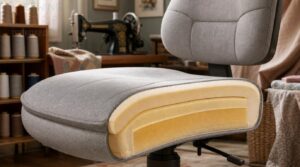
Think of your seat cushion as the foundation of every sewing session. High-density elastic sponge and CA117 fire retardant foam offer serious Cushion Sag Resistance — meaning your cushioned seat for sewing won’t flatten out after a few weeks.
Look for a padded waterfall vinyl seat with solid Edge Support Design. Breathable Foam and smart Temperature Management keep you comfortable through hours of detailed work.
Breathable Mesh, Vinyl, or Fabric Upholstery
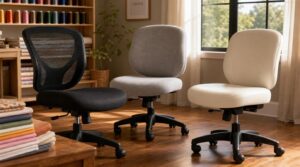
Your seat cushion sets the stage — now the upholstery keeps you comfortable through the long haul.
A breathable mesh back leads the way for Airflow Management and Heat Dissipation, pulling warmth away from your body.
Fabric upholstery offers Moisture Wicking comfort, while waterproof PU leather and vinyl upholstery win on Cleaning Ease and Material Longevity — perfect for thread-dusty sewing spaces.
Weight Capacity and Frame Durability
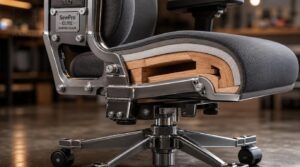
Upholstery keeps you cool — but what keeps the chair standing after years of daily use?
That comes down to Steel Frame Reinforcement and Frame Joint Integrity.
Most quality chairs meet Weight Rating Standards at weight capacity 250lbs minimum, with Heavy-Duty Welds and Load-Bearing Casters handling real-world stress.
A hardwood frame adds extra strength.
Always check weight capacity considerations for sewing chairs before buying.
Armrests Versus Armless Sewing Chairs
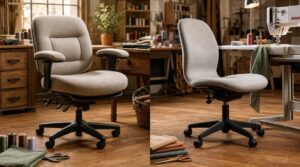
Now that you’ve got a sturdy frame underneath you, the next question is what goes on the sides.
Armrests offer elbow support during long sessions — but armrest interference is real in tight spaces. Armless chairs win on mobility range and fabric handling, letting you pivot freely. Adjustable armrest usage gives you customization flexibility either way.
For ergonomic sewing chairs, armless often means better space efficiency at the machine.
Built-in Storage for Sewing Tools
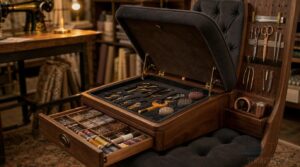
Storage solutions in sewing chairs go further than you’d expect.
Under seat storage keeps pins and scissors close without cluttering your table. Hidden storage compartments with drawer organization separate your needles cleanly.
Some chairs add a pegboard layout on the back, magnetic strips for metal tools, and cable management channels for foot pedal cords.
Seat cushion pockets handle the small stuff — thimbles, chalk, seam gauges — right where you need them.
Ergonomic Sewing Chair Benefits
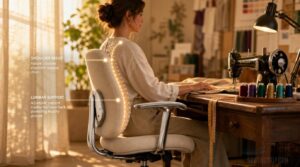
A good sewing chair does more than just hold you up — it actually protects your body over time. Hours at the machine can wear on your back, shoulders, and legs in ways you don’t notice until the damage is done.
A good sewing chair doesn’t just hold you up — it protects your body from the slow damage of hours at the machine
Here’s how the right ergonomic chair makes a real difference.
Reducing Back, Neck, and Shoulder Strain
Sewing for hours takes a real toll on your back, neck, and shoulders — especially without proper lumbar support for crafters built into your chair.
Ergonomic sewing chairs with adjustable height help you apply Spine Alignment Techniques naturally, keeping your neck neutral and preventing Neck Extension Prevention issues.
Shoulder Muscle Relaxation improves when you’re not straining to reach.
Microbreak Stretch Routines every 30 minutes, and sewing ergonomics finally works for you.
Supporting Better Sewing Posture
Good posture starts from the ground up. When your chair’s adjustable height puts your hips in a neutral Hip Positioning angle, everything else falls into place — Spine Neutrality, Neck Alignment, Shoulder Relaxation.
An ergonomic office chair with lumbar support and ergonomic design keeps your back contoured naturally, so posture support isn’t something you force. It just happens.
Improving Leg Circulation While Seated
Sitting for hours quietly hums along—until your legs start to ache. That’s your circulation asking for help. A chair with pneumatic seat height and adjustable height and tilt mechanisms lets you keep your leg flat on the floor at a natural 90-degree angle. Try these simple habits:
- Practice Ankle Mobility Drills — small circles every 30 minutes
- Add Calf Raise Breaks between seams
- Use Leg Elevation Techniques with a footrest or adjustable footrest
- Wear Compression Socks for better blood circulation while seated
Footrest Positioning makes a real difference over long sessions.
Reducing Fatigue During Detailed Projects
Detail work drains you faster than you think. That’s why choosing ergonomic sewing chairs matters — lumbar support, adjustable height, and breathable mesh work together to keep fatigue away.
| Fatigue Factor | Ergonomic Fix |
|---|---|
| Lower back tension | Lumbar support |
| Overheating | Breathable mesh |
| Pressure buildup | Pressure Distribution Foam |
| Eye strain | Eye Comfort Lighting |
| Leg stiffness | Footrest Integration |
Microbreak Scheduling and Swivel and caster functionality in sewing workstations into your routine — small moves, big relief.
Increasing Focus and Sewing Productivity
Your chair is doing more than holding you up — it’s shaping how well you focus. An ergonomic sewing chair reduces the physical noise that pulls your attention away, so you can stay in your flow longer.
Pair that with smart workspace efficiency habits:
- Use task lighting at 4000–5000K to sharpen contrast on fine details
- Try microbreak scheduling every 45–60 minutes to reset your concentration
- Keep tool organization tight so transitions between steps don’t break your rhythm
When chair design helps your posture, sewing productivity follows naturally.
Preventing Discomfort From Poor Chair Height
Wrong chair height quietly wrecks your body. When your seat sits too high, your hips tilt and your back and neck stretch with every stitch. Too low, and poor Knee Angle Alignment squeezes circulation behind your knees.
Ergonomic sewing chairs with pneumatic seat height and a height adjustment lever fix this fast. Add Footrest Integration if needed, and Seat Edge Contour supports Leg Circulation Support naturally — Posture Neutralization starts with adjustable height.
Matching Chair Ergonomics to Sewing Tasks
Not every sewing task asks the same thing from your body. Precision needlework pulls your torso forward, so Backrest Tilt and Lumbar support matter most. Quilting at full spread needs Knee Space and Seat Edge Padding to keep circulation moving.
- Adjust Armrest Height so elbows rest without crowding the machine.
- Footrest Position to keep ankles relaxed.
- Use Adjustable height to match each task’s reach.
- Dial Backrest Tilt for leaning versus upright stitching.
- Apply Needlework ergonomics to protect long-term back health.
Choosing Your Best Sewing Chair
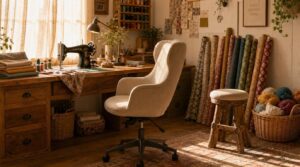
The right sewing chair isn’t one-size-fits-all — it’s the one that fits your table, your room, and how you actually sew. A few key factors will make that decision a lot easier.
Here’s think through before you commit.
Match Chair Height to Your Sewing Table
Getting your chair height right starts with your body, not the table. Use your elbow height as a proxy — your forearms should rest naturally at sewing surface level.
Popliteal height alignment keeps your feet flat and knees at 90°.
If the chair sits too high, footrest integration saves your posture.
Aim for a height tuning protocol that matches your sewing machine compatibility and table height ratio every time you sit down.
Consider Your Sewing Room Size
Your room size shapes which chair actually works for you. A minimum square footage of 70 square feet gives one station enough breathing room.
Beyond that, these details matter:
- Clearance around chair needs 2–3 feet for easy swiveling
- Ceiling height considerations affect overhead storage placement
- Power outlet placement determines cord-free movement zones
- Vertical storage utilization frees up valuable floor space
- Compact design chairs fit tight sewing workstation design layouts
Choose Wheels for Your Flooring Type
Your floor type matters more than you’d think when picking caster wheels.
| Floor Type | Best Wheel | Why It Works |
|---|---|---|
| Hardwood/Tile | Polyurethane Soft Wheels | Non-marking, scratch-free glide |
| Carpet | Wide-Diameter Rollers | Prevents indentation, smoother roll |
| Low-Pile Carpet | Nylon Low-Pile Casters | Easy rolling, lightweight feel |
| Vinyl/Soft Surfaces | Rubber Cushion Casters | Cushions contact, protects surface |
| Mixed Flooring | Non-Marking Wheel Covers | Adaptable, dual wheel casters adapt |
A 360-degree swivel with quality casters for carpeted floors keeps your swivel mobility smooth all session long.
Compare Budget and Premium Options
Budget-friendly sewing chairs ($120–$260) cover the basics well — decent foam, standard mesh, and simple height adjustment.
Premium options ($260–$520) earn their higher Price Ratio through improved Material Quality, better Durability Testing, and a richer Feature Set.
Here’s what sets them apart:
- Longer Warranty Length (up to 5 years vs. 1 year)
- High-density or memory foam seats
- 4D armrests and adjustable lumbar
- Reinforced frames with heavier-gauge steel
- Premium upholstery that resists wear longer
Check Warranty and Return Policies
Before you click "buy," take a minute to check the Warranty Duration and Return Window. Most chairs give you 14–30 days to return them — keep your Proof of Purchase handy.
Watch for Restocking Fees on opened items. Scan the Exclusions Summary too, since wear and misuse are rarely covered.
For daily sewing, a solid chair warranty is your best backup plan.
Prioritize Durability for Daily Sewing
If you sew every day, your chair takes a beating — so build quality really matters. Look for powder coated finish frames, reinforced gussets, and stainless steel fasteners that won’t loosen over time.
High density foam holds its shape through years of use, and a ball bearing swivel keeps movement smooth.
Durability considerations for sewing chair purchases often separate budget picks from premium ones worth the investment.
Choose Storage if Space is Limited
A small sewing space doesn’t mean you have to sacrifice organization. Compact Storage Solutions built right into the chair — like Under-Seat Bins, Slim Profile Trays, and Foldable Tool Caddies — keep scissors and notions within reach without cluttering your workspace.
Modular Storage Units let you add or remove compartments as your needs shift.
These compact chairs for small sewing spaces are true space-saving furniture for home studios.
Test Adjustability Before Long-term Use
Before committing to any chair, sit in it the way you actually sew. Run through these quick checks:
- Gas Lift Smoothness — Raise and lower the adjustable height several times; it should glide without catching.
- Seat Edge Trim Test — Feel for pressure behind your knees, then confirm the Pelvis Tilt Adjustment holds your spine naturally.
- Lock Lever Functionality — Engage the lock, then shift your weight to test stability.
Also verify the Backrest Height Range suits your torso, the adjustable tilt feels balanced, and the lumbar support lands exactly where you need it.
Frequently Asked Questions (FAQs)
How do I clean and maintain my sewing chair?
Keep your chair clean and it’ll last for years.
Vacuum fabric weekly, wipe leather or vinyl with a damp cloth, dust mesh gently, and lubricate casters and the gas lift every few months.
Can sewing chairs be used for other office tasks?
Yes — great sewing chair practically doubles as a full office chair.
Adjustable height, lumbar support, and swivel casters handle desk work, video calls, and keyboard reach just as well as any dedicated office seat.
Are there eco-friendly sewing chair options available?
Eco-friendly options do exist.
Look for chairs with recycled plastic components, bamboo frame materials, low VOC finishes, or biobased foam alternatives. Some even carry Cradle Certification, making your sewing space greener without sacrificing comfort.
How do sewing chairs impact posture over time?
Your chair quietly shapes your spine over time. Poor support causes lumbar flexion increase, pelvic tilt compensation, and neck muscle strain.
Spinal alignment shift follows — and so does the posture fatigue curve that drains your focus.
What warranty options are available for sewing chairs?
Warranty Duration usually runs one to three years. Coverage Details vary — parts may be included, but not labor.
Exclusions Limitations carefully, as wear and spills often aren’t covered.
Claim Process and Transferability Returns differ by brand.
Can sewing chairs help with posture-related headaches?
Absolutely.
Poor neck alignment is one of the top triggers for tension headaches during long sewing sessions. Ergonomic sewing chair with adjustable lumbar support promotes cervical relief and posture improvement, making headache prevention more achievable.
What weight capacity do most sewing chairs support?
Most sewing chairs follow standard capacity range guidelines of 250 to 300 pounds. Heavy-duty limits climb to 400 or even 500 pounds. Always check the manufacturer’s user weight guidelines before buying.
Are sewing chairs suitable for other craft hobbies?
Yes, most sewing chairs work great for other crafts.
Their Cross‑Craft Mobility, Adjustable Work Surface height, and Multi‑Tool Storage make them ideal crafting furniture — whether you’re beading, painting, or doing embroidery.
How do sewing chairs differ from gaming chairs?
Gaming chairs feature RGB Lighting, Headrest cushion padding, and a wide recline angle range for play.
Sewing chairs prioritize adjustable height, lumbar support, mesh back ventilation, 360 swivel wheels, tool accessibility, and firmer seat foam density for focused craft work.
Can you use sewing chairs at standing desks?
You can — as long as the chair’s adjustable height matches your desk range. Desk Height Compatibility matters most.
Good Pneumatic height adjustment, Stability at Elevation, and Hard Floor Mobility make it a capable Standing Desk companion.
Conclusion
The right chair doesn’t just assist your body—it aids every project you’ll ever make.
Whether you decide to build or buy your best sewing chair, the goal stays the same: hours at your machine that feel good, not punishing.
Match your height, check your lumbar assist, and don’t settle for whatever’s nearby.
Your fabric deserves care. Your technique deserves practice.
And you deserve a chair that makes both feel easy.
- https://www.sewingpartsonline.com/products/koala-sewcomfort-sewing-chair?utm_source=openai
- https://www.arrowsewing.com/hydraulic-sewing-chairs.html?utm_source=openai
- https://koalacabinets.com/pages/frequently-asked-questions?utm_source=openai
- https://www.mayoclinic.org/healthy-lifestyle/adult-health/in-depth/office-ergonomics/art-20046169?utm_source=openai
- https://www.micomlab.com/micom-testing/bifma-x5-1/?utm_source=openai