This site is supported by our readers. We may earn a commission, at no cost to you, if you purchase through links.
A quilt that’s too wide bunches up under your arms. One that’s too short leaves your knees cold. That narrow window between "just right" and "why did I make this" is exactly why lap quilt dimensions matter more than most quilters expect.
Most people assume any small quilt works as a lap quilt. But 30 to 60 inches covers a wide range of needs—wheelchair users, couch loungers, hospital patients, and tall adults all require different measurements to get real comfort from the same basic concept.
Getting the size right before you cut a single piece of fabric saves you from reworking the whole project.
Table Of Contents
- Key Takeaways
- What is a Lap Quilt?
- Standard Lap Quilt Sizes
- Small Lap Quilt Dimensions
- Medium Lap Quilt Dimensions
- Large Lap Quilt Dimensions
- Wheelchair Lap Quilt Sizes
- Lap Quilt Versus Throw Quilt
- Choosing Your Best Lap Size
- Fabric Needs by Quilt Size
- Top 5 Lap Quilt Sizing Essentials
- Frequently Asked Questions (FAQs)
- Conclusion
Key Takeaways
- Most lap quilts fall between 36–60 inches wide and 48–72 inches long, but the right size depends on who’s using it — a wheelchair user needs 30–36 inches wide, while a tall adult on a recliner might want up to 72 inches long.
- A 36 by 48 inch quilt is the sweet spot for beginners and chair use — it’s compact, forgiving of small mistakes, and requires only 12–20 fat quarters to complete.
- Always cut your backing fabric at least 4 inches larger on every side than your quilt top, and plan for fabric shrinkage after the first wash so your finished size lands exactly where you want it.
- Lap quilts and throw quilts aren’t the same thing — lap quilts are intentionally smaller and purpose-built for seated warmth, which also makes them a more personal and practical handmade gift than a larger throw.
What is a Lap Quilt?

A lap quilt is exactly what it sounds like — a smaller quilt sized to cover your lap while you’re sitting down. Before you can pick the right size or start cutting fabric, it helps to understand what makes a lap quilt different from other quilts. Here’s what you need to know first.
If you’re wondering about the best dimensions to start with, this beginner’s quilting guide explains why a 48-by-60-inch lap quilt is ideal.
Definition and Key Features
A lap quilt is a small, focused piece of bedding built to cover your lap — from your hips down to your knees — while you’re seated. Think of it as the middle ground between a heavy blanket and nothing at all.
What sets it apart is its three-layer quilt sandwich: a pieced or printed fabric top, a batting layer in the middle for warmth, and a backing fabric underneath. Binding stitched around the edges keeps everything neat and prevents fraying.
Lap quilt dimensions usually run 30 to 45 inches wide and 34 to 60 inches long — compact enough to stay put on your legs without pooling on the floor. Many quilters also love making them reversible, giving you two color schemes in one lap blanket size.
Standard lap quilt specifications often measure 50 by 60 inches to get the best coverage.
The targeted coverage utility here is the whole point. You’re not wrestling with yards of extra fabric just to warm up on the couch.
Common Lap Quilt Uses
Knowing what a lap quilt is naturally leads to the question of where it actually belongs in your life — and the answer is almost everywhere you sit.
Targeted warmth is the most straightforward use. Whether you’re reading by a drafty window or watching TV on the couch, lap quilt dimensions between 36 by 48 and 45 by 60 inches deliver just enough coverage without overheating you.
Wheelchair lap blankets serve a quieter but deeply meaningful role. Hospitals, VA centers, and nursing homes regularly accept donated wheelchair lap quilts sized around 36 by 45 inches — snug enough to avoid catching in wheels while keeping legs warm during long sitting hours. Many hospice and comfort care programs gift them to patients as a tangible gesture of support.
A well-chosen lap quilt also travels surprisingly well. Folded into a tote, a lightweight lap blanket size of 36 by 48 inches works just as comfortably at an outdoor event or a long car ride as it does at home.
Then there’s the sentimental gift angle. Handmade lap quilts rank among the most personal gifts you can give a senior, a recovering friend, or a new caregiver — something chosen with care that stays close every single day.
A handmade lap quilt is a deeply personal gift that brings daily comfort to those who need it most
Comfort Versus Full Coverage
There’s a real difference between a quilt that wraps you head to toe and one that simply rests across your lap.
Comfort-focused lap quilts prioritize soft tactile fabric, lightweight batting, and smooth rounded edges — keeping warmth close without restricting movement. Think of it as targeted coziness rather than full coverage, with lap quilt dimensions usually landing between 36 by 48 inches for that just-right balance.
Best Users and Settings
Who actually reaches for a lap quilt most often? Older adults, people in wheelchairs, home crafters, and anyone who runs cold during movie nights.
Wheelchair lap blankets work especially well in sizes between 30 and 36 inches wide, keeping fabric clear of moving parts. Comfort items like these also suit hospital patients, recliner users, and children settling in for quiet reading time.
Standard Lap Quilt Sizes
Most lap quilts fall within a pretty predictable size range, which makes planning your project much easier than you might expect.
Knowing the standard measurements gives you a solid starting point, whether you’re making one for yourself or as a gift. Here are the most common lap quilt sizes to know before you start cutting fabric.
36 by 48 Inches
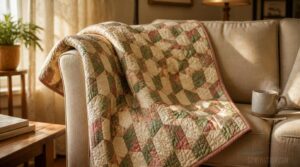
36 by 48 inches is one of the most practical sizes in any lap quilt sizes or quilt size chart. It covers about 12 square feet, fits comfortably across most adult laps, and drapes neatly over a sofa arm.
Compact enough for travel blanket utility, it also works beautifully as a nursing blanket or a patchwork display piece.
45 by 45 Inches
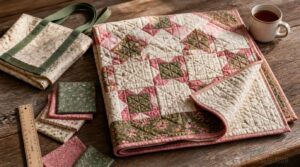
The 45 by 45 inch square sits in a sweet spot on any lap quilt sizes chart — compact enough to fold into a tote bag, yet generous enough to drape across your lap on a cool evening.
What makes this size especially appealing:
- Square layout benefits mean no guessing which end is "up" — every side is equal
- Beginner project advantages shine here since all four sides match, simplifying cutting, layout, and binding
- Efficient fabric consumption keeps costs low, usually requiring just two to four fat quarters depending on your pattern
At 2,025 square inches total, your fabric requirements stay manageable. Backing needs only a 46 by 46 inch cut, and batting trims cleanly to match. That predictability makes symmetrical design planning — like grid blocks or diagonal layouts — straightforward to execute without awkward leftover space.
It also washes and dries easily in a standard home machine, which matters more than people expect once a quilt sees regular use.
33 to 50 Inches Wide
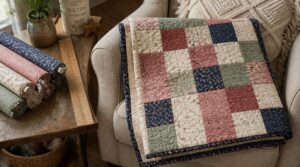
Width shapes everything about how a lap quilt fits, feels, and functions — and the 33 to 50 inch range covers nearly every seated adult comfortably.
A 33 inch width suits narrow chairs and wheelchair users without excess bulk, while 50 inches drapes generously across the thighs and knees for extra warmth. That 17-inch span gives you real flexibility when matching lap quilt dimensions to your seating setup.
Block layout planning shifts noticeably across this range too. Narrower widths around 33 inches fit roughly 6 to 7 standard blocks across a row, while 40 to 45 inches opens up 8 to 10 blocks — enough room for more intricate patterns without forcing awkward partial blocks at the edges.
Fabric width management is equally practical here. Most quilting cotton runs 42 inches off the bolt, so standard dimensions chart planning within this range keeps fabric requirements efficient and cuts clean.
45 to 60 Inches Long
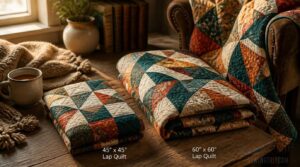
Length tells you more about a lap quilt than almost any other measurement. At 45 to 60 inches long, you’re covering the sweet spot of the standard dimensions chart — enough to warm your lap and thighs without pooling on the floor.
At 45 inches, the quilt sits neatly across your legs in a dining or office chair. At 60 inches, it reaches from your knees toward your hip zone, which suits recliner use and cooler evenings especially well.
Seating drape styles shift noticeably between these two lengths:
- 45 inches keeps fabric requirements lower and works cleanly in tight seating spaces
- 50 to 55 inches balances thermal coverage needs with manageable yardage
- 60 inches allows the quilt to wrap toward the shoulders for extra warmth if needed
Fabric weight also plays a role here. Heavier cotton at 60 inches drapes and stays put naturally. Lighter fabrics at that same length feel breezier — still cozy, but less anchored. Design proportion balance matters too; wider block layouts suit the 60-inch length, while tighter arrangements keep a 45-inch quilt looking intentional rather than cramped.
Metric Size Conversions
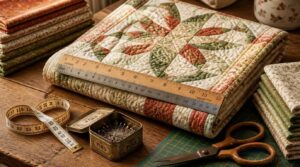
Working in centimeters? 1 inch equals 2.54 cm exactly, so your standard 36 × 48-inch lap quilt becomes roughly 91 × 122 cm. A 45 × 60-inch quilt lands at about 114 × 152 cm.
When cutting fabric, round to the nearest centimeter — quilting tolerances allow ±0.5 cm without affecting fit. Metric patterns usually list whole numbers, so don’t stress minor rounding differences.
Small Lap Quilt Dimensions
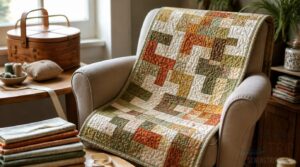
Small lap quilts sit right in that sweet spot between practical and cozy — compact enough for chair use, but still warm enough to matter.
If you’re just starting out or need something that fits a specific seat, this size range has a lot going for it. Here’s what you need to know about small lap quilt dimensions.
Best for Chair Use
A 36 by 48 inch lap quilt fits chair use better than almost any other size. It drapes neatly over the arms of a standard sofa or lounge chair without pooling on the floor — which matters more than most people expect once you’re actually settled in and comfortable.
Chair-friendly ergonomic backrests usually support you at 90 to 110 degrees, so your legs rest at a natural angle. A quilt that’s too long bunches up awkwardly at that position. Keeping your lap quilt dimensions tight to 36 by 48 inches respects that geometry.
Seat depth of 16 to 20 inches also plays into this. A compact quilt lays flat across your thighs without slipping off or tangling near the legs of the chair.
Compact Coverage Needs
Compact coverage is really about one thing: warmth where it counts, without extra fabric getting in the way.
A 36 by 48 inch lap quilt covers from mid-thigh to just below the knee for most seated adults — enough to take the chill off without bunching at your ankles. That’s the sweet spot for chair use.
Three things shape how well a small lap quilt actually performs:
- Fabric weight — heavier fabric stays put on your legs but can feel stiff; lightweight cotton drapes naturally and breathes better
- Edge finish — bias binding outlasts a simple turned edge through repeated machine washing
- Color and pattern — darker prints hide everyday staining far better than pale solids on a frequent-use lap quilt
Seating comfort also depends on how the quilt sits, not just how big it is. A non-slip backing keeps a compact lap quilt from sliding off slippery upholstery mid-movie. Lightweight batting helps too — low-loft options let the quilt conform to your legs rather than sitting stiffly on top of them.
Care is straightforward: machine wash warm, tumble dry low. Plan a 5 percent shrinkage allowance into your initial cuts so your finished lap quilt dimensions land exactly where you want them.
Easy Beginner Project Size
Starting your first DIY quilt project doesn’t mean tackling a king-size challenge. A 36 by 48 inch lap quilt is the perfect entry point — manageable, practical, and forgiving of small mistakes.
At that size, one or two fat quarters cover most of your fabric needs, keeping costs low while you learn.
Medium Lap Quilt Dimensions
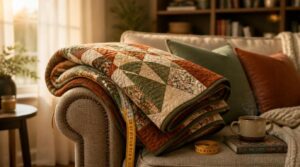
Medium lap quilts are the sweet spot for most adults — roomy enough to actually feel cozy, but not so big they’re sliding off your lap onto the floor.
They usually run 33–50 inches wide and 45–60 inches long, making them a go-to choice for everyday couch use and one of the most popular gifting sizes out there. Here’s what you need to know about medium lap quilt dimensions.
Average Adult Coverage
Most adults find a lap quilt hitting the hip-to-knee range does everything they need. That’s why 36 to 45 inches long works so well — enough for seated leg warmth without fabric bunching at your feet.
Key coverage goals to keep in mind:
- Just right thigh coverage without excess pooling
- Fabric drape balance across the lap
- Tailoring for height when choosing length
Everyday Couch Quilting
A medium lap quilt lives on the couch. Sizes around 45 by 60 inches drape beautifully over a sofa arm for quick, cozy evening warmth — and double as a decorative accent with seasonal color accents between throws.
| Quilt Use | Ideal Size | Notes |
|---|---|---|
| Sofa arm draping | 45 × 48 in | Stays neat, easy to grab |
| Cozy TV evenings | 45 × 60 in | Full lap coverage |
| Portable comfort item | 36 × 50 in | Lightweight, easy to carry |
| Decorative accent | 45 × 45 in | Square, styled fold |
| Guest gifting | 50 × 60 in | Generous without bulk |
Popular quilting patterns like patchwork or chevron shine at this scale without overwhelming your sofa.
Balanced Width and Length
Width and length need to balance. When one outpaces the other, the quilt shifts or bunches.
- Proportionate ratio near 1:1.5 keeps coverage even
- Prevents fabric from sliding off the lap
- Reduces bulk behind the knees
- Ensures uniform warmth across lap and thighs
- Creates predictable drape on standard chairs
For most adults, 36–45 inches wide by 45–60 inches long works best.
Comfortable Gifting Size
When a lap quilt becomes a gift, size suddenly matters in a whole new way. A finished quilt around 45 by 45 inches hits the sweet spot — enough coverage for real warmth, compact enough to fold neatly into a gift box without wrestling tissue paper into submission.
That’s your comfort zone for most DIY gifts.
Large Lap Quilt Dimensions
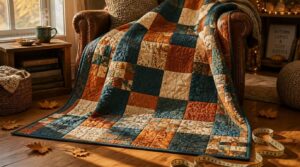
If you’re on the taller side, a standard lap quilt just won’t cut it — you need something with a little more reach. Large lap quilts are built with extra width and length so they actually cover you the way they should. Here’s what you need to know about sizing up.
Taller User Coverage
Taller users need extra length and width to feel truly covered. Aim for 60 to 72 inches long and up to 54 inches wide — enough to drape from shoulder to knee without riding up.
Choose low-loft batting to keep the quilt flexible across that longer span. The result is a soft, even drape that feels generous rather than stiff.
40 to 54 Inches Wide
That range covers a lot of ground — literally. A 40-inch wide quilt suits most chairs cleanly, while 54 inches lets two people share a couch throw with room to spare.
- 40 inches fits chairside without floor overhang
- 54 inches works beautifully as a sofa drape
- Wider quilts need roughly 40% more batting and backing fabric
Wider also means heavier, so plan for longer machine drying times.
Up to 72 Inches Long
Six feet of fabric is a different kind of comfort. At 72 inches long, your quilt reaches from shoulder to shin in a recliner — no bunching, no bare ankles.
| Length | Best For |
|---|---|
| 60 in | Standard recliner drape |
| 68 in | Tall user leg coverage |
| 72 in | Afghan-style full warmth |
Plan for 3–5% shrinkage after the first wash. Cut long, finish right.
Oversized Lap Quilt Options
When you want a quilt that wraps around you like a favorite chair, 50 by 70 inches hits the sweet spot. That extra width drapes over chair arms on both sides, creating a snug cocoon effect. The added length reaches past your knees for real leg warmth.
A thermal or minky backing makes cold evenings noticeably more comfortable without adding stiffness.
Wheelchair Lap Quilt Sizes
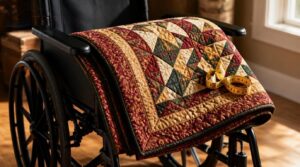
Wheelchair lap quilts aren’t just smaller versions of regular ones — they’re sized with real purpose in mind. Getting the dimensions right keeps the quilt off the wheels and out of the way, while still keeping the person warm and comfortable. Here’s a breakdown of the sizes that work best.
30 to 36 Inches Wide
30 to 36 inches wide hits the sweet spot for wheelchair users. That range keeps fabric off the wheels, preventing snags and drag during transfers.
A 36-inch width also lines up with standard fabric panel cuts, so you’re not fighting waste. For striped or reversible layouts, this width gives clean, balanced rows without awkward cropping.
40 to 48 Inches Long
Length matters just as much as width when you’re quilting for a wheelchair user. 40 to 48 inches long covers the lap and thighs comfortably while keeping fabric clear of footrests and wheels.
A 48-inch length equals four feet — enough to tuck warmly without dragging.
36 by 36 Inches
A 36 by 36 inch square is a well-loved wheelchair lap quilt size. Three feet in each direction keeps fabric neatly off wheels while covering the lap fully.
It folds into a tote for travel, dries quickly after washing, and its square pattern symmetry suits simple checkerboard or grid designs perfectly. Compact, practical, and easy to manage.
Avoiding Wheels and Dragging
Fabric that drapes over the wheels risks catching in spokes or jamming the push rims — a genuine safety concern. Keeping width between 30 and 36 inches means the quilt stays within the seat boundary. Length around 40 to 48 inches lets it cover the lap without pooling on the floor below.
Hospital Lap Quilt Sizing
Hospital settings call for slightly different lap quilt dimensions. A 46 to 50 inch square fits neatly over a patient’s lap without hanging past the bedside table. Measure across the patient’s hips, then add 2 to 4 inches for comfort.
Choose prewashed cotton — it survives frequent laundering and won’t fray. A 2-inch border keeps edges stable through repeated hospital wash cycles.
Lap Quilt Versus Throw Quilt
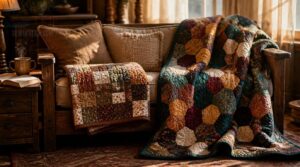
Lap quilts and throw quilts look similar at first glance, but their sizes and purposes are actually pretty different. Knowing which one fits your needs can save you a lot of second-guessing, whether you’re making one or buying one as a gift.
Here’s a closer look at how the two compare across size, use, and gifting value.
Lap Quilt Size Range
Lap quilts cover a surprisingly wide range. Standard lap quilt dimensions usually run from 36 by 48 inches up to 50 by 70 inches, depending on the user’s height and seating needs.
Common size markers include:
- 36 by 48 inches for chair use
- 40 by 50 inches for couch coverage
- 45 by 60 inches for taller users
- 50 by 70 inches for generous wrap
Throw Quilt Size Range
Throw quilts run noticeably larger than lap quilts. A standard throw measures 50 to 65 inches wide and 60 to 80 inches long — enough to drape comfortably over a couch arm and still cover your legs.
Taller users often reach for 60 by 80 inch throws, while a portable travel throw usually stays closer to 50 by 65 inches.
Coverage and Intended Use
The two serve different purposes. A lap quilt — usually 36 to 54 inches wide — wraps snugly around your seated legs, offering gentle pressure and portable warmth without overheating.
A throw covers more of your body and couch. When you just need cozy comfort during reading or TV time, the lap quilt’s compact dimensions make it the smarter, lighter choice.
Best Choice for Gifting
When choosing between a lap quilt and a throw as a gift, the lap quilt’s compact dimensions often win. Its smaller, intentional size signals care — this wasn’t grabbed off a shelf.
A handmade gift in a recipient’s custom color scheme, crafted from ethically sourced cotton, offers both practical utility value and a personal touch that a larger throw quilt simply can’t match.
Choosing Your Best Lap Size
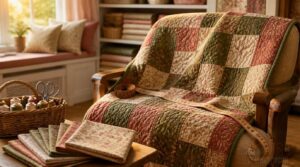
Getting the right size comes down to a few personal details that are easy to overlook. Before you cut a single piece of fabric, there are some simple steps that can save you from making a quilt that’s too short, too wide, or just off in some hard-to-name way. Here’s what to think through before you settle on your dimensions.
Measure Seated Body Width
Getting the width right starts with one simple measurement. Sit upright, then run a flexible tape measure across your widest hip or thigh point — knee to knee, keeping it level.
Three things to document accurately:
- Measure without thick clothing or bulky pockets
- Use the larger value if your hips sit asymmetrically
- Add 1 to 2 inches for comfortable ease
Write it down — you’ll reference it every time.
Consider Height and Comfort
Width tells you half the story. Height fills in the rest.
If you’re tall, your legs extend further — a quilt that stops at mid-shin leaves you cold where it counts. Aim for 45 to 72 inches long for comfortable coverage. For average height, 45 to 60 inches works well without bunching.
Good posture matters too. A quilt that puddles on the floor pulls forward and strains your lower back.
Match Chair or Recliner
Your chair shape matters more than you’d think. A standard recliner runs 35 to 40 inches wide, so a quilt in the 36 to 40-inch range sits cleanly across the seat without bunching over the armrests.
For a wall hugger or lift recliner, check the depth too — most run 20 to 22 inches — so your quilt drapes naturally without catching on the recline mechanism.
Plan for Shrinkage
Fabric and batting both shift after washing. Cotton usually shrinks 3–5%, so a quilt cut at 45 by 60 inches could finish closer to 43 by 57. Pre-wash your fabric before cutting to lock in that change early.
Batting can also expand slightly once quilted, so always measure your finished top after a test wash before calling the size final.
Add Borders if Needed
Once shrinkage is accounted for, borders become your best tool for recovering lost inches. A 3 to 4 inch border adds meaningful length without reworking your block layout.
Choose fabric that echoes a dominant color in your quilt center, and use mitered corners for a clean, polished finish that holds its shape wash after wash.
Fabric Needs by Quilt Size
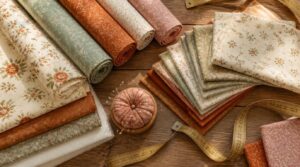
Once you know your quilt’s size, figuring out how much fabric you need becomes a lot more straightforward. A few key factors — like batting allowance, fat quarters, and seam width — will shape your shopping list before you cut a single piece. Here’s what to keep in mind as you plan your fabric needs.
Backing and Batting Allowance
Cut your backing fabric at least four inches larger on every side than your quilt top. For a 36 by 48 inch lap quilt, that means backing around 44 by 56 inches. If you’re using a longarm frame, add six to eight more inches in length.
Thicker batting also needs slightly wider margins to keep the quilt sandwich flat and stress-free.
Fat Quarter Planning
A standard fat quarter measures 18 by 22 inches, giving you 396 square inches of usable fabric — enough to cut multiple block components without buying full yardage. For a typical lap quilt, you’ll need roughly 12 to 20 fat quarters depending on your chosen quilt pattern and lap quilt dimensions.
Coordinating color stories come naturally when you buy fat quarters in curated bundles, which take the guesswork out of managing print scales across your quilt top. Start cutting your efficient block layouts by tackling the largest pieces first, then use remaining scraps for smaller squares — a simple habit that goes a long way toward reducing fabric waste.
Charm Pack Options
One charm pack gives you 42 pre-cut five-inch squares — all coordinated, all ready to sew. That’s a genuine shortcut for your fabric yardage calculation, especially when you’re planning smaller lap quilt dimensions.
- Skip tedious cutting with this precut fabric variety
- Lean on built-in color palette balance across every square
- Mix packs for richer charm pack combinations
- Explore seasonal themed packs for holiday sewing projects
- Perfect entry point for beginner project speed
Two packs together handle most modest lap quilt sizes comfortably.
Five-inch Square Counts
Sixty squares get you started — but knowing exactly how many makes the difference between running short and finishing strong.
For a standard 36 by 48 inch lap quilt, divide each dimension by 5. That’s roughly 8 columns by 10 rows, giving you 80 five-inch squares before seam allowances. Bump up to a 50 by 60 inch size and you’re looking closer to 145 squares. A 9-patch quilt block built from five-inch squares lets you experiment with color gradient experimentation row by row — shifting light to dark across the grid feels intentional, not accidental.
Your fabric yardage calculation gets easier once you fix your grid.
Seam Allowance Basics
Every extra stitch costs you space. In quilting, a 1/4-inch seam allowance is the standard — smaller than garment sewing’s typical 5/8 inch, and deliberately so. Less bulk means flatter seams across your patchwork grid.
For cotton fabrics, this holds perfectly. With knits or heavier materials, bump up slightly. Always test on scrap fabric first before cutting into your final yardage.
Top 5 Lap Quilt Sizing Essentials
Once you know your ideal lap quilt size, having the right tools and materials on hand makes the whole process easier. These five picks cover everything from measuring accurately to finding a finished quilt that fits your needs. Here’s what’s worth keeping close by.
1. Craftsman Self Locking Tape Measure
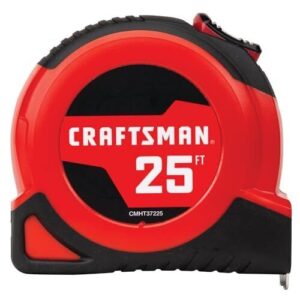
The Craftsman CMHT37225S is a quiet workhorse that earns its place in any quilter’s toolkit. Its self-locking blade stays extended hands-free until you press the release button — so you can hold fabric flat with one hand while the tape holds its position.
The fraction markings printed on the blade make reading measurements like 36 by 48 inches fast and clear, no squinting required. One limitation worth knowing: it carries no metric markings, so keep a conversion chart nearby if your patterns use centimeters.
| Best For | DIY enthusiasts, framers, and home improvers who need a reliable, easy-to-read tape measure they can use solo without a second set of hands. |
|---|---|
| Material | Steel blade, ABS plastic case |
| Care Instructions | Wipe clean |
| Color Options | May vary from photos |
| Available Sizes | One size (25 ft blade) |
| Primary Use | Fabric and material measuring |
| Brand | Craftsman |
| Additional Features |
|
- The self-locking blade holds its position hands-free, making solo measuring much easier
- Fraction markings are printed directly on the blade for quick, clear readings without squinting
- Compact and lightweight at under an ounce, so it slips into a tool belt or pocket without any bulk
- No metric markings, which can be frustrating if you’re working with materials or patterns that use centimeters or millimeters
- Small fractions can be tricky to read in low light or for anyone who needs high-precision measurements
- Product color may not match what’s shown in photos, which is a minor but occasionally surprising inconsistency
2. Special Supplies Sensory Compression Bed Sheet
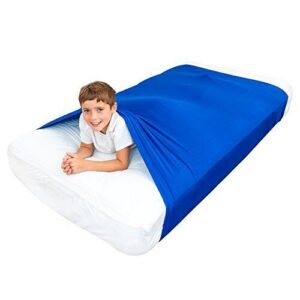
After measuring your quilt top with a tape measure, you might wonder what else belongs in a quilter’s toolkit. The Special Supplies Sensory Compression Bed Sheet is one worth knowing — especially if you’re quilting for a child with sensory needs.
Made from a nylon and spandex mix, it wraps snugly over the mattress like a sleeve, delivering gentle deep touch pressure that feels like a calm, steady hug. It’s breathable, machine washable, and available in twin, full, and queen sizes. Just air dry it to protect the stretch.
One heads-up: always consult an occupational therapist before use.
| Best For | Parents of children aged 3 and up with ADHD, autism, or sensory processing challenges who need a calming, breathable alternative to weighted blankets. |
|---|---|
| Material | Nylon and spandex blend |
| Care Instructions | Machine wash, air dry only |
| Color Options | Not specified |
| Available Sizes | Twin, Full, Queen |
| Primary Use | Sensory compression sleep aid |
| Brand | Special Supplies |
| Additional Features |
|
- Delivers gentle deep touch pressure that mimics a soothing hug, helping anxious or restless kids fall and stay asleep
- Breathable nylon-spandex fabric keeps things cooler than a traditional weighted blanket
- Available in twin, full, and queen sizes and is machine washable for easy care
- Stretching it tightly over the mattress during installation can be a frustrating process
- The fabric can snag or tear if handled too roughly, so it needs some care
- Requires a consultation with an occupational therapist before use, which adds a step before your child can try it
3. Lush Decor Reversible Cotton Throw Blanket
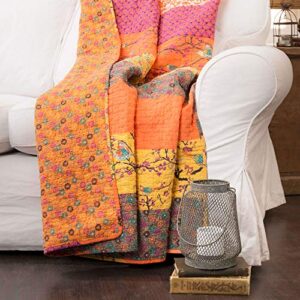
Once you’ve got your measurements sorted, you need something that actually shows you what a well-made lap-sized throw looks and feels like. The Lush Decor Reversible Cotton Throw Blanket is a solid reference point.
At 50 inches wide by 60 inches long, it sits right in the oversized lap quilt range — enough coverage for one adult on a couch without swallowing the furniture. The 50/50 cotton-polyester mix keeps it breathable yet durable, and the OEKO-TEX certification means it’s free from harmful substances. Two patterns in one piece — flip it over for a completely different look.
One honest note: it may feel stiff fresh out of the package, but a few washes fix that quickly.
| Best For | Anyone decorating a boho or maximalist space who wants a lightweight, versatile throw that pulls double duty as both a functional blanket and a decorative accent. |
|---|---|
| Material | 50/50 cotton-polyester blend |
| Care Instructions | Machine washable |
| Color Options | Multiple reversible patterns |
| Available Sizes | 50 x 60 inches |
| Primary Use | Decorative lap throw blanket |
| Brand | Lush Decor |
| Additional Features |
|
- Reversible design gives you two distinct looks in one blanket, making it easy to switch up your decor without buying anything new
- OEKO-TEX certified, so you can use it around kids or pets without worrying about harmful chemicals
- Machine washable and made from a cotton-poly blend that holds up well over time
- Comes out of the package feeling stiff and needs several washes before it softens up properly
- At 50 by 60 inches, it’s on the smaller side and won’t cover a full bed or larger sofa
- The thin profile makes it great for light layering but not a replacement for a heavier blanket in cold weather
4. Sewing Fabric Clips
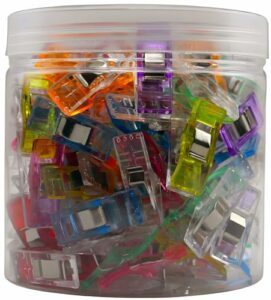
When you’re pinning down binding or holding quilt layers before stitching, fabric clips make the job cleaner than pins ever could. These 100-piece ABS plastic clips open to 11mm — enough to grip multiple fabric layers without punching holes through your work.
Each clip measures 27mm x 10mm x 13mm, small but firm. They handle curves, binding edges, and bulky batting without slipping. A clear storage jar keeps them organized between projects.
| Best For | Quilters, sewists, and DIY crafters who want a clean, hole-free way to hold fabric layers, binding, or heavy materials in place while they work. |
|---|---|
| Material | ABS plastic |
| Care Instructions | Wipe clean, store in jar |
| Color Options | 9 assorted colors |
| Available Sizes | 27mm x 10mm x 13mm per clip |
| Primary Use | Fabric layer and binding clips |
| Brand | Unbranded |
| Additional Features |
|
- 100 clips in nine colors make it easy to color-code projects or keep a large stash on hand
- The non-slip grip handles curves, binding edges, and multiple fabric layers without sliding
- Comes with a clear screw-top storage jar to keep everything tidy between uses
- The 11mm opening may not accommodate extremely thick or bulky fabrics
- Individual clips are on the smaller side, which can catch some buyers off guard
- The storage jar can be tricky to fill completely, so loose clips may end up scattered anyway
5. Greenland Home Quilted Throw Blanket
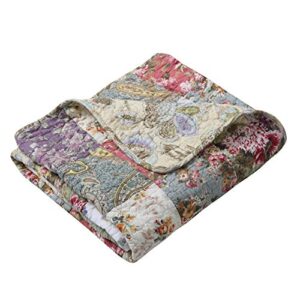
The Greenland Home Pavona sits at 50 by 60 inches — right in the sweet spot for a lap quilt that actually does its job without bunching up on your couch.
The cotton face breathes naturally, while the brushed microfiber back stays soft against your skin. Polyester fill keeps it warm without feeling heavy. And the botanical motif — songbirds, butterflies, peacocks among vines — means it looks just as good draped over a chair as it does in use.
Machine washable. Reversible design means both sides wear evenly over time.
| Best For | Anyone who wants a versatile, easy-care throw that works as a lap quilt, decorative accent, or even a lightweight summer bedcover. |
|---|---|
| Material | 100% cotton |
| Care Instructions | Machine washable |
| Color Options | Multicolor garden and Jacobean print |
| Available Sizes | Not specified |
| Primary Use | Lap quilt and decorative accent |
| Brand | Greenland Home Fashions |
| Additional Features |
|
- Reversible design gives you two distinct looks — a garden color pattern on one side and a yellow Jacobean print on the other
- Prewashed and preshrunk cotton means it holds its shape after repeated machine washes
- Flexible enough to use on a bed, couch, chair, or even as a tablecloth or pet blanket
- The texture can feel a bit scratchy at first, so it may need a few washes before it softens up
- At 50 by 60 inches, taller people might find it too short for full body coverage
- Some units have shown minor seam irregularities or slightly uneven stitching
Frequently Asked Questions (FAQs)
What is the rule of 7 in quilting?
The rule of 7 means cutting your squares 7/8 inch larger than the finished size you want. For a 4-inch half square triangle, cut at 4⅞ inches to account for seam allowances.
What is a good size for a quilt?
A good size depends on the person using it. For most adults, 45 by 60 inches hits the sweet spot — wide enough to wrap around, long enough to cover your lap and knees comfortably.
Can a lap quilt be square?
Yes, a lap quilt can absolutely be square. The 45 by 45 inch size is the most common square option, offering balanced coverage on chairs and couches while keeping your layout simple and symmetrical.
What is a lap quilt used for?
Warmth is best when shared." A lap quilt warms your lap and legs while you sit — on a couch, recliner, or wheelchair — offering lightweight, portable comfort without the bulk of a full bed quilt.
What are the benefits of lap quilts?
Lap quilts offer targeted warmth without overheating your whole body. They’re lightweight, easy to wash, and portable enough to carry room to room — making them a practical comfort tool for everyday seated use.
What types of fabrics are most suitable for lap quilts?
As the old saying goes, *the right tool makes all the difference.
- Quilting cotton is your best starting point — durable, easy to sew, and widely available. Flannel adds warmth, while Essex linen blends offer great drape and longevity.
What is the best way to quilt a lap quilt?
Straight-line quilting is the easiest and most reliable method. Run parallel lines every few inches using a walking foot. It secures all three layers cleanly and gives your finished quilt a neat, polished look.
Is there a standard size for lap quilts?
No, there’s no single official standard. Most quilters work within a 36 to 60 inch width and 48 to 72 inch length, treating these ranges as reliable, practical benchmarks rather than fixed rules.
What other uses can lap quilts have?
Beyond warmth, lap quilts serve many roles — travel comfort, furniture protection, sensory therapy, and even emergency blankets. You can also personalize them with embroidery or repurpose worn sections into pouches or tote linings.
Can I machine quilt a lap quilt at home?
Yes, a standard home sewing machine can handle a lap quilt. Use a walking foot to keep layers even. Work in sections if needed to manage bulk comfortably.
Conclusion
Even ancient weavers measured their work before the first thread crossed the loom—because size shapes function. Knowing how big lap quilts are before you cut means fewer mistakes and more comfort for whoever wraps up in your work.
Match the person, not a generic chart. A wheelchair user needs different coverage than a tall adult on a recliner. Get the measurements right first. Everything else—fabric, batting, borders—falls into place naturally after that.
- https://www.missouriquiltco.com/blogs/missouri-star-blog/lap-quilt-size
- https://sewnikki.com/4797/easy-guide-to-lap-quilt-sizes-and-5-free-patterns
- https://designedtoquilt.com/printable-quilt-size-chart
- https://www.sylviasquiltdepot.com/standard-mattress-measurements--quilt-sizes.htm
- https://suzyquilts.com/quilt-sizes-chart