This site is supported by our readers. We may earn a commission, at no cost to you, if you purchase through links.
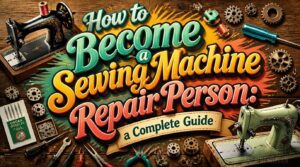
Most people don’t realize the sewing machine sitting in their grandmother’s spare room is a precision instrument with hundreds of moving parts—and when it breaks, almost nobody knows how to fix it. Skilled repair technicians are genuinely rare, which means the ones who exist rarely lack for work.
The trade sits at an interesting crossroads: part mechanical engineering, part electronics diagnostics, part customer service. A domestic machine might need a bobbin timing adjustment; an industrial unit could require vibration analysis and PLC fault code interpretation. The range keeps the work from ever going stale.
Becoming a sewing machine repair person takes deliberate training, the right tools, and hands-on practice across multiple machine types—but the path is more accessible than most technical trades, and the rewards run deeper than a steady income.
Table Of Contents
- Key Takeaways
- What Sewing Machine Repairers Do
- Meet Basic Education Requirements
- Learn Core Repair Skills
- Choose Your Training Path
- Get Hands-on Apprenticeship Experience
- Earn Repair Technician Certification
- Build Your Technician Tool Kit
- Practice on Different Machine Types
- Find Sewing Machine Repair Jobs
- Start Your Own Repair Business
- Frequently Asked Questions (FAQs)
- Conclusion
Key Takeaways
- Sewing machine repair blends mechanical, electronic, and customer-service skills across domestic, industrial, embroidery, and serger machines, keeping the work varied and consistently in demand.
- You can enter the trade through vocational programs, community college certificates, or online courses like Sewing Doc Academy, with most people reaching entry-level readiness within 6 to 12 months.
- Earning ISDA certification — through three tiers from Member to Certified Technician — unlocks higher pay ($50,000–$100,000 for independents), access to authorized service contracts, and greater client trust.
- Whether you work in a dealer shop, a manufacturer’s service department, or run your own mobile business, your starter tool kit runs $60–$250 and your long-term earning power grows with each machine type you master.
What Sewing Machine Repairers Do
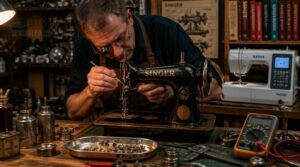
Sewing machine repairers do far more than tighten a loose screw or thread a bobbin—their work spans a surprisingly wide range of mechanical, electronic, and customer-facing responsibilities.
For those who treasure heirloom machines, vintage sewing machine repair specialists blend mechanical expertise with historical knowledge to keep decades-old craftsmanship running true.
Whether you’re servicing a home quilter’s vintage Singer or keeping an industrial factory machine running through a tight production deadline, the day-to‑to tasks vary considerably.
Here’s a closer look at what this role actually involves.
Common Repair Tasks
Every day, sewing machine repairers tackle a range of hands-on challenges — from bobbin area cleaning and lint removal to tension disc maintenance, hook timing synchronization, and drive belt replacement.
You’ll also run sewing machine diagnostics on computerized models, pushing firmware updates and tracing wiring faults, while mechanical adjustments and parts replacement round out a workload that keeps machines running reliably across dozens of brands and configurations.
Domestic Machine Servicing
Domestic machines bring their own rhythm of recurring needs.
Most require lint removal from the bobbin area every 6 to 12 hours of use, followed by light oiling at pivot points with sewing machine oil.
You’ll clean tension discs, replace worn bobbin case springs, and adjust presser foot pressure for fabric thickness — then verify everything with a stitch quality test on scrap fabric.
Following a regular servicing schedule helps keep the machine running smoothly.
Industrial Machine Repairs
Industrial machines hit harder when they fail — production stops, and the pressure is on you to diagnose fast. You’ll assess mechanical drives, hydraulics, and control electronics, often disassembling major components to verify tolerances.
- Use vibration analysis to detect bearing wear
- Apply thermal imaging to spot lubrication failures
- Read PLC fault codes for electronic troubleshooting
IoT condition monitoring and predictive maintenance models are reshaping how technicians plan repairs before breakdowns occur.
Embroidery and Serger Work
Embroidery machines and sergers demand a different kind of attention than the industrial work you’ve just left behind. With embroidery, embroidery tension calibration is your first checkpoint — imbalanced top and bobbin thread causes puckering or looping that ruins designs.
| Issue | Likely Cause |
|---|---|
| Design drift | Poor hooping tension |
| Thread breakage | Incompatible stabilizer choice |
| Skipped stitches | Mistimed hook synchronization |
Serger blade replacement keeps overlock stitch mechanics clean and precise.
Customer Service Duties
Customers remember how you made them feel as much as whether their machine runs smoothly. Responding within two hours during business hours, confirming appointments by text or email, and explaining root causes in plain terms builds the trust that keeps people coming back.
- Collect model and serial number before inspection
- Provide written estimates with labor and parts
- Send post-service reports with maintenance tips
- Request feedback after every completed repair
- Log full service history for future visits
Meet Basic Education Requirements

You don’t need a degree to get started in sewing machine repair, but there are a few foundational requirements that will set you up for success before you ever touch a machine. Most of these you may already have or can build with a little focused effort. Here’s what you’ll want to have in place from the start.
High School Diploma
A high school diploma is the starting gate for most entry-level technician roles, signaling to employers that you can handle structured learning and follow through.
| Requirement | Why It Matters |
|---|---|
| Essential coursework | Builds reading and math fundamentals |
| Diploma in hand | Unlocks vocational and apprenticeship programs |
| Science credits | Helps electronics troubleshooting basics |
| Career-tech diploma | Aligns directly with trade certification paths |
That credential creates pathways to certificate programs lasting 6–12 months.
Mechanical Aptitude
Think of a sewing machine as a miniature factory where every gear and cam has a job, and tracing why things move the way they do is your foundation.
Three aptitudes you’ll rely on daily:
- Pattern recognition in gear and belt systems
- Spatial visualization of hidden components
- Cause-effect mapping from symptom to root fault
Logical deduction turns symptoms into answers.
Sewing Machine Familiarity
Before you can fix a machine, you need to know it from the inside out. That means recognizing internal component identification by sight — the needle bar, bobbin case, feed dogs, and presser foot — and understanding how thread path logic connects spool to stitch.
Home sewing machines and industrial sewing machines differ in scale, but both reward technicians who’ve spent real time running them.
Safety Awareness
Every repair job carries real risk before you touch a single component. Disconnect power and unplug the machine before cleaning or maintenance — unintended starting causes serious injury.
Wear safety glasses with side shields and cut‑resistant gloves when handling sharp tools.
Store solvents in labeled, sealed containers, work with ventilation, and keep a first aid kit accessible at all times.
Basic Electronics Knowledge
Modern sewing machines are part circuit board, part mechanical system, so understanding basic electronics isn’t optional — it’s foundational.
You’ll need to recognize what a resistor, capacitor, or diode does, how a multimeter measures voltage and continuity, and why power ratings matter when diagnosing a failed motor.
That knowledge is what separates guesswork from an accurate, confident diagnosis.
Learn Core Repair Skills

Every solid repair technician builds their work on a handful of foundational skills that show up in almost every job, whether you’re fixing a vintage Singer or a modern computerized Brother. Mastering these basics is what separates someone who can get a machine running again from someone who truly understands why it wasn’t working in the first place.
Here’s what you’ll need to get comfortable with.
Cleaning and Lubrication
Keeping a machine clean is the foundation every reliable repair starts from. Use soft bristle brushes and lint-free swabs to clear debris from feed dog housings and needle plate areas, then wipe surfaces with isopropyl alcohol before applying any lubricant.
Apply light machine oil sparingly — over-lubrication attracts grit and causes bobbin nesting. Industrial machines need oiling every shift; domestic machines, every 6–12 months.
Tension Adjustment
Thread tension adjustment checks:
- Upper dial setting
- Bobbin tension screw tightness
- Needle alignment with thread path
- Lint buildup clearing in thread path
- Fabric weight match
Once clean, tension becomes your next focus. A loose bobbin causes looping underneath; over-tight settings bunch seams. Lint and needle misalignment quietly shift tension, so test on scrap fabric before assuming the dial needs changing.
Timing Corrections
Once tension is dialed in, timing becomes the deeper puzzle. When you spot skipped stitches or erratic stitch length, suspect the timing belt or gears first.
Check belt tension — too tight strains the motor; too loose causes slippage.
Inspect gear mesh for backlash or pitting.
On computerized machines, use diagnostic mode to read needle-position signals and verify electronic sensor synchronization before touching anything mechanical.
Motor and Gear Replacement
Once timing is squared away, motor failures demand a different kind of attention. Before touching anything, discharge capacitors and cut power completely.
Key checks during motor evaluation:
- Match voltage and RPM exactly to the original unit
- Confirm gear ratio preserves correct needle speed
- Inspect bearings for roughness or play
- Check motor vents for lint-driven overheating
Grinding sounds usually mean gear tooth wear, while a burning smell points to rotor winding damage.
Electronic Troubleshooting
When a computerized machine starts misbehaving, your multimeter becomes the first line of defense — check power rail continuity and verify ground resistance stays within 0.1 ohms. Irregular oscilloscope waveforms on the clock line often expose PWM driver faults before any visible damage appears.
Capacitors showing ESR drift beyond 10 percent destabilize the microcontroller’s 5V supply, causing unpredictable resets. Always run a full stitch-pattern test after any board-level repair.
Choose Your Training Path

No two technicians land their skills the same way, and the path you choose depends on your schedule, budget, and how fast you want to get hands-on. Each option below carries different time commitments and trade-offs worth knowing before you commit. Here are the main training paths to explore:
Vocational School Programs
Vocational schools offer one of the most structured ways into this trade, with programs spanning 9 to 24 months that combine classroom instruction with hands-on lab work.
Curriculum aligns directly with industry tasks, and many schools partner with local employers for internships.
Flexible evening schedules and financial aid options keep this path accessible, even if you’re already working.
Community College Certificates
A community college certificate fits neatly into a busy life, with programs finishing in as few as 12 credit hours.
- Flexible evening and weekend classes keep training accessible while you work
- Hands-on lab training builds real diagnostic skills alongside classroom theory
- Financial aid options can greatly reduce out-of-pocket costs
- Stackable credentials can transfer toward a full associate degree later
Online Repair Courses
Online courses have quietly become one of the most practical entry points into sewing machine repair. Self-paced video lessons let you pause mid-demonstration, rewatch tricky timing sequences, and work through virtual diagnostic labs that simulate real faults — all without leaving your workbench.
Platforms like Sewing Doc Academy offer remote instructor support and lifetime access for under $250, with a digital certificate upon completion.
Manufacturer Training
Brand-specific training from manufacturers like Brother, JUKI, and PFAFF gives you access to model-specific diagnostic flowcharts, factory-approved lubricants, and calibration standards tied to actual tolerance specs. You’ll learn firmware update procedures and safety compliance protocols — including lockout/tagout — directly from the source.
These programs are usually reserved for employees of authorized service centers, so your employer often sponsors your seat.
Self-study Limitations
Self-study can get you started, but it has a ceiling. Without structured deadlines or a mentor reviewing your work, diagnostic reasoning gaps develop quietly — you may misidentify a fault and not realize it until a customer’s machine comes back broken.
Hands-on training under supervision catches those habits early, before they cost you time, parts, and trust.
Get Hands-on Apprenticeship Experience
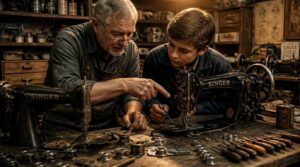
No classroom can fully prepare you for the moment a real machine lands on your workbench with a problem nobody’s written a manual fix for yet. That’s why hands-on apprenticeship experience is where your training actually starts to stick. Here are the best places to build that real-world foundation:
Real mastery begins the moment an unfixable machine lands on your bench with no manual to guide you
Local Dealer Shops
Walking into a local sewing machine dealer and asking about apprenticeship opportunities is often how careers in this trade actually start. Dealers regularly need an extra pair of hands for routine servicing, and that arrangement benefits both sides.
Many shops in smaller communities don’t advertise these openings — you find them by showing up, asking directly, and demonstrating genuine mechanical curiosity.
Authorized Service Centers
Dealer shops open the door, but authorized service centers take your training to a different level entirely.
Working here means using manufacturer diagnostic software, sourcing genuine parts, and following official service standards that preserve customer warranties.
Every repair you perform gets documented, every procedure is manufacturer‑approved — which means you’re building habits that certification pathways and future employers actually recognize.
Independent Repair Mentors
Not every valuable training arrangement comes with paperwork or a formal contract.
An independent repair mentor works alongside you on real machines, transferring diagnostic reasoning and troubleshooting workflows through shadowing sessions rather than lectures.
Platforms like Sewing Doc Academy, founded by Andi Barney, extend this through online mentorship, offering guided technical training for sewing machines that mirrors the hands‑on apprenticeship program experience closely.
Practice Machines
Mentors can only take you so far before you need repetition on your own terms.
Practice machines are scaled to mimic real units, with removable covers, lubrication observation windows, and built-in tension feedback sensors that record adjustments for review. You can trigger simulated fault codes, swap gear sets, and track diagnostic proficiency session by session — building mechanical fundamentals through controlled repetition before a paying customer’s machine is ever on your bench.
Real Customer Repairs
Once you’ve logged enough practice hours, real customer repairs become the proving ground where mechanical diagnostics sharpen fast.
| Repair Scenario | Diagnostic Method | Documentation Standard |
|---|---|---|
| Jammed bobbin | Manual feed test | Parts replaced, time logged |
| Thread misfeed | Tension calibration check | Settings recorded per model |
| Needle breakage | Timing alignment inspection | Fault cause noted |
| Timing misalignment | Fabric verification run | Warranty status documented |
| Post-repair sign-off | Safety and wiring check | Customer estimate on file |
Customer repair estimates come first — always.
Earn Repair Technician Certification
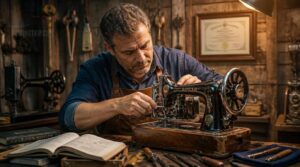
Once you’ve built real hands‑on experience, earning a formal certification is the next step that sets you apart in the trade.
The International Sewing Machine Dealers Association (ISDA) leads the way in recognizing qualified technicians, and there are several paths — both online and in‑person — to get you there.
Here’s what you need to know about each option.
ISDA Certification Levels
The International Sewing Machine Dealers Association structures its credentialing framework across three tiers:
- Member — entry-level recognition for those new to the trade
- Apprentice — mid-level standing gained through supervised practice
- Certified Technician — the highest designation, signaling full professional competence
Each level represents a clear step in tiered expertise, giving repair certification a defined path that employers and customers both recognize and trust.
Certified Technician Requirements
Reaching the Certified Technician designation means proving your competence through structured assessment, not just logging hours.
| Requirement | Details |
|---|---|
| Exam Assessment Structure | Written theory test plus timed practical repair |
| Practical Skill Testing | Timing adjustments, disassembly, and tension calibration on real machines |
| Mandatory Safety Training | Electrical safety protocols and proper machine handling |
| Experience Verification Logs | Attested hands-on hours from accredited service centers |
Certification renewal cycles keep your professional technician status current, usually tied to ongoing education.
Online Certification Options
Online pathways have made entry into this trade far more accessible. Sewing Doc Academy offers a three-level video-based certification aligned with ISDA standards for under $250, with lifetime access and instructor support built in.
Asynchronous delivery means you set the pace, fitting study around real repair work. A digital badge upon completion gives you a credential you can share immediately on professional profiles.
In-person Certification Programs
In-person apprenticeship programs, like the Sewing Machines Institute’s five-day course, deliver hands-on training with real machines and direct on-site instructor guidance. A technical certification here usually requires completing:
- Cohort-based lab sessions with structured schedules
- Hands-on lab etiquette and safety orientation
- Supervised practical skills assessment
- Theory and performance exams
- Certification recertification planning for ongoing credentials
Earning your certified sewing machine technician designation this way signals clear job-readiness to employers.
Career Benefits
Certification allows it that skill alone can’t access. Authorized service centers often require formal credentials before hiring, and clients trust certified technicians with expensive machines more readily. Certified technicians also earn more — independent operators can clear $50,000–$100,000 in their first year, while employed techs average $50,000–$60,000 annually, with salaries climbing higher in cities like New York or Los Angeles.
| Benefit | What It Means | Real-World Example |
|---|---|---|
| Higher earning potential | Charge premium rates with credentials | $99–$149 per full service call |
| Job security | Steady demand in shops and centers | Urban and rural service coverage |
| Work flexibility | Self-employment and mobile routes | Pick-up/delivery model, low overhead |
| Professional credibility | Clients trust certified work | Access to authorized service contracts |
| Skill transferability | Expands into related equipment | Industrial, embroidery, serger repairs |
Build Your Technician Tool Kit
The right tools don’t just make repairs easier — they’re what separates guesswork from confident, precise work. Before you touch your first machine, you’ll want to build a kit that covers every common scenario you’re likely to face. Here’s what belongs in a solid technician’s tool kit:
Precision Screwdrivers
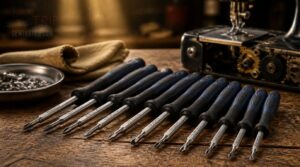
A good set of precision screwdrivers is the foundation of clean, controlled disassembly. Look for hardened steel tips rated 58–62 HRC, since softer tips round out fast on stubborn micro fasteners.
Magnetic tips hold screws securely in tight spaces, saving real time during interior assemblies.
Choose sets covering PH000 to PH2, with Torx and hex options for broader machine compatibility.
Clean tips after every session.
Pliers and Wrenches
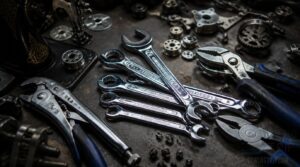
Screwdrivers get you inside the machine, but pliers and wrenches do the heavy holding. Choose chrome vanadium steel for both — it resists wear and corrosion through years of hands-on technical practice.
Key pieces to have ready:
- Combination wrenches for adaptable fastener access
- Locking pliers for one-handed grip control
- Groove joint pliers for variable jaw width
- Insulated grips rated for electrical safety
Ergonomic cushioned grips reduce fatigue during longer equipment diagnostics sessions.
Sewing Machine Oilers

With your fasteners handled, lubrication becomes the next line of defense against wear.
A precision needle oiler lets you place one drop exactly where the bobbin area, hook race, or needle bar needs it — no flooding, no guesswork.
Use light mineral-based sewing machine oil every 8–12 hours of use, rotating the handwheel afterward to distribute it, then wipe any excess immediately.
Parts Storage

Once your oiling routine is locked in, keeping spare parts organized becomes just as important as the repairs themselves.
A well-run small workshop runs on systems:
- Labeled drawers by part type cut search time by up to 40%
- Transparent bins allow quick visual checks without opening every container
- Climate-controlled storage protects rubber belts from premature degradation
- A digital parts database tracks quantities and triggers reorders automatically
Electrical Safety Tools
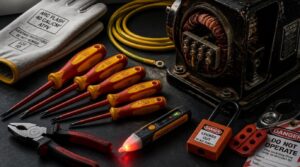
Working around sewing machine motors and wiring means electricity is never far away. Insulated hand tools — screwdrivers and pliers rated to 1,000 volts under IEC 60900 — protect you during motor and electronics service.
| Tool | Standard | Primary Use |
|---|---|---|
| Insulated screwdrivers | IEC 60900 | Motor terminal work |
| Non-contact voltage tester | ASTM F1505 | Live circuit detection |
| Lockout/tagout kit | OSHA compliant | Isolating power safely |
Arc flash protection and grounding cables round out any serious kit.
Practice on Different Machine Types
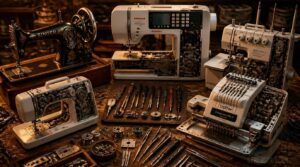
No two sewing machines are built the same, and the repair skills you build on one type won’t fully carry over to another.
Getting hands-on time with a range of machines is how you develop the kind of adaptable instinct that clients and employers trust.
Here are the five machine types you’ll want to work through as you build your practice:
Mechanical Sewing Machines
Mechanical machines are where real sewing machine repair instincts develop.
Every component is visible and traceable — the needle bar movement, the bobbin case threading path, the feed dogs advancing fabric with each stitch cycle.
Turn the hand wheel slowly and you can watch the drive belt transfer motion through the entire system, making mechanical troubleshooting far easier to understand than any apprenticeship textbook can teach.
Computerized Machines
Computerized machines demand a different kind of thinking — you’re no longer just watching gears move but interpreting digital troubleshooting interfaces and closed loop feedback systems that self-adjust in real time. Firmware update security matters here, since unauthorized patches can corrupt machine profiles.
Learn to read fault codes, run predictive maintenance alerts, and apply sensor connectivity technology to diagnose electronic sewing machines confidently.
Embroidery Machines
Embroidery machines combine mechanical and digital complexity. You’ll need to understand hoop stabilization systems securing fabric up to 500 by 350 millimeters, plus multi-needle capacity from 6 to 15 needles.
Essential skills:
- Reading digitizing file formats like DST, PES, and JEF
- Calibrating thread tension sensors for metallic threads
- Diagnosing servo motor precision within 0.05 mm
- Troubleshooting firmware and color sequence errors
Sergers and Overlockers
Sergers move fast — some exceeding 1,000 stitches per minute — which means small misalignments cause big problems quickly.
Threading follows a strict looper-then-needle sequence, and looper tension balance directly affects whether a seam stretches or puckers.
Keep the trimming blade sharp; a dull blade snags knit fabrics instead of cutting cleanly.
Differential feed troubleshooting resolves most puckering on lightweight materials.
Industrial Machines
Industrial machines run on three-phase motors and variable frequency drives, so diagnosing them requires electrical knowledge well beyond domestic repair.
Focus your practice on:
- Reading motion control systems and encoder feedback
- Interpreting industrial automation sensors for tension and feed issues
- Applying predictive maintenance techniques like vibration analysis
That foundation separates technicians who can service factories from those who can’t.
Find Sewing Machine Repair Jobs
Once your skills are solid and your certification is in hand, it’s time to figure out where you actually want to work. The good news is that this field allows it in more directions than most people expect, from steady shop posts to roles inside major manufacturers. Here are the main paths worth considering as you start your job search.
Dealer Repair Shops
Dealer repair shops are one of the most reliable entry points into this trade. You’ll handle customer repair estimates, source OEM parts, and follow warranty service protocols daily — building the structured habits that define a skilled service technician.
Many shops run apprentice programs, giving you direct access to factory-trained technicians and diagnostic software while working toward a recognized career pathway in trade jobs.
Manufacturer Service Departments
Working directly for a manufacturer — Brother, JUKI, or PFAFF, for example — puts you inside the brand’s full system. You’ll use brand-specific diagnostic software, apply firmware updates, and source genuine parts through factory distribution channels, all while following official repair protocols that preserve customer warranties.
That depth of access isn’t available everywhere, making these roles ideal if you want mastery of one machine line.
Factory Maintenance Roles
Factories offer a different pace than dealer shops. As a factory maintenance manager, you’ll coordinate technicians, schedule inspections, and protect production lines from costly downtime.
Key responsibilities include:
- Running preventive maintenance plans for needles, belts, and servo motors
- Managing spare parts inventory and supplier negotiations
- Enforcing lockout/tagout safety protocols
- Tracking MTBF and MTTR through asset health dashboards
Vocational training and a technical apprenticeship sharpen the industrial sewing machine repair skills these roles demand.
Mobile Service Work
If factory roles aren’t your style, mobile service work puts you in the driver’s seat — literally. You travel to customers, diagnose on-site, and carry a compact field toolkit with screwdrivers, oilers, tension springs, and a multimeter.
Good route optimization cuts wasted drive time between jobs. Collect machine make, model, and fault details during intake calls so you arrive prepared, not guessing.
Networking With Retailers
Retailers are often the first stop customers make before searching for a technician, which makes those relationships worth cultivating early.
Introduce yourself to local shop managers, leave cards, and discuss retailer referral systems that route repair leads your way. Some dealers will even share parts availability data or co-host joint marketing promotions, turning a handshake into a steady stream of work.
Start Your Own Repair Business

Starting your own sewing machine repair business puts you in control of your schedule, your rates, and the kind of work you take on. Whether you’re thinking about working from home or heading out to clients, the setup choices you make early will shape how the whole operation runs.
Here are the key pieces to get right from the start.
Home-based Repair Shop
Running a home-based repair shop demands more than skill — it demands smart setup.
- Dedicate at least 120 square feet for your workbench and parts storage
- Install surge-protected outlets at each station on a stable 110–220V supply
- Achieve 1,000 lux minimum at your work surface using adjustable task lamps
- Store solvents in sealed, ventilated enclosures away from heat and living areas
An anti-fatigue mat rounds out an ergonomic workstation that keeps you sharp through long sessions.
Mobile Pickup Service
A mobile pickup service lets you reach customers who can’t transport bulky or industrial machines themselves. You collect the machine, service it offsite, and return it — reducing overhead while expanding your reach.
Use a route optimization app to batch pickups efficiently by neighborhood. Document each machine’s condition with photos at collection, securing units with padding during transit to prevent damage.
Service Pricing
Pricing your services well is what keeps the lights on. For standard repairs, hourly labor rates of 40–85 euros cover most jobs, while a basic tune-up package runs 60–120 euros. Diagnostic fees of 20–50 euros apply when customers decline repairs.
Mobile visits warrant a 15–40 euro surcharge on top of labor — distance costs time, and time is your inventory.
Parts Inventory
A stocked bench is a fast bench. Organize parts using inventory category codes — needle plates, bobbins, and feed dogs each carry a unique SKU to prevent mispicks. Three essentials to track:
- Reorder points tied to usage velocity and supplier lead times
- Dual supplier sourcing to prevent outages on high-use components
- Cycle counts to verify actual stock against system records
Customer Record Keeping
Every repair you complete leaves a paper trail that either builds trust or creates liability.
Assign each client a unique customer ID linking their contact details, machine history, and invoices into one profile. Log parts used, repair outcomes, and warranty expiration dates accurately.
Store payment data using tokenized methods only, and follow data retention schedules, so old records are disposed of securely and compliantly.
Frequently Asked Questions (FAQs)
How do I become a sewing machine repairman?
Think of this career like threading a needle — precision, patience, and the right tools matter. You’ll need mechanical aptitude, hands-on training, certification, and diagnostic experience to become a qualified sewing machine technician.
What can you do with a sewing machine repair technician certification?
Certification allows it to higher service rates, better career prospects, and client trust. Authorized service centers often require it, and it can lift your earning potential well above uncertified peers.
Where can I learn sewing machine repair?
Some learn in a classroom; others learn under a mentor’s hands. Your options include vocational school programs, community college certificates, online training courses, manufacturer workshops, and apprenticeship programs with local dealers or authorized service centers.
How do I become a qualified sewing machine technician?
Becoming a qualified sewing machine technician means combining a high school diploma with vocational training or an apprenticeship, developing hands-on diagnostic skills, earning ISDA certification, and building a reliable tool kit — all while growing your professional network.
How long does it take to become a repair technician?
Most people reach entry-level readiness within 6 to 12 months of focused training. Full independence across mechanical, computerized, and industrial machines usually takes 2 to 4 years of combined technical education and hands-on experience.
What do you call a person who repairs sewing machines?
Like hats on a hat rack, the title changes depending on where you work. You might go by sewing machine technician, mechanic, repair technician, or certified sewing machine repairman — all describe the same skilled trade.
Is it hard to be a sewing machine operator?
Sewing machine operation has a moderate learning curve — most beginners thread needles and feed fabric confidently within a few hours, though mastering tension adjustments and bobbin setup takes closer to 20 hours of focused practice.
How much can sewing machine technicians earn annually?
The quieter your workbench, the more you can earn — $38,000 to $64,000 annually in the U.S., climbing toward $60,000–$65,000 with experience, certification, or specialization in computerized machines.
Is formal certification required to find repair work?
No, formal certification isn’t legally required in most regions to begin repair work. That said, many employers and clients prefer credentialed technicians, and certification can provide insurance coverage and access to warranty service contracts.
What does a starter field-service tool kit cost?
Think of a starter kit like a first toolbox — modest but sufficient. Basic sets run $60–$180, while mid-tier kits with a digital multimeter or specialty screwdrivers climb toward $200–$250.
Conclusion
The tools are ready, the knowledge is yours—now the only thing left is to roll up your sleeves and begin. Learning how to become a sewing machine repair person means committing to every layer of the trade: the mechanical instincts, the electronic diagnostics, the customer trust built one repaired machine at a time.
Few trades offer this combination of quiet precision and genuine usefulness. Master it, and you won’t just fix machines—you’ll restore what matters to the people who depend on them.