This site is supported by our readers. We may earn a commission, at no cost to you, if you purchase through links.

I’ve sewn through dozens of kids’ shirt patterns, and most fall into two camps: either they’re too basic to look polished, or they’re so complicated that you need an engineering degree to decode the instructions. The Classic Oxford Button-Up from Peek-a-boo Patterns breaks that mold.
This pattern review of the classic oxford button-up shirt comes from someone who’s wrestled with collar stands at 11 PM and lived to tell about it. What makes this pattern different is its clever balance—it looks sharp enough for picture day but won’t make you question your sanity during construction.
The sizing spans 3 months to 12 years, and the instructions walk you through plackets and topstitching without patronizing or skipping key steps. You’ll find out exactly where this pattern shines and where you might hit snags.
Table Of Contents
Key Takeaways
- The Peek-a-boo Patterns Classic Oxford Button-Up breaks the mold by balancing professional polish with manageable construction—you’ll get sharp results without needing an engineering degree to decode confusing instructions.
- This gender-neutral pattern spans 3 months to 12 years with multi-size blocks and adjustable elements, so you can grade between sizes and tweak sleeve length as your kids grow without buying separate patterns.
- You’ll need about 3 hours at intermediate skill level to master the collar stand, placket work, and topstitching precision—it’s not beginner territory, but the clear step-by-step instructions make real garment construction totally doable.
- The pattern delivers serious reuse value with endless fabric mixing possibilities and style adaptations like color-blocking or different cuff styles, making it one of those rare patterns that actually earns its permanent spot in your collection.
Overview of The Classic Oxford Button-Up Pattern
Let’s start with the basics—what makes this pattern worth your time. Peek-a-boo Patterns designed the Classic Oxford Button-Up, and after reading through dozens of reviews, I knew it was the one. Here’s what caught my attention right from the start.
Designer and Size Range
Peek-a-boo Patterns designed this gem with a size range that’ll blow your mind—3 months all the way to 12 years. Here’s why the sizing rocks:
- Multi-size blocks let you grade between sizes without buying extra patterns
- Age-based measurements guide you from infant to tween with clear chest and waist specs
- Adjustable elements mean you can tweak sleeve length as kids grow
Talk about pattern making that actually works for real families!
The auditing process for scientific studies involves a methodological rigor check to guarantee accuracy.
Gender-Neutral Versatility
This classic oxford button-up sewing pattern breaks free from outdated gender rules. You’ll love how the mid-fitted silhouette works for any child’s body—no need for separate “boy” or “girl” versions. The design leans into body positivity with adjustable ease and universal measurements that celebrate every kid.
This gender-neutral pattern celebrates every kid’s body with one versatile silhouette that actually fits real children, not stereotypes
| Inclusive Fashion Feature | Why It Works |
|---|---|
| Unisex styling options | Fits diverse body types naturally |
| Neutral fabrics recommended | Appeals to all preferences |
| Adaptive clothing elements | Sleeve tabs adjust for comfort |
| Standard placket placement | Creates balanced, gender-free look |
The garment construction enables children’s clothing that actually fits real kids, not stereotypes.
Sleeve and Pocket Options
You can customize this shirt beyond the fit—the pattern gives you short sleeves, long sleeves, and optional button tabs to roll up those sleeves when playtime gets messy. Cuff options let you adjust sleeve length as kids grow.
The left chest pocket adds function with single-needle stitching and a gusseted corner.
The straight placket design with five visible buttons keeps garment construction simple while the classic point collar and topstitched hem variations deliver that authentic Oxford buttonup look you’re after.
Fabric and Notions Selection

You can’t build a great shirt without the right materials. The fabric you choose and the little extras you pick up will make or break how this project turns out.
Here’s what you need to grab before you fire up your sewing machine.
Recommended Fabrics for Best Results
The right fabric selection transforms your button-up from so-so to show-stopping! For textile arts projects like this, 100% cotton oxford fabric delivers that crisp, durable weave you’re after.
Poplin blends with higher thread counts give you less wrinkling, while cotton blends boost wash-and-wear ease.
Want luxury? Pima or Egyptian cotton oxford brings superb softness without losing structure—drape factors matter here!
Choosing Notions and Interfacing
Interfacing types make or break your button-up shirt’s crisp edges! Here’s what you’ll need for exceptional garment construction:
- Fusible interfacing for collar and placket—mid-weight for cotton oxford
- Colorfast thread matching your fabric weight for stable seams
- Eight durable buttons scaled to your shirt’s proportions
- Universal 80/12 needles for clean stitching
Test fabric compatibility on scraps first—smart sewing techniques start here!
Fabric Design Considerations for Kids
Kid-friendly fabrics transform your button-up into something they’ll actually wear! Prioritize cotton fabric with colorfastness testing—you don’t want blue bugs bleeding onto white sheets.
Breathable materials and soft texture options matter for sensitive skin, especially around collars.
When sewing for kids or tackling DIY children’s clothing, fabric selection for sewing centers on fabric safety: hypoallergenic weaving, low-pill surfaces, and easy-care finishes that survive playground chaos!
Pattern Features and Fit Details

This pattern delivers a classic silhouette that works for both dressy occasions and everyday wear. The fit runs slightly slender, but you can easily tweak the length or width to match your kid’s build.
Let’s break down the key construction details that make this shirt look professionally customized.
Classic Fit and Sizing Adjustments
This Classic Oxford Button-Up delivers a slightly slender classic fit that you can tweak to completion. Bust adjustments are necessary if you’re fuller through the chest, as standard size grading won’t always account for individual curves.
Torso lengthening is simple with this sewing pattern review, and sleeve alterations let you dial in the exact length. These fit modifications make garment construction and sewing feel custom-tailored every time.
Collar, Collar Stand, and Placket Construction
You’ll find collar geometry and stand construction are where this Classic Oxford ButtonUp truly shines. The point collar requires careful placket interfacing and edge finishing to prevent puckering at curves.
Buttonhole placement sits exactly on center, making garment construction and sewing feel satisfying.
Pattern making and design here deliver sharp topstitching that transforms your buttonup shirt into something surprisingly professional—this sewing pattern review confirms it works.
Yoke, Pocket, and Sleeve Variations
This pattern review reveals outstanding design flexibility in yoke designs and pocket styles. You’ll appreciate the single-piece back yoke that enhances drape while reducing bulk—perfect for your classic Oxford button-up shirt.
Sleeve ease options let you choose between traditional set-in construction or rolled cuffs.
The left chest pocket uses single-needle topstitching that elevates basic sewing techniques into professional garment construction techniques, regardless of your fabric choices.
Sewing Experience and Construction Tips

The pattern instructions are straightforward, but you’ll want to know what you’re getting into before you start cutting fabric.
This shirt clocks in at about 3 hours and sits at an intermediate level—not beginner territory, but totally doable if you’ve sewn a few projects before.
Let’s break down what to expect when you’re actually at your machine.
Pattern Instructions and Difficulty Level
You’ll find this pattern rated as intermediate—think of it as your gateway to mastering real garment construction tips! The pattern clarity shines through step-by-step instruction detail, guiding you through placket, collar stand, and curved hem sewing complexity. Here’s what elevates this Classic Oxford Button-Up Shirt pattern review across skill levels:
- Topstitching precision requires steady hands and even seam allowances
- Collar construction demands careful easing and alignment of multiple layers
- Placket finishing tests your accuracy with consistent stitch counts
The difficulty ratings reflect real sewing patterns challenges, not beginner territory.
Time Investment and Required Skills
You’re looking at 3 hours total once you master the tailoring techniques. Intermediate skill levels handle this pattern making and design confidently—collar stands and placket work demand precision.
For sewing efficiency, prep your fabric and interfacing upfront. Time management matters: cutting takes 45 minutes, garment construction tips guide you through assembly.
These sewing projects build real sewing complexity without overwhelming beginners. Your productivity tips? Work in focused blocks!
Finishing Techniques for a Professional Look
Once you’ve nailed garment construction, edge finishing transforms your apparel sewing from homemade to high-end. Your tailoring techniques matter most here:
- Topstitching tips: keep consistent 1/8″ spacing on collars for that ready-to-wear edge
- Seam reinforcement at pocket corners prevents tears during rough play
- Professional hemming with interfacing choices matched to fabric weight stops collar collapse
These pattern making details separate good from great sewing projects!
Pattern Review, Results, and Recommendations
So here’s the real talk—after sewing these shirts, I need to tell you how they actually turned out. You’re probably wondering if this pattern is worth your time and money, right?
Let’s break down the finished results, what worked (and what didn’t), and whether you should add this to your sewing queue.
Finished Shirt Appearance and Fit
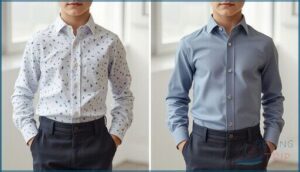
The boys looked sharp—really sharp! Those matching bug shirts hit mid-fly untucked, with collars that sat flat and plackets that didn’t pull.
You’ll notice how fabric drape affects everything: stiffer oxfords hold garment structure beautifully, while softer weaves hug closer to the body. Seam allowance stayed invisible, proving this classic oxford button-up shirt pattern delivers professional results when you nail your sewing techniques and fit adjustments.
Pros, Cons, and User Feedback

Real talk—most user reviews praised pattern accuracy and clear instructions, calling this classic oxford button-up shirt a solid garment sewing pattern. But sewing challenges popped up at collars and buttonholes, especially for beginners tackling button-up shirt patterns.
Fabric choices mattered big-time: woven cottons worked like magic, while stretchy weaves caused grief.
Customer support from Peek-a-boo helped troubleshoot tricky shirt-making moments when sewists reached out. The pattern’s sewing requirements are essential to review before starting the project.
Value, Versatility, and Future Project Ideas

This classic oxford button-up shirt delivers serious pattern reuse value—you’ll sew it repeatedly with fabric mixing for fresh looks.
Style adaptation is simple: try garment modification with cuffs, collars, or lengths. Think beyond basic button-up shirt pattern territory—test sewing hacks like color-blocking or switching fabrics mid-garment.
Fashion design meets clothing design versatility, making this one of those garment sewing patterns that truly earns its spot.
Frequently Asked Questions (FAQs)
What is the best fabric choice for durability?
You’ll want a sturdy cotton oxford weighing 5–7 oz/yd² for serious abrasion resistance. Long-staple fibers like Egyptian cotton boost durability, while herringbone weaves handle wrinkles better than plain fabric selections.
How to adjust the pattern for taller children?
Growing like weeds? Length adjustments start with torso modifications—add 5–2 inches to the center back.
Sleeve extensions and proportion techniques matter too.
Always do muslin testing before cutting your final fabric to nail the fit!
Are there any eco-friendly fabric recommendations?
You can swap in organic cotton with GOTS certification or Tencel lyocell for eco-friendly fabric choices.
Linen and recycled polyester blends also work beautifully while reducing environmental impact without sacrificing that crisp oxford finish!
What body types suit a slim fit shirt?
Athletic builds with proportional shoulders and narrower waists wear slim fits beautifully. If you’ve got curves, though, grade your seams or add ease—nobody wants button gape!
Rectangular torsos shine with strategic darts for definition.
How to troubleshoot common fit issues?
Start with a muslin fitting to spot your two or three main issues—tight armholes, gaping collars, or waist wrinkles—then make small, measured tweaks before cutting your final fabric.
Can I use this pattern for adult sizes?
This pattern’s youth sizing (2T–12 years) won’t translate to adult proportions without major reconstructive surgery—lengthening torso, redrawing shoulders, and scaling collars.
Save yourself heartache and grab a dedicated adult buttonup shirt pattern instead.
How do I prevent puckering on the placket?
Placket Stabilization starts with precise interfacing and even stitching—that’s your secret weapon against puckering! Match your fabric choice to a lightweight fusible, use balanced thread tension, and press often during garment construction.
Whats the best way to match fabric patterns?
Ironically, the busiest prints are the easiest to hide mistakes! Focus on fabric alignment at your placket and yoke—motif matching there creates pattern continuity.
Balance scale across panels, and plaid coordination becomes second nature.
Does the pattern include a buttonhole placement guide?
You’ll find buttonhole placement marks printed right on the pattern pieces. The guide shows exact spacing from collar to hem, so you don’t have to guess where each button goes.
Can I convert this to a snap closure?
You can swap buttons for snap hardware—just reinforce your placket modification with sturdy interfacing options.
Snap installation works beautifully on classic oxford button-up shirt patterns, giving you faster garment construction techniques without sacrificing that polished look.
Conclusion
Most patterns either intimidate you with complexity or bore you with basic designs. This pattern review classic oxford button-up shirt proves you don’t have to choose.
You’ll invest a few focused hours and walk away with a garment that actually looks custom-made—not homemade. The collar stand stays crisp, the placket lies flat, and your kid won’t squirm out of it before lunch.
Sometimes the best patterns are the ones that simply deliver without drama.
- https://www.minervacrafts.com/
- https://www.instagram.com/independentclothinginitiative/
- https://academichelpexpress.blog/2024/08/please-use-the-bulleted-points-and-the-rubric-below-to-guide-your-work-your-pa/
- https://www.sciencedirect.com/science/article/pii/S0749208123000268
- https://x.com/godofprompt/status/1990526288063324577