This site is supported by our readers. We may earn a commission, at no cost to you, if you purchase through links.
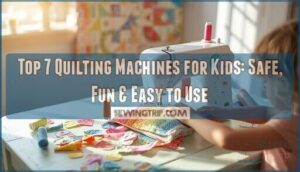
Your child just discovered the magic of fabric and thread, and suddenly every scrap becomes a potential masterpiece. That creative spark deserves the right tools, but most adult sewing machines overwhelm young hands with complicated features and intimidating speed settings.
Quilting machines designed specifically for kids change everything—they combine real sewing power with safety features, simple controls, and the kind of reliability that builds confidence instead of frustration. From automatic needle threaders that eliminate squinting struggles to speed limiters that prevent runaway stitches, today’s youth-friendly machines help children master straight seams, zigzag edges, and decorative touches without the tears.
Finding the perfect match means weighing stitch options against safety features, portability against durability, and price against long-term value—all while keeping your child’s skill level and creative ambitions in focus.
Table Of Contents
- Key Takeaways
- Key Features of Quilting Machines for Kids
- Important Safety Features for Young Quilters
- Choosing The Right Quilting Machine by Age
- Top 7 Quilting Machines for Kids
- Tips for Maintaining Kids’ Quilting Machines
- Fun and Easy Quilting Projects for Children
- Frequently Asked Questions (FAQs)
- Conclusion
Key Takeaways
- Kid-friendly quilting machines combine real sewing power with safety features like finger guards, automatic shut-off, and speed limiters that cap stitches at 200-900 per minute so young sewers can build confidence without overwhelming frustration.
- Essential beginner features include automatic needle threaders and drop-in bobbins that eliminate threading headaches, plus lightweight designs under 15 pounds that let kids move their machine independently and set up wherever creativity strikes.
- Match the machine to your child’s age and hand size—younger kids (5-7) need simpler one-touch models, while older sewers (11-16) can handle computerized machines with more stitches and advanced features that grow with their skills.
- Regular maintenance like brushing away lint after each session, replacing needles every 2-3 hours of sewing, and storing accessories in labeled containers keeps the machine running smoothly and teaches kids responsibility for their creative tools.
Key Features of Quilting Machines for Kids
Finding the right quilting machine means knowing what features actually matter for young learners. You want a machine that’s easy to operate, safe to use, and capable of growing with your child’s skills.
Let’s break down the key features that make a quilting machine kid-friendly and practical for beginners.
Essential Stitch Options for Beginners
When you’re starting out with quilting for kids, focus on mastering a few core stitches before diving into fancy options. Here’s what every beginner sewing machine needs:
- Straight stitch for clean, reliable seams in beginner sewing projects
- Zigzag basics to finish edges and add some stretch
- Backstitch tips for locking in your work securely
- Running stitch for lightweight decorative touches
Save satin stitch experiments for later, when you’ve got solid control. To maintain clarity and readability in your quilting guides, consider using clear science writing.
Speed Control and Safety Settings
Once your young quilter has the hang of basic stitches, it’s time to talk speed limits and safety modes. Look for machines with adjustable speed control, often maxing out around 600 to 900 stitches per minute, so kids can find their rhythm without losing control.
Foot pedals with lighter pressure, finger guards, and automatic shutdown features turn a kids sewing machine into a confidence builder, not a worry magnet. Stitch regulation and safety features like these let you step back while they stitch forward.
When teaching kids to quilt, consider exploring research methodology to improve their learning experience.
Built-in Needle Threaders and Drop-in Bobbins
Built-in needle threaders and drop-in bobbins turn thread management from a ten-minute headache into a quick win. Models like the Brother XR3774 and Janome Pink Sorbet simplify needle threading and bobbin alignment so kids can spend more time sewing and less time untangling.
- Automatic needle threader guides thread with one lever push
- Drop-in bobbin design eliminates confusing bobbin case steps
- Clear visual guides help verify correct thread path
- Faster setup means longer, frustration-free sewing sessions
These features boost sewing efficiency while teaching machine maintenance basics your young quilter will use forever.
Lightweight and Compact Design Benefits
A compact, lightweight machine puts quilting freedom directly in your child’s hands. Easy transport means moving from table to floor without strain, and compact storage lets you tuck it away when craft time ends.
Portability options make sewing machines for beginners workshop-ready, while space savings matter in smaller homes. Kids sewing machines with portable designs encourage independence and confidence.
Extension Tables and Walking Foot Attachments
With extension tables and walking foot attachments, you’ll achieve serious quilting stability for bigger projects. Extension tables expand your sewing machines for beginners with flat fabric support that prevents bunching, while a walking foot feeds multiple layers evenly through quilting machines.
These table accessories and foot attachments boost sewing efficiency, giving young quilters the professional quilt making tips they need for confident stitching.
Important Safety Features for Young Quilters
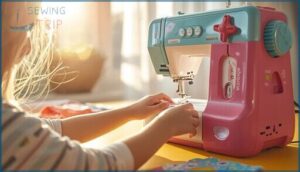
When you’re teaching kids to quilt, safety isn’t about locking them away from creativity—it’s about giving them the freedom to explore without worry. The right safety features turn a sewing machine from intimidating to confidence-building, letting young makers focus on their projects instead of potential hazards.
The right safety features transform a sewing machine from intimidating into confidence-building, letting young quilters explore freely without worry
Here’s what to look for when choosing a machine that puts protection first without getting in the way of the fun.
Finger Guards and Protective Covers
Think of finger guards as your child’s first line of defense at the needle. These protective covers, made from clear rigid plastic, shield small hands while keeping the action visible. Look for kid-friendly machines with built-in guards that meet ASTM F963 safety standards.
Here’s what solid guard designs deliver:
- Full enclosure around the needle area
- Smooth edges without pinch points
- Easy threading access without total removal
- Sturdy attachment that won’t pop off mid-project
- Clear visibility for monitoring fabric and needle movement
Automatic Shut-Off and Speed Limiting
Most kids’ sewing machines cap speed at 600–900 stitches per minute, and some even include an automatic shut-off after 5 to 15 minutes of nonstop sewing to prevent overheating. These safety modes give young sewers breathing room without penalty; you can restart right away without losing stitch settings. Variable speed controls let beginners dial down to 200–400 SPM, building confidence before they crank up the tempo.
| Feature | Beginner Mode | Expert Mode |
|---|---|---|
| Speed Range | 200–400 SPM | 600–900 SPM |
| Shut Off Times | 5–10 minutes | 20–30 minutes |
| Override Lock | Adult-only access | Adjustable by child |
Easy-to-Use Controls for Kids
When kid-friendly interfaces replace confusing dials, young sewers can actually focus on their art instead of wrestling with a machine. Most beginner sewing machines feature large, clearly labeled buttons, single-step automatic threading, and drop-in bobbins that take seconds to master. Speed limiters and beginner modes cap stitches at 200–400 per minute, giving your child room to breathe while they learn.
Here’s what makes kids’ sewing activities stress-free:
- Simplified stitching options with picture guides show exactly which stitch does what.
- Front-loading needle plates let beginners watch their thread path without guessing.
- Built-in tutorials walk young quilters through basic projects step-by-step.
Lightweight frames and one-hand portability mean your child can set up their sewing lessons wherever inspiration strikes.
Tips for Safe Sewing Supervision
Adult supervision transforms a potentially risky tool into a launch pad for creativity—but only when smart safety protocols are in place. Position the kids’ sewing machine on a stable, clutter-free surface with good lighting, and ensure scissors and spare needles are securely locked away. Before each session, review a checklist: verify the correct needle size, set the machine to a beginner-friendly speed, and keep an emergency response plan within arm’s reach.
Establish a dedicated learning area, free of loose fabric that could cause trips, and always ensure the machine’s presser foot and thread match your child’s skill level. Accident prevention begins with modeling safe-handling practices—demonstrate how to store pins properly and turn off the power before threading. Keep a well-stocked first-aid kit nearby for minor injuries like needle pricks, and document any near-misses to refine your safety approach. With these foundational safety measures, your child can explore quilting with confidence and minimal risk.
| Age Group | Supervision Strategies | Key Safety Features to Use |
|---|---|---|
| 5–7 years | Continuous, arm’s-reach presence; hands-on guidance for every stitch | Finger guards, automatic shut-off, speed limiter set to slowest |
| 8–10 years | Frequent verbal prompts; demonstrate safe hand placement before projects | Transparent bobbin area, jam-resistant threading, visible power switch |
| 11–13 years | Gradual independence after mastery; periodic check-ins during sewing lessons for kids | Built-in needle threader, decorative stitch controls locked until ready |
| All ages | Pre-sewing setup by adult; enforce start/stop protocol and tool storage after use | Clear instructions, first-aid kit nearby, locked storage for sharp tools |
Choosing The Right Quilting Machine by Age
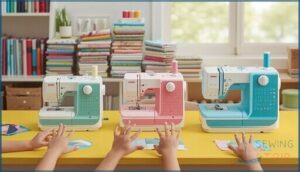
Finding the right quilting machine means thinking about your child’s age, hand size, and experience level. A machine that works well for a confident ten-year-old might overwhelm a younger beginner who’s just learning to guide fabric.
Let’s look at how to match the machine to your child’s stage so they can jump in with excitement, not frustration.
Assessing Skill Level and Hand Size
Matching a sewing machine to your young quilter starts with a hand size guide and dexterity tests. Smaller hands thrive with lightweight, ergonomic design models that boost fabric control and stitch accuracy.
Kids sewing activities work best at 400–600 stitches per minute, preventing fatigue during sewing lessons for kids. Measure palm width and finger length, then choose kids sewing machines with clear controls and adjustable pressure for sewing safety and confidence.
Age-Appropriate Machine Recommendations
Once you’ve measured those little hands, it’s time to nail your machine selection with age guidance that works. Skill assessment and safety features go hand-in-hand with user experience, so here’s what makes the best sewing machine for kids at each stage:
- Ages 5–7 need one-touch start models running 500–700 stitches per minute
- Ages 8–10 thrive with adjustable speed dials and lighter presser feet
- Ages 11–16 can handle computerized kids sewing machines for children with tutorials
Smart sewing for kids starts here.
Machines With Clear Instructions and Tutorials
Once you’ve landed on the right age bracket, look for tutorial modes that actually teach. Guided lessons and visual aids turn your sewing machine for beginners into a patient instructor, with on-screen prompts and step guides that walk young sewers through threading, tension, and first seams.
Interactive demos replace guesswork with confidence, making teaching sewing less about hovering and more about watching them fly.
Top 7 Quilting Machines for Kids
Now that you know what to look for, it’s time to explore some standout options that bring safety, creativity, and ease together.
These seven machines have earned their place through reliability, kid-friendly features, and the ability to grow with your young quilter’s skills.
Each one offers something unique, so you can find the right match for your child’s quilting adventure.
1. Brother Sewing And Quilting Machine
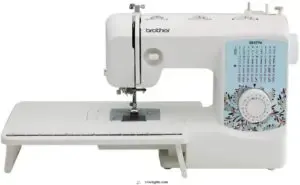
The Brother XR3774 stands out when doing a machine comparison for kids who are ready to explore real quilting techniques. This sewing machine for beginners packs 37 stitches, an automatic needle threader, and a drop-in bobbin that simplify thread management.
You’ll appreciate the included walking foot for fabric selection across three-layer projects, plus sewing accessories like eight feet and a wide extension table. At 15 pounds, it manages everyday repairs and baby quilts smoothly, though heavy denim seams might challenge it.
The built-in light helps young creators see their work clearly.
| Best For | Kids and beginners ready to tackle real quilting projects with a machine that balances ease of use and versatile features for everyday sewing and small quilts. |
|---|---|
| Built-in Stitches | 37 |
| Needle Threader | Automatic |
| Bobbin Type | Top drop-in |
| Weight | 15 lbs |
| Free Arm | Yes |
| Frame Material | Not specified |
| Additional Features |
|
- Automatic needle threader and drop-in bobbin make setup simple, even for first-timers who’ve never threaded a machine before.
- 37 built-in stitches plus eight included feet give you room to grow from basic hems to decorative quilting without needing upgrades.
- Lightweight at 15 pounds with a wide table and built-in light, so you can move it easily and see your work clearly on larger projects.
- Manual stitch selection with analog dials takes a bit of practice to understand, especially if you’re used to digital screens.
- Struggles with heavy fabrics like thick denim seams, so it’s better suited for lighter quilting and everyday repairs.
- No automatic thread cutter means you’ll need to snip threads by hand after each seam.
2. Brother Computerized Sewing Machine
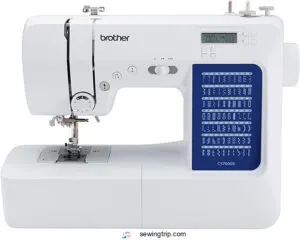
For older kids with bigger projects in mind, the Brother CS7000X takes quilting to the next level. This computerized model features 70 built-in stitches and an LCD display that simplifies fabric selection and thread management.
The wide extension table accommodates larger quilts, while the automatic needle threader and drop-in bobbin guarantee smooth bobbin control. At 14 pounds, it’s portable enough for classes yet stable through thick layers.
Ten presser feet expand your sewing techniques as skills grow.
| Best For | Older kids and teens ready to tackle serious quilting projects who want room to grow their skills with professional features. |
|---|---|
| Built-in Stitches | 70 |
| Needle Threader | Automatic |
| Bobbin Type | Top loading |
| Weight | 14 lbs |
| Free Arm | Yes |
| Frame Material | Metal |
| Additional Features |
|
- 70 stitches and a wide table give you tons of creative options and space for bigger quilts
- Automatic needle threader and LCD display make setup way less frustrating than basic machines
- Comes with 10 presser feet right in the box, so you can try different techniques without buying extras
- The automatic needle threader can be finicky to get the hang of at first
- Only one bobbin included, so you’ll probably want to grab a few more right away
- Some plastic parts might not hold up as well as all-metal construction over years of heavy use
3. Singer Heavy Duty Sewing Machine
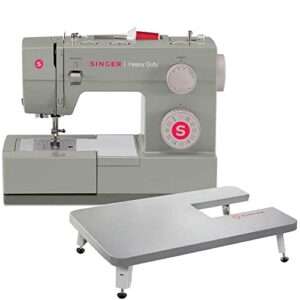
When speed meets strength, the Singer Heavy Duty 4452 becomes a powerhouse for kids’ sewing machine adventures. This beginner sewing model races through fabric at 1,100 stitches per minute, while its metal frame delivers machine durability that manages denim and canvas like butter.
The one-step needle threader cuts frustration, and adjustable sewing speed lets young quilters control their pace during beginner projects. At 18.5 pounds, it’s stable enough for confident stitching yet manageable for setup.
The reverse stitch lever reinforces seams, teaching proper technique from day one.
| Best For | Kids ready to tackle heavier fabrics like denim or canvas who want a machine that can grow with their skills beyond lightweight beginner projects. |
|---|---|
| Built-in Stitches | Not specified |
| Needle Threader | Easy threading system |
| Bobbin Type | Front loading |
| Weight | 18.5 lbs |
| Free Arm | Not specified |
| Frame Material | Metal |
| Additional Features |
|
- Races through thick materials at 1,100 stitches per minute with a sturdy metal frame that won’t wobble during use
- One-step needle threader and adjustable speed control make it easy for beginners to learn without getting frustrated
- Reverse stitch lever and drop-in bobbin system teach proper techniques while keeping setup simple
- Some users report bobbin issues and inconsistent performance that can interrupt learning sessions
- Weighs 18.5 pounds, making it harder for younger kids to move around without adult help
- Can be loud during operation and may feel less refined compared to other models in its price range
4. Janome Pink Sorbet Sewing Machine
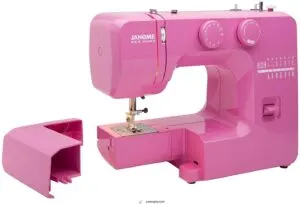
If style counts in your kids’ sewing machine lineup, the Janome Pink Sorbet brings beginner sewing charm with serious function. This compact machine weighs just 12 pounds, perfect for kids who want portable projects.
Sorbet features include 15 built-in stitches, a metal frame for stability, and a drop-in bobbin that simplifies threading frustrations. The Pink Design speaks to young creators ready for beginner quilting, while sewing accessories like a darning plate and removable free arm expand possibilities. It’s a sewing machine for beginners that doesn’t apologize for looking cheerful.
| Best For | Young sewers and beginners who want a lightweight, colorful machine that handles basic projects without overwhelming features. |
|---|---|
| Built-in Stitches | 15 |
| Needle Threader | Manual |
| Bobbin Type | Front loading |
| Weight | 12 lbs |
| Free Arm | Removable |
| Frame Material | Metal |
| Additional Features |
|
- Weighs only 12 pounds with a compact design, making it easy for kids to move and store
- 15 built-in stitches and a 4-step buttonhole give enough variety for learning without confusion
- Metal frame construction provides stability that cheaper plastic machines lack
- Bright pink color may not appeal to everyone or could look less professional over time
- Limited stitch selection compared to intermediate machines means you might outgrow it quickly
- Some users report thread breakage issues with certain thread types
5. Janome Even Feed Foot
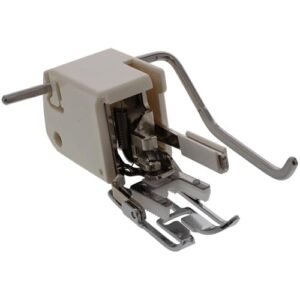
Sometimes the secret to smooth quilting accuracy lies in a single accessory. The Janome Even Feed Foot transforms fabric management for young sewers, guiding layers through evenly so you won’t fight puckering or shifting.
Foot installation takes just minutes, and once you’ve got feed alignment right, quilting becomes more efficient and less frustrating.
It’s compatible with low-shank Janome sewing machines for kids, making this tool a smart upgrade when your young quilter’s ready to tackle real quilt sandwiches with confidence and sewing efficiency.
| Best For | Young quilters ready to move beyond basic stitching who need consistent fabric feeding through multiple layers without puckering or shifting. |
|---|---|
| Built-in Stitches | Not applicable |
| Needle Threader | Not applicable |
| Bobbin Type | Not applicable |
| Weight | 2.89 oz |
| Free Arm | Not applicable |
| Frame Material | Metal |
| Additional Features |
|
- Feeds multiple fabric layers evenly through the machine, preventing the frustration of bunched or puckered quilting that can discourage beginners
- Quick installation process with plenty of video tutorials available, so kids can get started on real quilt projects faster
- Works smoothly with tricky fabrics like minky and thick quilt sandwiches that would normally cause feeding problems
- Only works with low-shank machines, so you’ll need to verify compatibility before purchasing
- Requires some initial adjustment and alignment to get the feeding mechanism working properly
- Priced higher than generic alternatives, which might feel steep for an accessory your young sewer may only use occasionally
6. Brother Lightweight Sewing Machine Model
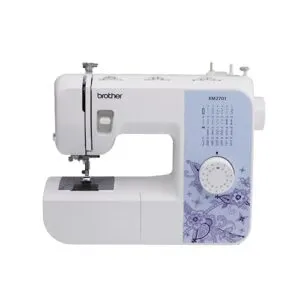
When you need machine portability without sacrificing sewing ease, the Brother XM2701 hits the mark. Weighing just 12.6 pounds, this compact design slips into closets or under beds, yet delivers 27 stitches and an automatic needle threader—kid-friendly features that matter for beginner projects.
The Brother LX3817A and Brother XM1010 offer similar lightweight convenience, while the Brother XR3774 steps up functionality slightly. Any of these kids’ sewing machines travel easily to classes or grandma’s house, letting your young quilter practice wherever inspiration strikes.
| Best For | Beginners and families looking for a portable, easy-to-use machine that handles everyday sewing projects without overwhelming features or a hefty price tag. |
|---|---|
| Built-in Stitches | 23 |
| Needle Threader | Automatic |
| Bobbin Type | Top drop-in |
| Weight | 13.67 lbs |
| Free Arm | Not specified |
| Frame Material | Full metal |
| Additional Features |
|
- Lightweight at 12.6 pounds with compact dimensions, making it easy to move between rooms or take to classes
- 27 built-in stitches plus automatic needle threader and one-step buttonholer simplify common tasks for new sewers
- Strong value at $129.99 with 6 included feet and a free arm for tackling sleeves and cuffs
- Some users report skipped stitches and inconsistent stitch quality on certain fabric types
- Plastic spool pin may break with regular use, and the foot pedal can feel sticky during operation
- Struggles with thick or heavy fabrics, limiting project variety for more ambitious sewers
7. Sew Amazing Sewing Machine Studio
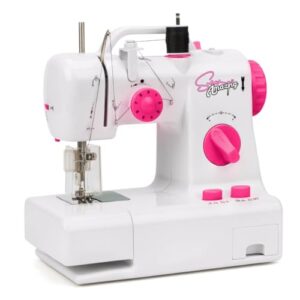
The Sew Impressive Sewing Machine Studio (model TY6143-1) approaches sewing education for children with a plastic guard around the needle area—essential sewing machine safety for ages six and up. You’ll find numbered threading and dual operation modes (button or foot pedal), plus accessories to launch beginner projects like clutch bags.
However, tension quirks can frustrate even patient quilters, and the needle guard sometimes snags thread. If you’re committed to teaching sewing for kids, plan on hands-on guidance and regular machine maintenance to keep this compact Sew Impressive Studio running smoothly.
| Best For | Parents looking to introduce their children (ages 6+) to basic sewing skills through guided, hands-on projects with built-in safety features. |
|---|---|
| Built-in Stitches | 27 |
| Needle Threader | Automatic |
| Bobbin Type | Top drop-in |
| Weight | 12.6 lbs |
| Free Arm | Yes |
| Frame Material | Not specified |
| Additional Features |
|
- Safety-focused design with a plastic guard around the needle area and speed control to protect young beginners
- Numbered threading system and simple dual operation (button or foot pedal) make setup easy for first-time users
- Comes with starter accessories and materials, including patterns to complete a clutch bag right out of the box
- Tension problems frequently cause thread jams and breakage, even for experienced sewers helping kids
- The needle guard can snag and break cotton thread during use, adding frustration to the learning process
- Requires close adult supervision and regular maintenance to work reliably, limiting independent use
Tips for Maintaining Kids’ Quilting Machines
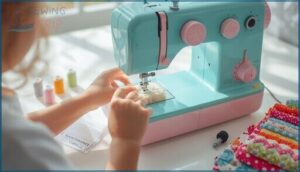
A quilting machine works best when you take care of it, and teaching kids simple maintenance habits sets them up for success. Regular upkeep keeps the machine running smoothly, prevents frustrating breakdowns, and helps young quilters feel confident and independent.
Here are the essential maintenance tasks that’ll keep your child’s quilting machine in great shape for years to come.
Regular Cleaning and Lint Removal
A little lint might seem harmless, but it’s the enemy of smooth stitching and machine maintenance. Your kids’ sewing machine needs regular attention to keep performing like a champ, and good sewing hygiene starts with simple cleaning habits that prevent bigger problems down the road.
Here’s your quick-win lint prevention checklist:
- Brush away lint from the needle plate and bobbin area after every sewing session using soft cleaning tools.
- Vacuum feed dogs weekly with a small brush attachment during heavy quilting projects.
- Wipe surfaces with a lint-free cloth to maintain fabric care standards.
- Check bobbin case for hidden fiber buildup that affects sewing machine safety.
- Store sewing machine accessories in dust-free containers to protect your sewing tools investment.
Needle Replacement and Care
Just like you clean away lint, you’ll also want to keep an eye on needles. A bent or dull needle throws off thread tension and can damage your Brother XR3774 or any sewing machine for kids. Replace needles after major quilting sessions, and always turn off your machine first—safety comes before speed when you’re teaching sewing for kids.
| When to Replace | Why It Matters |
|---|---|
| Visible bends or nicks | Prevents fabric snags and torn projects |
| Thread breaks frequently | Maintains proper needle alignment |
| Skipped stitches appear | Protects bobbin maintenance rhythm |
| After thick seam work | Keeps sewing machine oil working efficiently |
| Switching fabric weights | Ensures needle inspection catches issues early |
Safe Storage of Accessories
Once needles are swapped and cleaned, turn your attention to accessory organization. Store presser feet, bobbins, and finger guards in labeled safety containers—a clear plastic storage solution lets your young sewers spot what they need fast.
Keep sharp sewing tools and accessories in secure cabinets, away from curious hands. This simple labeling system protects kids’ sewing machine parts and reinforces safety features every time they craft.
Troubleshooting Common Issues
Even with careful storage, hiccups happen. Thread breakage and fabric jams pop up when lint clogs the needle plate—pause, brush it out, and rethread. Tension problems create loops underneath, so check both bobbin and top settings. Needle damage means swapping in the right size for your fabric. Motor issues? Verify connections and let the machine cool between sessions. Your young quilter will troubleshoot like a pro.
Fun and Easy Quilting Projects for Children
Once your child has gotten comfortable with their quilting machine, it’s time to put those skills to work on real projects. Starting with simple, achievable quilts and crafts builds confidence and keeps the excitement alive.
We’ve gathered a few beginner-friendly ideas that let kids create something they’ll actually want to keep or give away.
Simple Quilt Blocks and Patterns
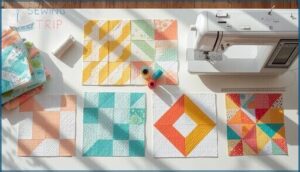
You’ll want to start with block designs that build confidence fast. Nine-patch blocks with light and dark squares teach kids contrast and color schemes without overwhelming them. Try a simple four-patch quilt or half-square triangles as your first sewing projects for children. These quilt patterns develop essential sewing techniques while showing young quilters how fabric choices shape their quilt-making journey on any sewing machine.
- Nine-patch blocks using three light and three dark fabric squares in a grid
- Churn dash blocks combining a center square with rectangular strips for bold contrast
- Half-square triangle blocks created by sewing two triangles into a finished square
- Rail fence blocks built from stacked strips for rhythmic, linear designs
Creative Fabric Crafts for Kids
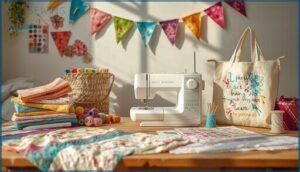
Beyond quilting for kids, your sewing machine creates opportunities for fabric painting and textile art adventures.
Craft projects like tie-dye banners, stamped tote bags, and appliqué patches turn sewing basics into DIY sewing for kids that sparks creativity.
These sewing projects for children work perfectly on any kids sewing machine, letting young makers explore quilt design through hands-on kids crafting and sewing experiments.
Using Decorative Stitches for Personalization
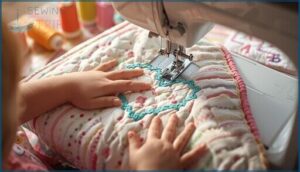
Decorative stitches transform plain quilts into unique treasures. Try zigzag or satin stitch patterns to add initials, borders, or playful motifs that match your quilt design.
Experiment with thread colors and fabric choice to create contrast and visual interest. Your sewing machine’s built-in stitch variety creates opportunities for machine embroidery and creative embellishment, perfect for beginners exploring quilt making with confidence and personality.
Step-by-Step Beginner Tutorials

Start with a simple sampler quilt block to master sewing basics and thread management. Choose fabric selection in two or three colors, then practice straight seams with your kids sewing machine.
Beginner projects like these build confidence through hands-on sewing tutorials, helping beginner sewers progress from basic quilt patterns to more adventurous sewing lessons.
Each completed project proves you’re ready for bigger creative challenges.
Frequently Asked Questions (FAQs)
What is the ideal budget for a kids quilting machine?
Don’t let sticker shock stitch up your plans. Budget planning for a kids sewing machine means balancing cost analysis with safety features, usually ranging from $60 to $300 for reliable, kid-friendly options.
Can vintage machines work well for young beginners?
Vintage machines can pose challenges for young beginners. Modern safety features, like finger guards and automatic shut-off, are generally absent, and threading systems may be less straightforward, making learning harder and supervision more critical.
Which fabrics are easiest for kids to practice on?
Cotton fabrics, especially broadcloth and muslin, work beautifully for kids learning to sew. These woven textiles form clean seams without fraying, and synthetic blends offer consistent feeding—perfect for sewing for beginners mastering their quilting machine.
How often should kids replace their sewing needles?
Replace sewing needles every 2 to 3 hours of practice, or whenever you notice bent tips or skipped stitches.
Fresh needles mean smoother sewing, fewer frustrations, and safer crafting sessions for young beginners.
Do quilting machines require professional servicing or repairs?
Most beginner-friendly sewing machines don’t need professional tune-ups for basic upkeep. Simple maintenance costs stay low when you handle routine cleaning yourself, though warranty coverage may require authorized servicing schedules for certain repair options.
Conclusion
Don’t let worries about cost or complexity hold you back—quilting machines for kids are built to grow alongside your child’s abilities, turning nervous first stitches into confident creative expression.
The right machine transforms fabric scraps into treasured keepsakes while teaching patience, precision, and problem-solving.
Your young quilter’s journey starts with one simple seam, and these beginner-friendly tools guarantee that first project sparks a lifetime of making something beautiful from nothing.
- https://www.needlenthread.com/2012/10/stitch-play-guilloche-stitch.html
- https://download.brother.com/welcome/doch102091/cpx100-110sc01en.pdf
- https://www.shinyhappyworld.com/2017/09/quilting-with-decorative-stitches.html
- https://www.nationalquilterscircle.com/post/exploring-decorative-stitches-on-your-sewing-machine
- https://quiltsocial.com/8-ways-built-in-decorative-stitches-add-a-lot-of-charm-to-your-sewing