This site is supported by our readers. We may earn a commission, at no cost to you, if you purchase through links.
The right presser foot turns a frustrating project into a finished one—and most sewists don’t realize how much that single accessory shapes their results. Swap a standard foot for a walking foot on slippery chiffon, and the fabric stops shifting. Attach a blind hem foot, and what used to take twenty minutes of hand stitching takes two.
Computerized sewing machines with a variety of feet give you that control built right into the box. The machine manages tension memory, stitch selection, and speed—you handle the creative decisions.
Whether you’re installing zippers, piecing a quilt, or finishing seams on denim, the lineup ahead covers eight models worth a serious look.
Table Of Contents
- Key Takeaways
- Why Presser Feet Variety Matters
- Features That Boost Versatility
- Built-in Stitch Library for Utility and Decorative Sewing
- LCD or Touch Controls for Quick Stitch Selection
- Automatic Needle Threading and Tension Assistance
- Speed Control, Stitch Length, and Width Adjustments
- Free Arm, Drop Feed, and Extension Table Benefits
- Portability, Machine Weight, and Workspace Fit
- Essential Presser Feet to Look For
- All-purpose Foot for Everyday Sewing
- Zipper Foot for Clean Zipper Installation
- Buttonhole Foot for Consistent Buttonholes
- Blind Hem Foot for Polished Hems
- Satin Foot for Decorative Stitching
- Overcasting Foot for Neat Seam Finishes
- Walking Foot for Layered and Slippery Fabrics
- Quilting or Free-motion Foot for Creative Projects
- Top 8 Computerized Sewing Machines
- 1. Brother Computerized Sewing Quilting Machine
- 2. Brother CS7000X Computerized Sewing Quilting Machine
- 3. Brother CS5055 Computerized Sewing Machine
- 4. Brother CP60X 60 Stitch Sewing Machine
- 5. Brother CS7205 Computerized Sewing Machine
- 6. Brother SE700 Wireless Sewing Embroidery Machine
- 7. Poolin Self Threading Sewing Machine
- 8. Brother CP100X Sewing Quilting Machine
- Choosing The Best Model
- Frequently Asked Questions (FAQs)
- Conclusion
Key Takeaways
- The presser foot you choose shapes your results more than any other single accessory — having the right ones included from day one saves time, money, and mid-project frustration.
- Computerized machines with larger stitch libraries and smart controls (auto-threading, adaptive tension, LCD selection) let you focus on the creative work instead of fighting the machine.
- Matching your machine to your actual projects — garments, quilts, or embroidery — matters more than chasing the highest stitch count or lowest price tag.
- Bundled feet, a metal frame, and strong warranty coverage add long-term value that a cheaper, less complete machine quietly costs you over time.
Why Presser Feet Variety Matters
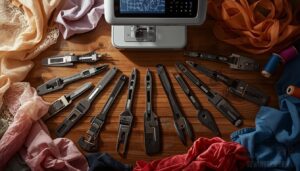
The presser foot that comes with your machine shapes almost everything — the fabrics you can handle, the projects you can finish, and how clean the results look. Having more feet from the start means less guessing and fewer trips to the store mid‑project.
A good set of guide feet also makes sewing perfectly straight lines far more consistent, especially on longer seams where small drifts add up fast.
Here’s why variety matters more than most buyers expect.
Better Results Across Fabric Types and Project Styles
With the right sewing feet, your machine adjusts for almost any fabric — delicate knits, stiff denim, slippery silk.
Stitch Tension Optimization and Variable Thread Tension keep seams clean across materials, while Multi-layer Feed Control and Adaptive Needle Pressure handle thicker projects without puckering.
Fabric-specific Speed Settings and flexible free arm access make a real difference in fabric handling, whether you’re working small hems or a wide table spread.
Choosing the right foot for cotton is breathable fabrics ensures smooth stitching.
Faster Sewing for Zippers, Hems, Buttonholes, and Quilting
Speed comes down to having the right sewing feet ready. A zipper foot trims alignment time instantly, while a dedicated buttonhole foot manages sizing automatically.
Thread Tension Optimization, Foot Pressure Adjustment, and Stitch Density Management keep each pass clean without rework.
Pair that with Bobbin Winding Speed routines and smart speed control, and quilt making techniques move faster too.
Seam Finish Efficiency follows naturally.
Greater Precision for Beginners and Experienced Sewists
Precision isn’t just for experts. Whether you’re threading your first seam or refining a custom-fitted jacket, the right presser foot keeps your work on track.
The right presser foot keeps every sewist on track, from first seam to fitted jacket
- Visual Stitch Markers and guided fabric guides remove guesswork from seam alignment.
- Thread Tension Sensors auto-balance stitches across fabric weights.
- Touch control precision and stitch selection make adjustments instant, not frustrating.
Presser foot versatility closes the skill gap fast.
More Value From Included Feet Versus Separate Add-ons
Buying feet separately adds up fast. A machine that ships with seven included feet or even six included presser feet covers your everyday bases from day one — no extra orders, no compatibility guessing. That’s real Cost Savings Analysis in action.
| Feature | Bundled Feet Advantage |
|---|---|
| Warranty Integration | Feet covered under machine warranty |
| Upgrade Path Clarity | Maker defines compatible add-ons |
| Accessory Compatibility | Matched to machine specs |
| Resale Value Boost | Complete sets command higher resale |
| sewing foot types | All key types included upfront |
Features That Boost Versatility
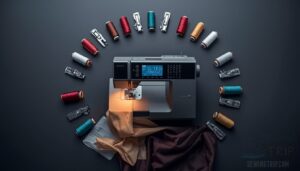
Presser feet get a lot of the credit, but the machine behind them does the heavy lifting. A bigger stitch library, smarter controls, and helpful automation all shape what you can actually pull off.
Here’s what to look for when comparing machines on versatility.
Built-in Stitch Library for Utility and Decorative Sewing
A strong built-in stitch library is your foundation for mastering any project. Utility, quilting, decorative, and heirloom stitches are organized with Fabric Mapping, so your machine suggests the right stitch for your material.
Stitch Diagnostics flag incompatible choices before you sew. Save custom setups as User Profiles using Stitch Memory, and use Practice Mode to build real confidence with new stitch variety.
LCD or Touch Controls for Quick Stitch Selection
When your hands are deep in a project, the last thing you want is to dig through a manual. That’s where LCD Stitch Icons and touch controls do the heavy lifting.
- Touchscreen Stitch Preview shows changes before you commit
- Backlit Display Visibility keeps your screen readable in dim rooms
- Gesture Navigation lets you swipe through built-in stitches fast
- Custom Stitch Shortcuts save your go-to settings instantly
- LCD display prompts the right foot for each stitch
Automatic Needle Threading and Tension Assistance
Threading a needle by hand wastes time you don’t have. That’s why automatic needle threading with Threader Sensor Feedback is a breakthrough — a small hook pulls thread through in one motion.
Adaptive Tension Control and Smart Fabric Detection adjust automatically as you switch materials, while Thread Break Detection pauses stitching instantly. A Self-Cleaning Thread Path keeps everything reliable across your sewing feet.
Speed Control, Stitch Length, and Width Adjustments
Speed is where control starts. Digital Speed Control lets you dial in your exact Foot Pedal RPM, so thin silk and thick denim each get the right pace.
Pair that speed control with the right stitch setting — this guide to portable sewing machines with LED work areas shows how good lighting and stitch selection work together for cleaner results.
Stitch Length Optimization runs from 0 to 5mm, while Width Memory Settings lock your favorite zigzag width for repeat use.
Adaptive Tension Sync keeps everything balanced as you adjust on the fly.
Free Arm, Drop Feed, and Extension Table Benefits
Three features quietly do a lot of heavy lifting: the free arm, drop feed mechanism, and extension table.
The free arm makes Cylindrical Sewing — think sleeves, cuffs, and pant legs — straightforward by giving you clean access around curved fabric.
The drop feed mechanism hands you Manual Feed Control for Free Motion Embroidery and creative stippling.
The extension table adds Wide Project Support and Seam Stability for quilts and layered work.
Portability, Machine Weight, and Workspace Fit
Machine weight shapes how you work every day. The Brother XM2701’s lightweight construction at 12.6 lb moves easily between rooms, while the Brother ST371HD‘s 18.4 lb frame stays put.
compact footprint fits tighter craft spaces, and a carry handle or foldable accessory tray keeps transport practical. matching machine weight considerations to your workspace — fixed table or flexible bench — saves real frustration.
Essential Presser Feet to Look For
Not every presser foot will earn its place in your sewing kit, but the right ones make a real difference. Knowing which feet to look for saves you from buying a machine that leaves you short when a specific project comes up.
Here are the essential presser feet worth checking for before you commit to any model.
All-purpose Foot for Everyday Sewing
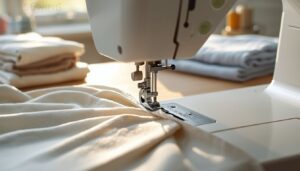
The all-purpose foot is your everyday workhorse — the one that stays on the machine for most projects. Its flat sole and centered opening keep fabric feeding smoothly across cotton, knit, and wovens.
Nail needle alignment, dial in your pressure adjustment, and this foot manages seams, topstitching, and basic decorative stitches reliably.
Solid foot compatibility and simple foot maintenance make it the anchor of any accessory bundle.
Zipper Foot for Clean Zipper Installation
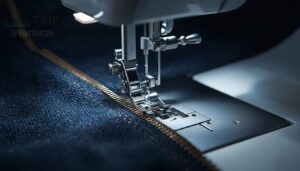
Where the all-purpose foot manages the everyday, the zipper foot manages precision. Its narrow toe gives you the foot alignment needed to stitch right beside zipper teeth — clean, straight, and no catching.
Left right selection lets you work either side of the tape. For fabric compatibility across cottons or denims, match your stitch length and follow basic maintenance tips for lasting results.
Buttonhole Foot for Consistent Buttonholes
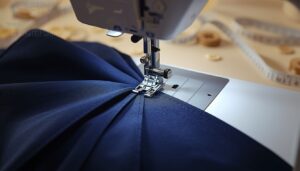
Getting buttonholes right starts with the right foot. The buttonhole foot uses a Stabilizer Plate Design and Underplate Material Choice to keep fabric from shifting.
Stitch Density Adjustment and Tension Synchronization prevent skipped stitches, while Button Size Calibration locks in consistent length every time. Machines like the Brother XM2701 include a one-step autosize buttonholer, making clean, repeatable buttonholes straightforward.
Blind Hem Foot for Polished Hems
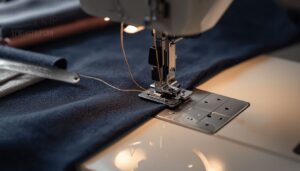
Once buttonholes are sorted, clean hems are next.
A blind hem foot uses Metal Guide Alignment to press the Folded Edge Precision against the needle, catching only a tiny bite of fabric.
Thread Tension Adjustment keeps the stitch invisible from the outside.
Regular Foot Maintenance Tips and knowing your Fabric Compatibility Guide help you get polished, hand‑sewn‑looking results every time.
Satin Foot for Decorative Stitching
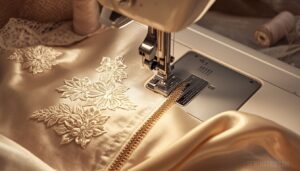
The satin foot is your go-to for decorative and heirloom stitches. Its Groove Design channels dense stitch passes cleanly underneath, eliminating tunneling. Open Toe Advantage gives you a clear sightline around curves and appliqué edges.
Fabric Compatibility spans delicate knits to heavier wovens — just adjust your pressure. Computerized sewing machines with flexible built-in stitches and presser feet make Stitch Quality consistent. Usage Tips: always stabilize and test first.
Overcasting Foot for Neat Seam Finishes
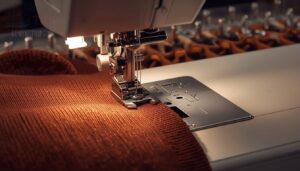
An overcasting foot wraps thread around raw fabric edges — no serger needed. Its Bar Ridge Design guides the edge cleanly so every stitch lands right.
Here’s what makes it worth including in your sewing foot set:
- Edge Stability on wovens and knits
- Fabric Compatibility across weights
- Stitch Width Tuning for clean wraps
- Seam Durability through repeated washing
- Works with most computerized sewing machines
Walking Foot for Layered and Slippery Fabrics
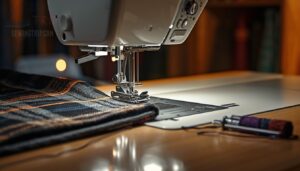
When layers start to drift, a walking foot takes control. Its Dual Feed Mechanics move top and bottom fabric simultaneously, delivering Even Tension Control across quilt sandwiches, heavy-duty fabrics, and slippery materials alike.
Fabric Grip Teeth lock each layer down while Needle Pressure Adjustment prevents tunneling. Follow Layer Alignment Tips, and your sewing feet — including all 10 sewing and quilting feet — perform consistently every pass.
Quilting or Free-motion Foot for Creative Projects
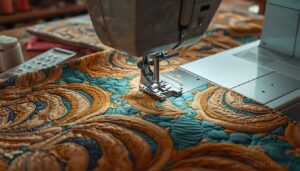
Free motion quilting is where precision meets creativity. Drop the feed dogs, attach a free motion foot, and suddenly you’re guiding fabric in any direction you want.
Open Toe Visibility keeps your sightlines clear for swirls and feathers, while the Spring Loaded Bounce maintains steady contact.
Add a Darning Plate Use for smooth gliding, or try Template Guided Patterns with a ruler foot for clean, repeatable lines.
Top 8 Computerized Sewing Machines
Finding the right computerized sewing machine comes down to what’s actually in the box — especially the feet. Each model below brings its own mix of stitches, controls, and accessories worth knowing before you buy.
Here are eight machines worth a close look.
1. Brother Computerized Sewing Quilting Machine
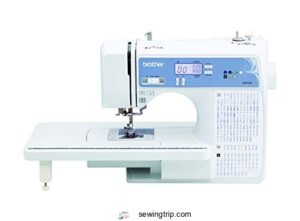
The Brother XR9550 packs serious capability into a 10.1-pound frame.
You get 165 built-in stitches — including 55 alphanumeric options for monogramming — plus eight presser feet covering everything from buttonholes to quilting.
The automatic needle threader and jam-resistant drop-in bobbin cut your setup time substantially.
Its LCD screen makes stitch selection straightforward, and the included wide table accommodates bulky quilt layers without crowding.
If portability and versatility matter to you, this machine earns its spot on the list.
| Best For | Beginners and hobbyists who want a lightweight, versatile machine that handles everything from quilting to monogramming without a steep learning curve. |
|---|---|
| Built-in Stitches | 165 |
| Buttonhole Styles | 8 |
| Auto Needle Threader | Yes |
| Drop-in Bobbin | Yes |
| Frame Material | Metal/Plastic |
| Presser Feet Included | 8 |
| Additional Features |
|
- 165 built-in stitches and 8 presser feet mean you can tackle a huge range of projects right out of the box.
- The automatic needle threader and drop-in bobbin make setup quick and frustration-free.
- Lightweight at 10.1 pounds, so it’s easy to move around or take to a class.
- Plastic components raise some durability concerns over time — it’s more of a replace-it than fix-it machine.
- Only works on 120V, so international use isn’t really an option without voiding the warranty.
- A few users have noted the hard cover doesn’t fit perfectly and stitches can pull slightly to the left.
2. Brother CS7000X Computerized Sewing Quilting Machine
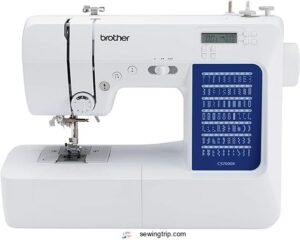
At $279.99, the CS7000X gives you solid value without cutting corners.
You get 70 built-in stitches — utility, decorative, quilting, and heirloom — plus seven one-step buttonhole styles that stay consistent across fabric types.
The LCD screen keeps stitch selection clear and quick.
Ten presser feet, a detachable wide table, and a built-in free arm handle everything from cuffs to full quilt panels.
The metal frame holds steady under pressure, and the automatic needle threader keeps your setup frustration-free.
| Best For | Beginners and home sewers who want a reliable, feature-packed machine that can grow with them — from basic repairs to quilting projects. |
|---|---|
| Built-in Stitches | 70 |
| Buttonhole Styles | 7 |
| Auto Needle Threader | Yes |
| Drop-in Bobbin | Yes |
| Frame Material | Metal |
| Presser Feet Included | 10 |
| Additional Features |
|
- The automatic needle threader and drop-in bobbin make setup quick and low-frustration, even if you’re just starting out.
- A metal frame plus 70 built-in stitches gives you durability and versatility that cheaper plastic machines can’t match.
- The detachable wide table and free arm mean you can tackle big quilt panels or tight sleeve hems without switching machines.
- It’s US-only voltage, so international users will need a step-down transformer — not ideal if you travel or live abroad.
- No automatic bobbin threading, which feels like a missed convenience at this price point.
- At 14 lbs, it’s not the lightest option if you’re hauling it to sewing classes or swapping it in and out of storage regularly.
3. Brother CS5055 Computerized Sewing Machine
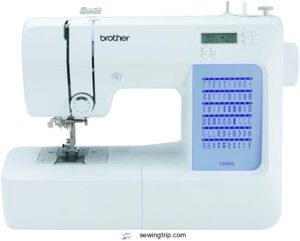
Step down in price and you land at $134 — the Brother CS5055.
It’s lighter than most at 10.5 lb, so moving it between rooms isn’t a chore.
You get 60 built-in stitches, seven auto-size buttonhole styles, and an LCD screen that keeps everything readable at a glance.
The metal frame holds steady, the automatic needle threader saves time, and seven presser feet cover your everyday needs.
It’s a capable, no-fuss machine for medium-weight fabrics and daily projects.
| Best For | Beginners and casual sewers who want a reliable, easy-to-use machine for everyday home projects without spending a lot. |
|---|---|
| Built-in Stitches | 60 |
| Buttonhole Styles | 7 |
| Auto Needle Threader | Yes |
| Drop-in Bobbin | Yes |
| Frame Material | Metal/Plastic |
| Presser Feet Included | 7 |
| Additional Features |
|
- Automatic needle threader and drop-in bobbin make setup quick and painless
- 60 built-in stitches plus 7 buttonhole styles give you real versatility for garments and décor
- Metal frame keeps stitching stable, even on medium-weight fabrics like denim
- Key parts like the presser-foot lever are plastic, which could be a durability concern over time
- The LCD error messages and foot-lever placement have a small learning curve for new users
- Thread can occasionally slip out of the needle eye during longer sewing sessions
4. Brother CP60X 60 Stitch Sewing Machine
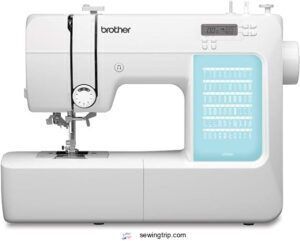
Bump the price up slightly and you get a bit more machine — the CP60X.
At 14 lb with a metal frame, it sits solid on your table without shifting mid-seam. You still get 60 built-in stitches, seven buttonhole styles, and a clear LCD screen, but the fixed needle bar adds consistency to every stitch line.
Seven presser feet, a Quick-Set bobbin, drop-feed dogs, and a free-arm make it a well-rounded pick for garments, quilts, and repairs alike.
| Best For | Hobbyists and intermediate sewers who want a reliable, versatile machine that handles everything from silk blouses to light denim without breaking the bank. |
|---|---|
| Built-in Stitches | 60 |
| Buttonhole Styles | 7 |
| Auto Needle Threader | Yes |
| Drop-in Bobbin | Yes |
| Frame Material | Metal/Plastic |
| Presser Feet Included | 7 |
| Additional Features |
|
- Metal frame keeps the machine steady and handles medium-weight fabrics like denim and quilts with ease
- 60 built-in stitches plus seven buttonhole styles covers most projects, from everyday repairs to decorative work
- Free-arm and drop-feed dogs make tricky jobs like sleeves and cuffs a lot easier to manage
- Plastic housing can feel a little flimsy if you’re running it hard for hours at a time
- Struggles with really thick materials or multiple heavy layers stacked together
- Twin needles don’t come included, so you’ll need to buy them separately for certain techniques
5. Brother CS7205 Computerized Sewing Machine
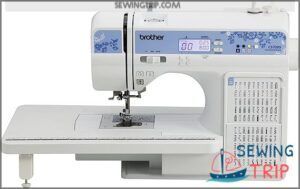
The CS7205 steps things up with 150 built-in stitches — more than double the CP60X — covering utility, decorative, and heirloom options plus eight auto-size buttonhole styles. At 17.5 lb, it’s heavier, but the backlit LCD, automatic needle threader, and Quick-Set bobbin keep setup fast.
Eleven included presser feet — walking foot, zipper, blind hem, and more — give you serious range without extra purchases.
It manages garments and basic quilting well, making it a strong mid-range choice for advancing sewists.
-only power (120V) means it’s a no-go for international use without a transformer
| Best For | Advancing beginners and intermediate sewists who want more stitch variety and built-in convenience features without jumping to a high-end machine. |
|---|---|
| Built-in Stitches | 150 |
| Buttonhole Styles | 8 |
| Auto Needle Threader | Yes |
| Drop-in Bobbin | Yes |
| Frame Material | Metal/Plastic |
| Presser Feet Included | 11 |
| Additional Features |
|
- 150 built-in stitches plus 11 presser feet give you a ton of versatility right out of the box
- The backlit LCD, automatic needle threader, and Quick-Set bobbin make setup genuinely quick and easy
- Handles everything from garments to basic quilting, so it grows with your skills
- No automatic thread cutter, which gets annoying fast on longer projects
- The throat area is on the smaller side, so big quilts will feel cramped
- U.S.
6. Brother SE700 Wireless Sewing Embroidery Machine
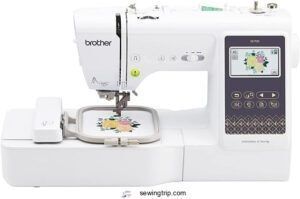
Where the CS7205 manages sewing and basic quilting, the SE700 adds a full embroidery dimension.
You get 135 built-in embroidery designs, 10 lettering fonts, and 103 sewing stitches — all navigated through a 3.7-inch color LCD touchscreen.
The 4×4-inch hoop works well for patches, monograms, and custom gifts.
Wireless LAN and the Artspira app let you send designs straight from your phone.
Eight presser feet, auto-threading, and auto-cutting round it out at $579.99.
| Best For | Hobbyists and beginners who want to do both sewing and embroidery without buying two separate machines. |
|---|---|
| Built-in Stitches | 103 |
| Buttonhole Styles | 10 |
| Auto Needle Threader | Yes |
| Drop-in Bobbin | Yes |
| Frame Material | Metal/Plastic |
| Presser Feet Included | 8 |
| Additional Features |
|
- 135 built-in embroidery designs plus 10 fonts mean you can personalize just about anything right out of the box.
- Wireless design transfer via the Artspira app makes it easy to send custom patterns from your phone — no USB fumbling required.
- Auto-threading and auto-cutting keep things simple, especially if you’re just getting started.
- The 4×4-inch embroidery area is pretty limiting — larger logos or big design panels won’t fit.
- Narrow throat space makes it tricky to work with wide fabrics or full quilt panels.
- It’s US-only (120V), so it won’t work if you ever move or travel abroad.
7. Poolin Self Threading Sewing Machine
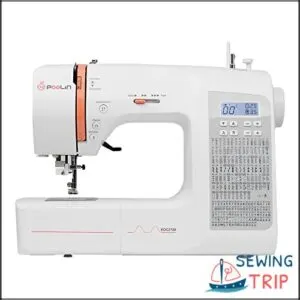
If you want capability without complication, the Poolin Self Threading Sewing Machine is worth a look.
It packs 200 built-in stitches, seven presser feet, and computerized controls into a 13.1 lb metal frame — compact enough for small spaces, sturdy enough for real projects.
One-click bobbin lift and on-screen error prompts keep you moving instead of troubleshooting.
Garments, quilts, costumes — the stitch library covers them.
Just note the reported noise at higher speeds and limited local repair options before committing.
| Best For | Beginners and hobbyists who want a versatile, computerized machine with plenty of built-in stitches and don’t mind learning the ropes with online tutorials. |
|---|---|
| Built-in Stitches | 200 |
| Buttonhole Styles | Included |
| Auto Needle Threader | Yes |
| Drop-in Bobbin | Yes |
| Frame Material | Metal |
| Presser Feet Included | 7 |
| Additional Features |
|
- 200 stitch patterns plus seven presser feet give you serious range for garments, quilts, costumes, and more
- Computerized controls with one-click bobbin lift and on-screen error prompts make setup and troubleshooting pretty painless
- Works with universal accessories, so you’re not locked into pricey proprietary parts
- Users report noticeable noise and high-pitched buzzing at higher speeds
- Needle breakage and thread tension issues pop up more than you’d want
- Limited local repair options and some machines reportedly fail after a few months
8. Brother CP100X Sewing Quilting Machine
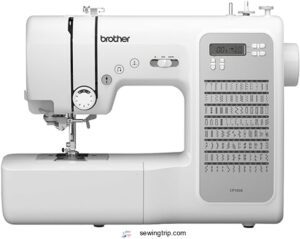
If you’re serious about quilting, the Brother CP100X earns its spot on this list. It brings 100 built-in stitches — utility, decorative, and heirloom — alongside eight auto-size one-step buttonholes.
The metal frame manages denim and thick quilt layers without fuss. At 10.5 lb, it’s light enough to move around.
You get 10 presser feet, a wide table, and a clear LCD display. Setup is straightforward, though first-timers may need a few sessions to find their rhythm.
| Best For | Quilters and home sewers who want a sturdy, versatile machine that can handle heavy fabrics without a steep learning curve. |
|---|---|
| Built-in Stitches | 100 |
| Buttonhole Styles | 8 |
| Auto Needle Threader | Yes |
| Drop-in Bobbin | Yes |
| Frame Material | Metal/Plastic |
| Presser Feet Included | 10 |
| Additional Features |
|
- Metal frame keeps things steady through denim, thick quilts, and layered fabrics
- 100 built-in stitches plus 10 presser feet means you’re set up for almost any project out of the box
- Lightweight enough to move around, and the speed slider makes it friendly for beginners or anyone who wants more control
- Bobbin winding can run uneven, so you may need to guide it by hand
- First-time sewers might find the initial setup a bit overwhelming
- Locked to US 120V power — using it abroad needs a converter and could void your warranty
Choosing The Best Model
Picking the right machine comes down to a few key decisions that are easy to get wrong if you’re not sure what to look for. The details — from stitch count to included feet to your budget — all play a role in whether a machine actually fits your workflow.
Here’s what to think about before you commit.
Match Included Feet to Your Sewing Goals
The feet included with your machine should reflect the work you actually do. Project-specific feet, fabric compatibility, and budget‑friendly sets all factor into that decision.
- Check whether the machine ships with 10 presser feet or fewer
- Confirm free arm, extension table, or wide table suits your workspace
- Map performance metrics like feed type and foot range to your upgrade planning
Compare Stitch Variety With Everyday Usability
More stitches don’t always mean more usability. A machine with 600 options and touch controls beats one with 27 if you’re doing monogramming, buttonhole automation, or decorative work.
Use this comparison to match stitch variety and intuitive interfaces for beginner sewists to real needs:
| Feature | High Stitch Count | Basic Stitch Count |
|---|---|---|
| Stitch Memory Recall | Yes | Rarely |
| Stitch Density Control | Full | Limited |
| Monogramming Options | Built-in | None |
Stitch selector simplicity matters just as much as built-in stitch options and presser feet variety.
Decide Between Sewing-only and Embroidery Features
Choosing between a sewing-only computerized sewing machine and an embroidery hybrid comes down to what you actually make.
Hybrid machines expand your Design Library Size and embroidery functions, but they carry a steeper Learning Curve and higher Maintenance Complexity.
If your projects stay practical, the extra sewing machine features won’t get used.
Match the machine’s Cost vs. Capability to your real workflow, not your wishlist.
Balance Budget, Accessories, and Long-term Value
Budget isn’t just about the sticker price. Bundled Foot Kits cut upfront costs and prevent surprise add-on purchases later — a real Maintenance Cost Savings win.
Machines with strong Warranty Longevity and Accessory Compatibility hold their Resale Value Boost over time.
When weighing price vs performance, the best budget-friendly computerized sewing machines 2025 offers aren’t always the cheapest — they’re the most complete.
Pick The Right Machine for Beginners, Quilting, or Customization
Your needs narrow the choice fast. A beginner sewing machine benefits most from an easy-to-use interface and automatic threading.
Quilting capabilities like a Quilting Free-arm and drop feed open up layered projects.
If customization drives you, prioritize Customization Features and broad Accessory Compatibility.
Energy Efficiency is a quiet bonus. Match the machine to your goals, and the right presser feet follow naturally.
Frequently Asked Questions (FAQs)
Do sewing machines come with different feet?
Yes, sewing machines come with different presser feet. Like a toolkit, each foot fulfills a purpose — zipper, buttonhole, quilting, and more. Foot Compatibility and Accessory Packs vary by model.
What is the most trouble-free sewing machine?
The Brother machines top the list for trouble-free use, thanks to jam-free bobbin systems, automatic needle threading, and metal frames.
Quiet motors, solid warranty coverage, and service support make everyday sewing genuinely stress-free.
Which singer is best for heavy fabrics?
The Heavy Duty 4411 manages heavy-duty fabrics best. Its sturdy motor and four-step buttonhole power through denim and canvas where lighter machines stall.
For finer control, the Quantum Stylist 9960 adds adaptable sewing feet.
How does the presser foot pivot enhance sewing?
The pivot feature lifts the presser foot automatically at stops, keeping the needle anchored for Corner Accuracy.
You get Seam Consistency, Reduced Fabric Drag, and Workflow Efficiency — all while cutting Hand Fatigue Reduction on every turn.
What is the advantage of a top drop-in bobbin?
Quick Bobbin Access, Visible Bobbin Cover, Jam-Resistant Design — a top drop-in bobbin delivers all three.
It sits directly beneath the needle, snaps in securely, and keeps your Stable Thread Feed consistent with minimal interruption.
How do built-in lettering features work?
A font module stores letter shapes in the machine’s firmware, converting each character into stitch paths with automatic kerning rules, underlay stitches for stability, and adjustable stitch density for clean, precise results on any fabric.
What are common uses for free motion stitching?
Free motion stitching covers thread painting, quilt embellishment, freehand lettering, and texture creation. It’s also solid for skill practice, free motion quilting, and building control before tackling real projects.
How do automatic needle threaders improve efficiency?
Automatic needle threaders cut threading time to just one to three seconds, reducing eye strain and setup delays.
You get faster project changeovers, fewer mistakes, and consistent stitch quality without the usual hands-free operation guesswork.
Can I use third-party feet on my machine?
Yes, but check your machine’s manual first. Third-party presser feet often fit low-rank systems, though adapter requirements vary.
Compatibility checks matter — mismatched foot attachments carry real safety risks and may void your warranty.
How often should presser feet be replaced?
There’s no set schedule — inspect presser feet at every project change.
Replace immediately if bent, chipped, or leaving marks.
Heavy daily use with denim or leather?
Swap feet every six to twelve months.
Conclusion
Picture a workspace where every project moves forward without second-guessing—where the right foot is already in the box, waiting.
That’s what the best computerized sewing machines with a variety of feet actually deliver: fewer interruptions, cleaner results, and more time doing the work you enjoy.
Match the machine to your goals, check the included accessories, and you won’t spend the next year tracking down what should’ve come standard.