This site is supported by our readers. We may earn a commission, at no cost to you, if you purchase through links.
A wrong bobbin costs more than thread. Skipped stitches, snarled tension, and jammed cavities can stall a job mid-seam, and on a deadline that delay adds up fast. Most tailors don’t think about bobbins until one cracks or unwinds wrong under the needle.
Machines don’t share bobbins the way you’d expect. A Class 15 that fits your Janome might jam a Brother front-loading case, and metal versus plastic changes how thread behaves at high speed.
Picking the right bobbins for professional tailors means matching class, material, and capacity to your machine, not guessing. Here’s what separates a reliable bobbin from one that’ll fail you halfway through a hem.
Table Of Contents
- Key Takeaways
- 10 Best Bobbins for Professional Tailors
- 1. Janome Genuine Plastic Bobbins 10 Pack
- 2. Brother Clear Plastic Sewing Bobbins
- 3. Plastic Sa156 Class 15 Bobbins
- 4. Plastic Class 15 Sewing Bobbins
- 5. Singer Class 15 Transparent Bobbins Prewound Assorted
- 6. EverNice 25 Bobbins with Storage Box
- 7. Dritz Plastic Class 66 Bobbins 12 Piece
- 8. Consew 205RB 206RB Metal Bobbins Pack of 10
- 9. Metal L Style Bobbins for Embroidery Machines
- 10. Universal Metal Sewing Machine Bobbins
- Compare Bobbin Types and Dimensions
- Choose Compatible Tailoring Bobbins
- Evaluate Professional Bobbin Performance
- Wind, Insert, and Maintain Bobbins
- Frequently Asked Questions (FAQs)
- Conclusion
Key Takeaways
- Bobbins aren’t universal—matching class, material, and size to your exact machine model prevents jams, tension problems, and wasted time mid-project.
- Metal bobbins outperform plastic for heavy-duty, high-speed, or industrial work, while plastic suits lighter domestic sewing and offers the bonus of seeing thread levels at a glance.
- Prewound bobbins save setup time and keep tension steady for high-volume runs, but self-wound bobbins give you more control over matching thread weight to fabric.
- Consistent maintenance—checking for cracks, winding evenly, avoiding overfill, and cleaning regularly—keeps tension stable and stitches clean no matter how often you sew.
10 Best Bobbins for Professional Tailors
Your bobbin choice affects tension, speed, and stitch quality every time you sew. The right pick depends on your machine, your fabric, and how much thread you burn through in a day. Here are ten bobbins worth keeping in your kit.
Before stocking up, it’s worth checking whether sewing machine bobbins are truly universal so you don’t end up with a drawer full of mismatched sizes.
1. Janome Genuine Plastic Bobbins 10 Pack
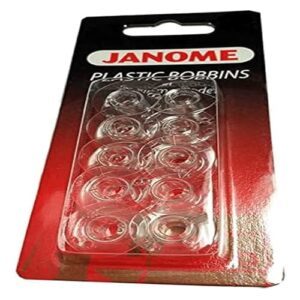
When thread level guesswork costs you a stitch, clear plastic earns its keep. This Janome genuine 10 pack fits standard Class 15 systems used across most Janome domestics, top and front loading alike.
Transparent construction lets you check fill level at a glance, so you catch a nearly-empty bobbin before it stalls mid-seam. Skip models 1600P, HD9, MB4, and MB7 — they need different bobbins entirely.
At this size, ten spares keep multiple thread colors organized and ready for back-to-back sewing sessions.
| Best For | Sewists who own compatible top or front loading Janome machines and want an easy way to monitor thread levels while keeping multiple colors organized. |
|---|---|
| Material | Plastic |
| Transparent Design | Yes |
| Quantity | 10 |
| Machine Compatibility | Janome |
| Storage Included | No |
| Thread Monitoring | Easy |
| Additional Features |
|
- Genuine Janome parts ensure proper fit and consistent stitch tension
- Transparent design makes it easy to spot low thread before it causes problems
- Ten bobbins per pack support smoother, uninterrupted sewing sessions
- Not compatible with Janome models 1600P, HD9, MB4, and MB7
- Using the wrong size or type can risk damaging your machine
- Clear plastic construction may be more fragile than metal bobbins
2. Brother Clear Plastic Sewing Bobbins
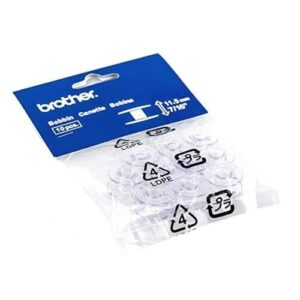
Janome’s pack covers domestics, but Brother owners need their own match. These clear plastic bobbins carry the Brother name and fit models like the PE770, XL2600i, and SE400.
The security notch holds thread steady while winding, cutting down on slippage mid-project.
Clear housing means checking a spool’s status is a glance, not a guessing game. Skip these for other brands, though — compatibility runs narrow, so confirm your model before stocking up.
| Best For | Brother sewing machine owners (including PE770, XL2600i, and SE400 models) who want a reliable stash of pre-wound bobbins ready for embroidery and quick color swaps. |
|---|---|
| Material | Plastic |
| Transparent Design | Yes |
| Quantity | 10 |
| Machine Compatibility | Brother |
| Storage Included | No |
| Thread Monitoring | Easy |
| Additional Features |
|
- Clear plastic design lets you check thread levels at a glance
- Security notch keeps thread wound tightly and prevents slippage
- Comes in a 10-pack, giving you plenty of backups for various projects
- Only compatible with select Brother models, so it won’t work for other brands
- Plastic construction can crack or break if dropped on hard surfaces
- Requires checking your specific machine model before purchasing to avoid mismatches
3. Plastic Sa156 Class 15 Bobbins
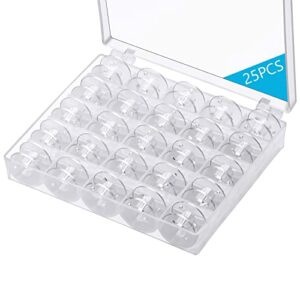
Brand loyalty aside, SA156 bobbins fit a wider net. These Class 15 A bobbins work across Brother and Janome machines, so you’re not locked into one label.
The clear plastic body shows thread status at a glance, and the security notch keeps winding tight and even.
At 7/16 inch deep, they hold standard capacity for most tailoring jobs. Just confirm your machine takes Class 15 alignment before switching brands.
| Best For | These bobbins are best for beginner and professional sewing enthusiasts who use standard machines accepting Class 15/Sa156 sizing and want an affordable, easy-to-monitor thread option. |
|---|---|
| Material | Plastic |
| Transparent Design | Yes |
| Quantity | 25 |
| Machine Compatibility | Class 15/Sa156 |
| Storage Included | Yes |
| Thread Monitoring | Easy |
| Additional Features |
|
- Transparent design makes it easy to monitor thread levels at a glance
- Includes a clear storage case with individual slots for better organization and portability
- Smooth surface finish helps prevent thread scraping for a seamless sewing experience
- Plastic construction may not perform as well as metal bobbins in some situations
- Only compatible with machines that accept Class 15/Sa156 standard sizing
- Limited to a fixed bobbin size (0.8 inches diameter, 0.45 inches height), which may not suit all machine models
4. Plastic Class 15 Sewing Bobbins
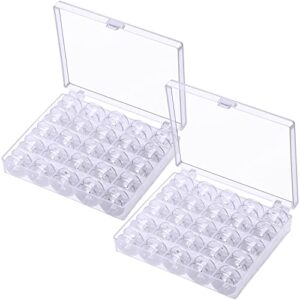
Once you’ve settled on a case style, the generic Class 15 plastic bobbin is your everyday workhorse. It measures roughly 20 mm across with an 11 mm depth, giving you enough capacity for standard tailoring runs without swelling past the case.
Clear plastic lets you check thread levels mid-project. Just check your machine calls for Class 15 A style, since a few models split hairs between 15 and 15j.
| Best For | These bobbins are a great fit for beginners and professional sewing enthusiasts who want an affordable, easy-to-organize option for both embroidery and everyday sewing projects. |
|---|---|
| Material | Plastic |
| Transparent Design | Yes |
| Quantity | 50 |
| Machine Compatibility | Class 15 |
| Storage Included | Yes |
| Thread Monitoring | Easy |
| Additional Features |
|
- Transparent design makes it simple to identify thread colors and check thread levels at a glance
- Comes with two clear storage cases with individual slots, keeping bobbins organized and portable
- Smooth plastic construction helps prevent thread damage during use
- Plastic material isn’t suitable for machines that require metal bobbins
- You’ll need to confirm compatibility with your specific Class 15 machine model before buying
- As a plastic bobbin, it may not hold up as well as metal alternatives for heavy-duty or industrial use
5. Singer Class 15 Transparent Bobbins Prewound Assorted
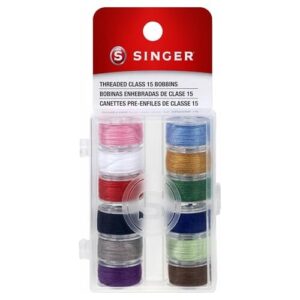
Time-strapped alteration work calls for a shortcut, and this twelve-pack delivers it. Each Class 15 bobbin comes prewound with 50 yards of spun polyester, so you skip winding entirely between color changes.
If you’re unsure whether Class 15 fits your machine, this guide to common bobbin types and sizes can help you double-check before you buy.
The transparent shell lets you gauge remaining thread at a glance, mid-seam. Colors run assorted, covering common garment shades without extra shopping.
Just don’t rewind them once empty. These are built for single-use convenience, and reused spools tend to loosen tension over time.
| Best For | Sewers and tailors who need fast, reliable color changes without stopping to wind their own bobbins. |
|---|---|
| Material | Plastic |
| Transparent Design | Yes |
| Quantity | 12 |
| Machine Compatibility | Singer, Brother, Kenmore, Elna, Pfaff |
| Storage Included | No |
| Thread Monitoring | Visual |
| Additional Features |
|
- Prewound with 50 yards of durable, colorfast polyester thread for consistent stitching
- Transparent design makes it easy to monitor thread levels during a project
- Assorted colors cover common shades, cutting down on extra shopping trips
- Must confirm compatibility with your specific machine before use
- Not ideal for machines that require metal bobbins
- Designed for single use, so rewinding isn’t recommended once empty
6. EverNice 25 Bobbins with Storage Box
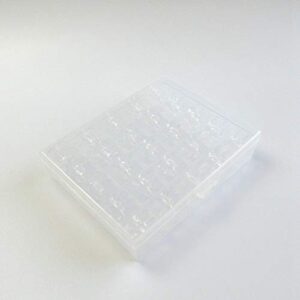
A full bin of bobbins beats an empty one mid-hem. This 25-count set targets Pfaff machines specifically, including models 2144, 2170, 7510, and the 7550-7570 range.
Clear plastic construction lets you check thread color and level without popping the case open. The included storage box (model 9033P) keeps every bobbin in its own slot, so nothing rattles loose in your kit.
For traveling tailors, that compact footprint fits neatly into a toolbox or sewing case.
| Best For | Pfaff sewing machine owners (models like the 2144, 2170, 7510, and 7550-7570 range) who want a reliable, organized bobbin supply on hand for long or frequent sewing projects. |
|---|---|
| Material | Plastic |
| Transparent Design | Yes |
| Quantity | 25 |
| Machine Compatibility | Pfaff |
| Storage Included | Yes |
| Thread Monitoring | Not specified |
| Additional Features |
|
- Generous 25-count supply keeps you stocked through extended sewing sessions without interruption
- Clear plastic design makes it easy to see thread color and remaining amount at a glance
- Sturdy storage box (model 9033P) keeps bobbins organized, dust-free, and easy to transport
- Built specifically for Pfaff machines, so compatibility with other brands isn’t guaranteed
- Plastic construction may wear faster than metal bobbins under heavy, frequent use
- No details given on bobbin weight, thread capacity, or winding direction for those needing precise specs
7. Dritz Plastic Class 66 Bobbins 12 Piece
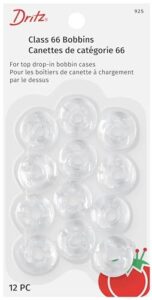
Twelve clear plastic bobbins built to the Class 66 standard, sized for vintage Singer models like the Featherweight and 401, plus Brother and Simplicity machines with top drop-in cases.
Each bobbin holds about 40 yards of 40 weight thread, enough for steady work on a single garment section. The smooth surface resists snagging, and clear plastic lets you check thread level at a glance.
Inspect for cracks after heavy use. Store dry, since plastic degrades with moisture over time.
| Best For | Sewers with vintage Singer Featherweight or 401 machines, plus Brother, Baby Lock, or Simplicity models that use top drop-in bobbin cases and need an affordable, easy-to-monitor bobbin option. |
|---|---|
| Material | Plastic |
| Transparent Design | Yes |
| Quantity | Not specified |
| Machine Compatibility | Singer, Brother, Baby Lock, Simplicity |
| Storage Included | No |
| Thread Monitoring | Easy |
| Additional Features |
|
- Clear plastic construction makes it simple to see thread color and remaining amount at a glance
- Wide compatibility across vintage and modern machines needing Class 66 bobbins
- Budget-friendly way to stock up on replacement bobbins
- Plastic wears down faster than metal bobbins under frequent, heavy use
- Some users find the bobbins too narrow to spin properly on certain winders
- Rewinding durability is limited, with some reporting only 1–2 good uses per bobbin
8. Consew 205RB 206RB Metal Bobbins Pack of 10
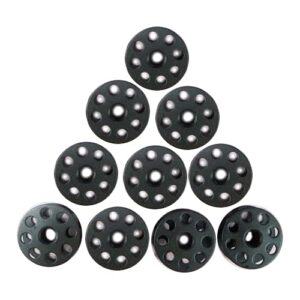
Leather and upholstery work chews through plastic bobbins fast, so this pack switches to solid aluminum. Ten bobbins, 1 inch in diameter, 3/8 inch thick, built for the Consew 205RB and 206RB series.
They match the M style bobbin dimensions used on many Consew walking foot machines, fitting drop-in cases without modification. The metal construction holds tension steady at high speed and resists deformation under heavy thread loads, making it a solid pick for production-level tailoring.
| Best For | Businesses and tailors doing heavy-duty leather and upholstery work on Consew 204RB, 205RB, 206RB, 208RB, or 306RB machines who need bobbins that can handle constant, high-speed use. |
|---|---|
| Material | Aluminum |
| Transparent Design | No |
| Quantity | 10 |
| Machine Compatibility | Consew RB series |
| Storage Included | No |
| Thread Monitoring | Not specified |
| Additional Features |
|
- Durable aluminum construction stands up to heavy thread loads far better than plastic bobbins
- Pack of 10 keeps production running without constant reordering
- Precise fit for Consew RB series machines ensures smooth, reliable feeding
- Color may vary between shipments
- Not guaranteed to fit machines outside the Consew RB series
- Metal bobbins may create slightly different thread tension than plastic ones in some setups
9. Metal L Style Bobbins for Embroidery Machines
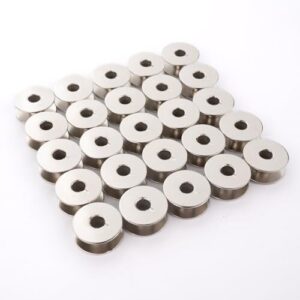
Embroidery machines demand a different bobbin altogether. This 20-pack of metal L style bobbins measures 20.6 mm in diameter and 8.7 mm wide, fitting Brother PR series, Entrepreneur, Janome, Babylock, and Bernina models with rotary shuttle systems.
Metal construction holds weight steady at high stitch speeds, keeping tension even during satin and zigzag work. Some units lack through-holes, so inspect each bobbin before winding. Verify your machine calls for Style L, since a similar diameter to Class 15 doesn’t guarantee a proper fit.
| Best For | Home and commercial embroiderers using Brother PR series, Entrepreneur, Janome, Babylock, or Bernina machines with rotary shuttle systems who need reliable size L bobbins for satin and zigzag stitching. |
|---|---|
| Material | Metal |
| Transparent Design | No |
| Quantity | 20 |
| Machine Compatibility | Brother, Janome, Bernina, Babylock, Singer |
| Storage Included | No |
| Thread Monitoring | Not specified |
| Additional Features |
|
- Metal construction holds weight steady at high stitch speeds, keeping tension even during detailed work
- Generous 20-pack offers good value and keeps you stocked for larger projects
- Compatible with a wide range of popular machines, including Juki TL series and Consew 103/105
- Some units reportedly lack through-holes, so each bobbin should be inspected before winding
- May not fit certain Singer 306K bobbin winders
- Similar diameter to Class 15 bobbins can cause confusion, so machine compatibility must be verified before purchase
10. Universal Metal Sewing Machine Bobbins
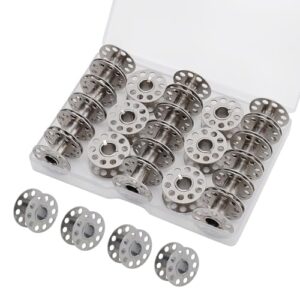
Steel bobbins with a galvanized surface and 0.80 inch outer diameter fit Class 15 machines from Singer, Brother, Janome, Bernina, and Toyota. Polished edges keep thread from scratching or fraying mid-seam.
The transparent storage box helps you track thread color and remaining supply at a glance. Verify diameter and inner hole size before buying, since "universal" doesn’t guarantee a fit across every brand. Match metal bobbins to metal cases only, and you’ll get consistent tension without the timing issues loose fits cause.
| Best For | Quilters, crafters, and both beginner and professional sewers using standard Class 15 machines from brands like Singer, Brother, Janome, Bernina, or Toyota. |
|---|---|
| Material | Steel |
| Transparent Design | No |
| Quantity | Not specified |
| Machine Compatibility | Singer, Brother, Janome, Bernina, Toyota |
| Storage Included | Yes |
| Thread Monitoring | Not specified |
| Additional Features |
|
- Galvanized steel construction resists rust and corrosion for long-lasting use
- Polished edges and smooth surface prevent thread from scratching or fraying
- Comes with a transparent storage box for easy organization and thread tracking
- Only compatible with standard Class 15 machines, not a true universal fit
- Buyers must double-check exact dimensions to avoid compatibility issues
- Should only be paired with metal bobbin cases to maintain proper tension
Compare Bobbin Types and Dimensions
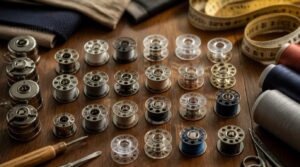
Not every bobbin fits every machine, and guessing gets you nowhere fast. Size, shape, and material all play a part in how your stitches turn out. Here’s how the main types stack up against each other.
Class 15 Versus Class 66
When you’re choosing between these two, size tells the story fast. Class 15 bobbins run smaller, fitting domestic machines, while Class 66 bobbins suit heavy-duty industrial setups.
Capacity differs too: Class 15 holds 1-2 inches of thread, Class 66 stretches to 6-8 inches. Class 15 favors plastic construction; Class 66 leans metal for durability and thread tension control under heavier loads.
L-Style Versus M-Style
Size isn’t the only fork in the road. L Style bobbins use a curved lip for circular thread path and smoother high-speed rotation. M Style bobbins run a flat edge, seating tight in the case for quick engagement.
- L Style: denser stitches, less top thread showing
- M Style: balanced stitches, shallower thread route
- Both: need correct winding for stable tension
Industrial Blind-Stitch Bobbins
Blind hems demand a different build entirely. Industrial blind-stitch machines run a narrow bobbin, around 16 mm diameter, sized to fit tight hook mechanisms.
That compact shape isn’t just about space. Tight tolerances keep wobble out, so tension stays steady across hundreds of stitches per minute, holding thread tension even on long production runs without binding the case. The blind stitch formation process ensures the needle penetrates only the inner fabric layer to create an invisible hem.
Bobbin Capacity and Yardage
Blind-stitch bobbins solve for space. Capacity solves for time. Bobbin capacity varies by class: Class 15 holds 60-75 yards, Class 66 stretches to 150-186.
- Thread weight cuts yardage
- Overwinding causes tension trouble
- Bulk winding skews true output
Prewound bobbins list exact thread yardage on the label, taking guesswork out of long production runs.
Measuring Unknown Bobbins
Found a mystery bobbin in your drawer? Grab calipers and check five points: outer diameter, width side measurement, height thickness reading, bore size verification, and flange diameter check.
Compare results against Class 15 A Style specs first, since it’s the most common match. This confirms bobbin compatibility with your bobbin case before you touch the bobbin winding thread guide.
Choose Compatible Tailoring Bobbins
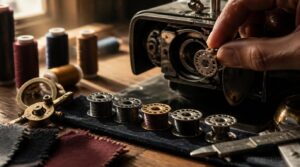
Picking the right bobbin isn’t guesswork, it’s a matter of matching specs to your machine. Get this wrong and you’ll fight tension problems all day long. Here’s what to check before you buy.
Check Sewing Machine Manuals
Your manual holds the real answer key. Find your model number stamped on the machine before you open it, then locate the approved bobbin types section.
Manuals show threading order, tension settings, and troubleshooting flowcharts for stitch problems. Check maintenance intervals too.
Skip this step, and you’re guessing at compatibility your machine already specifies in writing.
Match Bobbin Case Systems
Once you know your machine, check whether it runs a drop-in loading system or a removable bobbin case in a front compartment. Front-loading needs spring latch release and hook timing alignment.
- Verify thread path
- Confirm correct direction
- Inspect case latch
- Check hook alignment
Use a case compatibility guide for exact matches.
Compare Brand and Model
Not all bobbins labeled "Class 15" fit the same. Brand C prints exact diameter and height on packaging; Brand D widens the hole for thicker thread. Run a dimensional accuracy check before buying bulk.
| Brand | Feature | Best For |
|---|---|---|
| Brand A | Standard plastic | General use |
| Brand C | Class-labeled specs | Precision fit |
| Brand E | Metal, industrial | Heavy-duty machines |
Metal Versus Plastic
Steel or plastic? It comes down to how hard your machine works.
Metal bobbins handle heat and heavy tension without cracking, run quieter at high speed, and hold tight tolerances load after load.
Plastic bobbins cost less and weigh less, easing strain on domestic machines.
Match the bobbin to your bobbin case; mixing materials there causes wear and tension drift.
Pre-Wound Versus Self-Wound
Ready-to-load or ready-to-wind? Pick based on your shop’s pace.
PreWound bobbins cut setup time and keep tension consistent, ideal for high-volume runs. Selfwound bobbins let you match thread weight to fabric, reducing waste.
- Run a tension consistency test before switching
- Confirm bobbin case compatibility
- Wind only what a job needs
- Store extras in labeled, sealed containers
Evaluate Professional Bobbin Performance
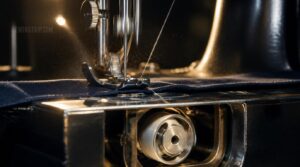
Picking the right size and material only gets you halfway there. Real performance shows up once the bobbin is under the needle, running at speed and holding tension. Here’s what separates a bobbin that works from one that truly holds up on the job.
Stitch Tension Consistency
Test every bobbin the same way: sew a swatch first. Correct thread tension shows top and bobbin threads meeting flat at the fabric surface, no puckering either side.
Correct thread tension shows top and bobbin threads meeting flat at the fabric surface, with no puckering on either side
Loose winding or dirty thread paths throw this off fast. Check bobbin case compatibility, keep tension slightly looser than top thread, and adjust settings per fabric weight before cutting into good material.
High-Speed Sewing Durability
Speed changes everything at the machine. Faster stitching raises needle heat, and that heat transfers straight into the bobbin thread path, testing bobbin winding integrity under real pressure.
- Choose metal bobbins for high-RPM runs
- Watch for heat-softened plastic bobbins
- Recheck tension every 500 stitches
- Inspect for warping after long sessions
Steady tension calibration keeps stitch formation consistent, even at full tempo.
Thread Weight Compatibility
Heat isn’t the only stress test a bobbin faces. Thread weight matching matters just as much, since a bobbin loaded with the wrong weight throws off tension fast.
Pair needle size to thread weight, and balance both against fabric weight. Adjust tension when switching threads, and confirm the thread system, since a 40 wt varies by brand.
Anti-Backlash Performance
Getting thread weight right sets up tension. Backlash control keeps it that way at speed.
Anti-backlash bobbins use spring-loaded discs, preventing overspin during deceleration. This gives steady thread feed consistency and fewer snags.
Check rim tolerances and bobbin wobble during quality testing. Match bobbin case materials, snug fits limit lateral movement, keeping tension stability intact through fast, repeated stitching.
Bulk Packaging and Storage
A few hundred bobbins take up more room than you’d think. Buying in bulk packaging cuts cost and keeps your bobbin storage solutions organized:
- Palletized crates or totes for warehouse space optimization
- Standardized container labeling standards for quick sorting
- Reusable container programs to cut waste
Keep bins away from heat, since storage temperature control protects plastic bobbin case materials from warping.
Wind, Insert, and Maintain Bobbins
Buying the right bobbin only gets you halfway there. How you wind, load, and care for it decides whether your stitches hold up. Here’s what you need to know to keep every bobbin working the way it should.
Wind Bobbins Evenly
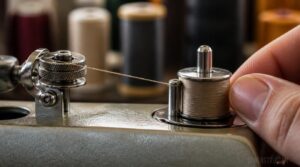
A wobbly bobbin ruins a stitch line fast. Even winding starts with thread path alignment through clean guides, then a tension disc adjustment for steady pull.
| Factor | Effect | Fix |
|---|---|---|
| Traverse speed | Prevents wavy layers | Sync to winder speed |
| Bobbin | Reduces friction | Use smooth bobbins |
| Tension | Stops loose layers | Adjust discs |
Prevent Bobbin Overfilling
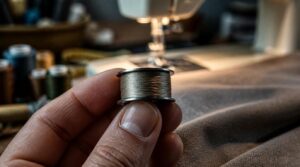
Overfill is silent until it jams your machine. Stop winding once thread reaches the groove edge, leaving 1 to 2mm clearance from the rim.
Run a visual fill check and rotate the bobbin by hand. Smooth rotation with no bulges means proper winding tension control — the key to jam-free, smooth sewing operations every time.
Insert Drop-in Bobbins
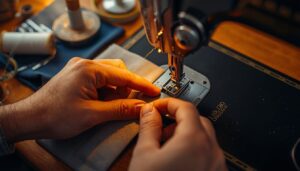
Five seconds is all a Top-Loading Drop-In bobbin needs. Raise the needle, open the drop-in cavity, and drop the bobbin in.
Check thread unwind direction against the diagram on the cover. Guide thread through the loading slot, under the tension spring, confirming bobbin rotation match with the hook.
Pull thread gently. Smooth feed means you’re ready to sew.
Fit Front-Loading Cases
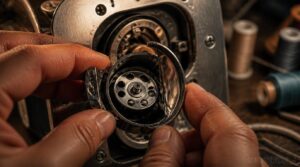
Front-loading demands more patience than a drop-in slot. Open the case, seat the bobbin, and check Load Face Alignment against the throat plate.
- Confirm Case Inner Dimensions fit snug, no rubbing
- Inspect Case Wall Thickness for warping
- Verify hinge tension holds firm
Class 15 bobbins fit best. Run bobbin tension calibration before stitching.
Inspect, Clean, and Store

A dirty bobbin ruins a clean stitch. Run through your Bobbin Inspection Checklist: check for cracks, lint, and burrs before every project.
Wipe with a lint-free cloth; use isopropyl alcohol for stubborn residue. That’s your Cleaning Methods Guide.
Store by class, color-coded, in labeled trays. Set a Maintenance Schedule Planning routine—weekly checks, monthly deep cleans. Give Pre-Wound Bobbin Care the same attention: sleeves on, dust out.
Inspect, clean, store—every time.
Frequently Asked Questions (FAQs)
What’s the difference between class 15 and class 66 bobbins?
Think of two siblings built from the same blueprint, yet shaped by different hands. Flat vs Domed Flanges sets Class 15 and Class 66 apart, along with height tolerance affecting case seating and thread flow impact.
What is the difference between L and M style bobbins?
Width and capacity set them apart: L-style bobbins are narrow, holding less thread, while M-style bobbins run wider with nearly double the yardage. Industrial machines favor M-style for bulk runs; L-style suits lighter, quick-changeover jobs.
How do I know what bobbins I need?
Start with your manual. Run a compatibility check against your machine’s specs, then match bobbin types, material, and bobbin case style before buying — the manual and old bobbin tell you nearly everything.
Do different sewing machines need different bobbins?
Yes. Bobbin case compatibility and machine-specific bobbin fit vary by brand and model, affecting tension. Always match the correct bobbin type, insert the bobbin properly, and check your manual before winding on a bobbin winder.
How often should professional tailors replace their bobbins?
Swap bobbins after every project, or weekly in high-volume shops. Watch for burrs, cracks, or uneven tension as wear indicators. Clean housings before replacement, rotate stock by date, and store spares dry to protect stitch quality.
Can different bobbin brands be mixed safely together?
Not automatically. Mixing brands works only if class codes match and case fit verification confirms proper seating. Test on scrap fabric first, checking stitch quality and winding tension. Metal and plastic bobbins shouldn’t share a case.
Why does thread keep bunching underneath the fabric?
Loose upper tension, wrong proper threading path, or a dirty bobbin case usually causes it. Check needle fabric match and thread weight selection first, then test tension adjustment tips on scrap fabric before sewing your project.
Do prewound bobbins work well for heavy fabrics?
Prewound bobbins deliver steady thread feed on denim and canvas, cutting downtime and stabilizing stitch uniformity. Run a case compatibility test first, match thread weight, and confirm bobbin tension stays balanced before starting a long production run.
What causes a bobbin to wobble while sewing?
Five culprits usually cause it: bobbin case alignment, uneven winding, tension balance problems, shuttle debris, or bobbin damage. Check the hook race and rewind evenly first, since most wobble traces back there before you touch tension screws.
Conclusion
A bobbin is small, but it carries the weight of every seam you sew. Get the class wrong, and your machine fights you all day. Get it right, and stitches fall clean and even, like clockwork.
The best bobbins for professional tailors aren’t flashy purchases; they’re quiet insurance against wasted hours. Match your machine, check the case, choose solid material. Your work deserves thread that behaves. Master this small detail, and bigger mistakes stay far away.