This site is supported by our readers. We may earn a commission, at no cost to you, if you purchase through links.
Twenty sewing machines humming at once, and one student raises her hand: "My thread keeps nesting underneath the fabric." Nine times out of ten, the culprit isn’t the machine—it’s the bobbin. Wrong class, worn spindle, or a knockoff that’s a hair off in diameter, and you’ll spend your whole class period chasing tension problems instead of teaching technique.
That’s the quiet truth about bobbins for crafting classes: they’re small, cheap, and completely capable of derailing a lesson. A Class 15 bobbin looks nearly identical to an L-Style one, yet swap them and your students will fight puckered seams for an hour.
Get the right bobbins—matched to machine, material, and project—and those headaches disappear before they start.
Table Of Contents
- Key Takeaways
- Top 10 Bobbins for Crafting Classes
- 1. Aleene’s Liquid Fusion Heavy Duty Glue
- 2. Janome Genuine Plastic Bobbins 10 Pack
- 3. Plastic Embroidery Floss Bobbins Set
- 4. Embroidery Floss Storage Box With Bobbins
- 5. Kumihimo Plastic Bobbins 2.5 Inch Diameter
- 6. Polyester sewing thread kit with bobbins
- 7. Universal Metal Sewing Machine Bobbins 56 Pcs
- 8. Beadsmith No-Tangle Thread Bobbins
- 9. Design Works Crafts Floss Bobbins with Ring
- 10. Plastic Embroidery Floss Bobbins 150 Pack
- Match Bobbins to Crafting Projects
- Compare Sewing Machine Bobbin Classes
- Choose Compatible Crafting Bobbins
- Prevent Bobbin Problems During Classes
- Frequently Asked Questions (FAQs)
- Conclusion
Key Takeaways
- Most classroom sewing headaches trace back to bobbin mismatches, so always check your machine’s manual to confirm the correct class (like Class 15, Class 66, L-Style, or M-Style) before stocking up.
- Bobbin size really does matter down to the millimeter—Class 15 and L-Style share a 20.3mm diameter but differ in width, so a quick caliper check can save you from tension nightmares later.
- Pre-wound bobbins can cut prep time by up to 90%, making them a smart choice for busy classes, while self-wound bobbins give you more flexibility for custom colors and specialty projects.
- Keeping bobbins clean, labeled, and stored properly—plus swapping out cracked or worn ones regularly—goes a long way toward preventing tangles, snapped threads, and tension issues mid-class.
Top 10 Bobbins for Crafting Classes
Not every bobbin belongs in the same toolbox, and crafting classes tend to prove that fast.
Different machines call for different bobbin types and sizes, so it’s worth checking whether sewing machine bobbins are universal before stocking up.
Whether you’re threading a sewing machine, winding kumihimo cord, or organizing embroidery floss, the right bobbin makes the whole project run smoother.
Here are ten picks worth keeping on your workbench.
1. Aleene’s Liquid Fusion Heavy Duty Glue
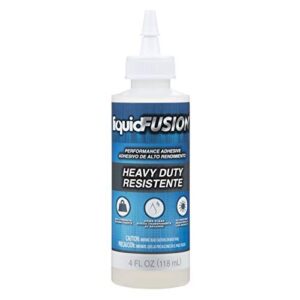
Odd one on this list, but stick with me: Aleene’s Liquid Adhesive earns its spot for repair, not stitching. This 4-ounce urethane adhesive dries crystal clear and waterproof, perfect for fixing cracked vinyl doll heads before rerooting or bonding embellishments onto plastic bobbin storage boxes.
It’s non-foaming, low odor, and bonds glass, tile, and fabric without leaving a cloudy residue. Give it 48 hours to fully cure, and your classroom repairs will hold up beautifully.
| Best For | Crafters and hobbyists who need a reliable adhesive for repairing vinyl doll heads, securing rhinestones, or bonding embellishments onto glass, tile, and fabric. |
|---|---|
| Material | Urethane adhesive |
| Quantity | 1 bottle |
| Primary Use | Bonding/adhesive |
| Weight | 4 fl oz |
| Durability | Waterproof cure |
| Best For | Rhinestone/jewelry repair |
| Additional Features |
|
- Dries crystal clear with a non-foaming, low odor formula
- Waterproof and suitable for both indoor and outdoor projects
- Forms strong bonds on non-oily surfaces like rhinestones and glass
- Takes up to 48 hours to fully cure for maximum strength
- Not meant for prolonged submersion in water despite being waterproof
- Can leave a glossy finish on matte surfaces once dry
2. Janome Genuine Plastic Bobbins 10 Pack
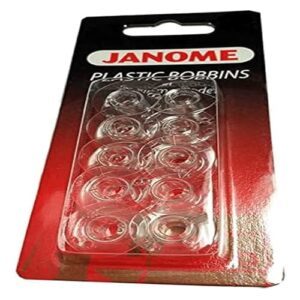
Now let’s get back to actual bobbins. If you’re teaching on Janome machines, this 10-pack of genuine plastic bobbins (model 200122614) is your workhorse supply.
They’re clear, so students can monitor thread levels mid-project, and they fit both top and front loading machines. Just skip these for the 1600P, HD9, MB4, and MB7 models—those need something else entirely.
At roughly a gram each, they’re light, classroom-friendly, and priced to restock often without breaking your supply budget.
| Best For | Sewing teachers and classroom instructors who need a reliable, affordable bobbin supply for multiple Janome machines. |
|---|---|
| Material | Plastic |
| Quantity | 10 bobbins |
| Primary Use | Machine sewing |
| Weight | 0.01 oz |
| Durability | Durable clear plastic |
| Best For | Janome machines |
| Additional Features |
|
- Clear plastic design lets students easily monitor thread levels during projects
- Compatible with both top and front loading Janome machines
- Genuine Janome parts help maintain stitch precision and reduce skipped stitches or bunching
- Not compatible with Janome 1600P, HD9, MB4, or MB7 models
- Must match the correct size and type, or risk damaging the machine
- Individual bobbins are tiny and lightweight, making them easy to misplace in a busy classroom
3. Plastic Embroidery Floss Bobbins Set
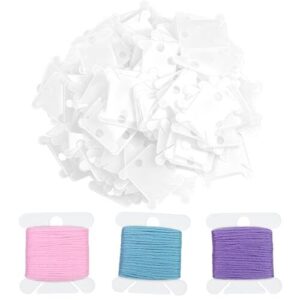
Once your machine bobbins are sorted, your students still need somewhere to park all that embroidery floss. A plastic bobbins set measuring roughly 1.5 by 1.4 inches does exactly that, with a smooth, waterproof finish that won’t snag delicate strands.
Dual top notches hold thread ends in place, so nothing unravels mid-class. Expect 20-30% of any pack to need minor trimming—budget a few extra minutes before handing them out.
| Best For | teachers and craft group leaders who need an affordable, color-coded way to keep embroidery floss, yarn, and string organized for multiple students at once. |
|---|---|
| Material | Plastic |
| Quantity | 100 pieces |
| Primary Use | Thread organization |
| Weight | 3.2 oz |
| Durability | Waterproof surface |
| Best For | Cross-stitch storage |
| Additional Features |
|
- Transparent design makes color-coded thread storage simple and quick to sort through
- Dual top openings keep thread ends secure so nothing unravels mid-project
- Smooth, waterproof surface protects delicate strands from snagging or breaking
- 20-30% of bobbins may need trimming before they’re usable
- Excess plastic on some pieces adds prep time before handing them out
- Sharp edges on certain bobbins risk fraying thread or nicking skin
4. Embroidery Floss Storage Box With Bobbins
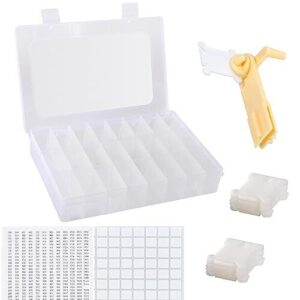
Trimming a few bobbins is manageable; keeping forty or more corralled long-term is another matter. That’s where a dedicated storage box earns its spot in your supply closet.
Look for a 24-grid detachable case with removable dividers, so you can reconfigure compartments as your collection grows. The best kits ship with 40 hard plastic bobbins featuring end stops, plus pre-printed stickers for all 464 DMC colors—trim oversized labels before applying, and skip the flimsy bobbin winder insert; it usually slides loose.
| Best For | Cross-stitch and embroidery enthusiasts who want their growing thread collection sorted, labeled, and tangle-free. |
|---|---|
| Material | Hard plastic |
| Quantity | 40 bobbins |
| Primary Use | Floss organization |
| Weight | 8.5 oz |
| Durability | Durable box |
| Best For | DMC floss sorting |
| Additional Features |
|
- Customizable 24-grid layout with removable dividers that adapts as your floss collection grows
- 40 hard plastic bobbins with end stops keep threads secure and prevent slippage
- Pre-printed stickers for all 464 DMC colors make sorting fast and straightforward
- Bobbin winder tool doesn’t fit securely and tends to slide out during use
- Pre-printed stickers often run oversized and need trimming before they’ll fit the bobbins properly
- Limited to 40 bobbins, so larger collections will need dividers removed or extra storage on the side
5. Kumihimo Plastic Bobbins 2.5 Inch Diameter
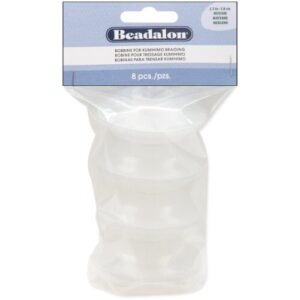
Once your students move from thread to cord, you’ll want a completely different bobbin altogether. Kumihimo plastic bobbins run 2.5 inches in outer diameter with a 0.75-inch center hole—sized specifically for braiding disks, not sewing machines.
Unlike Class 15 or 66 sewing bobbins, these braiding bobbins hold no thread tension at all, so pair them with our travel-friendly sewing kit essentials guide to keep both crafts organized on the road.
That 0.5-inch thickness balances wrap capacity against braid tension nicely. The flip-open lid winds cord fast, and clear casing lets you check tension at a glance—handy when a whole table’s braiding simultaneously.
| Best For | These bobbins are best for Kumihimo braiders and craft teachers who need an easy way to keep cords, threads, or thin wire organized and tangle-free while working with braiding disks. |
|---|---|
| Material | Plastic |
| Quantity | 8 bobbins |
| Primary Use | Cord braiding |
| Weight | 2.08 oz |
| Durability | Durable plastic |
| Best For | Kumihimo braiding |
| Additional Features |
|
- Durable plastic construction holds up to repeated use over time
- Compact 2.5 inch size with a 0.75 inch center hole fits standard braiding disks perfectly
- Comes in a pack of 8, making it easy to outfit a whole table of students at once
- Not built for heavy-duty or high-temperature applications
- Cord shouldn’t stay wound on the bobbin if heat buildup is a risk
- Plastic can warp under prolonged stress or direct sunlight exposure
6. Polyester sewing thread kit with bobbins
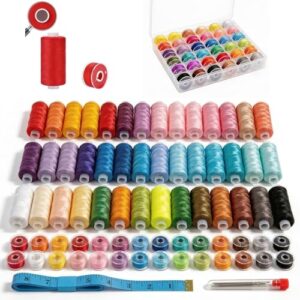
When a whole class needs matching thread and bobbins without a dozen separate purchases, a 90-piece polyester kit solves that instantly—36 spools paired with 36 pre-wound bobbins in colors spanning neutrals to brights.
Each spool runs 400 yards, giving students plenty of room for practice runs and do-overs. Seventeen needles and a measuring tape round things out, all tucked into an organized case. Just double-check bobbin sizing against your machines first, since these suit home sewing rather than industrial setups.
| Best For | This kit is best for classrooms, beginners, and frequent hobbyists who need a complete, ready-to-use thread and bobbin collection without piecing together separate purchases. |
|---|---|
| Material | Polyester/plastic |
| Quantity | 36 bobbins |
| Primary Use | Machine sewing |
| Weight | N/A |
| Durability | Durable polyester |
| Best For | Home sewing kit |
| Additional Features |
|
- Prewound bobbins matched to spool colors cut down on setup time and make color changes quick and easy
- Generous 400-yard spools give students and hobbyists plenty of thread for practice, mistakes, and do-overs
- Versatile enough for machine sewing, hand sewing, quilting, and embroidery, all organized in one storage case
- Bobbin sizing isn’t universal, so you’ll need to confirm compatibility with your specific machine before buying
- Built for regular home use rather than heavy-duty or industrial sewing needs
- With only 36 colors, very specific or unusual shade matches may still require a separate purchase
7. Universal Metal Sewing Machine Bobbins 56 Pcs
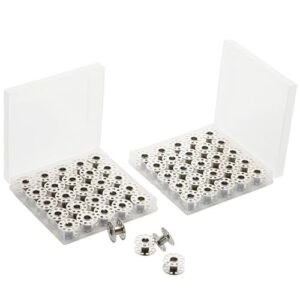
Fifty-six steel bobbins split across two sets means every student in class gets their own stash without hoarding the shared bin. These class 15 bobbins run 0.80 inches outer diameter, so standard-compatible machines like Singer and Brother accept them without fuss.
Steel resists warping better than plastic under repeated use, and the polished finish cuts friction, keeping tension even. Two clear storage cases keep pairs sorted—handy for busy classrooms juggling multiple projects at once.
| Best For | This bobbin set is best for classroom sewing instructors and students who need a generous, individual supply of reliable bobbins for shared machines. |
|---|---|
| Material | Steel |
| Quantity | 56 bobbins |
| Primary Use | Machine sewing |
| Weight | 8.4 oz |
| Durability | Corrosion resistant |
| Best For | Home machines |
| Additional Features |
|
- Steel construction resists warping and corrosion far better than plastic under repeated classroom use
- 56 bobbins across two sets means enough for a full class without constant sharing or hoarding
- Smooth, polished surface reduces friction, helping maintain even thread tension and fewer skipped stitches
- Only works with home sewing machines, so industrial classroom equipment won’t be compatible
- Fit still needs to be checked against your specific machine model before buying
- Plastic storage cases are convenient short-term but may wear out with heavy daily classroom handling
8. Beadsmith No-Tangle Thread Bobbins
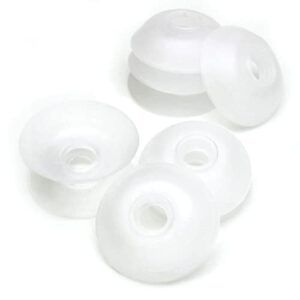
Ever untangled floss for ten straight minutes while a room full of kids waits? These bobbins fix that. Each one has a patented locking element that holds wound thread in place until you’re ready to unwind it—no more chasing loose ends around the table.
Made from soft, translucent plastic, they resist cracking through daily classroom handling, and you can actually see the thread inside at a glance. That visibility alone saves serious sorting time during group projects.
| Best For | These bobbins are best for jewelry makers, embroiderers, and classroom instructors who need a tidy, tangle-free way to store and manage multiple types of thread and cord. |
|---|---|
| Material | Soft plastic |
| Quantity | 8 bobbins |
| Primary Use | Cord braiding |
| Weight | 0.64 oz each |
| Durability | Repeated use plastic |
| Best For | Jewelry braiding |
| Additional Features |
|
- Flexible locking feature keeps thread ends secure and prevents unraveling while crafting
- Stackable design makes it easy to store multiple bobbins compactly and vertically
- Works well for a variety of materials, including embroidery floss, satin cord, leather, and nylon thread
- Some units may show visible seam imperfections or uneven stitching from manufacturing
- Made from flexible plastic rather than silicone, which can feel slick during winding
- Seams may weaken over time with frequent use, potentially leading to breakage
9. Design Works Crafts Floss Bobbins with Ring
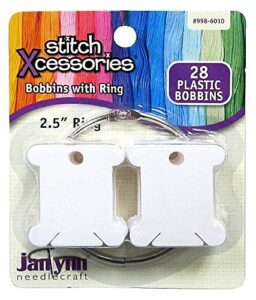
This set keeps 28 bobbins clipped to one sturdy metal ring, so nothing rolls off the table mid-class. The easy-release clasp pops open in a second, letting students grab or swap colors without fumbling.
At 2.5 inches across, the ring’s compact enough for project boxes yet holds serious capacity for cross-stitch groups. Each bobbin offers a spot for writing DMC codes, so color matching stays organized even when ten kids are digging through the same skein pile at once.
| Best For | This bobbin ring is best for cross-stitch instructors and craft groups who need a simple way to keep floss colors organized and grab-and-go during busy classes. |
|---|---|
| Material | Plastic |
| Quantity | 28 bobbins |
| Primary Use | Floss organization |
| Weight | 0.896 oz |
| Durability | Sturdy metal ring |
| Best For | Travel floss storage |
| Additional Features |
|
- Sturdy metal ring keeps all 28 bobbins secured and prevents them from rolling away
- Easy-release clasp makes swapping or adding bobbins fast, even mid-project
- Compact 2.5-inch size fits easily in project boxes while still holding a solid amount of floss
- May not hold enough bobbins for larger or more complex projects, requiring extra rings
- Plastic bobbins can show wear over time with heavy or frequent use
- Priced higher than some comparable bulk bobbin options
10. Plastic Embroidery Floss Bobbins 150 Pack
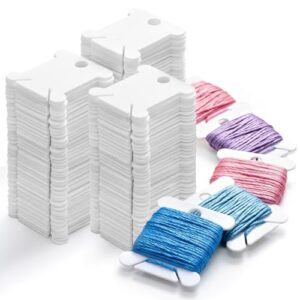
When restocking a whole classroom’s floss station, quantity wins. This 150-piece pack gives you enough bobbins for every color family DMC and Anchor make, with room to spare for backups.
Each measures 1.49" x 1.37", flat enough to stack without bulk. The dual-slot ends secure thread during winding, and the smooth white surface takes marker labeling well.
Some pieces arrive with rough edges—a quick sanding fixes that before handing them out.
| Best For | classrooms, craft groups, or serious hobbyists who need a large, ready-to-label bobbin supply for organizing many thread and floss colors at once. |
|---|---|
| Material | Plastic |
| Quantity | 150 bobbins |
| Primary Use | Thread organization |
| Weight | 6.4 oz |
| Durability | Reusable plastic |
| Best For | Daily embroidery |
| Additional Features |
|
- Generous 150-count pack covers full DMC and Anchor color ranges with backups to spare
- Smooth white surface labels clearly with marker for fast color identification
- Dual-slot ends keep thread secured during winding and storage
- Some bobbins arrive with rough edges that need sanding before use
- Thickness can vary slightly from bobbin to bobbin
- Thread may not stay locked in the end slots, and bobbins can stick together from residue
Match Bobbins to Crafting Projects
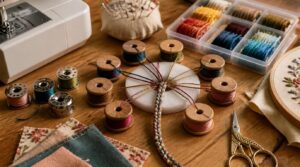
Not every craft calls for the same bobbin, and using the wrong one can turn a fun class into a frustrating one.
Whether you’re stitching on a machine, braiding kumihimo cords, or organizing floss for embroidery, your project’s demands shape which bobbin belongs on your table.
Here’s how to match your bobbin to what you’re actually making.
Sewing Machine Projects
Pillow cover basics and tote bag construction both run smoothly on Class 15 bobbins—the classroom standard for Kenmore and Necchi machines. For educational banner making and fabric organizer projects, prewound bobbins save serious time during busy sessions.
- Check bobbin case compatibility before class starts
- Calibrate thread tension for even seams
- Stock extra Class 15 bobbins
- Schedule quick sewing machine maintenance
- Display finished pieces on classroom craft displays
For beginner-friendly projects that build foundational skills, consider exploring easy sewing projects to practice techniques like straight seams and boxed corners.
Machine Embroidery Classes
Multi-needle embroidery machines run hotter and faster than home sewing machines, so bobbin case compatibility matters more here. Hooping technique and stabilizer choice affect stitch quality, but tension calibration still starts at the bobbin.
| Factor | Why It Matters |
|---|---|
| Class 15 bobbins | Common standard |
| Prewound options | Saves class time |
| Magnetic center | Reduces tangling |
| Tension checks | Prevents puckering |
Embroidery Floss Organization
Once the machines are humming, floss chaos becomes your next battle. Winding embroidery floss onto plastic bobbins prevents tangling and speeds up kit prep for busy classes.
Pair that with a solid color coding system—labeled by number and brand—plus clear storage boxes. Regular inventory tracking keeps duplicates and missing colors from derailing lesson day.
Kumihimo Braiding Projects
Once floss bobbins are sorted, kumihimo braiding calls for its own gear—2.5-inch plastic bobbins keep 8 to 16 warp strands tangle-free.
Cord tension stays even when weights stabilize strands, while color planning before braiding sets up spiral patterns. Strand organization mirrors your Class 15 bobbin winding logic: consistent, gap-free thread management, whether you’re feeding a sewing machine or a braid.
Beading and Jewelry Classes
Bead weaving—peyote, right-angle weave, loom work—demands small, precise bobbins, not industrial spools. Class 15 or plastic bobbins suit fine thread and stringing better than bulky M-Style options.
- Seed bead selection: 11/0 for detail
- Wire wrapping needs steady thread delivery
- Self-wound bobbins offer custom color flexibility
Jewelry design principles—color, proportion—pair naturally with careful bead finishing and crimping.
Compare Sewing Machine Bobbin Classes
Not every bobbin fits every machine, and mixing up classes is one of the fastest ways to end up with tangled thread and a frustrated class. Each bobbin type has its own size, shape, and machine matchups that make or break your stitch quality.
Let’s break down the main classes you’ll run into, so you can spot the right one before you ever thread a needle.
Class 15 Bobbins
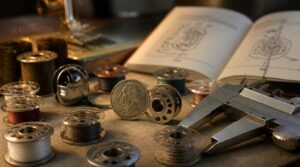
Picture a nickel—that’s roughly your Class 15 bobbin size, 20.3–20.6mm across. This is the workhorse fitting Kenmore, Necchi, and most modern Singers. Check your machine manual reference first, though, since compatibility varies.
Available in metal or plastic, each affects thread tension control differently. Unsure of an unmarked bobbin? Grab calipers for quick size verification—your stitches will thank you.
Class 66 Bobbins
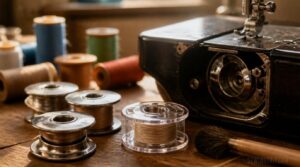
Vintage Singers speak their own language, and Class 66 is their dialect—20.5mm diameter, domed flanges guiding thread smoothly. Featherweights and models 401, 403A, 404 need this exact fit; Class 15 won’t work.
- Metal or clear plastic (thread density visibility)
- 6.2mm axis hole
- Check your bobbin case cavity
- Wipe lint regularly for maintenance
L-Style Bobbins
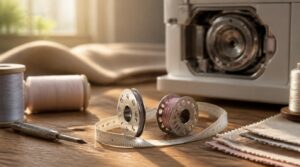
Same 20.3mm diameter as Class 15, but slimmer at 8.9mm—that Bobbin Width Comparison determines fit. LStyle bobbins use a Flat-Sided Design Benefit, reducing spin for consistent tension. Common in Brother and Baby Lock embroidery machines. Run a Tension Consistency Test before class; check Pre-Wound Thread Length (often 145 yards). Both metal bobbins and plastic bobbins work—just verify your machine’s spec.
M-Style Bobbins
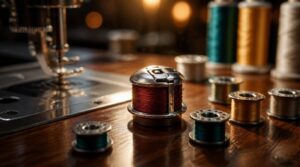
Think of M-Style bobbins as the SUVs of the bobbin world—bigger, roomier, built for the long haul. At 24.9mm diameter and 10.7mm width, they outclass Class 15 in capacity:
M-Style bobbins are the SUVs of the bobbin world—bigger, roomier, and built for the long haul
- Fewer mid-project bobbin changes
- Metal or Magna-glide center options
- Two flat sides for steady alignment
- Ideal for industrial machines
- Great for long embroidery sessions
Domestic Versus Industrial Bobbins
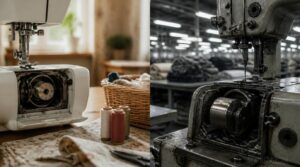
Your classroom machine and a factory unit aren’t playing the same game.
Domestic bobbins (Class 15, Class 66) run light plastic or metal, modest thread capacity, top-loading bobbin compatibility standards.
Industrial bobbins pack heavier metal, higher thread capacity, and rock-solid tension at high speed for hours-long runs—winding efficiency and durability your sewing room simply doesn’t need.
Choose Compatible Crafting Bobbins
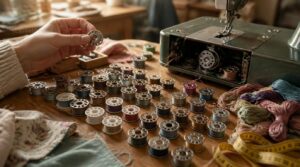
Picking the right bobbin isn’t guesswork—it’s about matching your machine’s specs to what you buy. A few smart checks upfront save you from mismatched fits and wasted class time. Here’s exactly what to look for before you commit to a bobbin.
Check Machine Manuals
Before buying a single bobbin, dig out your sewing machine manual. It’ll spell out the exact bobbin class, diameter, and whether pre-wound bobbins are even supported.
Quick manual reading tips:
- Locate the parts diagram
- Note the bobbin class number
- Check tension guidance
- Read damage warnings
This five-minute check prevents costly bobbin compatibility mistakes.
Compare Brand Compatibility
Once you know your machine’s specs, check the brand itself. Class 15 bobbins fit Kenmore and Necchi; Class L bobbins suit Pfaff and Brother/Baby Lock multineedle machines; Class M bobbins hold more thread for heavy embroidery.
| Brand | Bobbin Class |
|---|---|
| Kenmore | Class 15 |
| Pfaff | Class L |
| Baby Lock | Class L/M |
Measure Unknown Bobbins
Got a mystery bobbin with no markings? Grab calipers and check diameter measurement first — Class 15 runs 20.3–20.6mm, L-Style shares that width but measures only 8.9mm across. Then verify width specifications against your bobbin case tolerances.
Confirm material identification (plastic vs. metal) and thread compatibility before winding — a few careful measurements now save you from tension calibration headaches later.
Metal Versus Plastic
Once you’ve confirmed dimensions, material choice shapes performance. Metal bobbins resist deformation under heavy tension and hold steady sewing machine tension through hundreds of passes. Plastic bobbins run lighter, easing vibration during fast stitching, but soften near heat sources.
- Strength: metal outlasts plastic under load
- Weight: plastic reduces needle-plate strain
- Cost: plastic wins on availability and price
Pre-wound Versus Self-wound
When class time’s tight, pre-wound bobbins save real minutes—up to 90% less prep. Self-wound bobbins offer custom thread flexibility for specialty projects.
| Type | Best For | Tension |
|---|---|---|
| Pre-wound | Class 15, quick swaps | Stable |
| Self-wound | Custom colors | Varies |
| M-Style | High-volume | Consistent |
Check winding accuracy and machine compatibility before choosing.
Prevent Bobbin Problems During Classes
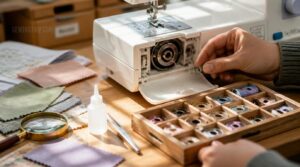
Even the right bobbin can cause headaches if you skip a few basic habits. Most classroom hiccups—tangled thread, snapped stitches, mystery jams—trace back to small, fixable issues. Here’s what to watch for and fix before your next project hits the machine.
Balance Bobbin Tension
Picture two thread colors meeting dead-center in your fabric—that’s balanced tension. Stitch a scrap sample first.
Bobbin thread peeking up top? Loosen the case screw counterclockwise. Top thread showing underneath? Tighten it clockwise, quarter-turn max.
Clean lint before adjusting—it skews readings. Match thread weights, recheck both sides, and coordinate needle tension until stitches sit flat and even.
Stop Thread Bird Nesting
Bird nesting" isn’t feathered friends—it’s tangled thread loops jamming your bobbin case. Keep thread tension balanced and paths clean to stop it before it starts.
Wind bobbins with steady precision; loose winding invites nests. Use a dropin loading system for consistent thread delivery, sterilize bobbins regularly, and clear lint often. These habits keep tension even and nests nonexistent.
Prevent Thread Breaks
Snapped thread mid-seam? Nine times out of ten it’s a thread tension calibration issue, not bad luck. Match needle to thread weight, keep spool tension steady so it unwinds without wobble, and clean lint from the bobbin case often.
Always run a scrap fabric test after rethreading—it catches snags before they wreck your students’ projects.
Label and Store Bobbins
Fifty mismatched bobbins in one drawer? That’s a class-time headache waiting to happen. Wipe each bobbin clean before labeling, then mark color codes with permanent marker so they survive winding.
- Color-code by thread brand
- Store in a Stack N Store Bobbin Tower
- Log colors in an inventory spreadsheet
- Keep labels facing outward for quick scanning
Replace Damaged Bobbins
A cracked bobbin will wreck a stitch line fast, so inspect for damage before every class. Check for chips, bent spindles, or rough edges, then use correct type—Class 15, L-Style, plastic or metal—matching your machine.
Clean bobbin area, insert the replacement, and verify thread wind sits even.
Frequently Asked Questions (FAQs)
How do I know what class bobbin to use?
Like checking a typewriter ribbon before class starts, grab your sewing machine manual first. It lists your exact class—Class 15, L-style, or M-style—by diameter and width, preventing tension issues before they ruin a project.
What’s the difference between class 15 and class 66 bobbins?
It comes down to size and shape: Class 15 measures 4mm across with flat flanges, while Class 66 runs 5mm with domed rims. Both resemble nickels, but that curve changes fit—and materials vary too.
What to use instead of bobbins?
In a pinch, try improvised bobbin holders — a spool laid sideways, a jar lid, or waxed paper for tension simulation. For floss, use pill organizers or bead trays instead of dedicated bobbin storage solutions.
What are the two types of bobbins?
Picture how the bobbin sits in the machine: that’s your real answer. Bobbins split into Drop in and Side loading types, differing in case design, winding methods, tension balance, and thread release—each shaping bobbin sizing across Class 15 and M-Style options.
Can kids use bobbins safely in craft classes?
Yes, with the right setup. Choose plastic bobbins over metal for young hands, follow strict Bobbin Safety Rules, keep supervision constant, and use Child-Safe Storage so Class 15 bobbins stay organized, labeled, and injury-free.
How many bobbins should a class typically provide?
Better safe than sorry: most classroom supply standards land around 24 bobbins per student, plastic Class 15 bobbins for basic sewing, jumping to 40–60 for embroidery-heavy, self-wound-friendly projects needing extra thread delivery consistency.
Whats the best way to clean sticky bobbins?
Wash bobbins in warm water with mild dish soap, scrubbing gently with a soft toothbrush. Rinse and dry fully, then apply a light oil coat to metal ones—preventive care beats scrubbing sticky residue later every time.
Can different bobbin types be mixed in projects?
Technically yes, but mixing bobbin types demands care: run a tension balance test first, check material compatibility, and confirm stitch consistency across bobbin classes before committing to a full project.
How often should classroom bobbins be replaced?
Check your bobbins monthly for wear signs and swap plastic ones yearly if crack-free. Replace metal bobbins every two years to prevent rust, and rotate pre-wound bobbins each term for consistent tension across shared classroom machines.
Conclusion
Like coins in a pocket, bobbins seem interchangeable until one jams the register. Stock your classroom right, and that small plastic spool stops being a mystery and starts being a tool your students trust.
The best bobbins for crafting classes aren’t flashy—they’re the ones that fit, spin evenly, and disappear into the work. Measure twice, match brands, replace worn spindles. Do that, and every seam, stitch, and braid comes out exactly as planned, every class.