This site is supported by our readers. We may earn a commission, at no cost to you, if you purchase through links.
A dull blade gets most of the blame when cuts go crooked—but the mat underneath deserves a harder look. The wrong surface chews through rotary blades faster, lets fabric shift mid-cut, and turns precise piecing into a guessing game.
One upgrade to the best cutting mat for quilters can fix all three problems at once.
Self-healing surfaces, clear grid lines, and a grippy backing work together like a silent third hand.
Whether you’re cutting binding strips or tackling a king-sized quilt, the mat you choose shapes every cut that follows.
Table Of Contents
- Key Takeaways
- Why Cutting Mats Matter for Quilters
- Types of Cutting Mats for Quilting
- Key Features of High-Quality Cutting Mats
- Choosing The Right Size and Shape
- Top 10 Cutting Mats for Quilters
- 1. Crafty World Self Healing Cutting Mat
- 2. OLFA Double Sided Rotary Cutting Mat
- 3. US Art Supply Double Sided Cutting Mat
- 4. Dahle Vantage Self Healing Cutting Mat
- 5. US Art Supply Double Sided Self Healing Mat
- 6. Idemeet Large Self Healing Cutting Mat
- 7. NEWBRAUG Double Sided Self Healing Cutting Mat
- 8. Fiskars Self Healing Cutting Mat
- 9. Sullivans Grid Cutting Mat
- 10. Elan Pink Purple Self Healing Mat
- Tips for Using and Maintaining Cutting Mats
- When to Replace Your Quilting Cutting Mat
- Frequently Asked Questions (FAQs)
- Conclusion
Key Takeaways
- self-healing mat with clear grid lines and a non-slip backing solves the three biggest quilting problems at once: shifting fabric, crooked cuts, and fast blade wear.
- Mat size should match your projects — 18×24 inches handles everyday cuts, while 24×36 or larger gives you room to cut full yardage without repositioning.
- Double-sided mats give you two usable surfaces and better fabric contrast, which stretches your mat’s lifespan and improves visibility for both light and dark fabrics.
- Replacing your mat before deep grooves and faded grid lines appear isn’t an extra cost — it protects your blades, your fabric, and the accuracy of every cut you make.
Why Cutting Mats Matter for Quilters
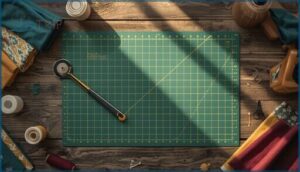
good cutting mat does more than just protect your table — it shapes how accurate and enjoyable your whole quilting experience feels. The right one keeps your cuts straight, your fabric steady, and your workflow moving without frustrating interruptions.
If you’re still hunting for the right fit, this roundup of top-rated fabric cutting mats for quilting breaks down what actually holds up after heavy use.
Here’s a look at why cutting mats are a quilter’s best friend and what they bring to the table.
Protecting Work Surfaces
Protecting your crafting table isn’t glamorous — but ruining a good one is expensive. A quality cutting mat stands between your rotary blade and your furniture, offering real crafting table protection through:
- Scratch Prevention from repeated blade passes
- Spill Containment blocking dyes and water
- Heat Resistance up to 230°C
- UV Protection to prevent surface fading
- A nonslip base for stability
Material durability keeps your work surface safe, cut after cut.
The self-healing cutting mat also prolongs the mat’s lifespan by repairing blade cuts.
Enhancing Cutting Precision
Once your table is safe, the next win is accuracy. A good mat doesn’t just sit there — it guides every cut.
| Feature | Benefit |
|---|---|
| 1-inch grid lines | Instant fabric alignment |
| 45°/60° angle markings | Perfect bias cuts |
| Measurement guides | No ruler-switching needed |
| Stabilized Fabric Positioning | Cleaner, straighter edges |
| Edge Alignment Tools | Consistent block sizing |
Blade Angle Optimization and Pressure Distribution improve naturally when your rotary cutter glides across a firm, marked surface. Precision Marking Templates and Cutting Accuracy go hand in hand here. Choosing a self‑healing cutting mat further protects your work surface and preserves blade sharpness.
Improving Project Efficiency
Precision bleeds straight into speed. When you pair smart Layer Stacking Strategies with Batch Cutting Techniques, projects move fast. A double sided mat keeps both surfaces fresh, and Rotating Mat Utilization means less repositioning between cuts.
- Stack 4–6 fabric layers for faster output
- Flip to the clean side to extend cutting mat lifespan
- Use grid markings and measurement guides on mats to skip extra measuring steps
Types of Cutting Mats for Quilting
Not all cutting mats are built the same, and the differences really do matter for your quilting projects. Knowing which type fits your work style can save you time, money, and a lot of frustration.
Here’s a closer look at the main types you’ll come across.
Self-Healing Vs. Solid Plastic Mats
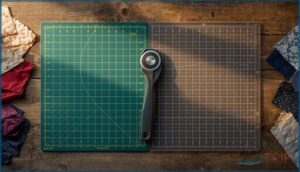
Self-healing mats win for serious quilting — no contest. Their surface flexibility means your rotary blade sinks slightly into soft PVC layers, then closes back up. That’s better blade interaction, noise reduction, and longer blade life.
Solid plastic mats groove permanently and dull blades faster.
Yes, self-healing mats cost more upfront, but cost over time favors them easily. Temperature sensitivity affects both types, so store them flat and cool.
Double-Sided and Rotating Mats
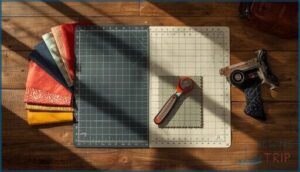
Double-sided and rotating cutting mats give you two tools in one. Flip for a fresh surface. Spin for faster trimming.
Here’s what sets them apart:
- Metric-Inch Grids — dual-surface durability means one side supports metric, the other inches
- Light-Dark Contrast — dark backgrounds for light fabrics, light for dark prints
- 360° Spin Lock — rotating work surfaces trim blocks without shifting rulers
- Angle Guide Integration — built-in 45° and 60° lines simplify triangle cuts
Material Composition and Durability
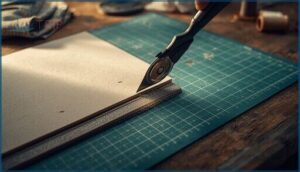
What’s inside your mat matters more than you’d think.
Most quality mats use multilayer construction — soft PVC layers wrapping a hard PVC center core.
That self-healing technology works because the blade separates flexible strands rather than slicing through solid material.
PVC construction with strong layer adhesion and elastic recovery means the surface closes right back up.
| Feature | Basic Mat | Premium Mat |
|---|---|---|
| PVC Core Density | Single layer | Five-layer composite |
| Temperature Tolerance | Warps above 40°C | Stable up to 50°C |
| UV Resistance | Fades quickly | Extended color retention |
Material durability and longevity depend heavily on material composition of self-healing mats.
Key Features of High-Quality Cutting Mats
Not all cutting mats are created equal, and the difference shows up fast when you’re working on a big quilt project.
A few key features separate the mats that last for years from the ones that give out after a few uses. Here’s what to look for before you buy.
Self-Healing Surface Technology
Think of a self-healing cutting mat like memory foam — it compresses under your blade, then quietly bounces back.
Over time, though, even the most resilient mats start showing grooves and dead zones — the same gradual wear you’ll notice when studying common signs of mechanical fatigue and breakdown.
That rebound mechanical action comes from a layered PVC design, where a soft top layer absorbs each cut while firmer inner layers hold everything stable.
This blade interaction keeps the surface clean and smooth.
Just avoid harsh solvents — chemical compatibility and heat resistance matter to preserve that self-healing capability long-term.
Grid Lines and Measurement Markings
A good mat is basically a built-in ruler for your cutting table. Grid lines and measurement guides do the measuring, so you don’t have to.
Primary grids space lines one inch apart with eighth-inch markings, while Stripology Grid Patterns add half-inch horizontal lines for strip work.
Diagonal Angle Lines — 45-degree and 60-degree guides — handle triangle and diamond cuts precisely.
Color Contrast Markings and Number Placement Design keep measurements visible even under rulers.
Non-Slip Backing
A mat that slides mid-cut can ruin your whole strip in seconds. That’s why non-slip backing matters more than most quilters expect.
Options like Rubber Grip Layer, Foam Cushion Base, Silicone Traction Pads, or Textured Friction Design all keep your cutting mat locked in place.
Multi-Layer Adhesion backing even dampens noise.
For any quilt supplies setup, a self-healing mat with a solid non-slip back is non-negotiable.
Mat Thickness and Multi-Layer Construction
Thickness is where durability lives.
Most quality mats fall between 3mm and 5mm — and that range matters.
A 3mm thickness manages everyday quilting well, while 5-ply construction distributes blade force across multiple layers, reducing deep grooves over time.
Multi Layer Durability depends heavily on Core Material Selection and Ply Count Influence.
Multilayer construction also improves Thickness Flexibility Balance, keeping cuts straighter without heat sensitivity impact warping your mat.
Choosing The Right Size and Shape
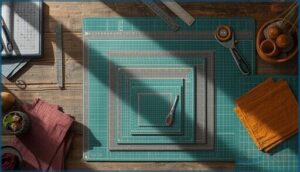
Size matters more than most quilters realize — grab the wrong mat and you’ll either run out of room or waste half your workspace. Your cutting mat should fit your projects and your table, not the other way around.
Here’s a breakdown of the main size and shape options to help you find your perfect match.
Small Mats for Quick Projects
When you’re working on mini quilts, mug rugs, or charm squares, a compact quilting tool keeps things moving fast. Small mats — generally 8×8 to 12×18 inches — offer a Travel-Friendly Design and Compact Storage Solutions that slide into a tote without fuss.
Their Rapid Block Squaring capability and Portable Cutting Setup make Mini Project Efficiency easy, perfect for classes or retreats.
Medium and Large Mats for Quilting
Once small mats feel too cramped, a medium mat or large mat opens everything up. A 24×36 inch selfhealing surface accommodates most quilting projects comfortably — including large format cutting surfaces for fussy‑cut prints.
- Color Contrast Sides help you spot fabric details clearly
- Custom Grid Patterns support precise strip and border cuts
- Budget Choices exist across sizes without sacrificing quality
Watch Temperature Impact — heat warps even the best mats.
Rotating Mats for Intricate Cuts
When big blocks need fine-tuning, a rotating mat changes everything. You spin the mat — not your body — keeping your cutter on your dominant side for Ergonomic Wrist Relief.
Models with Ball Bearing Stability, like the Martelli Round-about, glide smoothly. Lockable Rotation Mechanism options let you freeze the spin for straight cuts.
Built-in angle markings, grid lines, and Angle Guide Integration make Template Alignment Techniques easy on any rotary cutting mat.
Fitting Mats to Your Workspace
Once you’ve found your ideal rotating mat, the next step is making sure it actually fits your space. A simple Space Measurement Guide approach works best — measure your table before buying anything.
- Match mat size to your tabletop (a 24×36 inch mat suits a 48×72 inch surface)
- Table Height Matching — aim for 35 inches for comfortable Ergonomic Positioning
- Apply smart Mat Placement Strategies — keep edges clear for rulers and rotary cutters
- Consider weight and portability if you cut in multiple rooms
- Use Storage Solutions like pant hangers for flat, warp‑free storage in tight spaces
Top 10 Cutting Mats for Quilters
Finding the right cutting mat can make a real difference in how your quilting projects come together. There are plenty of options out there, but these ten stand out for their quality, durability, and value.
Here’s what made the cut.
1. Crafty World Self Healing Cutting Mat
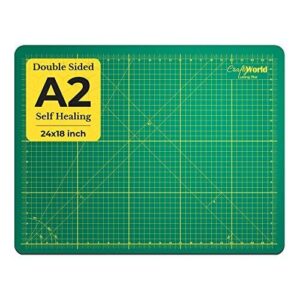
Crafty World Self-Healing Cutting Mat is a solid choice if you want reliable performance without overspending. 18″ x 24″, it’s big enough to handle folded quilting fabric comfortably.
The 3mm multi-layer PVC build keeps it flat and sturdy under rotary cutter pressure. Both sides have clear grid markings down to 1/8-inch, so precise cuts are easy.
The non-slip backing holds it steady on your table. Just expect a mild vinyl smell when it’s new — it airs out quickly.
| Best For | Quilters, sewists, and hobbyists who need a large, durable cutting mat for everyday crafting projects without breaking the bank. |
|---|---|
| Size | 24″ x 18″ |
| Self-Healing | Yes |
| Material | PVC |
| Double-Sided | Yes |
| Grid Lines | Yes |
| Weight | 1 lb |
| Additional Features |
|
- Self-healing surface holds up to repeated rotary and straight-edge cuts, so it lasts way longer than a basic mat
- Double-sided with grid markings on both sides, giving you flexibility depending on your project
- At 18″ x 24″, there’s plenty of room to work with folded fabric or larger pieces
- New mats can come with a noticeable vinyl smell that needs a few days to air out
- The surface isn’t as grippy as fabric-specific mats, so your cutting guides may shift if you’re not careful
- It might not lay completely flat right out of the box — give it some time or weight it down first
2. OLFA Double Sided Rotary Cutting Mat
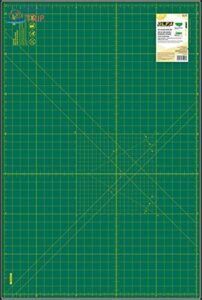
OLFA Double Sided Rotary Cutting Mat earns its spot on this list fast.
At 24″ x 36″ and 1.5mm thick, it gives you serious cutting real estate without hogging your whole workspace.
One side has sharp yellow grid lines with angle markings — great for bias strips and precise blocks.
Flip it over and you get a clean, solid surface for freehand work.
The self-healing surface protects your blades and stays smooth over time.
Just store it flat and away from sunlight.
| Best For | Quilters, sewers, and crafters who need a large, reliable cutting surface for precise, detail-oriented projects. |
|---|---|
| Size | 24″ x 36″ |
| Self-Healing | Yes |
| Material | Self-healing composite |
| Double-Sided | Yes |
| Grid Lines | Yes |
| Weight | 2.3 lbs |
| Additional Features |
|
- Double-sided design gives you a gridded side for precision and a clean side for freehand cutting — two mats in one.
- Self-healing surface keeps cuts smooth and extends the life of your rotary blades.
- Generous 24″ x 36″ size handles big fabric pieces and multiple layers without crowding.
- Can come with a strong chemical smell right out of the packaging.
- Not compatible with fixed blade utility knives — rotary cutters only.
- Needs to be stored flat and out of sunlight, which can be tricky in smaller spaces.
3. US Art Supply Double Sided Cutting Mat
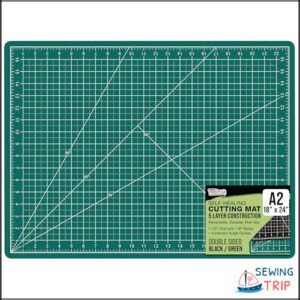
The US Art Supply Double Sided Cutting Mat checks a lot of boxes for everyday quilting.
At 18″ x 24″ and just 0.15″ thick, it fits nicely beside your sewing machine without crowding your space.
The 5-ply construction keeps it flat and firm under your ruler. You get a 1/2″ grid with 1/8″ marks on both sides, plus angle guides for bias cuts.
Green on one side, black on the other — flip it to find your best contrast for any fabric.
| Best For | Quilters, scrapbookers, and crafters who need a reliable everyday cutting mat with precise grid markings and a dual-sided design. |
|---|---|
| Size | 24″ x 18″ |
| Self-Healing | Yes |
| Material | Plastic |
| Double-Sided | Yes |
| Grid Lines | Yes |
| Weight | 2.5 lbs |
| Additional Features |
|
- Both sides have clear grid markings — flip between green and black to get the best contrast for your fabric
- The 5-ply build keeps it flat and sturdy, so your ruler doesn’t shift mid-cut
- 1/2″ grid with 1/8″ marks plus angle guides makes precise, repeatable cuts easy
- At 18″ x 24″, it can feel limiting for bigger quilting projects that need more room
- The thickness and weight make it a bit awkward to pack up or store in tight spaces
- The non-slip surface may not grip evenly on every type of worktable or desk
4. Dahle Vantage Self Healing Cutting Mat
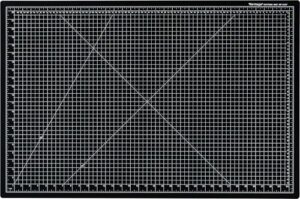
The Dahle Vantage Self Healing Cutting Mat means business. At 36″ x 24″ and 1/8″ thick, it gives you serious real estate for laying out wide fabric cuts.
The five-layer PVC build stays flat and firm — no buckling when you press down hard on a long ruler.
Its grid covers inches, metric, and 45°/60° angle guides, so bias cuts don’t slow you down.
Flip it over for a clean, unmarked surface.
A reliable workhorse for serious quilters.
| Best For | Quilters, sewers, and crafters who need a large, durable cutting surface for precise fabric and material work. |
|---|---|
| Size | 36″ x 24″ |
| Self-Healing | Yes |
| Material | PVC |
| Double-Sided | No |
| Grid Lines | Yes |
| Weight | 4.99 lbs |
| Additional Features |
|
- Big 36″ x 24″ surface gives you plenty of room for wide cuts without constantly repositioning your fabric.
- The five-layer self-healing PVC holds up to heavy use and keeps your blades sharper, longer.
- Built-in inch, metric, and angle guides (45°/60°) make bias cuts and precise trimming a breeze.
- May arrive folded or rolled and need some time to lay completely flat before use.
- Grid lines can be tough to see in low-light workspaces.
- Not built for heavy-duty tools like box cutters — stick to rotary cutters and x-acto knives.
5. US Art Supply Double Sided Self Healing Mat
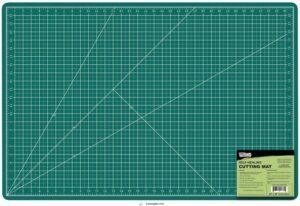
Two cutting surfaces for the price of one — that’s the deal with the US Art Supply Double Sided Self Healing Mat.
green side works great for dark fabrics; flip it to black when you need better contrast.
At 35.5″ x 24″ and five layers thick, it holds up through heavy use.
The 1/2″ grid with 1/8″ marks keeps your cuts accurate, and diagonal angle guides handle bias strips with ease.
A solid, no-fuss pick for everyday quilting.
| Best For | Quilters, crafters, and hobbyists who need a reliable, large-format cutting mat for everyday projects at home or on the go. |
|---|---|
| Size | 35.5″ x 24″ |
| Self-Healing | Yes |
| Material | Plastic |
| Double-Sided | Yes |
| Grid Lines | Yes |
| Weight | 4.6 lbs |
| Additional Features |
|
- Double-sided green/black design gives you better contrast for both light and dark materials
- Precise 1/2″ grid with 1/8″ marks and diagonal guides make accurate cuts easy
- Five-ply self-healing construction holds up well through heavy, repeated use
- Actual size runs slightly short at 35.5″ x 24″ rather than the advertised 36″ x 24″
- May have a noticeable plastic smell when first unboxed
- Being plastic, it can warp if exposed to heat or stored improperly
6. Idemeet Large Self Healing Cutting Mat
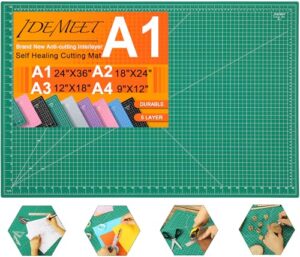
Built like a tank, the Idemeet Large Self Healing Cutting Mat means serious business. At 24″ x 36″, it gives you a generous surface for folded yardage and large quilt panels. The 5-ply PVC construction — with a density-upgraded 2600g core — keeps it flat and warp-resistant through heavy use.
Cuts close up cleanly thanks to the upgraded self-healing layers.
Grid lines in both inches and centimeters, plus 30-, 45-, and 60-degree angle guides, make precise cuts simple every time.
| Best For | Quilters, crafters, and hobbyists who need a large, durable cutting surface that can handle heavy daily use without warping or wearing down. |
|---|---|
| Size | 24″ x 36″ |
| Self-Healing | Yes |
| Material | PVC |
| Double-Sided | No |
| Grid Lines | Yes |
| Weight | 5.99 lbs |
| Additional Features |
|
- The 2600g density core keeps it flat and stable — no sliding around mid-cut
- Self-healing layers close up cleanly after cuts, so the surface stays smooth over time
- Clear grid lines in inches and centimeters, plus angle guides, make precise cuts quick and easy
- At nearly 6 lbs, it’s on the heavier side and not the easiest to move around
- Only comes in one size, so it won’t work for oversized projects that need more room
- Requires careful handling to avoid damage to the surface over time
7. NEWBRAUG Double Sided Self Healing Cutting Mat
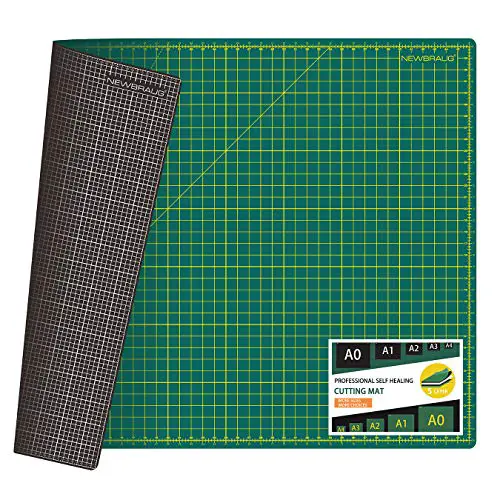
If you need more room to work, the NEWBRAUG Double Sided Self Healing Cutting Mat delivers. At 36 x 48 inches, it’s one of the largest options on this list — ideal for big quilt tops and wide fabric panels.
The 5-layer self-healing construction holds up through heavy rotary cutting, and the green and black sides give you a contrast boost for light and dark fabrics.
One side shows wear? Flip it over and keep cutting.
| Best For | Quilters and crafters who work with large fabric panels or big quilt tops and need serious workspace to get things done. |
|---|---|
| Size | 36″ x 48″ |
| Self-Healing | Yes |
| Material | Multi-ply composite |
| Double-Sided | Yes |
| Grid Lines | Yes |
| Weight | 12.97 lbs |
| Additional Features |
|
- Massive 36 x 48 inch surface gives you room to spread out without constantly repositioning your fabric
- Double-sided green and black design means better contrast no matter what color material you’re cutting
- 5-layer self-healing construction holds up through heavy, repeated rotary cutting
- At nearly 13 pounds, it’s bulky and awkward to store — you’ll need bungee cords just to keep it rolled up
- Rotary blades may dull faster compared to other mats
- The mat can hold a curl after being rolled, which makes laying it flat a bit of a hassle
8. Fiskars Self Healing Cutting Mat
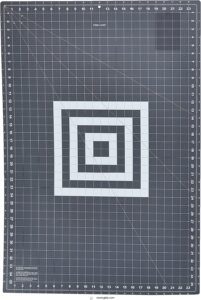
Not everyone needs a mat the size of a dining table. That’s where the Fiskars Self Healing Cutting Mat steps in.
It’s sized for everyday quilting tasks — think strip cutting, squaring up blocks, and trimming borders. The self-healing surface accommodates repeated rotary blade passes without deep grooves forming over time. Clear grid markings keep your cuts accurate, and the durable material flexes without cracking.
A solid, dependable mat for quilters who want reliable performance without the bulk.
| Best For | Quilters and crafters who need a large, reliable cutting surface for big projects like full fabric widths and long strips. |
|---|---|
| Size | 24″ x 36″ |
| Self-Healing | Yes |
| Material | Multi |
| Double-Sided | Yes |
| Grid Lines | Yes |
| Weight | 2.61 lbs |
| Additional Features |
|
- Extra-large 24″x36″ surface handles big cuts without having to reposition your fabric
- Double-sided design means you get more life out of a single mat
- Clear grid lines with multiple angle guides make precise cuts easy
- Some users notice a strong odor that’s tough to get rid of even after cleaning
- Needs hand washing and careful storage away from heat, cold, and sunlight
- Self-healing material will eventually wear out with heavy use
9. Sullivans Grid Cutting Mat
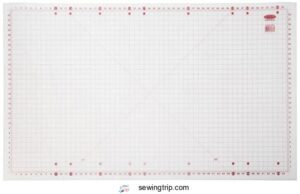
Sometimes you need a mat built for a specific workflow — not just a general-purpose surface.
The Sullivans Grid Cutting Mat fits that bill.
At 59 by 36 inches, it gives you serious room to work.
The simple grid layout keeps your cutting lines clean and easy to follow.
Yardage numbers along the top and bottom make fabric measurements fast.
The matte finish on the numbered side reduces scoring, so your markings stay visible and your surface stays smooth longer.
| Best For | Quilters, sewers, and crafters who need a large, precise cutting surface for fabric and material projects. |
|---|---|
| Size | 59″ x 36″ |
| Self-Healing | No |
| Material | Low-density polyethylene |
| Double-Sided | No |
| Grid Lines | Yes |
| Weight | 6 lbs |
| Additional Features |
|
- Huge 59 x 36 inch surface gives you plenty of room for big projects without constantly repositioning your material.
- Yardage numbers along the top and bottom make measuring quick — no ruler needed for basic cuts.
- Matte finish cuts down on scoring, so the surface stays clean and your markings stay easy to read.
- At 6 pounds, it’s not the most portable option if you’re hauling it to classes or craft nights.
- Doesn’t come with a table, so you’ll need a solid, flat surface to get the most out of it.
- Not built for heavy-duty cutting — you’ll need sharp blades and a light touch to avoid damaging the mat.
10. Elan Pink Purple Self Healing Mat
Want something a little more fun without losing function? The Elan Pink Purple Self Healing Mat delivers both.
One side is pink, the other purple — flip it depending on which gives better contrast with your fabric.
The 5-ply recycled PVC construction performs rotary cuts quietly and keeps the surface smooth over time. At roughly 60.8 by 36.8 inches, you’ve got plenty of room for yardage and large blocks.
Grids on both sides mean you’re always working with accurate measurements, no matter which way it’s facing.
| Best For | Crafters, quilters, and sewists who want a mat that’s practical and fun — especially if you work with a variety of fabrics and need good contrast to see your cuts clearly. |
|---|---|
| Size | 60.8″ x 36.8″ |
| Self-Healing | Yes |
| Material | Recycled PVC |
| Double-Sided | Yes |
| Grid Lines | Yes |
| Weight | 12.87 lbs |
| Additional Features |
|
- Dual pink/purple sides give you flexibility depending on your fabric color
- Self-healing 5-ply recycled PVC keeps the surface smooth after repeated cuts
- Extra-large size (60.8″ x 36.8″) with grids on both sides makes measuring easy and accurate
- At nearly 13 pounds, it’s not the easiest to move around or store
- Must be stored flat — no bending or rolling, which limits storage options
- Not suited for extreme temperatures or heavy-duty cutting tasks
Tips for Using and Maintaining Cutting Mats
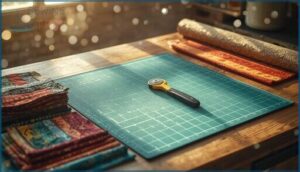
A good cutting mat can last for years — but only if you treat it right. How you use and store it makes all the difference between a mat that holds up and one that warps, dulls, or falls apart too soon.
Here are four simple habits that’ll keep your mat in great shape.
Working on a Hard, Flat Surface
Your cutting mat is only as good as the surface beneath it. Always place it on a hard, flat table — wood, laminate, or solid plastic works best.
A firm working surface activates your mat’s self healing technology, keeps grid lines readable, and provides vibration dampening for cleaner cuts.
Add an anti-slip layer between mat and table, and consider table height ergonomics to protect your wrists during long quilt making sessions.
Stacking Fabric Layers for Accuracy
Stacking fabric layers sounds simple — until your patches start coming out crooked. Most quilters stick to two to four layers for accurate cuts.
Beyond four, the bottom layers shift. Grain alignment matters too; misaligned fabric bows after cutting.
Press each layer with light starch to stabilize them, use firm ruler pressure, and keep your blade sharp.
Dull blades drag and distort everything underneath.
Rotating and Flipping Mats for Longevity
Rotating and flipping your mat is the easiest way to stretch its lifespan by years. wear distribution balance prevents deep grooves from forming in one spot.
Here’s what works:
- Rotate your rotating mat 180 degrees every few months
- Flip double-sided designs when wear appears on one side
- Vary your cut placements each session
Quilters using reversible cutting mat designs report self-healing surfaces lasting four to six years — serious longevity cost savings.
Cleaning and Storing Your Cutting Mat
A clean mat is a long‑lasting mat — and it’s easier to maintain than most quilters think.
| Task | Best Practice |
|---|---|
| Surface Cleaning Techniques | Damp cloth + mild dish soap |
| Deep Soaking Methods | Cool water + ¼ cup white vinegar, 15–20 min |
| Flat Storage Solutions | Slide under a bed, away from heat |
For lint removal, a soft brush clears fibers from cut grooves. Always air‑dry flat — heat damage prevention starts with skipping the hair dryer. Flat Storage Solutions keep your mat warp‑free for years.
When to Replace Your Quilting Cutting Mat
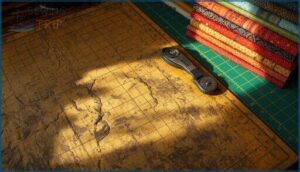
Even the best cutting mat won’t last forever. Knowing when to swap it out can save you from bad cuts, wasted fabric, and a lot of frustration.
Here’s what to watch for.
Signs of Excessive Wear
Your mat is quietly telling you it’s done — are you listening? Watch for these red flags:
- Deep Grooves along common cut lines that catch your blade
- Faded Grid lines too dim for precise alignment
- Fabric Snagging on rough texture spots, pulling threads
- Warped Edges lifting over ¼ inch from the table
These wear and tear signs mean it’s time to replace.
Impact of Blade Dullness
A dull blade doesn’t just ruin fabric — it ruins your mat, too. Every forced pass leaves Mat Groove Scarring that self‑healing technology can’t fix forever. You’ll notice Fabric Edge Damage, Cutting Speed Reduction, and real Safety Hazard Risk from blade slippage.
| Dullness Sign | Effect on Quilting | Risk Level |
|---|---|---|
| Skipped threads | Fabric Edge Damage | Medium |
| Extra hand pressure | Increased Hand Strain | High |
| Deep mat grooves | Mat Groove Scarring | High |
| Repeated passes | Cutting Speed Reduction | Medium |
Replace your rotary cutter blade before blade dullness kills your cutting precision — and your mat.
Cost-Effectiveness of Replacement
Think of replacing your mat as an investment, not an expense. A $60 OLFA mat amortized over 10 years costs under annually — that’s real long-term savings.
A quality cutting mat is not an expense but an investment that pays for itself over years of precise, reliable cuts
Budget mats at $20 need replacing far more often, so the ROI calculation actually favors going premium. Replacement frequency drops when you buy quality once.
Warranty and Replacement Policies
Beyond cost, knowing your warranty and replacement policies for mats saves real headaches. Most brands cover defects — not normal wear. Here’s what to keep in mind:
- Warranty Duration varies: some mats get 30 days, others up to a year.
- Proof of Purchase is almost always required before any Replacement Process begins.
- Exclusions and Limitations apply — heat warping and heavy use void most cutting mat warranty coverage.
Customer Responsibilities include filing claims promptly and shipping returns properly.
Frequently Asked Questions (FAQs)
What do quilters use to cut fabric?
Quilters rely on a few key tools for cutting fabric accurately. Rotary cutters with circular blades are the go-to choice.
Fabric shears, die cutting machines, and electric cutters round out the toolkit nicely.
Which rotary cutting mat is best for quilting?
The best rotary cutting mat balances self-healing surface, clear grid lines, and blade compatibility.
For quilt fabrics, the OLFA 24×36 inch mat consistently earns top user reviews for durability and precision.
Is a cutting mat necessary for quilting?
Yes, a cutting mat is essential for quilting. It protects your work surface, reduces blade dullness impact, and improves quilter safety.
Without one, you risk crooked cuts and faster wear on both your tools and table.
What is a large cutting mat for quilting?
A large cutting mat for quilting usually measures 24 by 36 inches or more. It gives you room to cut full-width fabric in one pass, saving time and boosting precision.
Which cutting mat is best for quilting & scrapbooking?
For both quilting and scrapbooking, a double-sided self-healing mat works best. It processes fabric and paper with equal precision.
The Crafty World mat is a top pick across user reviews for its durability.
How do I choose a quilt mat?
Choose based on size, thickness, and surface type.
A self-healing mat with clear grid markings suits most projects.
Match it to your table, budget, and fabric needs for accurate, confident cuts.
What are the different types of quilting mats?
There are four main types: self-healing mats, solid plastic mats, double-sided mats, and rotating mats. Each meets a different need, from everyday cutting to detailed block trimming.
What size cutting mat do I need for quilting?
For most quilters, an 18 by 24 inch mat manages everyday cuts well. Need to cut full yardage? Go 24 by Tight on space? A 12 by 18 inch portable cutting mat works fine.
What is the difference between A1 and A2 cutting mats?
Funny how a few centimeters can change everything. An A1 mat (90×60 cm) nearly doubles the workspace of an A2 (60×45 cm), affecting cutting speed, storage requirements, and material usage substantially.
What kind of cutting surface do you need to quilt?
self-healing cutting mat with grid lines, at least 3mm thickness, and good color contrast and visibility.
It protects your table, rotary cutter synergy, and keeps every cut accurate.
Conclusion
A strong foundation changes everything you build on top of it. The best cutting mat for quilters isn’t just a surface—it’s the reason your strips stay straight, your blades last longer, and your blocks actually match.
You’ve seen what separates a good mat from a great one. Now it’s your turn to choose wisely. The right mat won’t just protect your table. It’ll protect your time, your fabric, and your craft.
- https://rhinocuttingmat.co.uk/self-healing-cutting-mat-and-why-do-you-need-one/
- https://www.qualitysewing.com/products/quilters-select-self-healing-rotary-cutting-mats
- https://www.kearing.com/how-to-choose-cutting-mat/
- https://www.bestreviews.guide/quilting-cutting-mats
- https://shannonfraserdesigns.com/blogs/quilty-blog/martelli-round-about-cutting-mat-a-modern-quilter-s-review