This site is supported by our readers. We may earn a commission, at no cost to you, if you purchase through links.
Sketching a design by hand and watching it appear on fabric—stitch by stitch, exactly as you drew it—feels less like sewing and more like magic. That gap between a pencil drawing and a finished embroidered piece used to require professional software, expensive equipment, and a steep learning curve.
Not anymore. Brother sewing machines with hand drawn pattern capabilities have quietly closed that gap, putting genuine creative control in the hands of hobbyists and serious makers alike.
The right machine makes all the difference between a design that translates beautifully and one that blurs into thread chaos.
Table Of Contents
Key Takeaways
- Brother machines like the XR9550PRW and PQ1500SL let you take a hand-drawn sketch and stitch it directly onto fabric—no professional software required.
- Features like auto-trace, live stitch preview, and pressure-sensitive tablet support are what separate a clean result from a blurry thread mess.
- Your larger hoops matter more than most people realize—larger hoops mean fewer re-hoopings, better alignment, and truer lines across your whole design.
- Before you buy, nail down your budget (entry starts around $80, pro units hit $1,300), check connectivity needs, and confirm warranty length—it ranges from 10 to 25 years depending on the model.
Best Brother Models Reviewed
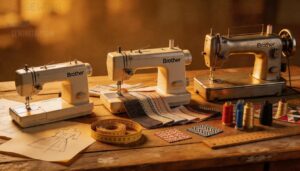
Three Brother machines stand out when hand-drawn pattern work is your goal. The XM2701 keeps things approachable — 27 stitches, speeds up to 800 SPM, and a price range that won’t clear your savings account. It’s a solid starting point.
If you’re still weighing your options, this Brother sewing machine comparison guide breaks down how the XM2701 stacks up against other models worth considering.
Step up to the XR9550PRW, and your stitch count jumps to 110, speed performance hits 850 SPM, and that heavy-duty metal frame manages knits and layered fabrics without complaint.
Then there’s the PQ1500SL — straight-stitch only, but blazing at 1,500 SPM with an industrial motor built for serious work.
Connectivity options vary by model, so check USB or Wi‑Fi support before buying. Warranty length differs too: most offer 25‑year mechanical coverage, while the PQ1500SL drops to 10.
Hand-Draw Features That Matter
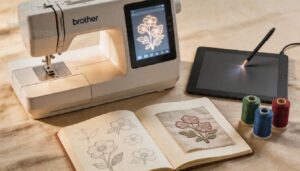
Once you know your machine, the real magic is in how it processes your hand‑drawn ideas.
Stitch Density Control lets you dial in how tight or loose your lines appear — critical for fine portrait work. Pressure Sensitive Tablet support means your natural drawing pressure translates directly into stitch weight. Live Preview updates your design in real time, so there are no surprises mid‑stitch. Jump‑Stitch Trimming keeps things clean between strokes automatically. And Color Masking lets you plan thread colors on fabric before committing.
From pressure-sensitive drawing to live stitch preview, every tool closes the gap between imagination and thread
Here’s what actually moves the needle:
- Auto-trace converts freehand lines into stitch paths
- Scale patterns from 0.5x to 2x without distortion
- Onboard memory stores up to 250 custom patterns
- Stitch precision reaches up to 200 stitches per inch
- Edge smoothing cleans up curved lines automatically
Hoop Size and Design Transfer
Hoop size quietly makes or breaks a hand-drawn design. Go too small and your sketch loses detail; go bigger and you’re re-hooping less — which means fewer alignment headaches.
If you’re debating whether to invest in a larger hoop setup, understanding whether an embroidery machine is worth it can help you weigh the real cost against the creative freedom you gain.
Here’s how each option stacks up.
When Small Hoops Limit Hand-drawn Detail
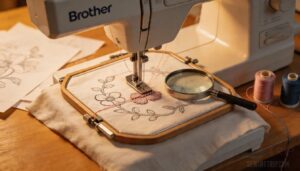
small hoops lock your hand-drawn work into a tight four-by-four-inch zone — and that’s where Stitch Density Challenges quietly creep in.
When you’re pushing intricate fills or fine details into that limited space, understanding your machine’s stitch capacity helps you plan smarter before density issues stall your project.
Dense fills blur thin lines. Fabric Distortion Risks rise when tension compresses delicate curves. Stabilizer Selection matters more than you’d think; weak choices let fabric drift. Thread Tension Issues can thicken hairlines. Design Rehooping Frequency adds registration drift with every pass.
Choosing the right hoop ensures consistent stitch density across your design.
When Larger Hoops Reduce Re-hooping
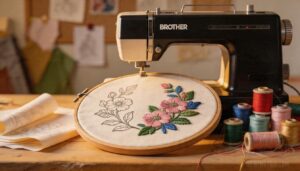
Bigger hoops change everything. A 6×10 or 8×12 inch frame keeps your hand-drawn motif in place longer, so Setup Time Savings stack up fast — fewer remounts, less drift.
Fabric Tension Stability holds delicate lines true across wider surfaces.
Thread Path Consistency improves, Alignment Efficiency sharpens, and Operator Comfort rises noticeably.
You spend less time fussing and more time creating.
Match Machines to Project Types
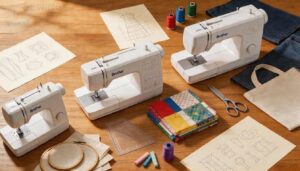
Not every machine fits every project, and picking the wrong one means fighting your tools instead of creating with them. The right match comes down to what you’re actually making — small precise work, big bold statements, or somewhere in between.
Here’s how different Brother models line up against real project types.
Small Patches, Labels, and Pocket Graphics
Patches and pocket labels live or die by the details. At 1–2 inches wide, your design needs bold lines, strong Color Contrast, and clean Edge Finishing — merrow or heat-bonded edges keep fraying away.
Smart Material Selection between woven polyester and embroidered patches determines washability.
Nail your Stitch Density settings and Application Technique, and even the tiniest pocket label looks intentional and sharp.
Totes, Sweatshirts, and Larger Statement Motifs
Scaling up to totes and sweatshirts is where your machine really earns its keep.
Canvas Durability matters here — 12 to 16 oz fabric demands consistent Stitch Density and solid Material Finish to hold up.
Large chest graphics hit 9 to 12 inches, so Graphic Scale and Color Contrast have to work together.
Your hoop size and thread count make or break the final look.
Best Fits for Beginners, Hobbyists, and Upgraders
Where you land on the skill ladder shapes everything. The LS14 nails Entry-Level Simplicity — four stitches, lightweight build, plug-and-play confidence.
Ready to push further? Hobbyist Design Flexibility opens up with models offering 110+ stitches and USB pattern imports.
Upgraders chasing an Upgrader Performance Boost get metal frames and 1,500 SPM. The Pricing Tier Comparison is clear, and solid Warranty & Support backs every step.
Buying Checklist Before You Choose
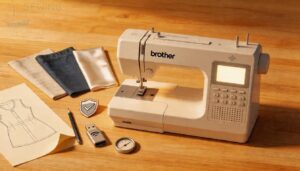
Before you spend a single dollar, run through this quick checklist — it’ll save you from buyer’s remorse later.
- Budget Range — Entry models start around $80-$120, intermediates hit $230-$990, and professional units climb to $1,300. Know your ceiling.
- Connectivity Options — Need wireless? The SE700, SE1900, and NQ series offer Wi‑Fi transfer. Others rely on USB only.
- Stitch Speed — Casual projects work fine at 600-800 SPM. Heavy or layered fabrics demand 850-1,500 SPM.
- Fabric Compatibility — Match your needle type and presser foot pressure to your material before committing.
Also confirm Warranty Coverage — mechanical protection ranges from 10 to 25 years depending on the model. Don’t overlook it.
Frequently Asked Questions (FAQs)
What are common problems with Brother embroidery machines?
Thread tension errors, bobbin alignment issues, and needle size mismatch top the list. You’ll also hit stabilizer selection problems and occasional firmware update glitches. Catch these early and you’re good.
Which one is better, Janome or Brother?
Stitched in a tough spot?
Brother wins on Software Ecosystem and Customer Support. Janome edges ahead on Durability Build and Stitch Quality.
Your Value Ratio depends on the project. Both brands deliver.
What is the most user friendly Brother sewing machine?
The CS7000X wins on ease.
Its Auto Threader saves frustration; the Jam-Resistant Bobbin drops in fast, and LCD Clarity makes stitch selection simple.
Lightweight Portability and Guided Tutorials keep beginners moving confidently forward.
Can I use machine embroidery pattern for hand embroidery?
Yes, you can.
Machine patterns work for hand embroidery with Pattern Simplification Techniques, Stitch Density Adjustment, and Thread Color Translation.
Use Transfer Paper Alternatives and Fabric Stabilization Methods to guide your needle cleanly.
What comes with the Brother Luminaire XP3?
Luminaire XP3 comes with included accessories like an 8×12-inch hoop, wireless foot control, and stylus digitizing tools.
Its aluminum frame build, touchscreen interface, and 2-year warranty support round out a solid package.
Are there any limitations to hand-drawn pattern sizes on Brother?
Entry-level models cap you at a 4×4 inch hoop — Canvas Size Constraints hit hard here.
Stitch Density Limits, Fabric Stabilizer Needs, Thread Tension Variability, and Software Scaling Issues grow as motifs get bigger.
Can Brother machines embroider on leather or vinyl?
Brother machines can handle leather and vinyl — think of it as embroidering armor.
Use proper Needle Selection, cut Stitch Density, set moderate Speed Settings, choose smart Stabilizer Types, and nail Material Prep first.
How long do Brother embroidery machines typically last?
With proper care, these machines run reliably for 5–10 years. Warranty Duration, Maintenance Frequency, Component Wear, Usage Intensity, and Environmental Factors all shape longevity. Metal-frame models outlast basic units by years.
Are replacement parts easy to find and affordable?
Yes — parts are everywhere.
Bobbins and needles cost under 5 euros. Presser feet run 12–30 euros. OEM vs aftermarket options suit every budget.
Regional parts supply and the online parts market make sourcing simple.
Conclusion
Like a painter’s brush bringing a canvas to life, Brother sewing machines with hand-drawn pattern capabilities transform your sketches into stitched reality.
With the right machine, your creative vision knows no bounds. Match your needs to the right model, and you’ll access a world of precision and ease.
Your next project is just a stitch away. Choose wisely, and let your imagination run wild with every thread and seam.