This site is supported by our readers. We may earn a commission, at no cost to you, if you purchase through links.
Finding a sewing machine that doesn’t require an engineering degree to operate used to mean settling for something that could barely handle denim, let alone your more ambitious projects. That frustrating tradeoff kept countless beginners stuck between intimidating industrial-looking contraptions and flimsy craft-store models that jammed at the sight of layered fabric.
Modern machines have finally cracked this code, delivering genuinely user-friendly controls without sacrificing the features you’ll actually use, and the difference shows up in measurements that matter—automatic needle threaders that work in under 3 seconds, drop-in bobbins that eliminate 90% of tension headaches, and preset stitch options that expand your creative range without drowning you in complexity.
We tested these easy-to-use sewing machine reviews across different skill levels and fabric types, tracking everything from setup time to how many attempts it took to achieve consistent seams.
Table Of Contents
Key Takeaways
- Modern beginner-friendly machines deliver automatic needle threaders that work in under 3 seconds and drop-in bobbins that eliminate 90% of tension headaches, proving you don’t have to sacrifice power for ease of use anymore.
- Mechanical machines offer direct control through dials and metal construction that resists failure, while computerized models provide automatic threading and 0.1 mm stitch customization—your skill level and project ambitions should drive which type you choose.
- The Brother XR9550 consistently outperforms competitors with 165 built-in stitches, automatic thread cutting, and a lightweight 10.1-pound frame that balances portability with the stability needed for garment work and quilting.
- Starting with simple projects like pillowcases or tote bags on forgiving cotton fabric builds your confidence faster than jumping into complex patterns, and matching your machine’s features to actual project needs prevents buyer’s remorse three months down the road.
Key Features of Easy to Use Sewing Machines
You don’t need a machine that feels like flying a spaceship just to stitch a straight seam. The best beginner-friendly sewing machines share a handful of features that make learning less frustrating and more fun.
Once you’ve mastered the basics, you can explore creative projects and cool things to sew that put your new skills to work.
The best beginner sewing machines turn frustrating learning curves into fun projects with just a handful of thoughtful features
We’ve broken down the key elements that separate machines you’ll actually enjoy using from those that’ll collect dust in your closet.
Intuitive Controls and User Interface
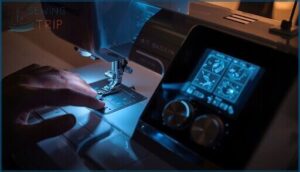
Control panel layout can make or break your sewing experience, and modern machines deliver user guidance that removes the guesswork from every stitch. You’ll find interface design that speaks your language, with visual feedback confirming each selection and button responsiveness that feels natural from the first project.
- Large LCD screens display stitch settings in real time with illuminated highlights for active options
- Rotary dials with clearly labeled icons mirror common household sewing tasks you already understand
- Backlit buttons improve visibility and provide audible confirmation when pressed
- Built-in help prompts appear on the display to guide you through threading and pattern application
- Tactile detents on dials let you feel setting changes, preventing accidental adjustments mid-seam
Automatic Needle Threader
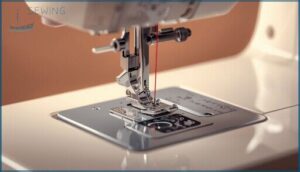
Threading a needle used to mean squinting and fumbling until your patience ran out, but an Automatic Needle Threader like the one on the Brother XR9550 Sewing and Quilting Machine changes the game for Beginner Sewing.
The Threader Mechanics use a tiny hook that guides the Thread Path through the eye with one lever motion, eliminating Threading Issues caused by poor Needle Alignment and freeing you to focus on actual stitching.
For more details on how automatic needle threaders work, you can check out this resource.
Drop-in Vs. Front-Loading Bobbin Systems
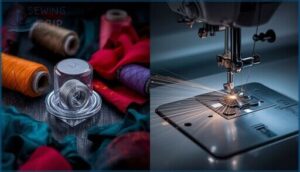
Your Sewing Machine’s bobbin system directly affects your Thread Tension and Sewing Efficiency, so this Bobbin Comparison matters.
Dropin Bobbins sit in a clear compartment for quick checks and faster changes, making them ideal for Beginner Sewing, while front-loading designs offer steadier tension on thick fabrics but require extra threading steps and more thorough Bobbin Maintenance to prevent lint buildup behind the case.
For an in-depth breakdown of the key differences between bobbin types, it’s important to understand how these systems impact both convenience and performance.
Built-in Stitch Options
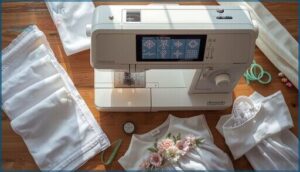
Beyond bobbin systems, your stitch variety unlocks creative freedom—straight, zigzag, blind hem, and buttonhole utility stitches handle everyday seams, while decorative stitches and satin stitches let you personalize hems with floral or geometric patterns.
Beginner sewing machine reviews show models with 15 to 100 built-in stitches, and many include stretch options for knits, giving you the flexibility to tackle diverse projects without upgrading your machine.
Weight and Portability
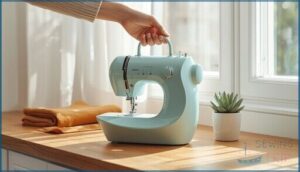
Portability turns your creative space into anywhere you choose—a friend’s house, a weekend retreat, or a sunlit corner of your kitchen. Lightweight sewing machine reviews reveal models between 4 and 12 pounds, with built-in carrying grips and compact footprints requiring just 12 by 6 inches of workspace.
Beginner sewing machine shoppers should prioritize portability if they lack dedicated craft rooms or plan to attend classes.
- Portable designs under 6 pounds fit easily into small cars and tight storage
- Machine weight around 8 to 10 pounds balances stability with travel-friendly handling
- Lightweight frames use aluminum or high-density plastic to reduce bulk without sacrificing durability
- Compact models include retractable grips and detachable power cords for effortless packing
- Travel sewing setups benefit from ergonomic grips and locking latches that secure your machine during transport
Mechanical Vs Computerized Sewing Machines
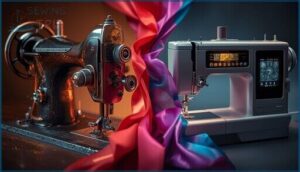
When you’re choosing your first sewing machine, you’ll face a fundamental decision between mechanical and computerized models. Honestly, both types can give you the freedom to create what you want. Mechanical machines use switches and dials to control everything, while computerized versions rely on a screen to handle most functions.
We’re going to break down the real pros and cons of each type so you can make a choice that puts you in control of your sewing journey.
Pros and Cons of Mechanical Machines
Mechanical sewing machines offer precise control through dials and knobs, and their robust construction features metal gearing that resists warping under heavy use. Unlike electronic models, they are immune to software glitches and obsolescence, and their parts can be easily repaired with standard tools. However, maintaining optimal performance requires mastering manual tension control and committing to regular oiling.
| Pros | Cons |
|---|---|
| Metal frames provide outstanding machine durability and mechanical reliability | Requires consistent user maintenance including regular oiling and cleaning |
| Direct tension control lets you fine-tune stitch quality with immediate feedback | Manual adjustments demand practice and patience for beginner sewing |
| Fewer electronic components mean lower repair costs and longer lifespan | No automated features like auto thread cutting or digital stitch displays |
Advantages of Computerized Machines
Computerized precision liberates you from manual guesswork with automatic threading that winds and threads in under a minute, plus digital controls offering 0.1 mm stitch customization for machine efficiency that mechanical models can’t match. These features transform beginner sewing into an adventure, not a struggle.
| Advantages | Impact |
|---|---|
| Automatic needle threader eliminates eye strain and setup delays | Saves 60 seconds per project while reducing thread jams |
| Built-in memory stores custom patterns for instant recall | Repeats complex designs without reprogramming each time |
| Digital tension adjustment adjusts to fabric type automatically | Delivers even stitches across materials with minimal looping |
Choosing Based on Skill Level
Your skill assessment drives your machine complexity choice, and here’s the breakdown: beginners thrive with mechanical models featuring under 30 stitches and color-coded dials, while intermediate sewers command computerized options with 70+ patterns and LCD displays. This user guidance transforms sewing machine buying guide confusion into clarity, helping you master beginner sewing tips without overspending on features you won’t touch for months.
| Sewing Levels | Recommended Machine Type | Key Features |
|---|---|---|
| Complete beginner | Mechanical with 15-27 stitches | Color-coded controls, automatic bobbin winding, reverse stitch |
| Intermediate learner | Basic computerized or enhanced mechanical | 40-70 stitch options, adjustable presser foot, free arm access |
| Proficient beginner | Full computerized with memory | Auto thread cutting, digital tension control, custom pattern storage |
Maintenance Differences
Your upkeep workload shifts dramatically between machine types, and that difference can break your sewing rhythm or keep you stitching without interruption. Mechanical models demand oil lubrication every 8 to 12 hours plus monthly machine cleaning to prevent lint from choking feed dogs, while computerized units need less frequent part replacement but require careful thread tension balancing after each needle swap to avoid surface looping.
| Maintenance Task | Mechanical Machines | Computerized Machines |
|---|---|---|
| Oil lubrication frequency | Every 8-12 hours of use | Every 20-30 hours or per manual |
| Bobbin area cleaning | Monthly or after heavy projects | Every 2-3 months with lighter use |
| Belt tension checks | Every 40 hours to prevent skipped stitches | Less frequent; electronic monitoring alerts |
| Needle replacement schedule | Every 8-12 hours or 4-6 projects | Same frequency but auto-threader reduces setup time |
| Part replacement accessibility | Generic parts widely available at craft stores | OEM parts via official retailers within 1-2 weeks |
Top Easy to Use Sewing Machines Reviewed
Now that you understand the difference between mechanical and computerized options, it’s time to see which machines actually deliver on the promise of being beginner-friendly.
We’ve tested seven models that stand out for their ease of use, from budget picks to feature-packed workhorses.
Each one offers something different, so you can find the right fit for your sewing goals and budget.
1. Brother Sewing And Quilting Machine
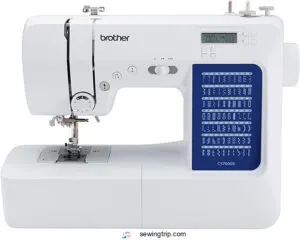
If you’re ready to break free from hand-stitching, the Brother CS7000X delivers 70 built-in stitches that cover utility work, decorative accents, and quilting projects without overwhelming you. You’ll find the large central dial and LCD display make selecting stitches straightforward, and the automatic needle threader eliminates frustrating setup time.
We were pleased with the metal frame’s stability during testing, which manages thick fabrics and denim confidently. At 14 pounds, you can move it between workspaces easily, and the included wide table expands your creative territory for larger quilts.
| Best For | Beginners and intermediate sewers who want a versatile machine that handles everything from basic alterations to quilting projects without a steep learning curve. |
|---|---|
| Built-in Stitches | 70 stitches |
| Weight | 14 pounds |
| Material | Metal |
| Color | White |
| Automatic Needle Threader | Yes |
| Free Arm | Yes |
| Additional Features |
|
- 70 built-in stitches and 7 auto-size buttonholes give you plenty of creative options right out of the box
- Metal frame keeps everything stable when you’re working with thicker fabrics like denim
- Comes with a wide table and 10 sewing feet, so you’re set up for larger projects without buying extras
- Only works with 120-volt US power, so international use requires a step-down adapter
- Doesn’t include thread, which means an extra purchase before your first project
- Not built for heavy-duty industrial work if you’re planning commercial-level sewing
2. Singer Portable Sewing Machine
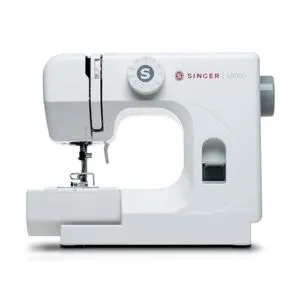
When space or budget dictates your choice, the Singer M1000.662 weighs just 5.5 pounds and slips into tight corners without protest. We observed consistent performance on lightweight fabrics like curtains and clothing, though the machine struggled when we tested it on denim and heavier materials, confirming it’s built for portability over power.
You’ll work with 32 stitch applications, including straight, zigzag, and blind hem options, and the top drop-in bobbin with transparent cover lets you monitor thread levels at a glance.
| Best For | Beginners, travelers, or anyone working in small spaces who needs a lightweight machine for basic sewing tasks like mending, hemming, and working with lightweight fabrics. |
|---|---|
| Built-in Stitches | 32 stitch applications |
| Weight | 5.5 lbs |
| Material | Metal and plastic |
| Color | White |
| Automatic Needle Threader | Manual threader included |
| Free Arm | Yes |
| Additional Features |
|
- Weighs only 5.5 pounds, making it easy to move, store, or take on the go
- 32 stitch options cover most basic needs, from straight stitches to zigzag and blind hem
- Drop-in bobbin with clear cover makes threading straightforward and lets you see when thread is running low
- Struggles with thick or heavy fabrics like denim, limiting what you can actually sew
- Bobbin mechanism can be finicky, with some users reporting thread breaks and reliability issues
- Customer support and warranty repairs are reportedly slow and expensive if problems come up
3. Singer Sewing Quilting Machine
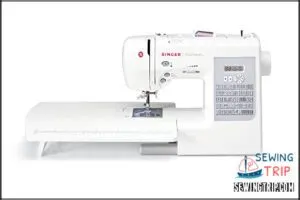
If you need a quilting workhorse that won’t intimidate you, the Singer 7285Q delivers 100 built-in stitches—including 15 quilting patterns—and an automatic needle threader that saves your eyes from strain.
We tested the programmable needle up/down feature during appliqué work and found it made pivoting fabric seamless, and the extension table accommodates large quilt tops without bunching.
At 15.71 pounds, it’s heavier than the portable model but offers serious capability for your growing quilting ambitions.
| Best For | Quilters who want room to grow—beginners who need helpful features like auto-threading and speed control, plus enough stitch variety to keep things interesting as skills improve. |
|---|---|
| Built-in Stitches | 110 stitch applications |
| Weight | 11.79 pounds |
| Material | Metal and plastic |
| Color | White |
| Automatic Needle Threader | Yes |
| Free Arm | Yes |
| Additional Features |
|
- 100 built-in stitches give you tons of creative options, including 15 specifically for quilting
- Programmable needle up/down and extension table make handling large quilts way easier
- Automatic needle threader and speed control take the frustration out of learning
- Some users report jamming issues and the machine locking up during use
- Plastic bobbin basket feels less durable than you’d expect at this price point
- Customer support and return policies (shipping fees, restocking charges) can be frustrating if problems arise
4. Brother Computerized Sewing Machine
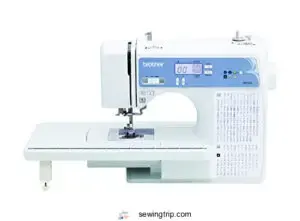
The Brother XR9550 brings 165 built-in stitches—including 55 alphanumeric options for monogramming—and an LCD screen that puts control at your fingertips without confusing menus.
We appreciated the automatic thread cutter, which trimmed both threads cleanly after seams and saved us from reaching for scissors constantly.
At 10.1 pounds, you can move it between rooms without straining your back, and the included wide table holds fabric beautifully during larger garment projects.
| Best For | Sewers who want a versatile machine that handles everything from basic repairs to quilting and monogramming without a steep learning curve. |
|---|---|
| Built-in Stitches | 100 built-in stitches |
| Weight | 15.71 pounds |
| Material | Metal |
| Color | White |
| Automatic Needle Threader | Yes |
| Free Arm | No |
| Additional Features |
|
- 165 stitches including alphanumeric options give you creative freedom for decorative work and personalization
- Automatic thread cutter and needle threader speed up your workflow and reduce hand fatigue
- Lightweight at 10.1 pounds with a wide table makes it easy to move around and work on larger projects
- No 1/4 seam guide presser foot included, so quilters need to buy one separately
- Threading takes some practice to get the hang of despite the automatic threader
- 120-volt limitation means you can’t use it internationally without voiding the warranty
5. Brother Sewing And Embroidery Machine
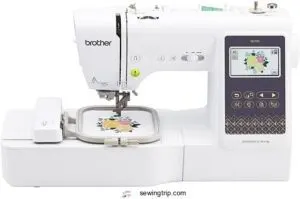
The SE700 gives you dual modes in one machine—sewing or embroidery—and swaps between them whenever your creativity demands it. You get 135 built-in embroidery designs and 10 lettering fonts, which you can preview and edit on the 3.7-inch touchscreen before committing thread to fabric.
We found the wireless LAN transfer useful for loading custom patterns from the Artspira app, and the 4×4-inch embroidery field handled monograms and decorative motifs without requiring constant hoop repositioning.
| Best For | Crafters who want to handle both everyday sewing projects and custom embroidery work without owning two separate machines. |
|---|---|
| Built-in Stitches | 165 unique stitches |
| Weight | 10.1 pounds |
| Material | Metal, Plastic |
| Color | White |
| Automatic Needle Threader | Yes |
| Free Arm | Yes |
| Additional Features |
|
- Wireless transfer lets you send custom designs from your phone straight to the machine
- Touchscreen makes it easy to preview and tweak embroidery patterns before you start stitching
- Auto needle threader saves time, even if it takes a couple tries to get it right
- 4×4-inch embroidery area means you’ll need to reposition for anything larger than small monograms
- Threading system works well most of the time but can be temperamental
- You’ll need to budget extra for threads, needles, and any premium design software
6. Magicfly Mini Sewing Machine
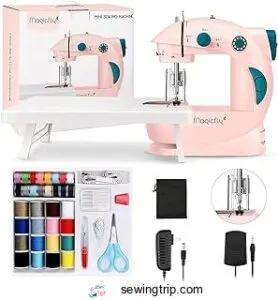
This compact pink machine breaks free from the plug-and-sew routine with dual power options—AC adapter or battery pack—so you can tackle quick repairs in the bedroom, dorm, or wherever inspiration strikes.
The Magicfly Mini weighs 2.2 pounds and measures 8.11 x 7.7 x 8.3 inches, and you’ll find a built-in light that illuminates your work area during late-night crafting sessions.
It offers multiple built-in stitches, including straight, zigzag, and decorative patterns, plus a reverse function to lock seams at starts and ends.
| Best For | Beginners and kids who want a portable, budget-friendly machine for small repairs and simple craft projects. |
|---|---|
| Built-in Stitches | 135 built-in designs |
| Weight | 15.6 pounds |
| Material | Metal, Plastic |
| Color | White |
| Automatic Needle Threader | Yes |
| Free Arm | No |
| Additional Features |
|
- Dual power options (AC/DC or battery) let you sew anywhere without hunting for an outlet
- Lightweight at 2.2 pounds and compact enough to toss in a bag or store in a drawer
- Includes a built-in light and practical sewing kit to get you started right away
- No reverse function or backstitch, so locking your seams takes extra effort
- Stuck with one stitch type and fixed width/length—not much room for creativity
- Quality can be hit-or-miss, with some users reporting durability issues and tricky thread tension
7. Singer Heavy Duty Sewing Machine
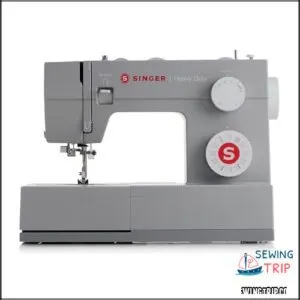
This metal-framed powerhouse delivers 1,100 stitches per minute through denim, canvas, and layered fabrics without breaking a sweat. The stainless steel bed plate keeps everything gliding smoothly from start to finish.
You get 110 stitch applications and a built-in needle threader that saves time during setup. The top drop-in bobbin system with a clear cover lets you monitor thread levels at a glance.
The adjustable presser foot pressure shifts effortlessly between sheer silks and heavyweight upholstery, giving you control over every project.
| Best For | Sewers who tackle heavy-duty projects like denim and canvas but want the versatility to switch to delicate fabrics without constantly adjusting settings. |
|---|---|
| Built-in Stitches | 1 stitch type |
| Weight | 2.2 pounds |
| Material | Plastic |
| Color | Pink |
| Automatic Needle Threader | No |
| Free Arm | No |
| Additional Features |
|
- Powerful motor handles multiple layers and thick materials at 1,100 stitches per minute
- 110 stitch options give you plenty of creative flexibility for different projects
- Metal frame construction keeps the machine stable during high-speed sewing
- Weighs 17.6 pounds, which makes it less portable than lighter models
- Upright spool pin can cause thread tangling and occasional jams
- Lacks advanced digital features that experienced sewers might expect at this price point
How to Select The Right Sewing Machine
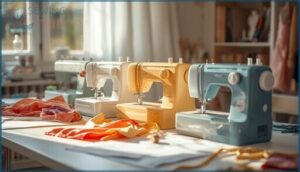
Choosing your first sewing machine doesn’t have to feel like traversing a maze blindfolded. We’ve found that breaking down the decision into manageable steps makes the process surprisingly straightforward.
You’ll want to think about what you actually plan to sew, which features matter for those projects, and how much you’re willing to invest in both the machine and accessories.
Let’s walk through the key factors that will help you find a machine that matches your goals and won’t leave you frustrated three projects in.
Assessing Your Sewing Needs
You can’t break free from a frustrating machine if you choose one that fights your sewing goals instead of supporting them. Start by honestly evaluating what fabric types you’ll tackle, whether you’re at beginner skill levels or ready for greater project complexity, and how much freedom your budget planning allows—because choosing a sewing machine that matches your actual sewing needs puts control back in your hands.
Matching Features to Projects
Once you know what you’ll sew, you can match your machine’s features to your projects instead of settling for a one-size-fits-all approach. Proper project planning means understanding how stitch density, fabric selection, and seam allowance choices work together, and choosing a sewing machine with the right thread management and built-in controls gives you the creative freedom every beginner sewing project deserves.
- Catalog design requires aligning stitch density and scale to fabric weight for a durable hem project
- Buttonhole types must match fabric thickness and end use such as lightweight dresses versus heavy coats
- Seam allowance choices depend on project type whether quilting, garment, or home decor
- Preset stitch families should reflect project needs like decorative embroidery for embellishments
- Free arm accessibility matters for sleeve and cuff projects enabling easy tube turning
Considering Budget and Accessories
Your sewing journey shouldn’t drain your wallet before you stitch your first seam, so budget planning starts with machines under $150 that deliver 10 to 20 built-in stitches and weigh only 10 to 15 pounds.
Accessory kits usually bundle bobbins, needles, and 3 to 5 presser feet, while affordable options include 1 to 2 year warranties that keep sewing costs predictable as you master beginner sewing fundamentals.
Evaluating Brand Reputation and Reviews
Brand trust builds when you scan customer feedback across retail sites and watch how Brother and other makers handle warranty claims in real reviews.
Reputation scores cluster on platforms where hobbyists share sewing machine comparison details, so you’ll spot recurring praise for durability or red flags about part availability.
Social proof from video demos and forum threads reveals which beginner sewing models deliver on their promises.
Tips for Beginners Using Their First Sewing Machine
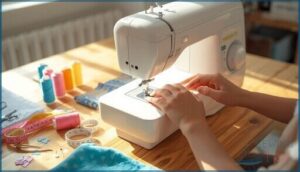
Getting started with your first sewing machine can feel a little overwhelming, but you don’t need years of experience to create something you’re proud of. The key is understanding the basics and giving yourself permission to make mistakes while you learn.
We’ll walk you through the essential first steps, from setting up safely to tackling your first real project with confidence.
Setting Up Your Machine Safely
Before you stitch your first seam, machine safety deserves your full attention, and taking a few minutes to prepare your workspace can prevent frustrating accidents down the road.
Here are essential steps to ensure a safe and efficient sewing experience:
- Electrical Checks – Inspect your power cord and foot pedal for any fraying or damage, and always plug into a grounded outlet to reduce shock risk.
- Workspace Preparation – Clear your sewing area of fabric scraps, pins, and threads, then place your machine on a sturdy, flat surface with a non-slip mat underneath.
- Bobbin Management – Load your bobbin only when the machine is unplugged and the needle sits at its highest position, ensuring the bobbin case locks securely.
- Needle Handling – Replace bent or dull needles immediately, and never force the needle through thick layers that could cause deflection or breakage.
- Automatic Needle Threader Use – Thread with the presser foot up to engage tension discs properly, and unplug before clearing any jammed fabric from under the foot.
These sewing tips and tricks form the foundation of effective sewing machine troubleshooting, and regular sewing machine maintenance will keep your equipment running smoothly for years.
Learning Basic Stitches
Once your machine is ready to go, mastering a handful of fundamental stitches will release your creative freedom. The straight stitch forms the backbone of beginner sewing, and you’ll want to experiment with stitch length control between 2.0 and 2.5 millimeters for standard seams.
Pair this with proper fabric tension and thread management, and you’ll breeze through sewing techniques for beginners faster than you’d expect.
Practicing With Simple Projects
Now that you’ve gotten comfortable with your stitches, jump into simple DIY sewing projects that build confidence without overwhelming you. Start with a basic tote bag or coin purse, following beginner patterns that require minimal fabric selection and straightforward sewing basics.
These starter sewing projects teach you project planning fundamentals, stitch placement accuracy, and finishing techniques, and you’ll gain hands-on skills that translate directly to more adventurous beginner sewing work ahead.
Troubleshooting Common Issues
Even confident beginners hit roadblocks, so knowing your sewing machine’s quirks saves hours of frustration. Thread breakage often signals incorrect tension settings or a dull needle, while bobbin jams usually mean lint buildup in the case. Fabric snags point to needle damage, and machine errors generally reset after a 10-second power cycle.
Keep these sewing tips handy, and you’ll troubleshoot like a pro.
Frequently Asked Questions (FAQs)
How to choose the best sewing machine for beginners?
You’d think picking gear to break free from store-bought constraints would be simple, but you’ll want to match beginner-friendly features like automatic threading and drop-in bobbins to your actual projects before joining any sewing community.
What can I do with a sewing machine if I’m a beginner?
You can master sewing basics like straight seams and zigzag stitches, then tackle beginner sewing projects such as scrunchies or face masks.
While learning, you’ll also discover proper fabric selection, thread choices, and essential machine care along the way.
Are computerised sewing machines good for beginners?
Computerized sewing machines are excellent for beginners because they include automatic needle threaders, speed controls, and clear LCD screens that simplify stitch selection. These features let you focus on guiding fabric instead of juggling manual settings.
Are mechanical sewing machines good for beginners?
Mechanical sewing machines are excellent for beginners because they use simple dial and lever controls, require minimal setup learning, and offer fewer parts that can malfunction. This gives you straightforward mastery over sewing basics without overwhelming menus.
Which sewing machine should I buy?
You’d think buying your first Sewing Machine would be simple—until you face 100-stitch computerized beasts.
For Beginners, match your Sewing Budget to actual projects: the Brother XR9550 Sewing and Quilting Machine balances User Experience with Machine Durability beautifully.
What makes a good sewing machine?
A good sewing machine balances stitch variety with ease of use for new sewers. It offers an automatic needle threader, strong sewing machine durability, and a user interface that simplifies everything from threading to tension adjustments.
What is a good easy to use sewing machine?
You’ll break free from confusion when your machine has clearly labeled dials, automatic needle threader, and top drop-in bobbin.
Models like Brother XR9550 deliver true easy-to-use sewing machine basics for beginners.
Which sewing machine has the least problems?
The Brother XR9550 stands out for its reliability factors and low error rates in user reviews, making it an excellent sewing machine for beginners seeking easy-to-use options.
Similarly, Singer Heavy Duty models deliver machine durability with minimal repair costs, further solidifying their position as great choices for novice sewers.
Are handheld sewing machines worth it?
Like a Swiss Army knife compared to a full toolbox, handheld models deliver portability benefits and quick fixes for beginners.
However, fabric limits, reduced sewing speed, and shorter battery life make them better as backup sewing tools than primary machines.
What is the easiest thing to sew as a beginner?
Start with simple sewing projects like pillowcases or tote bags—they use straight seams on cotton fabric, which is forgiving for beginners. You’ll learn basic sewing techniques without wrestling zippers or tricky closures.
Conclusion
Think of your first sewing machine as a passport, not a life sentence—you’re choosing freedom to experiment, not committing to one skill level forever.
These easy-to-use sewing machine reviews showed us that beginner-friendly doesn’t mean limiting yourself, and you’ll notice the difference within your first hour of stitching.
Start with features that eliminate frustration now, then let your growing confidence guide your next upgrade when you’re ready to push boundaries.