This site is supported by our readers. We may earn a commission, at no cost to you, if you purchase through links.

That droopy fabric pooling between your legs isn’t a body problem—it’s a fit problem, and there’s a difference worth knowing. Baggy crotch happens when the rise is too long, the fabric has lost its shape, or the pants were never cut right for your build in the first place.
A few horizontal folds across your upper thigh or that sad, saggy pouch at the seat are your pants telling you something’s off.
Fixing baggy crotch in pants takes less skill than you’d think—whether you pick up a needle or reach for fabric tape, the right method depends on your fabric, your tools, and how permanent you need the fix to be.
Table Of Contents
Key Takeaways
- A baggy crotch is almost always a fit problem—caused by a rise that’s too long, stretched-out fabric, or a pattern that was never cut right for your body.
- You don’t need a sewing machine to get a quick fix—fabric tape, safety pins, or a snug belt can lift the crotch and buy you time until you’re ready to sew.
- When you do sew, pinch the excess fabric first, double that measurement for your total take-in, baste before you commit, and always press the seam flat after stitching.
- Preventing the problem long-term comes down to three habits: wash in cold water, hang pants by the waistband, and reinforce worn seams early before they blow out.
Identify Why The Crotch Sags
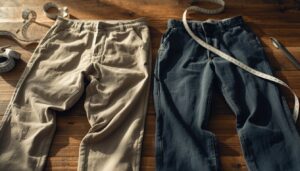
Before you fix anything, it helps to know what’s actually causing the problem. A baggy crotch can come from a few different things, and the cause shapes the solution. Here’s what to look for.
Signs of Excess Crotch Length
Spotting a baggy crotch in pants starts with knowing what to look for. Front rise droop shows up as horizontal wrinkles across the upper thigh. Back seam sag pulls the waistband down at the center back. Vertical thigh wrinkles and a hip‑waist gap are also clear signs. That crotch seam misalignment tells you the crotch length simply doesn’t match your body.
These fit issues often worsen when you move, and if your zipper starts grabbing fabric too, check out this guide on fixing fabric caught in a zipper before it turns into a bigger problem.
soft horizontal folds are a sign of excessive crotch length.
Weight Loss and Stretched Fabric
Weight loss changes more than just your waistline — it shifts how every seam sits on your body. As fat mass decreases, fabric that once fit snugly starts pooling in the crotch. Repeated movement accelerates fiber fatigue due to elasticity degradation over time.
Watch for these warning signs:
- Spandex content below 5% means poor recovery time after stretching
- Weight fluctuation clothing fit issues worsen with low compression rating fabrics
- Synthetic blends show fabric stretching faster than dense knits
Oversized Fit Through Hips and Thighs
Sometimes the problem isn’t about stretch at all — it’s simply too much room. When your hip-to-thigh ratio is more generous compared to your waist, extra fabric pools forward, creating loose draping.
Without side panel tapering or thigh contour shaping, pants lack structure and hang loosely. This excess fabric disrupts the silhouette, emphasizing fit issues rather than resolving them.
Adjusting hip ease and inseam length balance becomes critical for real crotch fit correction. These targeted modifications address the root cause, ensuring a smoother, more tailored drape.
Fabric Types That Bag Out Faster
Cotton Twill and denim break down fiber by fiber with each wash, bagging out faster than you’d expect.
Viscose Rayon relaxes the moment it absorbs moisture.
Polyester Knit loses elastane grip over time.
Linen Blend creeps under pressure.
Nonwoven Wool stretches with wear — and rarely bounces back.
Poor Original Pattern or Sizing
Not every baggy crotch is your fault — sometimes the pattern was wrong from the start. Faulty block drafting, pattern grading errors, and improper ease calculation leave too much fabric hanging through the seat.
Inconsistent size standards between brands make proper pant sizing a guessing game. A hip-thigh proportion mismatch compounds the problem fast.
Always check fit assessment using a toile and mirror before cutting.
Gather Tools and Prep Pants

Before you touch a seam, having the right tools on hand makes everything go more smoothly. A little prep work upfront saves you from re-doing steps or guessing as you go.
Here’s what you’ll need to get started.
Sewing Tools for a Clean Alteration
Having the right tools on hand makes this alteration straightforward. Before you touch the seam, gather these four essentials:
- A seam ripper and fabric marker to open and re-mark the crotch seam cleanly
- A measuring tape and seam gauge for accurate take-in measurements
- A rotary cutter and pattern notcher to trim and align fabric precisely
- A tailor’s ham and iron to press curves flat after stitching
Optional Tools for Heavy or Stretchy Fabrics
Working with heavy denim or stretchy knits calls for a few extra tools beyond the basics.
| Tool | Why You Need It |
|---|---|
| Heavy-duty needles | Pierce thick layers without breaking |
| Walking foot attachment | Keeps fabric from shifting mid-seam |
| Fusible interfacing | Stops stretchy areas from sagging again |
| Stabilizer spray | Holds fabric steady before you stitch |
Thick polyester thread withstands stress on bulky seams better than standard thread.
For high-stress areas like waistbands and crotch seams, pairing thick polyester thread with proper tension settings makes a real difference—this guide to sewing durable pants seams shows exactly how to set yourself up for fewer repairs down the road.
Turning Pants Inside Out Correctly
Turn the pants inside out before you do anything else. Grip the waistband with both hands, reach inside, and pull one leg through — that’s your hand placement sorted.
Once flipped, check that seam allowance lines are visible and the care label faces outward for label preservation.
Smooth the fabric without tugging to avoid stretching. Proper fabric orientation now saves you from redoing work later.
Pressing Seams Before Marking
A warm iron does more than flatten fabric — it sets the truth of your seam. Before you reach for chalk or a fabric marker, press the seam allowance first.
- Choose your Pressing Cloth Selection wisely — use it on delicates to avoid shine
- Apply Short Press Intervals with Iron Pressure Control: lift, press, lift — don’t glide
- Pick Steam vs Dry based on fabric: steam relaxes cotton; dry suits synthetics
- Allow Cooling Before Marking so chalk lines stay crisp and don’t smear
Checking Fit in a Mirror First
Before you mark a single line, do a proper visual fit assessment. Stand in good lighting, wear something fitted underneath, and face a full-length mirror.
Check symmetry evaluation on both sides—uneven drape often hides a lopsided take-in. Do a side view check at a 45-degree angle for hidden folds.
Drape observation tells you exactly where the fabric wants to go.
Measure and Mark The Take-In
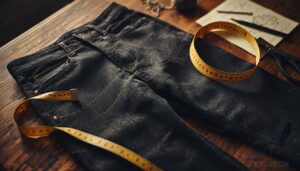
Before you sew a single stitch, you need to know how much fabric to take in — and where.
Getting this part right saves you from redoing the whole thing twice.
Here’s how to measure, mark, and prep your pants for a clean, accurate alteration.
Pinching Excess Fabric to Find Reduction
Pinching the extra cloth is the most direct way to see exactly how much needs to come out. Work at the inseam and rise where the baggy crotch sags the most.
- Pinch Symmetry — match both sides equally
- Depth Calibration — go shallow on stretch fabrics
- Even Pinch Spacing — avoid twists in the seam allowance
- Pocket Clearance — stay clear of pocket edges
Check Grain Alignment before you pin the new seam line.
Doubling The Pinch for Total Take-in
Once you’ve pinched the extra cloth on one side, double that number — that’s your total take-in. So a ½-inch pinch means removing a full inch overall.
This Dual Crease Technique ensures Pinch Symmetry on both sides, balancing Tension Redistribution across the rise.
Use safety pins to hold it, then do a quick Test Fit Evaluation before committing.
Marking The New Crotch Seam Line
Now that you know your total take-in, grab your chalk and mark the new seam line along the crotch curve. Focus on Seam Curve Alignment — draw a gentle S-shape from front to back on the wrong side of the fabric.
Edge Mark Visibility matters here, so keep your chalk line consistency steady. Always baste the new seam line before committing to permanent stitches.
Opening The Rise Seam Far Enough
With your chalk line ready, it’s time to open up the crotch seam. Use your seam ripper carefully—the incremental opening method works best here.
Open the rise seam about 1 to 2 cm forward using forward seam positioning, keeping alignment with the hipline intact. Your seam allowance should stay at ½ inch throughout this rise alteration for a clean crotch seam alteration on pants.
Basting for a Test Fit Before Sewing
Before you commit to a single permanent stitch, baste the crotch seam first — it’s your safety net. Set your machine to a stitch length of 3–5 mm and use a contrasting thread so the line stays visible.
Here’s what to check during your fit verification:
- Pin up any remaining excess every 1–2 inches for interval spacing control
- Try the pants on and sit, bend, and move
- Look for pulls, gaps, or still-baggy areas
- Mark any adjustments before removing the temporary hold stitches
Sew The Crotch for Better Fit
Once you’ve marked your new seam line and tested the fit, it’s time to make the alteration permanent.
Sewing the crotch properly means more than just running a straight stitch — it involves getting every part working together so the pants retain their shape. This requires careful attention to ensure structural integrity and comfort.
Here’s how to execute it correctly, step by step: Follow the outlined method to achieve a durable, well-fitted result.
Re-stitching The Crotch Seam Evenly
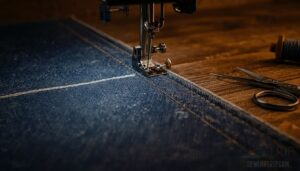
A clean re-stitch is critical to a successful repair. Set your machine to a consistent Stitch Length—around 2.5mm is ideal for denim—and verify Thread Tension to ensure stitches lock evenly without puckering. These foundational steps prevent fabric distortion and ensure durability.
Follow the marked new seam line precisely, employing Symmetrical Pinning to maintain layer alignment. Secure the seam by Backstitching at both ends, then press the seam allowance flat to achieve a crisp, professional finish.
| Step | What to Do |
|---|---|
| Needle Choice | Use a denim or stretch needle |
| Seam Alignment | Match original seam line precisely |
| Stitch Length | Set to 2.5mm for control |
| tight even stitch | Backstitch both ends to lock |
| crotch seam alteration for pants | Trim allowance, press flat after |
Adjusting Rise and Inseam Together
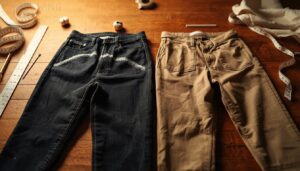
Rise and inseam don’t work in isolation — change one without the other and your pant length shifts unexpectedly. The Rise‑Inseam Ratio keeps everything proportional. Use the Unified Slash Technique: slash across both front and back rise, then spread or overlap evenly. This Proportional Leg Adjustment preserves Side‑Seam Balance throughout.
Change the rise without adjusting the inseam, and your pant length pays the price
Follow this Fit Recalculation Method for how to adjust inseam and crotch seams together:
- Slash above the hip line on both front and back pieces
- Spread or overlap pieces evenly to adjust crotch length for better pant fit
- Recheck side seam length after every change
- Baste the new rise before permanent stitching
- Verify overall pant length hasn’t shifted at the hem
Using Darts to Remove Extra Fullness
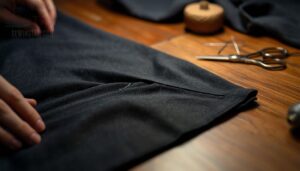
Darts are your secret weapon when seams alone can’t fix the puffiness. For dart placement, follow the crotch curve where fullness is worst — usually under the abdomen or along the hip seam.
Dart depth starts at ¼ inch; increase gradually if bagging remains.
Stitch dart stitching from wide to narrow, leaving a thread tail at the tip.
Check dart symmetry on both sides before pressing flat.
Trimming Seam Allowance for Comfort
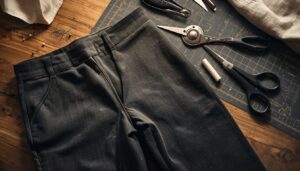
Too much fabric at the crotch seam creates binding and discomfort — bulk reduction is the fix. After re-stitching, trim the seam allowance carefully:
- Trim evenly 1/4 to 3/8 inch from the interior crotch seam edge.
- Use precision cutting with sharp scissors or a rotary cutter.
- Apply staggered allowance on dense fabrics — wider outside, narrower inside.
- Press flat after even seam trimming to set the new line.
Edge reinforcement prevents fraying after seam reduction.
Reinforcing The Seam to Prevent Stretching
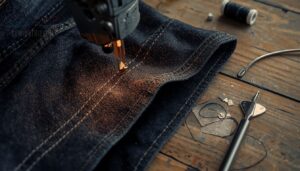
A repaired seam without reinforcement is just waiting to fail again. After trimming, lock it in with one of these seam reinforcement methods:
| Method | How It Works | Best For |
|---|---|---|
| Triple Stitching | Three parallel stitch lines share the load | Heavy denim, canvas |
| Bar Tack Reinforcement | Dense stitches lock seam endpoints | High-stress pivot points |
| Gusset Insertion | Small fabric panel reduces seam tension | Active or stretch pants |
| Interfacing Application | Fusible layer stiffens seam allowances | Lightweight or woven fabrics |
| Seam Tape Bonding | Fabric tape bonds layers under the seam | Quick, low-bulk fix |
Run your second stitch line about ¼ inch from the first to reinforce the seam evenly.
Pressing and Finishing The Altered Seam
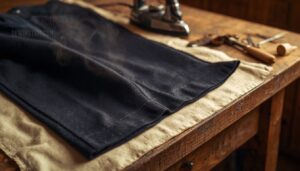
Once your seam reinforcement methods are done, press the crotch seam flat using a tailor’s ham for shaping. A seam roll technique works great along the inseam.
Lay a pressing cloth of choice over the fabric, then use an iron clapper press to set the edge crisp.
Finish with topstitch reinforcement, and your pants are ready.
Try No-Sew Fixes First
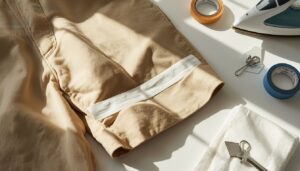
Not every fix needs a needle and thread. If you’re short on time or just need something to hold until you can sew, there are a few tricks that actually do the job.
Here’s what you can try right now.
Fabric Tape for Temporary Tightening
Grabbing a roll of fabric tape is one of the fastest temporary fixes you have. Choose your tape width selection carefully: narrower ¼-inch tape works for light cotton, while denim needs a full inch.
Press firmly for better adhesion, and consider heat-activated options if you need extra hold.
It’s stretch fabric compatible, and residue removal is typically a gentle wash away.
Iron-on Bonding Strips Inside The Seam
Iron-on bonding strips take the no-sew idea a step further. Tuck an iron-on hemming strip inside the seam, apply firm, even pressure — no sliding — and the heat-activated fabric adhesive creates a flat, low-profile bond.
Fabric prep techniques matter here: smooth the fabric first. Test bond strength on a scrap, check adhesive temperature settings, and trim strip edges clean after cooling.
Fabric Glue for a Quick Hold
Fabric glue is another quick fix for no-sew garment modifications. Choosing adhesive matters — pick one labeled for stretch fabric bonding if your pants have any give.
Apply a thin layer only; too much glue stiffens the fabric. Clamp during set for better alignment.
Follow drying time tips on the label — full strength usually develops after 24 hours.
Safety Pin and Clip Hacks
Hidden safety pins work great for a quick pin test fit — just pinch the excess fabric inside and secure it with a size 1 or 2 pin.
Try clip-held darts using binder clips to test the shape before committing. These DIY pant alteration techniques without sewing give you adjustable clip tension and pin-reinforced seams instantly.
Waist-tightening Tricks That Lift The Crotch
A snug waist pulls the whole pant up — including the crotch. Use a belt cinch or thread an elastic waistband insert to bring in extra room fast. Adjustable suspenders work surprisingly well too, lifting the rise evenly from both shoulders.
A hip band or waist adjuster tab offers non-sew garment modification without a single stitch. These solutions provide quick, practical ways to tailor fit without sewing.
Small waist adjustments to improve pants fit can make a big difference in comfort and appearance.
When Temporary Fixes Actually Work
Temporary fixes earn their keep when conditions are right. Here’s when they actually hold up:
- Fabric Compatibility – Woven and dense twills respond best; stretch knits need frequent reapplication.
- Wear Duration – Expect 1–5 wears per fix.
- Activity Level – Low-movement days make fabric tape and safety pins last longer.
- Heat Treatment – Iron-on strips bond better with correct heat settings.
- Reapplication Timing – Reapply after each wash to maintain reliable nonsew garment modifications.
Prevent Future Crotch Bagging

Fixing the problem is only half the battle — keeping it fixed is where the real win happens.
A few simple habits can go a long way toward making sure your pants stay snug and shaped the way they should. Here’s what to do going forward.
Washing and Drying Pants Without Overstretching
How you wash your pants matters more than you’d think. Always use a cold water cycle with a gentle spin speed — hot water and rough agitation stretch seams fast.
If you need to shrink denim slightly, a controlled hot wash works, but watch it closely.
Air dry hanging when you can. If you must machine dry, use low heat tumble only.
While still damp, reshape the waistband gently.
Storing Pants to Keep Their Shape
How you store your pants is just as important as how you wash them. For Hanging Strategies, use a wide sturdy hanger and hang by the waistband—this prevents crotch sag over time.
Fabric-specific hanging matters too: skip hanging stretch fabrics long-term; instead, use Drawer Dividers and Folded Stacking.
Maintain Preservation Conditions between 60–75°F, away from sunlight, for lasting wardrobe maintenance.
Reinforcing Worn Seams Early
Catch a worn seam early — it’s far easier to reinforce than to replace. Here’s how to stay ahead of it:
- Run stay stitching along the crotch curve to stop stretching before it starts.
- Add interfacing backing behind stress points for extra anchor support.
- Sew bar tacks at seam ends and use a twin needle stitch for strength.
- Apply patch reinforcement inside worn areas with secure edges.
Choosing Better-fitting Pants When Buying
Reinforcing seams keeps your current pants lasting longer — but smarter buying stops the problem before it starts.
When purchasing, use a size chart comparison each time, as sizing varies by brand. Check the fabric stretch rating and rise length guidelines before committing.
| What to Check | Why It Matters |
|---|---|
| Fit style selection | Prevents excess thigh room |
| Body shape matching | Ensures proportional drape |
Matching Crotch Depth to Body Shape
Smarter buying gets you halfway there — but your body shape does the rest of the work. Pear shape depth needs more room at the front thigh. Apple silhouette fit works better with less rise. Hourglass rise should balance both waist and hip. Rectangular line tweak adds length for visual curves. Petite crotch adjust keeps the waistband from riding up.
Match crotch depth to your shape, and crotch sag reduction practically resolves itself.
When to Fix at Home or Tailor
Know your limits — that’s half the battle. DIY is highly suitable when tackling small fixes, simple fabrics, or projects with tight time constraints.
Fabric complexity quickly changes things. Heavy denim, lined trousers, or formal garments demand professional expertise, tipping the balance between DIY repairs and tailored solutions.
For fit precision that lasts, professional tailoring services prove worth every cent.
Frequently Asked Questions (FAQs)
How to stop crotch bulge in pants?
Stop crotch bulge through smart Fit Diagnostics: pinch excess fabric, apply fabric tape, or use safety pins for quick fixes.
DIY methods for tightening pants work fast without a single stitch.
Can you make pants crotch smaller?
Yes, you can. With the right stitch in time — whether through Professional Alterations, DIY methods for tightening pants, Elastic Inserts, or Pattern Scaling — trimming the crotch down is absolutely doable.
Why is the crotch of my pants baggy?
Your pants feel loose in the crotch for a few key reasons: elastic fiber fatigue, seat curve mismatch, hip‑thigh proportion issues, or moisture induced swelling that distorts fit over time.
Can you alter a baggy crotch?
Absolutely — a baggy crotch in pants is one of the most fixable fit complications out there.
With basic sewing techniques for pants and a quick fabric assessment, professional tailoring results are well within your reach.
How to alter pants that are baggy in the seat?
Take in the back inseam about ½ to 1 inch, tapering toward the hip. Baste first, try on, then sew permanently. Trim and press the seam flat.
How to fix crotch blowout?
A crotch blowout needs denim patch reinforcement placed inside the pants.
Use a heavy needle and bar tack stitching at stress points.
Inside patch placement keeps repairs hidden and comfortable.
What tools are needed to fix a baggy crotch?
Gather a seam ripper and fabric tape handy? That’s your starting kit.
Add safety pins, iron-on hemming strips, and a seam gauge for precision — these essential tools for pant alterations cover almost every fix.
Can I fix a baggy crotch without sewing?
Yes, you can. Fabric tape, safety pins, a rubberized belt trick, suspenders lift, hidden elastic cord, shapewear layering, or high-heat shrink offer a solid quick fix — no needle required.
How can fabric choice affect crotch bagginess?
Fabric is the silent culprit — the more it stretches, the less it recovers.
Denim holds shape; cotton sags.
Weave tightness, fiber weight, and stretch recovery all decide how fast your crotch bags out.
Are there non-tailoring solutions for baggy crotches?
Absolutely — no needle required.
A few smart tricks like an Elastic Belt, Adjustable Suspenders, or a Hidden Drawstring can lift and redistribute fabric instantly, giving you a cleaner fit without touching a seam.
Conclusion
A perfectly fitting pair of pants can genuinely change how your whole day feels—and fixing baggy crotch in pants is closer within reach than most people realize. Whether you reached for a needle and thread or grabbed fabric tape, you’ve already done the hard part: you noticed the problem and chose to fix it.
Keep the seams reinforced, wash with care, and store them folded right. Your pants will hold their shape—and so will your confidence.