This site is supported by our readers. We may earn a commission, at no cost to you, if you purchase through links.
Threading a needle used to be the moment a sewing project almost didn’t happen. Squinting, re-wetting thread, muttering under your breath—every sewist knows that ritual. Modern computerized sewing machines with sophisticated technology have quietly made that struggle a relic. Today’s machines thread themselves, cut thread with a tap, read fabric thickness in real time, and connect to your phone to pull in embroidery patterns you found at midnight.
The gap between a home machine and a professional setup has never been smaller. Whether you’re piecing quilts, stitching stretch knits, or diving into embroidery, the right machine changes what you’re capable of making.
Table Of Contents
- Key Takeaways
- Advanced Technology Features
- Performance and Sewing Versatility
- Top 10 Computerized Sewing Machines
- 1. Brother Computerized Sewing Quilting Machine
- 2. Brother CS7000X Computerized Sewing Quilting Machine
- 3. Brother SE700 Wireless Sewing Embroidery Machine
- 4. Singer Quantum Stylist 9960 Sewing Machine
- 5. Brother CS7205 Computerized Sewing Machine
- 6. Brother CS5055 Computerized Sewing Machine
- 7. Brother SE2000 Sewing and Embroidery Machine
- 8. Heureux Computerized Sewing Machine with LCD Screen
- 9. Brother CP100X Sewing Quilting Machine
- 10. Brother CP60X 60 Stitch Sewing Machine
- Choosing The Right Machine
- Maintenance and Long-Term Reliability
- Frequently Asked Questions (FAQs)
- Conclusion
Key Takeaways
- Today’s computerized sewing machines thread themselves, adjust tension in real time, and connect to your phone — so you spend less time troubleshooting and more time actually making things.
- The gap between home and professional sewing has never been smaller, with machines under $300 now handling denim, knits, quilts, and decorative embroidery without breaking a sweat.
- Picking the right machine comes down to matching features to your actual projects — stitch count, throat space, and connectivity matter far more than chasing the biggest spec sheet.
- A little regular maintenance — cleaning lint, changing needles every 8–10 hours, and keeping firmware updated — is what separates a machine that lasts 25 years from one that fights you by next season.
Advanced Technology Features
Today’s computerized sewing machines pack a surprising amount of smart technology into a surprisingly small footprint. These features aren’t just flashy extras — they genuinely change how you work, cutting setup time and giving you more control over every stitch.
From touchscreen displays to auto-threading and tension adjustment, computerized sewing machines built for easy operation let you spend less time troubleshooting and more time actually creating.
Here’s a look at the key tech features worth knowing about.
Automatic Needle Threaders and Thread Cutters
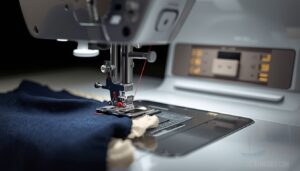
The threader mechanism on today’s computerized sewing machines is genuinely clever. A tiny hook slides through the needle eye in one motion — no squinting required. Just mind the needle size limits; needles smaller than 70/10 can bend that delicate hook. Perfect your thread guide setup, and the automatic thread cutter takes care of the rest, trimming both threads cleanly. This ensures pure sewing efficiency.
For users with dexterity issues, an automatic needle threader can be a valuable tool.
Needle Up/down and Pivot Control
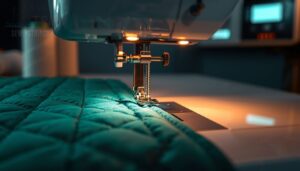
Needle positioning is where sewing machine control really earns its keep. With needle up/down settings, you stop exactly where you want — needle buried in the fabric or fully raised and ready to release. That precision stitching at corners? It’s easy.
Pivot functionality on computerized sewing machines lifts the presser foot automatically, ensuring fabric handling stays smooth and stitch accuracy never slips.
Digital Stitch Width and Length Adjustment
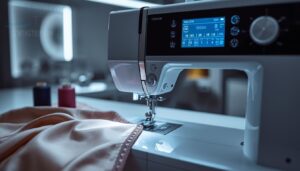
Once you’ve nailed your pivot, stitch size becomes your next lever. Stitch Length Control and Digital Width Adjustment put exact numbers at your fingertips — no guesswork.
Need a tighter seam on delicate silk? Drop the length. Wider zigzag for knit fabric? Tap ‘+’.
Sophisticated sewing technology makes Stitch Customization instant, so Precision Stitching Techniques actually feel seamless.
LCD Touchscreens and Stitch Previews
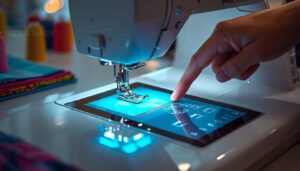
Once your stitch size is set, the LCD display screens on today’s computerized sewing machines take over the guesswork. Touchscreen Navigation feels surprisingly instinctive — tap a stitch, and Stitch Visualization shows exactly what you’ll get before thread meets fabric.
On-Screen Guidance recommends the right presser foot automatically, while Preview Editing lets you tweak settings on the spot. These features ensure seamless adjustments without interrupting your workflow.
Screen Reliability keeps everything crisp and responsive, so stitch selection stays fast and confident.
USB, Bluetooth, and Wi-Fi Connectivity
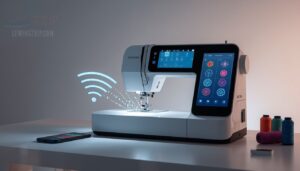
Connectivity options on today’s computerized sewing machines have quietly become a revolution. Whether you prefer USB design import from a flash drive, wireless LAN connectivity for smooth Wi-Fi transfers, or Bluetooth pairing functions for quick app links, modern machines meet you where you are.
The Brother SE700 nails all three:
- USB port — offline file loading, no network needed
- Wi-Fi connectivity — send designs wirelessly from your computer
- Mobile app connections — edit and transfer patterns straight from your phone
Programmable Memory and Custom Stitch Sequences
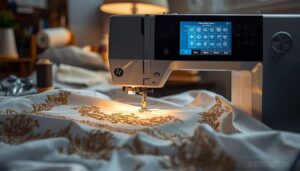
Think of programmable memory as your machine’s personal notebook. With Stitch Memory Recall, you save custom combinations once — logos, borders, monograms — and pull them back instantly. No rebuilding from scratch.
| Feature | What It Does | Why It Matters |
|---|---|---|
| Programmable Sequencing | Stores full stitch order | Repeat jobs stay consistent |
| Sequence Editing Tools | Adjust order or direction | Fix designs without starting over |
| Automated Stitch Flow | Runs saved patterns continuously | Cuts setup time dramatically |
| Custom Pattern Design | Combines utility and decorative stitches | Unlocks your creative range |
| Stitch Memory | Saves sewing attributes as groups | Keeps settings ready to reuse |
Today’s programmable sewing machine technology turns customizable stitches and patterns into reusable design programs — real sophisticated sewing technology built for makers who refuse to repeat unnecessary work.
Advanced Sensors for Tension and Fabric Feed
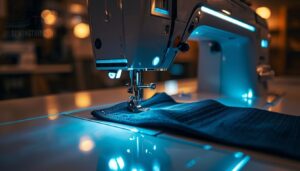
Modern computerized sewing machines take guesswork out of the equation with sophisticated sensor technology built right in. Automatic Tension Control reads your fabric in real time and adjusts before a bad stitch even happens. That’s stitch regulation technology doing the heavy lifting for you.
- Fabric Thickness Detection shifts Presser Foot Response automatically across denim, knits, and delicate layers
- Feed Monitoring Systems keep fabric moving evenly, preventing drift on slippery materials
- Precision Stitch Stability syncs tension and feed so both sides of your seam look clean
This sophisticated sewing technology makes automatic needle threading feel like just the beginning.
Performance and Sewing Versatility
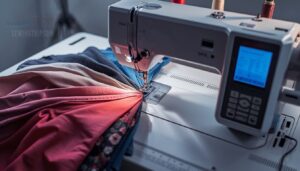
A great sewing machine isn’t just about fancy features — it has to perform when it counts.
From blazing speeds to handling the most delicate silk or the stretchiest jersey knit, versatility is what separates a good machine from a great one.
Here’s what today’s top computerized machines bring to the table.
High-speed Stitching for Faster Projects
Speed ramping lets you ease into full power gradually, so you stay in control from the first stitch to the last.
Most computerized sewing machines top out around 850 stitches per minute, and servo motor drive keeps vibration reduction smoothly even at peak pace.
Rapid needle positioning and precise speed control mean accelerated stitching never costs you accuracy — just time saved.
Precision Sewing on Delicate Fabrics
Delicate fabrics don’t forgive mistakes — and that’s exactly where modern sewing technology earns its place.
Computerized sewing machines give you precise control where it counts most:
- Needle Size — Use 60/8 or 70/10 Microtex needles to pierce silk and chiffon cleanly.
- Stitch Length — Set it between 2.0–2.5 mm for neat, controlled precision stitches.
- Presser Pressure — Adjust it so gentle feed moves fabric evenly without dragging.
- Fabric Stabilizer — Keeps slippery layers steady for consistent stitch regulation and fabric handling.
Stretch Stitches for Knit Materials
Knit fabrics stretch — and your seams need to keep up. Computerized sewing machines handle this with built-in stretch options that move with the fabric instead of fighting it.
| Stitch Type | Best Use |
|---|---|
| Lightning‑Bolt Stitch | Light to medium knits |
| Triple‑Straight Stitch | Athletic and fitted wear |
| Overedge Knit Stitch | Edge finishing with stretch |
| Stretch Needle Pairing | Prevents skipped stitches |
| Stitch Length Optimization | Balances strength and stitch elongation |
High-tech sewing technology takes the guesswork out — customizable stitches and patterns let you dial in fabric handling for jersey, ponte, or spandex with confidence.
Decorative, Utility, and Heirloom Stitch Options
Computerized sewing machines open a whole creative library beyond basic stretch stitches. Decorative stitches like satin stitch use, blanket edge detailing, chain outline techniques, and feather border ideas let your projects stand out.
Hemstitch lacing brings heirloom-quality detail to fine fabrics, elevating delicate work.
Built-in stitch patterns and customizable stitches mean sophisticated sewing technology does the heavy lifting — you just create.
Quilting Support With Wide Tables
Quilting with a computerized sewing machine becomes essential when your workspace keeps up. A wide table with Left Side Extension—about 2 to 3 feet—provides large quilts room to maneuver.
Table Height Alignment ensures fabric glides smoothly, preventing snags. Adding Rear Quilt Support behind the machine and using Table Clamping Techniques to secure edges further stabilizes the setup.
This Stable Table Setup effortlessly manages even king-size quilts, transforming ambitious projects into achievable feats.
Embroidery Functions, Fonts, and Design Imports
Embroidery functions on today’s digital embroidery machines go far beyond simple decoration. You get real tools — design resizing from 50% to 200%, pattern mirroring, and stitch order optimization built right in.
Color preview lets you see thread choices before a single stitch drops.
- Alphanumeric fonts with adjustable font spacing for clean monogramming
- Import embroidery designs via USB or Wi-Fi instantly
- Machine embroidery enables precise 1-degree pattern rotation
Stable Metal Frames for Heavy-duty Use
A rigid frame construction does more than just hold parts together — it keeps your needle bar, feed dogs, and motor aligned stitch after stitch. This frame-induced precision is critical when sewing through dense materials like denim, canvas, or leather.
The sturdy bed plate and vibration dampening systems ensure fabric glides smoothly under the needle, while the load bearing capacity of a durable metal frame allows heavy-duty machines to handle thick fabrics without hesitation or distortion.
Top 10 Computerized Sewing Machines
Picking the right computerized sewing machine comes down to knowing what is actually out there.
The market has some genuinely standout options right now, from beginner-friendly models to feature-packed machines built for serious makers.
Here are ten worth your attention.
1. Brother Computerized Sewing Quilting Machine
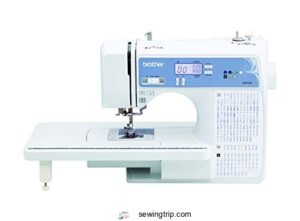
The Brother XR9550 combines simplicity with serious capability. It offers 165 built-in stitches, including 110 utility and decorative options plus 55 alphanumeric characters, keeping your creative range wide open.
The automatic needle threader and jam-resistant drop-in bobbin cuts setup time fast. An LCD screen with push-button selection keeps adjustments straightforward, not frustrating.
At just 10.1 pounds, it’s portable enough to take anywhere. Eight presser feet and a wide extension table round out a machine that genuinely grows with you.
| Best For | Beginners and hobbyists who want a capable, easy-to-use machine for quilting, garment sewing, and decorative projects without a steep learning curve. |
|---|---|
| Built-in Stitches | 165 |
| Buttonhole Styles | 8 |
| LCD Screen | Yes |
| Auto Needle Threader | Yes |
| Drop-in Bobbin | Jam-resistant drop-in |
| Machine Weight | 10.1 lb |
| Additional Features |
|
- 165 built-in stitches gives you plenty of creative options, from everyday utility stitches to decorative and alphanumeric designs.
- The automatic needle threader and drop-in bobbin make setup quick and painless, even if you’re just starting out.
- Lightweight at 10.1 lbs with a wide extension table, so it handles everything from small crafts to larger quilts without taking over your space.
- Plastic components throughout mean it may not hold up as well over time compared to heavier, metal-built machines.
- It’s US-only (120V), so if you travel or move internationally, your warranty is void and usability becomes tricky.
- A few users have noted minor quirks like a hard cover that doesn’t fit perfectly and occasional stitch tension pulling to the left.
2. Brother CS7000X Computerized Sewing Quilting Machine
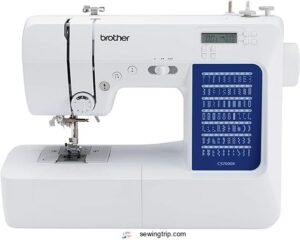
If you’re serious about quilting without breaking the bank, the Brother CS7000X deserves a close look. At $279.99, it punches well above its price point — 70 built-in stitches, seven auto-size buttonholes, and a metal frame that keeps everything stable, even through thick denim layers.
The jam-resistant drop-in bobbin and automatic needle threader cut setup time greatly. A detachable wide table manages large quilt panels with ease.
Compact at 14 pounds, it’s built to last without anchoring you to one spot.
| Best For | Quilters and home sewers who want a reliable, feature-packed machine at a mid-range price — especially beginners ready to tackle bigger projects. |
|---|---|
| Built-in Stitches | 70 |
| Buttonhole Styles | 7 |
| LCD Screen | Yes |
| Auto Needle Threader | Yes |
| Drop-in Bobbin | Jam-resistant drop-in |
| Machine Weight | 14 lb |
| Additional Features |
|
- 70 built-in stitches and a metal frame give you serious capability without a serious price tag
- The automatic needle threader and drop-in bobbin make setup quick and low-frustration
- The detachable wide table is a genuine game-changer for managing large quilt panels
- US-only voltage means international users need an extra adapter or transformer
- No automatic bobbin threading — you still have to load it by hand
- No built-in embroidery, so it won’t satisfy sewers looking for decorative machine work
3. Brother SE700 Wireless Sewing Embroidery Machine
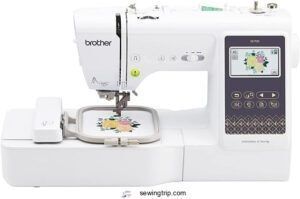
Want a machine that bridges sewing and embroidery without compromise? The SE700 does exactly that. At $579.99, it offers 135 built-in embroidery designs, 103 sewing stitches, and wireless LAN connectivity — letting you transfer custom patterns directly from your phone via the Artspira app.
The 3.7-inch color touchscreen simplifies design editing, making the process intuitive rather than daunting.
Automatic threading and thread cutting minimize hassle, streamlining your workflow.
While the 4×4-inch embroidery field is compact, it’s ideal for custom-made gifts and custom patches, offering ample creativity in a small space.
| Best For | Hobbyists and beginners who want to do both sewing and embroidery without buying two separate machines. |
|---|---|
| Built-in Stitches | 103 sewing + 135 embroidery |
| Buttonhole Styles | 10 |
| LCD Screen | 3.7″ color touchscreen |
| Auto Needle Threader | Yes |
| Drop-in Bobbin | Jam-resistant drop-in |
| Machine Weight | 15.6 lb |
| Additional Features |
|
- Wireless design transfer via the Artspira app makes it easy to create and send custom patterns straight from your phone
- Automatic needle threading and thread cutting save time and reduce frustration, especially for newer sewers
- 135 built-in embroidery designs plus 103 sewing stitches give you a ton to work with right out of the box
- The 4×4-inch embroidery field is pretty limiting if you want to do larger logos or bigger decorative pieces
- Narrow throat space makes it tricky to work with wide fabrics or large quilt panels
- Full wireless features depend on a stable Wi-Fi connection, and some users have run into bobbin tension issues and a fiddly setup process
4. Singer Quantum Stylist 9960 Sewing Machine
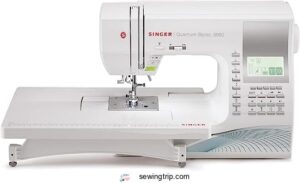
The Singer Quantum Stylist 9960 is a powerhouse hiding in plain sight. At $540.99, you get 600 built-in stitches, 13 automatic buttonhole styles, and a speed cap of 850 stitches per minute — enough to tear through long curtain seams or slow down for detailed appliqué work.
The automatic needle threader, drop-in bobbin, and built-in thread cutter keep your setup clean and fast.
Its heavy-duty metal frame adds stability, so even heavy fabrics behave.
A reliable all-rounder that punches well above its price.
| Best For | Home sewers and crafters who want a versatile, feature-rich machine that can handle everything from beginner projects to quilts, garments, and home décor without needing to upgrade anytime soon. |
|---|---|
| Built-in Stitches | 600 |
| Buttonhole Styles | 13 |
| LCD Screen | Yes |
| Auto Needle Threader | Yes |
| Drop-in Bobbin | Top drop-in |
| Machine Weight | 14.6 lb |
| Additional Features |
|
- 600 stitch types and 13 automatic buttonhole styles give you serious creative range, whether you’re quilting, garment sewing, or doing decorative work
- The automatic needle threader, drop-in bobbin, and built-in thread cutter make setup and finishing genuinely faster and less fiddly
- Speed control dial and start/stop button let you sew without a foot pedal, which is a nice option for detailed or hands-on projects
- The throat plate is on the smaller side, so large quilting projects can feel cramped and awkward to maneuver
- At nearly 15 lbs, it’s not the easiest machine to move around — you’ll want a dedicated spot for it
- The 90-day limited warranty is pretty short for the price, and some coverage requires you to register to get the full benefit
5. Brother CS7205 Computerized Sewing Machine
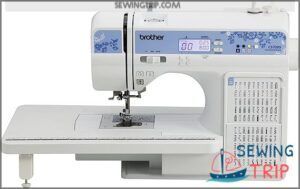
If you’re just stepping into computerized sewing, the Brother CS7205 is a smart place to land. It packs 150 built-in stitches — utility, decorative, heirloom, even basic monogramming — into a clean, approachable machine.
The back-lit LCD shows your stitch settings at a glance, and the one-lever automatic needle threader saves you from squinting at a tiny eye.
You also get 8 auto-size buttonhole styles and 11 presser feet included.
It won’t overwhelm you, but it won’t hold you back either.
| Best For | Beginners and advanced beginners who want a capable, easy-to-navigate machine for garments, basic quilting, and everyday sewing projects. |
|---|---|
| Built-in Stitches | 150 |
| Buttonhole Styles | 8 |
| LCD Screen | Back-lit LCD |
| Auto Needle Threader | Yes |
| Drop-in Bobbin | Quick-set drop-in |
| Machine Weight | 17.5 lb |
| Additional Features |
|
- 150 built-in stitches plus 8 auto-size buttonhole styles give you a lot of range without needing extra equipment.
- The automatic needle threader and drop-in bobbin system make setup fast and frustration-free.
- Comes ready to sew — 11 presser feet and a wide table are included right out of the box.
- The throat space is on the smaller side, so large quilting projects can get awkward fast.
- No automatic thread cutter or advanced features like USB connectivity or stitch memory.
- Only works with 120V U.S. outlets — not a great travel companion outside the country.
6. Brother CS5055 Computerized Sewing Machine
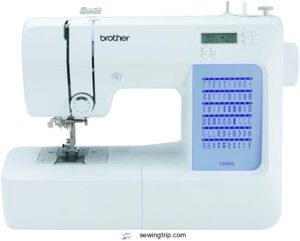
The Brother CS5055 is proof that $134 can go a long way. It offers 60 built-in stitches — utility, decorative, and heirloom — plus 7 auto-size buttonhole styles and a clear LCD screen that keeps settings visible at a glance.
The automatic needle threader and drop-in bobbin streamline setup, while the metal frame handles sturdy fabrics like denim and tweed without strain.
Its compact, quiet design ensures ease of use, making it beginner-friendly without feeling limited. A solid pick for building skills on a budget.
| Best For | Beginners and budget-conscious sewers who want a capable, easy-to-use machine for home projects like garment repairs, hemming, and décor without spending a fortune. |
|---|---|
| Built-in Stitches | 60 |
| Buttonhole Styles | 7 |
| LCD Screen | Yes |
| Auto Needle Threader | Yes |
| Drop-in Bobbin | Quick-set drop-in |
| Machine Weight | 10.5 lb |
| Additional Features |
|
- 60 built-in stitches plus 7 auto-size buttonholes give you plenty of variety for both everyday and creative projects
- Automatic needle threader and drop-in bobbin make setup quick and frustration-free, especially for new sewers
- Metal frame handles medium-weight fabrics like denim and tweed, so it punches above its price point
- Key parts like the presser-foot lever and spool spindle are plastic, which could be a durability concern over time
- LCD error messages and the non-standard foot-lever placement have a bit of a learning curve at first
- Thread can occasionally slip out of the needle eye during long sessions, and the speed won’t cut it for high-volume or industrial use
7. Brother SE2000 Sewing and Embroidery Machine
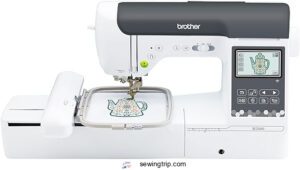
Ready to move beyond basics? The SE2000 is where sewing meets embroidery — no compromise needed. You get 241 built-in stitches, 193 embroidery designs, 13 fonts, and a 5" x 7" hoop for statement-sized projects.
The 3.7" touchscreen lets you resize, rotate, and preview designs before a single stitch drops.
Wireless connectivity pairs with the Artspira app, so transferring custom patterns takes seconds.
At 850 stitches per minute, your creative vision moves as fast as you do.
| Best For | Crafters who want a do-it-all machine — someone ready to tackle embroidery, quilting, and custom projects without juggling two separate machines. |
|---|---|
| Built-in Stitches | 241 sewing + 193 embroidery |
| Buttonhole Styles | Not specified |
| LCD Screen | 3.7″ touchscreen |
| Auto Needle Threader | Yes |
| Drop-in Bobbin | Not specified |
| Machine Weight | 38 lb |
| Additional Features |
|
- Huge design library right out of the box — 241 stitches, 193 embroidery patterns, and 13 fonts give you plenty to work with before spending a dime extra.
- Wireless design transfer via the Artspira app makes moving custom patterns from your phone to the machine genuinely painless.
- The 5" x 7" embroidery field is a solid size, and features like auto thread trimming and color sorting keep your workflow smooth.
- At 38 lbs with no carrying case, this thing lives on your table — don’t plan on moving it around much.
- The Artspira app subscription runs $13/month, and extras like magnetic hoops and stabilizers add up fast.
- There’s a real learning curve here — firmware updates, embroidery setup, and getting comfortable with the touchscreen all take some time upfront.
8. Heureux Computerized Sewing Machine with LCD Screen
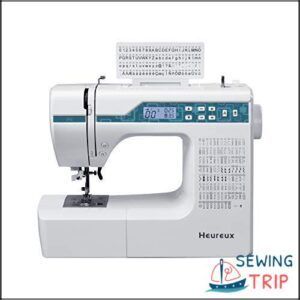
The Heureux Z6 keeps things focused — offering 200 built-in stitches, 100 alphanumeric options, and 8 auto-size buttonhole styles for serious range without a steep learning curve.
The LCD screen clearly displays stitch length and width, eliminating guesswork during use.
Its aluminum alloy frame handles diverse fabrics, from knits and denim to everything in between, ensuring durability and versatility.
Weighing just 14 pounds, the machine remains portable enough to accompany you wherever your next project calls.
| Best For | Sewers of all skill levels who want a versatile, feature-packed machine for everyday projects like clothing, home decor, and light quilting. |
|---|---|
| Built-in Stitches | 200 |
| Buttonhole Styles | 8 |
| LCD Screen | Yes |
| Auto Needle Threader | Yes |
| Drop-in Bobbin | Top-loading |
| Machine Weight | 12 lb |
| Additional Features |
|
- 200 built-in stitches — including 8 auto-size buttonhole styles — give you plenty of options without feeling overwhelming
- The LCD screen makes it easy to dial in stitch settings at a glance, no guesswork needed
- Aluminum alloy frame keeps it solid and durable while still light enough to take on the go
- The foot pedal has a reputation for acting up after just a few months of regular use
- Customer support is hit or miss — getting help when something goes wrong can be frustrating
- Thick or heavy-duty fabrics can cause jamming, so it’s not the best pick for serious heavy-duty work
9. Brother CP100X Sewing Quilting Machine
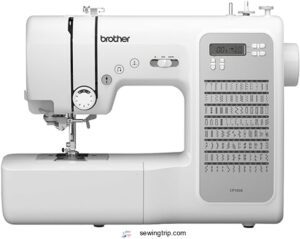
If portability matters to you, the CP100X checks that box at just 10.5 pounds — but don’t let the lightweight build fool you. Its metal frame manages denim, quilts, and thick layered fabrics without flinching.
You get 100 built-in stitches, 8 one-step buttonhole styles, and a speed control slider that lets you work at your own pace. The included wide table and 10 presser feet make it a genuinely capable quilting setup.
This is all backed by a 25-year limited warranty.
| Best For | Quilters, beginners, and anyone who needs a sturdy, easy-to-use machine that can handle heavy fabrics without being hard to move around. |
|---|---|
| Built-in Stitches | 100 |
| Buttonhole Styles | 8 |
| LCD Screen | Yes |
| Auto Needle Threader | Yes – 1-step |
| Drop-in Bobbin | Quick-set |
| Machine Weight | 10.5 lb |
| Additional Features |
|
- Metal frame handles thick, heavy fabrics like denim and quilts with no issues
- 100 built-in stitches plus adjustable speed make it flexible for all skill levels
- Comes ready to quilt — wide table and 10 presser feet included right out of the box
- Bobbin winding can run uneven and may need you to babysit it a bit
- First-time setup has a learning curve, and some buyers have gotten incomplete accessory kits
- Only works on US 120V outlets — using it abroad voids the warranty
10. Brother CP60X 60 Stitch Sewing Machine
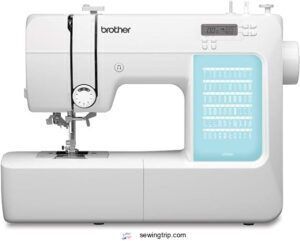
Stepping down in stitch count doesn’t mean stepping down in quality. The CP60X keeps things focused with 60 built-in stitches, 7 one-step buttonhole styles, and a 2-step automatic needle threader that streamlines setup.
At 14 pounds with a solid metal frame, it handles everyday fabrics reliably. The LCD screen simplifies stitch selection, while the Quick-Set bobbin reduces fumbling between projects.
If you prioritize a clean, capable machine without unnecessary extras, this one delivers.
| Best For | Beginners and casual sewers who want a reliable, easy-to-use machine for everyday garments, repairs, and light quilting without a steep learning curve. |
|---|---|
| Built-in Stitches | 60 |
| Buttonhole Styles | 7 |
| LCD Screen | Yes |
| Auto Needle Threader | Yes – 2-step |
| Drop-in Bobbin | Quick-set |
| Machine Weight | 14 lb |
| Additional Features |
|
- 60 stitches plus 7 buttonhole styles give you plenty of options for both basic and decorative work
- The automatic needle threader and Quick-Set bobbin make setup fast and frustration-free
- Metal frame keeps things sturdy enough for medium-weight fabrics like denim and tweed
- Plastic housing can feel a little flimsy if you’re pushing it through heavy-duty projects regularly
- Struggles with very thick materials or stacked layers, so it’s not ideal for heavy upholstery or bag making
- Twin needles don’t come included, so specialty techniques cost you extra out of the box
Choosing The Right Machine
Picking the right computerized sewing machine comes down to knowing what you actually need it to do.
The wrong choice can leave you frustrated — the right one feels like it was built just for you.
Here’s what to look at before you decide.
Matching Features to Sewing Goals
Think of your machine as a toolkit — it should match the work you actually do. Goal‑Based Stitch Selection means a basic 70-stitch model manages garments fine, while heirloom linen work demands 200-plus options.
Your sewing machine should match your work — a 70-stitch model handles garments, but heirloom linen demands 200-plus
Project‑Specific Fabric Matching, Needle Size Optimization, and smart Accessory Pairing Strategies separate a frustrating experience from a great one.
This sewing machine buying guide helps you compare sewing machine features before spending a dime.
Comparing Quilting and Embroidery Capabilities
Quilting and embroidery pull in opposite directions — and knowing the difference saves you from buyer’s remorse. Quilting capabilities demand wide throat space and extension tables, while embroidery functions lock you into 4×4-inch hoop constraints.
Thread requirements differ too: heavier cotton for quilts, fine rayon for detailed designs.
Stitch regulation and design import limits vary by mode, so match the machine to your actual craft.
Evaluating Stitch Count and Customization
Stitch library size matters more than you’d think. The SINGER Quantum Stylist 9960 offers 600 built-in stitch patterns—spanning quilting, heirloom, decorative styles, and 13 buttonhole options—while the Brother SE700 provides 103 stitches with stronger alphabetic capabilities and 128 KB memory storage.
Greater stitch diversity directly enables creative freedom. However, prioritize matching a machine’s pattern capacity and customizable settings to your actual projects rather than fixating on the largest number advertised.
Checking Ease of Use for Beginners
Starting out doesn’t have to mean starting over every time something goes wrong. The most beginner-friendly sewing machines earn that title through Setup Simplicity — fewer steps between unboxing and your First Project Support moment.
Look for these features before buying:
- Automatic needle threader that guides thread in one motion
- LCD screen with Interface Clarity showing stitch previews
- Threading Guidance printed directly on the machine
- Learning Prompts and on-screen help menus
- Top-drop bobbin systems that resist jamming
Assessing Speed Control and Precision Tools
Speed control is your secret weapon for precise stitches. Variable Speed Settings let you slow down on curves and power through straight seams — the Brother CS7000X tops out at 750 stitches per minute.
Fabric Feed Accuracy and Thread Tension Calibration ensure Stitch Consistency Metrics remain stable across every layer. Your LCD screen delivers instant Speed Adjustment Feedback, making sophisticated sewing technology feel completely user-friendly.
Balancing Technology, Durability, and Budget
Think of your budget as a long-term investment, not just a price tag. A proper cost-benefit analysis reveals lifecycle savings that cheap models quietly steal back in repairs and tech debt.
Feature prioritization matters—don’t pay for embroidery you’ll never use.
Flexible upgrades, sophisticated sewing technology, and durable, portable sewing machines justify higher upfront costs.
A smart sewing machine features comparison and price comparison of sewing machines always pays off.
Reviewing Accessories, Warranty, and Support
Beyond the budget question, what comes in the box matters more than people expect. Included accessory kits vary widely — some machines bundle presser feet, bobbins, and seam rippers, while others keep it bare.
Check sewing machine warranties and support terms carefully. Warranty claim processes, authorized service centers, spare part compatibility, and online troubleshooting resources can save you real headaches down the road.
Maintenance and Long-Term Reliability
A great machine deserves more than just good stitches — it deserves consistent care. How you maintain it will determine whether it runs like new in five years or starts causing headaches by next season.
Here’s what you need to know to keep yours in top shape for the long haul.
Cleaning Lint and Dust Buildup
Neglecting lint is one of the fastest ways to shorten your machine’s life. Safety comes first—unplug the machine completely before cleaning.
Here’s a simple routine to follow:
- Remove the needle plate for direct access to packed lint
- Brush out the bobbin-case cleaning area with a soft brush
- Use proper dust-removal tools—skip canned air
- Set a cleaning frequency every few bobbins, sooner with fleece or flannel
Caring for Bobbin and Needle Systems
Your bobbin and needle systems are the heartbeat of every stitch. Skip the care routine, and even the best machine starts fighting you.
| Care Task | How Often |
|---|---|
| Needle Replacement Frequency | Every 8–10 sewing hours |
| Bobbin Compatibility Checks | Each new project |
| Bobbin Case Cleaning | Every few bobbins |
| Thread Tension Balancing | When stitches look uneven |
| Hook Timing Inspection | If stitches skip or jam |
Correct seating of your drop-in top bobbin is essential — wrong placement throws off tension fast. The automatic needle threader only works when the needle itself is fresh, straight, and fully inserted.
Updating Software and Firmware
Just like your needle needs replacing, your machine’s software needs updating too. Version verification comes first — check your current firmware before downloading anything.
For USB connectivity in sewing machines, use a FAT32-formatted drive under 32GB. Never interrupt the install; power stability protects against corrupted firmware archive handling.
Backup settings beforehand, and always pull updates from the official manufacturer page — smart sewing devices deserve that respect.
Troubleshooting Tension and Feed Issues
When stitches start acting up, don’t panic — most problems trace back to a few usual suspects. Tension dial fine-tuning, bobbin race inspection, needle thread alignment, and feed dog synchronization cover the bulk of sewing machine troubleshooting:
- Re-thread completely before touching tension settings
- Check the bobbin race for lint blocking the thread catch
- Confirm feed dog systems for fabric control are raised and moving
- Set stitch length above zero to prevent fabric slip detection failures
Computerized sewing machines make sewing machine maintenance and care easier with built-in tension sensors, but manual checks still matter for peak sewing machine speed and performance.
Replacing Presser Feet and Accessories
Swapping presser feet can open up entirely new sewing possibilities — if you get compatibility right first. Foot Compatibility starts with knowing your shank size: low, high, or brand-specific.
Safe Removal requires powering off the machine, raising the needle, and pressing the release lever.
Always perform Alignment Checks before stitching to ensure precision.
| Specialty Foot Use | Accessory Care |
|---|---|
| Zipper foot for piping | Check snap-on grip regularly |
| Quarter-inch foot for patchwork | Match shank size before use |
| Satin stitch foot for dense stitches | Replace worn feet promptly |
| Buttonhole foot for clean sizing | Store feet in labeled cases |
| Free-motion foot for quilting | Use adapters for universal fit |
Protecting The Machine During Storage
Before packing your machine away, a little prep goes a long way. Clean out lint from the bobbin area and needle plate, then drape a fitted dust cover over the body.
Unplug it — power disconnection isn’t optional. Store it in a climate-controlled space, never a damp garage.
Keep accessories in a separate compartment so metal parts don’t scratch the exterior.
Using Warranty Coverage and Repair Support
Your warranty is your safety net — don’t ignore it. Read the coverage limits carefully, as some plans cover parts only, not labor. Keep your receipt and warranty copy together; you’ll need them to start the claims process.
Contact the seller first, then escalate to the manufacturer if needed. Stick to authorized service providers to ensure compliance with warranty terms.
Hold onto all repair records for future reference, as they may be required during claims or further disputes.
Frequently Asked Questions (FAQs)
Is it worth it to get a computerized sewing machine?
Ironically, the "too complex" machine might be your simplest upgrade. Yes, it’s worth it — the Creative Freedom, faster Project Turnaround, and built-in automation outweigh the Learning Curve for most sewists.
What is the disadvantages of computerized sewing machine?
Computerized machines come with a higher price, steeper learning curve, repair difficulty, and maintenance intensity. Their component fragility makes them less forgiving than mechanical alternatives — especially for beginners still building confidence.
What is the most reliable sewing machine brand?
Janome and Bernina top the charts for reliability. Bernina machines average 7 years of use, while Janome’s repair success rate hits 9% — strong proof of lasting brand reputation and consumer satisfaction.
How long will a Computerised sewing machine last?
Think of it like a car — treat it well, and it’ll go the distance. With proper sewing machine maintenance and attention to motor wear, most machines reliably last 10–25 years.
How do computerized machines handle different fabric types?
You guide the machine — it adapts. Set the fabric type, and sensors adjust tension, feed, and stitch length automatically.
From silk to denim, intelligent feed adjustment and variable presser pressure keep every seam clean.
What are the energy-saving benefits of computerized machines?
Servo Efficiency and Standby Power features mean your machine uses up to 70% less energy.
Variable Speed and Sensor Optimization cut average power from 220W to 120W, making Smart Power Management a genuine win for eco-friendly sewing.
Can computerized machines create custom embroidery designs?
With AI‑assisted digitizing and on‑screen design editing, creators can refine designs effortlessly. Stitch density tuning and thread color sequencing further enhance precision.
File format compatibility ensures seamless transfers, making custom embroidery projects genuinely within reach.
How do servo motors improve sewing machine performance?
Servo motors bring Variable Torque, Quiet Operation, and Energy Efficiency to your machine.
With Feedback Control and Rapid Acceleration, you achieve smooth speed control and precise stitching — every seam stays consistent, even on tricky fabrics.
What are the noise and heat reduction advantages of computerized machines?
Computerized machines run quieter and cooler thanks to servo motor quiet operation, standby power saving, direct-drive silence, vibration reduction, and LED cooling — making long sewing sessions far more comfortable.
Can computerized sewing machines handle leather or vinyl?
Some fabrics fight back — leather and vinyl are two of them. With the right Motor Power, Walking Foot Compatibility, and Needle Selection, computerized sewing machines handle both beautifully.
Conclusion
The more a machine does for you, the more creative freedom you actually gain—that’s the quiet power behind today’s computerized sewing machines with sophisticated technology. Features like automatic threading, real-time sensors, and wireless design imports don’t replace your skill; they sharpen it.
By handling tedious tasks, these innovations let you spend less time fighting the machine and more time building something worth keeping. You focus on craftsmanship while the technology streamlines the process.
Pick the one that fits how you sew, maintain it well, and watch what your hands were always capable of making.
- https://quiltsocial.com/6-benefits-of-the-presser-foot-down-pivot-function/
- https://janome.co.nz/auto-pivot-function/
- https://learnhowtoquilt.com/encyclopedia/needle-up-needle-down/
- https://www.ageberry.com/sewing-machine-basics-settings-explained/
- https://meckindustries.in/how-needle-valve-works-explained/