This site is supported by our readers. We may earn a commission, at no cost to you, if you purchase through links.
Choosing the wrong quilting machine doesn’t just slow you down—it can turn a king-size quilt into a genuine struggle, one where you’re fighting your equipment more than creating anything. The difference between a machine with 5 inches of throat space and one with 9 inches isn’t a spec on a chart; it’s whether you can maneuver a rolled queen-size top without losing your mind.
Speed, feed systems, stitch variety, and workspace dimensions all interact in ways that matter deeply to the finished quilt.
This quilting sewing machine comparison chart cuts through the noise, giving you real numbers and honest trade-offs across ten machines worth your attention.
Table Of Contents
- Key Takeaways
- Quilting Machine Comparison Chart Criteria
- Top 10 Quilting Machines Compared
- 1. Juki Computerized Sewing Machine
- 2. Brother PQ1600S Sewing and Quilting Machine
- 3. Singer Quantum Stylist 9960 Sewing Machine
- 4. Brother XR3774 Sewing Quilting Machine
- 5. Brother HC1850 Sewing and Quilting Machine
- 6. Juki TL2000Qi Sewing Quilting Machine
- 7. Janome MC6650 Sewing Quilting Machine
- 8. Bernette B77 Sewing Quilting Machine
- 9. Brother Computerized Sewing Quilting Machine
- 10. Singer 7285Q Quilting Sewing Machine
- Key Specs That Matter Most
- Best Picks by Quilting Needs
- How to Use The Chart
- Frequently Asked Questions (FAQs)
- Conclusion
Key Takeaways
- Throat space — the gap between the needle and the machine’s body — is the single most important spec for quilting; aim for at least 8 inches to handle queen- and king-size projects without fighting your machine.
- Speed and stitch consistency only matter together: a machine hitting 1,500 stitches per minute means little without a solid feed system, proper tension control, and vibration damping to keep every stitch clean.
- budget sweet spot lies between $299 and $600, where you get a metal frame, 9-inch throat space, and free‑motion capability without paying for features most quilters never use.
- Warranty length signals building confidence — Janome and Juki back their machines with 25‑year limited coverage, while most brands cap out at one to five years, which tells you plenty about long‑term reliability.
Quilting Machine Comparison Chart Criteria
Not all quilting machines are built the same, and the specs that matter most depend entirely on how you quilt. Before you compare models side by side, it helps to know exactly what you’re looking at.
If your machine uses a low shank attachment system, that alone narrows your options significantly before you even get to stitch length or throat space.
Here are the seven criteria that drive every recommendation in this chart.
Stitch Count and Stitch Variety
Every stitch tells a story — but only if you pick the right one. Built-in stitches range from 20 to 800, though 50–100 hit the sweet spot for stitch variety without overwhelm.
Use this quilting machine feature specifications chart to compare stitch counts at a glance:
| Feature | Entry-Level | Mid-to-Pro |
|---|---|---|
| Built-in Stitches | 20–50 | 100–800 |
| Stitch Density Optimization | Basic | Enhanced |
| Fabric Compatibility | Light–Medium | All Weights |
Stitch Count Visualization helps you match design complexity balance to your project’s needs.
Throat Space and Workspace Size
Stitches get you started — but throat space determines what you can actually finish. This is your needle clearance zone, the horizontal gap from needle to machine edge. For quilt panel maneuverability, aim for 8 inches minimum.
| Spec | Entry-Level | Mid-to-Pro |
|---|---|---|
| Throat Space | 5–7 inches | 8–11 inches |
| Arm Reach / Work Surface Stability | Basic bed | Extended table |
| Throat-to-Bed Ratio | Narrow | Wide, flat |
Understanding throat space for quilting means fewer fabric re-rolls.
Sewing Speed and Stitch Consistency
Speed is where machines separate themselves. Quilting models hit 1,000–1,500 stitches per minute, but raw motor speed means nothing without stitch quality behind it. The sensor detects fabric speed helps maintain even stitch length during free‑motion sewing.
| Feature | What It Does |
|---|---|
| Servo Motor Control | Smooth, quiet acceleration |
| Speed Ramp Optimization | Gradual start/stop |
| Needle Timing Sensors | Syncs needle to fabric |
| Real‑time Tension Monitoring | Balances thread at speed |
| Feed Dog Microstepping | Controls precise fabric advance |
Precision stitching depends on all five working together.
Feed System and Fabric Handling
Once your stitches are consistent, the feed system decides whether your layers actually behave. A walking foot grips fabric from both top and bottom — think of it as two hands moving together instead of one pushing alone.
Feed Dog Synchronization and Even Feed Calibration prevent drift across wide quilt sandwiches.
| Feed Feature | What It Controls |
|---|---|
| Walking Foot | Top and bottom layer alignment |
| Dual Feed System | Thick fabric advance consistency |
| Feed Dog Adjustment | Stitch length precision |
| Layered Fabric Feed | Multi-layer grip stability |
| Fabric Slip Prevention | Slippery or dense material control |
Janome’s Advanced Plus Feed System with seven-piece feed dogs manages fabric handling across cotton, denim, and batting without skipping.
Display Type and Control Layout
Your control panel is the cockpit — and how well you can read it mid‑project matters more than most quilters expect. A LCD touchscreen or color touchscreen puts stitch settings, tension readings, and Feedback Icons right at your fingertips.
| Display Feature | What It Does | Example |
|---|---|---|
| Touch Interface | Direct screen input | Tap to select stitches |
| Display Brightness | Reduces eye strain | Auto‑dimming in low light |
| Custom Toolbar | Prioritizes your go‑to functions | Save 50+ personal presets |
| Quick Access Buttons | One‑touch setting changes | Grouped by function type |
| Button Arrangement | Keeps controls within reach | Right‑side presser foot controls |
Higher‑end models — including Computerized 7 Color Touch Screen and Computerized 101 Color Touch Screen Wireless LAN for Updates options — deliver smoother navigation when projects get complex.
Extension Table and Quilting Accessories
When your quilt sandwich sprawls past the machine bed, everything shifts — fabric sags, stitches drag, and precision disappears. That’s why extension table support matters.
| Accessory | What It Gives You |
|---|---|
| Free-Motion Gliders | Smooth, drag-free movement |
| Quilt Guide + Ruler Integration | Consistent seam alignment |
| Adjustable Legs + Vibration Damping | Table Stability at speed |
Walking foot and quilt foot attachments keep layers feeding evenly. Combined with a solid extension table, your workflow stays controlled.
Warranty, Durability, and Support
A strong machine warranty tells you something the spec sheet won’t — how much confidence the manufacturer actually has in their own build.
| Factor | What to Check |
|---|---|
| Warranty Length | 25-year limited coverage signals real durability |
| Service Network | Authorized repair centers cut repair costs fast |
| Parts Availability | Metal build materials mean longer parts availability |
After‑sales support and warranty considerations matter as much as stitches per minute.
Top 10 Quilting Machines Compared
Here are ten quilting machines worth knowing about in 2026, covering a range of budgets, skill levels, and project types. Each one brings something different to the table — whether that’s raw speed, throat space, or stitch variety.
If speed and precision are your priorities, the Brother PQ1500SL high-speed straight stitch machine is a standout pick for projects where fabric thickness stays under 4mm.
Let’s walk through what each machine actually offers.
1. Juki Computerized Sewing Machine
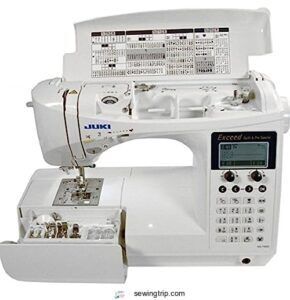
The Juki Computerized Sewing Machine earns its spot at the top for good reason. At $1,499, you get 255 built-in stitches — utility, decorative, stretch, and buttonhole — plus an independent bobbin motor that winds thread without stopping your work.
The automatic needle threader and thread cutter cut setup time considerably.
Dual LED lights keep your workspace bright, and the ¼-inch needle placement keeps piecing precise.
It’s heavy at 30 lbs, but that metal frame means real stability when you’re quilting king-size projects.
| Best For | Quilters and home sewists who want a reliable, feature-packed machine for everything from garment sewing to large quilting projects. |
|---|---|
| Built-in Stitches | 255 |
| Auto Needle Threader | Yes |
| Bobbin Type | Dedicated motorized winder |
| Machine Weight | 30 lb |
| Extension Table | Yes, optional |
| LED Work Lighting | 2 LED lights |
| Additional Features |
|
- 255 stitches plus an independent bobbin winder so you never have to stop mid-project to wind thread.
- Automatic needle threader and thread cutter make setup fast and easy on your eyes.
- Solid metal frame keeps the machine stable and quiet — great for home workshops or shared spaces.
- At 30 lbs, it’s heavy and needs a dedicated, permanent spot in your workspace.
- The presser-foot lift doesn’t lock, so thick fabrics like heavy denim can be frustrating to work with.
- Some users have reported durability hiccups — like the auto-threader failing or uneven stitches — after months of regular use.
2. Brother PQ1600S Sewing and Quilting Machine
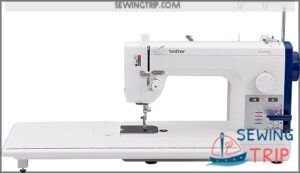
The Brother PQ1600S is built for one thing: speed. At $999.99, it hits 1,500 stitches per minute — industrial-level output without the industrial price tag.
The extra-large extension table (11.1 × 23.3 inches) gives you real room to wrestle a king-size quilt.
Four color-coded feed-dog settings handle everything from gauze to batting.
The knee lifter keeps your hands where they belong — on the fabric. It’s a straight-stitch specialist, so don’t expect decorative flourishes.
But for pure quilting output, it delivers.
| Best For | Serious quilters and home sewists who need near-industrial speed and a large work surface without stepping up to a full commercial machine. |
|---|---|
| Built-in Stitches | 1 (straight only) |
| Auto Needle Threader | Yes |
| Bobbin Type | Side-loading case |
| Machine Weight | 24 lb |
| Extension Table | Yes, 11.1×23.3 in |
| LED Work Lighting | Yes, LED |
| Additional Features |
|
- Screams along at 1,500 stitches per minute — a genuine time-saver for big quilt projects
- The extension table and knee lifter combo means less stopping, less adjusting, more sewing
- Feed-dog height settings and pin-feed handle everything from sheer fabric to thick batting with ease
- No bobbin run-out indicator, so you’re listening for trouble instead of seeing it coming
- The automatic needle threader gets finicky with lower-quality thread — not great when you’re mid-project
- High-speed use gets loud, and some users report squeaking even after proper lubrication
3. Singer Quantum Stylist 9960 Sewing Machine
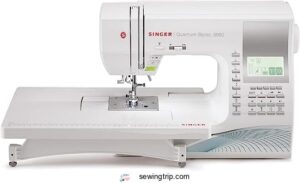
The Singer Quantum Stylist 9960 is where versatility earns its place. At 600 built-in stitches — covering utility, decorative, stretch, and mirror-image options — it’s one of the most flexible machines on this list.
You also get 13 automatic one-step buttonhole styles and five lettering fonts for monograms.
Top speed sits at 850 SPM, so it won’t race like the PQ1600S, but the autopilot mode and adjustable speed control make precise, detail-heavy work genuinely easier.
The included extension table and walking foot handle multi-layer quilts without complaint.
| Best For | Sewists who want one machine that can handle everything — from garment construction and monogramming to quilting and home décor — without needing a separate toolkit. |
|---|---|
| Built-in Stitches | 600 |
| Auto Needle Threader | Yes |
| Bobbin Type | Top drop-in |
| Machine Weight | 14.6 lb |
| Extension Table | Yes, included |
| LED Work Lighting | Yes, LED |
| Additional Features |
|
- 600 built-in stitches plus 13 automatic buttonhole styles means you’re rarely reaching for a different machine or extra accessories.
- The automatic needle threader and built-in thread trimmer save real time, especially on long, repetitive sewing runs.
- Handles heavy, multi-layer fabrics like rag quilts without skipping stitches — the extension table and walking foot make a noticeable difference.
- The throat plate is on the smaller side, which can feel limiting when you’re wrestling with a large quilt.
- All those features come with a learning curve — beginners may find the sheer number of options and the bottom-mounted tension screw a bit overwhelming at first.
- At 14.6 lbs with only a basic dust cover, it’s not the most portable option if you sew on the go.
4. Brother XR3774 Sewing Quilting Machine
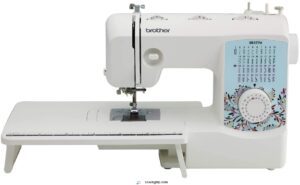
If budget is your top priority, the XR3774 deserves a serious look. It’s not trying to compete with the Juki or Singer — and it doesn’t need to.
With 37 built-in stitches, a jam-resistant drop-in bobbin, and an automatic needle threader, it covers the basics cleanly. The included extension table and eight presser feet give you real quilting support at an entry-level price.
It works with cotton and canvas well, though thick batting layers will test its limits.
| Best For | Beginners and intermediate sewers or quilters who want a reliable, feature-packed machine without spending a lot. |
|---|---|
| Built-in Stitches | 37 |
| Auto Needle Threader | Yes |
| Bobbin Type | Top drop-in |
| Machine Weight | 15 lb |
| Extension Table | Yes, wide tabletop |
| LED Work Lighting | Not specified |
| Additional Features |
|
- 37 built-in stitches plus a 1-step buttonhole give you plenty to work with right out of the box.
- The automatic needle threader and drop-in bobbin make setup quick and frustration-free.
- Comes loaded with accessories — 8 presser feet, an extension table, and a DVD — so you’re ready to sew from day one.
- Gets noisy and vibrates at higher speeds, especially with heavier fabrics.
- Struggles with thick materials like plush fleece, minky, or heavy upholstery layers.
- The extension table can shift under large projects, so a non-slip mat is basically a must.
5. Brother HC1850 Sewing and Quilting Machine
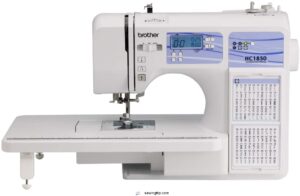
Step up from basic, and the HC1850 gives you noticeably more to work with.
Brother packed 185 built-in stitches into this machine — including 55 alphanumeric characters for simple monogramming — along with a spring-action quilting foot and free-motion capability.
The detachable wide table expands your workspace without a separate purchase.
At $299.99, it sews up to 850 stitches per minute and backs that up with a 25-year limited warranty.
A solid mid-range choice that earns its spot.
| Best For | Hobbyists and intermediate sewists who want a versatile machine for quilting, garment making, and light monogramming without jumping to an industrial price tag. |
|---|---|
| Built-in Stitches | 185 |
| Auto Needle Threader | Yes |
| Bobbin Type | Top drop-in |
| Machine Weight | 10.1 lb |
| Extension Table | Yes, detachable |
| LED Work Lighting | Yes, LED |
| Additional Features |
|
- 185 built-in stitches plus free-motion quilting capability give you a lot of creative range in one machine
- Automatic needle threader and drop-in bobbin make setup quick and frustration-free
- Comes with a detachable wide table and 8 presser feet, so you’re not nickel-and-dimed on accessories
- Only works on 120V US power, so it’s a no-go if you travel or sew abroad
- Not built for heavy-duty projects — thick layers or tough fabrics can push it to its limits
- The edge-hemming foot isn’t included, which is a bit of an odd omission at this price
6. Juki TL2000Qi Sewing Quilting Machine
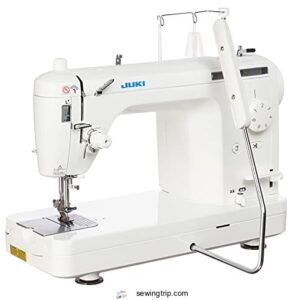
When the HC1850’s 850 SPM starts feeling like a ceiling, the Juki TL-2000Qi tears that ceiling off.
This machine runs at 1,500 stitches per minute — the same speed as industrial workhorses — and backs that up with an aluminum die-cast frame that kills vibration before it can throw off your stitch line.
No decorative stitches here, just a precise, relentless straight stitch built for king-size quilts and heavy materials.
The included extension table and walking foot handle the rest.
| Best For | Quilters and sewists who work with heavy fabrics, large projects, or high-volume straight-stitch work and need industrial-level speed without the industrial footprint. |
|---|---|
| Built-in Stitches | 1 (straight only) |
| Auto Needle Threader | Yes |
| Bobbin Type | Standard bobbin |
| Machine Weight | 25.4 lb |
| Extension Table | Yes, included |
| LED Work Lighting | Yes, LED |
| Additional Features |
|
- Blazing 1,500 SPM speed with an aluminum frame that stays rock-solid — no vibration, no drift, just clean stitches
- Handles tough materials like canvas, leather, and thick batting that would choke a regular home machine
- Comes with an extension table and walking foot right out of the box, so you’re ready for big quilts from day one
- Straight stitch only — no buttonholes, no decorative stitches, so it’s a one-trick pony (albeit a very fast one)
- No built-in speed control means it’s full throttle unless you manually ease up on the pedal
- Needs a voltage converter for 220V regions, and extra accessories (like a free-motion foot) cost extra on top of an already premium price
7. Janome MC6650 Sewing Quilting Machine
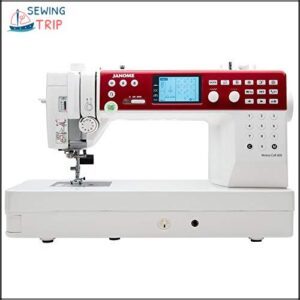
Where the Juki TL-2000Qi is all speed and no frills, the Janome MC6650 gives you both speed and options.
You get 170 built-in stitches at 1,000 SPM, all housed in a heavy-duty metal frame that doesn’t budge.
The 7-piece feed-dog system manages multi-layer quilts without fuss, and the Advanced Plus Feed System keeps your layers moving evenly.
It won’t race like the Juki, but it covers far more creative ground — a real workhorse for quilters who want precision and versatility together.
| Best For | Quilters and home sewists who want speed, versatility, and room to grow — especially those tackling large projects or heavy fabrics. |
|---|---|
| Built-in Stitches | 172 |
| Auto Needle Threader | Yes |
| Bobbin Type | Top-loading rotary hook |
| Machine Weight | 24.25 lb |
| Extension Table | Yes, 10-in flatbed |
| LED Work Lighting | 6 LEDs, 3 locations |
| Additional Features |
|
- Massive 10-inch throat space makes big quilts and bulky layers way easier to manage.
- 172 stitches plus memory banks means you can get creative and save your favorite settings.
- Sturdy all-metal frame keeps things stable even at full 1,000 SPM speed.
- At $2,099, it’s a serious investment that’s hard to justify on a tight budget.
- Weighs 24 lbs and takes up real estate — you’ll want a dedicated spot for it.
- Some users have run into mechanical hiccups and the manual apparently doesn’t help much.
8. Bernette B77 Sewing Quilting Machine
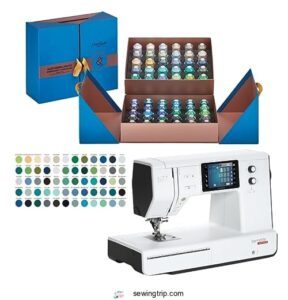
The Bernette B77 is where ambition meets control.
You get a 500-stitch library — including 35 quilting-specific stitches — on a 5-inch color touchscreen that actually makes navigation feel natural.
The dual-feed system manages multiple layers cleanly, and the 9-inch right-of-needle workspace gives your quilts room to breathe.
Built-in stitch combinations are saveable, so your workflow doesn’t reset every session.
The automatic presser-foot pressure adjusts itself to your fabric, from chiffon to leather — less fussing, more stitching.
| Best For | Quilters and home sewists who want a feature-rich machine that handles everything from delicate fabrics to thick layers with minimal fuss. |
|---|---|
| Built-in Stitches | Multiple (computerized) |
| Auto Needle Threader | Yes |
| Bobbin Type | Standard bobbin |
| Machine Weight | Not specified |
| Extension Table | Yes, large throat |
| LED Work Lighting | Not specified |
| Additional Features |
|
- The dual-feed system keeps multiple layers feeding evenly, which is a game-changer for quilting and upholstery work
- Large throat area gives you real room to maneuver big projects without fighting the machine
- Programmable settings mean you can save your go-to stitch combos and pick up right where you left off
- No automatic thread-tension adjustment, so you’ll be tweaking manually when you switch fabrics
- The automatic needle threader and thread cutter can be hit-or-miss, which defeats the purpose of having them
- Warranty sounds great on paper, but customer service responses have been inconsistent — don’t count on a smooth experience if something goes wrong
9. Brother Computerized Sewing Quilting Machine
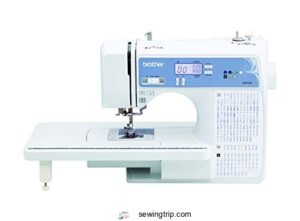
The Brother XR9550 punches above its weight class. You get 165 built-in stitches — including 110 utility and decorative options plus 55 alphanumeric stitches — on a clean LCD screen with push-button selection.
Setup takes minutes, not frustration: the automatic needle threader and jam-resistant drop-in bobbin handle the tedious parts.
Eight presser feet ship in the box, including a dedicated quilting foot. At 10.1 pounds, it’s genuinely portable.
The wide table expands your workspace when the project demands it.
| Best For | Beginners and hobbyists who want a versatile, easy-to-use machine for quilting, garment sewing, and decorative projects without a steep learning curve. |
|---|---|
| Built-in Stitches | 165 |
| Auto Needle Threader | Yes |
| Bobbin Type | Top drop-in jam-resistant |
| Machine Weight | 10.1 lb |
| Extension Table | Yes, included |
| LED Work Lighting | Not specified |
| Additional Features |
|
- 165 built-in stitches plus an LCD screen make it easy to dial in exactly what you need, fast.
- Automatic needle threader and drop-in bobbin save time and cut down on setup headaches.
- At 10.1 pounds with a wide table and free-arm, it handles everything from tiny cuffs to full-size quilts.
- Plastic components raise durability concerns over time — it’s more of a replace-it than fix-it machine.
- US-only voltage means no warranty coverage if you travel or move abroad.
- A few users have noted the hard cover fits loosely and stitch tension can pull slightly left in rare cases.
10. Singer 7285Q Quilting Sewing Machine
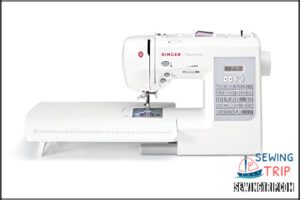
The Singer 7285Q is built with quilters in mind from the start. Its 100 built-in stitches include 15 dedicated quilting stitches — enough variety to handle patchwork, appliqué, and decorative topstitching without switching machines.
The automatic needle threader and drop-in bobbin cut setup time noticeably. Electronic speed control lets you dial in your pace without relying on foot pressure.
The extension table and four quilting feet ship in the box.
Just note: the plastic bobbin basket is a known weak spot.
| Best For | Quilters and home sewers who want a reliable, feature-packed machine with enough built-in stitches and accessories to tackle patchwork, appliqué, and decorative projects right out of the box. |
|---|---|
| Built-in Stitches | 100 |
| Auto Needle Threader | Yes |
| Bobbin Type | Top drop-in |
| Machine Weight | 15.7 lb |
| Extension Table | Yes, included |
| LED Work Lighting | Not specified |
| Additional Features |
|
- 100 built-in stitches including 15 quilting-specific options cover everything from basic patchwork to decorative topstitching
- Automatic needle threader and electronic speed control make setup and sewing noticeably easier, especially for beginners
- Extension table and four quilting feet are included, so you’re ready to handle bulky quilts without buying extras
- Plastic bobbin basket is a known weak spot and prone to breakage and thread tangling over time
- No feed-dog lowering switch, which limits free-motion quilting options
- Error codes like C4 can lock up the machine, and local repair support is often hard to find
Key Specs That Matter Most
Not every spec on the box actually changes how your quilt turns out — but a few of them really do. Knowing which numbers to focus on saves you from paying for features you’ll never use.
Here are the specs worth checking before you buy.
Minimum Throat Space for Quilting
Think of throat space as your quilting room — the distance from needle to machine body.
For Small Quilt Fit, 6–7 inches accommodates projects up to 24×24 inches cleanly. Large Quilt Clearance demands 9 inches or more to prevent Fabric Bunching Prevention issues mid-stitch.
Free-Motion Range improves dramatically with wider machine throat.
Adjustable Harp Extensions can expand your workspace when your machine falls short.
Built-in Stitches and Decorative Options
Your stitch library is the creative engine behind every quilt. Most quilting machines pack 20 to 800 built-in stitches — but 50 to 100 hits the sweet spot for real utility.
Look for Motif Libraries with botanical and geometric patterns, Alphanumeric Stitches for personalization, multiple Buttonhole Styles, and Stitch Memory to save favorites.
A stitch preview display and Edge Embellishment options make decorative stitching genuinely practical.
Maximum Speed in Stitches Per Minute
Speed is where a machine earns its keep. Domestic quilting machines usually hit 1,000–1,500 stitches per minute, while industrial models exceed 2,000 SPM. Motor power and heat management directly affect long‑run reliability, and belt wear quietly kills speed calibration over time.
Domestic quilting machines hit 1,500 stitches per minute, but belt wear and heat quietly kill that speed over time
- Variable speed control lets you dial exact SPM.
- Acceleration Control prevents fabric shove on dense layers.
- Pedal-based input allows smooth, responsive speed adjustments.
- Computerized models auto-regulate sewing speed by stitch program.
- Regular maintenance protects stitch per minute performance analysis accuracy.
Walking Foot and Dual-feed Systems
Once you’ve dialed in your speed, you need the fabric to actually follow. A walking foot grips layers from top and bottom — quilt sandwiches don’t shift or ripple.
A dual feed system builds that same control directly into the machine.
Check compatibility charts before buying feet, and adjust presser-foot pressure for material performance. Both systems reward clean maintenance, cleaning habits.
Automatic Needle Threader and Thread Tension
Threading a needle by hand gets old fast. An automatic needle threader uses a spring-loaded mechanism — a small hook that captures your thread and guides it through the needle eye in seconds.
For smooth results, focus on three things:
- Follow the thread path exactly — misrouting causes threader jams
- Apply tension adjustment tips when switching fabric weights
- Clean lint regularly for threader maintenance and thread path optimization
Balanced tension means cleaner quilts.
Presser-foot Pressure and Free-motion Capability
Once thread tension is set, presser foot pressure becomes your next control point. A pressure dial calibration lets you match downward force to fabric weight — lighter for delicate cotton, heavier for thick batting layers.
Drop the feed dogs, attach a free motion foot, and you’re steering fabric like a pencil. Adjustable pressure sensors, knee lift integration, and walking foot compatibility give you full command.
Screen Size and Machine Controls
Controls pick up where pressure leaves off. A color touchscreen or LCD display — ideally 7 inches or larger — shows your stitch library at a glance.
Features like screen brightness, glare reduction, and haptic feedback reduce eye strain during long sessions.
Some machines, including Computerized LCD 275 x 125 models, support multi-user profiles, voice command, and touch screen access using a stylus to program machine functionality.
Best Picks by Quilting Needs
Not every quilter needs the same machine — and that’s exactly the point. Your best pick depends on what you’re actually making, how fast you want to work, and how much you want to spend.
Here’s how the top models stack up when matched to real quilting needs.
Best for Beginners
Starting out doesn’t have to feel overwhelming. The Brother PQ1600S is a strong pick for beginners — it reaches 1,500 stitches per minute, but gives you a speed control slider so you can ease in slowly.
Its simple interface, drop-in bobbin, and auto needle threader make easy setup real.
Add built-in learning guides, safety controls, and a budget-friendly price, and you’ve got a confident starting point.
Best for Large Quilts
When your quilt stretches past king-size, your machine needs to keep up.
Look for a Wide Harp Design with at least 10 inches of throat space, plus a Large Bed Capacity and extension table that accommodates bulky layers without bunching.
A reliable feed system, LED Illumination, Automatic Thread Cutter, and Quilt Frame Compatibility give you the quilting performance and versatility to handle every inch confidently.
Best for High-speed Straight Stitching
Speed is where control meets confidence—and for high-speed straight-stitch quilting, your machine’s internals matter as much as its price tag.
The best high-speed straight-stitch quilting machines share four traits:
- Motor Torque and Heat Management — a servo motor hitting 1,500–1,600 stitches per minute with thermal protection
- Vibration Damping — aluminum or industrial frames that stay steady at top sewing speed
- Stitch Length Precision — integrated speed control keeps every straight stitch uniform across thick layers
- Needle Positioning — programmable stops prevent drift during chain piecing
Best Computerized Quilting Machine
Juki HZL-F600 sets the bar for best computerized quilting machine.
Smart Stitch Editing lets you adjust length, width, and density before a single stitch drops.
Wireless Design Transfer pulls patterns straight from your device.
Integrated Lighting System and Noise Reduction Technology keep your workspace comfortable during long sessions — a genuine edge in the computerized vs mechanical quilting machines debate.
Best Budget-friendly Quilting Option
You don’t need to spend a fortune to start quilting well.
Budget-friendly quilting machine options under $150 deliver a solid price-to-performance ratio — think 60-plus stitches, drop-feed free motion, and a starter accessory kit that covers the basics. Compact portability features and a simple threading system make setup easy.
For this price range, customer service quality and a one-to-three-year warranty seal the deal.
Best for Heavy-duty Project Sewing
Heavy fabrics don’t forgive a weak machine — they expose every flaw in it.
The right heavy-duty quilting machine delivers:
- Industrial sewing motor with high motor torque — up to 1,100 stitches per minute under load
- Heavy-duty frame with full frame rigidity — 20–40% stiffer than standard builds
- Industrial bedplate and needle plate strength that won’t warp or flex
- Heavy-duty threading with automatic needle threader for thick needle setup
- Highspeed straight-stitch quilting machines optimized for denim, canvas, and batting layers
How to Use The Chart
The chart works best when you treat it as a decision tool, not just a reference list. Each step below is designed to bring you closer to a clear choice without second-guessing yourself.
Here’s how to work through it.
Compare Specs Side by Side
Start with the comparison chart of quilting machine features — it’s your clearest shortcut to a smart decision.
| Spec | Entry-Level | Pro-Level |
|---|---|---|
| Throat Space | 6–7 inches | 8–16 inches |
| Built-in Stitches | 100–170 | 255–600 |
| Max Speed (SPM) | 1,000 | 1,500–1,600 |
This data visualization of key hardware specs for quilting performance makes price benchmarking and performance scoring instant.
Prioritize Features for Your Projects
Once you’ve compared specs side by side, match those numbers to how you actually sew. That’s User Workflow Alignment in practice.
| Project Type | Feature to Prioritize |
|---|---|
| Large bed quilts | Throat space 8"+ |
| Decorative quilting | 255+ built-in stitches |
| Speed piecing | 1,500 SPM minimum |
| Thick batting | Adjustable presser-foot pressure |
| Budget builds | Free-motion capability |
Balance Price With Performance
Matching features to your projects is half the work — the other half is making sure the price actually makes sense for what you get.
| Budget Range | Best Value Focus |
|---|---|
| Under $300 | Free-motion + 2-year warranty |
| $300–$600 | Metal frame + 9" throat |
| $600–$1,000 | 1,500 SPM + dual feed |
| $1,000–$2,000 | Extended table + 255 stitches |
| $2,000+ | Long-arm + full support package |
Your Performance per Dollar sweet spot sits around $299–$600 — that’s where Cost Efficiency peaks for most quilters.
Check Support, Warranty, and Reliability
A good price means nothing if support vanishes after purchase. Check warranty registration requirements — some brands void coverage if you don’t register within 30 days.
| Factor | What to Check |
|---|---|
| Repair Turnaround Time | 1–5 business days standard |
| Service Network Reach | Authorized centers near you |
Extended coverage options and strong customer feedback scores signal real machine durability you can trust.
Narrow Choices to Your Top Three
By now, your comparison chart has done its heavy lifting. Feature Prioritization and Threshold Filtering remove anything that doesn’t meet your minimums — throat space, speed, feed system. What remains goes into a simple Scoring Matrix.
| Machine | Meets Your Top 3? |
|---|---|
| Juki HZL-F600 | Throat ✓ Speed ✓ Feed ✓ |
| Brother PQ1600S | Speed ✓ Feed ✓ Budget ✓ |
| Janome MC6650 | Precision ✓ Frame ✓ Throat ✓ |
User Test Validation confirms your shortlist holds up on real fabric.
Choose The Machine That Fits Your Workflow
Your shortlist is ready — now let your workflow make the final call. Think about how each machine fits your actual sewing room: noise level during long sessions, its power requirements at your outlet, and maintenance frequency over months of heavy use. Thread management and ergonomic controls matter just as much as specs.
| Workflow Factor | What to Check |
|---|---|
| Noise Level | Under 65 dB for shared spaces |
| Ergonomic Controls | Knee lift, touchscreen, dial placement |
| Thread Management | Auto cutter, bobbin winder |
| Maintenance Frequency | Oiling schedule, dealer proximity |
Frequently Asked Questions (FAQs)
What brand is the Quilters choice sewing machine?
Quilter’s Choice is a retail brand, not a single manufacturer. It’s sold through hobby stores under private-label arrangements, making the true manufacturer origin vary by model and marketplace.
How often should I service my quilting machine?
Service your machine every 12–18 months if you sew weekly, or every 2–3 years for occasional use. Clean the bobbin area after every project. Strange noises or skipped stitches? Book service immediately.
Can I quilt with regular sewing machine thread?
Yes, you can. Regular 50-weight thread works for quilting, but adjust your tension settings and use an 80/12 or 90/14 needle. Stitch consistency improves when thread weight matches your fabric layers.
What warranty coverage do quilting machines typically include?
Most quilting machines cover parts for one to five years, but labor limits apply — often just one or two years.
Transferability rules vary, and accessory warranties differ by brand, so always confirm before buying.
Are refurbished quilting machines worth considering for beginners?
Refurbished machines are worth it.
You get real Cost Savings — 20 to 40 percent off — plus Warranty Confidence and solid Build Quality.
Many include Accessory Packages, making them genuinely budget-friendly quilting machine options for beginners.
How much space do I need for quilting?
You don’t need a warehouse — but you need more room than you think. Aim for at least 8×8 feet, with 3 feet of floor clearance around your table for smooth fabric handling.
Can quilting machines handle embroidery designs too?
Most quilting machines handle simple embroidery, but dedicated Embroidery Machines go deeper.
Expect limits on embroidery area, Design File Conversion, and Hooping Techniques for Quilts without an optional Embroidery Module Compatibility upgrade.
What financing options exist for expensive quilting machines?
Financing makes high-end machines accessible. Options include retail partner loans, brand in-house financing, lease-to-own programs, and specialized quilting credit.
alternative funding sources like HELOCs or equipment loans also work well for larger purchases.
How do long-arm machines differ from standard quilters?
Longarm machines offer throat spaces from 10 to over 30 inches, robotic head movement, and frame rigidity that standard quilters can’t match — making large scale motion, free‑motion accuracy, and bobbin management far more manageable.
Which brands offer the longest warranty coverage?
A good warranty is like a safety net — Janome and Juki lead with 25-year limited coverage, while most brands offer 1–5 years on parts and labor.
Conclusion
A poor craftsman blames his tools—but a smart one chooses them carefully.
This quilting sewing machine comparison chart exists so you don’t have to guess. You now know which machines handle bulk, which deliver speed, and which ones fit a tighter budget without sacrificing stitch quality.
The right machine won’t just keep up with your projects—it’ll quietly expand what you think you’re capable of making. Trust the specs. Trust your instincts.
- https://www.linkedin.com/pulse/quilting-machine-market-outlook-20262033-trends-e81re
- https://www.businessresearchinsights.com/market-reports/sewing-and-quilting-market-118753
- https://straitsresearch.com/report/industrial-sewing-machine-market
- https://craftindustryalliance.org/the-size-of-the-quilting-market-quilting-trends-survey-results-2024/
- https://www.thequiltedcowraymore.com/blogs/news/the-ultimate-guide-to-buying-a-long-arm-quilting-machine-8-things-to-consider