This site is supported by our readers. We may earn a commission, at no cost to you, if you purchase through links.
You pick up a sewing machine at a store, and it feels like comparing smartphones—dozens of models, each promising to be the perfect fit. The difference is, a phone might last three years before you upgrade, but a quality sewing machine sits on your workspace for decades, stitching through thousands of projects.
That longevity makes your choice critical. What separates a frustrating machine that collects dust from one you’ll reach for every time? It comes down to a handful of core elements that directly affect your control, precision, and comfort at the sewing table.
Understanding these core elements—from stitch options to bobbin design—lets you match a machine’s capabilities to your actual projects, whether you’re hemming jeans or tackling quilts.
Table Of Contents
Key Takeaways
- A quality sewing machine balances stitch variety (straight, zigzag, buttonhole) with adjustable length and width controls, letting you fine-tune precision from delicate silks to heavy denim without constant manual tweaking.
- Mechanical machines offer hands-on durability with repairable gears and no software headaches, while computerized models deliver programmable precision and automatic features that cut setup time in half across varied fabrics.
- Essential features like automatic needle threaders, drop-in top bobbins, and free arm capability directly reduce eye strain and frustration while expanding your project range from flat seams to tubular sleeves.
- Regular cleaning after every 8-12 hours of stitching plus proper storage under dust covers can stretch your machine’s lifespan to 20+ years, making upfront investment in solid metal frames and quality construction worth every dollar.
Key Features of a Good Sewing Machine
A good sewing machine isn’t just about power—it’s about the right combination of features that match your needs and skill level. From the number of built-in stitches to how easily you can thread the needle, these details make the difference between frustration and smooth sewing.
Whether you’re working with delicate silks or heavy denim, understanding what makes a good sewing machine for different projects helps you choose one that handles your fabric choices without struggle.
Let’s look at the key features you should prioritize when choosing your next machine.
Stitch Variety and Options
A multifaceted machine needs solid stitch patterns—straight for woven seams, zigzag for knits, buttonhole for closures. Most models offer 10 to 100 built-in options, including decorative stitches like scallops and florals that improve fabric compatibility across projects.
Computerized sewing machines let you program custom designs, while mechanical styles stick to reliable basics. Different thread types and sewing techniques demand specific stitch quality for clean, professional results.
For more on choosing the right stitch types for your project and fabric, see this essential guide.
Adjustable Stitch Length and Width
Stitch length and stitch width controls give you hands-on fabric handling, letting you fine-tune sewing precision from 0.0 to 5.0 millimeters depending on your project. Shorter lengths create tight seams for woven fabrics, while longer settings suit knits and basting.
Adjustable stitch patterns also let you dial in stitch density and zigzag width, so thread tension stays balanced and machine calibration stays consistent across different sewing machine features. Some machines highlight their versatility with adjustable stitch width options that allow even greater customization for specialized techniques.
Automatic Needle Threader
After dialing in your settings, an automatic needle threader cuts down on eye strain and speeds up your workflow. The lever mechanism drops a tiny hook through the needle eye, guiding thread in seconds.
Three key factors affect performance:
- Needle alignment must stay precise after each needle change
- Thread quality matters—slippery or waxed varieties may need gentle guidance
- Maintenance tips include regular cleaning to prevent lint buildup around threading components
Drop-in Top Bobbin
Once your needle is threaded, a drop-in top bobbin speeds you to the actual sewing. You load it vertically into a clear case, checking bobbin visibility through the window to monitor thread supply.
This system offers quick setup—under 30 seconds—and jam resistance that minimizes skipped stitches. The threading path guides bob thread upward in one smooth arc, keeping your sewing machine ready for any project.
Free Arm Capability
The free arm transforms your sewing machine into a tool for precision work on tubes and sleeves. Remove the accessory box to expose a smooth cylinder that holds curved seams without fabric bunching.
- Tubular sewing lets you stitch pant hems and sleeve cuffs by sliding them over the arm
- Accessory compatibility with standard presser feet maintains versatility across stitch modes
- Arm maintenance requires regular cleaning to prevent lint buildup in tight spaces
- Sewing precision improves when you guide fabric with light, even pressure around the cylinder
Presser Foot Selection
You’ll discover every technique your sewing machines need when you match presser feet to fabric weight and seam type.
Low shank feet fit most modern models with a half-inch needle-to-screw distance, while high shank requires one inch.
Specialty feet options like zipper, walking, and rolled hem attachments expand your creative range.
Adjustable foot pressure prevents puckering on delicate layers, and snap-on sewing machine accessories swap faster than screw-on types during multi-step projects.
Mechanical Vs. Computerized Sewing Machines
The biggest choice you’ll face when shopping for a sewing machine comes down to control: manual dials or digital buttons.
Mechanical machines rely on physical dials you turn by hand, while computerized models use electronic systems to adjust settings with the push of a button. Understanding how each type operates, and what they offer, will help you pick the machine that fits your sewing style.
Core Differences in Operation
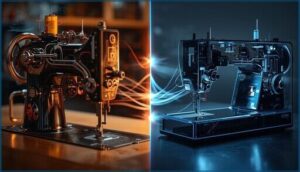
The heart of the difference lives in how your machine forms each stitch. A mechanical sewing machine uses cams and gears—no electronics—to guide stitch formation, while a computerized model relies on microprocessors and servo motors for precise motor control and thread tension. You’ll notice this in sewing speed and gear mechanism responsiveness.
| Feature | Mechanical | Computerized |
|---|---|---|
| Stitch Formation | Cams and gears | Microprocessors and motors |
| Control Method | Manual dials and levers | Touchscreen or keypad |
| Adjustment Speed | Immediate mechanical response | Digital commands to motors |
Advantages of Mechanical Machines
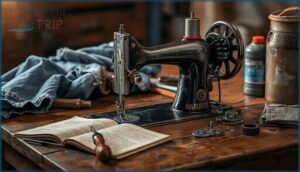
When you want something you can fix with a screwdriver and steady hands, mechanical sewing machines deliver. They rely on belt-driven gears instead of circuit boards, cutting the risk of software glitches and firmware headaches during your everyday projects.
| Benefit | Why It Matters |
|---|---|
| Mechanical Durability | Metal construction withstands heavy use and impacts |
| Simple Operation | Manual control gives instant feedback on tension and stitch length |
| Low Maintenance | Exposed lubrication points make routine oiling quick and straightforward |
| Repairability | Standard shop tools and widely available parts keep you sewing |
| Beginner-Friendly | Dials and levers teach you sewing fundamentals without menus |
That metal frame won’t flex when you’re pushing denim or canvas through, and you’ll find replacement parts from multiple brands. Mechanical sewing machine types stay consistent across temperature swings and voltage dips, so you can count on them year after year without worrying about memory corruption or digital failures.
Benefits of Computerized Machines
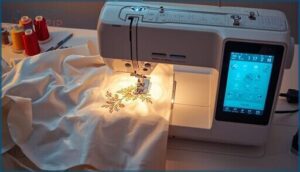
Computerized sewing machines hand you automatic stitching and precision control through digital calibration, cutting setup time in half. Smart sensors adjust tension on the fly while sophisticated embroidery features let you import patterns through USB ports. It includes programmable stitch sequences that deliver consistent results across cotton, silk, and stretch knits without manual dial tweaking.
| Feature | Advantage | Real-World Use |
|---|---|---|
| Touchscreen Control | Navigate 200+ stitches with finger taps instead of menu hunting | Select decorative borders for quilts in seconds |
| Auto Thread Cutter | Trims threads after each seam without lifting your foot | Speed through garment construction with clean finishes |
| Stitch Memory | Save custom sequences for logos and monograms | Reproduce brand labels on multiple products |
Choosing Based on User Needs
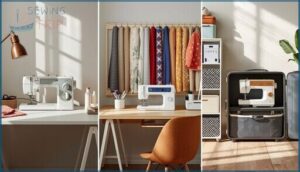
Match your machine to your sewing goals instead of chasing feature lists. If you’re sewing for beginners on cotton and linen, a mechanical model offers hands-on learning without digital complexity. When you need speed across varied fabric types or plan embroidery work, computerized controls deliver precision.
Check sewing machine reviews and comparison charts to align user experience with your actual projects, not imagined ones.
| User Profile | Best Choice | Why It Fits |
|---|---|---|
| Beginner seamstress | Mechanical with 10-20 stitches | Simple dials build foundational skills without software confusion |
| Quilter working with multiple fabric types | Computerized with stitch memory | Saves custom settings for piecing cottons and binding edges |
| Portable class attendee | Lightweight mechanical under 15 pounds | Easy transport without sacrificing machine portability for workshops |
Essential Factors When Choosing a Sewing Machine
Picking the right sewing machine isn’t just about flashy features or the lowest price tag.
You need to match the machine to your actual needs, from your current skill level to how often you’ll use it.
Let’s break down the five factors that’ll guide you to a machine you won’t regret buying.
Skill Level and Intended Use
Honestly, your skill level and sewing goals determine which machine will serve you best. A beginner needs direct stitch options and automatic features to cut down setup time, while an intermediate sewist benefits from adjustable tension for varied fabrics. Experienced users require memory settings and precise speed control for complex work.
- Beginners: Look for machines with simple controls and automatic threading to reduce frustration
- Alterations: Choose models with reliable straight stitch and compact footprint for tight workspaces
- Quilting: Wide harp space and expansive bed accommodate large quilts without bunching
- Garment making: Adjustable presser foot pressure manages knits and stretch fabrics smoothly
- Heavy fabrics: High torque motor and sturdy frame prevent skipped stitches on denim or leather
Match your project complexity to machine capabilities, and you’ll enjoy a better user experience from day one.
Machine Durability and Build Quality
Once you’ve narrowed your focus to the right features, durability becomes the deciding factor in your sewing machine comparison.
Frame materials like die-cast metal resist bending under heavy use, while hardened steel gears prevent timing drift after thousands of stitches.
Motor efficiency and sturdy chassis design reduce vibration, so you won’t fight needle wobble mid-seam. Investing in solid metal finishing and regular sewing machine maintenance keeps your machine running for decades.
Ease of Setup and Use
A solid frame won’t help if you can’t thread the needle without cursing. Look for logical controls with numbered thread guides and automatic tension dials that eliminate guesswork.
Quick start features, like drop-in bobbins with clear windows and one-touch needle threaders, cut setup time to under three minutes. Computerized sewing machines often include built-in tutorials, while mechanical models rely on straightforward dials you’ll master after a weekend of practice.
Size, Weight, and Portability
You’ll want to measure your workspace before committing. Compact designs like the Brother CS7000X fit 14 to 17 inches wide, while portable machines shrink to 9 to 12 inches for storage.
Weight matters too—lightweight units hover around 6 to 12 pounds with built-in grips, perfect if you’re moving between rooms or packing travel cases with your sewing accessories for weekend workshops.
Price and Value for Money
You can find entry-level sewing machines for $100 to $200, mid-range computerized sewing options around $300 to $500, and premium units exceeding $800. Budget analysis and price comparison reveal the best sewing machines balance upfront cost with long-term reliability—metal frames, jam resistance, and solid warranties deliver cost savings over time. Your value assessment should weigh feature relevance against actual use, ensuring affordable options meet your specific sewing machine comparison needs without paying for unnecessary extras.
- Upfront Price vs. Long-Term Cost – Cheaper models may require more frequent repairs, increasing lifetime expense.
- Durability and Build Quality – Metal frames and quality components reduce vibration and extend service life.
- Warranty and Support – At least 2 years coverage and local service centers lower maintenance costs.
- Feature Relevance – Match stitch options and accessories to your actual projects to avoid overspending.
Specialized Sewing Machine Types Compared
Beyond the standard machines you’ll find in most sewing rooms, specialized models serve specific tasks with precision you won’t get from general-purpose options. I’ve tested these machines across different projects, from finishing seams to tackling thick leather, and the right specialty tool makes the difference between struggling through a project and completing it cleanly.
Here’s how the main specialized types stack up for different sewing needs.
Overlock and Serger Machines
A serger sewing machine trims fabric edges as it stitches, giving you clean rolled finishes in one pass. Most overlock models use 3 to 5 threads combined with differential feed to prevent puckering on knits.
Thread tension discs let you adjust for consistent edge finishing across different fabrics. Serger blades cut precisely to your stitch width, while proper fabric handling keeps seams secure without stretching.
Quilting and Embroidery Machines
Quilting and embroidery machines let you combine machine embroidery with quilting techniques through built-in design libraries and extended work surfaces. Most models offer 4×4 to 5×7 inch embroidery fields, with thread management systems that detect color changes and prevent breakage during long runs.
- USB ports enable quick transfer of custom embroidery designs from your computer
- On-screen stitch editing tools let you resize, flip, and adjust lettering before sewing
- Automatic fabric stabilization suggestions help prevent puckering on delicate materials
- Magnetic hoops allow tool-free changes between small labels and large quilting projects
Heavy-Duty and Industrial Models
Heavy duty machines bring industrial motors and sturdy construction to your sewing room, handling thick leather, canvas, and denim with ease. The Singer 4452 and Singer Heavy Duty 6800C use metal components and heavy-duty frames that eliminate vibration during high-speed stitching. You’ll get up to 1,100 stitches per minute, while cast iron construction ensures industrial sewing performance that lasts decades.
| Feature | Heavy Duty Models | Industrial Sewing Machines |
|---|---|---|
| Frame Construction | Reinforced metal components, steel bed | Cast iron frames for rigid stability |
| Motor Power | 0.6–0.8 HP, 1,100 SPM | 1.0+ HP, up to 5,000 SPM |
| Fabric Capacity | Multiple denim layers, leather | Continuous heavy material production |
| Typical Use | Home projects, alterations | Professional workshops, upholstery |
Mini and Manual Machines
Mini sewing portables deliver manual stitch precision when you need quick fixes on the go. These compact design wonders, under 12 inches, fit inside your purse with a hand crank or foot pedal for operation. You’ll manage three core tasks effortlessly:
- Travel wardrobe repairs during camping trips
- Patch mending on lightweight cotton fabrics
- Hem alterations on kids’ garments
Manual mechanical machines serve beginner sewers beautifully, though they can’t match the Brother CS7000X for stitch variety.
Top 5 Sewing Machines to Consider
After testing dozens of machines across weeks of real projects, from thick denim seams to delicate embroidery, I’ve narrowed it down to five standouts.
Each one earned its spot by handling everything I threw at it without jamming, breaking threads, or requiring constant adjustments.
Here’s what made the cut and why these machines deliver consistent results you can count on.
1. Brother Computerized Sewing Machine
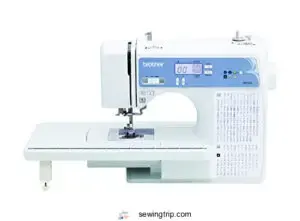
The Brother XR9550 brings 165 built-in stitches to your workspace, including 55 alphanumeric options for monogramming. It manages everything from garment construction to quilting, weighing just 10.1 pounds for easy movement between projects.
The automatic needle threader saves time during long sewing sessions, while the drop-in bobbin keeps threading straightforward. It includes eight presser feet, a wide table, and an LCD screen for quick stitch adjustments.
You’ll find the free arm particularly useful when tackling sleeves and cuffs on garments.
| Best For | Sewers and quilters who want a versatile machine with lots of stitch options without breaking the bank. |
|---|---|
| Built-in Stitches | 165 |
| Automatic Needle Threader | Yes |
| Weight | 10.1 lbs |
| Material | Metal, Plastic |
| Free Arm | Yes |
| Included Feet | 8 |
| Additional Features |
|
- 165 stitches give you tons of creative options, from basic utility stitches to decorative patterns and full alphabets for monogramming
- Automatic needle threader and drop-in bobbin make setup quick and frustration-free
- Lightweight at just over 10 pounds, so you can move it around or take it to classes easily
- Doesn’t include a quarter-inch seam foot, which quilters will likely need to buy separately
- Threading the machine takes some practice to get the hang of
- Only works with 120-volt outlets, so it’s not great for international use
2. Janome Lovely Lilac Sewing Machine
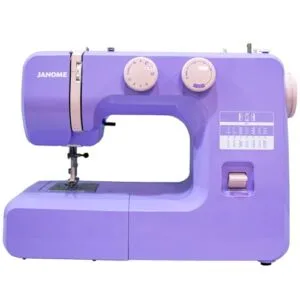
The Janome Lovely Lilac offers 15 built-in stitches and a 4-step buttonhole, covering basics without overwhelming you with options. It weighs 12 pounds with a heavy-duty interior metal frame that keeps vibration minimal during operation.
The front-loading bobbin system reduces jamming compared to some drop-in designs, and you can check thread levels through the clear cover. Its removable free arm manages sleeves and cuffs smoothly, while dual retractable spool pins manage thread efficiently during garment and home décor projects.
| Best For | Beginners and hobbyists who want a reliable, easy-to-use machine for garment sewing, quilting, and home décor without needing advanced features. |
|---|---|
| Built-in Stitches | 15 |
| Automatic Needle Threader | No |
| Weight | 12 lbs |
| Material | Metal, Plastic |
| Free Arm | Yes |
| Included Feet | 4 |
| Additional Features |
|
- Heavy-duty metal frame keeps the machine stable even on thick fabrics like denim
- Front-loading bobbin system with clear cover makes threading easier and reduces jamming
- Comes with everything you need to start—4 presser feet, tutorial videos, and a 25-year warranty
- Can be noisy during operation
- Thread breaks happen occasionally, often due to thread quality issues
- Manual only comes in English, which may be limiting for some users
3. Brother Sewing And Quilting Machine
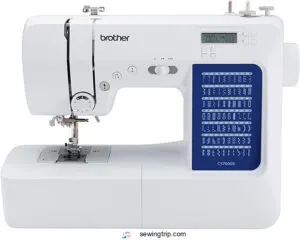
For quilters who need precision and space, the Brother CS7000X delivers 70 built-in stitches and 7 automatic buttonholes across a 16.26-inch workspace. It weighs 14 pounds with a metal frame that reduces vibration during long piecing sessions, and the improved automatic needle threader cuts setup time considerably.
You’ll get 10 presser feet, a wide table extension, and a protective hard case for portability. Its adjustable speed control navigates thick batting layers without stalling, making it reliable for both decorative quilting and utility sewing projects.
| Best For | Quilters and intermediate sewers who need workspace for larger projects and want reliable stitch variety without spending on industrial-grade equipment. |
|---|---|
| Built-in Stitches | 70 |
| Automatic Needle Threader | Yes |
| Weight | 14 lbs |
| Material | Metal |
| Free Arm | Yes |
| Included Feet | 10 |
| Additional Features |
|
- 70 stitches plus 7 auto-buttonholes give you serious creative range for quilting and decorative work
- Metal frame keeps things stable when you’re working through thick layers or doing long piecing sessions
- Comes loaded with accessories—10 presser feet, wide table, and a hard case so you can actually take it places
- Only works at 120V, so you’ll need an adapter if you’re outside the US
- No thread included, which feels like an odd omission at this price point
- Automatic bobbin threader can be finicky and frustrating until you get the hang of it
4. Singer Quantum Stylist Sewing Machine
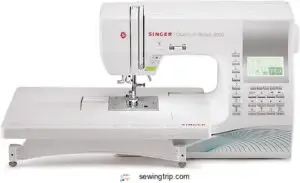
If you crave stitch variety without sacrificing control, the Singer Quantum Stylist 9960 offers 600 built-in stitches and 13 automatic buttonholes in a metal-framed package weighing 14.6 pounds.
It includes an LCD screen for quick navigation, mirror imaging, and stitch elongation to customize patterns on the fly. You’ll get 13 presser feet, a wide extension table, and an auto thread cutter that trims both threads automatically.
The DC motor maintains consistent speed through thick layers, making it dependable for garments, quilts, and home décor projects.
| Best For | Sewers who want tons of creative options and professional features like automatic thread cutting and customizable stitches, whether you’re making clothes, quilts, or home décor. |
|---|---|
| Built-in Stitches | 600 |
| Automatic Needle Threader | Yes |
| Weight | 14.6 lbs |
| Material | Metal, Plastic |
| Free Arm | Yes |
| Included Feet | 13 |
| Additional Features |
|
- 600 stitches plus mirror imaging and elongation give you endless design possibilities
- Auto thread cutter and needle threader save time on repetitive tasks
- DC motor keeps speed steady even through thick fabric layers
- The needle threader can be tricky to use despite being automatic
- Limited throat space makes it harder to work on large quilts
- You’ll need to spend time with the manual to unlock all those features
5. Bernette Computerized Sewing Embroidery Machine
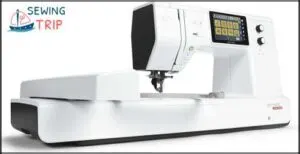
For those ready to explore embroidery sewing, the Bernette B79 delivers 500 stitches, 208 embroidery designs, and a 5-inch color touchscreen in a 47-pound aluminum-framed unit.
It reaches 1000 stitches per minute for piecing and 850 for embroidery, with dual feed keeping layers aligned through quilts and home décor. You’ll get three hoops, USB connectivity for design transfer, and Stitch Designer tools to create custom patterns up to 7 millimeters wide.
The drop-in bobbin simplifies threading, though startup takes over 40 seconds.
| Best For | Crafters and sewers who want to combine quilting, garment-making, and embroidery projects in one machine without buying separate equipment. |
|---|---|
| Built-in Stitches | 500 |
| Automatic Needle Threader | Semi-automatic |
| Weight | 47 lbs |
| Material | Aluminum |
| Free Arm | Yes |
| Included Feet | Multiple |
| Additional Features |
|
- 500 built-in stitches and 208 embroidery designs give you tons of creative options, plus you can design custom stitches up to 7mm wide
- Dual feed system keeps fabric layers aligned perfectly, which is huge for quilts and multi-layer projects
- Three embroidery hoops and USB connectivity let you transfer designs easily and tackle different project sizes
- Takes over 40 seconds to boot up every time you turn it on, which gets frustrating if you sew in short sessions
- Menu navigation isn’t intuitive and you’ll need to memorize functions since the manual doesn’t explain things clearly
- Threading the bobbin can be finicky, and replacement parts are tough to track down
Maintenance and Longevity Considerations
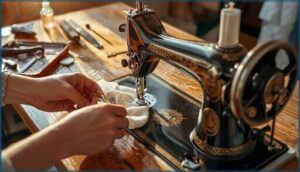
Your sewing machine won’t last forever on its own, but proper care can stretch its lifespan to 20 years or more.
Proper care can stretch your sewing machine’s lifespan to 20 years or more
A few simple habits make the difference between a machine that runs smoothly for decades and one that breaks down after a couple of years. Here’s what you need to know to keep your investment in top shape.
Regular Cleaning and Oiling
You’ll keep your sewing machine running smoothly for years by sticking to a simple cleaning schedule—after every 8 to 12 hours of stitching, clear lint from the bobbin area with a soft brush, then apply two to three drops of machine oil to designated points.
Wipe away excess immediately, rethread carefully to check thread tension, and store your machine under a dust cover between projects.
Troubleshooting Common Issues
When thread issues or tension problems stop your stitching cold, start by rethreading the machine with the presser foot raised and replacing a bent needle—these two steps fix most stitch errors and machine jamming.
Test fabric handling on scrap material after cleaning lint from the bobbin area, and adjust your tension dial gradually to restore smooth, balanced seams.
Importance of Warranty and Support
A solid warranty coverage shields you from manufacturing defects for one to five years, while accessible support channels like toll-free lines and online chat help you solve issues fast.
Check your sewing machine comparison for repair options and customer service quality—brands with nationwide service networks and extended plans often save you time and stress when maintaining your investment.
Proper Storage and Handling
Storing your sewing machine properly extends its lifespan by years, preventing rust, dust buildup, and component misalignment that derail home sewing equipment performance.
- Humidity control: Keep your workspace below 60 percent humidity and away from direct sunlight to protect metal parts and plastic components from cracking.
- Machine covers: Use breathable fabric dust prevention covers that block debris while allowing moisture to escape.
- Transportation safety: Always loosen presser foot pressure, remove needles, and use padded cases when moving your machine to avoid bending delicate parts.
Store bobbins and sewing machine accessories in labeled containers for quick access.
Frequently Asked Questions (FAQs)
What are the four points to consider when choosing a sewing machine?
When choosing a sewing machine, consider your skill level and intended projects first, then evaluate the machine’s durability and build quality, ease of setup, and whether its price aligns with your budget.
Does the quality of a sewing machine matter?
Yes, machine durability directly impacts sewing accuracy and fabric compatibility. Quality sewing machines maintain consistent tension across varied materials, reducing maintenance costs while delivering exceptional user experience over thousands of hours.
Can sewing machines handle thick leather or denim?
Heavy duty machines punch through multiple layers of leather up to 8 oz thick using sharp needles and strong thread.
Denim requires sturdy size 90-110 needles with polyester thread for layered seams.
How loud are sewing machines during operation?
Most sewing machines operate between 60 and 80 operational decibels at your ear, with sound levels rising at high speeds.
But regular sewing machine maintenance and repair, plus noise reduction mats, keep machine vibration and quiet operation manageable.
Are there sewing machines for left-handed users?
Most standard sewing machines work fine for lefties with minor adjustments, though dedicated left-handed designs are rare.
Look for models offering left needle position, ergonomic controls, and visual accessibility features for improved user comfort.
What is the typical lifespan of a sewing machine?
Most household machines last five to fifteen years with regular sewing machine maintenance, while durable mechanical models can reach twenty-five years through proper machine maintenance and repair, substantially extending sewing machine longevity expectations.
Do sewing machines require professional servicing or calibration?
Most machines don’t need yearly professional servicing if you clean and oil them regularly.
Light home use requires service every one to three years, while heavy daily sewing demands more frequent calibration checks.
Conclusion
A sewing machine sits in your workspace like a reliable apprentice—silent until needed, then performing exactly as trained. What makes a good sewing machine isn’t mystery or marketing hype; it’s practical features aligned with your projects, from adjustable stitches to dependable bobbins.
You’ve seen the core elements, compared machine types, and reviewed proven models. Now you hold the blueprint. Choose based on your actual needs, maintain it properly, and that machine will answer every creative challenge you throw its way.