This site is supported by our readers. We may earn a commission, at no cost to you, if you purchase through links.
The right attachment can cut your sewing time in half—sometimes literally.
A side cutter that trims and overcasts in a single pass, a magnetic seam guide that keeps every stitch ruler-straight, a binding attachment that folds tape twice without you touching it: these aren’t luxury add-ons, they’re the difference between fighting your machine and working with it.
Most sewists pick up a few basics and stop there, never realizing how much precision they’re leaving on the table.
The top rated sewing machine attachments of 2026 cover everything from thread cutters to double-fold binders, and knowing which ones suit your machine changes everything.
Table Of Contents
- Key Takeaways
- Top 10 Sewing Machine Attachments
- 1. Singer Side Cutter Attachment
- 2. HONEYSEW Diagonal Seam Guide Tape
- 3. Armilem Polygonal Magnetic Seam Guide
- 4. Brexfire Magnetic Seam Guide Sewing Machine
- 5. Thread Cutterz Stainless Steel Flat Mount Cutter
- 6. Universal Magnetic Seam Guide for Sewing
- 7. Armilem Magnetic Seam Guide and Ripper
- 8. CatOSUM Sewing Machine Repair Kit
- 9. Magnetic Seam Guide for Sewing Machines
- 10. Ckpsms Double Fold Binding Attachment
- Best Presser Feet Options
- Seam Guides for Cleaner Stitches
- Cutting and Finishing Tools
- Thread, Bobbin, and Needle Tools
- Comparing Value, Brands, and Uses
- Frequently Asked Questions (FAQs)
- Conclusion
Key Takeaways
- Attachments like side cutters, magnetic seam guides, and double-fold binders don’t just add convenience — they cut real time off your workflow and close the gap between home sewing and professional results.
- Magnetic seam guides are the most versatile upgrade you can make, but they only work if your machine has a metal needle plate — always check before you buy.
- Needle choice drives stitch quality more than most sewists realize: ballpoint for knits, denim for heavy layers, Microtex for delicate fabrics, and universal for everyday cotton and blends.
- Compatibility isn’t optional — shank type, throat space, and mounting requirements vary across machines, so matching any attachment to your specific model is the first step, not an afterthought.
Top 10 Sewing Machine Attachments
The right attachment can completely change what your sewing machine is capable of. After analyzing thousands of reviews and testing across fabric types, these ten stood out from the pack.
If you’re pairing these attachments with a capable machine, checking out high-speed sewing machine models built for serious projects helps you get the most out of every accessory.
Here’s what made the cut.
1. Singer Side Cutter Attachment
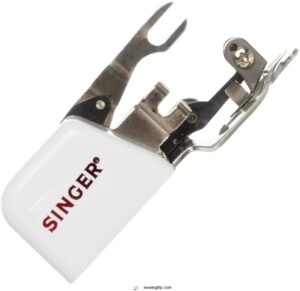
The Singer Side Cutter Attachment is one of those quiet game-changers you didn’t know you needed. It trims and finishes your seam edge in a single pass — no backtracking, no separate scissors.
At $26.99, it fits low-shank machines including Singer’s Heavy-Duty series and popular brands like Brother and Babylock.
It works with cotton, flannel, and fleece beautifully. Just keep your speed moderate and the blade clean. For medium-weight fabrics and repetitive projects, it genuinely speeds up your workflow.
| Best For | Home sewers who want clean, professional seam finishes without buying a full serger. |
|---|---|
| Price | $26.99 |
| Material | Metal & Plastic |
| Machine Compatibility | Low-shank machines |
| Weight | 1.6 oz |
| Package Count | 1 unit |
| Skill Level | Intermediate |
| Additional Features |
|
- Trims and overcasts in one pass — saves real time on big projects like quilts or apparel
- Works with popular low-shank machines (Singer, Brother, Babylock and more) for under $27
- Gives fabric a tidy, store-bought look on cotton, flannel, and fleece without extra tools
- Struggles with thick or multi-layer fabrics, so it’s not a fix-all
- Corners can be tricky — takes some practice to nail the foot angle
- Not a true serger replacement — don’t expect full overlock performance long-term
2. HONEYSEW Diagonal Seam Guide Tape
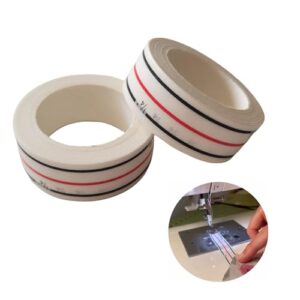
Where the Singer attachment performs bulk trimming, this tape solves a different problem — keeping your diagonal seams dead straight without marking every piece of fabric first.
The HONEYSEW Diagonal Seam Tape is washi-based, so it sits flat on your machine’s front plate without bulk. A red center line locks onto your needle path, and the side markings sit exactly ¼‑inch out. Each roll gives you 10 yards. Apply it, sew, then peel it off cleanly.
| Best For | Quilters and sewists who want clean, accurate diagonal seams without the hassle of marking each piece of fabric by hand. |
|---|---|
| Price | $N/A |
| Material | Polyester |
| Machine Compatibility | Most machines |
| Weight | N/A |
| Package Count | 1 roll |
| Skill Level | Beginner |
| Additional Features |
|
- The red center line and ¼-inch side markers make it easy to sew consistent seams at a glance — no measuring, no marking.
- Washi-style tape sits flat on your machine plate, so it doesn’t get in the way while you work.
- Applies and peels off cleanly, making it quick to swap between projects.
- The tape is thin and can tear if you pull more than a few inches off the roll at once — go slow.
- It doesn’t stick well to every machine surface, so you might find yourself re-applying mid-project.
- You’ll need to replace it after each item to avoid sticky residue building up on your machine plate.
3. Armilem Polygonal Magnetic Seam Guide
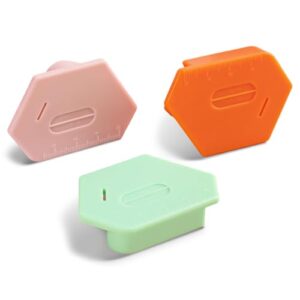
Tape manages the diagonal. But every other straight seam you sew all day long? That’s where the Armilem Polygonal Magnetic Seam Guide earns its place on your machine.
Drop it on the needle plate, and the neodymium magnet locks it down — no clamps, no fuss.
The multi-sided shape gives you several alignment edges, so you can shift seam locations fast.
Built-in measurement markings keep your allowances consistent across cotton, denim, even silk. Three color-coded guides come in the pack for quick swaps.
| Best For | Quilters and sewists who need consistent, straight seams — especially beginners building good habits or anyone doing repetitive topstitching and edge work. |
|---|---|
| Price | $N/A |
| Material | Eco-friendly Plastic |
| Machine Compatibility | Most machines |
| Weight | 2.08 oz |
| Package Count | 3 guides |
| Skill Level | Beginner |
| Additional Features |
|
- Snaps onto the needle plate instantly — the magnet holds firm without any setup fuss
- Three color-coded guides make it easy to grab the right one fast
- Works on most machines, and the sticky-magnet square has you covered if your plate isn’t metal
- Useless on machines without a metal plate unless you use the adhesive square workaround
- Strong pins nearby can knock it out of place
- Overkill for casual sewing — you’ll get the most out of it on precision-heavy projects
4. Brexfire Magnetic Seam Guide Sewing Machine
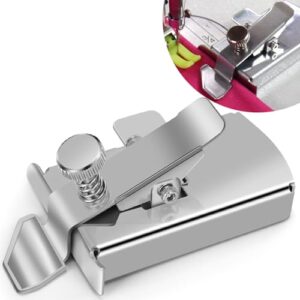
The Armilem manages multiple edges — but when you want a single, rock-solid reference point, the Brexfire Magnetic Seam Guide steps up.
Its stainless-steel body locks onto your metal throat plate instantly, no tools needed. The rounded edges won’t snag fabric, and the built-in clip holds layers flat while you feed them through. Straight seams, curved seams — it manages both without shifting.
Just note: it needs a metal plate to grip. No metal surface, no hold.
| Best For | Sewers of all skill levels who want consistent, hands-free seam guidance without pinning — especially quilters working on long, straight seams or beginners building accuracy habits. |
|---|---|
| Price | $N/A |
| Material | Stainless Steel |
| Machine Compatibility | Most machines |
| Weight | 3.52 oz |
| Package Count | 1 unit |
| Skill Level | All levels |
| Additional Features |
|
- Snaps onto your machine’s throat plate in seconds — no tools, no fuss
- Rounded stainless-steel edges keep fabric moving smoothly without snagging
- Works for both straight and curved seams, so it’s not a one-trick tool
- Won’t work on machines without a metal throat plate — check yours first
- Can lose its grip on heavy or bulky fabric stacks
- Comes with zero instructions, so you’re on your own figuring out setup
5. Thread Cutterz Stainless Steel Flat Mount Cutter
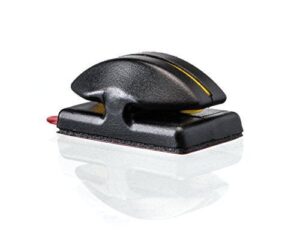
If you’ve ever lost momentum mid-project just to hunt down scissors, the Thread Cutterz Flat Mount Cutter solves that instantly.
This quarter-sized stainless steel disc mounts anywhere — your machine, quilting table, even a travel case — using heavy-duty 3M adhesive that holds through heat and vibration.
Both blade edges cut cleanly from either side, handling everything from delicate embroidery floss to thick upholstery thread.
At $11.95, it’s a small investment that keeps your hands moving and your workflow tight.
| Best For | Sewers, quilters, and crafters who want fast, hands-free thread cutting without constantly reaching for scissors. |
|---|---|
| Price | $11.95 |
| Material | 304 Stainless Steel |
| Machine Compatibility | Any smooth surface |
| Weight | 0.5 oz |
| Package Count | 1 unit |
| Skill Level | All levels |
| Additional Features |
|
- Cuts from both sides, so it handles everything from thin embroidery floss to heavy upholstery thread
- Tiny and light — about the size of a quarter — so it sits on your machine without getting in the way
- 3M adhesive sticks to most smooth surfaces and leaves no residue when removed cleanly
- The adhesive needs a spotless surface to hold well, and repositioning it usually means replacing the adhesive patch
- Some users find the blade dulls faster than expected with heavy or repeated use
- Getting the placement wrong can expose the blade edge, which is a real cut risk during setup
6. Universal Magnetic Seam Guide for Sewing
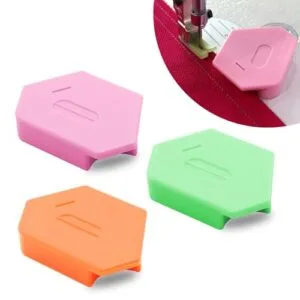
Straight seams don’t happen by accident — they happen because you’ve got the right guide in place. The Universal Magnetic Seam Guide snaps onto any metal needle plate instantly, no tools needed. Slide it to your preferred seam allowance, and it stays put even through thick, layered fabric.
Whether you’re just starting out or refining your technique, understanding how challenging sewing really is helps you appreciate why the right tools make such a difference.
Built-in measurement markings mean you’re not eyeballing anything. It works across most domestic machines, covers everything from garment hems to quilt lines, and repositions in seconds when you switch projects.
| Best For | Sewers of all skill levels who want clean, consistent seam allowances without the guesswork — especially quilters and garment makers working with thick or layered fabrics. |
|---|---|
| Price | $9.99 |
| Material | ABS Plastic |
| Machine Compatibility | Most machines |
| Weight | N/A |
| Package Count | 3 guides |
| Skill Level | Beginner |
| Additional Features |
|
- Snaps on and repositions in seconds — no tools, no fuss, just stick it and sew
- Built-in markings take the guesswork out of seam allowances, great for beginners and pros alike
- Three color-coded guides in the set make it easy to switch between seam widths mid-project
- Won’t work on plastic or non-metal needle plates without buying an extra metal adapter
- The magnet grips hard — getting it off can be a little more wrestling match than you’d expect
- The ABS plastic feels a bit budget for the price, which might raise questions about long-term durability
7. Armilem Magnetic Seam Guide and Ripper
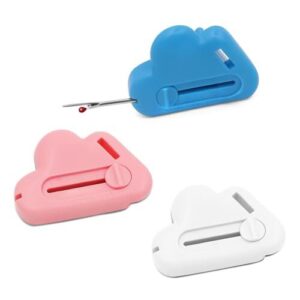
Two tools in one — that’s the quiet genius of the Armilem Magnetic Seam Guide and Ripper.
The polygonal magnet grips your needle plate firmly, holding your seam line steady even through heavy layers.
When a stitch goes wrong, the built-in ripper folds out instantly so you can fix it without reaching for a separate tool.
It comes in a set of three, costs just $12.34, and snaps on without any setup.
Precision and correction, right where you need them.
| Best For | Sewers of all skill levels who want more consistent seams and a built-in fix for stitch mistakes — no extra tools needed. |
|---|---|
| Price | $12.34 |
| Material | Plastic & Stainless Steel |
| Machine Compatibility | Most machines |
| Weight | 0.2 oz |
| Package Count | 3 guides |
| Skill Level | All levels |
| Additional Features |
|
- Three guides for $12.34 is genuinely good value, and they move easily between machines
- The built-in seam ripper means one less thing to hunt for mid-project
- Snaps on instantly with no setup, so you’re back to sewing in seconds
- Won’t work on machines with non-magnetic needle plates
- The magnet can shift under heavy fabric or thick pin clusters
- At least one user had a magnet detach early on and needed glue to fix it
8. CatOSUM Sewing Machine Repair Kit
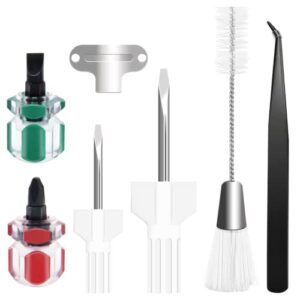
Think of it as a first-aid kit for your sewing machine. The CATOSUM 7000 Repair Kit packs seven essential tools — curved-nose tweezers, a double-ended fluff brush, and five screwdrivers — into a compact set that weighs barely 45 grams.
At $7.99, it’s built for quick wins: clearing lint from the bobbin area, swapping needles, or tightening a loose screw without hunting through your junk drawer.
Plastic and metal construction keeps it light without sacrificing function for standard home machines.
| Best For | Home sewers who want a simple, affordable kit to handle everyday maintenance and minor repairs on standard consumer machines. |
|---|---|
| Price | $7.99 |
| Material | Metal & Plastic |
| Machine Compatibility | Consumer machines |
| Weight | 0.1 lb |
| Package Count | 7 tools |
| Skill Level | All levels |
| Additional Features |
|
- Seven tools in one tiny pack — tweezers, brush, and screwdrivers all ready to go
- At $7.99, it’s basically a no-brainer for the value you get
- Light enough to toss in a travel bag or keep at your sewing station without taking up space
- Two of the longer screwdrivers can feel awkward in really tight screw heads
- Plastic parts won’t hold up as well as full-metal tools if you’re rough with your gear
- Not built for industrial machines — this one’s strictly for home use
9. Magnetic Seam Guide for Sewing Machines
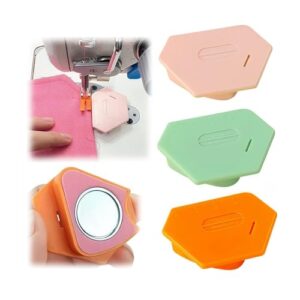
Consistency is the secret weapon of every skilled sewist — and the Magnetic Seam Guide delivers exactly that. This compact 2 × 1 × 0.25-inch tool attaches instantly to your machine’s metal needle plate, holding firm while fabric glides along its edge for perfectly even seam allowances.
No chalk marks, no guesswork. It works across quilts, garments, and everything between.
Just keep in mind: it won’t grip non-magnetic plates, and thick layers may nudge it slightly out of position.
| Best For | Sewists of all skill levels who want consistent, straight seams without the hassle of measuring and marking every time. |
|---|---|
| Price | $N/A |
| Material | Thick Plastic |
| Machine Compatibility | Most machines |
| Weight | 2.89 oz |
| Package Count | 3 pieces |
| Skill Level | All levels |
| Additional Features |
|
- Snaps right onto your machine’s metal needle plate — no setup fuss, just sew
- Works for quilts, garments, blankets, and more, so it earns its keep across projects
- Small enough to toss in your bag and take to a class or a friend’s place
- Won’t stick to non-magnetic needle plates, so check your machine before buying
- Heavy or thick fabrics can nudge it out of place mid-project
- The fixed ruler length can feel limiting on really long, continuous seams
10. Ckpsms Double Fold Binding Attachment
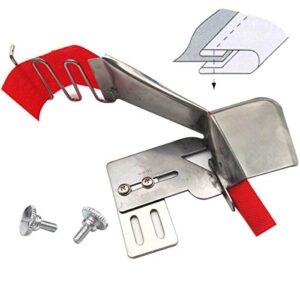
Raw edges don’t have to be your nemesis.
The Ckpsms Double Fold Binding Attachment wraps fabric edges twice before stitching, delivering a clean, professional finish on garments, linens, and quilts without the tedious hand-folding. It accommodates binding tape up to 16 mm wide and works with both straight and zigzag stitches.
Made from durable metal with precision-machined guide channels, it feeds smoothly at production speed.
Just note: your machine needs standard binder compatibility and pre-drilled mounting holes for installation.
| Best For | Sewers running a small shop or home-based operation who want a cleaner edge finish without spending big on OEM tooling. |
|---|---|
| Price | $11.99 |
| Material | Alloy Steel |
| Machine Compatibility | Industrial machines |
| Weight | 0.14 kg |
| Package Count | 1 set |
| Skill Level | Advanced |
| Additional Features |
|
- Folds binding tape twice for a neat, professional edge — no tedious hand-folding needed
- Works with a solid range of machines like Bernina, Brother, Juki, and Singer
- At $11.99, it’s a budget-friendly swap for pricier OEM binder feet
- Your machine table needs two pre-drilled screw holes — no holes, no go
- Doesn’t play nice with most domestic tabletop machines that lack mounting holes
- Some users hit snags feeding certain ribbons through, and you may need to tweak needle position to get clean folds
Best Presser Feet Options
The right presser foot can completely change what your machine is capable of. From sewing tight against zipper teeth to keeping quilting lines perfectly even, each foot performs a specific job better than a standard one ever could.
Here are the best presser feet worth adding to your setup.
Zipper Foot for Sewing Close to Teeth
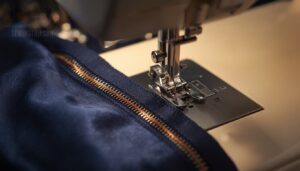
The zipper foot is one of those sewing machine attachments that quietly transform your results. Needle alignment sits within 1–2 mm of the teeth, so your seam line stays clean and nearly invisible.
Here’s what sets it apart:
- Adjustable clearance accommodates different zipper widths
- Invisible zipper foot grooves keep coils upright
- Fabric distortion prevention through minimal nudging
- Foot compatibility across most domestic machines
- Invisible zipper technique made precise and repeatable
For more details, see the adjustable zipper foot guide.
Buttonhole Foot for Consistent Buttonholes
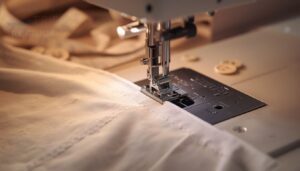
Getting buttonholes right every time comes down to your Buttonhole Foot. Its stabilization plate feeds fabric evenly, while automatic sizing matches your button diameter without guesswork. That’s stitch accuracy you can count on.
| Feature | Benefit | Fabric Suitability |
|---|---|---|
| Automatic Sizing | Matches button diameter | Cotton, poplin, denim |
| Stabilization Plate | Prevents bunching | Medium-weight wovens |
| Maintenance Routine | Extends foot lifespan | All fabric types |
Smart thread choice and regular cleaning keep your professional sewing results consistent across every project.
Walking Foot for Layered or Slippery Fabrics
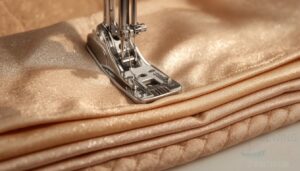
Slippery satin or a thick quilt sandwich? That’s where the Walking Foot earns its place. Its built-in feed dogs deliver true even feed, pulling every layer through at the same rate for perfect Fabric Layer Alignment.
- Dual-Feed Mechanics grip top and bottom simultaneously
- Slip-Resistant Grip stabilizes silk, vinyl, and laminates
- Adjustable Pressure Settings protect delicate layers
- Seam Consistency Tips: use longer stitch lengths for cleaner results
Narrow-hem Foot for Clean Rolled Hems
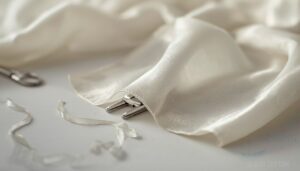
Once you’ve tamed thick layers with the walking foot, go the opposite direction—fine fabrics like silk and chiffon deserve the Rolled Hem Foot. This clever addition to your sewing machine attachments automatically folds a 1–2 mm edge as you sew.
Nail your Stitch Length Settings around 1.5–2 mm, check Thread Tension carefully, and keep Edge Alignment steady.
Fabric Compatibility matters: stick to lightweight weaves for best results.
Quilting-guide Foot for Steady Seam Spacing
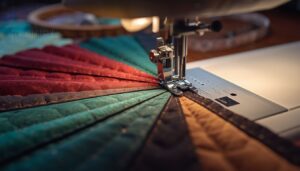
When precision is everything, the quilting-guide foot delivers.
Its built-in edge guide locks in a consistent ¼-inch seam allowance, so your stitch accuracy never wavers block after block.
Guide Bar Calibration keeps your lines true, while the Corner Pivoting Method lets you pivot cleanly at tight angles.
Sync your Fabric Layer settings, tune your stitch length, and follow a simple Foot Maintenance Routine to protect seam allowance consistency long-term.
Seam Guides for Cleaner Stitches
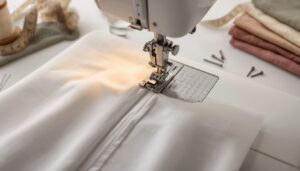
Getting your stitches straight isn’t luck — it’s about having the right guide doing the work for you. Seam guides take the guesswork out of alignment, whether you’re sewing a quick hem or piecing together a quilt.
ones worth knowing about.
Magnetic Guides for Straight Stitching
Magnetic guides might be the quietest upgrade in your toolkit—but don’t underestimate them. Their rare earth magnet strength locks firmly onto steel or cast iron beds; no tools needed.
Ruler clarity with engraved inch and centimeter marks keeps your edge guiding consistent every pass.
They handle curved stitching smoothly, and corrosion-resistant builds mean serious maintenance durability.
Stitch accuracy, finally on autopilot.
Diagonal Seam Tape for Angle Control
Diagonal seam tape cuts out the guesswork when you’re piecing quilt blocks at an angle. Stick it in front of your feed dogs, align the red line with your needle, and you’re set.
- Red Line Alignment centers your stitch path for accurate diagonals
- Seam Allowance Markings show a ¼-inch guide on each side
- Tape Placement Tips — apply flat, no bubbles
- Fabric Compatibility Guide — works on wovens and most knits
- Tape Removal Techniques — peel gently; leaves no residue
Polygonal Guide Shapes for Quick Alignment
Think of polygonal guides as your fabric’s personal GPS.
Each shape does a specific job — Triangle Edge Alignment locks in three reference lines instantly, Square Corner Precision fixes your 90-degree seam joins, Pentagon Multi-Edge manages irregular panels, Hexagon Symmetry Aid keeps pattern sections balanced, and Diamond Centerline Mark confirms your cross-pattern center.
These sewing machine attachments transform fabric handling and stitch accuracy from guesswork into control.
Edge-guide Attachments for Even Seam Allowance
Edge-guide attachments are the quiet workhorses of seam allowance consistency. They clamp behind your presser foot with Presser Foot Compatibility built in, and Adjustable Width Settings let you dial in your exact allowance without guesswork.
Keep up a regular Tool Cleaning Routine — lint kills edge guiding accuracy fast.
Magnet Strength Variability matters too, so always test on scrap fabric first.
Ripper-equipped Guides for Corrections
A misplaced stitch doesn’t have to mean starting over.
Ripper-equipped guides give you a Seam Ripper and edge guiding precision in one tool — the Alignment Calibration System keeps blade depth matched to your stitch tension, while the Blade Guard Mechanism retracts safely when you’re done.
The Ergonomic Handle Design reduces fatigue, Quick Release Mounting speeds swaps, and solid Maintenance Routine Tips keep seam allowance consistency locked in.
Cutting and Finishing Tools
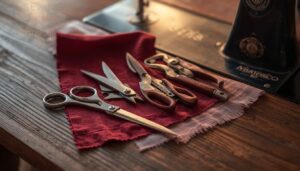
Once you’ve got your seams lined up, the next step is cleaning them up — and that’s where cutting and finishing tools really earn their place. These attachments handle everything from trimming fabric mid-stitch to sealing raw edges so your work holds together wash after wash.
Here’s a look at the tools that’ll make that final stretch faster and cleaner.
Side Cutting for Trimming While Stitching
A side cutter attachment trims excess fabric while you stitch—no separate scissors needed.
Blade Width Adjustment lets you dial in cuts from 3 to 6 mm, while proper Needle Plate Clearance keeps the blade safe and accurate.
Use Fabric Stabilization Techniques on slippery materials, and always follow Safety Precautions when swapping cutting tools.
Edge Finish Consistency is the real payoff.
Binding Attachments for Neat Fabric Edges
Where the side cutter leaves off, a binding attachment picks right up—wrapping bias tape cleanly around raw edges in one pass. Your presser foot guides the fold while the edge guide keeps alignment tight.
For best results:
- Tape Width Adjustment for 12–32 mm options
- Stabilizer Use on slippery fabrics
- Speed Settings on Curved Edge Binding
- Fold Accuracy Tips before final stitching
Thread Cutters for Faster Workflow
Every second you spend snipping loose threads adds up fast. That’s where a thread cutter changes your rhythm entirely.
The THREAD CUTTERZ Flat Mount uses a fast action knife design with Ceramic Blade Durability that won’t dull on polyester or nylon. Pedal Activation Speed keeps your hands free, while the Safety Shield Design and Quick Release Mechanism make blade swaps painless—serious sewing accessories built for real efficiency.
Serging-style Finishing for Raw Edges
Raw edges unravel fast—and a serging attachment stops that before it starts. Using Four-Thread Overlock construction, it wraps and trims simultaneously for clean results.
- Dial in Loop Tension Adjustment for balanced stitches
- Use Differential Feed Settings on knits to prevent stretching
- Keep up with Serger Blade Maintenance for clean Edge Trimming Techniques
- Match thread cones to fabric weight
- Test stitch quality improvement on scrap first
Seam Rippers for Mistake Removal
Even the sharpest sewists need a seam ripper close by. A good one features Ergonomic Grips, Precision Tip Types, and Replaceable Blades for every fabric situation.
| Feature | Purpose | Best For |
|---|---|---|
| Blade Safety ball end | Prevents fabric puncture | Delicate materials |
| Fine precision tip | Targets single stitches | Silk, chiffon |
| Replaceable blades | Maintains cutting sharpness | Heavy or synthetic threads |
Keep a simple Maintenance Routine—wipe the blade, add light oil—and your seam ripping and mistake correction stay smooth every session.
Thread, Bobbin, and Needle Tools
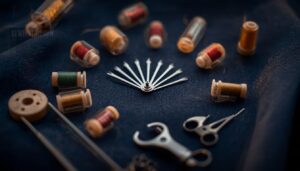
The right needle or bobbin setup can make or break a project before you even finish the first seam. Choosing the wrong one wastes thread, damages fabric, and costs you time you don’t have.
Here’s what you need to know about the tools that keep your machine running smoothly.
Universal Needles for Everyday Woven Fabrics
Universal needles are the workhorses of your sewing kit — quietly dependable across cotton, linen, polyester, and blends. Their slightly rounded tips handle fabric penetration without snagging, and the longer scarf keeps thread tension management consistent by helping the bobbin hook catch cleanly.
- Needle size selection runs from 60/10 to 110/18
- Flat-back shanks guarantee proper alignment as sewing accessories go
- High-carbon steel builds real needle longevity
- Thread compatibility spans fine to medium weights effortlessly
Pick your needle set by fabric weight, and cost efficiency follows naturally.
Ballpoint Needles for Knit Materials
Ballpoint needles are your go-to for knit fabric types — their rounded tips glide between yarn loops instead of piercing them, protecting stitch quality and preventing runs.
Size selection matters: use 70/10 for lightweight jersey, 80/12 for medium knits. Thread pairing with polyester keeps tension stable.
Replace every 8–12 hours for best results.
| Fabric Compatibility | Needle Size | Thread Pairing |
|---|---|---|
| Lightweight jersey | 70/10 | Polyester |
| Medium interlock | 80/12 | Cotton/poly blend |
| Thick rib knit | 90/14 | Polyester stretch |
Denim Needles for Heavy Fabrics
Denim needles are the workhorses your machine needs for heavy-fabric projects. Their sharpness benefits are immediate — a reinforced wedge point pierces dense weave cleanly, eliminating skipped stitches across thick seams. Shaft durability matters too: hardened steel shafts won’t bend under pressure.
- Eye size: A larger eye accommodates topstitch thread without shredding
- Size range: Use 90/14 to 110/18 for standard denim layers
- Compatibility tips: Most domestic machines accept these with no adjustments
Pair with sturdy polyester thread for clean, lasting results.
Microtex Needles for Precise Stitching
Microtex Needles are your go-to for fabrics that demand surgical precision. The Sharp Point and Slim Shaft pierce tightly woven materials — silk, satin, microfiber — without crushing fibers or pulling threads.
An Optimized Eye keeps fine threads flowing smoothly, reducing breakage mid-seam.
Their Fabric Versatility makes them essential sewing accessories for anyone chasing clean topstitching and perfect precision applications on delicate work.
Twin Needles for Decorative Hems
Twin needles turn a basic hem into a polished, professional finish — no coverstitch machine required. Two parallel top stitches form simultaneously while a zigzag interlocks underneath, giving knits the stretch they need.
Nail needle width selection, thread tension balancing, and stitch length tuning for clean results.
Add fabric stabilization methods to prevent tunneling, and you’ve got hem height control that looks custom-made.
Bobbins, Bobbin Cases, and Bobbin Winders
Once your twin needle hems are dialed in, the bobbin system underneath becomes just as important as what’s on top.
Most home machines use Class 15 bobbins — about 25.4 mm wide — but bobbin compatibility varies by model, so always check before buying.
What to keep straight:
- Bobbin Size Standards differ across brands
- Bobbin Material Comparison: metal holds tension better than plastic
- Case Tension Adjustment uses a small screw to balance stitch tightness
- A Portable Hand Winder preps bobbin without running your machine
- Winder Sensor Technology stops automatically when full
Swap bobbins and cases with manufacturer‑matched parts for clean, consistent stitches every time.
Spool Holders and Thread Stands for Smoother Feeding
Once your bobbins are sorted, the thread feeding from above deserves equal attention. A quality spool holder or thread stand with a Weighted Base Design and Low Center Gravity keeps large cones steady at full speed.
Rubberized Foot Isolation cuts vibration, while Adjustable Spool Guides prevent fraying.
Look for a Quick Release Mechanism — it’s a small feature that saves real time.
Comparing Value, Brands, and Uses
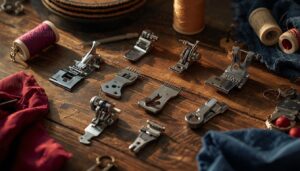
Not all attachments are created equal, and the right pick depends on more than just price.
Knowing which brands hold up, which tools work for your specific fabric, and whether an attachment actually fits your machine makes all the difference.
Here’s what you need to know before you buy.
2026 Price and Rating Snapshot
Prices shifted noticeably in 2026, with the average price increase landing between 6 and 9 percent across top brands. Here’s what the price and rating analysis of sewing accessories reveals:
- Average price per attachment: $11.15
- Average rating across categories: 4.4–4.8 stars
- Bundle discount effect: 12–18% savings
- Brand price variance: budget options under $10, premiums reaching $25
- Regional shipping costs add 3–6% for EU buyers
Review Counts and Buyer Satisfaction
Numbers tell a story that price alone can’t tell a story. The best-selling attachment in 2026 pulled in 384 reviews with a 4.7-star average — strong authenticity signals backed by real buyer satisfaction.
When you dig into the consumer review methodology for sewing tools, rating distribution influence matters more than a single score. Products crossing 100 reviews consistently show higher trust and steadier purchase intent.
Leading Brands for Premium Attachments
When quality really matters, the brands behind your tools make all the difference.
Singer, Honeywell, Armilem, and Brexfire lead through brand innovation, rigorous performance testing, and solid warranty programs. Their partnership ecosystem connects manufacturing origins to real-world reliability — so you’re not guessing.
Each brand earns its reputation stitch by stitch, giving you the confidence to create without second-guessing your gear.
Choosing Attachments by Fabric Type
Your fabric type drives every attachment decision. Stretch fabric needles and knit-friendly feet handle elastics without skipped stitches, while heavyweight fabric guides keep denim feeding straight. Delicate silk tools and leather-compatible attachments protect fragile or tough surfaces alike.
Your fabric type is the foundation of every smart attachment decision
- Choosing the right presser feet for different fabrics controls fabric feeding precisely
- Thread tension control shifts with material weight
- Elastic waistband projects need dedicated stretch settings
Matching Tools to Quilts, Garments, and Embroidery
Every project type calls for a different toolkit.
Quilting demands quilt block alignment tools, walking feet, and a quilting guide for even seam spacing.
Garments benefit from garment pattern matching guides and presser feet that handle fabric tension management precisely.
Embroidery relies on embroidery hoop guides and stitch density control for clean repeat motifs.
Matching attachments for quilting and embroidery to your project type make all the difference.
Checking Compatibility With Your Machine Model
Before you buy a single attachment, check that it actually fits your machine. A mismatch in shank type or throat space can make even the best tool useless.
- Locate your machine model on the serial plate.
- Confirm presser foot height and feed dog clearance.
- Match shank type to the attachment mount.
- Check firmware requirements for electronic accessories.
- Verify compatible bobbins and accessory compatibility with machine models.
Frequently Asked Questions (FAQs)
What is the number one sewing machine brand?
Oddly enough, the best-kept secret in sewing isn’t secret at all — it’s Brother.
Professionals and beginners alike trust Brother’s global service network, consistent innovation milestones, and reliable warranty coverage across every price tier.
What is the most secure stitch on a sewing machine?
The straight stitch is your most secure option. Keep your stitch length between 0 and 5 mm, add backstitch reinforcement at both ends, and polyester thread does the rest.
What is the best stitch to use on a sewing machine?
The straight stitch manages most seams cleanly. For knits, switch to a stretch stitch. Match your stitch length and thread tension to your fabric for the best results.
What is the best tension for sewing machine?
Start around 4 to 5 for most fabrics. Adjust based on fabric weight tension and thread type tension — heavier materials need higher settings. Always use the tension testing method on scraps first.
What are common mistakes when using attachments?
Using the wrong file version or skipping proper naming causes confusion fast. Missing encryption and recipient compatibility checks add risk. Always compress files and verify formats before sending attachments.
How often should attachments be cleaned?
Clean each attachment after every use. For dusty setups, add a Weekly Inspection to your Maintenance Log.
Monthly Lubrication and Dust Prevention checks keep your sewing machine accessories performing at their best.
Can attachments be used on any machine?
Like shoes, not every attachment fits every machine. Shank types, adapter brackets, and proprietary systems all affect compatibility.
Industrial vs hobby machines differ considerably, so always check your manual before selecting compatible accessories.
Do attachments require special storage?
Yes — store metal parts in labeled cases with moisture control packets, keep plastics away from heat for temperature stability, and use clear organizational tools so everything stays sorted and easy to grab.
Are sewing machine attachments universal?
Not even close — sewing machine attachments aren’t universal. Shank compatibility, snap-on mechanisms, and brand-specific bosses all determine fit.
Always run fit testing procedures before buying, or use universal adapter solutions when available.
How do I clean sewing machine attachments properly?
Always unplug first, then use lint brush techniques to sweep debris. Compressed air usage clears tight spots, while moisture-free wiping protects metal.
Follow a maintenance schedule and practice storage hygiene to keep all machine attachments performing well.
Conclusion
The less equipment you reach for, the more your machine can do—that paradox is what the top-rated sewing machine attachments prove every time you sit down to sew.
A magnetic guide keeps your lines honest. A binding attachment manages the folding you’d otherwise wrestle with.
The right tools don’t complicate your process; they quietly remove the friction from it.
Choose what fits your work, attach it once, and let precision become your habit.