This site is supported by our readers. We may earn a commission, at no cost to you, if you purchase through links.
Walk into any fabric store’s machine aisle and you’ll spot the same rookie mistake: sewists grabbing the flashiest computerized model without asking whether they need 400 built-in stitches or can even thread an automatic needle tensioner.
Sewing machine buying considerations for various skill levels don’t start with price tags or brand loyalty—they start with an honest assessment of what you’ll actually sew and how much mechanical complexity you can troubleshoot when a bobbin jams at midnight.
A beginner wrestling with computerized menus often produces worse seams than someone running a reliable mechanical workhorse, while an expert tailor stuck with entry-level limitations will outgrow their investment in months.
The gap between what marketing promises and what your skill level demands determines whether your machine becomes a trusted partner or expensive closet decoration.
Table Of Contents
Key Takeaways
- Match your sewing machine to your current skill level rather than aspirations—beginners need mechanical simplicity with forgiving controls, intermediates require expanded stitch libraries with adjustable features, and advanced sewists demand industrial-grade durability with precision control that handles dense fabrics and marathon sessions.
- Evaluate machines based on essential features that directly impact your projects: built-in stitch count and adjustability (10-200+ patterns), threading systems (manual versus automatic), presser feet versatility, fabric compatibility across weights and textures, and speed control options that match your working pace.
- Budget strategically across three tiers—entry models ($100-$300) cover basic projects with 8-60 stitches and manual threading, mid-range options ($300-$800) deliver automatic features with metal frames for hobbyist durability, and premium machines justify their cost only when completing 10+ garments monthly or tackling professional-grade workloads.
- Prioritize brand reliability and support infrastructure over flashy features: verify warranty coverage length (1-25 years depending on tier), confirm local access to certified repairs and genuine spare parts, and research community forums where active users troubleshoot real problems before your purchase becomes expensive closet decoration.
Sewing Machine Types for Every Skill Level
You’re standing at the starting line of your sewing journey, and the machine you choose will either fuel your progress or hold you back. The market offers mechanical, electronic, and computerized options, along with specialized machines designed for specific tasks. For beginners seeking precision and ease, a computerized sewing machine offers built-in stitch patterns and automatic features that simplify complex projects.
Each category caters to different skill levels and project demands. Understanding these distinctions equips you to select equipment that matches your current abilities while leaving room for growth as your expertise develops. These categories help you choose equipment matching your skill level and leave room to grow as your abilities advance.
Mechanical Vs. Electronic Vs. Computerized Machines
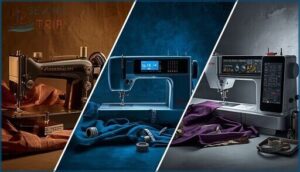
Your machine controls define your creative freedom. Mechanical machines give you tactile, hands-on power through manual dials—no digital interference, just pure sewing speed you command. Electronic sewing machines upgrade you with push-button stitch precision and motor efficiency that responds instantly. Computerized sewing machines access programmable patterns and automatic threading, turning complex projects into conquered territory. The Brother HC1850 computerized machine delivers programmable precision with intuitive push-button controls for seamless fabric handling.
- Mechanical machines: Direct control, simpler maintenance, lower cost
- Electronic features: LCD screens, motorized adjustments, fewer manual steps
- Computerized models: Sensors, memory banks, sophisticated stitch databases
- Selection guide: Match machine features and functions to your ambition level.
When evaluating the reliability of scientific study summaries, consider the importance of methodological rigor in ensuring accurate results.
Specialized Machines (Serger, Overlock, Coverstitch)
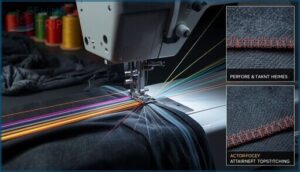
Beyond standard sewing machine types and features, you’ll discover sergers and overlocks dominate knit-fabric finishing, while coverstitch hems deliver professional topstitching on stretchy materials. These specialty threads and industrial sewing machines demand dedicated maintenance routines, but overlock benefits include simultaneous cutting, stitching, and edge sealing. Sergers excel at edge finishing and seam construction, especially when using a serger machine for rolled hem techniques on delicate fabrics.
Your sewing machine selection guide expands when you master serger tips: they complement rather than replace standard machines, giving you complete control over garment construction with machine features and functions that standard models can’t touch. Mastering both machines means understanding the core differences between sergers and sewing machines to build your ideal sewing toolkit.
Matching Machine Types to User Experience
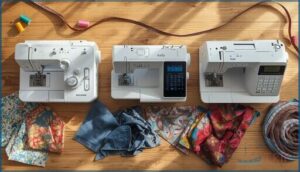
Your beginner skill level demands mechanical or simplified electronic controls—those clearly labeled dials minimize confusion during fabric selection and thread management. As you advance toward intermediate sewing techniques, computerized machines with 30 to 100 stitches and adjustable speed release stitch customization without overwhelming choice.
Machine learning curve steepens with feature-dense models, so your sewing machine selection guide should match current ability, then stretch slightly beyond for rewarding growth. Understanding the key features, such as user friendly controls, is vital for making an informed decision.
Assessing Your Sewing Skill and Goals
Your sewing machine needs to match where you’re right now, not where you think you should be. Choosing a machine that’s too sophisticated wastes features you won’t use, while settling for too little leaves you outgrowing it in months.
Choose a sewing machine that matches your current skill level, not your aspirations or assumptions about where you should be
Here’s how to honestly assess your current skill level and identify the machine capabilities that’ll support your actual projects.
Beginner Needs and Common Projects
If you’re just starting out, your first forays into sewing basics often include tote bags, simple hems, and pillow covers—projects that sharpen fabric selection instincts and build confidence with straight seams.
These beginner patterns let you master essential sewing skills and techniques without complex closures, preparing you for home decor projects and thoughtful sewing project planning that guides your sewing machine selection moving forward.
Intermediate Requirements and Aspirations
As you graduate to intermediate skill level projects, your sewing machine demands shift—precision guidance and stitch consistency become non-negotiable, threading control needs sharpen, and you’ll crave adjustable settings that respond to your evolving sewing skills and techniques.
Fabric handling grows more intricate, workflow automation saves precious hours, and your machine must flex across wider project variety without compromise.
Advanced Sewists and Professional Use Cases
When professional workflows demand impeccable execution, your sewing machine comparison must prioritize industrial durability, motor power that handles dense fabrics without hesitation, and high precision stitch control that remains consistent through marathon sessions.
- Industrial sewing machines deliver component-level serviceability and certified technician access for frequent professional use
- Sophisticated sewing techniques require specialized presser feet compatibility and professional-grade accessory ecosystems
- Technical features like consistent tension control and reliable feed systems separate hobby machines from true workhorses
- Dense fabric handling capabilities and motor torque specifications become critical benchmarks in your sophisticated machine evaluation
Essential Features to Compare
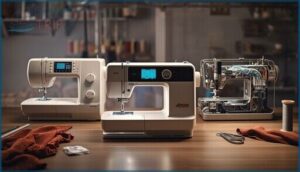
When you’re comparing sewing machines, certain features separate a reliable workhorse from a frustrating purchase. Understanding which specifications actually matter for your projects gives you the power to choose confidently, without getting distracted by marketing gimmicks or unnecessary bells and whistles.
Let’s break down the core features that determine whether a machine will meet your needs or leave you second-guessing your investment.
Built-in Stitches and Stitch Adjustability
Think of built-in stitches as your creative arsenal—machines range from 10 basic options to over 200 intricate stitch patterns. You’ll want adjustable stitch length (0–5 mm) and zigzag width (up to 6 mm) for stitch customization across fabric settings.
Look for machines with selector dials showing tension adjustments and buttonhole mechanisms, plus memory functions that save your favorite stitch options and sewing speed preferences.
Needle Threading and Bobbin Systems
Manual threading can slow your sewing momentum, but modern threading mechanisms and automatic threading systems transform setup into a one-motion task. You’ll encounter these core bobbin type configurations and needle guides across today’s sewing machine options:
- All-in-one lever-passed needle guides that thread the eye without finger precision
- Bobbin sensors monitoring thread tension to prevent stitch errors
- Drop-in bobbins with clear visibility for faster machine maintenance
- Front-load bobbin systems with dedicated tension paths
- Thread tension adjusters maintaining stable stitch options across fabric weights
Presser Feet Options and Speed Control
Swapping presser feet and adjusting speed settings release your machine’s full potential, letting you control every stitch with precision. Modern sewing machines ship with 6–10 presser feet—zipper, buttonhole, walking foot—and speed control options ranging from foot pedals to start/stop buttons and speed sliders, giving you throttle-style consistency whether you’re stitching leather or silk.
| Presser Foot Type | Best For |
|---|---|
| Walking foot | Thick or slippery fabrics |
| Rolled hem foot | Consistent hem formation |
| Teflon foot | Vinyl, leather, laminated materials |
| Free-motion foot | Quilting at controlled speeds |
| Zipper foot | Precise seam placement |
Fabric Compatibility and Versatility
Your machine’s ability to manage multiple fabric types—from chiffon to canvas—determines whether you’ll master every project or hit frustrating dead ends. Feed systems and material adaptability separate adaptable machines from one-trick models, so check these tolerances before you buy:
- Fabric thickness: 6–10 mm clearance manages denim, upholstery, and layered quilts
- Stretch tolerance: Differential feed prevents puckering on knits and jersey
- Delicate handling: Adjustable presser foot pressure protects silk, organza, and tulle
- Textile and fabric selection: Built-in settings fine-tune stitch quality across woven and stretch fabrics
Budgeting for Your Sewing Machine Purchase

Your budget shapes every aspect of your sewing machine purchase, from the features you’ll access to the longevity you can expect from your investment. Understanding price tiers helps you identify which machines offer genuine value versus those that cut corners on critical components like motor quality, frame construction, and stitch consistency.
Let’s break down what you can realistically expect at each price point, so you can allocate your funds where they’ll deliver the most lasting impact on your sewing projects.
Entry-Level Models ($100–$300)
When you’re breaking free into sewing, budget options between $100 and $300 deliver solid entry costs without breaking the bank. Most machines in this range offer 8 to 60 built-in stitches, manual threading, and metal or sturdy plastic frames—sufficient durability for beginner projects. User reviews consistently highlight reliability for hems, seams, and basic repairs, though you’ll sacrifice automatic features found in higher-tier models.
| Feature | Typical Spec | Consideration |
|---|---|---|
| Built-in Stitches | 8–60 stitches | Covers utility and stretch |
| Threading System | Manual needle threading | Requires setup practice |
| Warranty Coverage | 1–2 years parts/labor | Limited electronics coverage |
Mid-Range Options ($300–$800)
Stepping up to the $300–$800 bracket unlocks mid-range features that fuel hobbyist needs and semi-professional use—automatic needle threading, computerized machines with 100+ stitches, and metal frames built for sewing machine durability. These budget-friendly options balance upfront sewing budget and investment with long-term performance, making sewing machine testing and evaluation worthwhile before committing.
- Automatic threading systems save setup time on every project
- Extended stitch libraries support diverse fabrics and techniques
- Metal internal frames withstand years of intermediate sewing demands
- North American warranty coverage ensures accessible repairs and parts
When to Invest in Premium Machines
Premium costs make sense when your sewing budget and investment align with serious workload—if you’re completing more than ten garments monthly or tackling dense quilting, high-end models deliver longevity benefits that budget computerized machines can’t match.
Professional upgrades offer sophisticated features like programmable memory and heavier frames that reduce downtime, letting your skill level thrive without frustrating mechanical limits.
Balancing Cost and Long-Term Value
Your budget should account for more than the sticker price—factor in maintenance costs, energy efficiency, and durability that stretches years between repairs. Machines with strong resale value and reliable brand support reduce your total ownership expense, freeing resources for premium features that accelerate sewing skill development.
Long-term savings often justify spending more upfront when you’re committed to lasting craft mastery.
Evaluating Brands and Warranty Support
Choosing a sewing machine isn’t just about features and price—it’s about backing your investment with a brand that won’t leave you stranded when something goes wrong. The right manufacturer gives you peace of mind through solid warranties, accessible repair networks, and a community of users who can help you troubleshoot problems.
Let’s break down what separates the reliable brands from the rest, so you can buy with confidence and keep your machine running for years.
Singer, Brother, Janome, and Juki Overview
When you compare leading brands, four names dominate the landscape: Singer delivers affordability and model varieties for beginners, Brother emphasizes built-in sewing innovations and customer support for entry users, Janome balances stitch quality with machine durability across skill levels, and Juki brings industrial-grade reliability to domestic machines.
Each brand offers distinct advantages in sewing machine maintenance, parts availability, and long-term performance that match your skill level and project ambitions.
Warranty Length and Coverage
Beyond the initial sale, warranty terms separate machines built to last from those engineered to fail. Most beginner sewing machine warranties cover one to two years on defects, while high-end models extend five to twenty-five years on core components like motors and sewing heads.
Coverage limits exclude wear items—needles, belts, bulbs—and misuse, so you’ll need extended warranties or solid repair options to protect your budget long-term.
Access to Repairs and Spare Parts
When your sewing machine stalls, repair service and spare parts availability determine whether you’re back in action or stuck waiting weeks. Local dealers stock official parts for mainstream brands and handle warranty claims within five to fifteen business days in most urban areas.
Third-party shops cut downtime by twenty to forty percent using generic components, though you’ll risk voiding warranty terms on newer equipment.
Brand Reputation and Community Support
Reputation metrics and customer support often separate frustration from confidence. Active community forums for Bernette, Juki, and Janome let you troubleshoot in real time, while detailed user reviews expose reliability patterns before you commit.
Brand loyalty stems from responsive support teams and sewing community resources that turn first-time buyers into lifelong advocates. These resources give you access to project ideas, troubleshooting threads, and local certified dealers who keep your machine running.
Top Sewing Machines for Every Skill Level
You don’t need to wade through endless spec sheets to find the machine that’ll actually work for your projects and skill level. The three models below represent solid choices across the beginner-to-advanced spectrum, each offering distinct advantages in build quality, stitch capability, and long-term reliability.
Let’s break down what makes each one worth your attention and which sewist they’re built to serve.
1. Bernette Sewing Machine
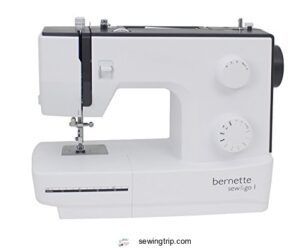
If you’re stepping into the Bernette lineup, you’ll find a Bernette sewing machine built under Bernina’s umbrella, targeting entry to mid-range sewists with straightforward automatic threading and top-loading bobbins. These models deliver reliable stitch quality on woven fabrics, though you’ll need to stay on top of sewing machine maintenance and repair—regular oiling and tension calibration keep performance consistent.
User reviews highlight easy threading and LED visibility, making them accessible for beginners while offering enough versatility in sewing accessories to support your growing skill level and project ambitions.
| Best For | Beginners and casual sewists who want a simple, no-fuss machine for basic projects like curtains, placemats, and home decor without overwhelming features. |
|---|---|
| Brand | Bernette |
| Color | White |
| Weight | 15.9 Pounds |
| Power Source | Corded Electric |
| LED Light | Yes |
| Material | Plastic |
| Additional Features |
|
- Easy threading system and top-loading bobbin make setup quick, even if you’ve never touched a sewing machine before
- LED light improves visibility so you can see your stitches clearly, especially helpful for detail work
- Affordable entry point into the Bernina family with reliable performance on woven fabrics and basic stitches
- Construction quality can be inconsistent—some users report loose screws and durability concerns right out of the box
- Tension issues pop up with certain fabrics like tight-weave cotton, requiring frequent adjustments and troubleshooting
- Limited features compared to computerized models, and you’ll need regular maintenance (oiling, calibration) to keep it running smoothly
2. Juki Computerized Sewing Machine
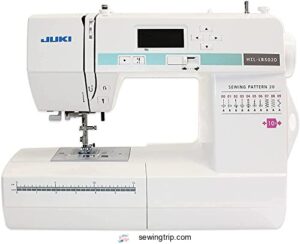
When you demand precision paired with intelligent automation, a Juki computerized sewing machine delivers exactly that—LCD displays show your stitch selection in real-time while automatic needle threading and adjustable sewing speed let you control every pass.
These Juki models handle multiple layers effortlessly, making them ideal for intermediate to expert sewists ready to leverage computerized features like memory patterns and digital tension adjustment.
The user interface guides you through settings, though consistent machine maintenance—oiling moving parts and cleaning the bobbin area—keeps your sophisticated features running smoothly across diverse skill levels and fabric weights.
| Best For | Intermediate to advanced sewists who want computerized precision and automation features like LCD displays, automatic needle threading, and memory patterns for tackling complex projects across multiple fabric types. |
|---|---|
| Brand | JUKI |
| Color | White |
| Weight | 18.1 Pounds |
| Power Source | Corded Electric |
| LED Light | Yes |
| Material | Aluminum |
| Additional Features |
|
- LCD screen with real-time stitch selection and guided settings makes it easy to dial in the right stitch for each project without guesswork.
- Handles multiple layers of fabric smoothly thanks to the 7-point feed dog system, making it great for quilting and heavy-duty sewing.
- Automatic needle threader and variable speed control give you full command over precision and pace, whether you’re learning new techniques or perfecting advanced work.
- Some users have reported issues with backstitching functionality and occasional defective units that require costly evaluation and repair.
- Requires regular maintenance like oiling moving parts and cleaning the bobbin area to keep computerized features running smoothly.
- The instruction manual is essential for troubleshooting, and the accessory arm placement could be more user-friendly for easier access during projects.
3. Janome Sewing Machine Model 2212
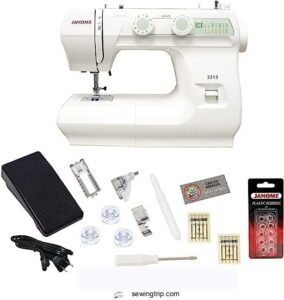
If you’re a beginner seeking liberation from complicated controls, the Janome 2212 strips away digital distractions and hands you fifteen reliable stitches, dial-based selection, and a free arm for conquering cuffs and sleeves.
This mechanical workhorse features an all-metal internal frame that steadies your needle through cotton, linen, and light synthetics. User reviews praise its consistent stitch quality at moderate speeds, though you’ll adjust tension manually when switching fabrics.
Janome’s widespread parts availability and active community support mean you can maintain this machine yourself, mastering sewing techniques and tips while building real skill and confidence.
| Best For | Beginners who want a straightforward mechanical sewing machine with reliable stitches and no digital complexity, perfect for learning basic garment work and craft projects. |
|---|---|
| Brand | Janome |
| Color | White |
| Weight | 14 Pounds |
| Power Source | AC |
| LED Light | Not specified |
| Material | Metal |
| Additional Features |
|
- All-metal internal frame delivers steady needle movement and consistent stitch quality at moderate speeds
- Fifteen built-in stitches with simple dial selection and free arm capability for sleeves and cuffs
- Wide parts availability and strong community support make maintenance and troubleshooting easy
- Manual needle threading and tension adjustments require more hands-on work when switching fabrics
- Some users report jamming issues or quality inconsistencies after extended use
- Fixed or limited presser foot pressure may not handle very thick materials as smoothly as adjustable models
Frequently Asked Questions (FAQs)
How often should I service my sewing machine?
An ounce of prevention beats a pound of cure—service your sewing machine every 12 months for home use.
Address maintenance schedules that improve machine longevity, durability, and performance while minimizing servicing costs through proper sewing techniques and repair options.
Can I sew leather with a standard machine?
You can sew leather on a standard sewing machine with proper leather needle selection, thread tension adjustment, and a walking foot—though leather thickness and stitch reinforcement demands may require sophisticated features for durability and consistent results.
What thread weight works best for quilting projects?
For quilting fabrics, cotton threads in weight 40 deliver balanced strength and stitch visibility across most projects.
Weight 50 minimizes bulk in dense layers, while 30 creates bold, decorative topstitching on your sewing machine.
Do I need a separate walking foot attachment?
Like a steadying hand on unruly fabric, a walking foot isn’t always necessary—but for thick fabrics, sewing layers, or quilting, it ensures even stitching and fabric feeding that standard presser feet can’t match.
How do I troubleshoot tension problems effectively?
Start with your presser foot up and rethread the entire path.
Then, test stitch tension on scrap fabric, adjusting upper thread tension in small increments while checking bobbin insertion and needle condition systematically.
Conclusion
Your machine doesn’t define your skill—but mismatched sewing machine buying considerations for various skill levels will sabotage every seam you attempt. Beginners thrive on forgiving mechanical simplicity, intermediates demand expanded stitch libraries and adjustable tension, expert sewists require industrial-grade durability and precision control.
The technician’s truth: buy slightly above your current abilities to encourage growth, but never leap two categories ahead. Match your investment to your honest assessment, then let consistent practice close the gap between aspiration and craftsmanship.
- https://www.direct-sewingmachines.co.uk/category/sewing-machines
- https://www.hobbysew.com.au/blog-posts/top-10-sewing-machines-for-every-skill-level-a-comprehensive-guide-for-2025/
- https://www.goldstartool.com/blog/how-to-choose-the-best-sewing-machine-for-your-skill-level.htm
- https://meissnersewing.com/blogs/inspiration/how-to-choose-best-sewing-machines
- https://sparrowrefashion.com/2024/10/16/mechanical-vs-computerized-sewing-machine-pros-cons/