This site is supported by our readers. We may earn a commission, at no cost to you, if you purchase through links.
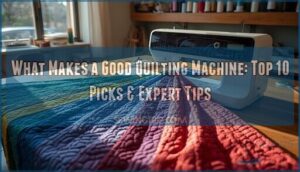
Your grandmother’s Singer probably stitched a hundred quilts without complaint, but try wrestling a king-sized quilt sandwich through that vintage throat space and you’ll understand why modern quilters demand more. The difference between a regular sewing machine and what makes a good quilting machine isn’t just marketing hype—it’s the gap between frustration and flow when you’re maneuvering yards of fabric under the needle.
Throat space, specialized feet, feed dog control, and motor power separate machines that handle quilting projects from those that merely tolerate them. Whether you’re piecing intricate geometrics or free-motion stitching sprawling designs, the right machine transforms technical challenges into creative opportunities.
We’ve tested dozens of models to identify the features that actually matter and the machines that deliver them without emptying your wallet.
Table Of Contents
- Key Takeaways
- What Makes a Quilting Machine Different
- Essential Features Every Good Quilting Machine Needs
- Top 10 Quilting Machines Worth Considering
- 1. Singer Quantum Stylist Sewing Machine
- 2. Brother Computerized Sewing Machine Model
- 3. Juki Straight Stitch Sewing Machine
- 4. Singer Patchwork Sewing Machine
- 5. Bernette Computerized Sewing Embroidery Machine
- 6. Metal Open Toe Quilting Presser Foot
- 7. Juki Computerized Sewing Machine
- 8. Brother High Speed Sewing Machine
- 9. Brother Sewing And Quilting Machine
- 10. Brother Computerized Sewing Machine
- Choosing The Right Quilting Machine Type
- How Machine Features Impact Real Quilting Projects
- Maintaining Your Quilting Machine for Longevity
- Frequently Asked Questions (FAQs)
- Conclusion
Key Takeaways
- A good quilting machine requires 9-12 inches of throat space, specialized presser feet (walking and free-motion), adjustable feed dog control, and a powerful motor (1/3 to 1/2 HP) to handle thick quilt layers without struggling through fabric bunching or skipped stitches.
- Essential features include walking foot capability for even feeding, free-motion quilting support with responsive darning feet, extension table compatibility for stable workspace, adjustable speed control for precision, and a variety of built-in quilting stitches for versatility.
- Domestic quilting machines offer the best balance for home quilters with 9-12 inch throat space and adaptable features, while longarm machines handle king-size projects with industrial power, and midarm models (12-18 inch throat) provide a space-saving middle ground.
- Regular maintenance—weekly bobbin area cleaning, monthly oiling of moving parts, proper needle and thread pairing (size 80/12 or 90/14 for cotton), and climate-controlled storage with dust protection—extends your machine’s longevity and preserves stitch quality.
What Makes a Quilting Machine Different
You can’t just grab any sewing machine off the shelf and expect it to handle a queen-size quilt. Quilting machines are built differently from the ground up, with specific features that let you work through multiple fabric layers without fighting your project every inch of the way.
Let’s break down the four key differences that set these machines apart from standard models.
Throat Space and Work Area
Throat space transforms how you tackle big projects on any quilting machine. You’ll find that 9-12 inches gives you room to maneuver without wrestling bulky layers:
- Better quilt visibility around the needle
- Smoother fabric management during free-motion work
- Improved sewing ergonomics over long sessions
Extension tables expand your work area even further, while longarm quilting machines offer the supreme throat space for serious quilters.
Understanding language patterns can also boost your creativity in quilting designs and names.
Specialized Presser Feet
Once you’ve got breathing room around the needle, the right presser foot unlocks every quilting technique you can imagine. Walking feet keep your sandwich layers gliding together without shifting—no puckers! Free-motion feet let you stitch curves, swirls, and custom designs like you’re drawing with thread. To guarantee the quality of our quilting patterns, we rely on methodological rigor in our design process.
| Foot Type | Best For |
|---|---|
| Walking Foot | Straight-line quilting, even feeding |
| Free-Motion Foot | Stippling, meandering, custom patterns |
| Edge-Stitch Foot | Topstitching, precise seam alignment |
Groove feet and clear acrylic options improve visibility during intricate work, while zipper and piping feet handle dimensional details. These sewing accessories transform your extension table into a creative studio!
Feed Dog Control
The right presser foot means nothing if you can’t control fabric movement underneath. Feed Dog Adjustment changes everything—raise those metal teeth for automatic Fabric Advance during straight-line work, then drop them for Free Motion Quilting where you’re the driver.
This simple Sewing Machine Features toggle switches between Quilting Modes instantly, giving you Stitch Regulation for precise patterns or total creative freedom. Most Quilting Machines offer one-touch Dog Height Settings without disrupting your flow!
Motor Power and Durability
Behind every smooth stitch through batting and fabric lies serious Motor Efficiency. Quality Sewing Machines for Quilting pack motors rated 1/3 to 1/2 HP—enough Power Ratings to handle thick layers without straining. The Singer 4423 review breaks down how its robust motor and adjustable presser foot handle multiple quilt layers without skipping a beat.
Look for Thermal Protection that prevents burnout during marathon sessions, plus metal gears that pass Durability Tests. These features are essential when choosing a reliable sewing machine that can handle both everyday projects and intensive use.
Your Quilting Machine’s motor determines whether you’ll finish that king-size quilt or face frustrating slowdowns! A powerful motor pairs beautifully with thoughtful quilt pattern design advice to help you create ambitious projects with confidence and speed.
Essential Features Every Good Quilting Machine Needs
Now that you understand what sets quilting machines apart, let’s talk about the features that actually matter when you’re standing in the store or browsing online. Not every bell and whistle translates to better quilting—some are just marketing fluff.
Here are the six must-have features that’ll make or break your quilting experience, whether you’re tackling your first baby quilt or your fiftieth heirloom masterpiece. A roomy throat space—like the 8½-by-6-inch clearance found on top quilting sewing machines with free motion capabilities—gives you the elbow room to maneuver thick layers without fighting your fabric.
Large Throat Space (9-12 Inches)
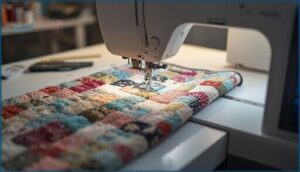
You’ll notice the difference instantly when you position a bulky quilt under the needle—9 to 12 inches of throat space gives you serious quilt maneuverability.
This extended workspace on quilting machines means less wrestling with fabric during free-motion ease, fewer pauses to reposition layers, and smoother handling of large projects.
It’s a breakthrough for sewing machines for quilting, especially if you’re tackling anything beyond lap-size quilts!
Walking Foot Capability
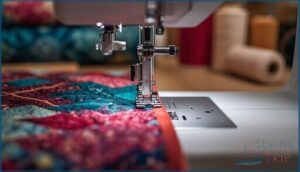
A walking foot transforms quilting accuracy by moving in sync with your needle, feeding multiple fabric layers evenly—no shifting, no puckering! This essential quilting foot provides fabric guidance and stitch regulation that free motion quilting simply can’t match for straight lines.
Check sewing machine reviews to confirm foot compatibility with your model, because proper feed control separates frustrating quilting machines from ones you’ll actually enjoy using. A detailed quilting sewing machine comparison chart helps you evaluate frame stability and feed system quality before investing in your next machine.
Free-Motion Quilting Support
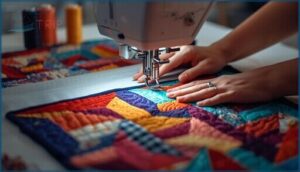
Free motion quilting unlocks your creative freedom—you control where the needle goes once feed dogs drop! Quality FreeMotion Quilting support demands a responsive darning foot, smooth fabric control, and reliable stitch regulation that keeps stitches consistent as you guide the quilt.
- Adjustable presser foot pressure prevents fabric snagging during intricate FMQ designs
- Throat space of 9-12 inches gives you maneuvering room for curved motifs
- Needle up/down control lets you pivot precisely mid-pattern
- Variable speed settings help maintain even stitch rates during continuous freemotion quilting
- Compatible extension table creates a stable, flat surface for smooth fabric control
Extension Table Compatibility
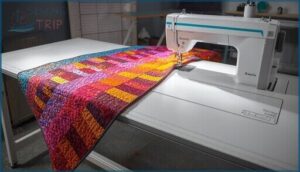
Without enough quilting space, even the most skilled free-motion quilting hits a wall. Extension table compatibility transforms your machine by adding 12–24 inches of stable surface that holds large quilts without sagging or shifting.
Check your machine’s footprint and hole pattern—many sewing machines require model-specific adapters or universal bases that lock securely to your needle plate. Built-in ruler guides? Even better for precision work!
Adjustable Speed Control
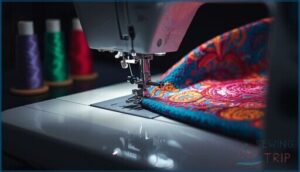
Speed regulation separates frustrating tangles from smooth, confident stitching—especially when you’re maneuvering tight curves in free-motion work. Variable control lets you dial your quilting machine from 600 to 1,500 stitches per minute, giving you the motor efficiency and stitch consistency you need for intricate sewing techniques.
A responsive foot pedal with gradual acceleration prevents thread breakage and keeps your hands free to guide fabric through complex patterns.
Built-in Quilting Stitches
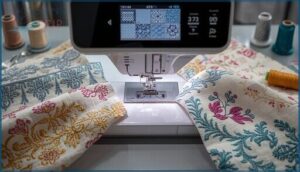
A solid stitch variety transforms your quilting machine from basic to exceptional. Look for models packing 50+ built-in patterns—utility stitches like straight, zigzag, and blanket for binding, plus decorative options that bring quilt patterns to life.
More stitches mean you’ll tackle everything from piecing to embroidery without switching machines, and that versatility keeps your quilting techniques sharp across any fabric you choose.
Top 10 Quilting Machines Worth Considering
Now that you know what features matter most, let’s look at machines that actually deliver.
We’ve rounded up ten solid options that quilters trust, from workhorse domestic models to specialized high-speed machines.
Each one brings something different to the table, so you can find the right fit for your projects and budget.
1. Singer Quantum Stylist Sewing Machine
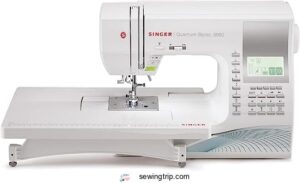
The Singer 9960 Quantum Stylist delivers versatility that’ll spark your creativity! With 600 built-in stitches and 13 automatic buttonholes, you can tackle everything from precision piecing to decorative quilting techniques.
We love the automatic needle threader and drop-in bobbin system—they keep you focused on your fabric selection instead of fiddling with setup.
At 14.6 pounds with solid metal construction, this sewing and quilting machine manages thick layers beautifully. The included quilting accessories and extension table support both sewing techniques and larger projects, making it an excellent choice for expanding your skills.
| Best For | Sewers who want a feature-rich machine that handles everything from simple repairs to complex quilting projects with room to grow their skills. |
|---|---|
| Built-in Stitches | 600 |
| Automatic Needle Threader | Yes |
| Weight | 14.6 lbs |
| Bobbin Type | Top drop-in |
| Included Feet | 13 |
| Price Range | $538 |
| Additional Features |
|
- 600 built-in stitches and 13 buttonhole styles give you tons of creative options for any project
- Automatic needle threader and drop-in bobbin make setup quick and frustration-free
- Solid construction at 14.6 lbs handles thick fabric layers without struggling
- Can feel overwhelming for complete beginners due to the number of features and settings
- Throat space might be tight for larger quilting projects
- Stitching quality can be inconsistent according to some user experiences
2. Brother Computerized Sewing Machine Model
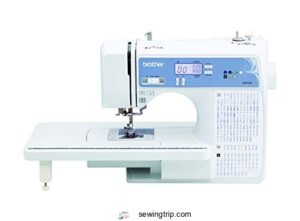
The Brother XR9550 gives you computerized stitching power without the complexity! With 165 built-in stitches and a user-friendly LCD display, you’ll breeze through both piecing and quilting phases of your projects.
The automatic needle threader and drop-in bobbin control make thread management simple—perfect when you’re switching colors frequently. At just 10.1 pounds, this computerized sewing and quilting machine travels easily to workshops.
We appreciate the included wide table and eight quilting foot options, though you’ll want to stick with light to medium-weight fabrics for best results.
| Best For | Beginner to intermediate sewers and quilters who want computerized stitch selection and automatic features without overwhelming complexity. |
|---|---|
| Built-in Stitches | 165 |
| Automatic Needle Threader | Yes |
| Weight | 10.1 lbs |
| Bobbin Type | Top drop-in |
| Included Feet | 8 |
| Price Range | Mid-range |
| Additional Features |
|
- 165 built-in stitches with LCD display makes pattern selection quick and visual
- Automatic needle threader and drop-in bobbin save time during color changes
- Lightweight at 10.1 pounds with included wide table for easy transport to classes
- Not designed for heavy-duty or thick materials like denim or canvas
- Some users report needle breaks during extended use
- Top cover doesn’t latch, which could be inconvenient for storage or travel
3. Juki Straight Stitch Sewing Machine
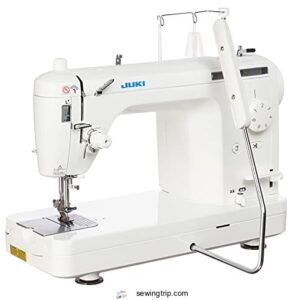
The Juki TL2000Qi takes you back to basics—and that’s exactly what serious quilters need. This straight stitch powerhouse races to 1500 SPM with rock-solid stability thanks to its aluminum die-cast frame that practically eliminates vibration during high-speed runs.
You’ll appreciate the automatic needle threader and generous extension table for managing large quilt layers. At 25.4 pounds, this industrial-grade sewing machine delivers outstanding stitch quality through multiple fabric layers. Just remember: it’s a straight stitch specialist, so you’ll need a separate machine for decorative work!
| Best For | Quilters and sewers who work with thick fabrics or multiple layers and need a fast, reliable straight stitch machine without the distraction of fancy features. |
|---|---|
| Built-in Stitches | 1 (straight) |
| Automatic Needle Threader | Yes |
| Weight | 25.4 lbs |
| Bobbin Type | Standard |
| Included Feet | Standard |
| Price Range | Mid-range |
| Additional Features |
|
- Lightning-fast 1500 SPM speed with minimal vibration thanks to the aluminum die-cast construction, making it perfect for long quilting sessions
- Handles heavy-duty projects like a champ—sews through denim, leather, and multiple quilt layers without breaking a sweat
- Comes with an extension table right out of the box, giving you plenty of workspace for large quilts and home décor projects
- Straight stitch only, so you’ll need another machine if you want decorative stitches or zigzag functions
- The automatic needle threader can be finicky—some users report it doesn’t work consistently
- At 25.4 pounds, it’s heavy enough that moving it around isn’t exactly easy
4. Singer Patchwork Sewing Machine
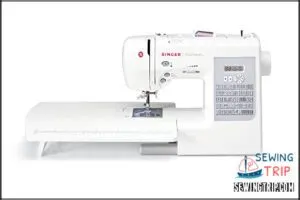
Looking for your first machine without breaking the bank? The Singer Patchwork delivers solid basics at a beginner-friendly price point. This mechanical model includes essential utility stitches and simple decorative options—perfect for learning straight-stitch construction and basic patchwork projects.
You’ll find a drop-in bobbin system and standard presser foot functionality that gets you quilting quickly. While it won’t match the Singer 9960’s sophisticated features, this budget option helps you master fundamental sewing and quilting techniques before investing in professional-grade equipment!
| Best For | Beginners and casual crafters who want to learn basic quilting and patchwork techniques without spending a fortune on their first machine. |
|---|---|
| Built-in Stitches | 100 |
| Automatic Needle Threader | Yes |
| Weight | 15.71 lbs |
| Bobbin Type | Standard |
| Included Feet | 4 bonus quilting |
| Price Range | Mid-range |
| Additional Features |
|
- Budget-friendly price makes it accessible for newcomers testing the waters before committing to expensive equipment
- Drop-in bobbin system and straightforward mechanical controls help you get started quickly without a steep learning curve
- Includes a useful variety of utility and decorative stitches for simple quilting projects and patchwork designs
- Some users report reliability issues including the machine locking up or displaying hard-to-fix error codes
- The plastic bobbin basket can break more easily than metal alternatives, especially with regular use
- Not built for heavy-duty projects or thick fabrics—you’ll outgrow it if you advance to complex quilting work
5. Bernette Computerized Sewing Embroidery Machine
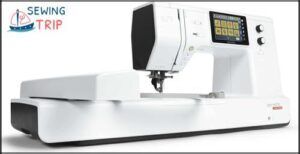
Ready to add embroidery flair to your quilting projects? The Bernette Computerized Sewing Embroidery Machine blends adaptable sewing and quilting capabilities with decorative stitching through its dual-function design. This all-in-one unit features 500 stitches, a 5-inch color touchscreen, and dual feed for managing multiple fabric layers—perfect for quilters who want machine upgrades without buying separate equipment.
Bernette models like the B77 offer solid accessory compatibility and basic quilting software integration at mid-range prices, making computerized sewing embroidery accessible for expanding your creative toolkit!
| Best For | Quilters and home sewers who want to expand into embroidery without buying separate machines, especially those working on mixed projects like embellished quilts or decorated home décor. |
|---|---|
| Built-in Stitches | 500 |
| Automatic Needle Threader | Semi-automatic |
| Weight | 47 lbs |
| Bobbin Type | Standard |
| Included Feet | Multiple |
| Price Range | Premium |
| Additional Features |
|
- 500 built-in stitches plus embroidery capabilities give you tons of creative options in one machine
- Dual feed system handles multiple fabric layers smoothly, making it practical for both quilting and regular sewing
- 5-inch color touchscreen and programmable foot control make navigation and operation straightforward
- Some users report a steep learning curve with non-intuitive menus and a vague user manual
- Slow 40 second startup time can interrupt workflow during longer sewing sessions
- May struggle with very thick fabrics or heavy-duty projects, and accessories can be hard to source
6. Metal Open Toe Quilting Presser Foot
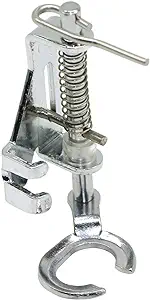
Want crystal-clear needle visibility during intricate appliqué work? The Metal Open Toe Quilting Presser Foot transforms your standard sewing machine into a precision quilting powerhouse!
This affordable accessory uses durable metal construction and an open toe design that lets you see exactly where your needle lands—perfect for mastering complex quilting techniques like edge-stitching and detailed patchwork.
Compatible with most low-shank machines from Singer, Brother, and Janome, this presser foot improves stitch quality across multiple fabric layers while preventing those frustrating skipped stitches!
| Best For | Quilters and sewers who need clear needle visibility for detailed appliqué work, free-motion quilting, and precise edge-stitching on multi-layer fabric projects. |
|---|---|
| Built-in Stitches | N/A (presser foot) |
| Automatic Needle Threader | N/A |
| Weight | Not specified |
| Bobbin Type | N/A |
| Included Feet | 1 (presser foot) |
| Price Range | Budget |
| Additional Features |
|
- Open toe design gives you an unobstructed view of the needle area, making it easier to follow intricate patterns and stitch accurately along seams
- Compatible with most low-shank domestic machines from popular brands like Brother, Singer, and Janome without needing expensive upgrades
- Metal construction provides durability and smooth gliding across dense fabrics, helping prevent skipped stitches on thick quilt layers
- Some users report the foot feels flimsy or less sturdy than expected, which may affect performance during heavy quilting sessions
- Installation can be tricky since the mounting screw may not fit all machine openings, and the spring pin occasionally falls out
- Not ideal for commercial or industrial use due to quality limitations, and may require practice to avoid fabric bunching near tight corners
7. Juki Computerized Sewing Machine
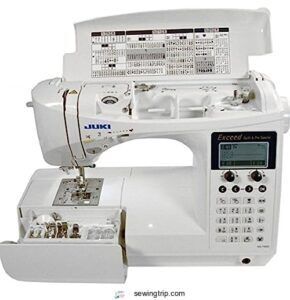
Need precision without the price tag of industrial giants? The Juki Computerized Sewing Machine delivers professional-grade quilting power with 255 built-in stitches and an automatic needle threader that saves precious minutes during marathon quilting sessions!
This Juki model manages everything from delicate jersey to thick seams, giving you adjustable sewing speed control and a large work surface that’s perfect for bed-sized quilts.
Compatible with essential quilting accessories like walking feet and extension tables, the Juki TL2000Qi and similar computerized sewing machine models offer the durability and machine upgrades serious quilters demand—all while staying quiet enough for late-night stitching!
| Best For | Quilters who want a reliable, feature-rich machine that handles everything from delicate fabrics to thick seams without breaking the bank on an industrial model. |
|---|---|
| Built-in Stitches | 255 |
| Automatic Needle Threader | Yes |
| Weight | 30 lbs |
| Bobbin Type | Standard |
| Included Feet | Multiple |
| Price Range | $1,399 |
| Additional Features |
|
- 255 built-in stitches with automatic needle threader make it easy to switch between quilting, garment sewing, and decorative projects without manual hassle.
- Adjustable speed control and large work surface accommodate bed-sized quilts and give you precision on intricate free-motion work.
- Quiet operation and durable metal frame mean you can stitch late into the night on long projects without disturbing anyone or worrying about machine longevity.
- Some users report durability issues like broken needle screws or malfunctioning automatic threaders that require replacement parts.
- Struggles with very thick fabrics—four layers of denim can be too much for this machine to handle smoothly.
- Higher price point at $1,399 and a learning curve for all the computerized functions may not suit beginners on a tight budget.
8. Brother High Speed Sewing Machine
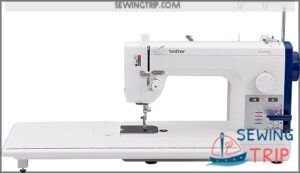
If you’re chasing quilting accuracy at breakneck pace, the Brother PQ1600S hits up to 1,500 stitches per minute without sacrificing stitch quality! This high-speed sewing machine from Brother features motor efficiency that powers through thick seams and multi-layer quilts with consistent tension.
The 5.7″ x 8.7″ throat space plus 11.1″ x 23.3″ extension table give you room to maneuver large projects, while adjustable speed settings and push-button thread management keep you in control during intricate free-motion work.
| Best For | Quilters and sewers who need lightning-fast stitching for large projects and want a reliable machine that handles heavy fabrics without slowing down. |
|---|---|
| Built-in Stitches | 1 (straight) |
| Automatic Needle Threader | Yes |
| Weight | 24 lbs |
| Bobbin Type | Side loading |
| Included Feet | Free motion foot |
| Price Range | Mid-range |
| Additional Features |
|
- Blazing 1,500 stitches per minute with rock-solid stitch quality, even through thick seams and multiple layers
- Massive workspace with 11.1″ x 23.3″ table and generous throat space makes wrestling with big quilts way easier
- Smart features like push-button thread cutter, knee lifter, and adjustable feed dogs keep your hands free for precision work
- Side-loading bobbin won’t warn you when thread runs out, so you might stitch into empty space
- Tension dial and needle threader can be fussy—hard to see and awkward to use, especially with budget threads
- Pin feed and overall quietness may deteriorate after heavy use, requiring more frequent maintenance
9. Brother Sewing And Quilting Machine
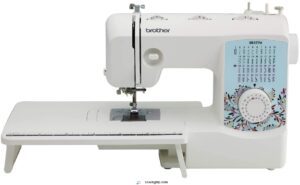
The Brother XR3774 bridges everyday sewing and quilting techniques with 37 built-in stitches and an automatic needle threader that saves your eyesight! This sewing and quilting machine includes eight presser feet—walking foot and free-motion options expand your quilter community repertoire—while the wide extension table accommodates baby quilts and larger projects.
At 15 pounds with 110V power, it’s lighter than the Brother PQ1600S but still copes with multiple fabric layers. Machine comparison shows it’s ideal for beginners mastering straight-line work and decorative stitches, though heavy denim seams push its limits.
Quilting accessories included make setup simple!
| Best For | Beginners and intermediate sewers looking for a versatile machine that handles everyday sewing projects and quilting without overwhelming features or a steep learning curve. |
|---|---|
| Built-in Stitches | 37 |
| Automatic Needle Threader | Yes |
| Weight | 15 lbs |
| Bobbin Type | Top drop-in |
| Included Feet | 8 |
| Price Range | Budget |
| Additional Features |
|
- Comes with 37 built-in stitches and 8 presser feet right out of the box, plus a wide extension table for quilting larger projects without buying extra accessories.
- Automatic needle threader and drop-in bobbin make setup quick and painless, especially if you’re new to sewing or hate threading needles.
- Lightweight at 15 pounds and easy to move around, but still sturdy enough to handle multiple fabric layers for baby quilts and small projects.
- Manual stitch selection with analog dials takes time to learn and isn’t as intuitive as computerized touch screens on higher-end models.
- Struggles with very thick fabrics like layered denim seams, so it’s not the best choice if you work with heavy materials regularly.
- No automatic thread cutter means you’ll be reaching for scissors more often, which slows down your workflow on longer projects.
10. Brother Computerized Sewing Machine
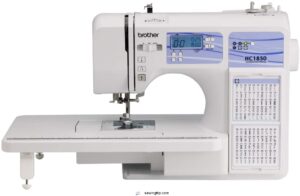
The Brother HC1850 delivers 185 built-in stitches—130 sewing plus 55 alphanumeric—that blow past the Brother XR3774’s basic lineup! This computerized sewing powerhouse features an LCD display, automatic threading, and eight presser feet for diverse sewing techniques.
Quilter reviews praise its stitch quality across decorative and quilting projects, while the wide table accommodates larger quilts with ease.
Machine comparison reveals excellent accessory options and a 25-year warranty. At just 10.1 pounds, you’ll carry this sewing machine to classes without breaking a sweat. Sewing machine reviews confirm it’s perfect for beginners mastering quilting machine basics!
| Best For | Beginners and intermediate sewers who want a versatile, computerized machine for quilting, decorative stitching, and basic monogramming without a steep learning curve. |
|---|---|
| Built-in Stitches | 185 |
| Automatic Needle Threader | Yes |
| Weight | 10.1 lbs |
| Bobbin Type | Top drop-in |
| Included Feet | 8 |
| Price Range | Mid-range |
| Additional Features |
|
- 185 built-in stitches (including 55 alphanumeric) give you tons of creative options for quilting and decorative projects
- Automatic threading system and LCD display make setup fast and frustration-free, even if you’re new to sewing
- Lightweight at 10.1 pounds and backed by a 25-year warranty, so it’s portable for classes and built to last
- Too lightweight for some users—it can shift or move during heavy stitching, which interrupts your workflow
- Only works with 120 volts (US use only), limiting where you can take it internationally
- Not built for heavy-duty or commercial projects, and some handy accessories like the edge hemming foot cost extra
Choosing The Right Quilting Machine Type
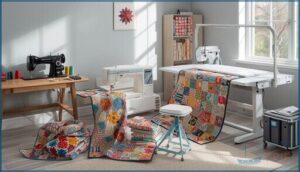
You can’t pick the right quilting machine until you know which type fits your space, projects, and goals. Each category—from compact domestic models to professional longarms—brings different strengths to your sewing room.
Let’s break down the four main types so you can choose with confidence.
Domestic Quilting Machines
Domestic Quilting Machines strike the perfect balance for most home quilters! These adaptable sewing and quilting machines handle everything from precision piecing to intricate quilting patterns and designs, giving you quilter comfort and creative freedom in your own workspace.
You’ll find generous quilting space (9-12 inches throat), impressive stitch variety, and reliable fabric tension control—all without overwhelming machine noise.
Longarm Quilting Machines
When you’re ready to quilt king-size projects with serious speed, Longarm Quilting Machines deliver unparalleled power! These heavy-duty machines feature sturdy Frame Design and industrial Motor Power that handle continuous stitching without overheating.
You’ll get sophisticated Stitch Regulation, excellent Quilt Mobility across large surfaces, and professional-grade Machine Upgrades.
Longarm Quilting transforms your workflow—check Quilting Machines Review sites to find models perfect for your ambitious projects!
Midarm Quilting Machines
If longarm models feel too big for your space, Midarm Quilting Machines offer the perfect middle ground! With 12–18 inch throat depths, these beauties handle mid-sized projects beautifully while fitting on smaller Midarm Frames or domestic tables.
You’ll love the Machine Portability and Ergonomic Design that reduce fatigue during longer sessions. The Quilter Community consistently praises midarms for balancing workspace with maneuverability—perfect for your growing skills!
Computerized Vs. Mechanical Models
Beyond size, you’ll face a fundamental choice: Computerized sewing machines offer Stitch Regulation and Quilting Algorithms that enhance precision, plus Digital Interfaces for pattern libraries and Automatic Thread Cutting.
Mechanical models deliver hands-on control with simpler maintenance and Motor Efficiency.
Quilting Machine Reviews show computerized units excel at repeatability, while mechanical versions shine when you want immediate, tactile adjustments without Machine Calibration menus!
How Machine Features Impact Real Quilting Projects
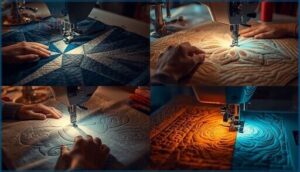
You’ve chosen your machine type, but here’s where theory meets reality. Different quilting projects put your machine’s features to the test in surprisingly different ways.
Let’s look at how specific features make or break four common quilting scenarios you’ll actually encounter.
Large Free-Motion Quilts
When you’re tackling large free-motion quilts, throat space becomes your best friend—aim for 9-12 inches to keep those sweeping patterns flowing without fabric bunching.
Stitch regulation features maintain consistent quality across expansive designs, while an extension table gives you the support needed for fabric tension control.
Practice your free motion tips on scrap layers first, and you’ll master quilt pattern design with confidence!
Precision-Pieced Geometric Quilts
Geometric patterns demand machine features you can depend on—start with a quarter-inch presser foot to nail those seam allowances and keep your precision-pieced blocks sharp.
Your quilting machine’s straight stitch quality matters most here, so test your fabric selection and piecing techniques on scrap triangles first.
Consistent tension transforms color theory into stunning quilt design, and mastering these quilting techniques opens up endless quilting patterns!
Intricate Art Quilts
Art quilts push your quilting machine to its creative limits—think free-motion embroidery, thread painting, and intricate stitch techniques that bring artistic expression to life.
You’ll need excellent feed dog control and variable speed settings to execute complex quilting patterns while exploring color theory through fabric selection.
These sophisticated quilting techniques and tips transform ordinary quilt design into textile masterpieces that showcase your unique vision!
Straight-Line Quilting Projects
Straight-line quilting is your gateway to mastering controlled precision—it demands a walking foot that maintains even fabric tension across all layers and consistent stitch regulation throughout long seams.
You’ll want quilting rulers to guide parallel rows, proper thread selection for visible definition, and a reliable sewing machine with adjustable speed control.
These essential quilting tools transform simple grid patterns into stunning geometric designs!
Maintaining Your Quilting Machine for Longevity
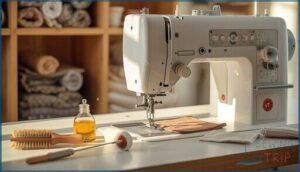
Your quilting machine is an investment, and a little consistent care goes a long way in keeping it running smoothly for years. Think of maintenance as the foundation that protects your stitching quality and prevents costly repairs down the road.
Consistent care is the foundation that protects your quilting machine’s stitching quality and prevents costly repairs down the road
Here are the essential practices that’ll keep your machine in peak condition.
Regular Cleaning and Oiling
Your quilting machine thrives on consistent care—treat it like the workhorse it is.
Clean the bobbin area weekly to prevent thread jams, and wipe down surfaces monthly with a damp cloth. Apply manufacturer-approved oil to moving parts every 8–12 hours of stitching.
Keep a maintenance log tracking cleaning schedules and oil types used. Store your machine covered to minimize dust prevention challenges, and you’ll preserve its precision for years.
Proper Needle and Thread Selection
Mismatched needles and thread are the fastest way to wreck your stitch quality—let’s get it right.
Pairing your sewing machine with the correct sewing notions transforms every project:
- Use size 80/12 or 90/14 needles for standard cotton quilting
- Match polyester thread for strength, cotton thread for traditional looks
- Choose titanium-coated needles when quilting dense, layered fabrics
- Test bobbin tension control on scraps before starting
- Replace dull needles immediately to prevent fabric compatibility issues and skipped stitches
Storage Best Practices
Once you’ve got the right needles and thread combo dialed in, protect your investment with smart storage solutions. Keep your sewing machine covered in a climate-controlled space where humidity levels stay between 30% and 50%.
Dust protection is non-negotiable—a breathable fabric cover beats bare exposure every time. Practice good cable management by coiling cords loosely, and store that extension table flat to prevent warping.
Component Durability Considerations
Beyond routine care, your quilting machine’s longevity depends on what’s inside. Cast iron or heavy-gauge steel frame materials dampen vibration better than lightweight alternatives.
Look for sealed ball bearings and quality motor insulation that prevent heat damage during marathon sessions.
Hardened steel gear trains outlast plastic components, while reinforced presser foot shanks resist the strain of free-motion work—especially when you’re pushing through thick batting.
Frequently Asked Questions (FAQs)
Can I quilt without a specialized quilting machine?
Your trusty sewing machine can absolutely handle quilting! Add a walking foot and darning foot for free-motion work, plus an extension table for managing larger fabric pieces—no specialized quilting machine required.
How much should I budget for my first machine?
Plan to invest $150–$800 for your first quilting machine. Entry models start around $150, while feature-rich options reach $ Mid-range machines ($350–$600) offer the best balance of capability and affordability for beginners.
What throat space do beginners actually need?
You’ll want 9 to 11 inches of throat space for quilting ease—it gives you room for fabric management on beginner projects without overwhelming your machine capacity or workspace.
Do I need a separate machine for piecing?
Most quilters find one adaptable sewing machine manages both piecing and quilting beautifully.
A 6–8 inch throat space with good fabric handling and workflow optimization covers quilting for beginners through expert projects efficiently.
Which brands offer the best warranty coverage?
Singer and Brother machines often include 25-year limited warranties on select parts, while Bernina usually offers 2-5 years. Juki provides 2-3 years coverage.
Compare warranty terms, repair services, and customer support when evaluating brand reliability.
Conclusion
Your next quilt won’t finish itself, but the right machine makes it feel like magic. Understanding what makes a good quilting machine—from throat space to feed dog control—turns ambitious projects from pipe dreams into reality.
You’ve got the knowledge, the top picks, and expert insights to choose confidently. Now it’s time to stop wrestling your machine and start creating those quilts you’ve been sketching in margins. Your fabric stash is waiting!
- https://lucyengels.com/blogs/blog/what-fabric-can-i-use-for-quilting-a-beginners-guide?srsltid=AfmBOoqdz_d4G3FQpTQqnau__hVIBlVnxoUwDliUhpbSbrxjkHymVaTe
- https://quiltersselect.com/2023/08/21/6-tips-to-sew-beautiful-decorative-stitches/
- https://sewingmachineman.substack.com/p/stitch-regulator-explained
- https://www.grandviewresearch.com/industry-analysis/sewing-machine-market-report
- https://craftindustryalliance.org/the-size-of-the-quilting-market-quilting-trends-survey-results-2025/