This site is supported by our readers. We may earn a commission, at no cost to you, if you purchase through links.

tight stitches that refuse to budge have ended more projects than most crafters care to admit. You pull, you tug, you maybe mutter something under your breath—and nothing gives.
What started as a fun afternoon project now feels like untangling holiday lights in January.
The frustrating truth is that tight stitches won’t loosen on their own, and forcing them usually makes things worse. Most of the time, the culprit isn’t your skill level—it’s a fixable combination of tension settings, tool mismatches, or small technique habits you didn’t know you had.
The good news? Every one of those problems has a straightforward solution.
Table Of Contents
- Key Takeaways
- What Causes Tight Stitches That Won’t Loosen?
- Recognizing Signs of Overly Tight Stitches
- How Tight Stitches Affect Your Sewing Projects
- Troubleshooting Tight Machine Stitch Tension
- Fixing Tight Hand-Knitted or Hand-Sewn Stitches
- Preventing Tight Stitches in Future Projects
- When to Adjust Needle, Thread, or Yarn
- Expert Tips for Consistent, Balanced Stitches
- Frequently Asked Questions (FAQs)
- Conclusion
Key Takeaways
- tight stitches almost always come down to fixable causes — wrong needle size, mismatched thread weight, or tension settings that just need a small tweak.
- Your tools matter as much as your technique, so matching needle material and thread weight to your fabric type can stop most stitch problems before they start.
- Relaxing your grip, swatching before big projects, and taking hand breaks every 20–30 minutes are the simplest habits that keep your tension consistent over time.
- Once tight stitches set in, they can permanently distort fabric — so catching and correcting tension issues early saves your project (and your materials).
What Causes Tight Stitches That Won’t Loosen?
tight stitches don’t just happen out of nowhere — something’s always behind them. A few common culprits show up again and again, whether you’re working by hand or using a machine. Here’s what’s likely causing the problem.
Your needle is often the sneaky starting point, so it’s worth checking common sewing stitch problems and fixes before assuming the issue runs deeper.
Incorrect Thread or Yarn Tension
Thread diameter effects matter more than most people realize. Thicker thread fills the tension discs more, which naturally cranks up resistance even if your dial hasn’t moved.
For hand knitters, yarn slip grip is everything — hold your yarn too tight, and you’re basically strangling each stitch before it forms. Poor stitch tension often starts here, so check your setup before blaming anything else.
Maintaining optimal yarn tension is essential for consistent stitch quality.
Needle Size and Type Issues
Your needle choice matters just as much as your thread setup. Using the wrong size or type is like trying to zip a jacket with the wrong zipper — it just won’t cooperate.
- Needle Size Gauge: A size 70 needle creates tiny holes that restrict thread pull-through, causing puckering.
- Sharp Needle Drawbacks: Sharp universal needles pierce knit loops, snagging yarn and tightening surrounding stitches.
- Ballpoint Needle Benefits: Ballpoint needles slide between knit loops instead of cutting them, keeping fabric flat and relaxed.
- Metal vs Wood Needles: Metal knitting needles let stitches glide more smoothly than wood, naturally reducing tightness.
- Needle Material Compatibility: Matching needle materials to your yarn weight and fabric type keeps your tension balanced from the start.
Remember that adjusting needle size can change gauge and fabric behavior.
Inconsistent Stitching Technique
Even with the right needles, your technique can quietly sabotage everything. Inconsistent tension often comes down to grip pressure, wrist alignment, and stitch rhythm working against you.
Clenching too hard? Yarn slip becomes impossible.
Slouching affects posture influence more than you’d think, tightening your whole arm.
Fixing tight knitting starts with slowing down, relaxing your hands, and building smoother yarn management habits through consistent, mindful practice.
Machine Vs. Hand Stitching Factors
Your hands control everything in hand stitching—thread grip, ergonomic pressure, even your mood. Machines? Totally different story.
- Stitch density is mechanically locked in
- Thread tension adjustment happens via dials, not feel
- Fabric compatibility errors cause permanent puckering
- Sewing machine troubleshooting often beats ripping seams
tight knitting tension control is natural. Machine needle selection and thread grip? That’s a settings game.
Recognizing Signs of Overly Tight Stitches
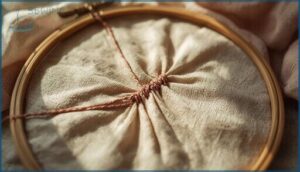
tight stitches don’t always announce themselves loudly — sometimes the signs are subtle until your project is halfway done. Your fabric is usually the first to tell you something’s off, if you know what to look for. Here are the most common signals that your tension is too tight.
Fabric Puckering or Gathering
Puckering is your fabric’s way of saying "something’s off." It usually means tight tension is pulling the seam tighter than the cloth wants to go. Stitch density adjustment and thread weight compatibility are your first fixes — dense stitches on thin fabric almost always gather. Fabric pre-wash effects matter too, since unwashed material shrinks later and worsens puckers.
| Cause | Quick Fix |
|---|---|
| Tight tension / tight knitting | Lower top thread tension dial |
| Poor thread weight compatibility | Match thread weight to fabric |
| Skipping fabric pre-wash effects | Pre-wash fabric before sewing |
| Ignoring stitch density adjustment | Lengthen stitch to 2.0–2.5 mm |
| Weak seam allowance trimming | Trim and clip curves properly |
Stitch direction control also plays a role — stitching against the grain can stretch fabric slightly, making puckers worse once it relaxes.
Hard-to-Slide Stitches
Sliding stitches along your needle should feel smooth — if they’re dragging or refusing to budge, tight tension is usually the culprit. Poor yarn grip adjustments, rough fabric surface texture, or needle tip geometry that compresses loops can all create micro-knot prevention nightmares.
Pairing your needle work with a yarn swift for consistent tension control helps eliminate the uneven pull that turns smooth stitching into a frustrating tug-of-war.
Your yarn tension guide should be your first stop.
Simple relaxation techniques and fixing knitting tension early keep things flowing freely.
Stiff or Rigid Fabric Feel
Cardboard. That’s the best way to describe fabric that’s suffered through tight knitting or over‑tensioned machine stitches. If your project feels board‑like instead of soft and flexible, that’s a major puckering indicator.
Fabric drape loss is real — stiff seams can reduce natural movement by nearly 30 percent.
Try a quick stiffness testing trick: pinch the fabric and release. No recovery? Your yarn tension guide and pressing relief techniques can help restore material flexibility.
Difficulty Adjusting or Undoing Stitches
Ever tried undoing tight stitches and felt like you were fighting the fabric? That’s knitting tension working against you.
Fixing knitting tension starts with the right stitch release tools — insert your seam ripper at a 90-degree angle using smart needle angle adjustments. Thread slip techniques and live stitch recovery keep loose tension manageable, while consistent yarn and needle selection ensures long-term stitch consistency.
How Tight Stitches Affect Your Sewing Projects
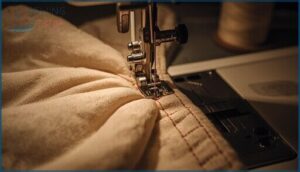
tight stitches don’t just look off — they can quietly wreck a project you’ve put real time into.
From throwing off the fit to stressing the fabric itself, the effects show up in ways you might not expect.
Here’s what you need to know about how tight stitches can hold your project back.
Impact on Project Size and Drape
tight stitches don’t just look off — they quietly shrink your whole project. width compression can reduce a garment’s chest measurement by 10–15%, while length reduction steals centimeters from sleeves and bodices. That throws off fit alteration plans entirely.
- shrinkage percentage hits hardest in dense knitting styles
- higher drape coefficient means stiffer, less flowing fabric
- yarn weight and knitting tension together shape final dimensions
Project planning starts with your swatch.
Reduced Flexibility and Comfort
When your stitches are too snug, your body pays the price.
Movement restriction kicks in fast — seams along the hips, underarms, or waist can dig in and hold you back like a too‑tight hug.
Poor knitting tension creates pressure points, skin irritation, and even posture strain when you naturally adjust to avoid pulling.
Relaxing knitting techniques and smarter tension control can change everything.
Risk of Thread or Fabric Damage
Beyond discomfort, tight stitches can quietly wreck your materials.
Thread Breakage happens when tension stretches fibers past their limit — especially with older or fine thread.
Fabric Puckering, Fiber Abrasion, and Needle‑Hole Damage follow close behind, weakening seams you can’t easily repair.
Permanent Stretching around stitch lines is the sneaky one — washing makes it worse.
A simple tension dial check during sewing troubleshooting saves your fabric before damage sets in.
Troubleshooting Tight Machine Stitch Tension
Machine tension problems can feel like a puzzle, but they usually come down to a few fixable things. Once you know where to look, the fix is often simpler than you’d expect.
Here are the key areas to check when your stitches are coming out too tight.
Top Thread Tension Settings

Checking top thread tension is usually the fastest fix. Most machines default to around 4.5–5 — a solid middle ground for medium-weight fabrics.
If your stitches look pulled or puckered, dial calibration is your friend: drop the tension dial one number at a time, test on a scrap, and repeat. Thread type and fabric weight both shift how your thread management behaves, so always retest when switching materials.
Bobbin Tension Adjustments
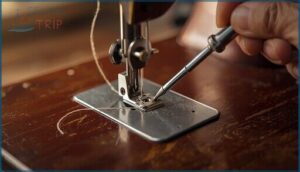
Now, bobbin thread is where things get sneaky. Unlike the top dial, bobbin tension lives inside the case — and fixing it takes a different touch.
For front load access, pull the case out by its handle. Top load removal means lifting the throat plate first.
Then use the Screw Turn Technique: clockwise tightens, counterclockwise loosens — just 1/8 turns at a time. Validate each tweak with a YoYo Drop Test.
Common Sewing Machine Mistakes
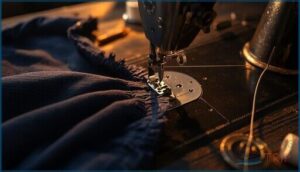
Even after nailing your bobbin, a few sneaky habits can still wreck your tension. Sound familiar?
- Thread Path Errors — Missing the tension discs causes super-tight top stitching instantly.
- Needle Damage — Bent or dull needles skip stitches and tighten seams.
- Needle Selection — Wrong needle type for your fabric creates uneven feeding.
- Presser Foot Pressure — Too high flattens fabric and locks stitches tightly.
- Fabric Feeding Issues — Pulling or pushing fabric overrides the feed dogs entirely.
Cleaning and Maintenance Tips
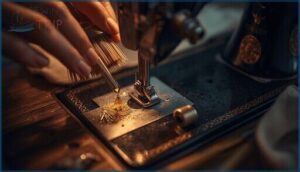
Keeping your machine clean is half the battle. Lint wedged between the tension discs creates drag that makes stitches feel unnaturally tight—a simple disc cleaning routine fixes this fast.
Don’t skip bobbin area hygiene either; brush out feed dog debris every 8–10 hours.
Pair that with regular needle hook lubrication and exterior dust removal, and your tension stays balanced almost automatically.
Fixing Tight Hand-Knitted or Hand-Sewn Stitches
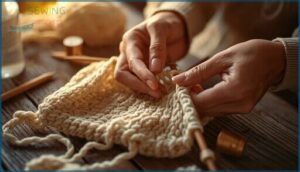
hand knitting and hand sewing give you way more control over your tension than a machine does — which means the fixes are often simpler too.
small habit changes can make a big difference in how your stitches look and feel. Here’s what to try.
Adjusting Yarn or Thread Grip
hold your yarn matters more than you think. Finger wrap techniques shape your knitting tension from the start.
Try the continental hold variation — wrap yarn under your pinky, over your ring finger, then anchor it over your index finger. This index finger anchoring gives you grip pressure control without strangling the yarn.
Adjusting these yarn wrapping points prevents yarn slip and fixes uneven fabric tension fast.
Relaxing Your Hands and Movements
tight hands are the silent enemy of good knitting tension.
Before picking up your needles, run through a quick Shoulder Drop Exercise — roll them back and let them fall away from your ears. Follow that with a Wrist Warm-up Routine and Finger Stretch Sequence to loosen your grip. Sync your breathing with each stitch.
Relaxed hands mean smoother Fiber and Yarn Management naturally.
Practice Swatching for Better Tension
Think of swatching as your dress rehearsal. A quick 6-to-8-inch practice swatch reveals your Knitting Tension before it ruins a full project.
Use it for Needle Material Testing — bamboo grips differently than metal. Run Yarn Weight Trials to find your sweet spot.
Blocked Swatch Evaluation after soaking shows your true gauge.
Consistent Stitch Sampling builds the muscle memory that makes tension click.
Undoing and Reworking Stitches
Sometimes the kindest fix is starting over — and that’s okay.
Use the Lifeline Technique to safely rip back rows without losing your place. The Thread Snipping Method manages stubborn tight spots, while proper Seam Ripper Angles protect your fabric during hand‑sewn repairs.
Fabric Hooping Support keeps things steady, and Post‑Removal Smoothing restores the weave. Knitting Tension this way makes your rework cleaner every time.
Preventing Tight Stitches in Future Projects
Fixing tight stitches is satisfying, but stopping them before they start is even better.
Few simple habits can make a real difference in how your next project turns out.
Here’s what to focus on going forward.
Choosing The Right Needle and Thread
Your tools matter more than you might think. Getting needle size matching and thread weight pairing right is honestly half the battle against tight stitches.
- Use size 70–80 needles for lightweight fabrics; size 90–100 for denim or linen
- Match thread weight to fabric — 50wt for delicate, 30wt for heavier topstitching
- Follow a fabric compatibility guide for needle material selection
- Ballpoint knitting needles prevent snags on stretchy fabrics
- Proper needle gauge keeps thread tension adjustment smooth and consistent
Regularly Checking Stitch Samples
Once needle and thread are sorted, don’t skip the swatch. Checking stitch samples regularly — swatch frequency matters — helps you catch knitting tension problems before they spiral.
Do a visual inspection every five rows or after each tension dial change. Keep a simple thread tension log to track what’s working. That’s your knitting troubleshooting safety net, right there.
Maintaining Consistent Technique
Consistency is the real breakthrough here.
Once your hands learn relaxed hand grip and steady needle tip work, muscle memory kicks in and knitting tension evens out naturally.
Keep your pedal pressure steady at the machine, guide fabric gently, and maintain a perpendicular thread path.
These small habits — applied every single session — are what separate "pretty good" from genuinely polished work.
Using Blocking Mats for Knitting
Blocking mats take your knitting tension fixes to the next level. Pin your damp piece onto the interlocking foam tiles, use the grid alignment marks to keep edges straight, and let moisture management do the rest as it dries into shape.
Foam protection keeps your floors safe, and portable storage means your blocking mats travel easily.
Minor tension quirks? Blocked right out.
When to Adjust Needle, Thread, or Yarn
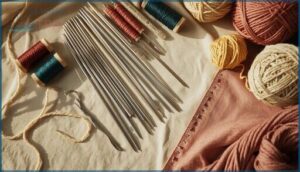
tight stitches aren’t about your technique at all — they’re about your tools. The needle, thread, or yarn you’re using might just be the wrong fit for the job.
Here’s when it’s time to make a swap.
Matching Tools to Fabric Type
Think of tools as teammates — pick the wrong one and the whole project suffers.
Needle‑fabric pairing matters more than most beginners realize: lightweight silk needs a fine 60/8 needle, while heavy denim demands a 100/16. Smart thread‑fiber matching, proper presser‑foot choice, and walking‑foot application also reduce tight stitches considerably.
Even interfacing weight selection and fiber selection shape how your knitting tension and knitting techniques perform overall.
Replacing Old or Cheap Thread
Old or bargain thread is sneaky — it looks fine on the spool but causes havoc in your machine. Thread Age Testing is simple: give it a firm tug; if it snaps easily, toss it.
- Polyester thread lasts 10+ years; cotton weakens around 5 years
- Fuzzy, uneven strands signal poor Thread Strength Indicators
- Spool Storage Tips: keep thread cool, dry, and away from sunlight
Upgrading thread is the cheapest fix for Knitting Tension Troubleshooting.
Selecting Appropriate Yarn Weights
Yarn Weight Matching is honestly one of the easiest knitting tension fixes people overlook. If your stitches feel too stiff, your yarn might be too heavy for your needles.
Worsted and aran weights work best with 4.5–5.5 mm needles — going outside that range throws off your gauge planning fast.
Fiber Elasticity matters too: springy merino forgives tight tension, while cotton shows every mistake.
Match your yarn to your project’s needed drape, and knitting tension problems shrink dramatically.
Switching Needle Materials
Switching needle materials might be the simplest fix you haven’t tried yet.
Material Grip Differences are real — Bamboo Needles and Wood Needles add friction that slows yarn down, easing tight stitches naturally.
Steel Needles let loops glide freely, improving Gauge Variation and Fabric Drape.
Plastic Needles sit comfortably in between.
Bonus: bamboo’s lightweight flex offers Hand Fatigue Relief, helping you stay relaxed and consistent longer.
Choose Right Needles for your yarn’s personality.
Expert Tips for Consistent, Balanced Stitches
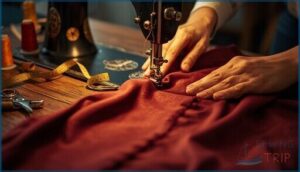
Getting to truly consistent stitches isn’t about one big secret — it’s a handful of small habits that add up fast.
The good news is that experienced sewists and knitters have already figured out what works.
Here are the tips that make the biggest difference.
Relaxation Techniques for Crafters
Your hands carry the tension your mind holds — and that shows up in every stitch.
Your mental tension flows directly through your hands and into every stitch you make
Build in Posture Breaks every 30–45 minutes, shake out your wrists, and run through quick Hand‑Wrist Stretches to keep things loose.
Pair that with Mindful Breathing and a calming Sensory Soundscape, like lo‑fi music, and your Session Pacing naturally improves.
Relaxed crafter, relaxed stitches. Simple as that.
Swatching and Sampling Best Practices
Think of a swatch as your project’s dress rehearsal. Before committing to the main fabric, knit or sew a sample — aim for at least 15 centimeters square — so your gauge measurement actually reflects real working tension.
Blocking technique matters too; wash and dry it exactly as you’ll treat the finished piece.
Good sample documentation and smart yarn selection save you from nasty surprises later.
Consulting Patterns and Guides
Patterns are basically cheat codes for fixing knitting tension. Always check the Pattern Gauge Tips first — most knitting patterns tell you exactly how many stitches per 10 centimeters to aim for.
Difficulty Ratings help you pick projects that match your skill level, so tight stitches from stress are less likely. Don’t skip Manual Tension Settings or Annotation Insights either — and always do Errata Checks before you start.
Learning From Experienced Sewists and Knitters
Beyond patterns, real growth happens when you learn from people who’ve already made every mistake in the book. Joining Technique Workshops or Peer Feedback Sessions puts you in the room with experienced hands. Watch Mentor Demonstrations closely — how someone holds yarn tells you everything.
- Attend Live Swatch Reviews for instant feedback
- Join Skill Exchange Programs to practice Fixing Knitting Tension together
- Use community groups for Sewing Techniques for Beginners
- Ask veterans about Fabric and Thread Selection
Frequently Asked Questions (FAQs)
Can tight stitches cause permanent fabric damage?
Yes, tight stitches can cause permanent puckering, weave distortion, elastic loss, micro-tears, and fiber breakage — especially on delicate fabrics. Once those fibers compress and shift, they rarely bounce back completely.
Does humidity or temperature affect stitch tension?
Ever notice stitches feeling tighter on a rainy day?
Humidity-driven slack and moisture swelling in natural yarns are real — climate-induced drift quietly shifts fabric tension without you touching a single needle.
Are certain stitch types more prone to tightness?
Absolutely — some stitch types run tighter by nature.
Single crochet, rib stitch, lockstitch, and buttonhole stitch are all prone to tightness. A tight row in these patterns needs extra attention to tension from the start.
How does knitting speed influence overall stitch tension?
Speed sets the pace, but rhythm consistency keeps your tension honest.
Knit too fast, and yarn glide suffers — loops tighten before fully seating on the needle shaft, shifting your gauge variation without you noticing.
Can hand fatigue contribute to progressively tighter stitches?
Hand fatigue absolutely tightens your stitches over time. As muscles tire, grip fatigue effects kick in — you unconsciously squeeze harder, pulling each loop smaller.
Short break-interval strategies every 20–30 minutes help reset your tension naturally.
Conclusion
Every stitch tells a story, and now you’ve got the tools to write a better one. Tight stitches won’t loosen by accident—but they’ll respond when you adjust your tension, match your tools to your materials, and stay consistent with your technique.
Trust the process. Check your bobbin. Breathe.
Whether you’re at a machine or working by hand, small changes make a big difference. Your next project deserves to drape, flow, and feel exactly right.
- https://www.tillyandthebuttons.com/2020/03/thread-tension-troubleshooting.html
- https://debsquiltstudio.blog/understanding-and-solving-fabric-puckering-issues-a-complete-troubleshooting-guide/
- https://sewcutepatterns.com/blog/mastering-your-sewing-machine-tips-for-choosing-and-adjusting-thread-tension-stitch-width-length-and-needle-position
- https://www.sewessential.co.uk/blog/how-to-fix-sewing-machine-stitch-quality-problems/
- https://pmc.ncbi.nlm.nih.gov/articles/PMC3871579/