This site is supported by our readers. We may earn a commission, at no cost to you, if you purchase through links.
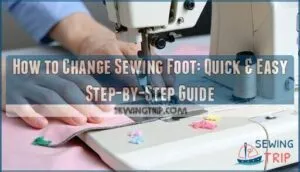
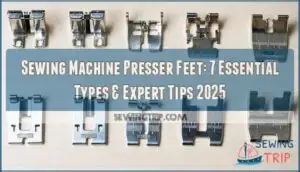
The wrong presser foot can turn a clean seam into a frustrating mess—and the right one, attached correctly, can make even tricky fabrics feel manageable. Most sewists know which foot they need; fewer feel confident swapping them out without second-guessing every step.
That hesitation is understandable. Between snap-on systems, screw-on fittings, shank heights, and adapter bars, the process has more variables than it first appears.
But once you understand how your machine’s attachment system works, changing feet becomes second nature—something you do in under a minute without stopping to think.
Table Of Contents
Key Takeaways
- Always power off and unplug your machine before swapping feet—this one habit prevents most accidents and protects both you and your machine.
- Knowing your attachment system (snap-on vs. screw-on) and your shank height (low vs. high) saves you from buying the wrong foot and starting over.
- Every foot has a job: match it to your fabric and stitch type, and problems like slipping, puckering, and skipped stitches mostly disappear.
- If something feels off—a wobble, no click, or a loose foot mid-seam—the fix is almost always a quick clean, a full lever lift, or a careful reattachment.
Prepare Your Machine Safely
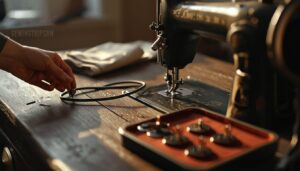
Before you touch any part of your machine, a few quick safety steps will save you a lot of trouble. Rushing this part is where most mistakes happen.
Taking a few minutes to review the Singer SE340 maintenance and troubleshooting guide before you start can help you spot potential issues before they become real ones.
Here’s what to do first.
Turn Off or Unplug The Sewing Machine
Before you touch any foot or attachment, turn off the machine completely — don’t rely on standby mode, which still draws current and leaves parts live.
Follow this power down checklist every time:
- Flip the power switch to off
- Unplug the cord from a grounded outlet
- Keep the cord clear of foot pedals
- Wait five seconds before handling any parts
- Confirm the handwheel won’t move
Raise The Needle to Its Highest Position
With the machine off, your next move is to raise the needle to its highest position. Use Handwheel Rotation — turn the wheel toward you slowly until the needle stops climbing.
Good Needle Alignment means the Eye Visibility is clear from the front. This Needle Clearance protects both your fingers and the foot during the presser foot installation process.
Lift The Presser Foot Lever Fully
Now raise the presser foot lever fully — push it up until it stops completely. That full lift gives you Maximum Clearance around the ankle clamp, which makes the presser foot installation process much easier.
Check for Smooth Lever Action as you go; gritty resistance signals a Lever Travel Inspection is overdue. Full Lift Safety means no accidental pinching during foot release.
Raising the presser foot opens the upper tension discs, as shown by the raise presser foot opens tension discs, ensuring proper thread passage.
Clear Fabric, Thread, and Debris From The Needle Area
With the lever up, take a moment to clear the work area. Use a soft brush — this is your Lint Brush Technique — to sweep debris away from the needle plate. Skip the Needle Plate Vacuum unless it’s designed for sewing machines.
A quick Debris Inspection Routine and Thread Snag Removal now prevent needle sticks later. Regular cleaning and periodic inspection keep your machine running smoothly.
Check Whether Your Machine Uses Snap-on or Screw-on Feet
Before you grab a new foot, check your attachment system — it shapes your whole foot attachment procedure.
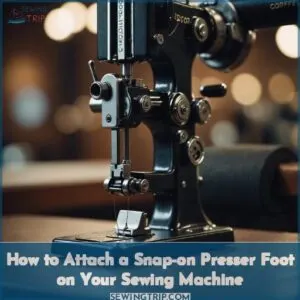
Most machines from the last 15 years use snap‑on feet: no tools, just press and click.
Older or brand‑specific models often need a screw‑on foot secured with a set screw and screwdriver.
Check your foot documentation or presser foot holder to confirm.
Proprietary feet won’t always fit a universal ankle clamp, so knowing your system early prevents frustration.
Attach Feet by Snapping or Screwing
Now that your machine is ready, it’s time to put the new foot on. The process is straightforward whether your machine uses a snap-on or screw-on system.
Follow these steps to get it attached correctly.
For a full walkthrough on keeping every component spotless, these sewing machine cleaning tips walk you through the process step by step.
Remove The Current Presser Foot From The Ankle
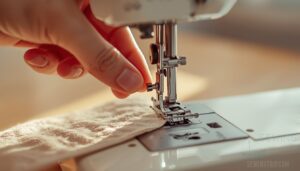
Before you remove the existing foot, make sure your presser foot lever is fully raised — that’s what opens the ankle clamp. Then it’s straightforward:
- Press the release button or slide the release clip operation lever
- Hold the foot as it drops down
- For snap-on detachment, pull it gently away
- For screw-on loosening, turn the screw counterclockwise first
Finish with a quick ankle clamp inspection — wipe away any lint before moving on.
Align The New Foot Bar Beneath The Ankle Clamp
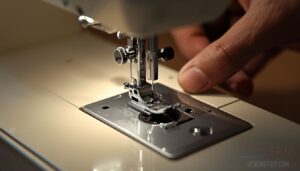
With the ankle clamp clear, it’s time to align the new foot. Slide the foot bar straight up so it sits directly beneath the clamp — that’s your Straight Bar Position.
Check for equal Edge Gap Measurement on both sides; any Foot Bar Tilt causes skipped stitches.
A quick Bar Level Check confirms Clamp Clearance is correct before you proceed.
Lower The Presser Foot Lever Until It Clicks
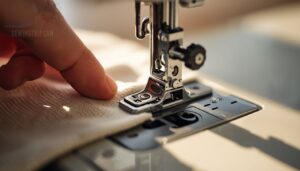
Now comes the moment that tells you everything went right — the click.
Slowly lower the presser foot lever all the way down. That single Audible Click Cue is your Lever Click Confirmation that Foot Lock Engagement is complete.
- Listen for one clean, firm click
- Don’t stop halfway — full Lever Pressure Adjustment matters
- A partial click means the foot isn’t locked
- Use the Click Timing Technique: slow and steady wins here
- Tug gently to confirm the presser foot installation process worked
Tighten The Screw Securely for Screw-on Feet
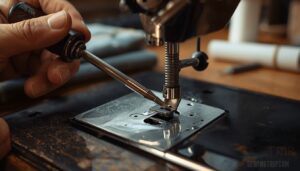
Screw-on feet need a different approach than snap-on.
Use a small screwdriver with a snug Tool Fit on the set screw — hand pressure only, no power drivers.
Torque Control matters here: tighten until the foot is firm, then add a quarter turn. Don’t force it.
Do a quick Thread Inspection and Recheck Tightness after ten minutes of sewing, since vibration can loosen the presser foot attachment over time.
Confirm The Foot Sits Flat on The Needle Plate
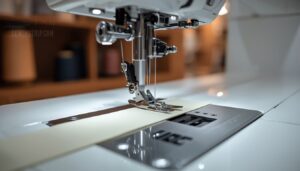
Once the foot is locked, give it a quick Plate Level Inspection. Lay a straightedge along its front edge — it should sit flush, no rocking.
For the Paper Clearance Test, slide a scrap between the presser foot and needle plate; you want just a hair’s clearance.
Run a Debris Clearance check around the ankle, then fine-tune with Foot Pressure Tuning before your first test stitch.
Choose The Correct Sewing Foot
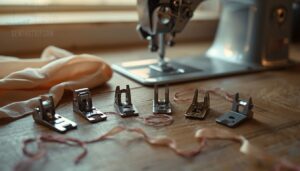
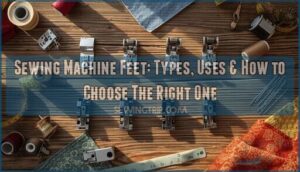
Not every foot works for every job, and using the wrong one can throw off your stitch or damage your fabric. The good news is that once you know what each foot does, picking the right one takes seconds.
Match the foot to the job, and the right choice takes seconds
Here’s a quick breakdown of the most common feet and when to reach for each.
All-purpose Foot for Basic Stitching
If you’re just getting started, the all-purpose foot is your best friend. It manages straight stitches, zigzag, and basic decorative patterns on everyday fabrics like cotton, linen, and blends. Think of it as your machine’s default setting.
It works well for:
- Fabric guidance on woven and medium-weight materials
- Stitch length adjustments for gathering or seams
- Pressure adjustment across fabric thicknesses
- Foot cleaning between projects for consistent feeding
Zipper Foot for Sewing Close to Zipper Teeth
When a standard foot can’t get close enough to zipper teeth, the zipper foot steps in. It’s narrower, with a notch that clears the coil for tight needle positioning right beside the teeth.
Use invisible foot benefits for hidden closures — grooves underneath guide the zipper coil alignment perfectly.
Adjustable foot settings let you shift left or right, giving you real control over seam placement.
Walking Foot for Quilting and Slippery Fabrics
Unlike the zipper foot’s precision for closures, the walking foot addresses a different challenge — keeping layers honest. It adds its own set of feed dogs on top, so quilt sandwiches and slippery fabrics move together without drift.
Key benefits include:
- Layer Alignment across complex quilt patterns
- Fabric Slip Prevention on satin, silk, and nylon
- Stitch Consistency through dense batting
- Quilt Tension Management along long seams
- Dual Feed Advantages that reduce pin basting
Blind-hem Foot for Nearly Invisible Hems
When you want hems that vanish from the right side, the blind hem foot is your answer. Its central guide tracks your fold precisely, so the needle catches only a tiny thread — nearly invisible from the outside.
Focus on Fold Precision and Fabric Selection; it shines on silk and cotton.
Adjust Guide Adjustments, Stitch Length, and follow Maintenance Tips for lasting results.
Rolled-hem Foot for Narrow Lightweight Hems
The rolled hem foot takes the guesswork out of narrow hems on lightweight materials like chiffon and silk. Its curved channel folds and stitches the edge in one pass — no separate pressing needed.
For best edge finish quality, set a short stitch length around 1.5 to 2.0 mm, lower your thread tension slightly, and choose your hem width selection based on fabric weight.
Match The Foot to Your Stitch Type and Fabric
Choosing the right presser foot comes down to two things: your stitch type and your fabric weight.
- Lightweight fabrics — Use low pressure and a rolled-hem or zigzag foot
- Slippery or layered fabrics — A walking foot ensures even feed
- Stretch knits — A zigzag foot lets seams move without breaking
- Decorative stitches — Adjust thread tension and needle height to match
Check Foot Compatibility First
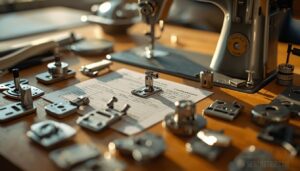
Not every presser foot fits every machine, and buying the wrong one is a frustrating waste of time. A few quick checks before you shop can save you from that headache entirely.
Here’s what to look at before committing to any foot.
Identify Low-shank Versus High-shank Machines
Your machine’s shank height decides which feet fit — no guessing needed. Measure the needle plate distance up to the screw hole positioning on your presser foot bar.
Half an inch means low shank; one inch or more means high shank. This quick shank measurement shapes your entire presser foot installation process and machine compatibility choices, so get it right before buying anything.
Review Your Sewing Machine Manual
Your sewing machine manual is the clearest guide you’ll have. Find Model Number information on the machine’s base, then match it to your manual or the manufacturer’s website. Read Safety Symbols, Locate Foot Charts, and Understand Stitch Codes — it’s all mapped out for you.
Check Warranty Details, too. That step-by-step guide sitting in your drawer knows your machine better than any generic tutorial.
Use Adapters for Brand-specific Foot Systems
Not every foot fits every machine right out of the box. Brand-specific adapters solve that problem.
For a Janome sewing machine or similar brand with a non-standard snap-on system, a presser foot adaptor bridges the gap.
Shank matching matters here — confirm low or high shank before adapter installation. After securing it, always do a fit verification on scrap fabric to confirm sewing machine compatibility.
Know When Specialty Feet Require Screw-on Attachment
Some specialty feet simply won’t stay put with a snap-in connection. That’s when screw-on pressure becomes essential.
Zipper feet, embroidery feet, and other heavy-duty options often need a set screw and threaded foot adapter to lock in place.
The foot locking mechanism holds firm during dense or fast stitching.
For industrial foot stability, tighten the screw snugly — follow screw tightening best practices and check your presser foot adapter fits your shank type.
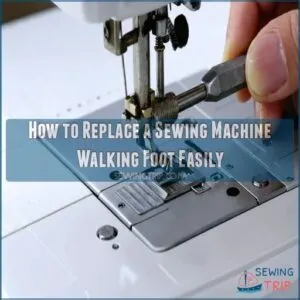
Verify Walking Foot Compatibility Before Buying
Walking feet aren’t one-size-fits-all. Before buying, confirm these four compatibility points:
- Shank Type Matching — verify machine shank compatibility (low or high shank) using your model number.
- Needle Plate Clearance — the foot’s wider sole must clear your throat space without binding.
- Brand Adapter Availability — some brands need specific adapters even for universal walking feet.
- Fabric Weight Suitability — heavier fabrics need reinforced shank support.
Choosing the right walking foot for your machine prevents foot alignment issues before they start.
Fix Common Attachment Problems
Even when you follow every step carefully, attachment issues can still pop up. Most problems have a simple fix once you know what to look for.
Here are the most common ones and how to solve them.
No Click When Attaching The Foot
If you don’t hear a click, the fix is usually simple. First, check your presser foot lever — insufficient lever lift is the most common culprit. Raise it fully.
Spring tension problems and lock mechanism wear can also silence that snap. Try cleaning lint from the ankle clamp.
If you’re using an adapter, confirm it’s the right size — a bar height error or wrong adapter size will prevent proper presser foot installation every time.
Foot Wobbles or Sits Unevenly
A wobble usually points to one of four things:
- Ankle Clamp Tension is too loose — re-press the foot release button and reattach.
- Needle Plate Alignment is off — check for lint or bent screws underneath.
- Foot Pressure Distribution is uneven — an adapter misfit issue can tilt the foot angle.
- Thread Tension Balance is off — rethread and test on scrap first.
Needle Hits The Presser Foot
If the needle hits the foot, stop immediately. This usually comes down to needle alignment, foot clearance, or a rushed presser foot installation process.
Make sure the needle bar is fully raised before reattaching. Check your needle type — bent or wrong-size needle drifts sideways.
Fabric thickness can also push the needle off-path. Reattach carefully and run a slow test stitch.
Foot Loosens While Sewing
A foot that loosens mid-project usually signals one of a few fixable issues. Uneven fabric thickness variation shifts pressure as you sew, jarring the attachment loose over time. Needle penetration impact can also gradually loosen an incomplete lock.
Follow your step‑by‑step guide for foot attachment again — check ankle clamp wear, confirm foot pressure, and keep a regular maintenance schedule for screw tightening frequency.
Clean Lint From The Ankle and Locking Mechanism
Lint is the sneaky culprit behind a stuck release mechanism. Before starting any presser foot installation process, unplug your machine.
Use the Brush Technique — sweep a small brush through the ankle opening — then follow with Microfiber Wiping to lift loose fibers.
Compressed air use clears tight corners fast.
Regular cleaning keeps your release button responsive and your step-by-step guide for foot attachment, frustration‑free.
Test Stitches on Scrap Fabric Before Sewing Your Project
Testing on scrap fabric is your last safety check before committing to the real thing. Use fabric that matches your project closely — Fabric Matching here makes a real difference.
Sew a short seam, then check both sides. Look for tension issues, skipped stitches, or puckering.
Stitch Length Adjustment and Tension Calibration are easier now than mid-project.
Trust your Sample Evaluation before moving forward.
Frequently Asked Questions (FAQs)
How do you put a foot on a sewing machine?
Raise the presser foot lever, align the new foot under the ankle clamp, then lower the lever until you hear a click.
That’s the core presser foot installation process — simple, safe, and done in seconds.
How do you remove a foot from a sewing machine?
Turn off your machine, raise the needle, and lift the presser foot lever. Press the release mechanism, then remove the foot by guiding it straight down — no twisting needed.
What is a walking foot on a sewing machine?
A walking foot is your second set of hands.
It feeds top and bottom fabric together, giving you feed synchronization, smooth fabric motion, consistent stitch length, and reduced puckering — perfect for multi-layer stitching projects.
How do you change a presser foot on a sewing machine?
Lift the presser foot lever, press the release button, and swap in your new foot. Lower the lever until it clicks. That’s the whole foot change procedure done safely.
How often should presser feet be replaced?
Inspect your presser feet every 6 to 12 months. Heavy-duty usage on denim or quilts shortens that window. When edges chip or the sole wears smooth, replace them right away.
Can I use feet from a different brand?
Sometimes, yes. Snap-fit compatibility depends on whether your machine uses a standard shank. Many brands share this design, so feet often cross over.
Always check thread-pitch matching for screw-on types, and watch for anti-slip collar issues.
How do I adjust presser foot pressure settings?
Turn the pressure dial toward minus for delicate fabrics, plus for heavy ones. Test on scrap fabric first. Small adjustments prevent puckering or slipping before you touch your actual project.
What feet work best for free-motion quilting?
For free-motion quilting, your best options are an open toe foot, darning center foot, or glide foot.
A walking foot manages layers evenly, while a quarter‑inch guide keeps spacing consistent.
How do I store and organize presser feet?
A dedicated shallow drawer with labeled compartments keeps every presser foot visible and within reach.
Use protective padding, sort by type, and tuck a travel case with a maintenance kit nearby for on-the-go projects.
Conclusion
Once you get the hang of it, knowing how to attach sewing machine feet stops feeling like a chore and starts feeling like control. You understand your machine. You recognize the ankle, the shank, the click that confirms everything is set.
That knowledge doesn’t just save time—it changes how you approach every project. The right foot, attached correctly, is the difference between fighting your fabric and working with it.