This site is supported by our readers. We may earn a commission, at no cost to you, if you purchase through links.
Spend enough time in sewing circles — online or otherwise — and Baby Lock’s name surfaces constantly. Sometimes with reverence, sometimes with sticker shock. The brand sits in a curious position: premium pricing, loyal following, and a reputation that splits opinions between "worth every penny" and "you’re paying for the logo."
What actually separates a Baby Lock from a $200 machine at the big-box store isn’t marketing language. It’s measurable. Seams that hold under 40 N of pull force. Thread failure rates under 0.5%. A die-cast aluminum chassis that doesn’t rattle apart after three years of weekend projects.
Whether Baby Lock sewing machines deserve that premium — and which model fits your work — depends on specifics worth knowing before you spend.
Table Of Contents
Key Takeaways
- Baby Lock’s die-cast aluminum frames, sub-0.5% thread failure rates, and seams that hold under 40 N of pull force back up the premium price tag with real, measurable performance.
- Features like Jet-Air threading, Digital Dual Feed, and automatic tension control aren’t just conveniences — they’re the details that separate a Baby Lock from a budget machine during daily, demanding use.
- High-end models retain 60–75% of their resale value and regularly last beyond 20 years, making the upfront cost a smarter long-term investment than replacing a cheaper machine twice.
- Baby Lock leads the pack in serger automation and embroidery workflow ease, but Brother wins on budget value, Janome on mechanical durability, and Bernina on raw stitch precision for complex work.
Yes, Baby Lock Sewing Machines Are Good
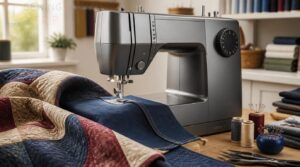
Baby Lock has earned its reputation the hard way — through consistent performance across thousands of hours of real sewing.
That track record holds up whether you’re a hobbyist or running a small business — as seen in these top-rated serger machines for kids’ clothing, where reliability isn’t optional.
Whether you’re mending denim or finishing a full quilt, the machine really holds up where cheaper brands fall short. Here’s a closer look at what makes Baby Lock stand out.
Stitch Quality and Reliability
Baby Lock machines hold stitch density at 9–12 stitches per inch on medium-weight fabrics — tight enough to resist seam failure under 40 N of pull force. Length stays within a 0.2 mm tolerance, so your seam lines look machine-straight every time.
Polyester and core-spun threads handle stretch and abrasion without breaking, with a thread failure rate under 0.5% in factory testing. Proper machine settings help prevent common seam failure modes during the construction process.
Build Quality and Lifespan
Stitch consistency only holds if the machine underneath is built to last. That’s where die-cast aluminum chassis construction earns its keep — dampening vibration at high speeds while keeping internal components aligned within tight manufacturing tolerances.
DC motors include thermal protection circuits that prevent overheating under load. Follow the oiling schedule, and you’re looking at a lifespan exceeding 20 years.
Owner Reviews and Satisfaction
Across review platforms, Baby Lock sewing machines hold a 4.6+ star rating with a 91% recommendation rate. Owners consistently praise stitch quality across fabrics — knits, denim, and everything between. Quiet operation gets mentioned constantly in mid-to-high-end feedback.
Dealer support earns high marks too. When threading or accessory questions come up, authorized dealers resolve issues fast — often on the first call.
Common Complaints and Limitations
No machine is perfect. Baby Lock’s biggest gripes center on three recurring patterns:
- Interface navigation lag during complex stitch sequences
- Firmware compatibility issues with newer operating systems
- Regional service availability — rural owners may wait weeks for authorized repairs
Maintenance scheduling challenges catch new owners off guard too. Lubrication and calibration can’t be skipped. Miss a service cycle, and stitch tension drifts noticeably.
Best Users for Baby Lock
Who gets the most from a Baby Lock? Honestly, home sewing hobbyists, quilters chasing quilting precision, and embroidery enthusiasts running multi-step design workflows. Small business owners lean on its metal frame durability for daily production runs.
If you’re repair-prone, the 600+ dealer network keeps downtime short. Baby Lock fits anyone who values long-term reliability over a low sticker price.
Is Baby Lock Worth The Price?
Baby Lock machines aren’t cheap, and that’s exactly why the price question deserves a straight answer. Whether you’re eyeing an entry-level model or a high-end embroidery unit, the value depends on more than the sticker price. Here’s what actually shapes the cost — and whether it holds up.
Price Ranges by Model
Baby Lock spans a wide range. The Zest and Joy start around $200–$450, while the Zeal climbs toward $900–$1,100 with automatic features.
Embroidery-focused models like the Verve and Chorus run $1,500–$3,500. The flagship model sits in premium all-rounder territory at $2,500–$6,000.
Bundles with quilting feet or extension tables routinely add $300–$1,500 to any tier.
Warranty and Dealer Support
What you get beyond the machine itself matters. Baby Lock backs most models with a 25-year chassis warranty and a 10-year electronics warranty through authorized dealers — coverage that treats this as the long-term investment it is.
Warranty claims require proof of purchase and certified technician service. Wear items like needles and belts are excluded. Over 600 authorized dealers nationwide handle repairs, training, and genuine parts.
For a closer look at Bernina’s Swiss-engineered lineup and what to expect from authorized service, Bernina sewing machine reviews and model guides offer a solid starting point before your next dealer visit.
Resale Value and Longevity
High-end Baby Lock machines retain 60–75% of their resale value — unusually strong for a home appliance.
Four factors that protect your investment:
- Complete service history and documentation
- Low stitch count with original packaging
- Proper storage in dust-free conditions
- Authorized dealer maintenance records
Metal frames and Japanese manufacturing standards push lifespan well past 20 years, making them a reliable secondhand buy.
Maintenance and Service Costs
Owning a Baby Lock means budgeting beyond the purchase price. Annual servicing runs 60–150 euros, covering cleaning, lubrication, and tension checks — ideally once or twice a year.
Technician rates hit 40–90 euros per hour, and diagnostic visits add 25–75 euros. Skip routine care, and minor issues compound fast. A consistent service plan is the most reliable way to protect machine longevity.
Value Versus Cheaper Brands
Cheaper machines cost less upfront — but that gap narrows fast. Budget brands often use lighter materials, smaller dealer networks, and shorter warranties.
Long-term cost tells the real story: Baby Lock’s 60–75% resale value and 20-year lifespan outpace most value brands considerably. For serious sewists treating this as professional sewing equipment, the math usually favors investing once over replacing twice.
For serious sewists, Baby Lock’s 20-year lifespan and 75% resale value make buying once smarter than replacing twice
Best Baby Lock Sewing Machines Compared
Baby Lock makes machines for every skill level, so knowing which model fits your needs saves you time and money. The lineup spans everything from beginner-friendly basics to high-end embroidery powerhouses. Here’s how the most popular models stack up against each other.
Zest, Joy, and Jubilant
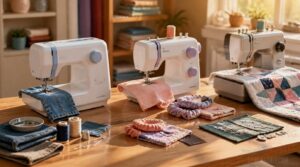
Simplicity has its own kind of power. The Baby Lock Zest starts at around $220 and gives you 19 built-in stitches — enough for mending, hemming denim, and basic projects, with a numbered threading system that takes the guesswork out of setup.
The Baby Lock Joy steps it up slightly, adding more stretch stitches for knits and jersey fabrics — a real edge if T-shirts or scrunchies are on your list.
The Jubilant is where this tier earns its name. With 80 built-in stitches, 8 one-step buttonholes, an LCD screen, automatic needle threader, and drop feed for free-motion work, it combats quilt piecing and garment construction without breaking a sweat — all in a portable, lightweight frame.
Zeal, Soprano, and Crescendo
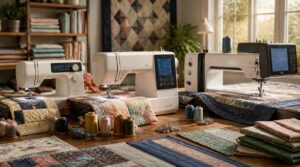
Step up from the Jubilant, and the stitch count climbs fast. The Baby Lock Zeal gives you 25 built-in stitches — a clean jump for sewists ready to move beyond basics — with a drop-in bobbin, built-in needle threader, and drop feed for free-motion work.
The Soprano hits 300 stitches and adds automatic pivot, fabric sensor, and knee lift — features quilters genuinely rely on.
The Crescendo pushes to 573 stitches with a color LCD touchscreen, guide beam, sensor pen, and digital dual feed system that controls thick quilt layers without shifting.
Here’s what separates this tier:
- Soprano suits quilters who want capable features without the Crescendo’s price tag
- Crescendo’s dual feed replaces a walking foot — one less accessory to manage
- Guide beam and sensor pen give you visual placement control most brands don’t offer
- 573 stitches means specialized quilting, decorative work, and utility sewing all live in one machine
Jazz II for Quilters
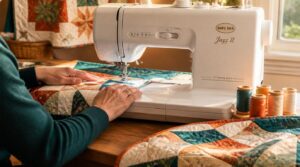
The Jazz II sits in a different lane than the Crescendo — no touchscreen, no guide beam — but for quilters who want workspace and speed without a premium price tag, it punches well above its class.
That 12-inch workspace gives your quilt room to breathe, especially when you’re wrestling a lap-size project through tight corners.
| Feature | Jazz II Spec | Why It Matters |
|---|---|---|
| Workspace | 12 inches | Controls bulky quilt layers |
| Speed | 1,000 SPM | Efficient for long seams |
| Built-in Stitches | 28 | Covers essential quilting needs |
The hands-free presser foot and knee lift keep both hands on your fabric — exactly what piecing quilts demands. Pair that with the programmable needle up/down, and chain piecing becomes noticeably smoother. The top-loading bobbin stays accessible mid-project, so you’re not stopping to dig around. At 1,000 stitches per minute, it’s a capable quilting machine for sewists who value control over complexity.
Verve and Chorus Embroidery
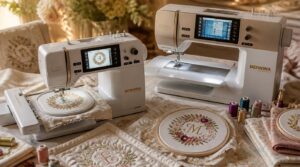
When the Jazz II wraps up the quilting conversation, the Verve and Chorus pull you into a completely different category — machines built around embroidery as the main event.
The Verve is a combination sewing and embroidery machine aimed at beginners stepping into embroidery for the first time. It works within a 4×4 inch hoop, which suits small projects like labels, monograms, and pocket designs well. You get 95 built-in embroidery designs, 11 fonts, and design editing tools — mirror imaging, rotation in 1°, 10°, or 90° increments, and 20% size adjustments for fitting designs onto garments precisely. Multi-color stitching runs sequentially, so automatic color changes happen without rehooping. USB transfers let you pull in additional designs beyond the built-in library. One honest limitation: experienced embroiderers tend to outgrow the 4×4 hoop fairly quickly.
Four things the Verve does well out of the box:
- Monogram and font work — 11 built-in fonts with adjustable stitch density
- Design editing — combine, rotate, mirror, and resize on the 3.2-inch LCD touchscreen
- Multi-color workflows — sequential color changes without stopping to rehoop
- USB design transfers — expand beyond the 95 built-in designs immediately
The Chorus operates at a different scale entirely. It’s a quilting and sewing machine — not a dedicated embroidery unit — but its 771 built-in stitches and 11.25-inch workspace make it the more flexible long-term investment. The guide beam, sensor pen, and Compact Digital Dual-Feed System give you precise seam placement and consistent fabric control across heavier materials. If the Verve is where you learn embroidery basics, the Chorus is where serious sewists and quilters land when they need room to grow.
Entry-Level Versus Premium Models
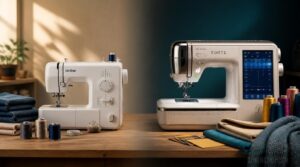
Once you’ve toured the Verve and Chorus, the real question surfaces: which tier actually fits where you are right now?
The Baby Lock Zest starts at roughly $200 and covers 15 built-in stitches — enough for mending, hemming denim, and learning basic techniques. No automatic needle threader, no drop-in bobbin, no thread cutter. That’s intentional — fewer features means a cleaner skill progression path for beginners.
| Feature | Entry-Level (Zest/Joy) |
|---|---|
| Built-in Stitches | 15–19 |
| Needle Threader | Manual / Basic |
| Feed System | Standard feed dogs |
| Touchscreen | None |
| Feature | Premium (Jubilant and above) |
| — | — |
| Built-in Stitches | 80–573+ |
| Needle Threader | Fully automatic |
| Feed System | Digital Dual Feed |
| Touchscreen | Color LCD |
Move up to the Jubilant or Soprano, and automated tension control, stronger motors, and reinforced needle plates handle heavier fabrics — knits, denim layers, canvas — without the manual fussing. Premium models also cut setup time a lot through automatic threading and trimming, which matters when you’re sewing daily.
The trade-off is straightforward: entry-level machines cost less upfront and stay simple, but premium models earn back time and consistency on complex projects.
Key Baby Lock Features That Matter
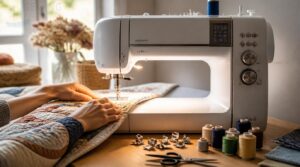
Baby Lock builds a lot of features into their machines, but a handful of them genuinely change how you sew. These aren’t just selling points — they’re the details that make a real difference at the table. Here’s what you should know before you buy.
Automatic Needle Threading
Threading a needle by hand — squinting, poking, missing — wastes time you could spend actually sewing. Baby Lock’s one-touch automatic needle threader fixes that with a simple lever-and-hook system that guides thread through the eye in one smooth motion.
The lever captures your thread and pulls it cleanly through needle sizes 75/11 to 100/16 — covering most standard household gauges with no guesswork. Just align the thread, press the lever down, and you’re done.
If you sew with thick or textured threads, don’t expect the auto-threader to handle everything. Those can bend the internal wire or rod, so manual threading is the safer call there. Keep lint cleared from the needle area too — buildup is the most common reason the mechanism jams or misses.
For sewers with vision challenges or hand tremors, this feature alone can make a Baby Lock worth considering over a brand that skips it entirely.
Jet-Air Threading
If the automatic needle threader takes care of the needle eye, Jet-Air Threading controls the part that frustrates most serger owners — the loopers.
Looper threading on a serger is notoriously brutal. You’re feeding thread through tight internal channels, often blind, often in a specific order. Baby Lock’s solution is a burst of compressed air that propels thread through enclosed tubular looper channels the moment you press a lever. No tweezers. No squinting. No threading sequence to memorize.
Here’s what makes the system work so well:
- Enclosed tube design — thread travels a fully protected path, eliminating snags and mis-threads
- Touch-lever activation — one press sends the air burst through the lower loopers instantly
- Any-order threading — you don’t have to follow a set sequence, which cuts setup time dramatically
- Safety engagement — a sensor confirms thread is properly seated before stitching begins
For users with limited dexterity, this isn’t a convenience feature — it’s a life-saver.
Keep the air nozzle clean. Lint near the presser foot area is the top reason Jet-Air systems slow down or miss. If threading feels sluggish or fails mid-thread, check for debris blocking the port before assuming a mechanical fault. Worn O-rings or cracked air tubes can also reduce pressure — those need a dealer visit to fix properly.
Digital Dual Feed
Think of the Digital Dual Feed as a walking foot that actually talks to your machine — not just rides along with it.
A standard walking foot moves fabric mechanically, independent of the machine’s internal timing. Baby Lock’s system is different. The foot plugs directly into a back panel port, letting the machine electronically synchronize top and bottom fabric movement in real time. That synchronized feed timing is what separates it from a traditional walking foot — the two mechanisms work as one, not in parallel.
| Feature | Standard Walking Foot | Baby Lock Digital Dual Feed |
|---|---|---|
| Feed Synchronization | Mechanical, independent | Electronically timed with machine |
| Layered Fabric Stability | Moderate | High — controls 8+ dense layers |
| Texture Shift Control | Limited | Smooth cotton-to-flannel shifts |
Where this really pays off is quilting precision. When you’re stitching through batting, backing, and a quilt top simultaneously, any slight drag on the upper layer causes drift — and drift means your seams don’t line up. The Digital Dual Feed keeps the full presser foot width in contact with fabric throughout each stitch cycle, so layered fabric stability isn’t a concern even through curves or sharp corners.
Quilters working on the Crescendo, Ballad, Soprano, or Solaris will find the foot included or available as an add-on. A compact version also exists for tighter maneuvering on smaller projects.
The range of accessories extends its usefulness considerably — open-toe soles, stitch-in-the-ditch soles, and quilting bars with adapters all mount directly onto the foot. That means you’re not buying a single-use attachment; you’re buying a modular fabric handling platform.
For maintenance: keep the belt clean and check the electronic connection at the port regularly. Lint buildup under the foot is the most common cause of uneven feeding. If the feed starts skipping or lagging on texture changes — say, moving from cotton to flannel mid-seam — clean the feed area before assuming the foot needs replacing.
Guide Beam Precision
Precise seam placement isn’t about eyeballing — it’s about having a reliable reference point every time you sit down to sew.
Baby Lock’s guide beam system projects a visible light path directly onto your fabric, giving you a sharp, high-contrast line to follow before the needle ever touches the cloth. It’s especially useful for tasks where a standard presser foot can’t provide a reference — like inserting a zipper along a seamline or piecing half-square triangles without marking every diagonal by hand.
Projection clarity stays consistent across fabric textures, so you’re not squinting at a washed-out line on dark denim or busy prints. The beam can be repositioned to reflect custom seam allowances, and on machines like the Crescendo and Altair, it doubles as a quilting guide for precision stitching across large quilt tops.
Real-time adjustments keep the system practical rather than decorative — you can shift the beam position mid-project without stopping to re-mark your fabric.
Touchscreens and Stitch Memory
The full-color LCD touchscreen on mid-to-high-end Baby Lock machines isn’t just a display — it’s your project control center.
On models like the Jubilant and Presto II, the LCD screen controls stitch selection, parameter adjustments, and visual previews in one place. The Solaris 2 pushes that further with a 10-inch diagonal touchscreen that allows pinch-to-zoom gestures for moving through complex embroidery layouts. You can store up to 24 personal stitch settings in dedicated memory pockets — and because the storage is non-volatile, your saved configurations survive every power cycle.
Recalling a saved stitch takes under 0.5 seconds on most mid-range models. That’s not a small thing when you’re mid-project and switching between a decorative edge and a straight reinforcement seam. The user interface design keeps that process clean: on-screen prompts walk you through saving, renaming, or deleting entries, and zoomable thumbnails let you confirm exactly what you’re pulling up before it applies.
On higher-end units, USB stitch exporting lets you move saved stitch libraries between compatible machines — useful if you split time between a studio model and a portable. Some models also support memory sharing across sewing and embroidery modes, so a hybrid project doesn’t force you to rebuild settings from scratch. Haptic feedback or soft audio cues confirm when a save registers, which removes the guesswork entirely.
Baby Lock Versus Brother, Janome, and Bernina
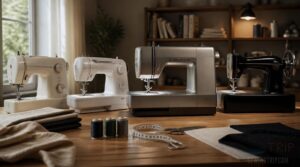
Baby Lock doesn’t exist in a vacuum — it competes directly with some of the most trusted names in sewing. How it stacks up against Brother, Janome, and Bernina depends a lot on what you actually need from a machine. Here’s how each comparison breaks down.
Baby Lock Versus Brother
Here’s the Baby Lock Versus Brother section:
How close are these two brands, really? Closer than most shoppers realize. Many Baby Lock models above $500 are built on the same platform as their Brother counterparts — same factory, same basic mechanics, different paint and branding. The Baby Lock Jubilant and the Brother NS80e, for instance, are practically the same 80-stitch machine.
That said, the differences that do exist are worth your attention:
- Stitch Library Variety — Brother’s design libraries run broader at comparable price points, and their PE Design software gives experienced users strong embroidery software ease for customizing patterns.
- Tension Control Tech — Baby Lock’s automatic sensors manage thread tension more consistently across knits and denim, which matters when you’re chasing clean topstitching results.
- Machine Price Gap — Brother usually lands lower on price for equivalent hardware, while Baby Lock bundles dealer support and a 60-day educational program into the cost.
Long-term build reliability favors Baby Lock slightly — tighter quality control standards and less motor wear over time. Brother’s more budget-friendly models use lighter materials, though their high-end units hold up well. For Baby Lock sewing machine reviews, users consistently praise the setup experience; Brother earns points for its deeper online resource library.
The honest verdict in this sewing machine comparison: if price efficiency drives your decision, Brother wins. If you want guided setup, stronger tension control tech, and dealer-backed service, Baby Lock justifies the premium.
Baby Lock Versus Janome
Switching from Brother to Janome is a different kind of comparison — you’re no longer looking at shared platforms. These two brands built their reputations on separate engineering philosophies, and that gap shows up fast during fabric versatility testing.
Janome’s mechanical builds — especially the HD3000 — push through eight layers of denim at 1,200 stitches per minute. Mechanical build durability is genuinely Janome’s calling card at mid-range prices. Baby Lock counters with electronic stitch control, using automatic tension sensors to keep knits and wovens consistent without manual adjustments.
For embroidery workflow comparison, Baby Lock pulls ahead. Its integrated memory features, automatic thread cutting, and easy-to-use design navigation make repeat embroidery projects faster to execute. Janome offers a wide built-in pattern library and highly adjustable hooping — useful, but the workflow demands more hands-on management.
Buttonhole variety analysis slightly favors Janome across comparable price tiers. Models like the 3160QDC-G include six one-step buttonhole styles. Baby Lock keeps its buttonhole options curated — reliable, but narrower in selection.
On electronics reliability, Janome leads both brands — dealer technicians consistently report the fewest computerized sewing machine failures of any manufacturer. Baby Lock’s stitch control differences shine in embroidery density and satin stitch precision, but Janome’s electronics simply break down less.
The split is clean: choose Janome for heavy-fabric power and long-term mechanical reliability; choose Baby Lock for embroidery-focused workflows and automated sewing machine features that reduce setup time.
Baby Lock Versus Bernina
Here’s the "Baby Lock Versus Bernina" section:
Janome draws a clean line between mechanical reliability and electronic finesse — but Bernina moves the conversation somewhere else entirely. This is the comparison where price gap becomes impossible to ignore.
Bernina sits at the top of the consumer market. The 790 model runs around $10,000. Baby Lock’s premium embroidery machines land well below that ceiling, making the stitch precision differences between the two brands the real deciding factor — not just the sticker price.
On raw precision, Bernina holds an edge. Stitch length consistency sits at 97% for Bernina versus 93% for Baby Lock across comparable computerized sewing machines. That gap matters most in dense embroidery work — tight satin columns, layered motifs, fine silk thread. For those applications, Bernina’s build tolerances are genuinely tighter.
Modular upgrade potential is Bernina’s structural advantage. Its embroidery module attaches separately, meaning you can buy a sewing-only machine now and expand into embroidery later. Baby Lock bakes embroidery into its machines from the start — a different philosophy that trades flexibility for a simpler, more integrated setup.
The embroidery interface comparison tips toward Baby Lock for most users. Baby Lock’s layout — guide beam alignment, easy-to-use touchscreen navigation, automated tension — shortens the path from design to finished hoop. Bernina’s interface rewards experienced sewers who want granular control, but the learning curve variance between the two brands is real.
Material construction styles also differ. Bernina uses tight-tolerance metal frames across its lineup. Baby Lock balances metal components with lighter assemblies on mid-range models — a trade-off that makes Baby Lock sewing machines easier to transport without sacrificing essential performance.
The split: if stitch accuracy on complex motifs is your main priority and budget isn’t the ceiling, Bernina earns its price. If you want strong sewing machine features, an easier workflow, and a lower entry point into high-end embroidery, Baby Lock is the more practical choice for most home sewers.
Strengths in Sergers
Where Bernina wins on precision sewing, Baby Lock dominates in serging.
Jet-air threading and differential feed make Baby Lock sergers fast starters — threading in seconds, stitching over 1,200 per minute.
- Overlock stitch durability seals knit seams cleanly
- Integrated trimming cuts and finishes simultaneously
- Differential feed prevents puckering on lightweight fabrics
- Tension control precision delivers consistent rolled hems
Sewing automation here isn’t a gimmick — it’s a genuine edge.
Best Brand by User
No single brand wins everything. Baby Lock leads in serger automation and ease, Brother dominates budget-friendly versatility, Janome excels at precision mechanical stitching, and Bernina owns high-end Swiss craftsmanship.
With a 91% recommendation rate and strong dealer networks driving loyalty, Baby Lock earns its edge among sewists who want smart home sewing equipment that genuinely reduces frustration — not just specs on paper.
Frequently Asked Questions (FAQs)
What warranty coverage do Baby Lock machines offer?
Warranty registration within 20 days activates extended coverage — up to 25 years on the metal chassis and 10 years on electronics. Labor runs one year. Miss that window, and you revert to standard terms.
Are Baby Lock parts easily available nationwide?
Baby Lock parts are widely available nationwide through authorized dealers — common items like presser feet, bobbins, and needles are stocked by most retailers. Use the official retailer locator tool to find nearby service centers by ZIP code.
Do Baby Lock machines work with generic feet?
Grab a universal walking foot from any sewing accessories aisle — it’ll snap onto most Baby Lock models without issue. Most use low shank compatibility, welcoming generic presser feet. Embroidery units with proprietary sensor feet are the exception.
How often should Baby Lock machines be serviced?
For typical use, service your machine annually. Heavy quilting or embroidery work may push that to every 3–6 months. Clean lint from the bobbin area after every 8–10 hours of sewing to stay ahead of buildup.
Can Baby Lock machines handle leather or vinyl?
Yes — with the right setup. Use a leather needle, roller foot, and walking foot. Raise stitch length, moderate tension. Models like the Accomplish handle medium-weight leather and vinyl cleanly.
Can beginners learn to sew on Baby Lock?
Yes, beginners can absolutely learn to sew on a Baby Lock. The Baby Lock Zest keeps setup simple, and starter classes plus a 60-day online trial give new sewers a confident, structured start.
Are Baby Lock sergers good for garment construction?
For garment construction, they’re a strong pick. Differential feed controls knits and wovens cleanly, while 3-to-8-thread configurations give you rolled hems, flatlock, and overlock — all the finishes serious garment work demands.
Conclusion
A machine is only as good as what you make with it. Are Baby Lock sewing machines good?
The numbers say yes — sub-0.5% thread failure, die-cast frames, seams that hold under real tension. They’re not for everyone. Budget sewers will find capable alternatives.
But if you want a machine that performs the same on year one as year five, Baby Lock earns that premium honestly. Buy for the build, not the badge.